A ¥100 notebook and a ¥1,000 Japanese luxury notebook.
The difference is felt the instant your pen touches the page.
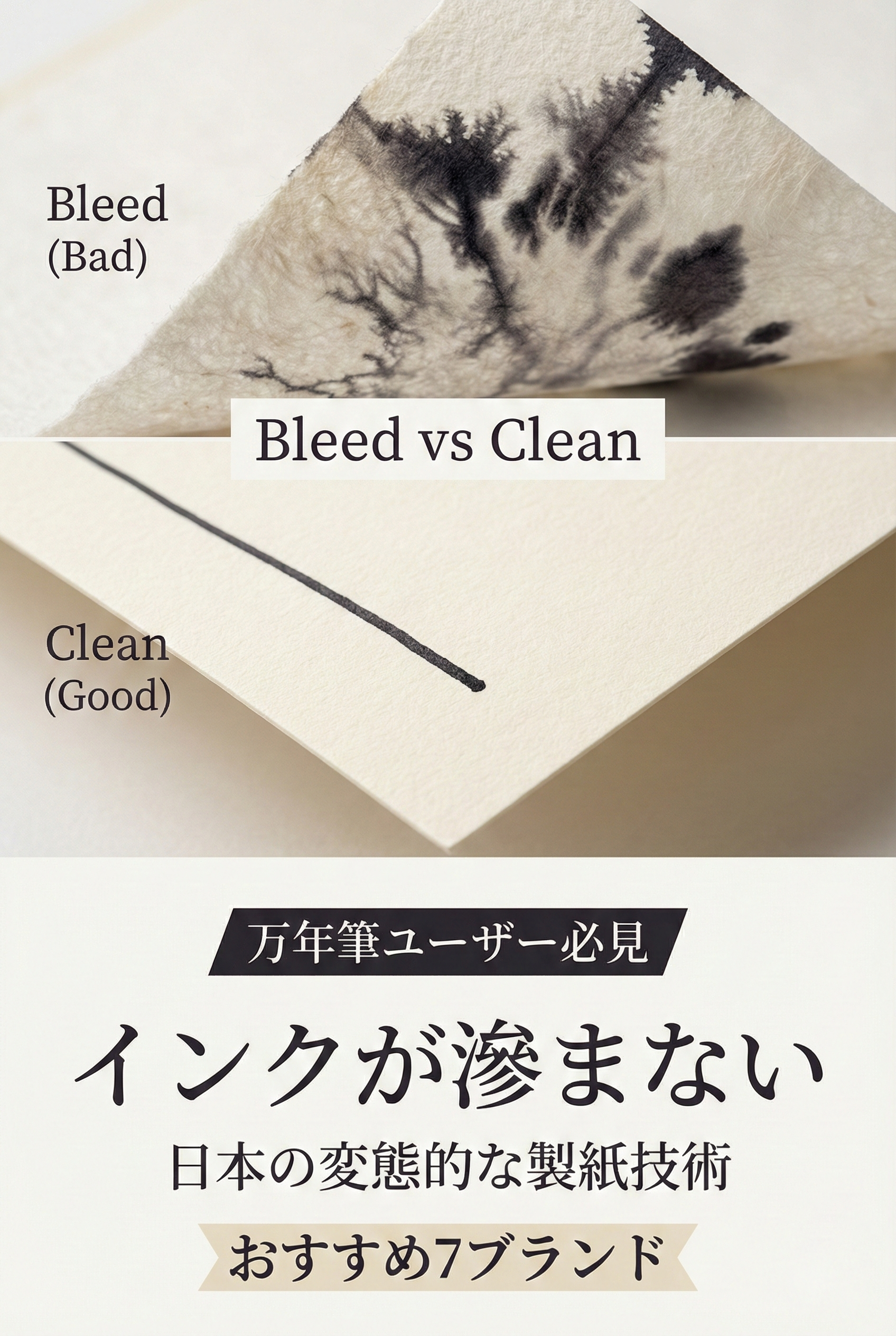
No scratching, no dragging — just ink sinking smoothly into paper, as though the surface is drawing it in. And above all: no bleed-through, even with a fountain pen.
This guide introduces 7 Japanese notebooks — the crystallisation of Japan's papermaking tradition — that make writing an experience you won't want to stop.
Quick Reference: 4 Paper Feels at a Glance
| Paper Type / Brand | Writing Feel | Fountain Pen | Best For |
|---|---|---|---|
| Silky smooth (APICA Silky 865) |
Like writing on glass | ✓ Excellent | Long sessions, light hand pressure |
| Pleasantly textured (Midori MD) |
Gentle feedback, controlled | ✓ Excellent | Careful handwriting, deliberate writing |
| Cream laid paper (LIFE Noble) |
Balanced, shows ink shading | ✓✓ Ideal | Ink enthusiasts, calligraphy |
| Ultra-thin (STALOGY 365) |
Smooth, light weight | ✓ Good | Daily planners, journals |
1. Why Japanese Notebooks? The Bleed-Through Battle
For anyone who uses a fountain pen or water-based ballpoint, the most critical factor in a notebook is bleed-through (裏抜け) — whether ink soaks through to the other side.
Japanese luxury notebooks were developed specifically to beat this problem.
Foolscap Paper — The Gold Standard
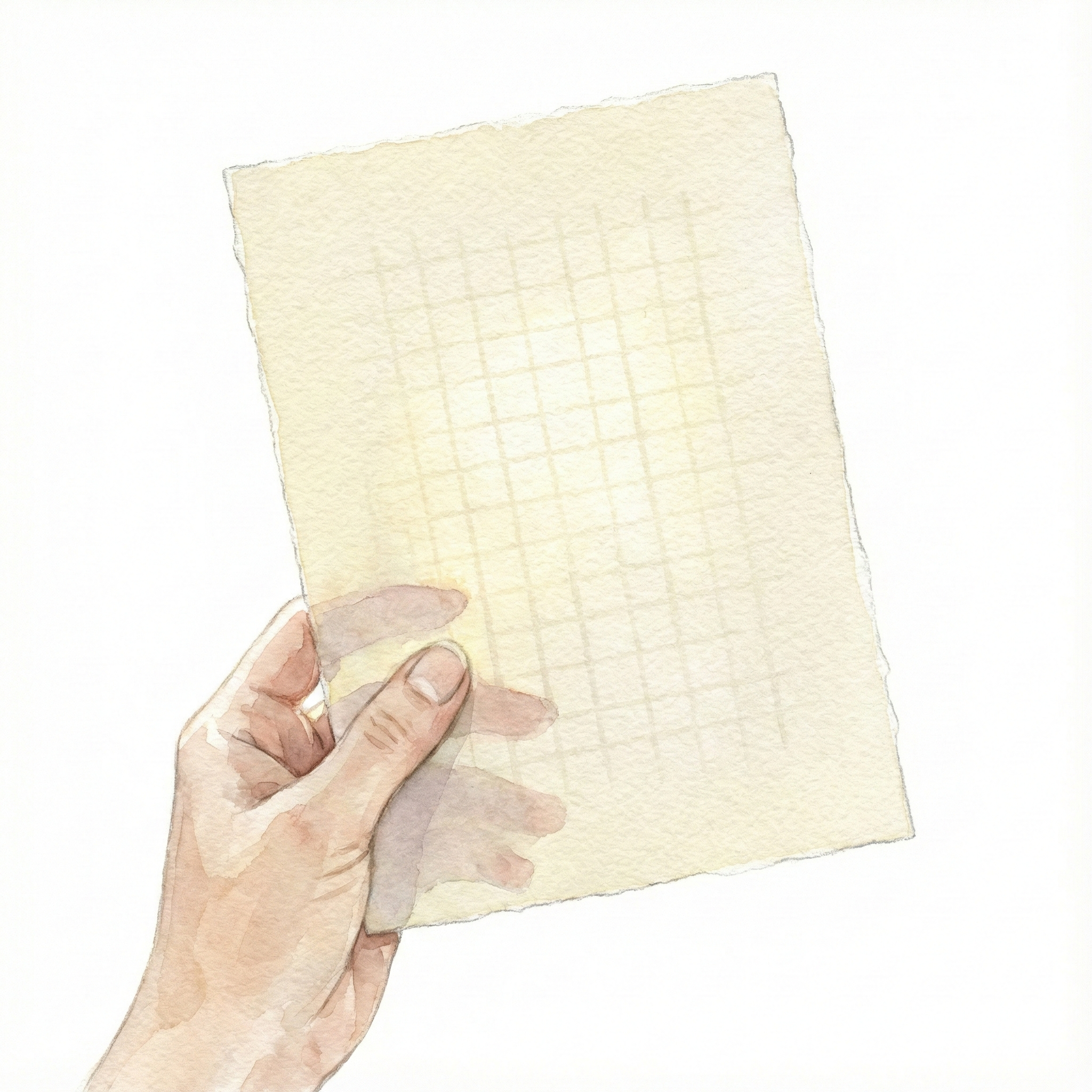
Japan imported foolscap paper-making technology from Britain in the Meiji era, then refined it beyond the original. The result is paper that shows a laid-pattern watermark when held to the light.
The key property: it absorbs ink at exactly the right rate — enough to prevent the ink from sitting wet on the surface, not so much that it soaks through. The pen glides significantly better as a result.
Silky Smooth vs. Pleasantly Textured
· Smooth (e.g., APICA): Friction reduced to an absolute minimum. Like writing on silk — the pen glides without the slightest resistance.
· Textured (e.g., Midori MD): A deliberate, gentle tooth — you feel the act of writing. More feedback, more control.
Both camps have devoted fans, and both prevent bleed-through equally well. The choice is purely about the feeling you want.
2. 7 Japanese Luxury Notebooks Worth Buying
These are the notebooks that stationery lovers around the world seek out specifically.
No.1 — LIFE Noble Note: The Classic
The magic of L Writing Paper. LIFE bindery workers hand-bind each notebook so every page lies completely flat when open. The cream-coloured paper is easy on the eyes and shows fountain pen ink shading (the subtle colour variation in each stroke) beautifully. Among fountain pen users, this may be the single most-owned notebook in Japan.
- Paper
- L Writing Paper (cream, laid texture)
- Known for
- Flat-open hand binding; ink shading visibility; classic cover design
- Best for
- Fountain pen users; those who want a timeless Japanese notebook
No.2 — Midori MD Note: Writing Without Distraction
Uses MD (Midori Diary) paper, a formula developed in the 1960s and refined ever since. The cover is stripped back to near-nothing — no decoration, no unnecessary design — because the focus is entirely on the act of writing. The pen doesn't glide too freely. There's just enough resistance that you feel in control of every stroke.
- Paper
- MD paper — soft cream, pleasantly textured surface
- Known for
- Minimalist cover; controlled writing feel; 60+ years of formula refinement
- Best for
- Careful handwriting; deliberate, distraction-free writing sessions
No.3 — APICA Premium C.D. Notebook: The Smoothest
APICA's proprietary Silky 865 paper is named exactly right. Writing on it feels like skating on ice — for any pen, from ballpoint to fountain pen. For those with a light hand pressure, or anyone who finds wrist fatigue after long writing sessions, this is genuinely the most accommodating surface available.
- Paper
- Silky 865 — the smoothest writing surface in Japanese notebooks
- Known for
- Zero drag; ink sinks in cleanly; zero bleed-through
- Best for
- Long writing sessions; anyone prone to hand fatigue
No.4 — Tsubame Note: A Showa-Era Masterpiece
Unchanged since 1947 — and filmmaker Akira Kurosawa used one. The Tsubame neutral-pH foolscap paper contains no fluorescent brighteners, making it gentle on the eyes and capable of lasting an estimated 10,000 years without yellowing. Extraordinary quality at a modest price.
- Paper
- Neutral-pH foolscap — no brighteners; estimated 10,000-year lifespan
- Known for
- Design unchanged since 1947; Kurosawa connection; archival quality
- Best for
- Those who want timeless design and genuinely durable archival paper
No.5 — STALOGY 365 Days Notebook: For Editors & Thinkers
The paper is as thin as a diary insert, so 365 pages don't add up to a brick. The grid is printed so finely it almost disappears — leaving a surface that accommodates both text and sketches without visual clutter. Zero bleed-through despite the paper weight. Popular among journalists, creators, and daily journalers.
- Paper
- Ultra-thin — 365 pages in a pocket-friendly volume
- Known for
- Near-invisible fine grid; daily use for a full year
- Best for
- Journalists, creators, and anyone who journals every day
No.6 — Yamamoto Paper RO-BIKI Note: Wax-Coated Character
Made by a small paper shop in Osaka, the RO-BIKI Note has a wax-coated cover that creases, scratches, and deepens in colour with use — exactly like a veg-tan leather good. Inside, papers such as "New Chiffon Cream" are chosen specifically for fountain pen compatibility. Passport size — ideal to carry everywhere.
- Based in
- Osaka
- Known for
- Wax-coated cover that ages like leather; passport size; fountain pen paper
- Best for
- Those who want a notebook that develops character alongside a leather wallet
No.7 — KUNISAWA FIND NOTE: Business Distinction
Created by a Shinbashi printing house, this is a hardcover notebook made for the desk of someone who takes quality seriously. "i am a gentleman" is gold-foil stamped on the cover. OK Foolscap paper absorbs ink beautifully with zero bleed-through. The pages' gilded edges (tenkane) seal the paper against discolouration and keep dust from entering.
- Based in
- Shinbashi, Tokyo
- Known for
- Gilded page edges (tenkane); gold-foil cover stamping; OK Foolscap paper
- Best for
- Desk use; professionals who want a notebook that signals quality
3. Make Your Own in Tokyo — Kakimori, Kuramae
One Notebook in the World: Choose Every Part
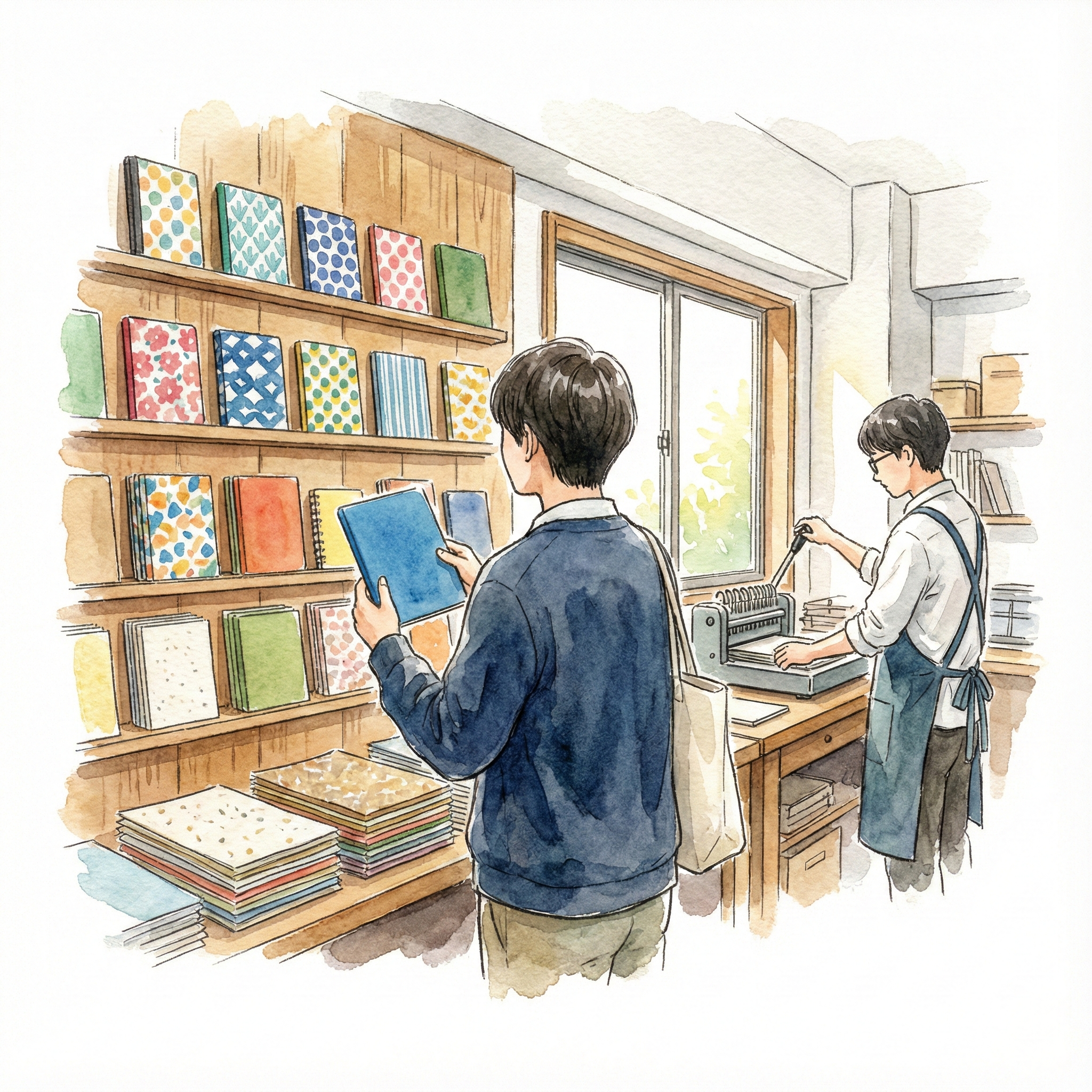
The notebooks above are exceptional products. But in the Kuramae district of Tokyo, the stationery shop Kakimori goes further: you choose the cover, the inner paper, the ring binding colour, and the fastener — and a staff member binds it in front of you on the spot.
The process:
1. Choose from over 60 cover designs.
2. Trial-write on 30+ paper types (foolscap, bank paper, and more) and pick the one that feels right.
3. A staff member ring-binds your notebook while you watch.
When you fill it up, the inner paper can be replaced. If you're visiting Tokyo, Kuramae is the stationery pilgrim's destination.
4. Frequently Asked Questions
Does it make a difference if I only use a ballpoint pen?
Absolutely. The smooth surface of a luxury Japanese notebook dramatically improves the feel of ballpoints and mechanical pencils too.
With an oil-based ballpoint in particular, the reduced drag on the paper fibres means the pen moves with noticeably less effort — less hand fatigue over long sessions, cleaner lines.
Grid or lined? Which should I choose?
Choose based on how you use it:
· Lined (e.g., 7mm rule): Best when you want text arranged cleanly in rows — diary entries, meeting notes, letters.
· Grid (e.g., 5mm): Better for mixing diagrams, sketches, and freeform layouts. Ideal for mind maps and journaling.
If you're unsure, grid is the current trend and the more versatile choice — it doesn't force your writing into a single size or direction.
A5 or B6 — which size is right?
Let your use case decide:
· A5 (half an A4 sheet): The standard desk size — enough writing room without taking over the table. The right choice for work or study.
· B6 (paperback book size): Slightly smaller, easier to open on a café table. Better for carrying around and using as a personal planner.
5. Final Thoughts: Good Paper Deepens Thought
A phone's notes app is convenient. But handwriting has something no app can replicate: it clarifies thinking and anchors memory in a way that typing doesn't.
The texture of paper under your fingers. The scent of ink. The sound of a page turning.
A Japanese luxury notebook is not just a piece of stationery — it is an invitation to slow down, concentrate, and enjoy the act of writing for its own sake.
Find the one from this list that speaks to you, and give yourself permission to be absorbed in writing again.
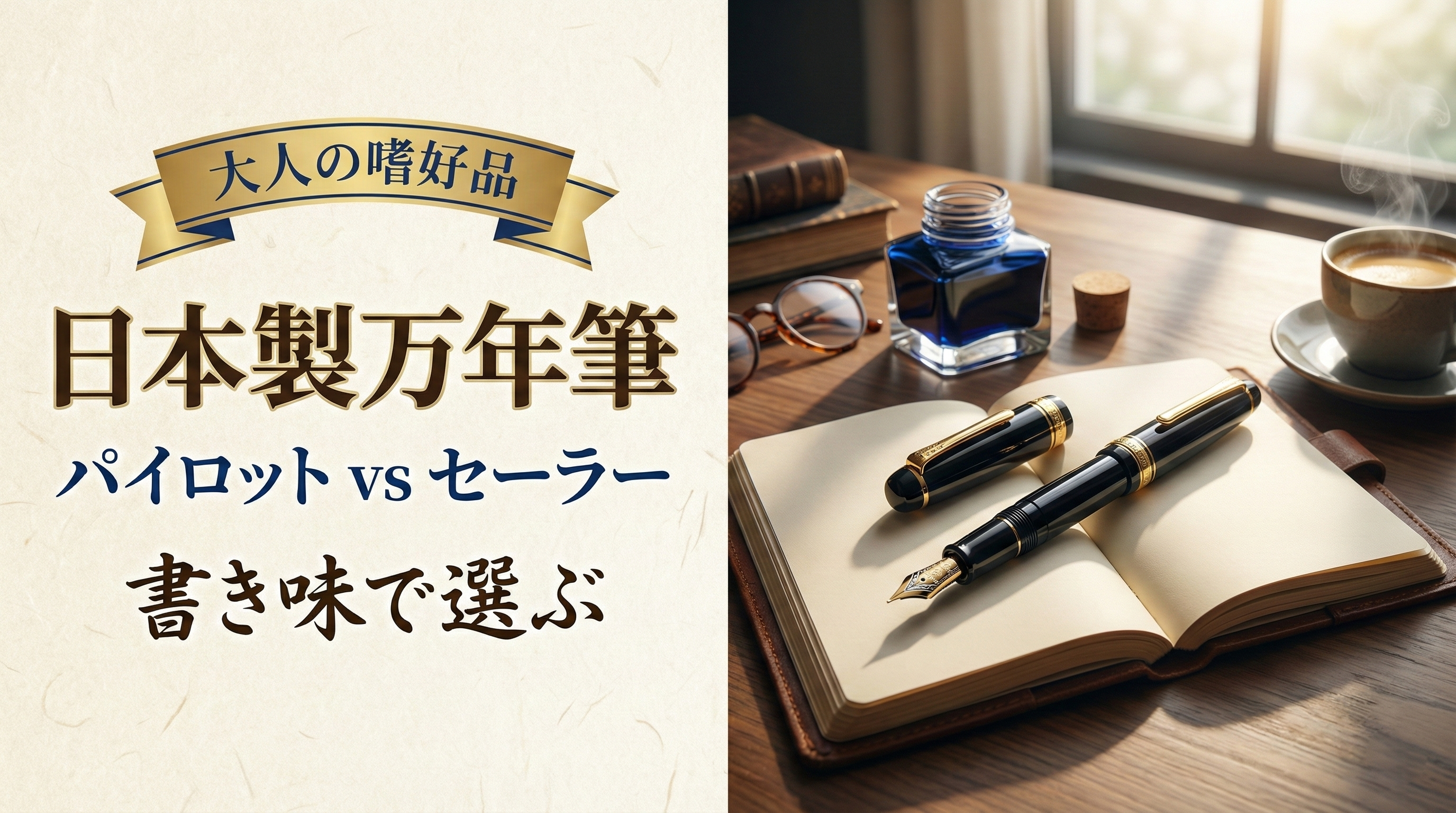
Japanese Fountain Pens: Pilot, Sailor & Platinum Compared
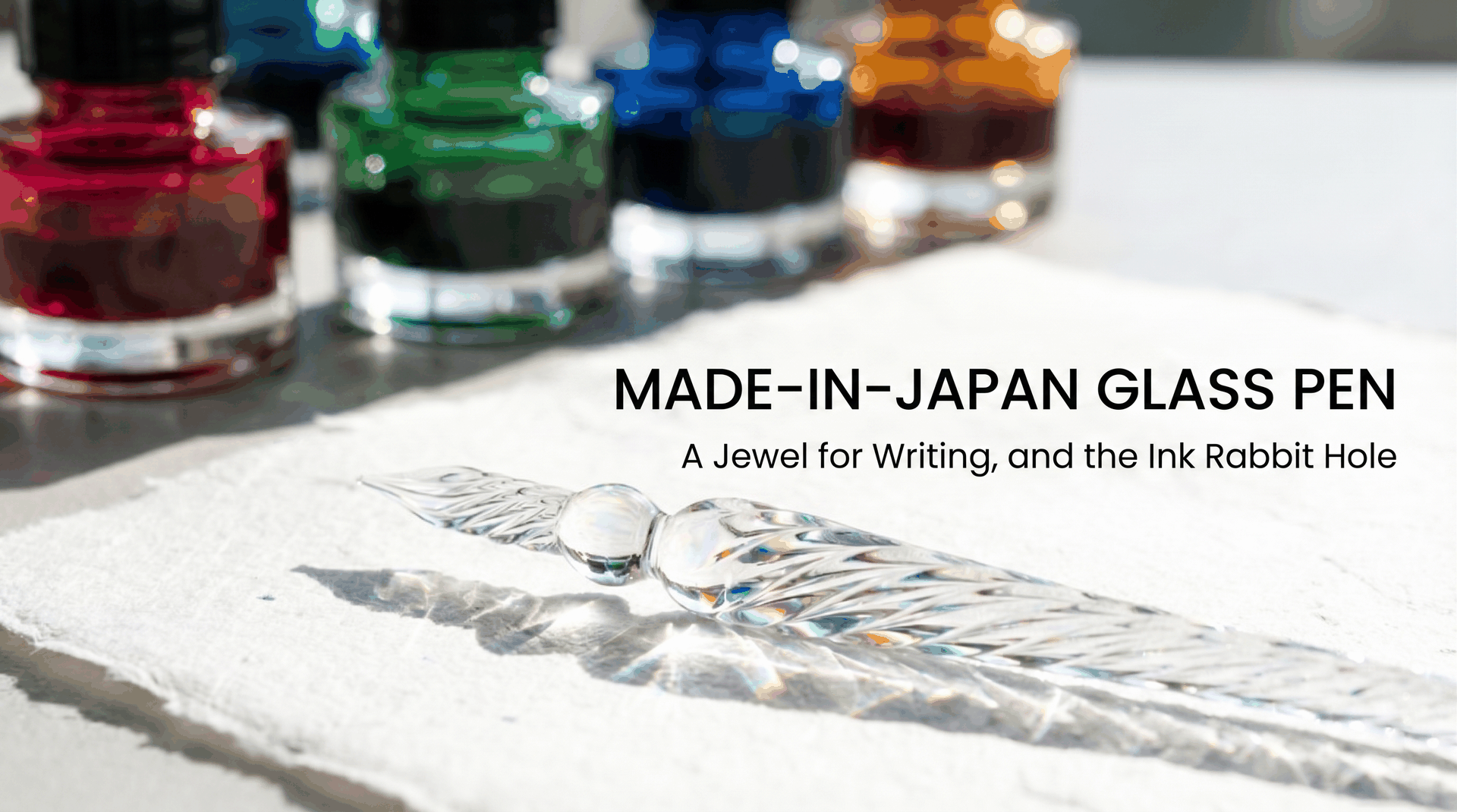
Japanese Glass Pens: 5 Studios That Make Writing Magical