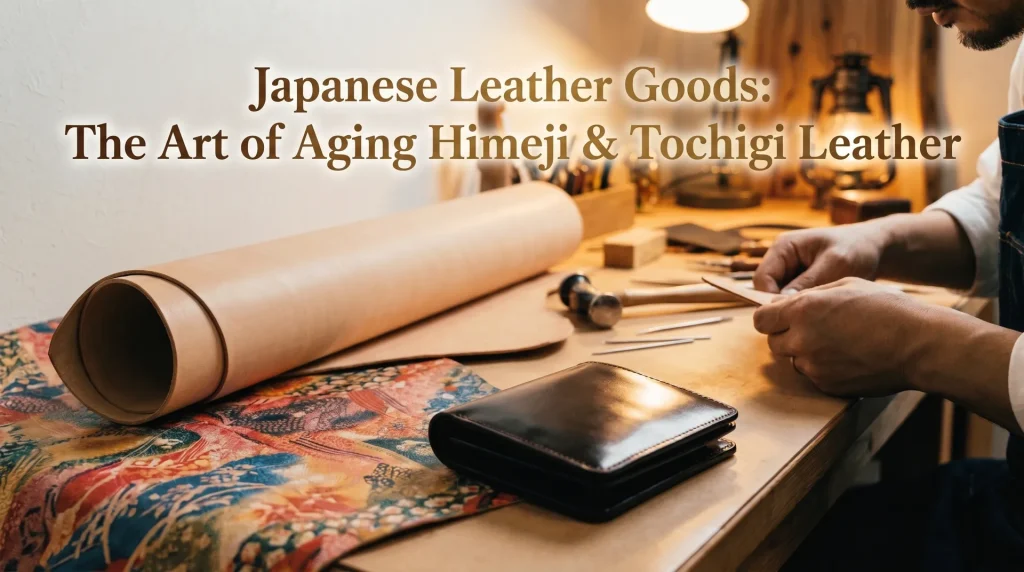
"I want a wallet I'll carry for life — but what's the difference between Tochigi Leather and Himeji Leather?"
"Why is cordovan so expensive?"
When choosing a leather product, looking past the brand name to the type and origin of the leather
itself reveals the true character of what you're buying.
Japan is, by any global standard, a leather powerhouse — and "Japan Leather" has earned serious respect among
international brands for its quality.
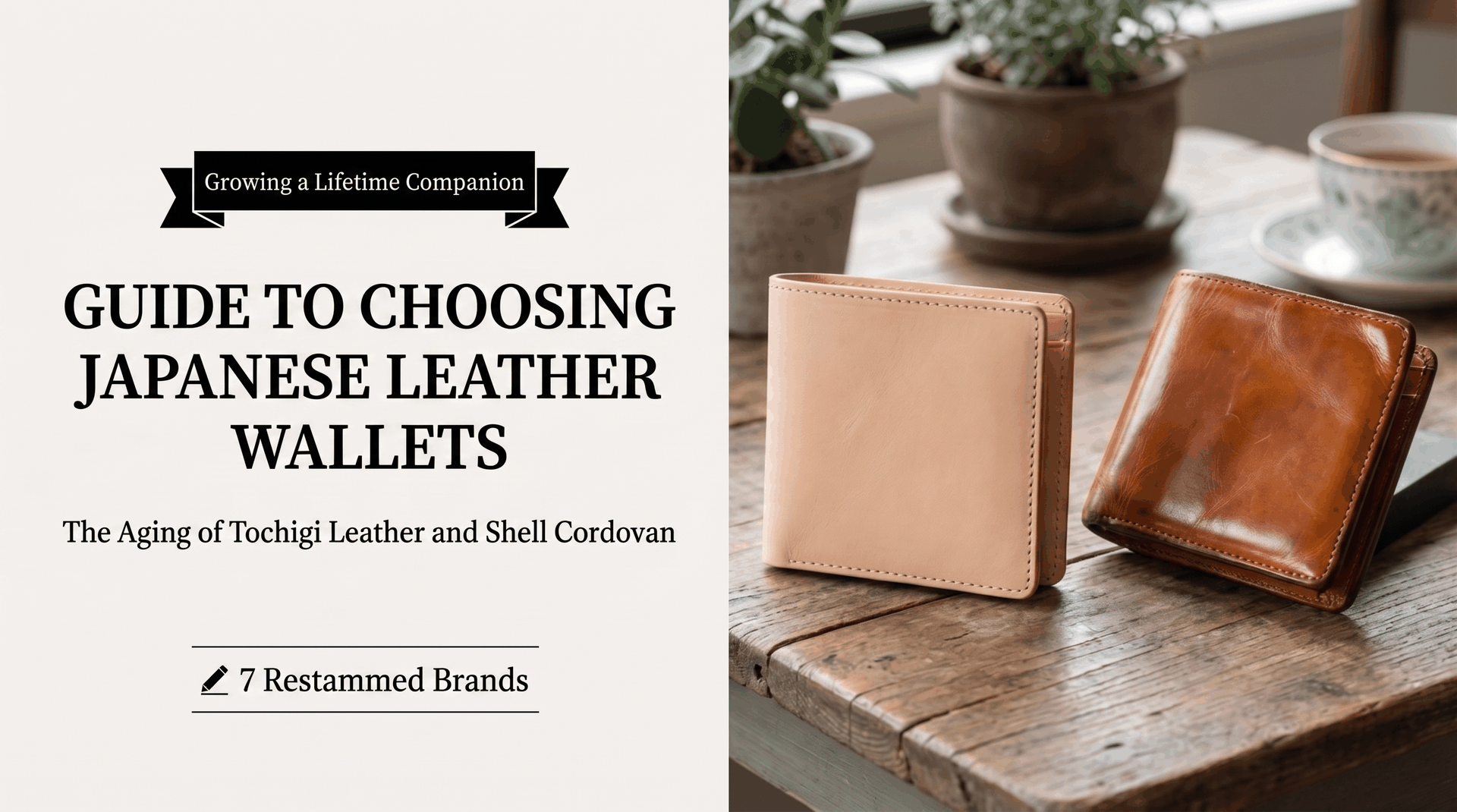
In short: choose Tochigi Leather if you want to watch a piece age and develop a deep patina over
years. Choose Himeji Leather if you want durability, vibrant color, and a more weather-resistant
hide.
Behind each of these leathers is a region, a river, a century of craft. This guide takes you into that world —
because knowing the story makes the object worth carrying.
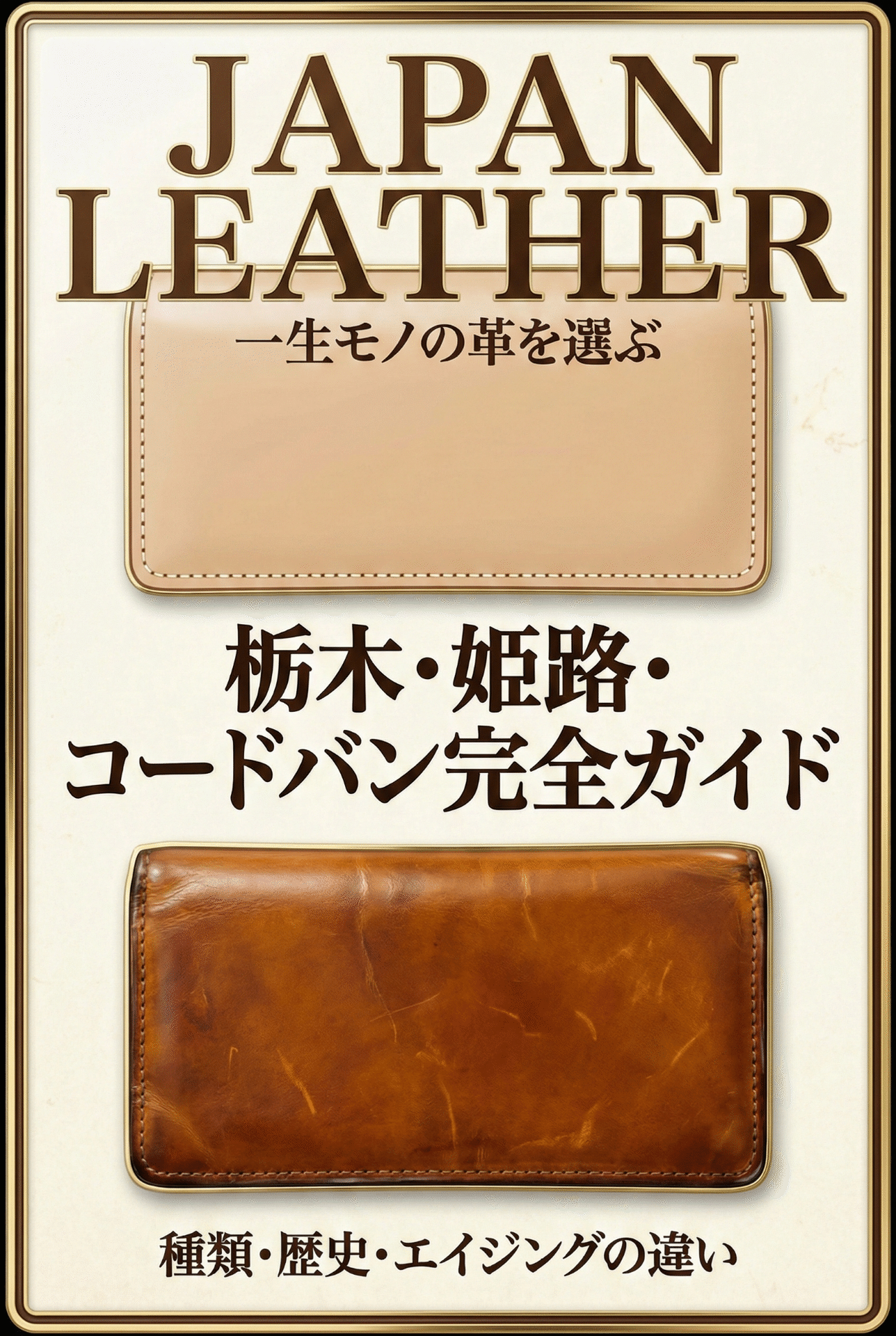
Quick Reference: Japanese Leather Types at a Glance
| Leather Type | Tanning Method | Key Trait | Best For |
|---|---|---|---|
| Tochigi Leather (Tochigi) | Vegetable tannin (pit tank) | Exceptional aging — develops a deep patina | Those who want to grow their leather |
| Himeji Leather (Hyogo) | Chrome tanning / white tanning | High durability, vibrant color retention | Those who don't want to worry about rain or scratches |
| Cordovan (Hyogo) | Specialty process (horse rump) | Mirror-like luster — the world's finest | Those who want the best available |
| Gibier Leather | Vegetable tannin, etc. | Thin, light, rare — sustainable sourcing | Environmentally conscious buyers |
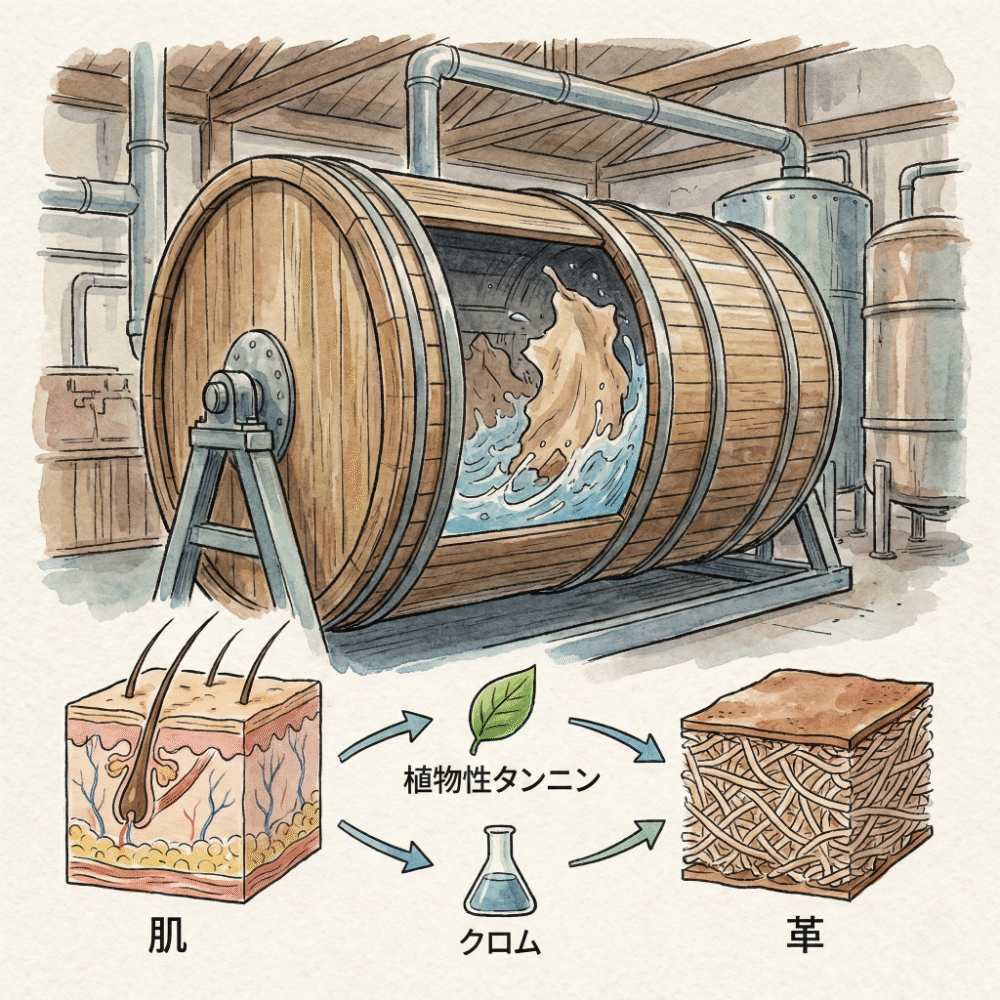
1. From Hide to Leather — The Two Tanning Methods
Animal skin (kawa, 皮) in its raw state will decay. The process of treating it with plant extracts or
chemicals to create a durable, supple material is called tanning (nameshi, 鞣し).
There are two dominant methods, and they produce very different results.
The Two Core Tanning Techniques
| Method | Characteristics | Primary Japanese Region |
|---|---|---|
| Vegetable tannin tanning (plant-based) |
Ages beautifully over time. Uses natural tannins extracted from bark and plants. Produces a firmer, denser hide with an organic feel. |
Tochigi Leather (Tochigi City, Tochigi Prefecture) |
| Chrome tanning (chemical) |
Vibrant color, supple texture. Uses chromium salts. Resistant to water and heat; holds its color well. |
Himeji Leather (Tatsuno / Himeji, Hyogo Prefecture) |
Japan's leather industry developed around abundant clean water sources and generations of specialist craft. Today, "Japan Leather" is actively sought by European luxury brands for its consistency and quality.
2. Tochigi Leather — Pit-Tanned Vegetable Leather & Its Heritage
"Tochigi Leather" is the brand name of leather produced by a long-established tannery (tanner) in Tochigi
City, Tochigi Prefecture.
Its defining feature is the pit tank tanning method — rare by global standards and almost unheard
of at commercial scale.
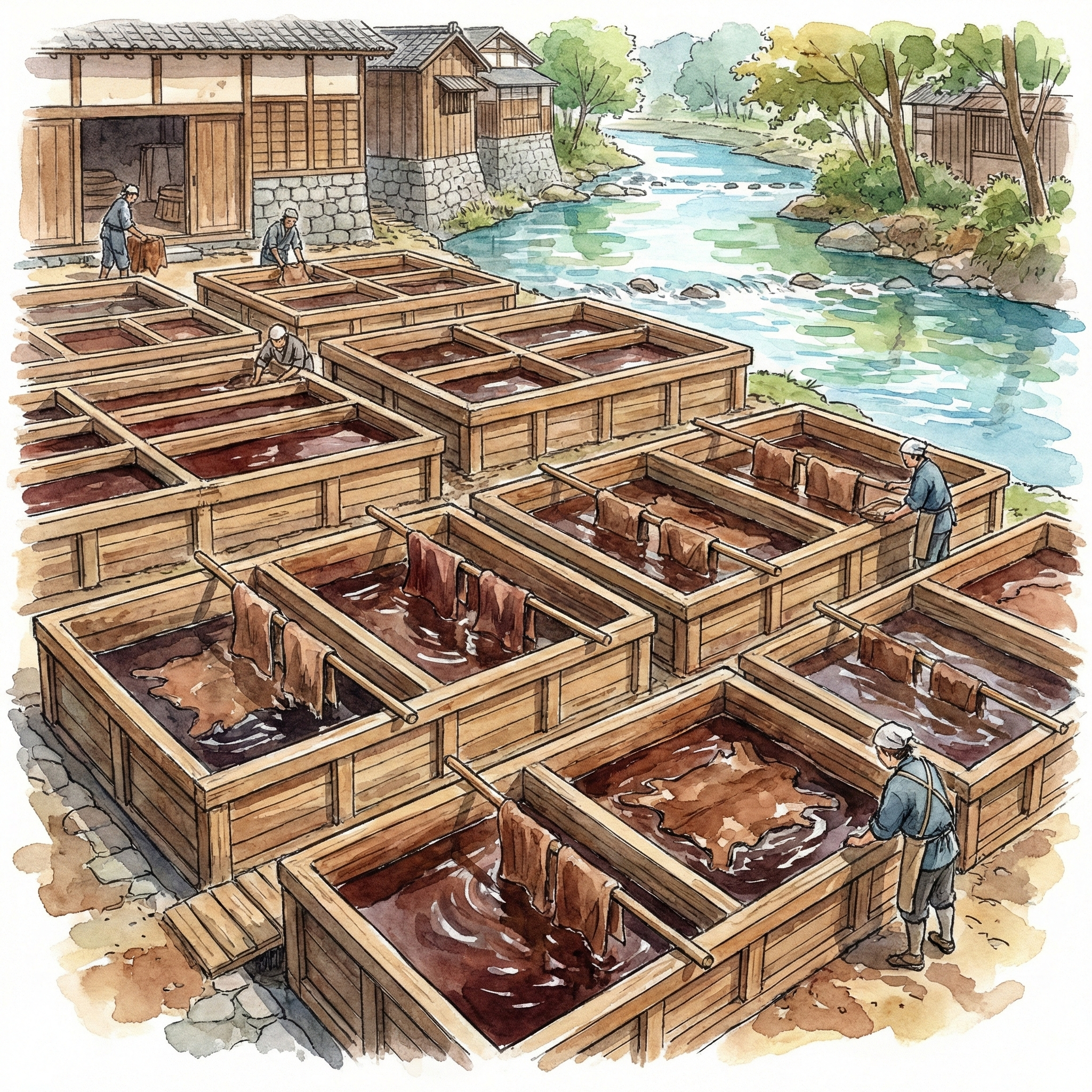
Why Tochigi? The Role of Pure Water
History and context:
Tanning leather requires enormous quantities of clean water. Tochigi City sits above rich underground water from
the Naka River system — precisely suited to the slow, gentle chemistry of vegetable tannin tanning.
As chrome tanning took over the industry in the postwar era for its efficiency, Tochigi Leather chose to
preserve the laborious traditional method instead.
The magic of the pit tanks:
Where conventional drum tanning completes in days, Tochigi Leather submerges hides across 160 progressively
stronger tannin pits, allowing roughly one month for the tannins to penetrate deeply and evenly throughout every
fiber.
The result is a nubuck-style natural leather of exceptional density — stiff and almost austere at
first, but capable of developing a stunning, transparent patina over years of use.
HUKURO — Tochigi Leather Bifold Wallet
HUKURO's wallets carry the Tochigi Leather red tag as proof of origin. The oil-rich hide starts matte and understated, but within months begins to develop a lustrous glow as it takes on the shape and warmth of your hand. Stitch color is customizable — a small detail that makes the piece feel genuinely yours from the moment you order.
- Material / Type
- Tochigi Leather (vegetable-tanned, pit tank)
- Made in
- Japan
- Best for
- Long-term aging, deep patina development
- Price range
- $80–$150
3. Himeji Leather — Japan's Largest Producing Region & the White-Tanning Tradition
Approximately 70% of leather produced in Japan comes from the Nishi-Harima region of Hyogo Prefecture — the cities
of Tatsuno and Himeji.
The industry here stretches back to the Heian period, over a thousand years ago.
Rivers, Salt, and Continental Technique
History and context:
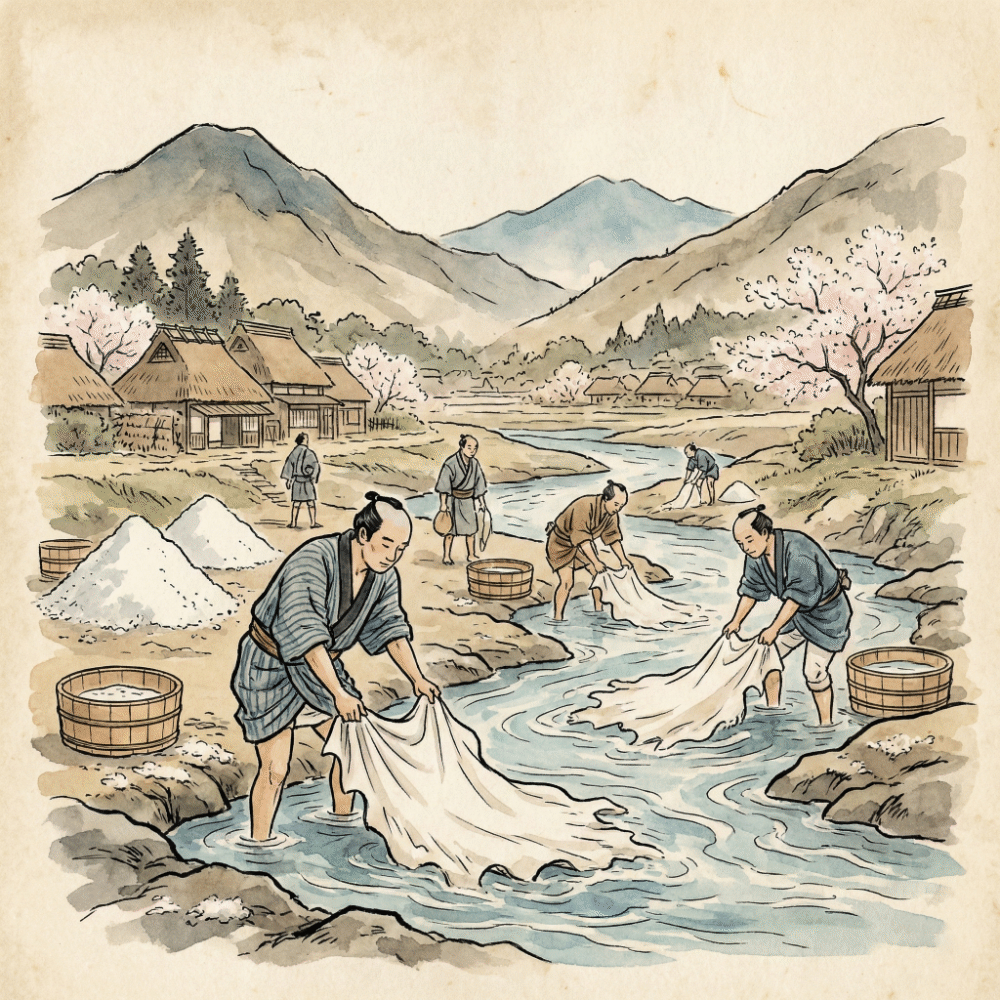
The Ichikawa and Hayashida Rivers running through the region made it ideal for washing hides — a critical step
in the process. Nearby Ako was also a major salt-producing area, which made salt-curing hides for preservation
and transport inexpensive and accessible.
The traditional method once practiced here — called shiro-nameshi (white tanning) — used only river
water, salt, and rapeseed oil, with no chemicals at all. It produced a distinctive pure-white leather prized for
its purity.
Today, the region combines that deep craft heritage with modern chrome tanning to produce highly durable, richly
colored leather at scale — forming the backbone of Japanese leather goods production.
4. Cordovan — The Diamond of Leather, from Shinki Hikaku
Cordovan is called "the diamond of leather" — and the comparison is apt.
It is sourced from a small, specific layer within the rump of a horse, and fewer than a handful of tanneries
worldwide have the skill to process it correctly.
One of those tanneries is Shinki Hikaku (新喜皮革) in Himeji.
A Gemstone Carved from the Hide
Cordovan is not the surface of the skin — it is a dense fibrous membrane roughly 2mm thick buried within the hide,
carved out by hand. The fibers in this layer are tightly and uniformly packed, which allows it to be polished to a
mirror-like sheen unlike anything achievable with regular cattle hide.
Said to be three times stronger than cowhide, cordovan products — properly maintained — can outlast their owner.
It is the reason cordovan has traditionally been used in Japanese randoseru schoolbags, which must
survive six years of daily use by a child without losing their shape.
CYPRIS — Cordovan Long Wallet (Shinki Hikaku)
CYPRIS is a Japanese leather brand whose signature piece uses cordovan from Shinki Hikaku in Himeji, stitched by Japanese craftspeople. As it is used, the leather develops an almost liquid-looking translucency — a depth of gloss that keeps intensifying rather than fading. In any business setting, it commands attention without demanding it.
- Material / Type
- Horse cordovan (Shinki Hikaku, Himeji)
- Made in
- Japan
- Best for
- Mirror-gloss finish, lifetime investment, business carry
- Price range
- $200–$500+
5. Gibier Leather — Deer and Boar Hide as a Sustainable Choice
A quieter but growing category in Japanese leather is gibier leather — hides sourced from wild animals culled to protect farmland, processed into leather rather than discarded.
Wild Marks Become Character
- Ezo deer leather (Hokkaido and elsewhere):
Exceptionally light and supple with excellent breathability. Sometimes called "the cashmere of leather" for its softness. Thin yet surprisingly resilient. - Wild boar leather:
Naturally water-resistant and highly scratch-proof. The distinctive pore pattern left by the bristles creates an organic, wild-looking texture that cannot be replicated.
Natural scarring from a wild life — called natural marks — is present in every piece. Rather than being a flaw, these marks are part of the story: a hide that is chosen, not wasted. For buyers who care about where materials come from, gibier leather carries a meaning that farmed leather simply cannot.
6. Aging & Care — How to Maintain Each Leather Type
A leather product is not bought and then forgotten — it is grown.
But different leathers require different approaches, and the wrong care can do more harm than neglect.
Essential Maintenance by Type
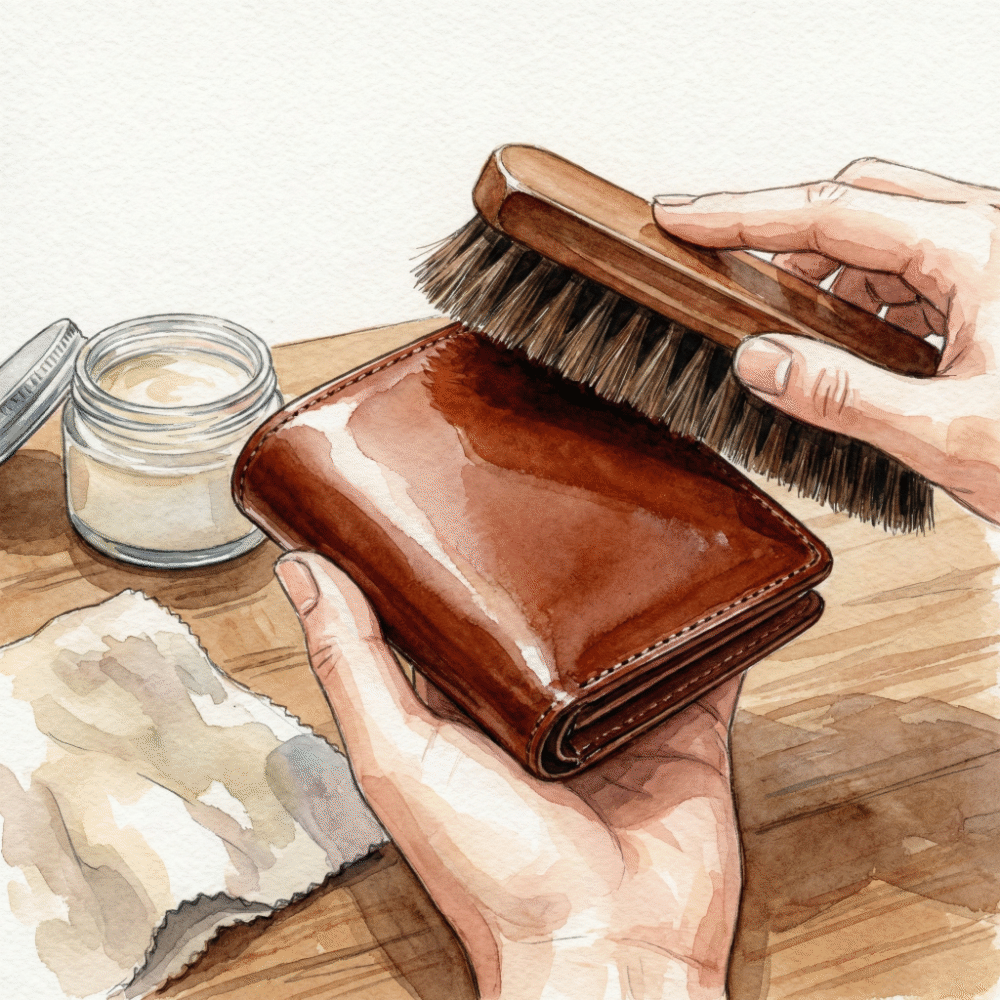
- Tochigi Leather (vegetable-tanned):
When new, briefly sun-expose the piece to draw out natural oils and create a protective surface layer. When the leather begins to feel dry, apply a small amount of delicate cream or mink oil with a soft cloth. Never over-condition — a little goes a long way. - Himeji Leather (chrome-tanned):
Largely maintenance-free. For surface dirt, use a soft-bristle brush or lightly wrung damp cloth. Because chrome leather absorbs oils poorly, avoid over-applying cream — it will sit on the surface rather than penetrate. - Cordovan:
Highly sensitive to water — use a waterproofing spray before first use and reapply regularly. When the gloss dulls, polish with a dedicated cordovan cream. Never rub water into cordovan; water marks must be handled immediately and carefully.
7. Frequently Asked Questions
Tochigi or Himeji — which is actually better?
It depends on what you want from the leather.
If you want to actively participate in the object — watching it darken, soften, and develop your personal patina
over years — choose Tochigi Leather.
If you'd rather buy it looking great and have it continue looking great with minimal effort, regardless of
weather, choose Himeji Leather (chrome-tanned).
How long does a leather product actually last?
With proper care, well over ten years — potentially a lifetime.
Synthetic leather (PU/PVC) typically hydrolyzes and begins to flake within three years. Genuine leather has no
such expiration — as long as the fibers hold and the stitching is maintained, it continues to function. Worn seams
can be professionally re-stitched, making quality leather goods genuinely repairable rather than disposable.
My wallet got caught in the rain and has a water stain. What do I do?
For vegetable-tanned leather, dampening the whole surface often resolves it.
A water stain forms when moisture penetrates unevenly. Dampen a cloth, wring it thoroughly, and wipe the entire
surface uniformly — then allow to dry in shade. Spreading the moisture evenly eliminates the visible boundary of
the stain.
For cordovan: do not attempt this yourself. Water causes cordovan to bubble. Take it to a leather care
professional immediately.
Is a cordovan schoolbag (randoseru) too heavy for a child?
Slightly heavier than synthetic alternatives, yes.
Synthetic leather (Clarino and similar) schoolbags weigh around 1,100g. Cordovan versions run around
1,400g. However, the durability is in a different class — cordovan schoolbags are chosen specifically by parents
who want the bag to survive six full years of heavy child use without deforming or wearing through.
If a product says "genuine leather," does that mean it's Japanese?
No — "genuine leather" refers only to material, not origin.
"Genuine leather" (本革) indicates the material is real animal hide, not synthetic. It says nothing about where the
hide was tanned, where the product was assembled, or what tanning method was used. Even products labeled "Made in
Japan" may use imported Italian or other leather. To be certain the leather itself is Japanese-tanned, look for
specific tags reading "Tochigi Leather" or indicating a Japanese tannery by name.
I want to start caring for my leather properly. Where do I begin?
Start with a horsehair brush — everything else comes after.
After each use, brush off dust with a soft horsehair brush. Once or twice a month, apply a thin coat of
conditioner and buff dry. For vegetable-tanned leathers like Tochigi, use neatsfoot oil or Renapur (Leather
Balsam). For chrome-tanned leather like Himeji, use a light delicate cream. Keep it simple, keep it consistent —
that's what separates leather that ages beautifully from leather that simply wears out.
Final Thoughts: When You Know the Story, the Object Means More
Leather is an animal's life, transformed by human knowledge into a tool.
The clear water of Tochigi giving rise to nubuck that ages over decades. The rivers and salt of Himeji
underpinning a thousand years of craft. The rare membrane of a horse's rump, coaxed by Shinki Hikaku into
something that shines like a polished stone.
A leather product chosen with this context in mind is more than a purchase — it is a collaboration with the
artisan who made it, the animals whose hides it came from, and the years ahead when it will take on the
particular shape and color of your specific life.
The wallet or bag you carry every day can be one of those objects. Japan gives you the materials to make it one.
Japanese Leather Wallets: Tochigi, Cordovan & the Best Brands
Okayama Denim Guide: 5 Japanese Selvedge Jean Brands Worth Buying