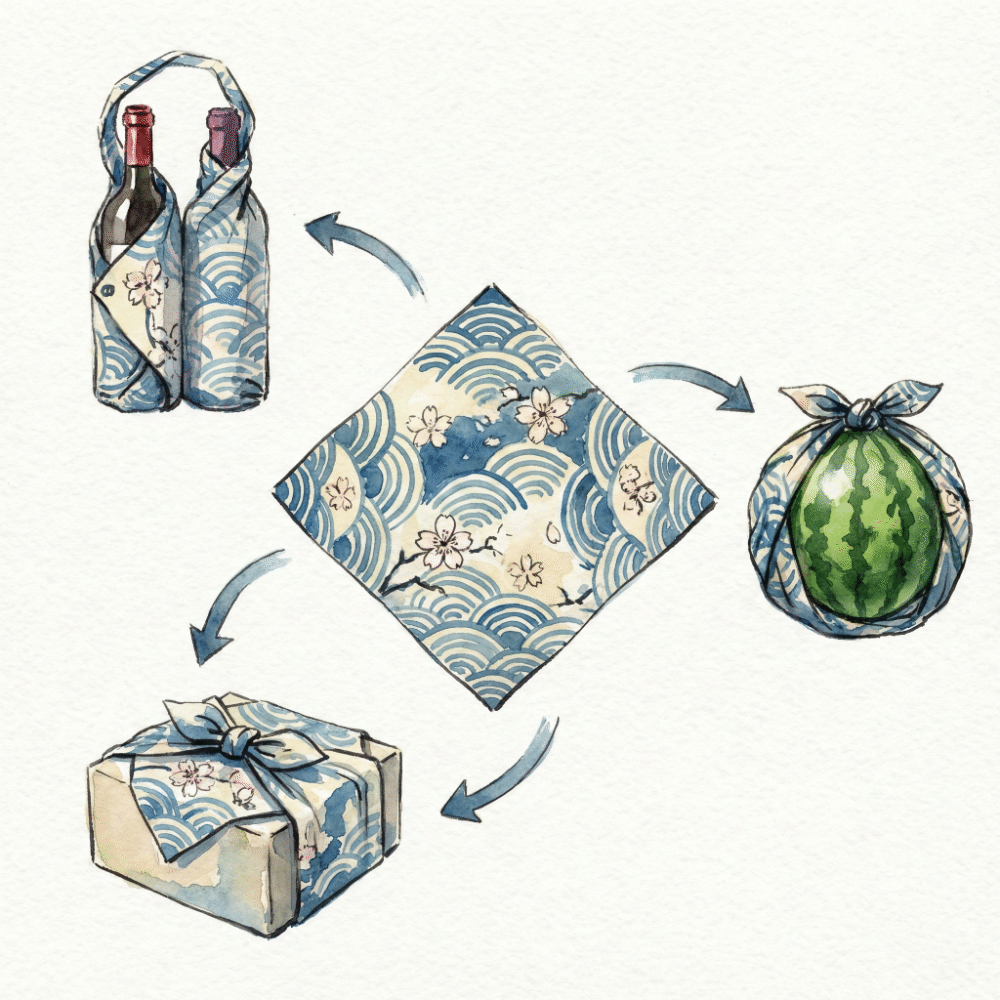
One square of cloth. No straps, no zippers, no rigid structure — and yet it carries a wine bottle, a
watermelon, or an entire basket of groceries without complaint.
Furoshiki (風呂敷),
the traditional Japanese
wrapping cloth, is one of those tools that looks simple until you actually use it — and then you wonder
how you managed without it.
Fold it down to handkerchief size when empty. Wrap it around anything when you need it. Modern versions
even come with super water-repellent finishes strong enough to carry liquid. This guide covers the
essentials: sizes, materials, how to knot, and the two Japanese brands worth knowing.
Quick Reference: Furoshiki at a Glance
| Feature | Detail |
|---|---|
| What it is | A square cloth used for wrapping and carrying — no handles, no closures |
| Common sizes | 50 cm (bento wrap), 70 cm (bottles / gifts), 100 cm+ (reusable bag / tablecloth) |
| Materials | Cotton (durable, washable), polyester (vivid colour, water-repellent), silk (ceremonial) |
| Water-repellent type | Can repel water strongly enough to carry liquid when knotted into a bag shape |
| Key knot | Musubi-knot (square knot) — locks flat, releases with one pull |
| Top brands | Musubi (Kyoto, modern designs), Nagare (Gunma, super water-repellent) |
| When empty | Folds flat to handkerchief size — fits in any pocket or bag |
1. Why Furoshiki Beats Every Reusable Bag
The problem with most reusable bags is that they have a fixed shape. A tall wine bottle tips over inside a wide tote. A flat pizza box won't fit through a narrow opening. A round watermelon rolls around no matter what you do.
It conforms to whatever you're carrying
Furoshiki has no fixed shape — the cloth wraps directly around the object, so round things stay
round, long things stay upright, and oddly shaped things get hugged into place.
When you're done, it folds flat. No bulk, no wasted space. Tuck it into your pocket and forget it's
there until you need it.
2. Water-Repellent Furoshiki: Beyond What Fabric Should Do
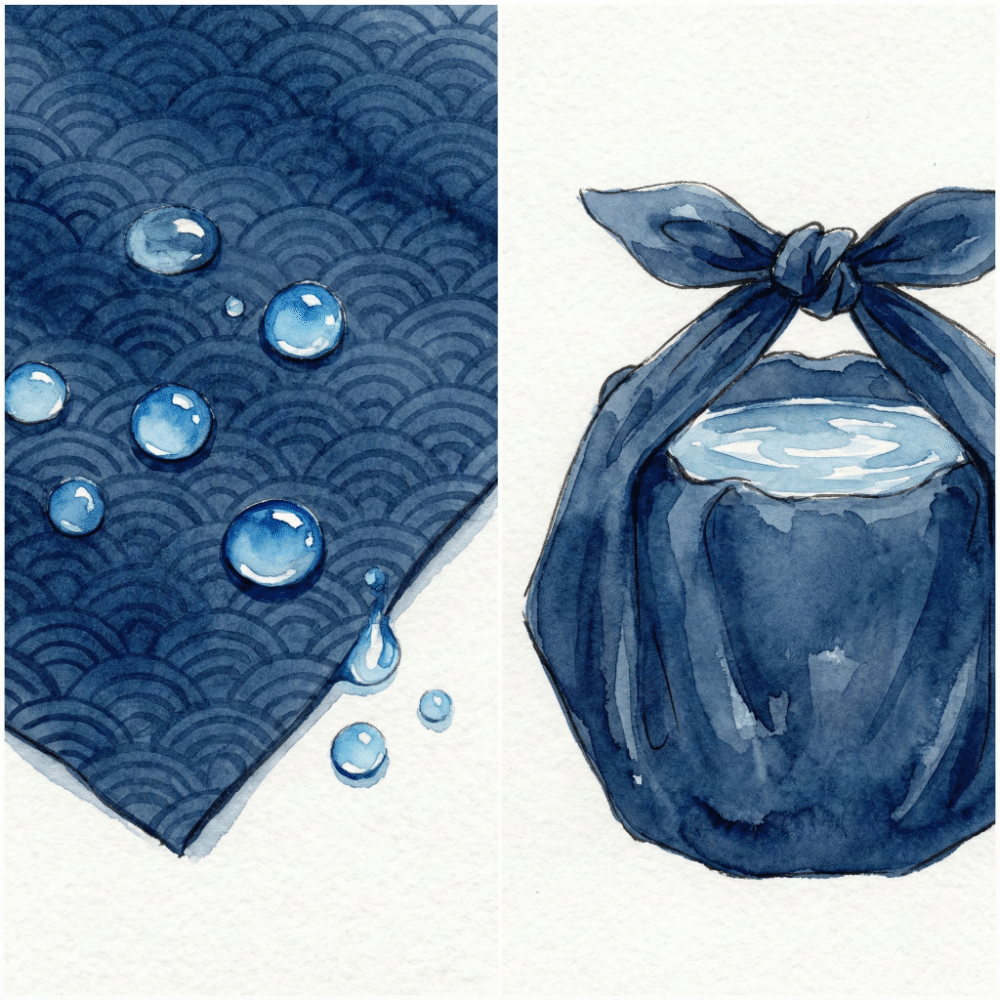
Standard furoshiki is cotton or polyester. But a new category has emerged that goes much further: super water-repellent furoshiki that can actually hold liquid.
Rain cover, bag protector — and bucket
The super water-repellent versions use a finish that causes water to bead up and roll off completely.
The weave is tight enough that when you knot the cloth into a bag shape, it can carry water
without leaking — like a bucket made of fabric.
In everyday use, this means you can wrap a dripping umbrella and put it in your bag, cover your
leather bag during a downpour, or use it as a tablecloth that wipes clean instantly.
The repellent effect lasts through washing and can be restored with a brief pass of a warm iron.
3. Choosing Size and Material
Furoshiki sizes are measured in haba (幅, width). Pick the size based on what you plan to carry.
Size guide
- 50 cm (nakahaba): Bento box wrap, tissue box cover, small gift wrap.
- 70 cm (futahaba): Wine bottle, box of sweets, travel clothing organizer.
- 100 cm+ (mihaba): Shopping bag, tablecloth, rain cover for a backpack. ★ This is the size to start with if you want an everyday carrier.
Material guide
- Cotton: Durable, machine washable, holds knots well. The most practical choice for daily use.
- Polyester: Vivid colours, wrinkle-resistant, takes water-repellent finishes well. Lightweight.
- Silk: Beautiful sheen but delicate — avoid water. Best for formal gifts and ceremonies.
4. Brand Spotlight: Musubi (Kyoto) — Modern Designs
Kyoto-based Musubi (Yamada Seni) is the furoshiki brand most likely to make you forget you're buying something traditional. Their designs collaborate with contemporary artists and Nordic-influenced aesthetics — patterns you'd happily use as a scarf.
Musubi (Yamada Seni) — Modern Kyoto Furoshiki
The brand that makes furoshiki feel current. Musubi has collaborated with mina perhonen and French designers to create pieces that double as fashion accessories. Draped around the neck, wrapped as a scarf, or tied into a bag — the patterns hold up at every angle. Organic cotton lines also available.
- Material / Type
- Cotton, organic cotton (various designs)
- Made in
- Kyoto, Japan
- Best for
- Modern aesthetic, gift wrapping, fashion accessory use
- Price range
- $20–$50
5. Brand Spotlight: Nagare (Gunma) — Super Water-Repellent
Nagare is made by Asakura Senko in Kiryu, Gunma — a textile town with centuries of weaving history. Their furoshiki exists in a category of its own.
Nagare Super Water-Repellent Furoshiki — Gunma
Nagare uses a proprietary "dewelry" finish that lets the cloth breathe while repelling water with enough force to hold liquid when knotted. Knot the corners into a bag, fill it with water, and it holds. In practice: wrap your wet umbrella, cover a leather bag in a downpour, or wipe clean in seconds. The repellent effect survives machine washing and is restored with a warm iron.
- Material / Type
- Polyester with super water-repellent "dewelry" finish
- Made in
- Kiryu, Gunma, Japan
- Best for
- Rain protection, outdoor carry, liquid-proof wrapping
- Price range
- $25–$45
6. Two Knots You Actually Need
You don't need to learn ten furoshiki techniques. These two cover most situations.
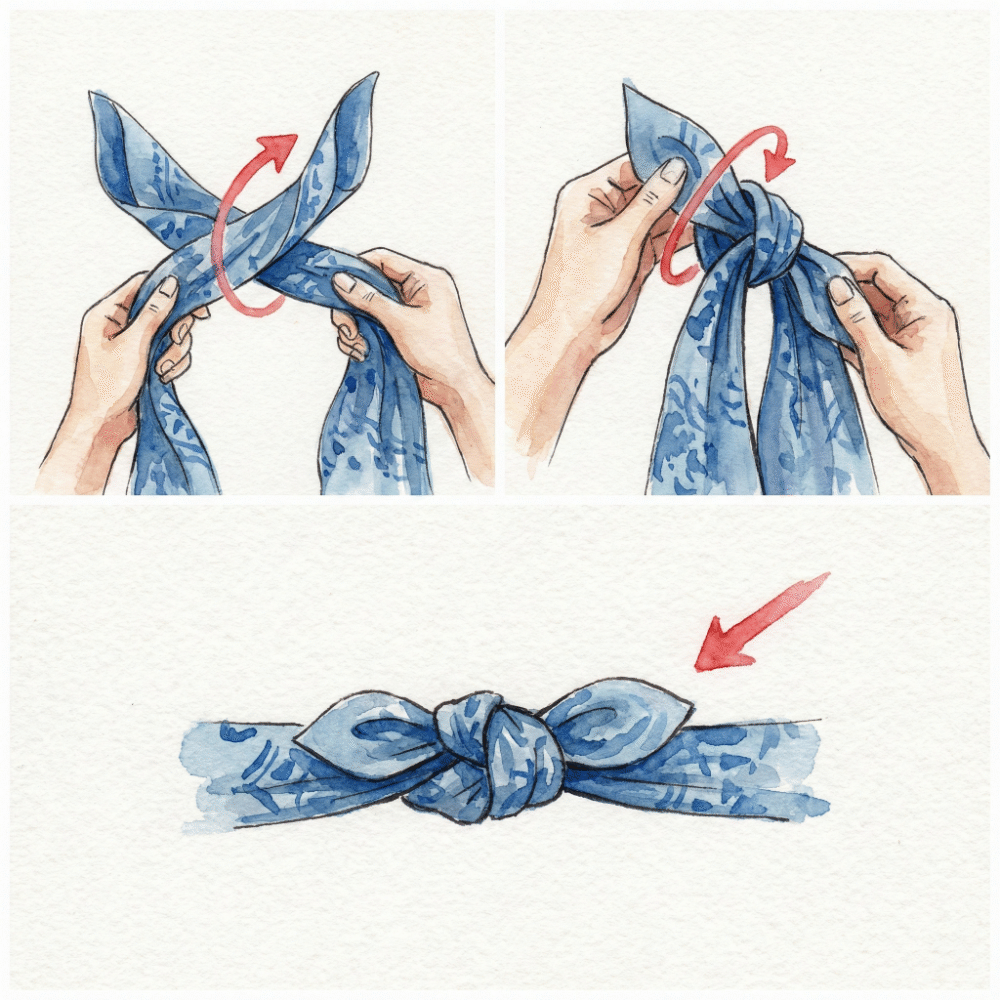
The square knot (musubi) — the one that never slips
This is the foundation of every furoshiki technique. The key is getting the direction right so it
lies flat, not twisted.
1. Hold the left and right corners. Cross left over right and tie once.
2. Take the corner now on top (left) and cross it over the right corner again — tie once more.
3. Pull both ends outward. The knot should lie flat across in a straight horizontal line.
To release: push one end firmly toward the opposite side until the knot straightens — then pull. It slides apart
cleanly.
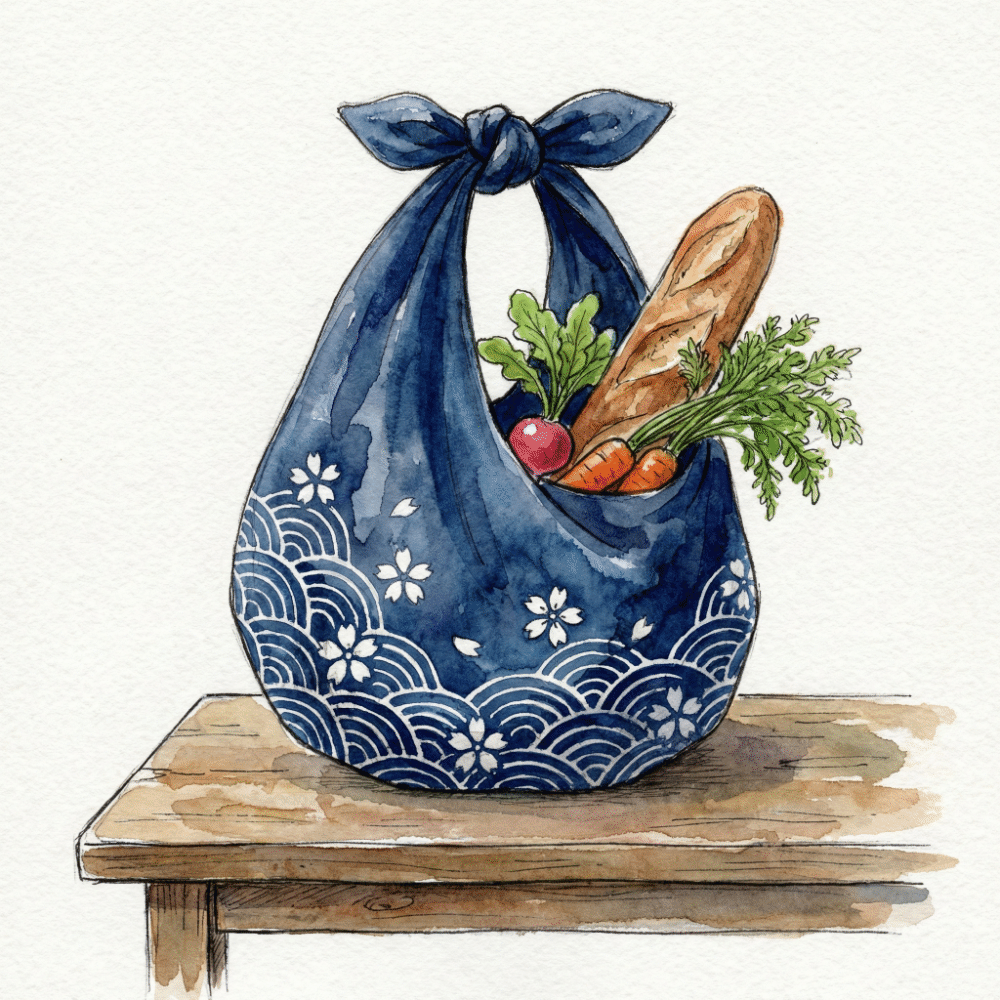
The drop bag (shizuku bag) — your everyday carrier
This is the most useful furoshiki shape for grocery shopping or carrying oddly sized items.
1. Lay the furoshiki face-down and fold it diagonally into a triangle.
2. Tie each of the two side corners into a simple overhand knot — these become the base of the bag.
3. Flip the cloth right-side out. Gather the two remaining top corners together and tie them with
a square knot — this becomes the handle.
The result is a wide-mouthed drop-shaped bag that opens generously and holds its shape well.
7. Frequently Asked Questions
Can I put furoshiki in the washing machine?
Cotton and polyester versions are generally machine-washable.
Wash dark colours separately the first time in case of bleeding. Silk and crepe (chirimen) varieties
shrink — dry cleaning is safer for those.
For water-repellent furoshiki, rinse thoroughly after washing (detergent residue reduces repellency)
and finish with a warm iron to restore the water-beading effect.
My knot is stuck and won't come undone.
If it's a proper square knot, there's a trick.
Push one of the ends firmly toward the opposite side until the knot lies flat in a straight line, then
grip the knot and pull — it releases smoothly.
If the knot is twisted (a "granny knot"), it genuinely is difficult to untie. The fix for next time is
to make sure the second tuck goes in the opposite direction from the first.
Which size should I start with?
100 cm (mihaba) is the most versatile starting size.
It works as a shopping bag, a bag cover in rain, a table runner, and a blanket for small objects. Once
you use it regularly, you'll likely want a 70 cm for bottles and gifts as well. The 50 cm size is
mainly for bento boxes or as a decorative wrapping cloth.
Which side is the "front" of the fabric?
Usually the side with more vivid colour or a more defined pattern is the front.
Many furoshiki also have a top-and-bottom orientation, so check that the pattern reads correctly before
knotting. Reversible (double-dyed) versions are intentionally beautiful on both sides.
Can I iron furoshiki?
Yes, matched to the fabric's temperature range.
Cotton and linen tolerate high heat. Polyester needs a medium setting with a pressing cloth to avoid
shine. For water-repellent furoshiki, periodic ironing on medium heat actually realigns the
water-repellent coating and prolongs its effectiveness.
Is furoshiki a good gift?
It's one of the most practical Japanese gifts that travels well.
It's lightweight, flat, and doesn't break — ideal for sending internationally. A 70 cm cotton
furoshiki with a traditional pattern reads as distinctly Japanese while being immediately useful.
Pairing it with a small item (tea, sweets, stationery) wrapped inside the furoshiki itself makes the
packaging part of the gift.
Final Thoughts: Handkerchief-Size When Empty, Carries Everything When Open
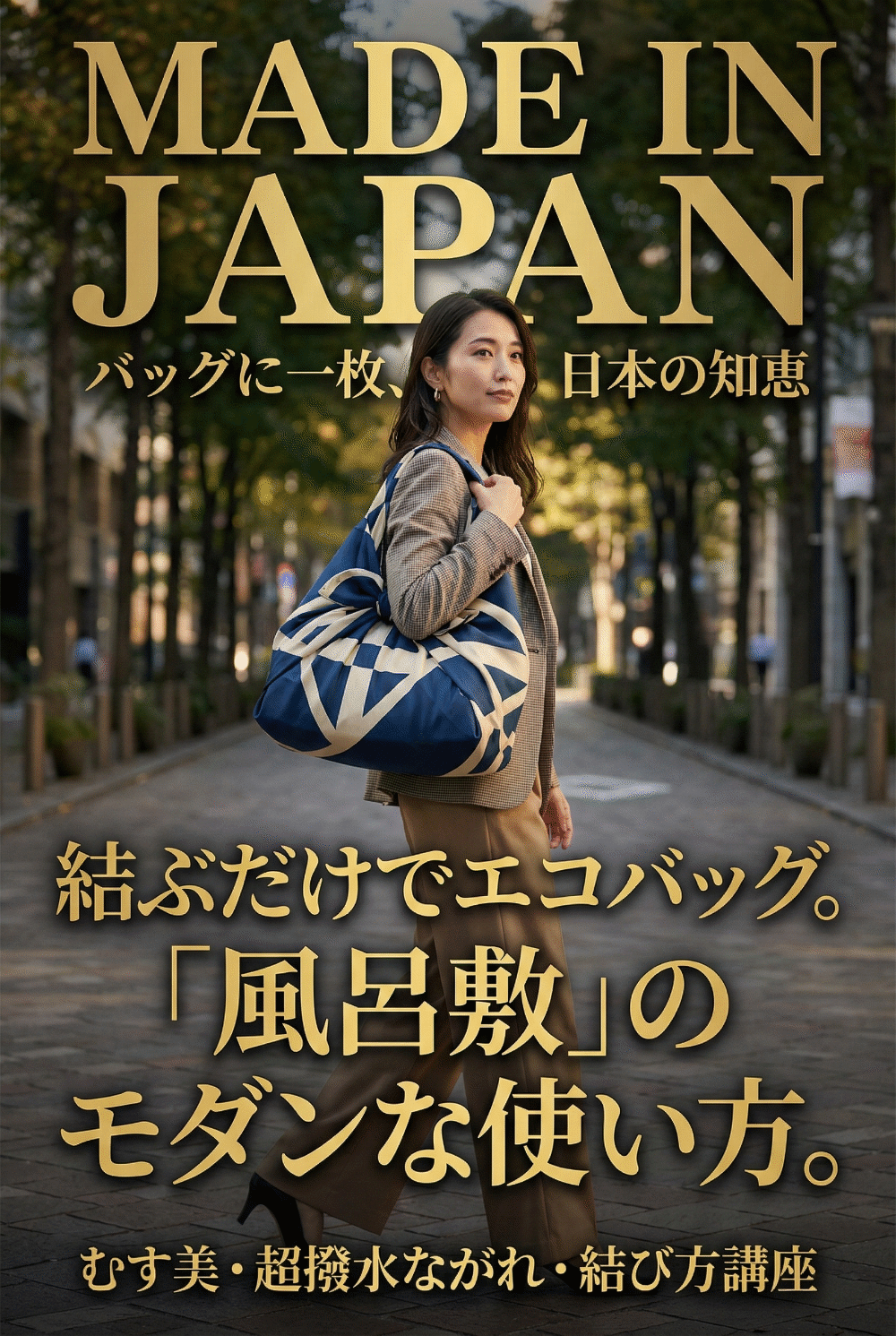
Furoshiki isn't about tradition for tradition's sake. It solves a real problem: carrying things of
unpredictable shapes without a bag collection for every occasion.
A wine bottle, a round melon, a stack of books — one cloth handles all of them, then disappears into
your pocket. The water-repellent versions add a layer of everyday utility that modern bags rarely
match.
Start with a 100 cm cotton or water-repellent polyester. Learn the square knot and the drop bag. You
will find occasions to use it within the first week.
Tenugui: Japan's Multipurpose Cotton Towel
Japanese Canvas Bags: Inumark, Ichizawa Hanpu & More