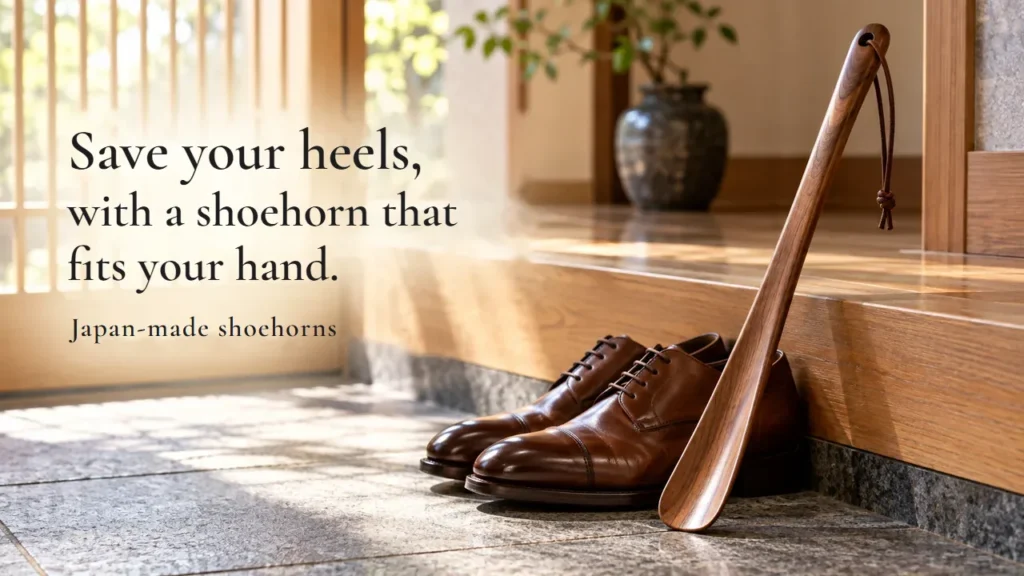
The heel counter of your favorite leather shoes, crushed inward before you noticed.
The cause may be putting them on without a shoehorn — stepping on the heel.
Columbus, a Japanese shoe-care company, describes the shoehorn as "a tool that makes shoes easier to put on and keeps the heel from being damaged." In Japan, where shoes come off at the genkan (entryway) every time you come home and go back on every time you leave, the shoehorn earns its place by the door.
This guide covers Japan-made shoehorns — a workshop-finished wooden one, lacquered zelkova from an Izumo craftsman, a light everyday one and a leather one to carry — plus a camphor-wood shoe keeper from Kochi for after the shoes come off. Two Japan-made wooden shoehorns are also on Amazon.com.
Quick Reference: Japan-Made Shoehorns and Shoe Keepers at a Glance
| Item | Material | Length | Best for |
|---|---|---|---|
| Yamato Kogei wooden shoehorn ▾ | Natural wood | About 65 cm (25.6 in) | Entryway, standing up |
| Izumo zelkova shoehorn ▾ | Zelkova, wiped lacquer | 54 / 70 cm | Entryway, a gift |
| Columbus shoehorn ▾ | Resin and aluminum | About 49.5 cm (19.5 in) | The whole family, every day |
| sot leather shoehorn ▾ | Italian leather | Pocket size | Out and about |
| Tosaryu camphor shoe keeper ▾ | Kochi camphor, Japanese hinoki | — | Inside shoes after wearing |
Click an item to jump to it.
1. Why Japanese: A Tool That Protects the Heel
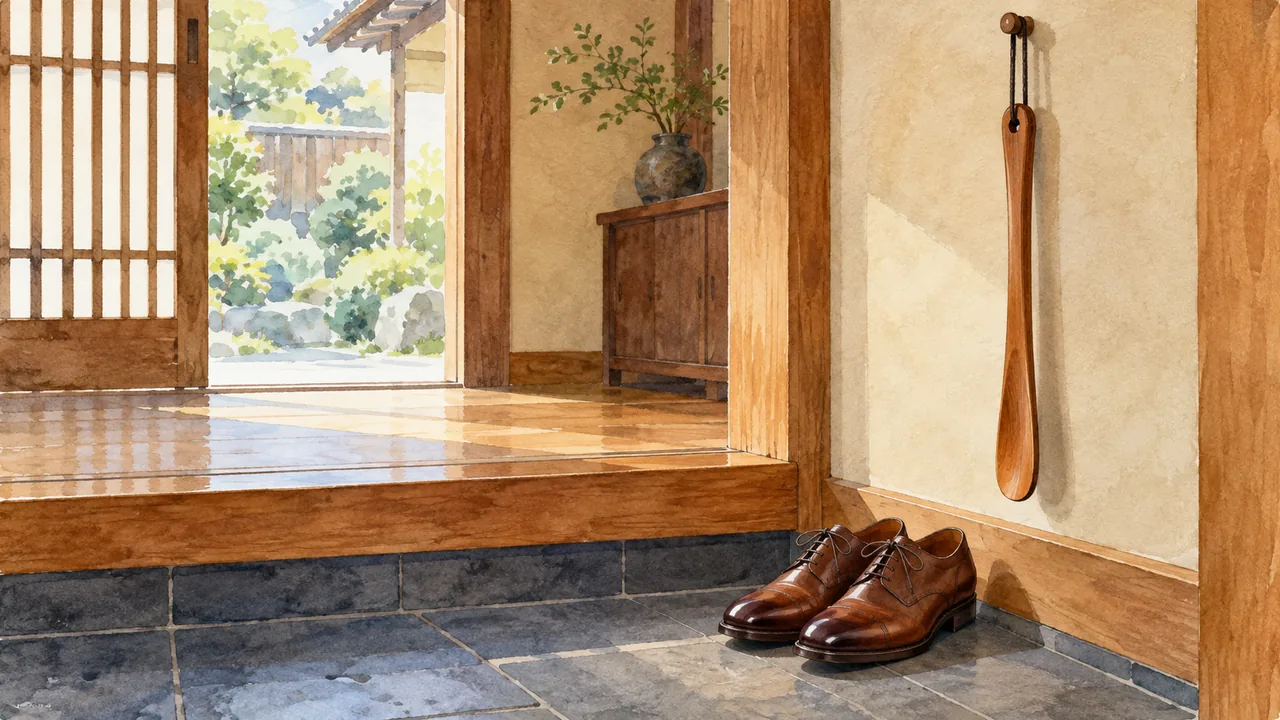
When you put them on, and after you take them off
Shoes suffer most when you put them on and after you take them off. Stepping on the heel or forcing a finger in damages the heel counter; slide a shoehorn in and the foot glides in instead.
After you take them off, a shoe keeper inside lets them rest. Tosaryu in Kochi says its camphor-wood shoe keeper helps regulate humidity inside the shoe. Before and after — a shoehorn and a keeper make the whole routine.
2. Wooden Shoehorns: Handwork for the Entryway
Cut to finish, all by the maker's own hands
Yamato Kogei's wooden shoehorn is described as made entirely by its own staff — from cutting the wood to assembly and finishing — each one by hand. At about 65 cm (25.6 in), you can put on shoes standing up.
The hanging cord is leather, which gains character with use, and the handle bears a small "yamato japan" mark. Hung on the entryway wall, it's a piece of wooden decor.
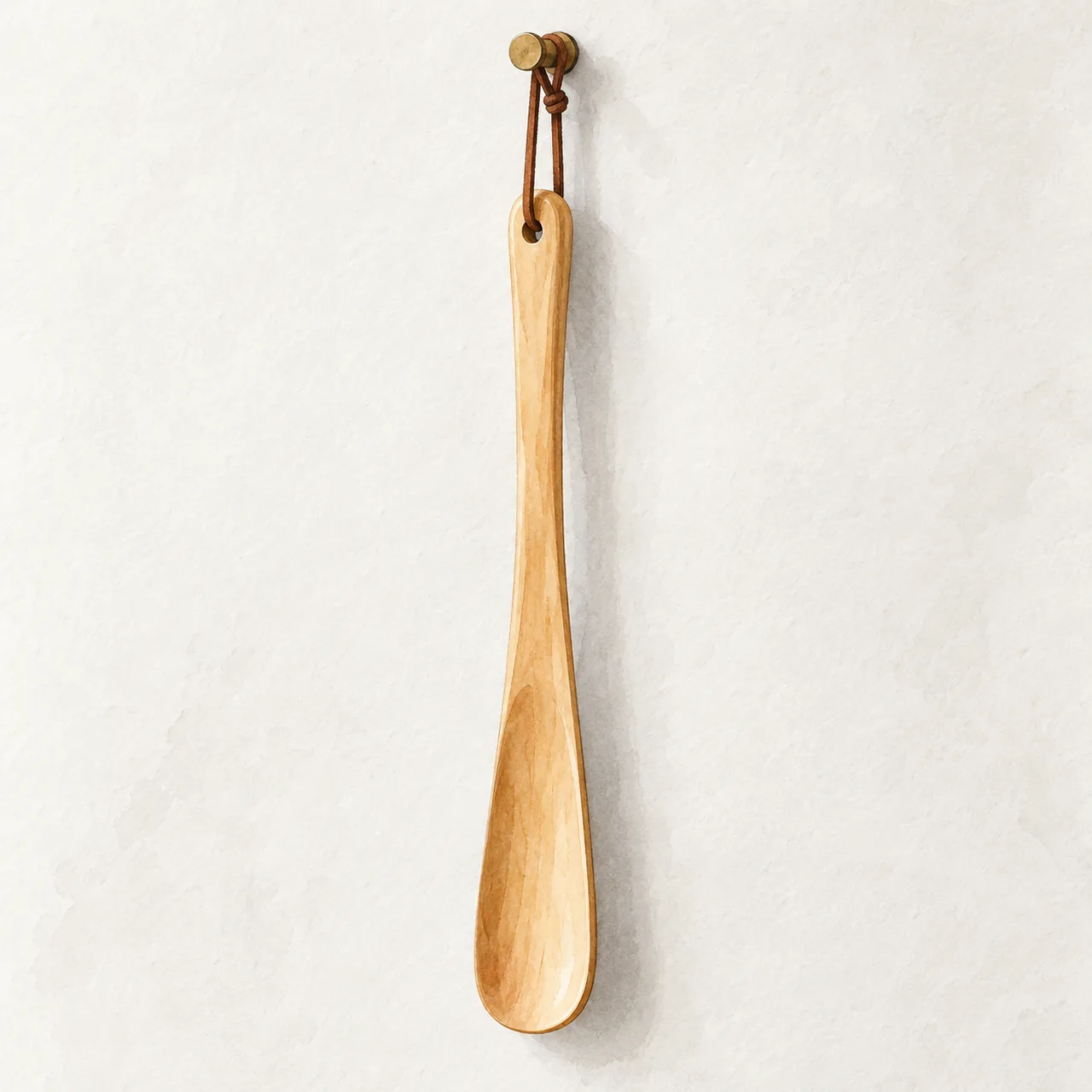
Yamato Kogei Wooden Shoehorn, 65 cm — natural wood, used standing up
Slip shoes on without bending down. Handmade in Japan, about 3.5 × 65 cm (1.4 × 25.6 in), with a leather hanging cord. Yamato Kogei also makes a stand for it — one set place in the entryway and the whole family starts using it. Sold in Japan.
Zelkova shaped by an Izumo craftsman, finished in lacquer
Among Izumo City's (Shimane) hometown-tax gifts is a shoehorn of zelkova carved piece by piece and finished in fuki-urushi (wiped lacquer) — lacquer applied and wiped off again and again — so it gains shine and the grain grows more beautiful with use.
The tools you handle every day are the ones that age best
The Izumo shoehorn is described as getting "shinier, with more beautiful grain, the more you use it"; Yamato Kogei's leather cord mellows too. You pick up a shoehorn every time you go out — choose a material that grows a little each time, and the entryway becomes a small pleasure.
Zelkova Shoehorn, Plain, Lacquered, 54 cm / 70 cm — wiped lacquer by an Izumo craftsman
Zelkova and lacquer that grow glossier with use. Handmade in Japan, in 54 cm (21.3 in) and 70 cm (27.6 in). Sets with a stand and a pocket shoehorn in black persimmon also exist — a gift for someone you want to use it for years. Offered in Japan as a hometown-tax (furusato nozei) gift.
3. An Everyday Shoehorn from a Shoe-Care Specialist
Light, tough and clean
Columbus, known in Japan for shoe creams and care products, makes a light shoehorn of resin with an aluminum pipe handle, about 49.5 cm (19.5 in) long. The material contains an inorganic antibacterial agent — a plus for a shoehorn the whole family shares.
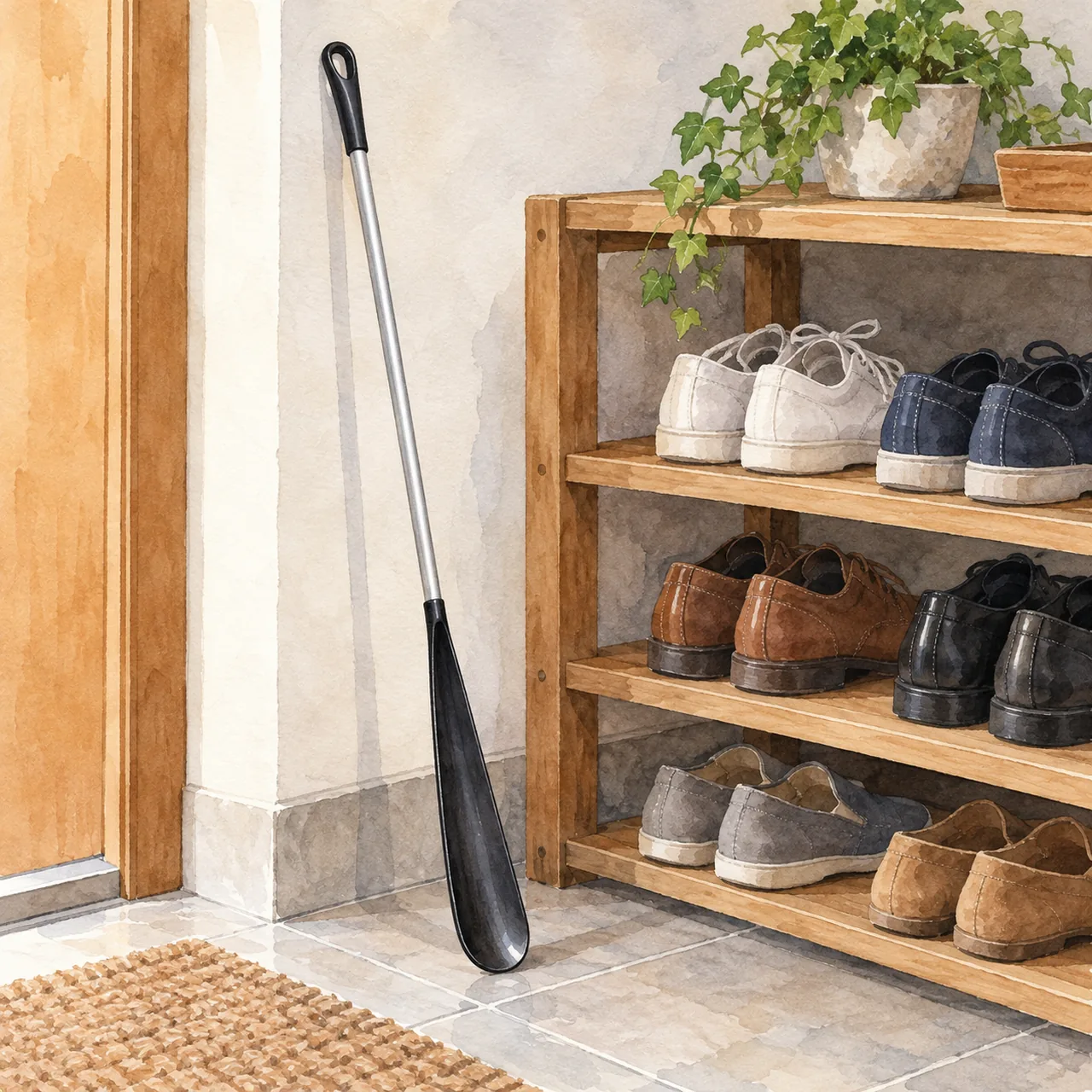
Columbus Antibacterial Shoehorn — the family's everyday shoehorn
A light, Japan-made shoehorn that protects the heel. About 49.5 cm, in black or clear white. Affordable enough to keep at the front door, the back door, and a locker at work. Sold in Japan.
4. A Shoehorn to Carry: Leather
Italian leather, made up in Japan
A restaurant with tatami seating, a business trip, a place where shoes come off — it's out and about that you most want a shoehorn. In Japan that happens often.
Japanese leather-goods brand sot makes a pocket shoehorn in Italian "Pueblo" leather, made up in Japan, with a key ring so it rides along with your keys.
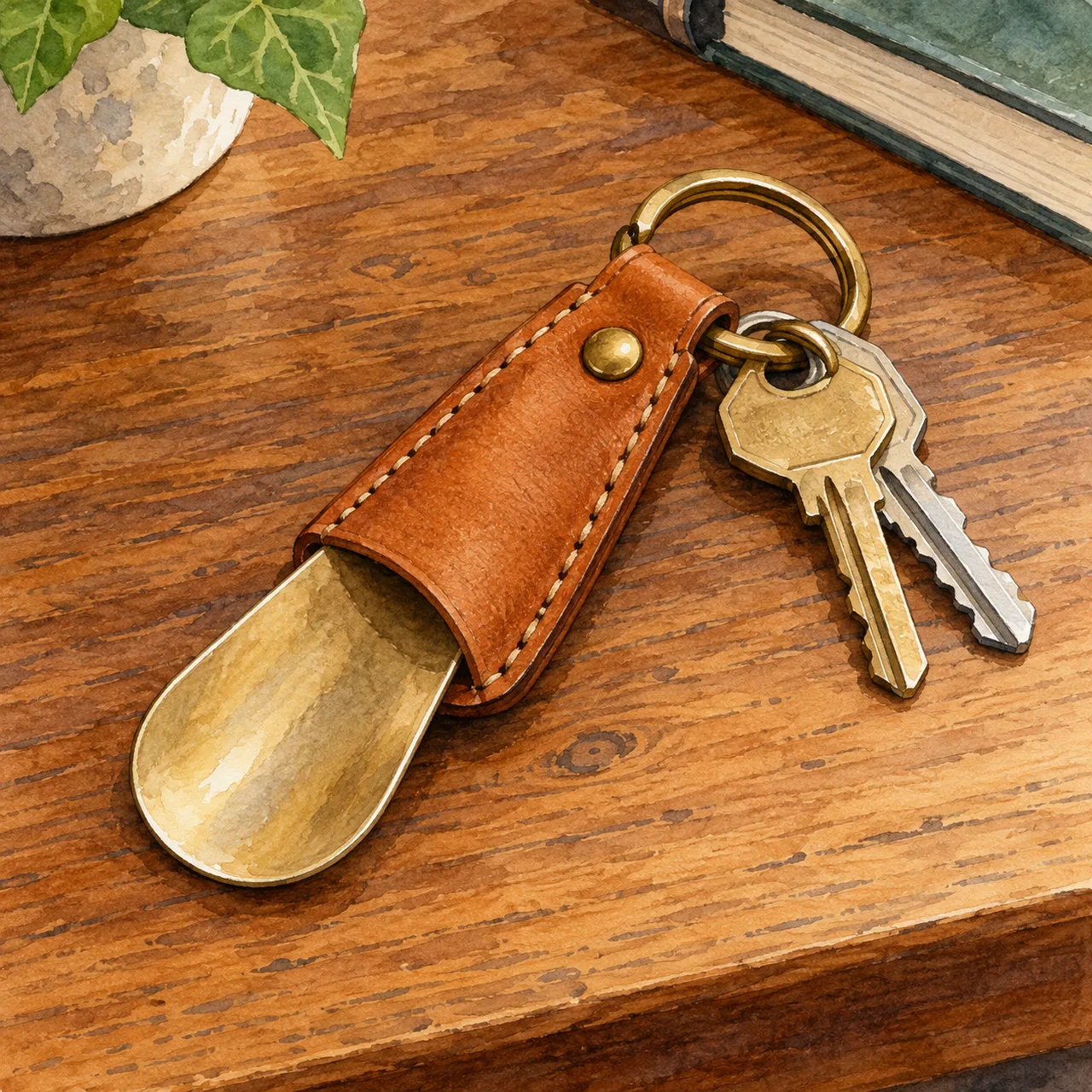
sot Pueblo Leather Shoehorn — carried with your keys
Put shoes on without crushing the heel, wherever you are. Made in Japan, from sot's official store, in camel, dark brown or black; the key ring won't come off unless you mean it to. It develops a deep sheen with use. A gift for someone who wears leather shoes. Sold in Japan.
5. After Taking Them Off: A Camphor Shoe Keeper from Kochi
Resting the shoe in camphor's scent
Tosaryu in Kochi makes shoe keepers of Kochi-grown camphor wood, with dowels of Japanese hinoki. Camphor has a cool, minty scent; Tosaryu says it helps keep odors down and that the wood regulates humidity inside the shoe.
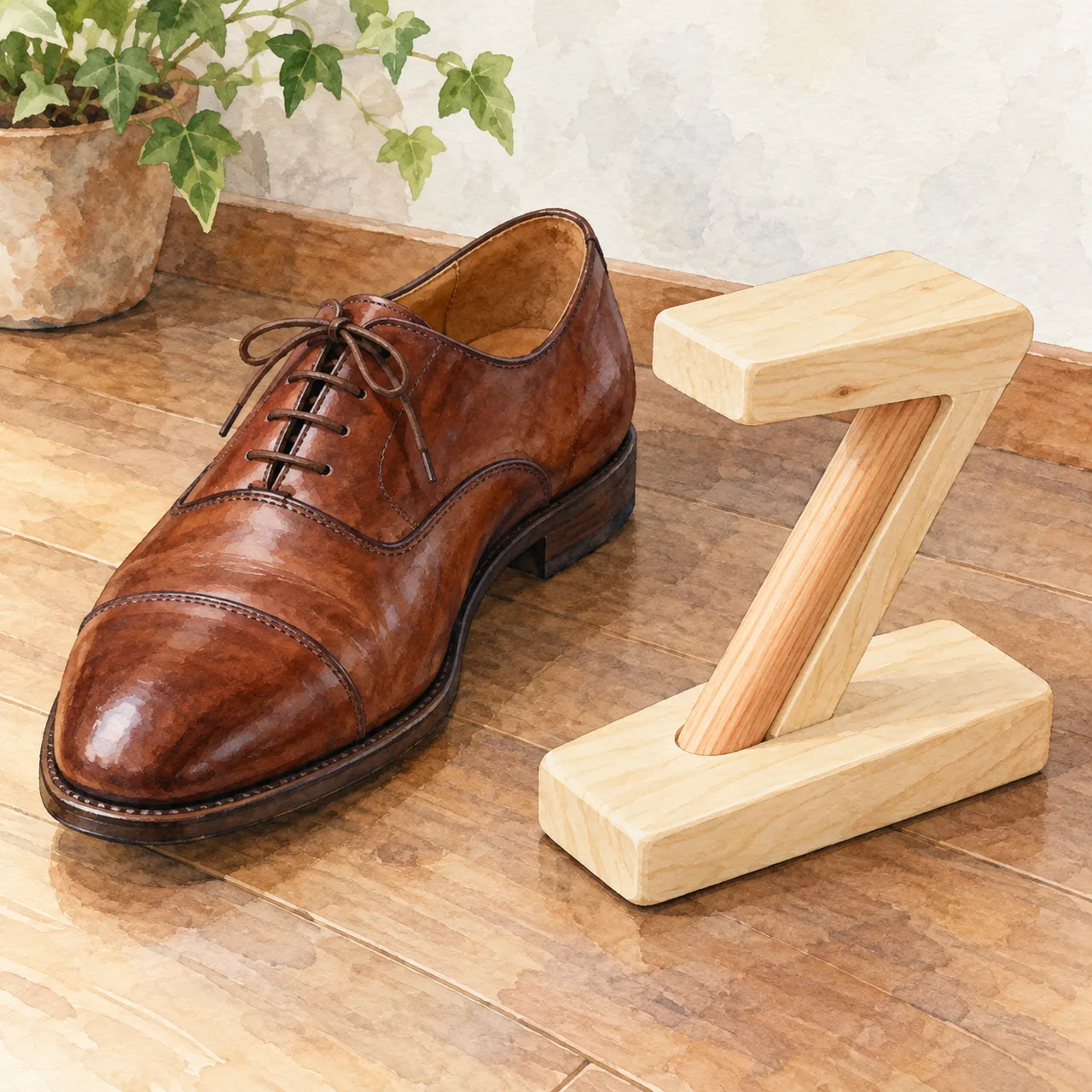
When the scent fades, sandpaper brings it back
According to Tosaryu, when the camphor scent weakens, rubbing the surface with sandpaper revives it. Take off a little wood and fresh scent rises again — you maintain it instead of replacing it, which is the beauty of wooden tools.
Tosaryu Camphor Shoe Keeper, Z-type — Kochi camphor and Japanese hinoki
Slip it into shoes you've taken off. Made in Japan; boards of Kochi camphor, dowels of Japanese hinoki. Works in men's leather shoes, women's shoes and sneakers — affordable enough to have one for every pair you wear often. Sold in Japan.
6. Choosing by Length and Place
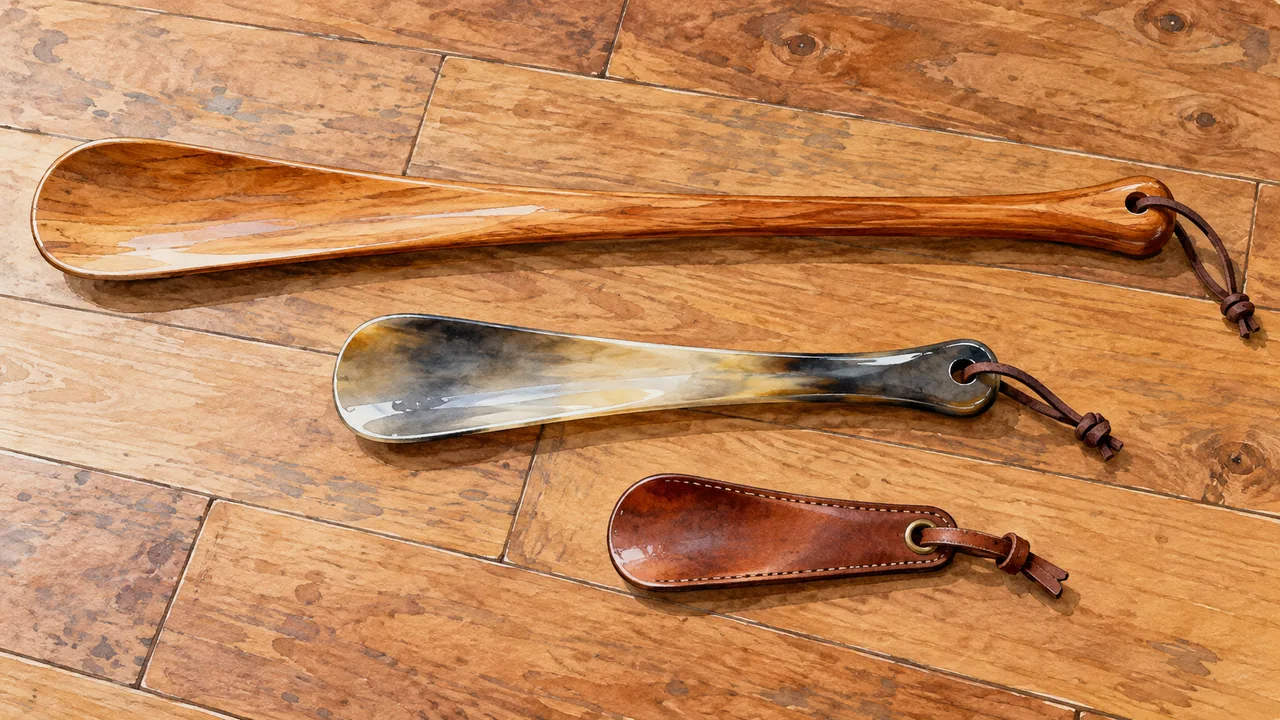
① For the entryway: long enough to use standing up
By the door, a length you can use standing, without bending, is easiest: here, Yamato Kogei about 65 cm, Izumo zelkova 54 or 70 cm, Columbus about 49.5 cm. Match your family's height.
② Out and about: a small one to carry
If you travel or eat out often, a pocket shoehorn for your bag or keys — sot's leather one has a key ring, and Izumo makes one in black persimmon.
③ For shoes you've taken off: a shoe keeper
Shoehorn on the way out, keeper on the way in. Covering both before and after turns shoe care into one easy routine.
7. Buying a Japanese Shoehorn Outside Japan
The five items above are sold in Japan; we couldn't find them on Amazon.com. Two long wooden shoehorns labeled made in Japan are listed there — one with its own stand.
Kime Wooden Shoehorn with Stand (70 cm)
A long walnut shoehorn with a stand, made in Japan — 27.5 in (70 cm), for standing use by the door.
Kime Wooden Shoehorn with Stand (70 cm)
Loading product details…
Sasaki Comfy Long Wooden Shoehorn (Walnut, 72 cm)
A walnut long-handle shoehorn, made in Japan — 28.3 in (72 cm).
Sasaki Comfy Long Wooden Shoehorn (Walnut, 72 cm)
Loading product details…
8. Frequently Asked Questions
Why use a shoehorn at all?
To keep from damaging the heel. Columbus calls it "a tool that makes shoes easier to put on and keeps the heel from being damaged." You don't step on the heel or tug with a finger.
How long should a shoehorn be?
For standing use by the door, about 50–70 cm (20–28 in). Here: Columbus 49.5 cm, Yamato Kogei 65 cm, Izumo zelkova 54 or 70 cm.
Wood or resin?
Wood for feel and aging; resin for lightness and easy care. Izumo zelkova gains shine with use; Columbus is light and antibacterial.
How do I carry a pocket shoehorn?
One with a key ring rides with your keys. sot's Pueblo leather shoehorn has a ring that won't come off unless you mean it to.
My camphor shoe keeper has lost its scent.
Rub the surface with sandpaper and the scent returns — Tosaryu's own care advice.
Is a shoehorn a good gift?
Yes — it's used every day. Izumo's lacquered zelkova suits a housewarming or retirement; sot's leather shoehorn suits someone who wears leather shoes.
Final Thoughts: Before You Put Them On, After You Take Them Off
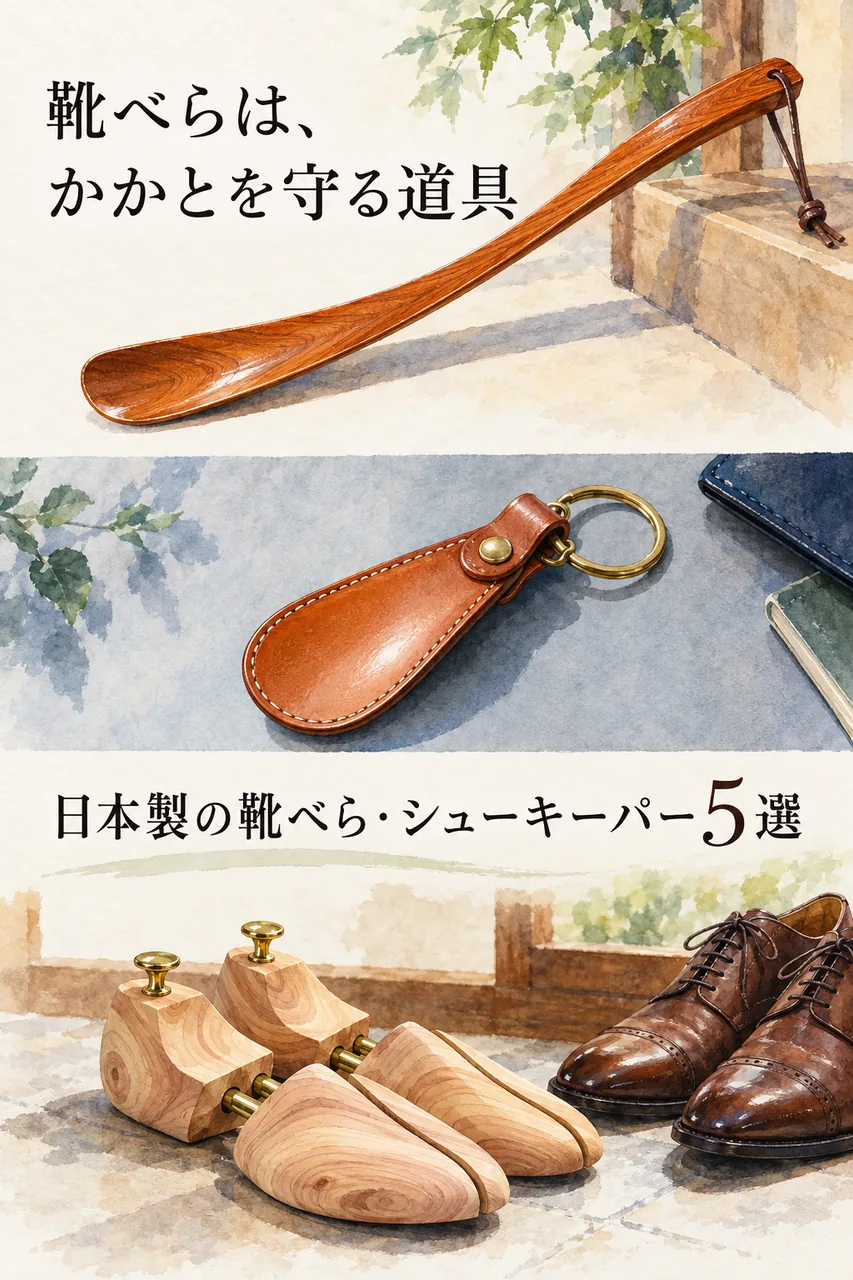
A shoehorn is a tool that protects the heel; a shoe keeper lets the shoe rest after you take it off.
Yamato Kogei's workshop-finished wooden shoehorn, an Izumo craftsman's lacquered zelkova, Columbus's light everyday one, sot's leather pocket shoehorn, and Tosaryu's Kochi camphor shoe keeper.
Hang one by the door — your favorite shoes will last longer for it.
Leather Shoe Care Guide: Polish, Mirror Shine & Japanese Cream
Japanese Dress Shoes: Wide Fittings and How to Buy