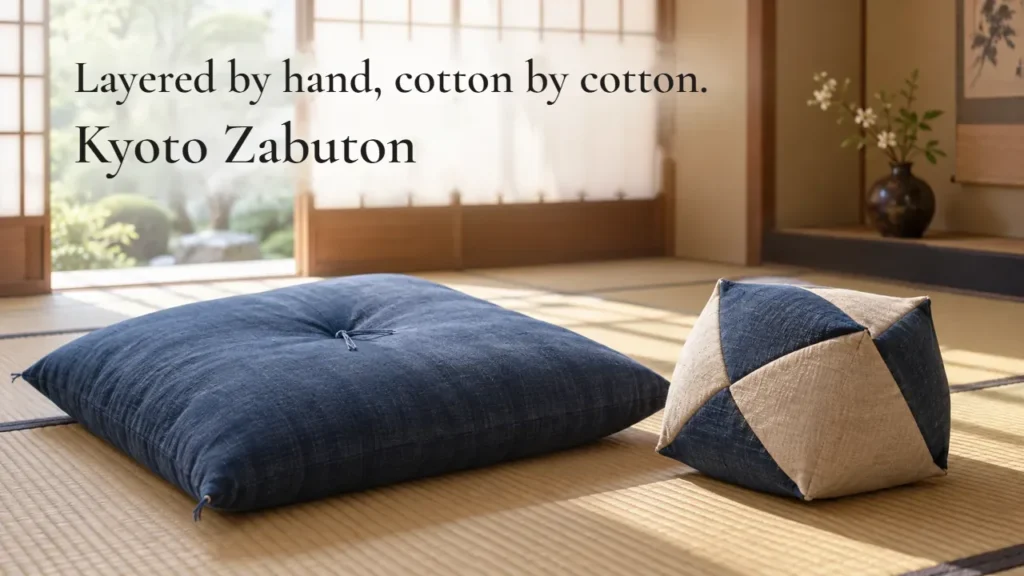
A zabuton (座布団) is the Japanese floor cushion you sit on at a low table or on tatami. A good one gives softly when you sit, then holds you up — and that comes down to how the cotton inside is layered.
(In English, "zabuton" often means a flat meditation mat. This guide is about the traditional Japanese seat cushion.)
It introduces the zabuton of Rakuchu Takaokaya in Kyoto, which began in 1919 as the bedding workshop of a Kyoto department store and still fills its cushions with cotton by hand in a workshop in the middle of the city: the classic square Kyo-zabuton, the round "ojami" cushion shaped like a beanbag, a red zabuton for a 60th-birthday celebration, and refilling an old cushion with new cotton. It also covers sizes, and what you can buy from outside Japan.
Quick Reference: Zabuton at a Glance
| Cushion | Shape | Where | For |
|---|---|---|---|
| Kyo-zabuton, cotton ▾ | Square (meisen, hattan and other sizes) | Tatami rooms, around a low table | The classic zabuton |
| Ojami zabuton ▾ | Round beanbag shape (M about 40 cm / 16 in across) | Floor, sofa, chair back | Rooms without tatami |
| Red kanreki zabuton ▾ | Square, red | A gift | A 60th-birthday celebration |
| Ojami refill service ▾ | New fabric + new cotton | Your existing ojami | Keeping it for years |
Click a name to jump to that section. Sizes are covered in How to Choose.
1. Why Japanese: Comfort Comes From How the Cotton Is Layered
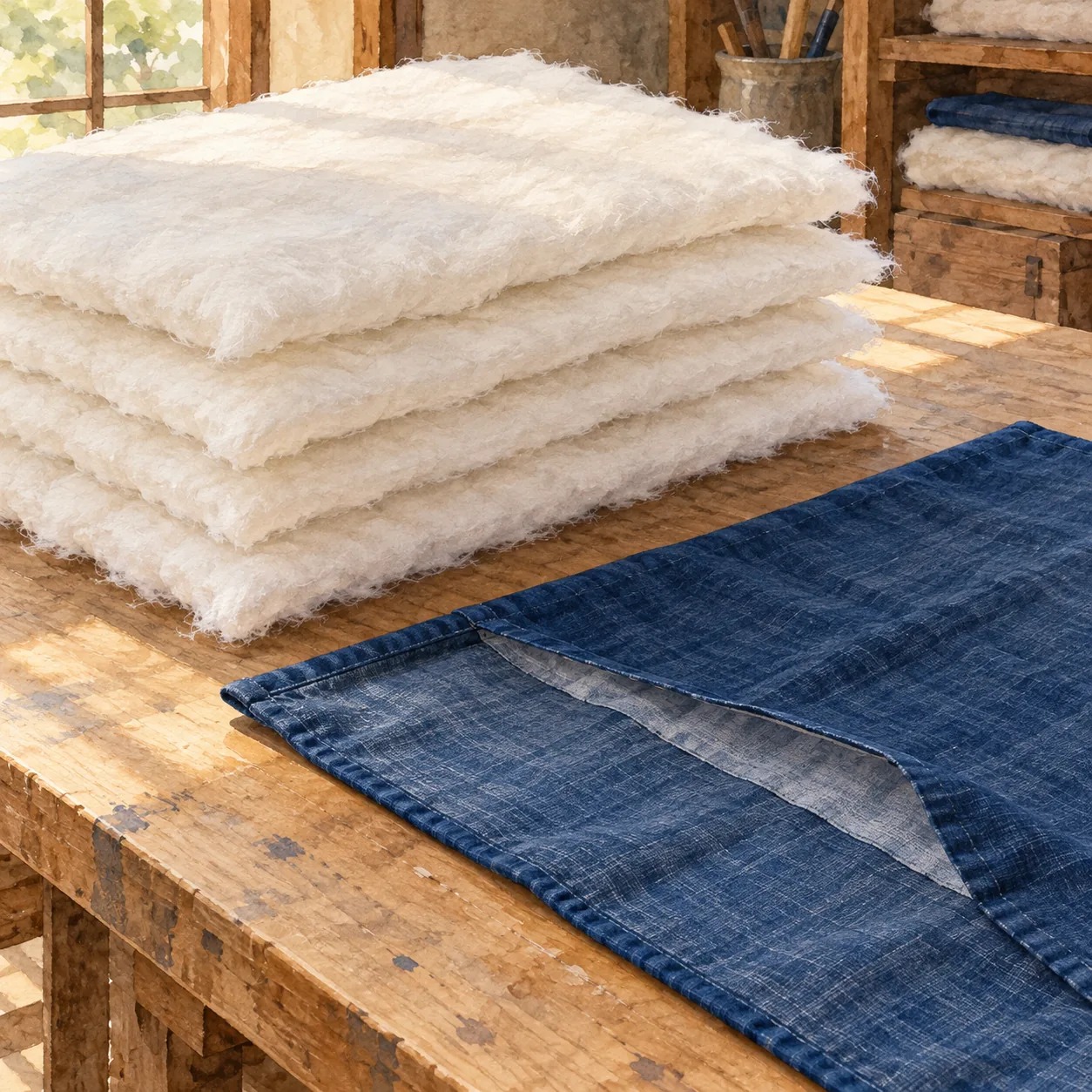
Cotton is layered, not stuffed
According to OTONAMI, a site that offers tours of Rakuchu Takaokaya's workshop, its zabuton have a reputation for being comfortable and staying even, without lumps, even after years of use.
Behind that is the craftsman's skill in laying the cotton in sheets, thinking about the direction of the fibers. Cotton that is simply stuffed in shifts and bunches. The workshop does everything by hand — cutting, sewing, filling and finishing — including kuke, a kimono-sewing stitch that hides the seam, and the tufting stitch at the center of each cushion that holds the layers in place.
That is what "made in Japan" means for a zabuton: a cushion assembled layer by layer by people who make futons, not a cover around a block of foam.
2. Kyo-Zabuton: From a Department Store's Bedding Workshop
Since 1919, in the middle of Kyoto
Takaoka Co., the company behind Rakuchu Takaokaya, was founded in 1919 as the bedding workshop of a long-established Kyoto department store. For decades it made and wholesaled bedding and zabuton, and in 1999 it launched Rakuchu Takaokaya as a brand built around its craftsmen's handmade cushions.
The workshop is on the second floor of the company's building in Shimogyo, Kyoto. According to OTONAMI, it is unusual for a Kyoto bedding maker to have its workshop in the city center.
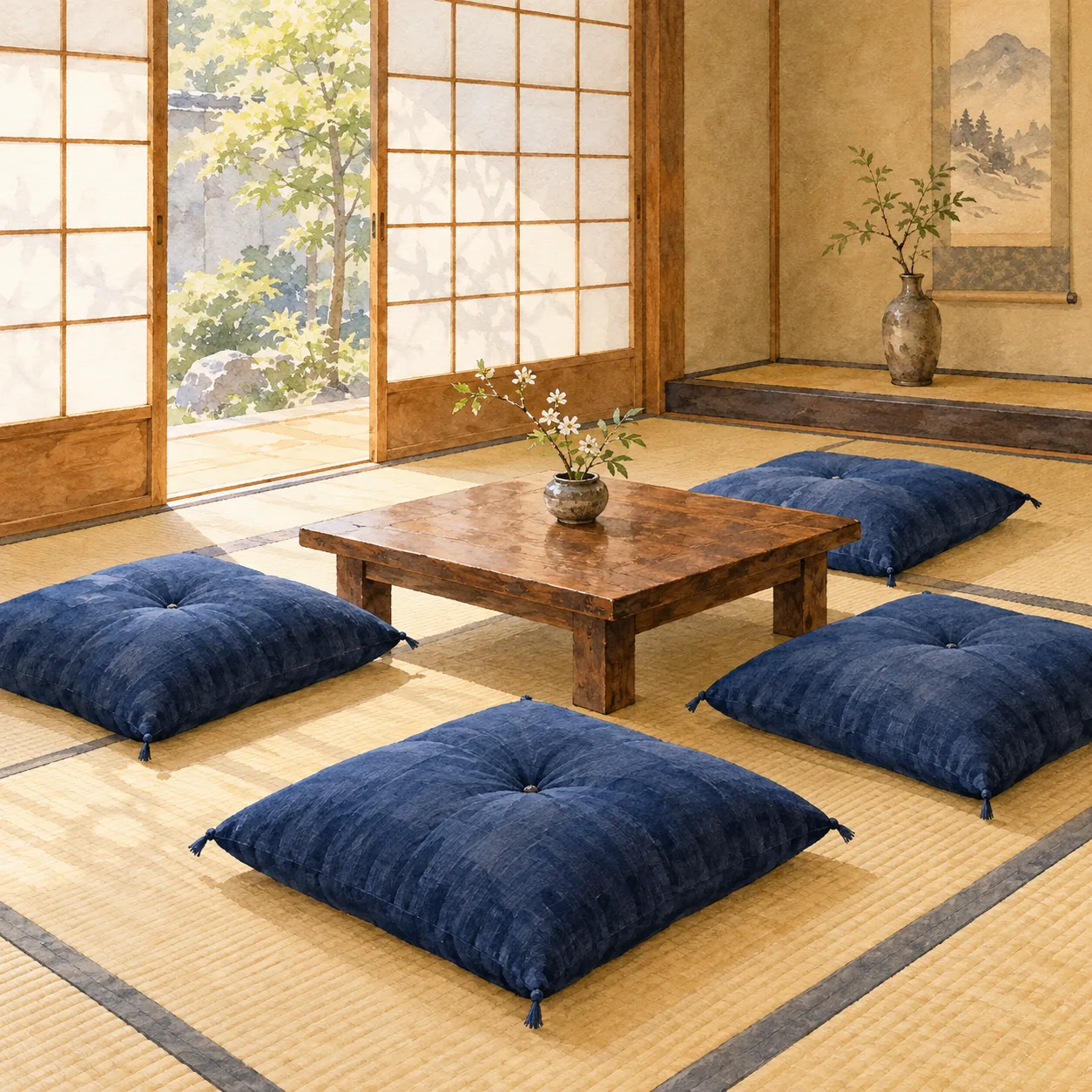
Rakuchu Takaokaya Kyo-Zabuton, cotton — Kyoto
A cotton Kyo-zabuton in meisen size, hattan size, a small size, or the larger "meoto" (couple's) size, in many colors and patterns.
A set for the guest room, or one cushion for yourself to sit on every day. Sold in Japan.
3. The Ojami: A Cushion Shaped Like a Beanbag
On the floor, on the sofa, behind your back
Rakuchu Takaokaya's signature is the "ojami zabuton." Ojami is the Kansai word for an otedama, the small cloth beanbag Japanese children juggle. The cushion is sewn from four pieces of fabric, using the way an otedama is sewn — an idea of the company's third-generation president, Koichiro Takaoka.
Because it is shaped to stand up and filled firmly with cotton, its height lifts your hips a little, which makes sitting easier. A special urethane core in a three-layer construction keeps the cotton from flattening. It is used in hotels and restaurants in Kyoto and across Japan, and has been shown at Maison&Objet in Paris.
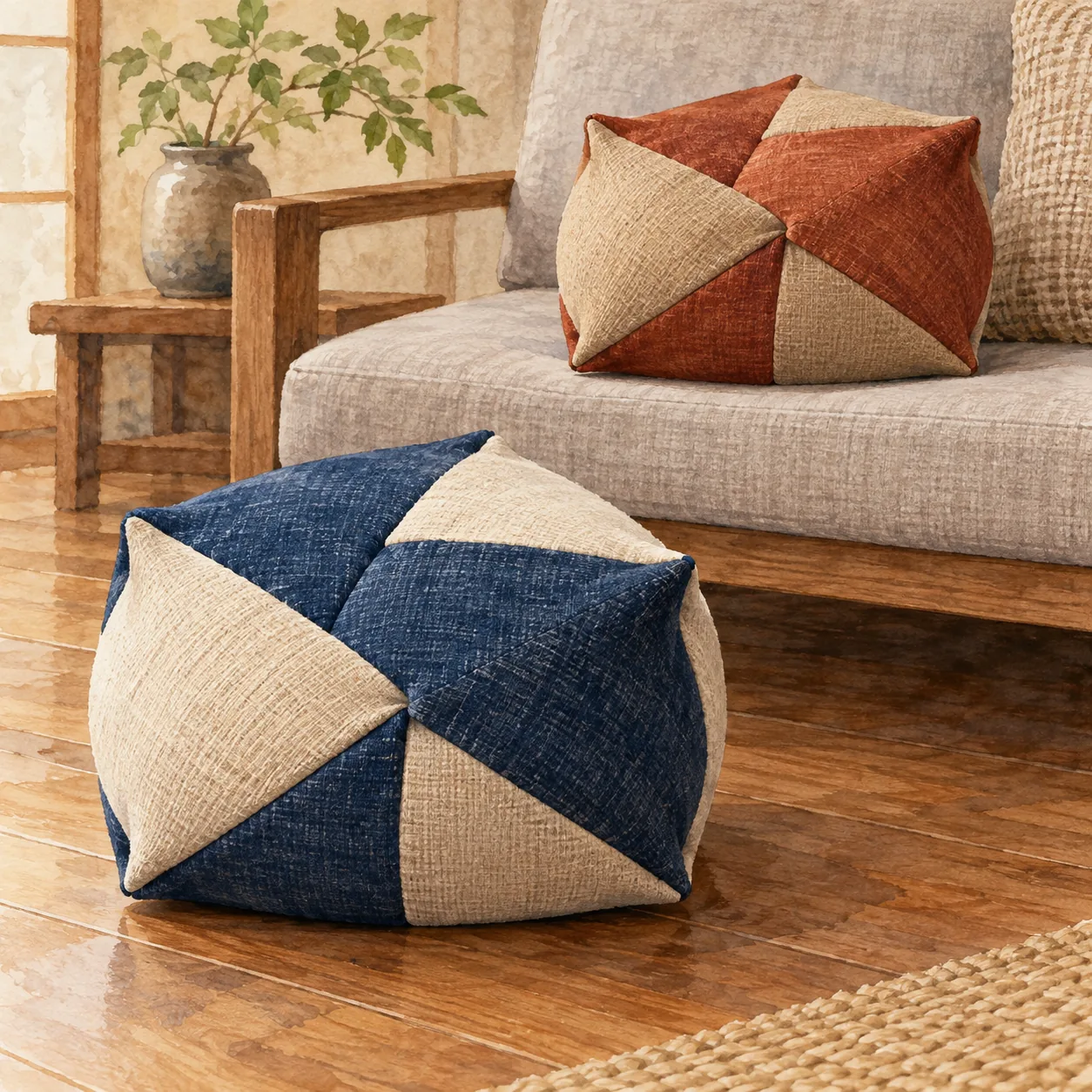
Rakuchu Takaokaya Ojami Zabuton, cotton — Kyoto
A beanbag-shaped zabuton sewn by hand by Kyoto craftsmen. You can choose the color and pattern of each of the four panels.
It suits homes without a tatami room — on a wooden floor or on a sofa. Sold in Japan.
4. A Zabuton as a Celebration Gift
The red of a 60th birthday, on a cushion used every day
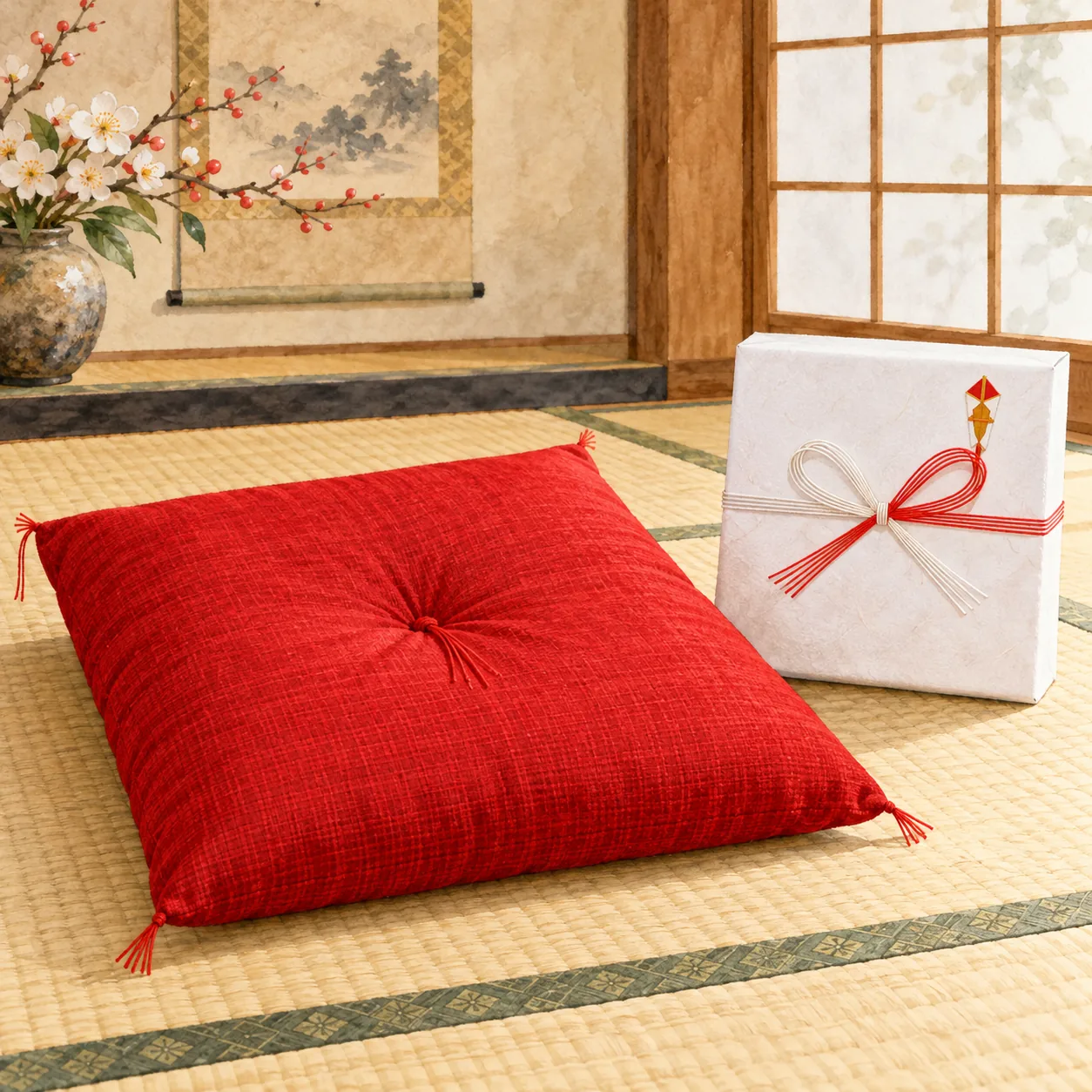
In Japan, a 60th birthday (kanreki) is traditionally celebrated with something red. Rakuchu Takaokaya offers a red Kyo-zabuton, gift-wrapped, for kanreki.
Unlike the red vest worn once at the party, a cushion is used every day after the celebration. For later milestones — the 70th, the 77th — the shop also makes gold-brocade zabuton with an embroidered name.
5. New Cotton, Same Cushion
When it flattens, have it remade
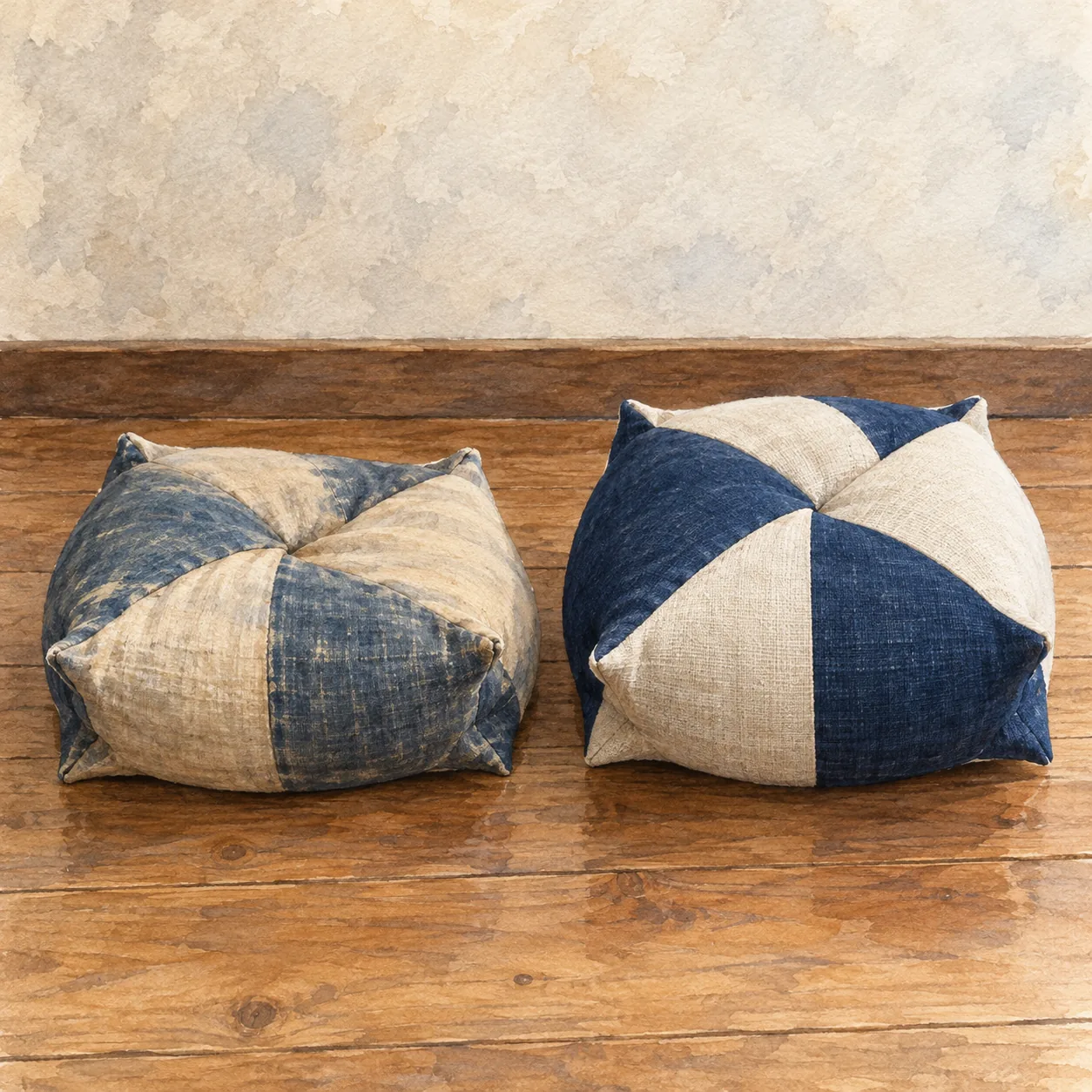
After years of sitting, the cotton flattens. Rakuchu Takaokaya's ojami cushions can be refilled with new cotton and re-covered with new fabric, so you keep using them.
The shop takes these remake orders — new fabric, new cotton — including for its children's "Ojami Kids." Repair rather than replace: that is the advantage of a cushion made by a futon maker.
6. How to Choose: Size and Where You'll Use It
① Square sizes: meisen and hattan
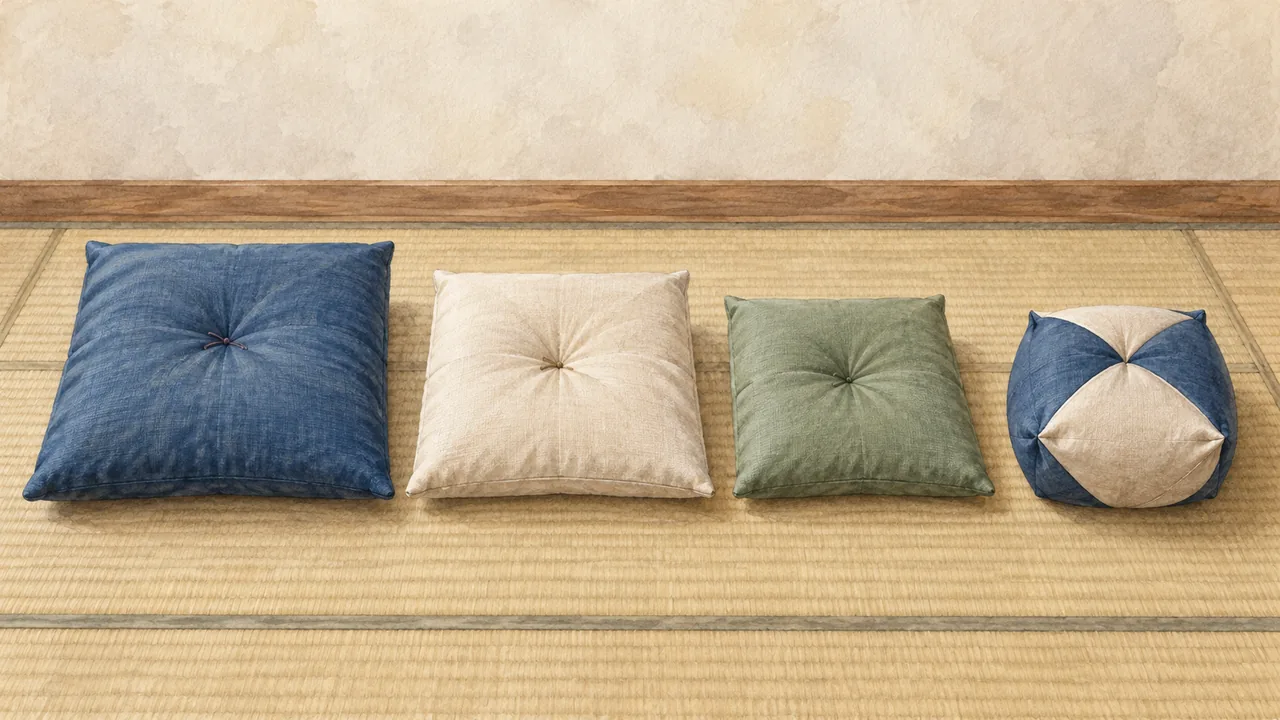
Japanese zabuton sizes have names. As bedding shops list them, meisen-ban is about 55 × 59 cm (21.5 × 23 in) and hattan-ban about 59 × 63 cm (23 × 25 in). For a roomier seat, choose the larger hattan. Rakuchu Takaokaya's Kyo-zabuton also comes in a small size and a couple's size.
② No tatami room: the ojami
The ojami works on a wooden floor, on a sofa, or as a back cushion on a chair. For a dining bench, the shop also makes a long zabuton, about 60 × 108 cm (23.5 × 42.5 in).
③ Want a backrest: add a zaisu
If you spend long hours on the floor, pair the zabuton with a zaisu, the Japanese legless chair. See our guide to zaisu.
④ To make it part of the room: mix the colors
With the ojami, you choose the colors and patterns of the four panels — tone-on-tone to match the room, or one bold accent. Some are made with fabrics from overseas textile brands. Its round shape means it looks good simply set on a sofa or by a window.
7. Buying From Outside Japan
Rakuchu Takaokaya sells in Japan. We could not find an English-language store or overseas shipping; in Japan it is sold through its own shop and department stores. If you visit Kyoto, its cushions are worth seeing in person.
Be careful with "zabuton" on Amazon.com. Most results are flat meditation mats made outside Japan, with no country of origin given. If you want a Japanese-made floor cushion, look for "made in Japan" in the listing and a named maker or material.
One made-in-Japan option that is listed on Amazon.com is a different traditional type: zabuton made of igusa, the rush grass used for tatami. They are cool and firm — a summer cushion rather than a soft cotton one.
Igusa (rush grass) Zabuton, 2-piece set — 55 × 55 cm
Floor cushions woven from 100% Japanese tatami rush grass, listed as made in Japan, about 55 × 55 × 6 cm (21.7 × 21.7 × 2.4 in), in a set of two.
Rush grass feels cool and smells faintly of fresh tatami. A good choice for warm months and for rooms that already have tatami or a tatami rug.
Igusa (Rush Grass) Zabuton, 2-piece set — 55 × 55 cm
Loading product details…
8. Frequently Asked Questions
Is a zabuton the same as a meditation zabuton?
Not quite. In English, "zabuton" often means a large, flat mat placed under a meditation cushion. In Japan, a zabuton is the everyday seat cushion you sit on directly — at a low table, on tatami, or for guests.
What does "ojami" mean?
It is the Kansai word for an otedama, a small cloth beanbag. Rakuchu Takaokaya's ojami zabuton is sewn from four pieces of fabric in the way an otedama is sewn.
Meisen or hattan — which size?
For a roomier seat, the larger hattan. As bedding shops list them, meisen-ban is about 55 × 59 cm and hattan-ban about 59 × 63 cm.
My zabuton has gone flat. Do I have to replace it?
Not with Rakuchu Takaokaya's ojami. The shop remakes them with new fabric and new cotton. Cotton-filled cushions from futon makers can often be refilled — ask the maker.
Are Rakuchu Takaokaya's zabuton handmade?
Yes. Cutting, sewing, filling and finishing are all done by hand, in a workshop in Shimogyo, Kyoto.
Can I use a zabuton in a room without tatami?
Yes — the ojami is made for that. It works on a wooden floor, on a sofa or as a back cushion on a chair.
Final Thoughts: A Cushion Made by Hands That Layer Cotton
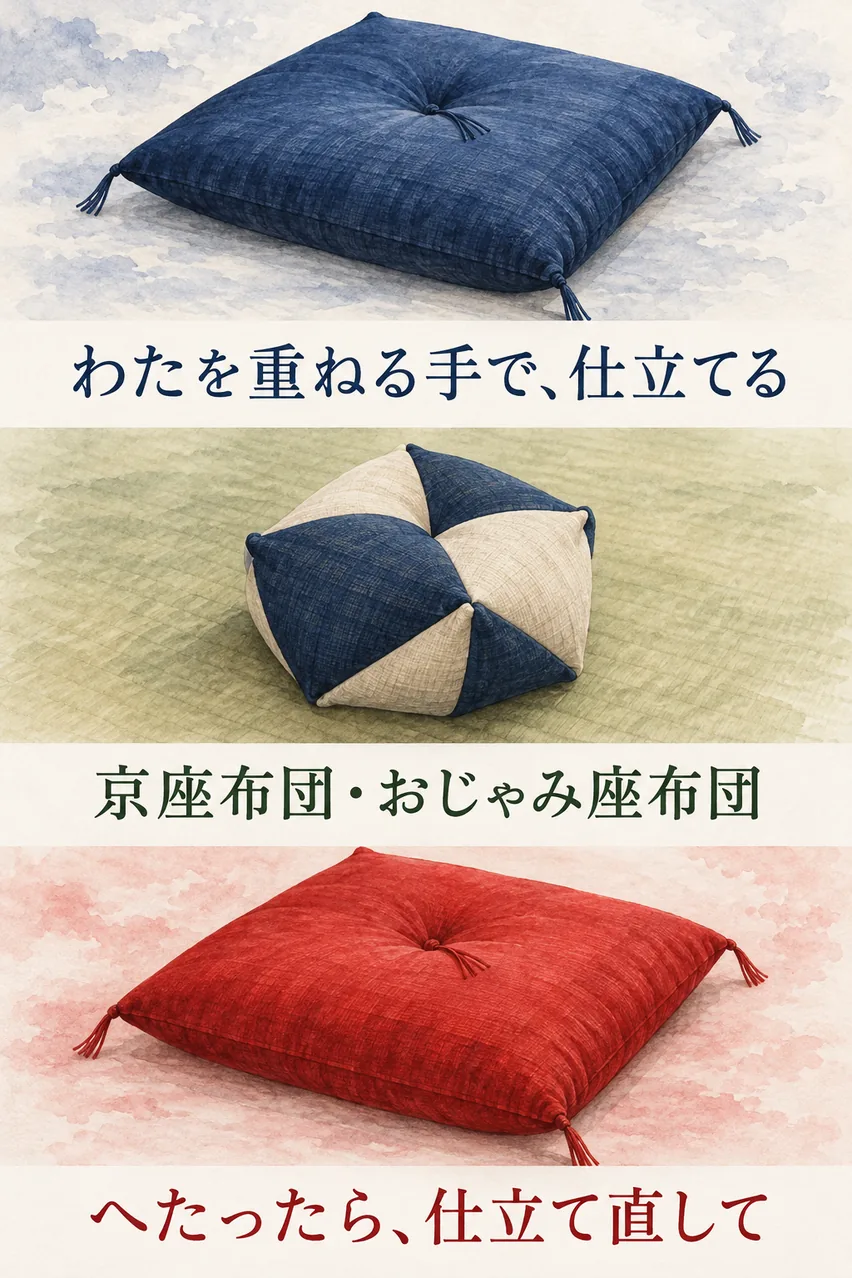
A good zabuton is made by how the cotton is layered.
For a tatami room, Rakuchu Takaokaya's Kyo-zabuton, from a workshop that began in 1919 as a department store's bedding maker. Without tatami, the round ojami. For a 60th birthday, a red zabuton. And when the cotton flattens, have it remade.
Outside Japan, look for "made in Japan" and a named maker — or start with an igusa cushion. Then live with it for a long time.

Zaisu: The Legless Chair, and Whether It Suits You
Kotatsu: Buying a Japanese Heated Table That Lasts