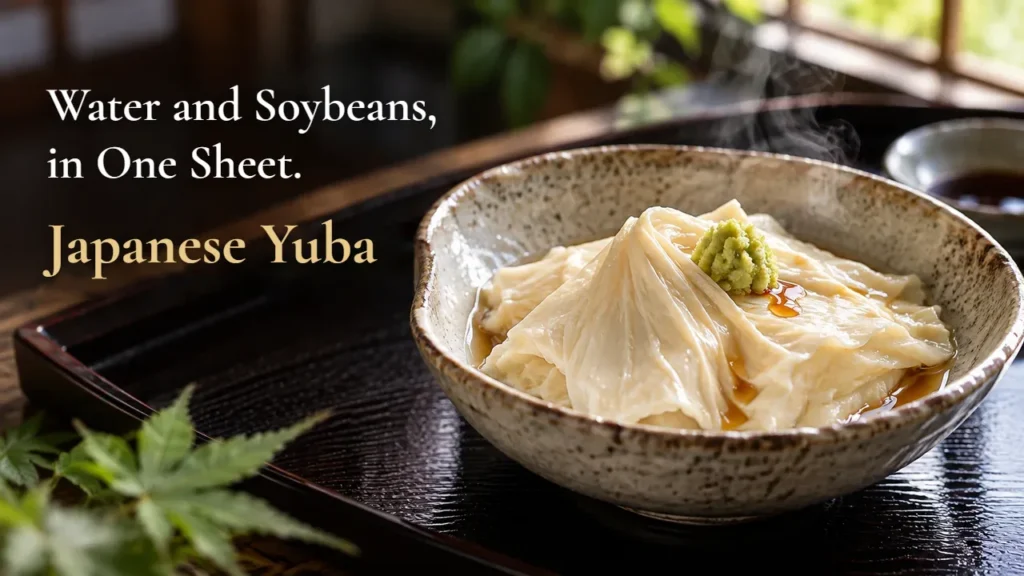
"The yuba I had in Kyoto melted in my mouth. At home, it just isn't the same." What's missing may not be your cooking, but where the yuba came from.
Yuba (tofu skin) is the single film that forms on the surface of warmed soy milk. Its ingredients are little more than water and soybeans — which is exactly why makers care so much about whose water and which fields' soybeans they use. This guide introduces three yuba regions: kumiage yuba of Tamba black soybeans, made with farmers in Miyama, Kyoto; thick fresh yuba from Minobu, Yamanashi, made with 100% Japanese soybeans; and Nikko yuba handmade with the spring water of the Nikko mountains — with how to eat and keep it.
Quick Reference: Three Yuba Regions, Four Yuba
| Yuba | Region / Maker | Water and beans | How to eat |
|---|---|---|---|
| Tamba black kumiage yuba ▾ | Yumame (Miyama, Kyoto) | Kyoto-grown Tamba black soybeans | Silky, with wasabi and soy |
| Ware-yuba (dried) ▾ | Yumame (Miyama, Kyoto) | Kyoto-grown soybeans | Scattered into soups and simmered dishes |
| Minobu yuba, 3 kinds ▾ | Yuba Kobo Godai (Minobu, Yamanashi) | Minobu spring water, 100% Japanese soybeans | Thick, as yuba sashimi |
| Nikko Meisui yuba, 3 kinds ▾ | Nikko Shokuhin (Nikko, Tochigi) | Nikko mountain spring water, 100% Japanese soybeans | Sashimi, fried rolls, tsukudani |
1. Why Japanese: All Three Regions Talk About Water and Soybeans
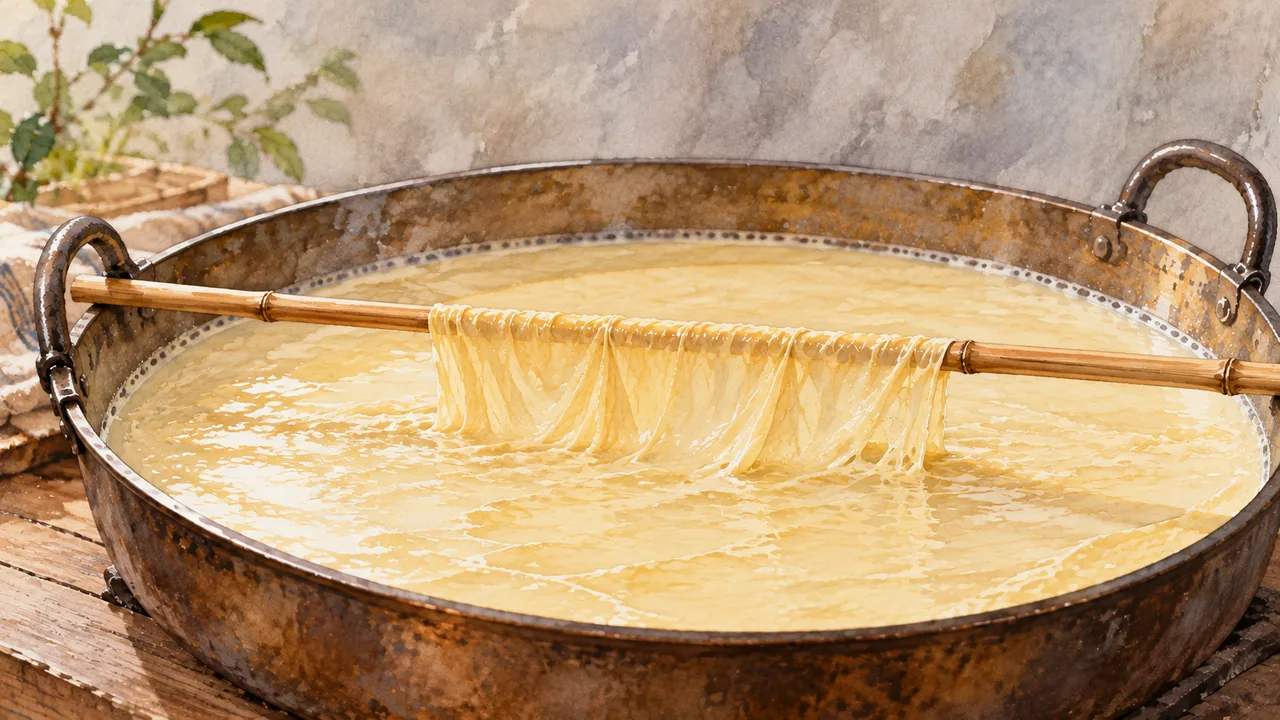
Yuba is made by slowly warming soy milk made from soybeans and lifting the film that forms on top, one sheet at a time. Its ingredients are almost only water and soybeans — a food that can't hide anything.
The three makers in this guide all talk about water and soybeans. Yumame in Miyama, Kyoto: "the clear water of Miyama and carefully chosen Japanese soybeans." Godai in Minobu, Yamanashi: Minobu's natural water and 100% Japanese soybeans. Nikko Shokuhin in Nikko: the spring water of the Nikko mountains and 100% Japanese soybeans. Choosing yuba means choosing a place's water and fields.
2. Miyama, Kyoto, Yumame: Tamba Black Yuba Made With Farmers
Kyo-Miyama Yuba Yumame is a yuba workshop in Miyama, Nantan city, Kyoto. Its motto: "a one-of-a-kind yuba, started together with farmers." It makes yuba from Kyoto-grown soybeans, centred on beans grown with Miyama's farming cooperative and partner farmers across the Tamba region — Nantan, Keihoku, Kameoka. Its yuba is used by ryotei and hotels in Kyoto city.
One signature is a dark yuba made from Kyoto-grown Tamba black soybeans. Tamba black has become far more expensive in recent years, but having supplied restaurants for so long, Yumame writes, it can secure enough to keep making it — choosing beans from Yakuno, Keihoku, Hiyoshi and Tango, all in the same Tamba area as Miyama. Its kumiage yuba (scooped yuba) is made without defoaming agents; the owner, Mr Nishiyama, recommends taking it silky, with wasabi and soy sauce.
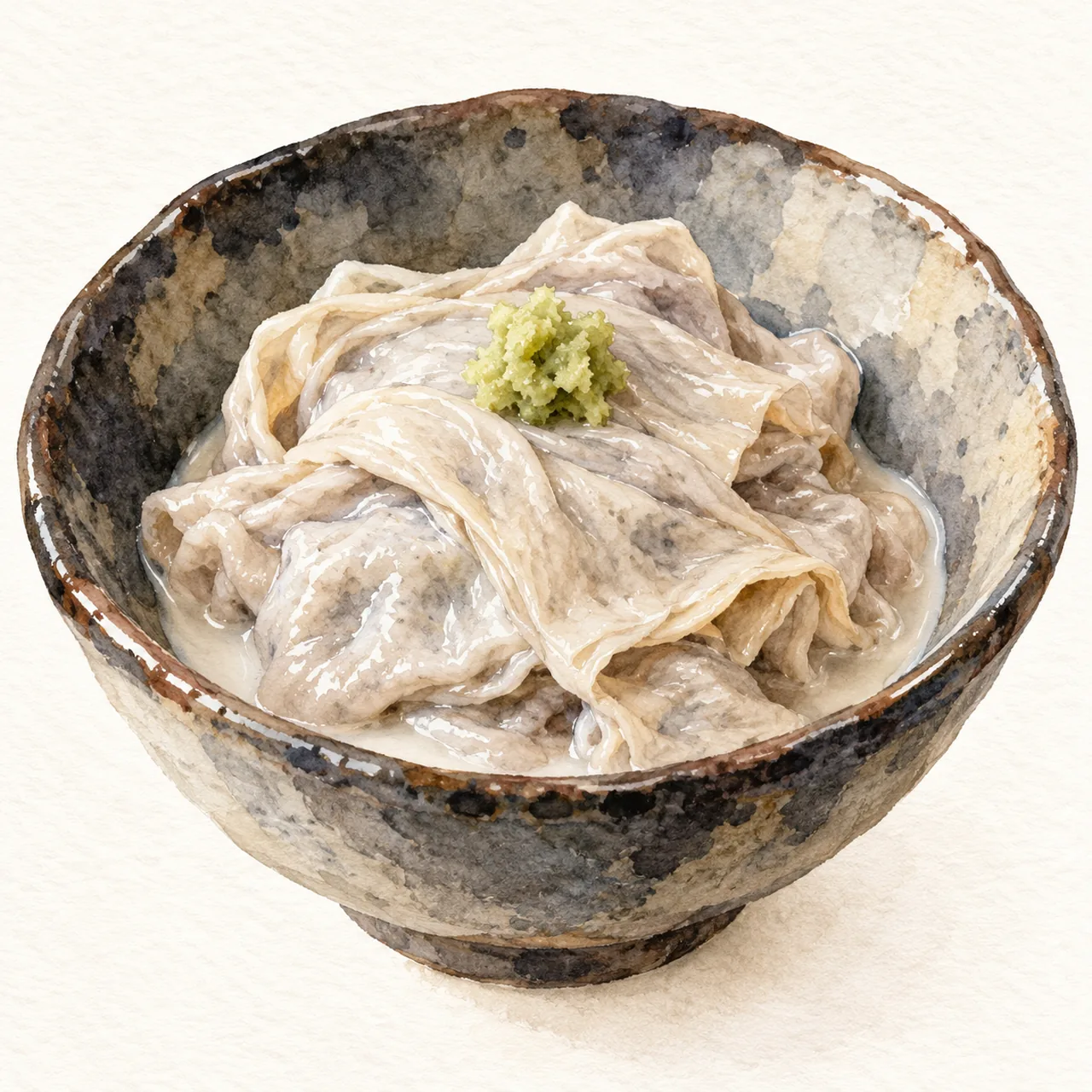
Did you know: "Ware-yuba" is yuba that broke in the finishing
Finishing yuba always produces edges and broken pieces. Yumame dries them and sells them as "ware-yuba" (broken yuba). In the owner's words: "It looks 'imperfect'; the taste is the real thing." Use it like dried wakame — a sprinkle into clear soup, miso soup or simmered dishes. Dried, it keeps far longer than fresh yuba.
3. Minobu, Yamanashi, Godai: Thick Yuba Tied to Nichiren
Minobu, Yamanashi, sits at the foot of Mount Minobu, closely tied to the Buddhist monk Nichiren. According to Yuba Kobo Godai, Minobu's yuba goes back about 750 years, to yuba made by Nichiren's disciples for him, handed down to the present.
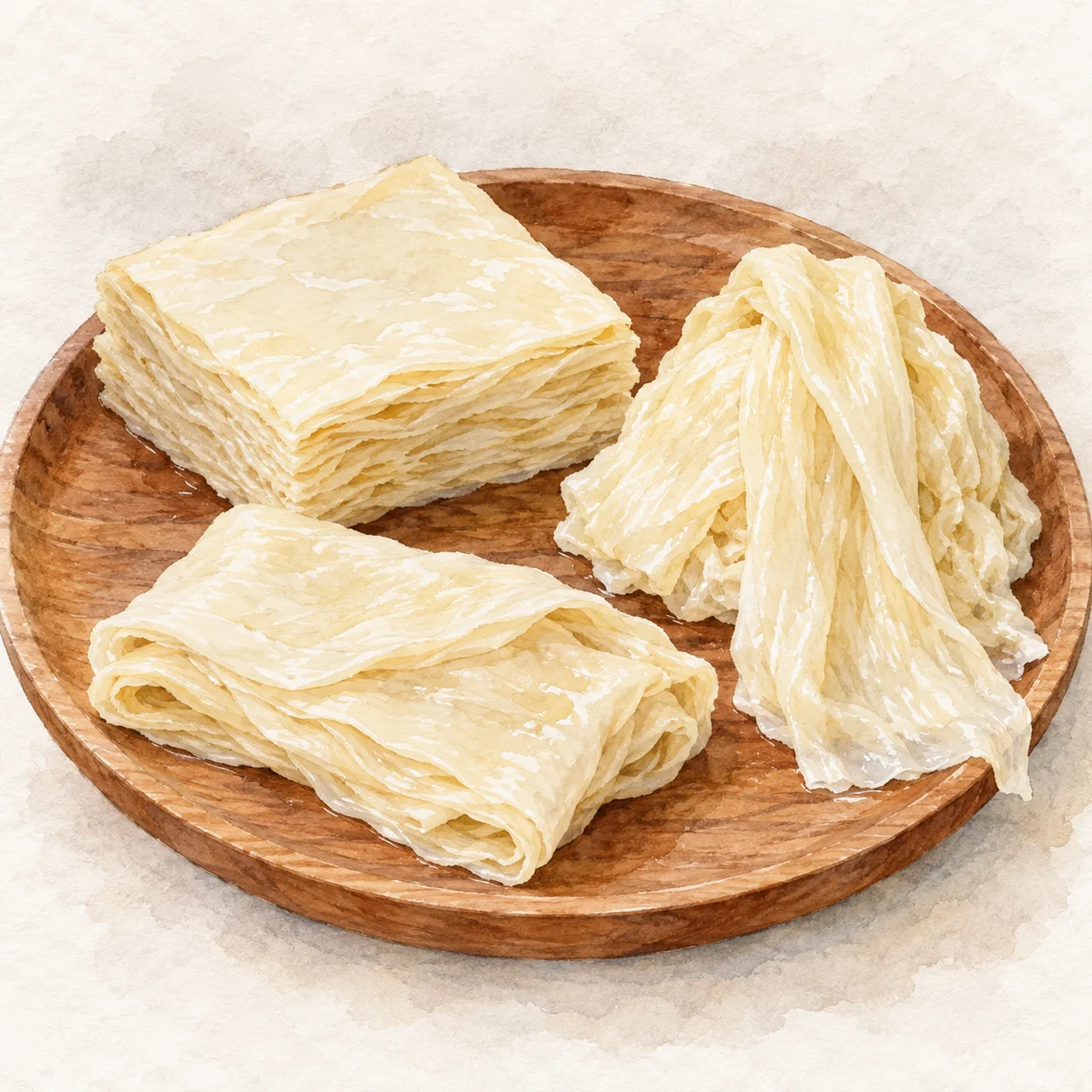
Godai's yuba uses Minobu's natural water generously and 100% Japanese soybeans. It's thicker than other yuba, with volume, a rich soybean flavour and a satisfying bite. Its set of three — square kaku-yuba, folded yuba and draped shidare-yuba — arrives chilled from the region; try it first as yuba sashimi. Best-before is eight days including the shipping day.
4. Nikko, Tochigi: Handmade With Mountain Spring Water
Yuba is a specialty of Nikko, the World Heritage town — where it's sometimes written 湯波 rather than 湯葉. Nikko Shokuhin's "Nikko Meisui Yuba" uses 100% Japanese soybeans and the spring water of the Nikko mountains, all handmade the traditional way.
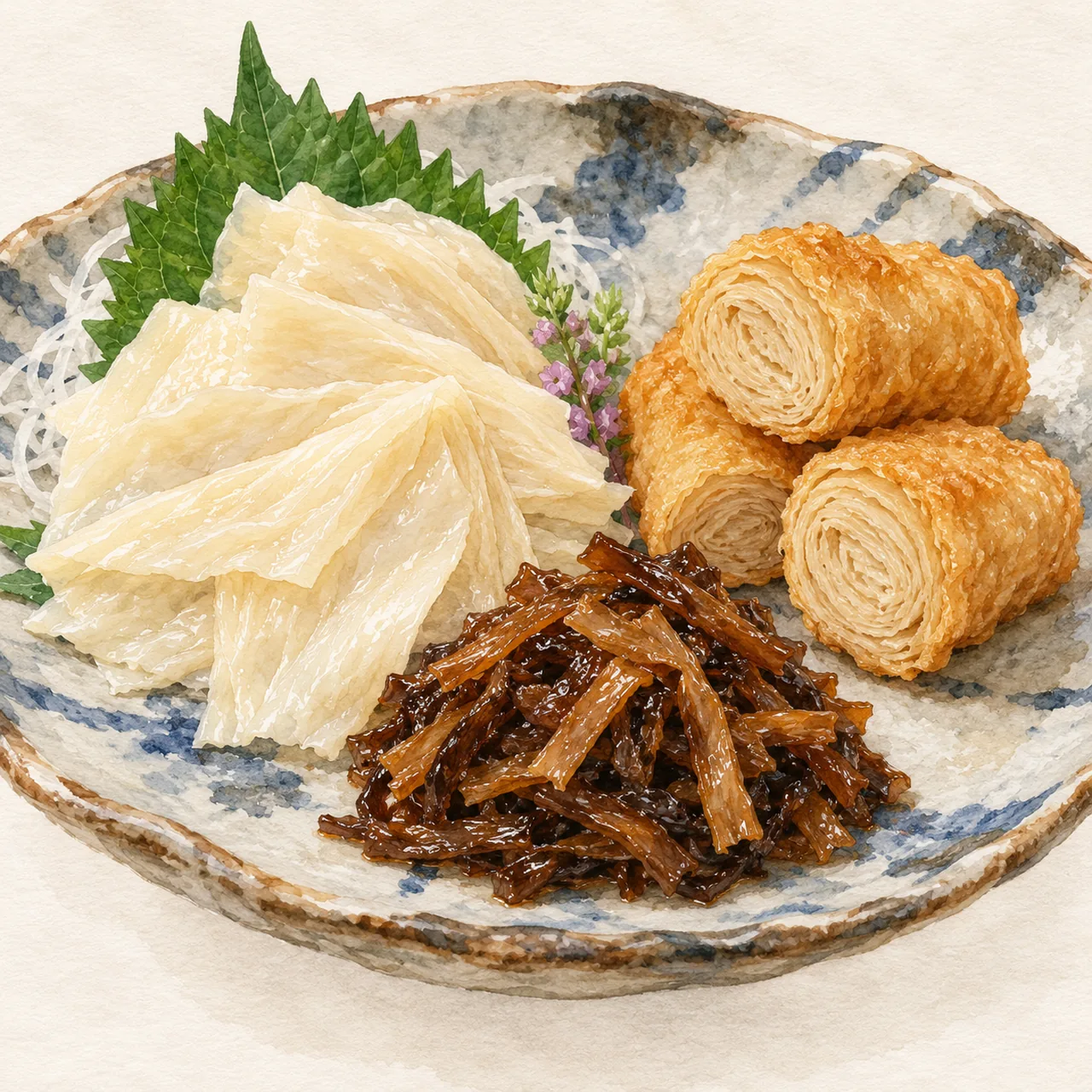
Yuba to eat as sashimi, fried and rolled yuba, and yuba tsukudani: Nikko yuba's charm is its range of textures and flavours. Its three-kind set — yuba sashimi, fried rolls and tsukudani, with a dedicated sauce — is a popular year-end and midsummer gift in Japan.
5. Getting Yuba Outside Japan
As of November 2026, we didn't find Japanese-made yuba on Amazon.com; the makers above sell within Japan. Fresh yuba is chilled and keeps only about a week, so it doesn't travel — it's something to eat in Kyoto, Minobu or Nikko. Dried yuba, like Yumame's ware-yuba, keeps far longer and is the one to bring home from a trip. Dried bean-curd skin is made in many countries; if you want Japanese yuba, look for the maker and region on the pack.
6. How to Eat It, and Keeping It Once It Arrives
Fresh Yuba: First Bite With Nothing On It
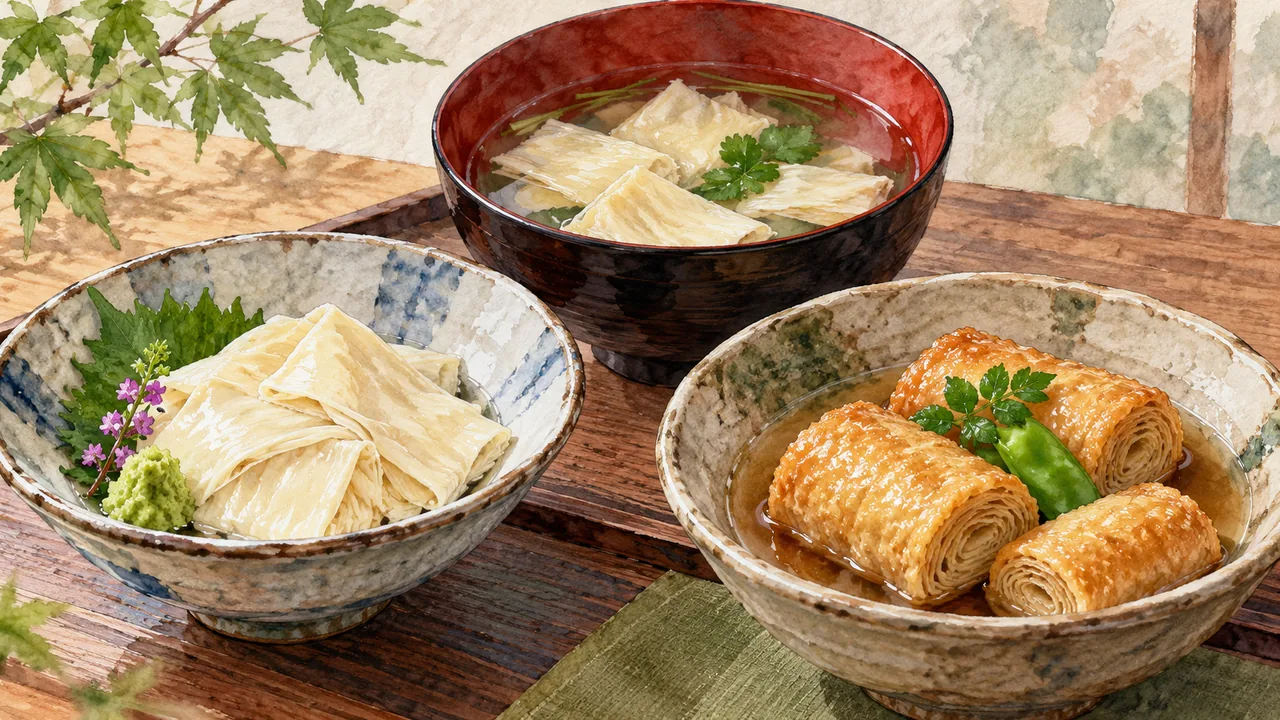
Take your first bite of kumiage or fresh yuba plain, to taste the soybeans themselves — then with wasabi and soy sauce, as Yumame recommends. Thick Minobu yuba shines as yuba sashimi. Dried ware-yuba goes into clear soups, miso soup and simmered dishes; fried rolled yuba turns plump and soft when simmered.
Fresh Yuba: Refrigerate, and Eat Soon
Fresh yuba arrives chilled and doesn't keep long — Godai's is eight days including the shipping day. If you can't finish it quickly, dried yuba is the better choice.
7. Frequently Asked Questions
How is yuba made?
By slowly warming soy milk and lifting the film that forms on top. With almost only water and soybeans in it, makers care about how they choose both.
What's the difference between kumiage yuba and fresh yuba?
Kumiage yuba is silky and soft — Yumame's Tamba black version spreads soybean flavour as it melts. Minobu's square and folded yuba are thick and substantial.
What makes dark yuba dark?
Tamba black soybeans. Yumame selects Kyoto-grown Tamba black from the Tamba area around Miyama.
How long does fresh yuba keep?
Not long — Godai's is eight days including shipping, chilled. For longer keeping, choose dried yuba.
Are 湯葉 and 湯波 the same?
Yes. Nikko sometimes writes it 湯波; both are read "yuba."
Can I bring yuba home from Japan?
Dried yuba, yes — it keeps well. Fresh yuba is chilled and perishable, so enjoy it where it's made. Check your country's rules on bringing in food.
Final Thoughts: A Place's Water and Soybeans, in One Sheet
Yuba is little more than water and soybeans — so the place's water and fields come through.
Tamba black kumiage yuba and dried ware-yuba made with Miyama's farmers. Thick Minobu yuba with some 750 years behind it. Nikko yuba handmade the old way with mountain spring water. All made from Japan's water and soybeans.
When you're in Japan, find the yuba of the place you're visiting — and taste one silky sheet.
Kombu for Dashi: Rishiri, Rausu, Ma-Kombu and Aged Kelp
Dried Shiitake: Donko vs Koshin, Log-Grown in Japan