"It's a wooden tub for rice — basically an ohitsu, right?" Most people think so. But the job is the opposite.
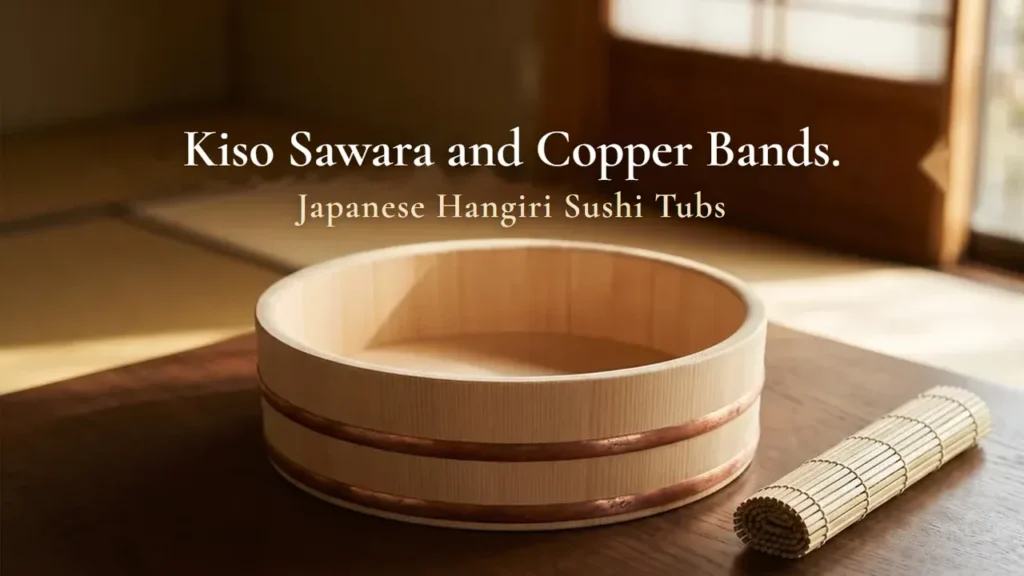
An ohitsu is a vessel for keeping the moisture in cooked rice. A hangiri (also called sushi oke or handai) is a vessel for letting excess moisture go. No lid, shallow and wide — every bit of its shape has a reason. You pour the vinegar dressing over the rice, cut it in with slicing strokes and let the steam escape, and for that you need surface area. And when you choose one, there are only three things to read: the wood, the material of the hoops that bind it, and the diameter.
Quick Reference: What You're Making Decides the Tool
| Making | Choose | Look for |
|---|---|---|
| Sushi rice for 2–3 | A hangiri about 27 cm across ▾ | Kiso sawara, copper hoops |
| Sushi rice for 4 or more | A hangiri 30–36 cm across ▾ | Wall thickness |
| Maki rolls, ehomaki | Bamboo makisu ▾ | "Japanese bamboo" |
| Datemaki, rolled omelette | Onisudare ▾ | Bamboo skin left on |
| Remember | Diameter is the guide to capacity: 27 cm ≈ 2 go of rice, 30 cm ≈ 3 go (1 go = one rice-cooker cup) | |
1. Why Japanese: A Hangiri Is a Tool for Making Sushi Rice
Ohitsu and Hangiri Treat Moisture in Opposite Ways
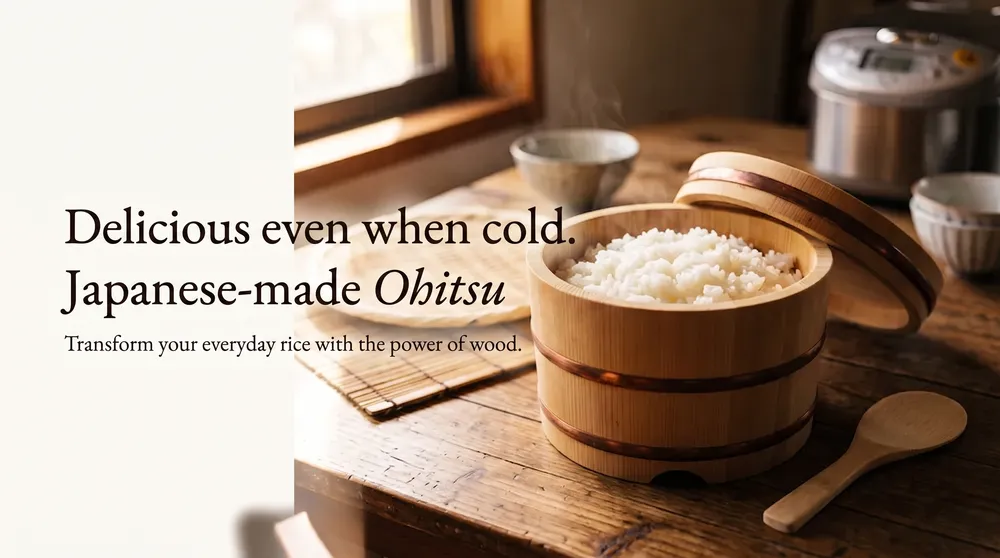
Both are wooden, both hold rice, so they look like relatives. But the jobs are opposite. An ohitsu keeps moisture — lidded, stretching freshly cooked rice's best state as long as it can. A hangiri releases it — drawing excess water and steam out of rice dressed with vinegar.
That's why a hangiri needs no lid, and why it's shallow and wide. Sushi rice made in a bowl turns sticky because the steam has nowhere to go.
Why Sawara?
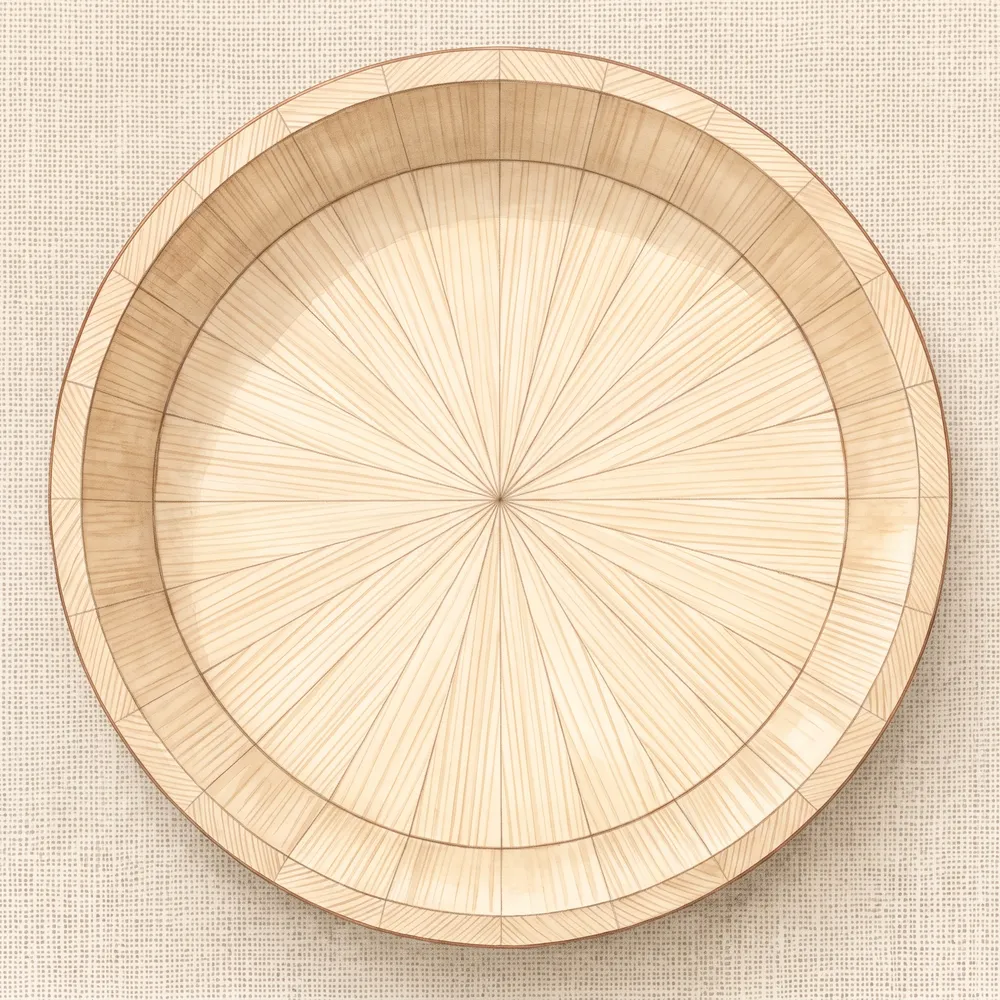
The wood of a hangiri is usually sawara (Japanese cypress, Chamaecyparis pisifera) — a relative of hinoki with several qualities that suit tubs. Its grain is fine and it shrinks little as it dries; a tub is held together by hoops, so wood that shrinks loosens them, and wood that doesn't keeps the hoops from slipping. It's light, and its natural oils make it shed water well. And most important of all: sawara's scent is restrained. A strong-smelling wood would ride on the flavour of the sushi rice; sawara's quietness is why it stayed in this role.
Did you know: It's sold under four names
The same thing is called sushi oke, handai, hangiri (飯切) or hangiri (半切), depending on the shop — and online listings often use all four. If "sushi oke" doesn't find it, try "hangiri" or "handai," which are the usual names in restaurant-supply shops. Shallow serving tubs are also called "sushi oke," so if you want a tub for making sushi rice, look for a deeper hangiri.
2. Yamaichi: A Ten-Person Workshop in Nagiso
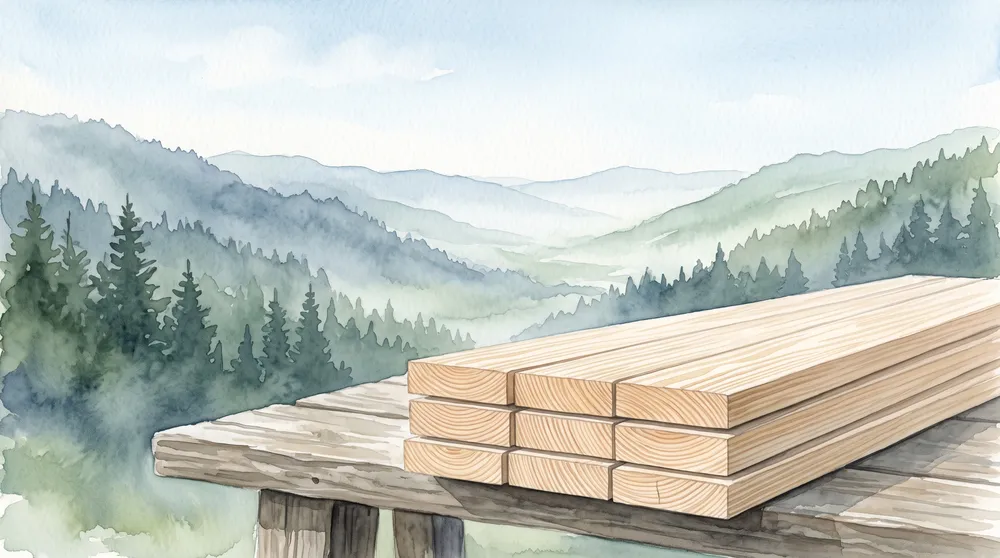
Yamaichi makes woodwork in Nagiso, Kiso district, Nagano, and was established in 1971. To give the scale first: ten employees. Not a big factory. The company describes its work like this: "Using fine Shinshu Kiso logs, we make a wide range of traditional woodwork and modern wooden craft products." From the log onward it's Kiso, and tubs and cutting boards come out of the same workshop. The hangiri is one of them.
Copper Hoops Are the Sign to Look For
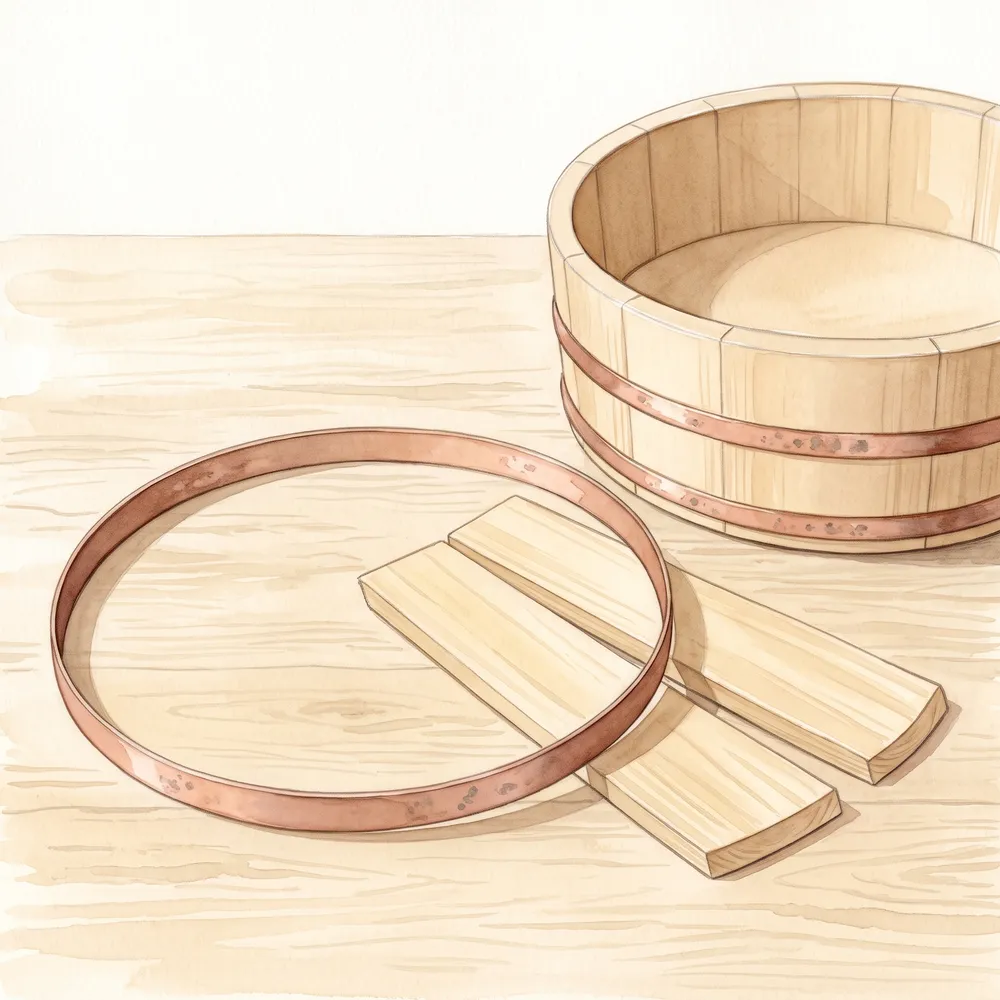
A tub is made by lining up staves and binding them with hoops — taga. Several materials are used, but the traditional one for wooden tubs is copper. If the name says "copper hoops" (dō-taga), that's your sign. With use the copper darkens and contrasts with the pale wood — and metal hoops can be tightened and repaired.
Sushi Hangiri, 27 cm: If You're Buying One, This Size
27 cm (10.6 in) across, about 2 go of rice — just right for a table of two or three. Kiso sawara with copper hoops, about 550 g: light enough to lift with one hand and wash in the sink. If in doubt, choose the smaller one; a hangiri that's too big is hard to work a little rice in, and hard to store.
Sushi Hangiri, about 30 cm: For Families, and Chirashi-Zushi
30 cm (11.8 in), about 3 go — for a table of four, or chirashi-zushi for Hinamatsuri (the Girls' Day festival). From this size you can bring the tub straight to the table without moving the rice to another dish. Decide where it will live first: 30 cm takes more space than you'd think.
3. Miyabi Urushi Kogei: From Kiso Village to Professional Kitchens
Miyabi Urushi Kogei is in Kiso village (Kiso-mura), Nagano — Kiso like Yamaichi, but a village near the source of the Kiso River. It uses the Kiso Five Trees — hinoki, sawara, nezuko, asunaro and koyamaki, the trees that represent Kiso's mountains — and makes vessels and cooking tools by hand. Its customers say a lot about the company: hotels, restaurants, Japanese restaurants, confectioners and supermarkets. A company that has made tools for places where they're used every day.
Professional tools are expected to be repaired and kept in use, not replaced when they break — which is part of why wooden tubs have metal hoops. Precisely because a home uses a hangiri only a few times a year, choosing one that lasts pays off: tools with few outings are the ones that deteriorate in storage. Its 27 cm hangiri in sawara with copper hoops brings the shape it has supplied to professional kitchens down to home size, with no decoration — just the making. (In Japanese, sawara is written 椹; if you see that character, it's the same wood.)
4. Shimizu Mokuzai: From a Water-Wheel Sawmill to a Sleeper Train's Bathtub
Shimizu Mokuzai Sangyo began in 1944, when Shimizu Toyojiro, returning home as a wounded veteran, started a sawmill. At first it sawed logs with a water wheel, making building materials and beekeeping supplies; it moved on to wooden bathtubs, and by around 1955 was making 40 a day for public housing. That it now makes sushi tubs, ohitsu and hinoki baths side by side is an extension of that path.
The company's name spread when its tubs were chosen for the bathtubs of the luxury sleeper train TRAIN SUITE Shiki-shima, earning a special prize at Monozukuri Taisho NAGANO 2017. A bathtub that holds water in a swaying train, made of wood in a freely curved shape — tub-making skill carried straight over. For now, its tubs are sold through its own online shop; know that makers like this exist in Kiso, and search by the company name.
5. Taketora: Makisu and Onisudare From Kochi
If tubs come from Kiso, rolling mats come from bamboo country. Yamagishi Chikuzaiten, trading as Taketora, is in Anwa, Susaki, Kochi. Founded in 1894, it's Japan's only specialist in torafu-dake (tiger-striped bamboo). The company writes: "With very few exceptions, all of Taketora's bamboo crafts are made in Japan from Japanese bamboo."
Makisu and Onisudare Are Different Tools
They look alike in the shop, but their jobs differ. A makisu is flat bamboo strips tied with string — for rolling nori rolls and futomaki. An onisudare is thick bamboo sticks with an almost triangular cross-section — roll with it and you get the ridges on datemaki (sweet rolled omelette for New Year). A makisu won't give datemaki its ridges; an onisudare isn't suited to futomaki.
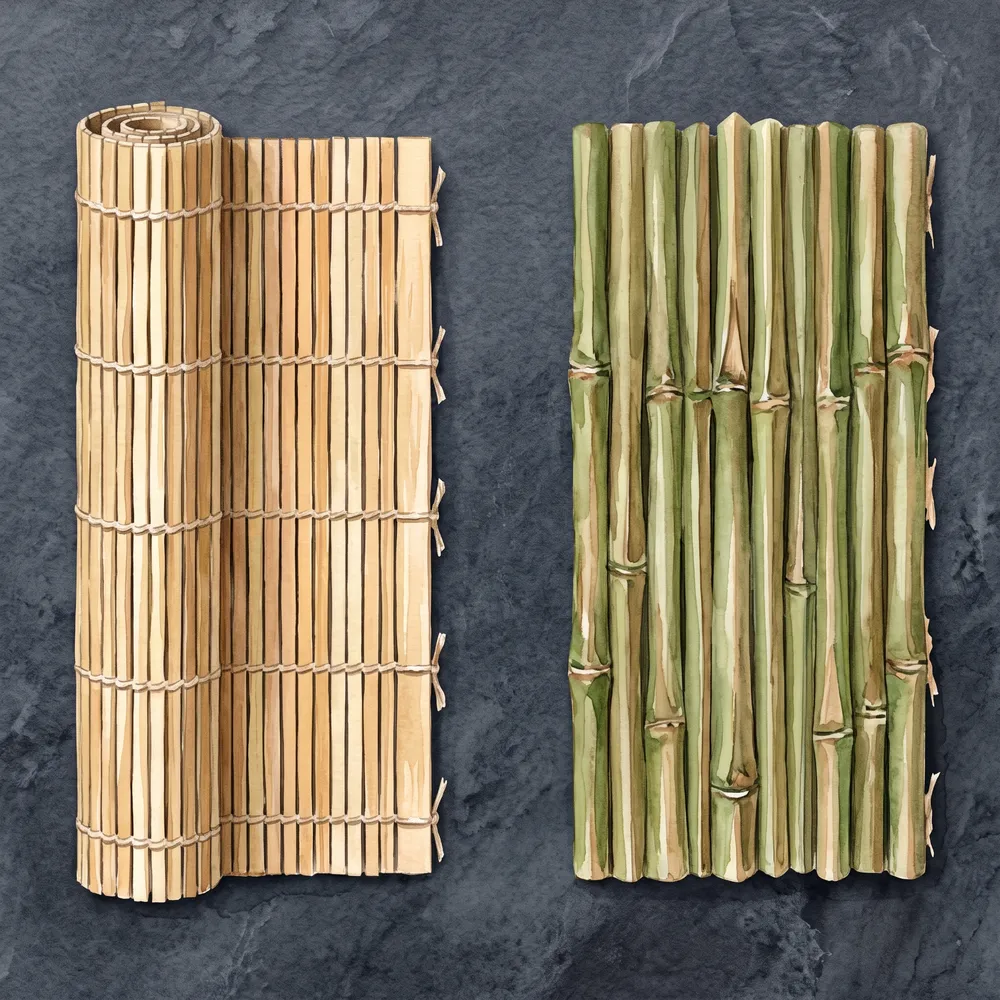
Taketora's Japanese onisudare (about 24 × 24 cm) keeps the bamboo skin on, so egg mixture sticks less; it's a tool that only comes out for New Year cooking, and lasts all the longer for it. Its basic makisu, each strip tied with string, flexes easily and passes your squeeze straight through — and also shapes dashimaki tamago if you roll it while hot. When buying either, look for "Japanese bamboo" on the label.
6. Buying From Outside Japan
As of November 2026, the makers above sell through Japanese shops. On Amazon.com, TIKUSAN's sawara hangiri with copper hoops, made in Japan, come in the same sizes this guide recommends — check that the listing says "sawara" and "copper band."
TIKUSAN Sawara Hangiri With Copper Bands, 27 cm
Made in Japan of sawara with copper hoops, 27 cm (10.6 in) — about 2 go of rice, for two or three people.
TIKUSAN Sawara Hangiri With Copper Bands, 27 cm
Loading product details…
TIKUSAN Sawara Hangiri With Copper Bands, 30 cm
The 30 cm (11.8 in) size — about 3 go, for four or for chirashi-zushi you'll bring to the table in the tub.
TIKUSAN Sawara Hangiri With Copper Bands, 30 cm
Loading product details…
7. Choosing a Size, and Making It Last
Diameter Tells You the Capacity
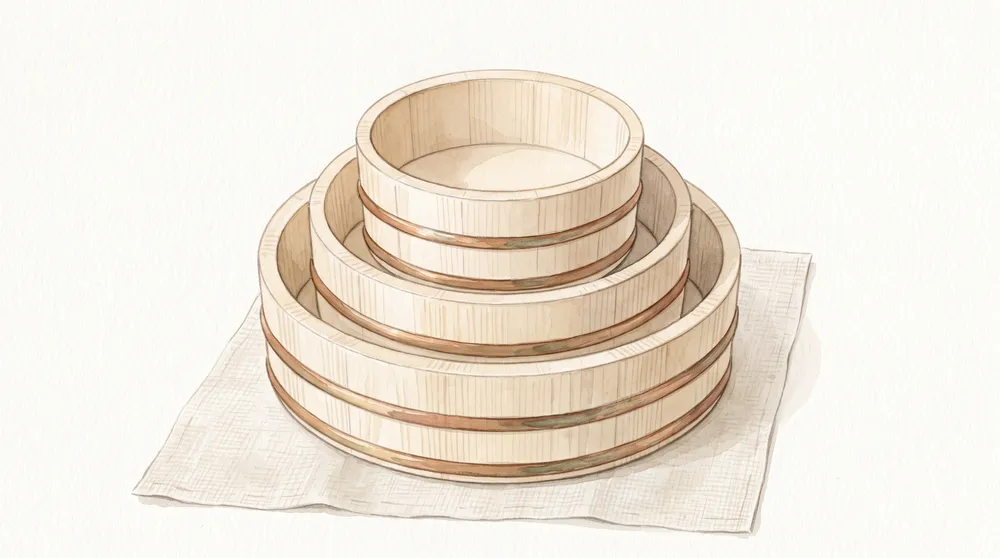
Hangiri are sold by diameter, which is also your guide to capacity: about 2 go at 27 cm, about 3 go at 30 cm, and 7–8 go once you pass 36 cm. Wall thickness changes it a little, so check each listing's capacity. Two or three people: 27 cm. Four or more: 30 cm or larger. If in doubt, go smaller — bigger doesn't cover smaller here. Cut a little rice in a too-wide tub and it scatters and cools too much.
Fill It With Water Before Use
Both when you first use a new hangiri and just before each use, fill it with water to moisten the wood. Put rice in dry wood and grains stick fast; soaked wood lets them slide off when you wash it. Pour out the water, wipe it quickly, then add the rice. A new tub especially benefits from a few hours of water to draw out the wood's lye.
Mind How You Put It Away
After washing, dry it thoroughly before storing. Avoid drying it fast in direct sun — the wood shrinks and the hoops loosen. Stand it up in an airy, shaded spot. Don't seal it in a plastic bag either. The less often you use a tool, the more its lifespan depends on how it's stored. For washing wooden vessels in general, see our magewappa care guide.
Did you know: Sawara was banned from felling for looking like hinoki
In the Edo period, Kiso's mountains were ruled by the Owari domain. Overcutting had thinned the forests, so the domain created "chōjiboku" — trees forbidden to fell: hinoki, sawara, asunaro and koyamaki in 1708, with nezuko added in 1728. That's the origin of the Kiso Five Trees. The interesting part is why they were chosen: what the domain wanted to protect was hinoki. Ban hinoki alone and similar woods would be used instead, so look-alike, useful trees were banned too — sawara among them. The penalty is said to have been as harsh as "one tree, one head." That Kiso still has fine sawara is partly because it was protected so fiercely 300 years ago.
8. Frequently Asked Questions
Do I need both an ohitsu and a hangiri?
They do different jobs, so one can't stand in for the other. An ohitsu keeps cooked rice; a hangiri makes sushi rice. For hand rolls or chirashi-zushi, the hangiri; to stop using your rice cooker's keep-warm, the ohitsu.
How do I choose the size?
By diameter: about 2 go at 27 cm, about 3 go at 30 cm. 27 cm for two or three, 30 cm or more for four or more. If in doubt, choose smaller.
Is there anything to do before using it?
Fill it with water to moisten the wood. A few hours for a new tub; just before use otherwise, then wipe. It makes washing far easier.
Can I use detergent?
For unfinished wood, a scrubbing brush and water are the basics. Detergent can soak into the wood and leave a smell; for oily residue only, wash quickly with diluted mild detergent and rinse. Avoid the dishwasher and bleach.
The hoops are getting loose. Can I still use it?
It's a sign the wood has dried and shrunk. Fill it with water and leave it a while; the wood may swell and tighten. If not, ask the maker — metal hoops can be re-tightened. Avoiding fast drying is the best prevention.
How do I look after a makisu?
Wash along the bamboo and stand it up to dry. Rice gets caught between the strings, so wet it before use. Don't put it away damp — bamboo goes mouldy. Store it flat once fully dry.
Final Thoughts: The Ohitsu Keeps, the Hangiri Lets Go
An ohitsu keeps moisture; a hangiri lets it go. No lid, shallow and wide — all to dress the rice, cut it in and release the steam. Sawara, because it shrinks little, sheds water and keeps its scent quiet.
Read three things: Kiso sawara, copper hoops, diameter. About 2 go at 27 cm, 3 go at 30 cm; if in doubt, smaller. For rolls, a makisu of Japanese bamboo; for datemaki, an onisudare.
Behind them are a ten-person workshop in Kiso, a village company making kitchen tools from the Kiso Five Trees, and a Kochi bamboo shop dating from 1894. Set a date for hand-roll night — and bring home a sawara hangiri.
Ohitsu: The Wooden Tub That Replaces Keep-Warm
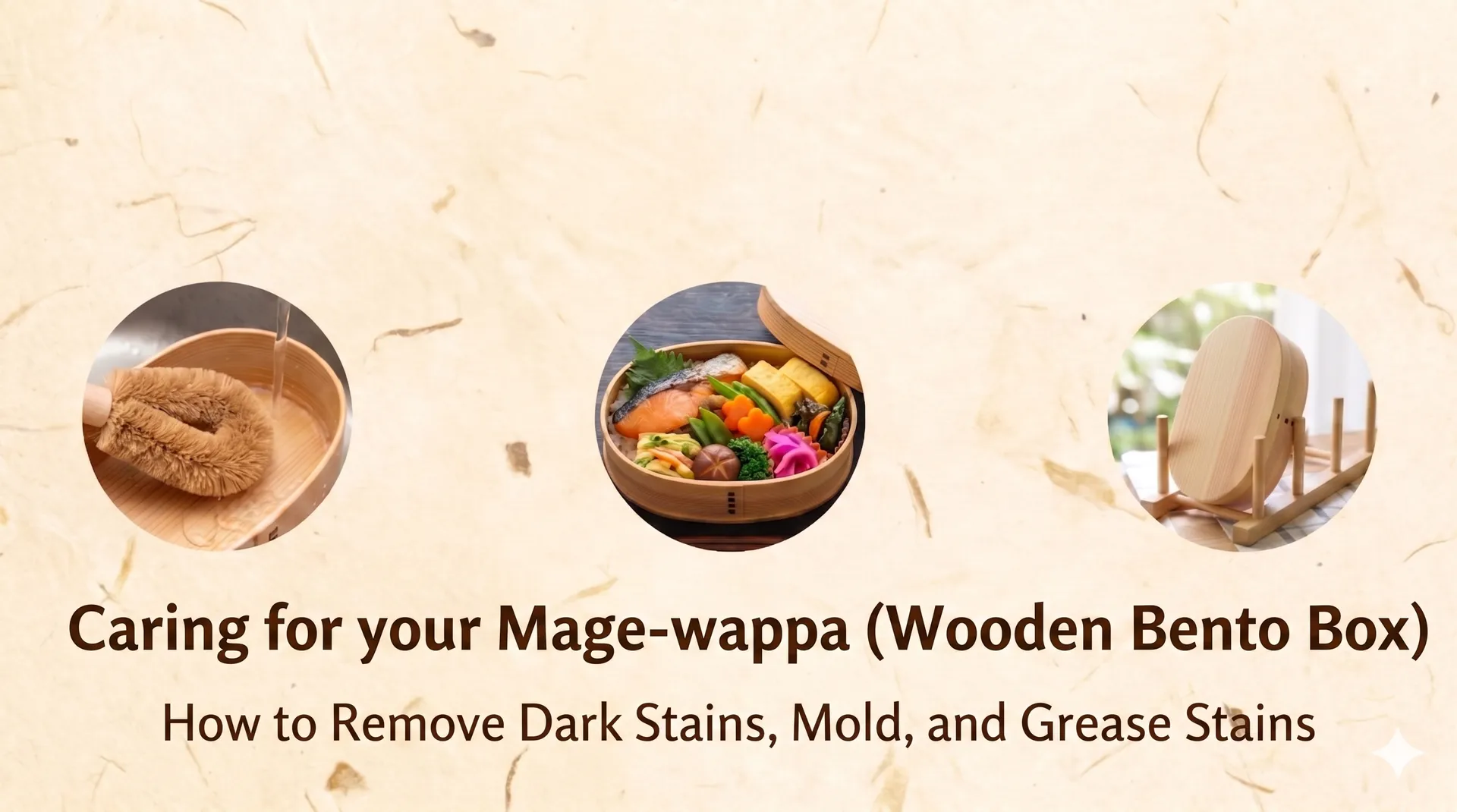
Magewappa Bento Box Care: Washing, Black Stains & Mold