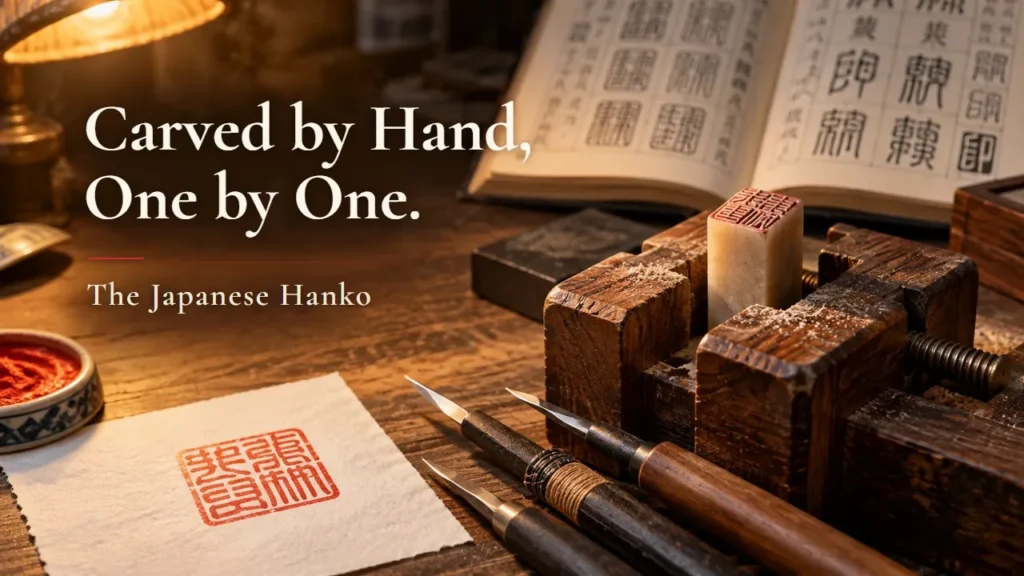
In Japan, a hanko — a small personal seal pressed in red ink — still does the job of a signature. If you live in Japan, you'll likely need one for registering at the city office, opening a bank account, or signing for a delivery. If you're visiting, a seal carved with your own name is one of the most personal things you can bring home.
Either way, don't choose only by price and material. Look at who carved it, and how. In Yamanashi Prefecture, "Koshu hand-carved seals" are a designated Traditional Craft of Japan: a craftsperson draws the characters onto the face, rough-carves it, and finishes it, all by hand. This guide covers Koshu seals, fully hand-carved Satsuma boxwood, titanium seals from the metalworking town of Tsubame, an inden seal case, and which sizes you need.
Quick Reference: Japan-Made Seals and a Seal Case
| Seal | How it's made, material | Maker | Lead time |
|---|---|---|---|
| Koshu hand-carved seal set ▾ | Hand-carved, black water-buffalo horn | Suzukiya (Ichikawamisato, Yamanashi) | About 1 month |
| Koga business-card seal ▾ | Hand-carved, akane wood | Certified craftsman Mochizuki Koga | About 2 months |
| Fully hand-carved Satsuma boxwood, 3 seals ▾ | Fully hand-carved, boxwood | Raimudo (Ise, Mie) | 1–2 weeks |
| Titanium seals, 3 seals ▾ | Titanium | Tsubame, Niigata | 10-year warranty |
| Inden-ya seal case ▾ | Lacquer on deerskin (Koshu inden) | Inden-ya Uehara Yushichi (Yamanashi) | With ink pad |
1. Why Japanese: A Hand-Carved Seal Is a National Traditional Craft
From a crystal-mining region to "the hometown of hanko"
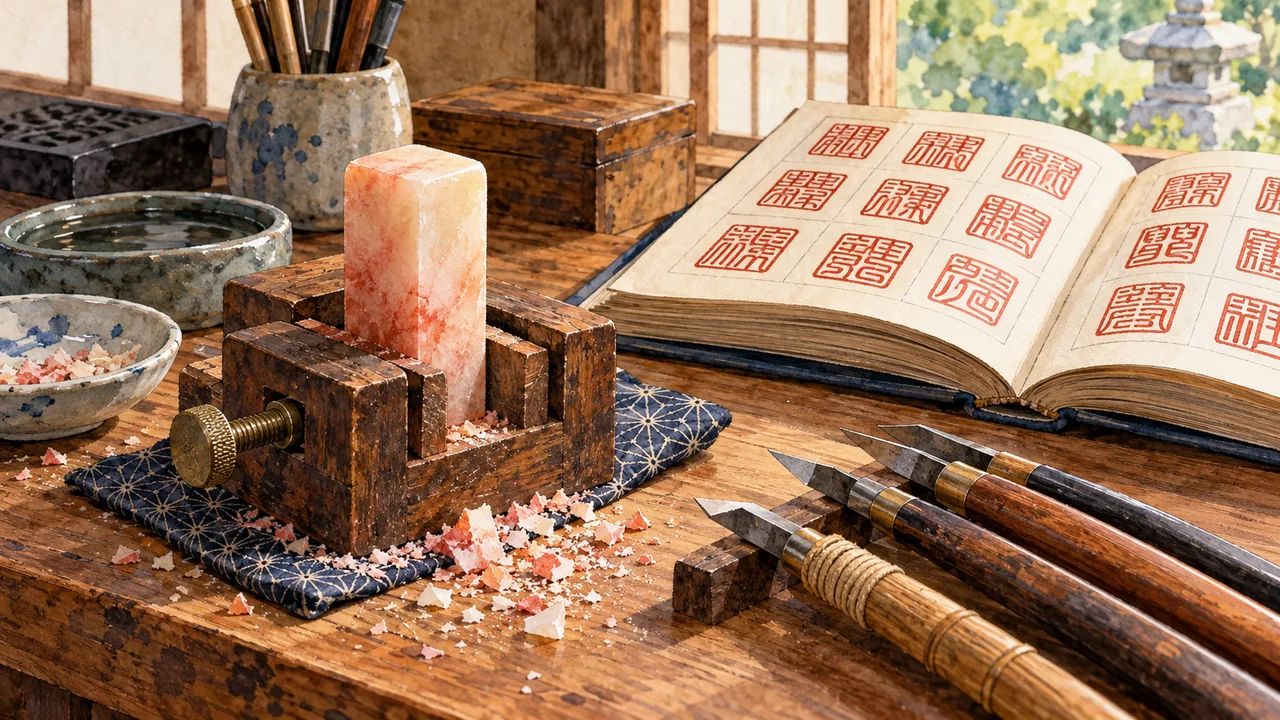
According to Yamanashi Prefecture, its seal-making began with crystal. Fine quartz was found in the Mitake mountains, and in 1837 a crystal-working workshop opened at Mitake near Kofu, growing the cutting and engraving skills of the area; crystal seals became one of its specialities.
Then, in 1873, a government decree required registered seals (jitsuin) on certificates between private individuals, and personal seals spread to ordinary people. The people of Rokugo — now Ichikawamisato — who already travelled as peddlers began selling seals, and the whole district grew into producing and selling them nationwide. From that history came the "Koshu hand-carved seal," and Rokugo became known as "the hometown of hanko."
2. Living in Japan? The Three Seals You May Need
Jitsuin, ginkō-in, mitome-in
Seals are easiest to manage when each job has its own:
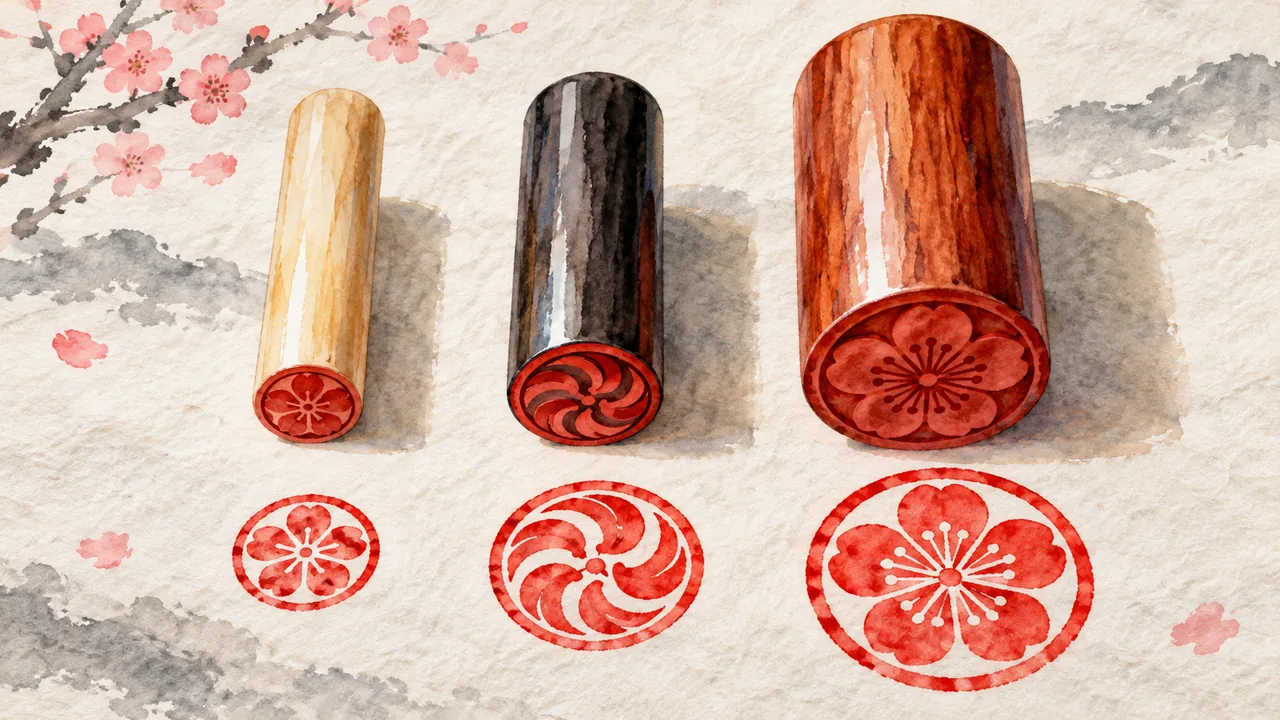
- Jitsuin (registered seal): registered at your city office, used for major contracts such as buying a car or property.
- Ginkō-in (bank seal): registered with your bank account.
- Mitome-in (everyday seal): for receiving deliveries and routine paperwork.
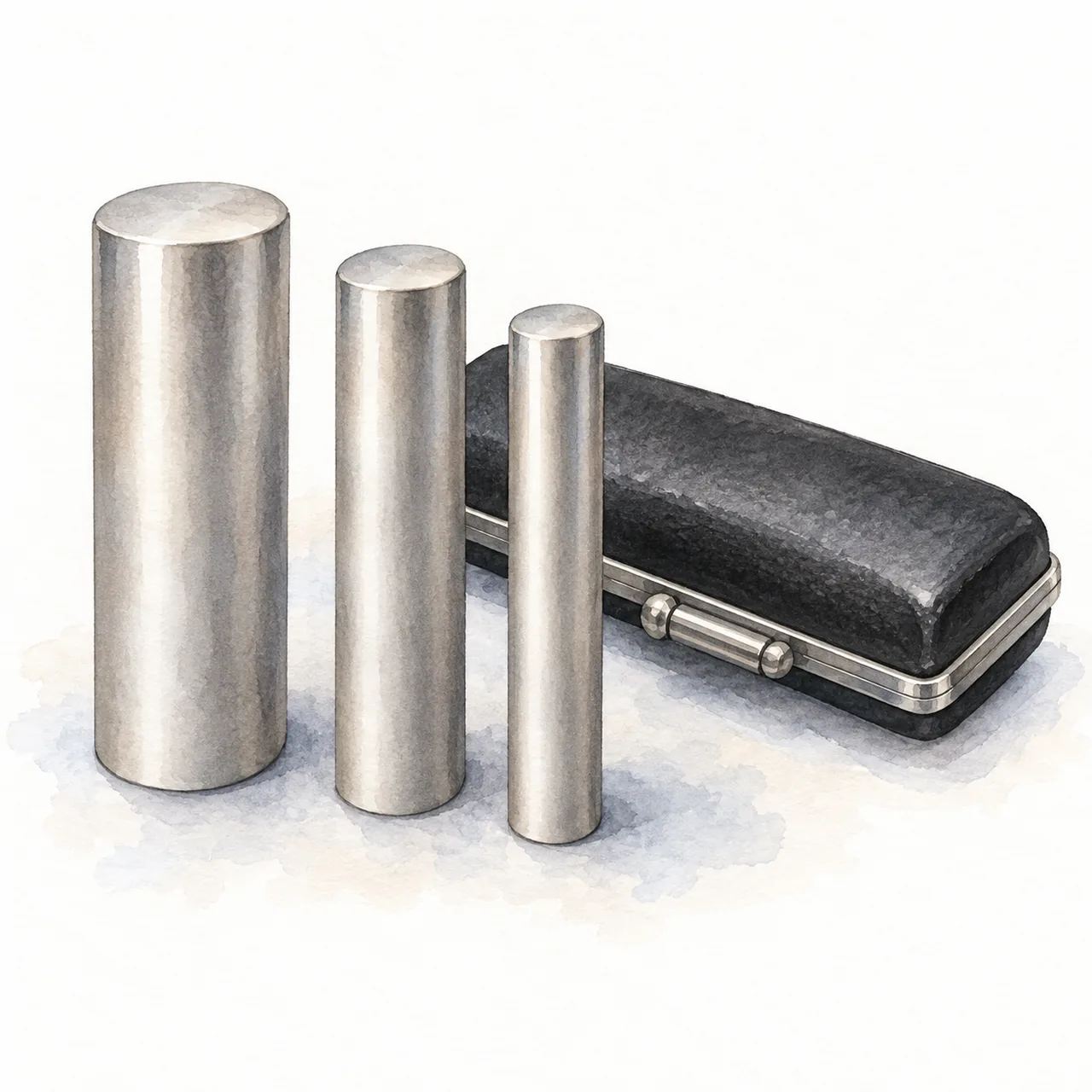
A titanium set from Tsubame, for example, comes in 16.5 mm, 15.0 mm and 13.5 mm — widest to narrowest for registered, bank and everyday use. Using a different width and impression for each prevents mix-ups.
Check your city's rules before making a registered seal
The size and conditions for a seal you can register as a jitsuin are set by each municipality, including what name can be carved on it. Check your city or ward office's guidance on seal registration before you order. Many seal makers can carve a foreign name in katakana or in the alphabet.
3. Koshu Hand-Carved Seals: One Person, From First Stroke to Finish
Fuji, arabori, shiage
Yamanashi Prefecture describes the work of certified traditional craftsman Mochizuki Koga like this. First, fuji: drawing the characters onto the seal face, balancing them against each other within the frame. Then arabori, rough-carving away everything except the frame and characters. Then shiage, finishing with the knife, attending to every dot and stroke. All of it is done by hand, and no step ever leaves his hands.
A single seal can take two to three months. While meeting each customer's wishes, he says that "using the correct character is a given" — his workbench is lined with dictionaries of character origins and forms.
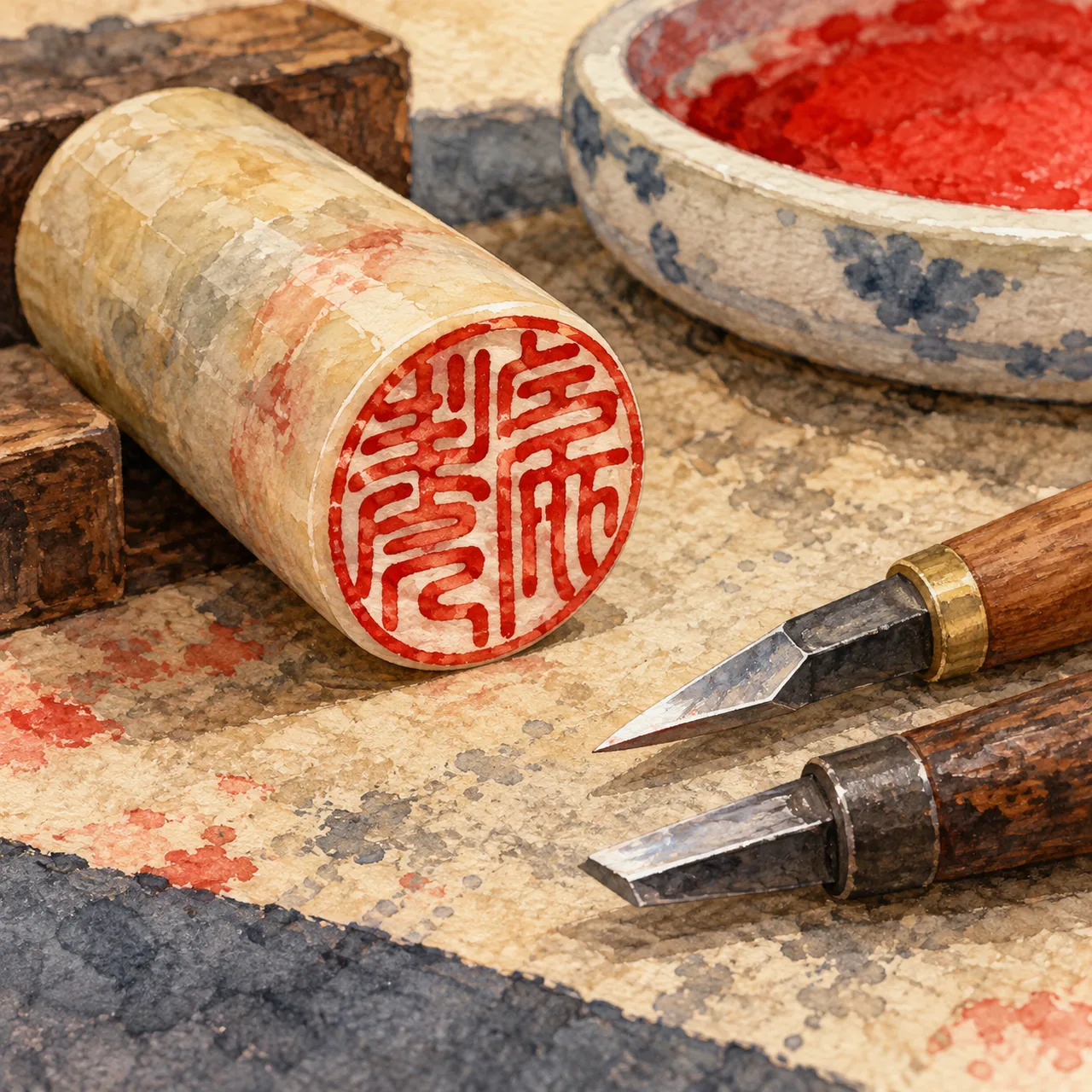
Suzukiya, a seal-material shop in Ichikawamisato, makes a black water-buffalo horn seal set certified as a Koshu hand-carved seal, with a numbered certificate and certification sticker; it takes about a month to make to order. Mochizuki Koga's own workshop makes a tiny business-card seal in akane wood, 7.5 mm square, carved after you send in the characters you want — about two months from order. As the workshop explains, a seal too large for the card loses its elegance and one too small loses its effect; a single hand-carved red seal at the edge of a business card is something people remember.
4. Fully Hand-Carved Satsuma Boxwood
"Hand-finished" versus "fully hand-carved"
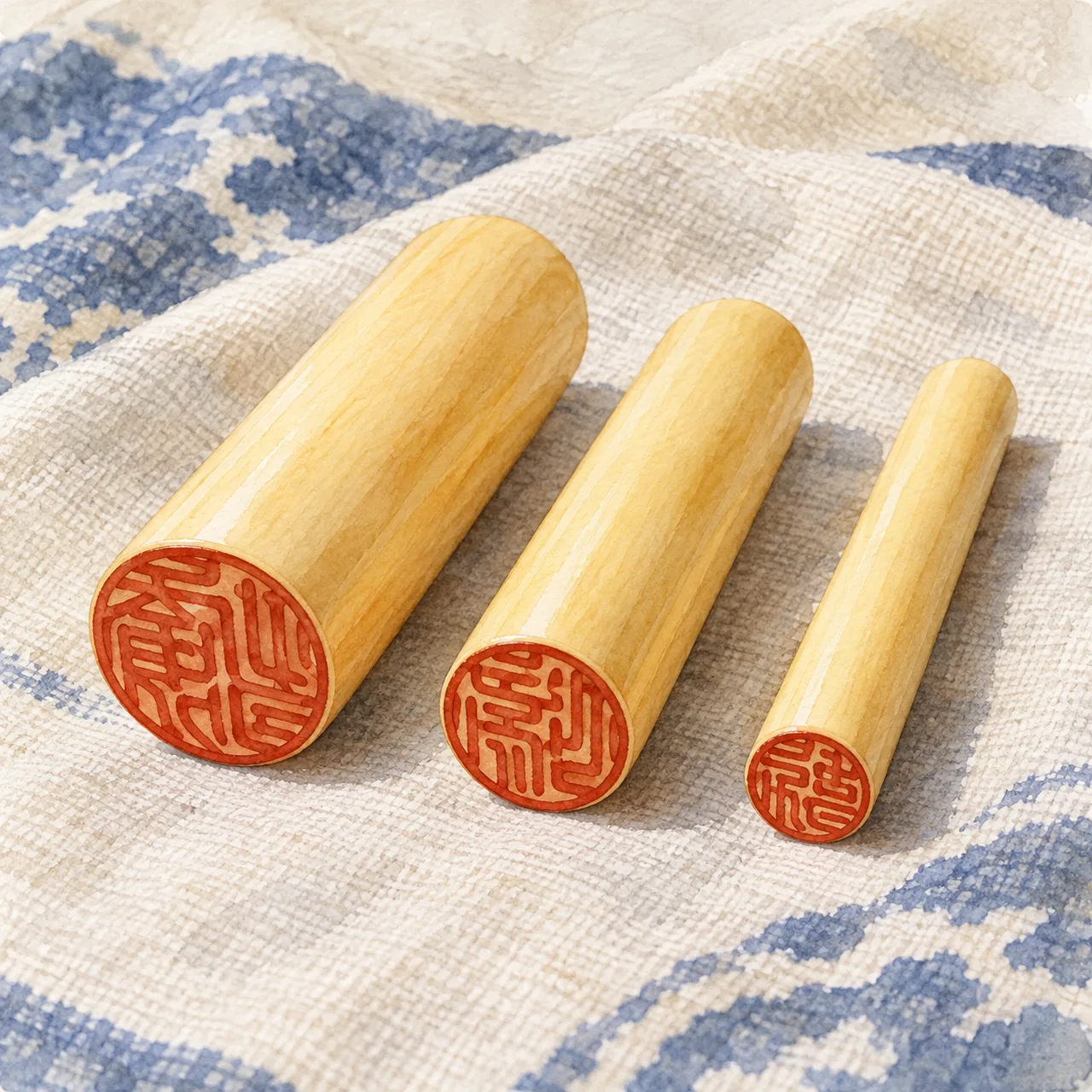
Some seals are machine-carved and then finished by hand — "tebori shiage." Raimudo, a seal shop in Ise, Mie Prefecture, offers "kanzen tebori," fully hand-carved: every step from drawing the characters to finishing is done by a craftsperson's hand.
The material is Satsuma hon-tsuge, Japanese boxwood. Its three-seal set covers registered, bank and everyday use, and usually takes one to two weeks.
5. Titanium Seals From Tsubame
Neither wood nor horn
Besides wood and horn, there are titanium seals. The set in this guide is "Made in Tsubame" — from the metalworking town of Tsubame in Niigata. It has a matte silver finish and a 10-year warranty from the seller, a choice for bank and everyday seals you press again and again.
If you have your full name carved, the seller cuts it vertically so that it reads right to left when stamped.
6. Keeping It Safe: A Koshu Inden Seal Case
Deerskin and lacquer, from the same province
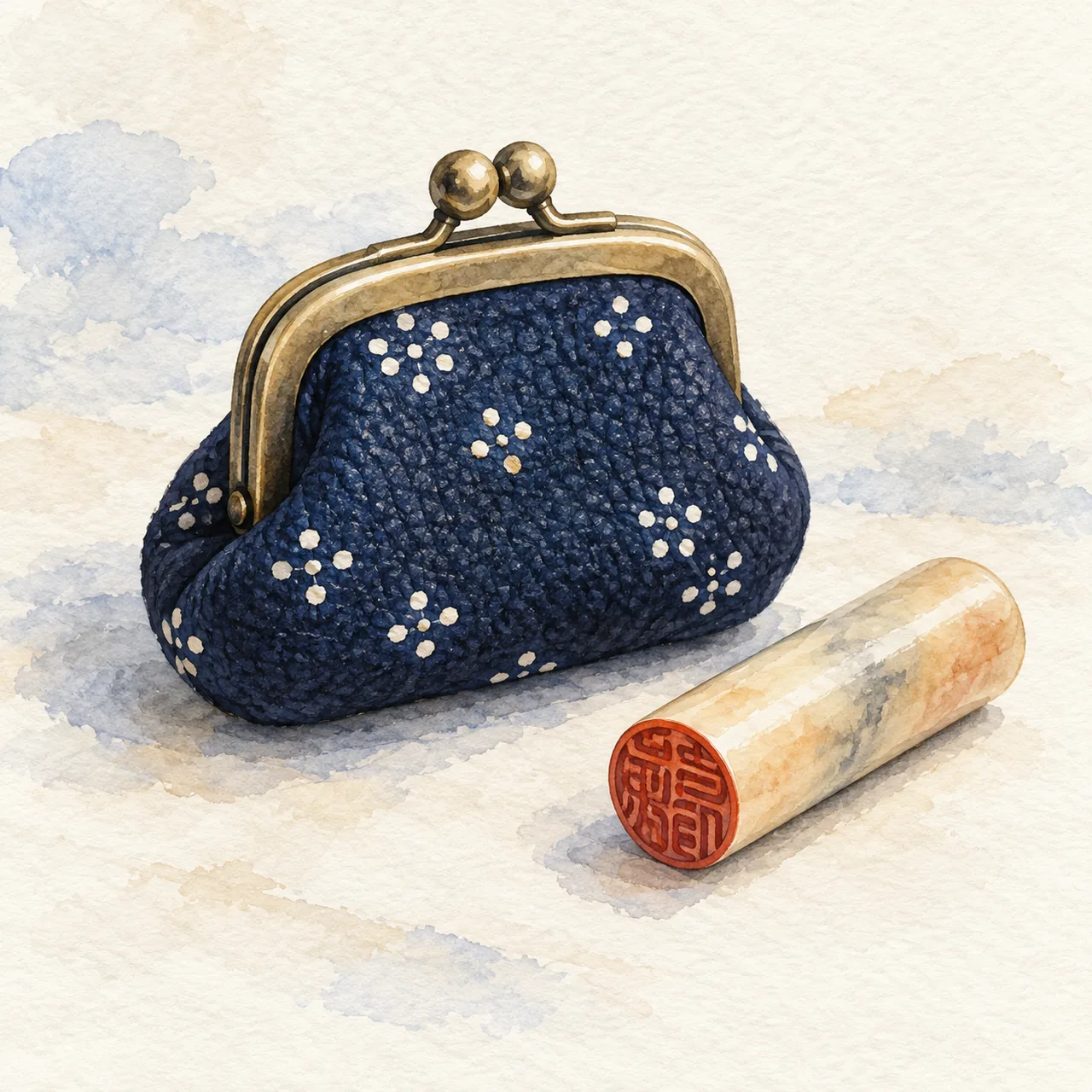
Yamanashi has a traditional craft for carrying your seal, too. Koshu inden is deerskin decorated with lacquer patterns. Inden-ya Uehara Yushichi's seal case is a small clasp purse in genuine deerskin with a built-in ink pad, 3.5 × 8.5 cm (1.4 × 3.3 in), so the seal doesn't roll around in your bag and the ink is right there when you need it.
A Koshu hand-carved seal in a Koshu inden case — two Yamanashi crafts together. It's also a thoughtful thing to give alongside a new seal.
7. Buying From Outside Japan
Many "Japanese hanko" sold online abroad are custom wooden name stamps that don't say where they were made. If you want a seal carved in Japan, check these:
- Where it's carved. Look for a listing that says the seal is carved in Japan, not only "Japanese-style."
- How it's carved. "Fully hand-carved" (kanzen tebori), "hand-finished" (tebori shiage) or machine-carved — a good seller tells you which.
- How your name will be written. Katakana, kanji chosen for sound, or the alphabet. If it's for registration in Japan, check your city's rules first.
The seals and case in this guide are sold through Japanese shops; as of November 2026 we didn't find them with international shipping. If you live in Japan and pay resident tax, the two Koshu seals in section 3 are also offered as furusato nozei (hometown tax donation) gifts from Ichikawamisato. If you're visiting, ask a seal shop in Japan — they can often make one during your stay.
8. Frequently Asked Questions
What is a Koshu hand-carved seal?
A hand-carved seal from Yamanashi Prefecture, designated a Traditional Craft of Japan. It grew out of Yamanashi's crystal-working and the seal-peddling history of Rokugo, and is carved by hand from drawing the characters to finishing. The certified set in this guide comes with a numbered certificate.
What's the difference between "hand-carved" and "hand-finished"?
How much is done by hand. Hand-finished seals are machine-carved and then finished by hand. Fully hand-carved seals are done entirely by hand, from drawing the characters to the final cut.
How long does a hand-carved seal take?
From one or two weeks to about two months, depending on the maker. Raimudo's fully hand-carved seals usually take 1–2 weeks, the certified Koshu set about a month, and Mochizuki Koga's business-card seal about two months.
Can a foreigner register a seal in Japan?
Residents can register a seal at their city office; the rules are set by each municipality. Size limits and which form of your name can be carved differ by city, so check your city or ward office's guidance before you order a registered seal.
What's good about a titanium seal?
It's a hard-wearing choice for seals you use often. The Tsubame titanium set in this guide carries a 10-year warranty from the seller.
What makes a good gift with a seal?
A seal case. Inden-ya's Koshu inden case — lacquer patterns on deerskin, with a built-in ink pad — comes from the same prefecture as Koshu hand-carved seals.
Final Thoughts: Hands and Time, in a Seal You'll Use for Life
Don't choose a hanko only by price and material. Look at who carved it, and how. Yamanashi's Koshu hand-carved seal is a national Traditional Craft, drawn, rough-carved and finished by one person's hands.
A certified Koshu set, a business-card seal from a certified craftsman, fully hand-carved boxwood from Ise, titanium from Tsubame, and a Koshu inden case to keep it in. Each is a seal from a Japanese maker.
Your name, carved by hand — in Japan, few things are more yours.

Inden Wallet Guide | Japanese Deer Leather & Lacquer Craft
Japanese Calligraphy Brushes, Sumi Ink, and Inkstones