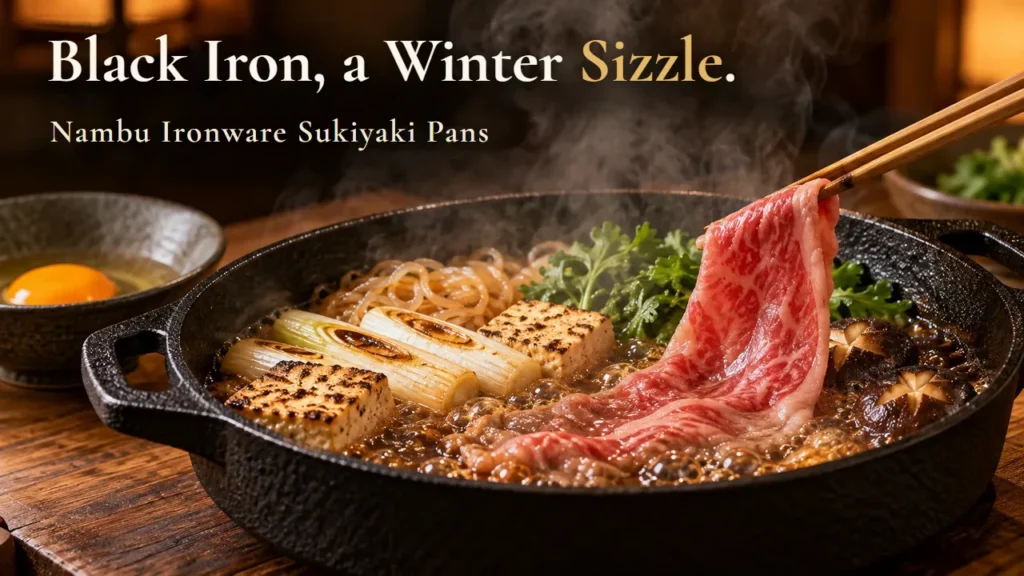
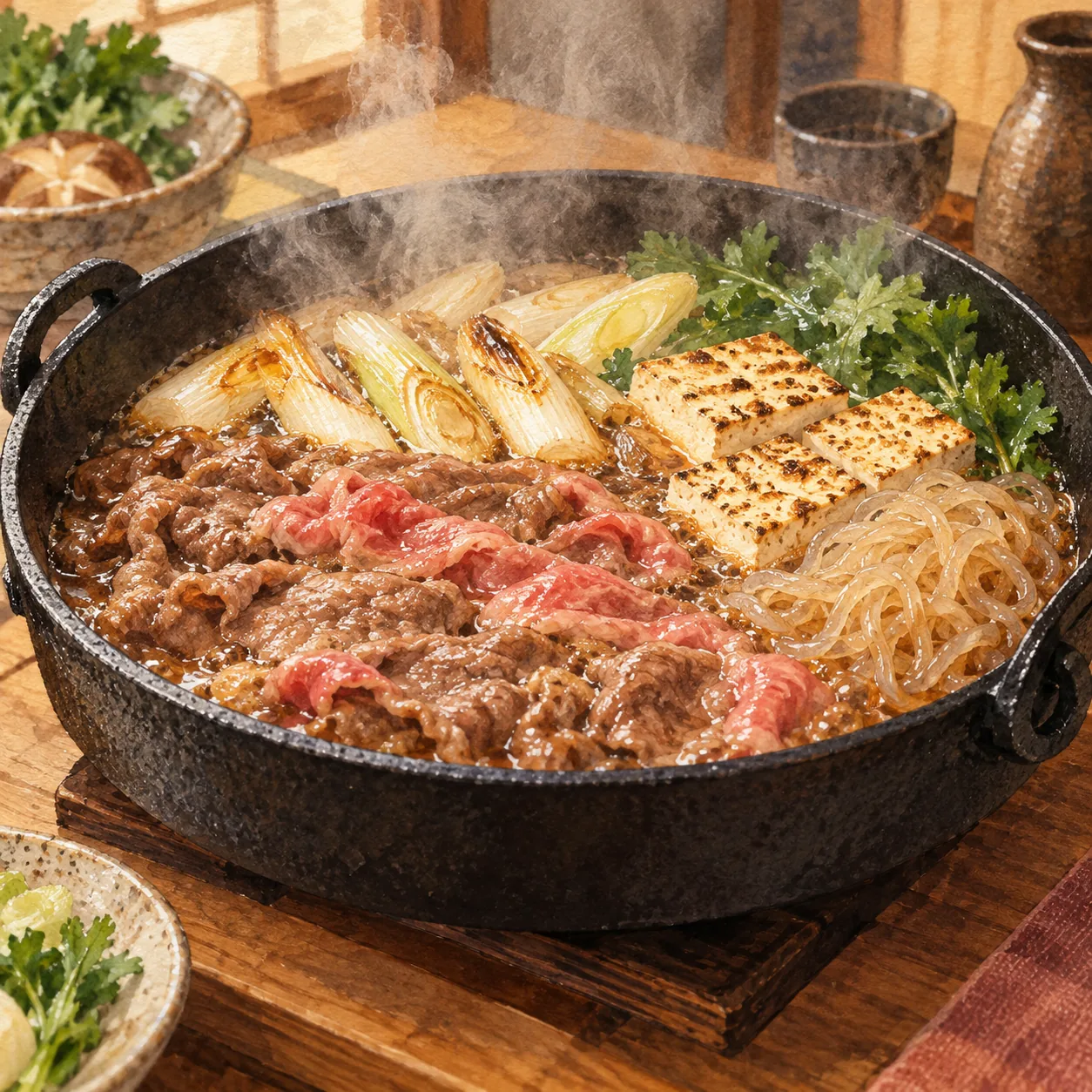
In Japan, the pan for sukiyaki is black cast iron — and the best-known ones come from the Nambu ironware foundries of Iwate Prefecture. Beef, tofu, leeks and shirataki noodles simmered at the table in a sweet soy broth, each bite dipped in beaten raw egg: sukiyaki is a winter dish, and the heavy iron pan is half of it.
Iwate's foundries each make their sukiyaki pan their own way. Oigen, founded in 1852, decorates its pan with the raised arare (hailstone) pattern. Iwachu, founded in 1902, has made the same handled pan for more than half a century. Kamasada, founded in 1908, designs pans shaped by its third-generation owner's years studying design in Finland. This guide compares the three, then covers sizes, weight, and how to season and wash a cast-iron pan.
Quick Reference: Nambu Cast Iron Sukiyaki Pans
| Pan | Size and weight | Serves | Induction |
|---|---|---|---|
| Oigen Muttsu Arare (F-107) ▾ | 27 cm (10.6 in), 3.5 kg | 5–6 | Yes |
| Oigen sukiyaki pan, handled (CA-1) ▾ | 24 cm (9.4 in), 3 kg | About 3 | Yes |
| Iwachu Nambu handled pan ▾ | 24 or 26 cm (9.4 or 10.2 in), about 2.6 kg | 3–4 | Yes |
| Kamasada kumi-nabe, medium ▾ | 24 × 19 cm, 1.3 kg | 2–3 | Yes |
1. Why Japanese: Two Foundry Towns, One Name
Morioka and Oshu
According to Japan's Association for the Promotion of Traditional Craft Industries, Nambu ironware began in the early 17th century, when the Nambu domain invited tea-kettle makers from Kyoto to Morioka. In the area that is now Oshu, then under the Date domain, everyday castings such as pots were made too. Since the 1950s, castings from both Morioka and Oshu have been called "Nambu ironware" together.
The association describes its character in two phrases: "plain and sturdy" and "strong and long-lasting." Its raised arare (hailstone) dots are part of what it calls the warmth of the makers' hands. Nambu ironware was designated a Traditional Craft of Japan in 1975.
2. Oigen: Pans Since 1852, and the Hailstone Pattern
A pot-and-kettle maker in Mizusawa
Oigen was founded in 1852 in Mizusawa, Oshu. Its own history records that its second-generation head sold pots and kettles across the Tohoku region. Pans are where it began.
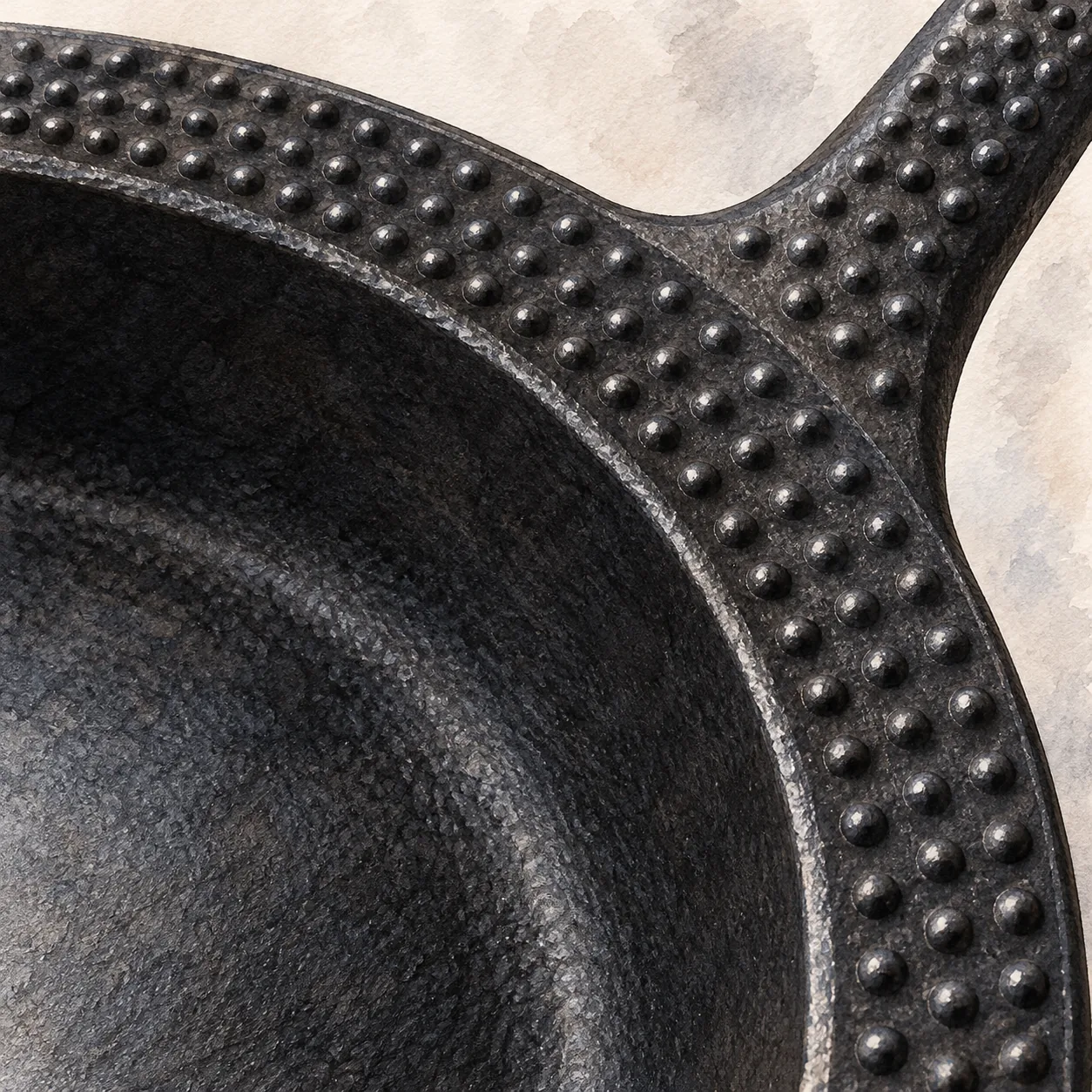
Its Muttsu Arare sukiyaki pan, designed by craftsman Shin Hirose, has won both a Good Design Award and a Long Life Design Award. At 27 cm (10.6 in) it serves five or six, weighs 3.5 kg, and has a raised rim that helps keep the broth from boiling over. It works on gas, induction and in the oven.
Oigen's handled 24 cm pan (CA-1) is the size for about three people. One Japanese retailer describes it this way: "even with vegetables and shirataki added, the temperature doesn't drop, and it doesn't budge when you poke at it with chopsticks." A buyer put it more simply: "It holds heat so well — the meat is delicious." Oigen's dual sukiyaki and gyoza pan (CA-4, 26 cm) is the version listed abroad.
Oigen Nambu cast iron sukiyaki pan CA-4 (26 cm / 10.2 in)
Oigen's sukiyaki-and-gyoza pan, made in Japan. Sukiyaki in winter, crisp-bottomed dumplings the rest of the year. Induction-compatible.
Oigen Nambu Cast Iron Sukiyaki Pan CA-4 (26 cm)
Loading product details…
3. Iwachu: The Handled Pan That Hasn't Changed in Fifty Years
Nothing extra, nowhere for dirt to hide
Iwachu was started in Morioka in 1902 by Iwashimizu Sueyoshi. According to nippon.com, it began its full push abroad around 1995 with colourful Nambu ironware, and about 40% of its sales now come from Europe, North America and Asia.
Its "Nambu handled" (Nambu tsuru-tsuki) series has been made, unchanged, for more than half a century. There are no extra parts or gaps where the handle meets the pan, so it's easy to clean, and the deep black of the iron sets off the food. Iwachu's own site lists both sizes as made in Japan: the 26 cm has an inner diameter of 26 cm and weighs about 2.6 kg, and both work on induction.
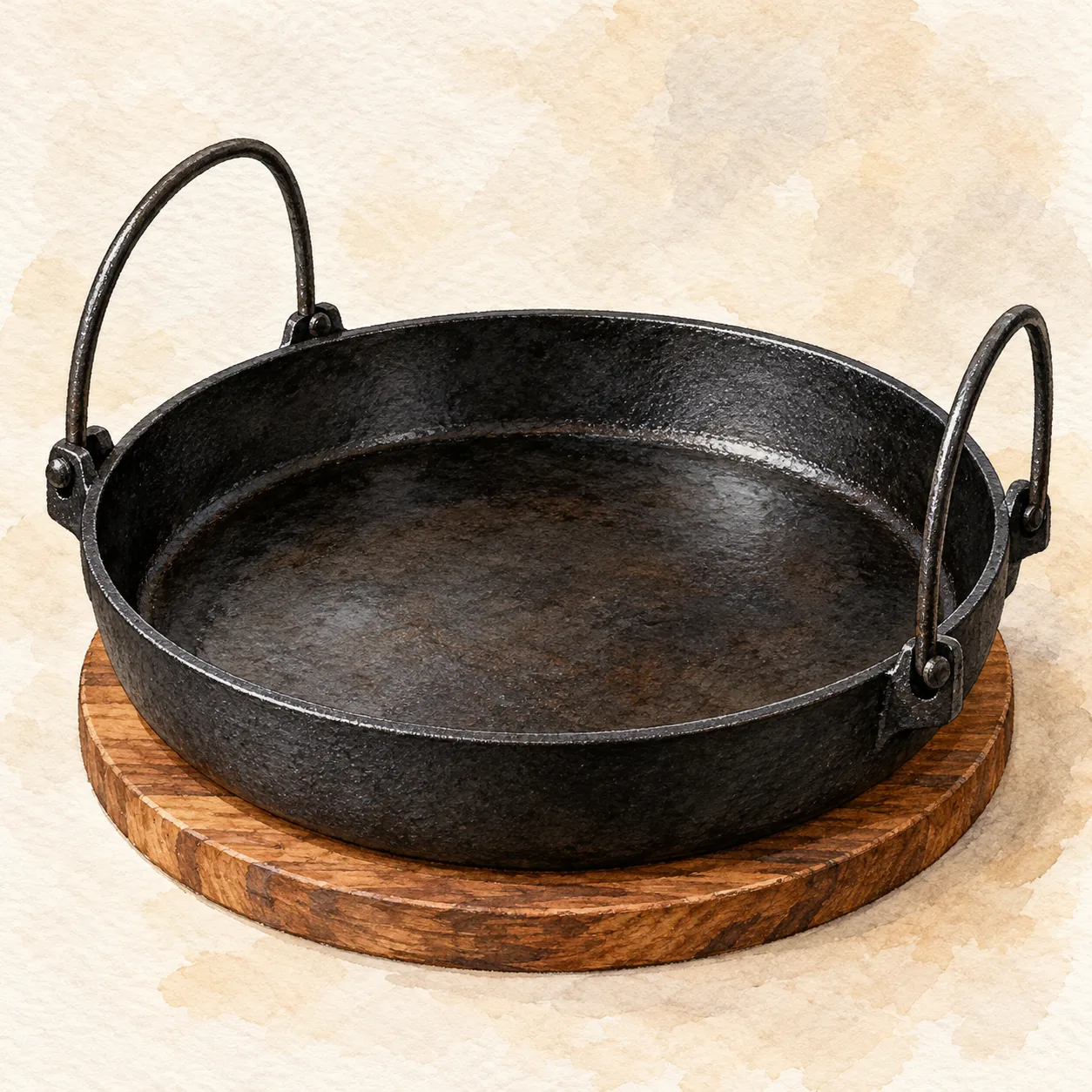
Iwachu Nambu handled sukiyaki pan (26 cm / 10.2 in)
For three or four people. Iwachu's half-century-old design, made in Japan, about 2.6 kg, induction-compatible.
Iwachu Nambu Cast Iron Sukiyaki Pan with Handle (26 cm)
Loading product details…
Iwachu Nambu handled sukiyaki pan (24 cm / 9.4 in)
The same pan, a size smaller — right for two or three, and easier to lift to the table.
Iwachu Nambu Cast Iron Sukiyaki Pan with Handle (24 cm)
Loading product details…
4. Kamasada: A Morioka Pan Shaped by Scandinavian Design
From "Kamaya no Sadakichi," more than a century ago
Kamasada was founded in 1908 as Miya Tetsubin-ten in Konyacho, Morioka. Its third-generation head, Miya Nobuho, says the name probably came from the founder's nickname, "Kamaya no Sadakichi" — Sadakichi the kettle maker.
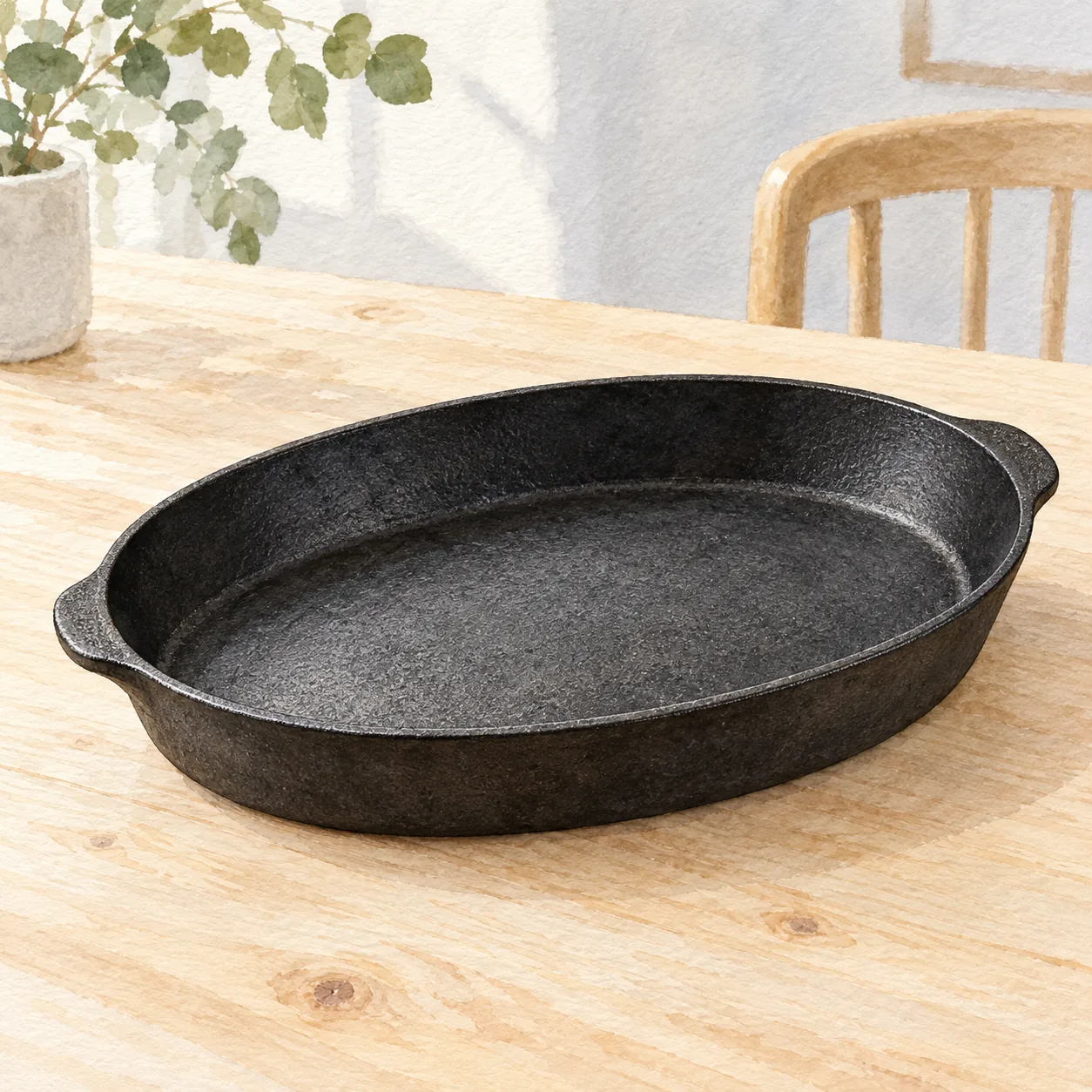
He took over the family business in 1977, and at 30 went to Finland to study Scandinavian design. He describes his thinking with Basho's "fueki ryūkō" (the unchanging and the ever-changing), Rikyu's "shu-ha-ri," and "Less is More." Kamasada's kumi-nabe — sold as a sukiyaki pan — is the result: a shallow pan with nothing to spare. The medium is 24 × 19 cm and 4.5 cm deep, weighs 1.3 kg and serves two or three; there is also a small (one person, 0.8 kg) and a large (four or five, 2.8 kg). It works on induction.
5. How to Choose: People, Weight and Your Stove
1. Size by the number of people
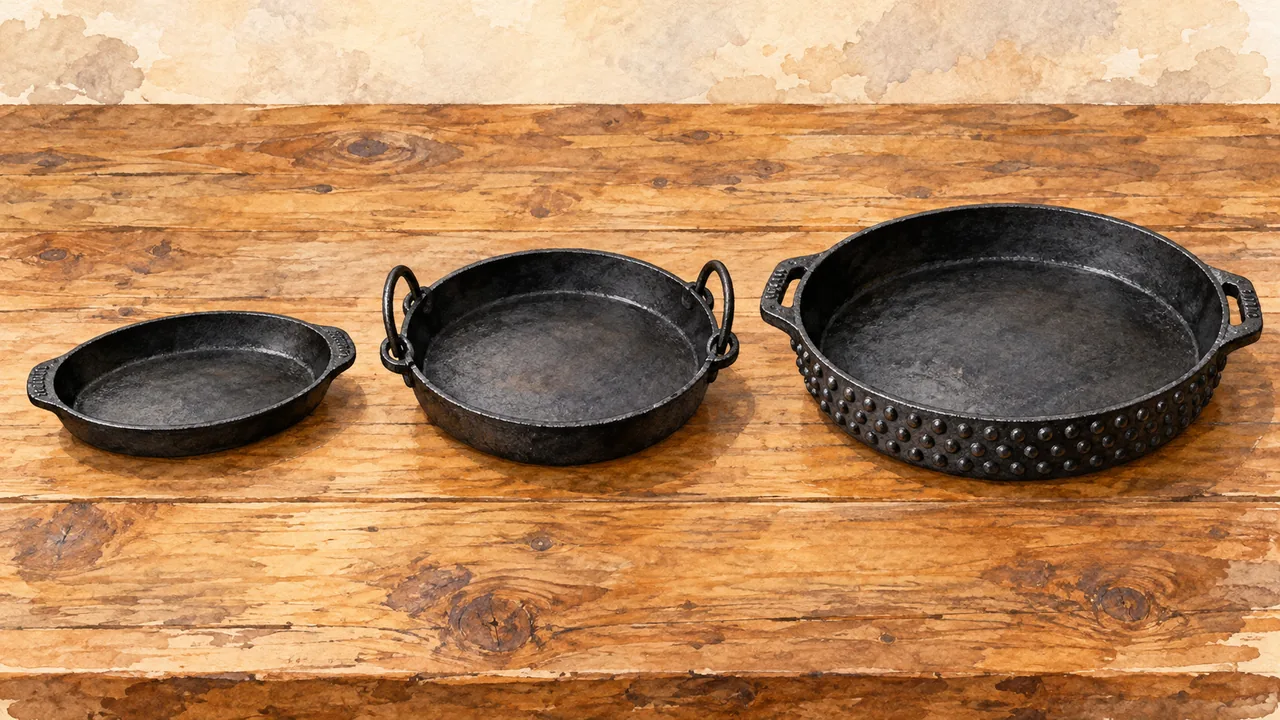
Two or three: 24 cm, or Kamasada's medium. Three or four: 26 cm. Five or six: Oigen's 27 cm. A sukiyaki pan goes from the stove to the middle of the table, so it should hold enough for everyone without constant refilling.
2. Check the weight
Cast iron is heavy, and that weight is what holds the heat. But you'll carry it full of hot broth. Kamasada's medium is 1.3 kg; Iwachu's 26 cm about 2.6 kg; Oigen's 24 cm 3 kg; Oigen's 27 cm 3.5 kg. If lifting is a concern, choose the lighter end.
3. Your stove
Every pan in this guide works on induction as well as gas, so it will work on most modern home stoves. For cooking at the table, a portable gas or induction burner is the usual setup in Japan.
6. Seasoning and Washing a Cast-Iron Pan
First, stir-fry some vegetables in oil
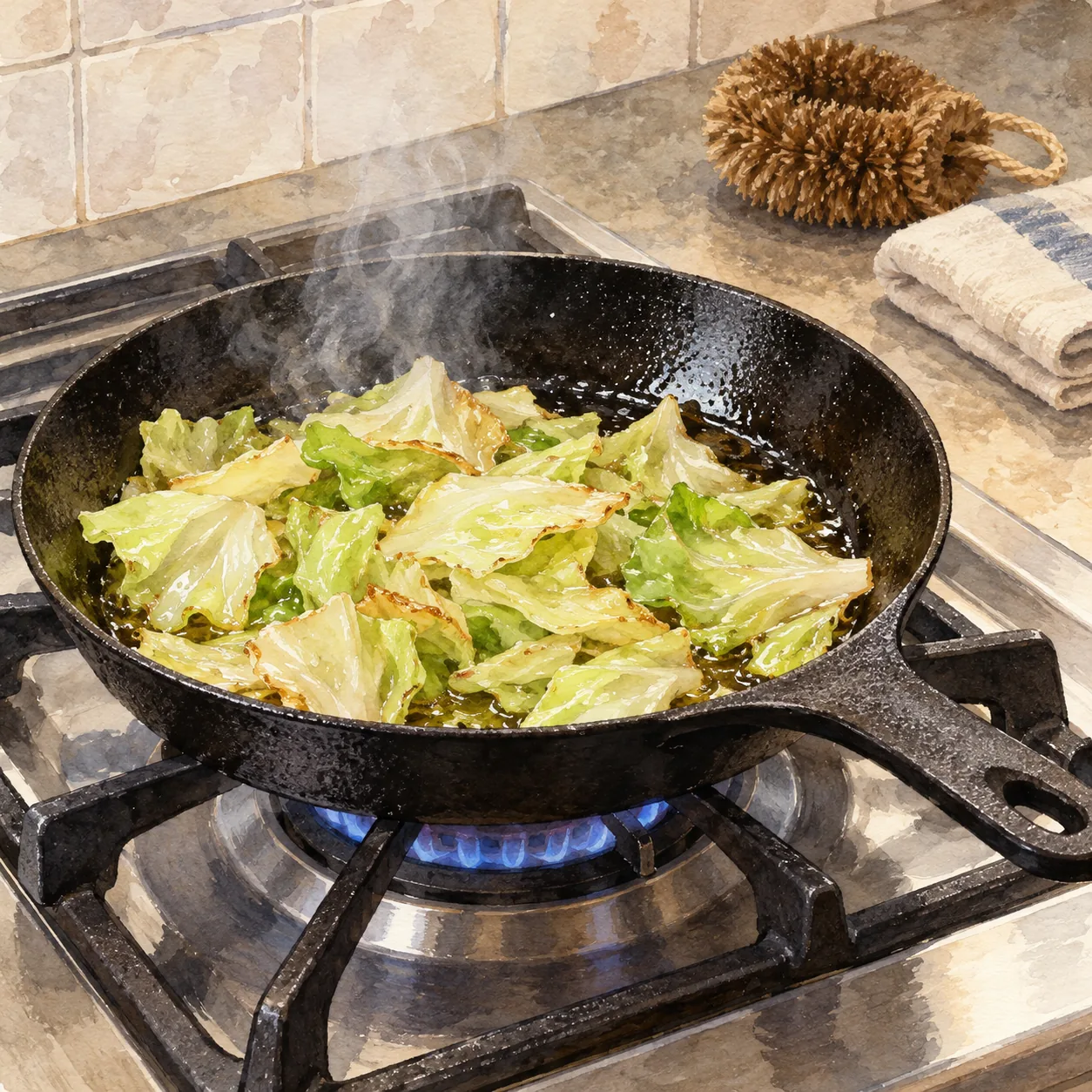
Oigen recommends "abura-narashi" — seasoning with oil — before first use, by simply stir-frying vegetables in plenty of oil. It helps prevent food sticking and rust. Oigen's steps:
- Wash the pan with water.
- Heat it over a medium flame to dry it.
- Add plenty of oil and stir-fry leafy vegetables.
- Wash with a scrubbing brush and warm water.
- Dry it again over a medium flame.
Never pour water onto a very hot iron pan — it throws up a burst of steam that can burn you — and don't heat it empty for too long.
After eating, empty it and wash it warm
Oigen advises moving leftovers into a storage container before they cool, leaving nothing in the pan — food left sitting in it encourages rust. The basic wash is a scrubbing brush and warm water. Dry it over the flame afterwards, and a cast-iron pan will keep going for years.
7. Buying From Outside Japan
- Oigen and Iwachu: the pans in sections 2 and 3 are listed on Amazon.com. Iwachu's own site lists them as made in Japan, and Japanese retailers list Oigen's CA-4 the same way.
- Check the maker's name. Cast-iron sukiyaki pans come from many makers. For Nambu ironware, look for Oigen, Iwachu or Kamasada and "made in Japan" on the listing.
- Kamasada: sold through Japanese shops and its own store in Morioka. As of November 2026 we didn't find it listed on Amazon.com.
8. Frequently Asked Questions
Do Nambu cast iron sukiyaki pans work on induction?
Yes — every pan in this guide is induction-compatible, and works on gas as well. Oigen's Muttsu Arare also goes in the oven.
What should I do before using it the first time?
Season it with oil. Oigen recommends stir-frying vegetables in plenty of oil: wash, dry over medium heat, stir-fry with oil, wash with a brush and warm water, and dry over the flame again.
Can I leave leftover sukiyaki in the pan?
No. Oigen advises moving leftovers to a storage container before they cool. Food left in a cast-iron pan encourages rust.
Can I use dish soap?
The basic wash is a scrubbing brush and warm water, as Oigen recommends. Dry it over the flame afterwards so no moisture stays on the iron.
What size is right for two people?
A 24 cm pan, or Kamasada's medium kumi-nabe (1.3 kg). Both are sized for two or three and are easier to carry to the table than the larger pans.
Where is Nambu ironware made?
In Iwate Prefecture — in Morioka and in Oshu. Since the 1950s, castings from both towns have been called Nambu ironware together. Oigen is in Oshu; Iwachu and Kamasada are in Morioka.
Final Thoughts: Winter Sukiyaki in a Black Iron Pan
The Japanese sukiyaki pan is black Nambu cast iron, made in Morioka and Oshu.
Oigen, making pans since 1852, gives it the hailstone pattern. Iwachu has made the same clean handled pan for half a century. Kamasada shapes it with a Scandinavian eye. Choose by how many gather at the table, check the weight, season it with oil, and wash it warm.
Then put it in the middle of the table this winter, and let it sizzle.
Nanbu Tekki: Japanese Cast Iron Teapots, Kettles & Pans
Japanese Cast Iron Teapots & Kettles: 7 Best Brands