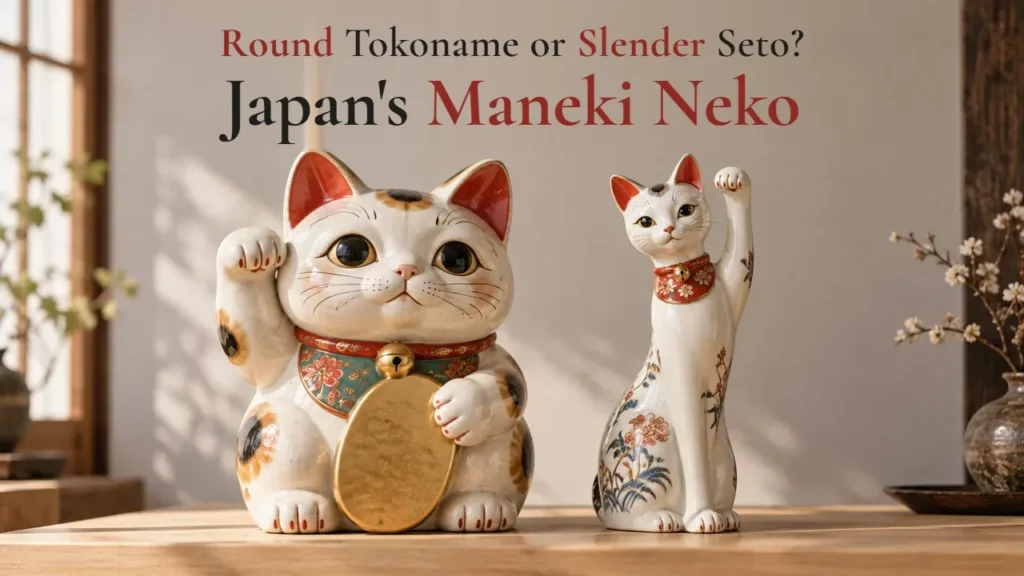
The classic maneki neko face — round head, huge eyes, a gold coin clutched to its chest — is younger than you might think. It was created in Tokoname, Japan, in the decade after the Second World War. Before that, Tokoname's lucky cats were slim, much closer to a real cat.
Aichi Prefecture is home to Japan's two great maneki neko towns: Tokoname, where the round face was born, and Seto, where a slender, arched-back cat has been made since the early 1900s. This guide introduces the round cats of Baigetsu Tomimoto Ningyoen in Tokoname and the slender cats of Chugai Toen in Seto, explains what the raised right or left paw means, what each colour is meant to bring, and how to choose the right size for where it will sit.
Quick Reference: Tokoname Cats vs Seto Cats
| Town and maker | Face and shape | Born | Material |
|---|---|---|---|
| Tokoname — Baigetsu ▾ | Round face, big eyes, chibi proportions, a large gold coin held tight | 1945–1954 (postwar) | Earthenware (tōki) |
| Seto — Chugai Toen ▾ | Slender, with an arched back — the "Old Seto" style | Early 1900s | Porcelain (jiki) |
| Right paw or left? | Right paw invites money; left paw invites customers (section 4 ▾) | ||
1. Why Japanese: The Round Face Was Born in Tokoname
From a sleek cat to a round one
The Tokoname Tourism Association tells the story like this: maneki neko were made in Tokoname before the war, but they were slim, realistic cats. Then, in the decade after the war (1945–1954), the third-generation head of Baigetsu Tomimoto Ningyoen and a sculptor friend turned a bold idea into a shape: a round head, big eyes, and a stout little body. That face spread across Japan almost at once.
If the lucky cat you picture is round-faced and wide-eyed, that is the face one small workshop in Tokoname created.
Two faces, one prefecture
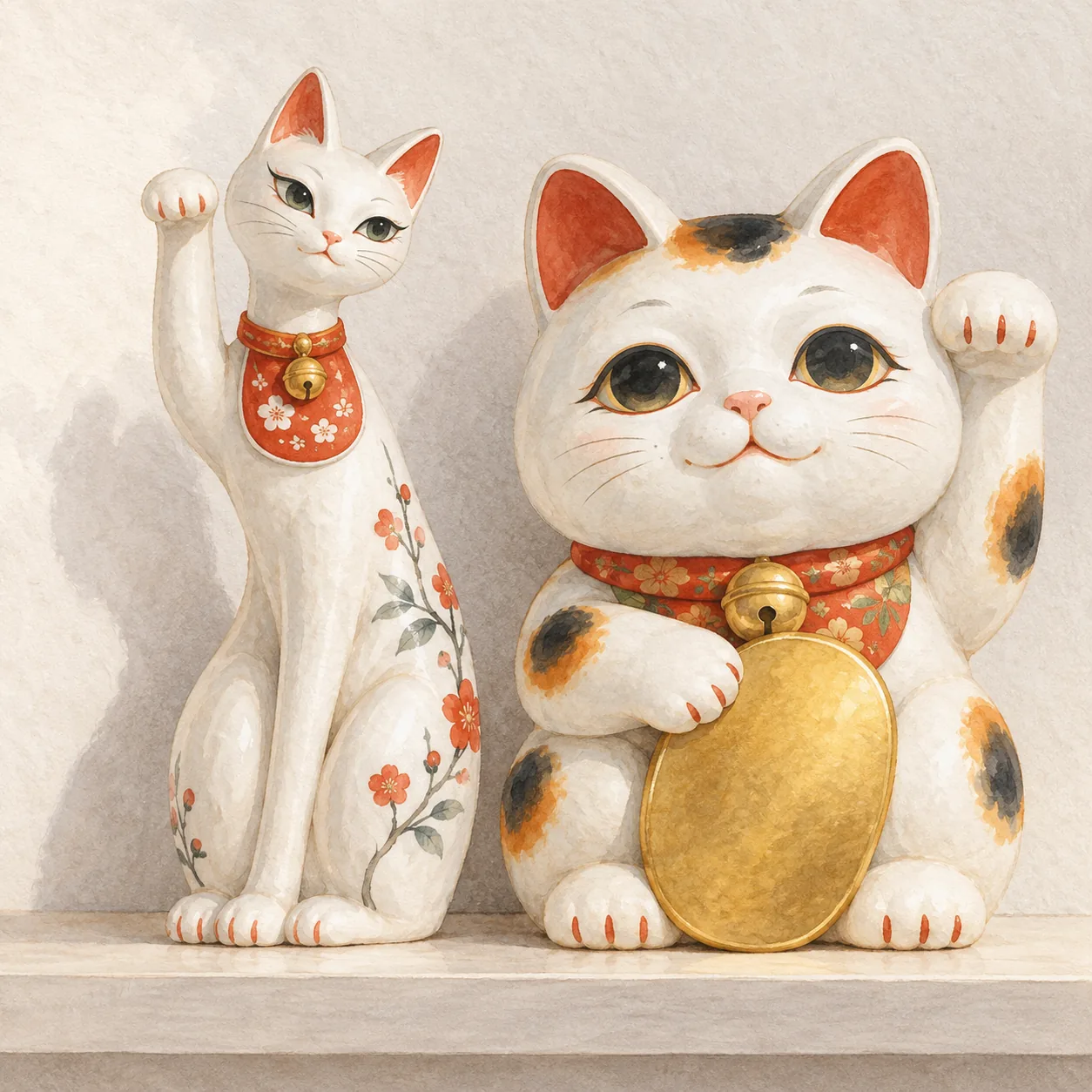
Aichi Prefecture's official tourism site divides its two lucky-cat traditions neatly: the slim, elegant Seto style in porcelain, and the chubby Tokoname style in earthenware. Neither is the "real" one. The slender arched back of Meiji-era Seto and the round face of postwar Tokoname are both genuinely Japanese, made in the same prefecture by makers who are still working today. Which face calls to you decides which cat you bring home.
2. Tokoname: Round, Big-Eyed, Holding the Coin Tight
Each one finished by hand
Baigetsu Tomimoto Ningyoen, the workshop that created the round face, still makes maneki neko in Tokoname. Its site says every single cat is handmade by its craftspeople.
Big ears, a round face, large drooping eyes, chibi proportions. In the words of Aichi's tourism site, the large gold coin gripped in its paw stands for a thriving business. Tokoname-style cats are said to account for about 80% of the lucky cats made in Japan, and Baigetsu says it produces about 80% of the national share itself — and exports overseas.
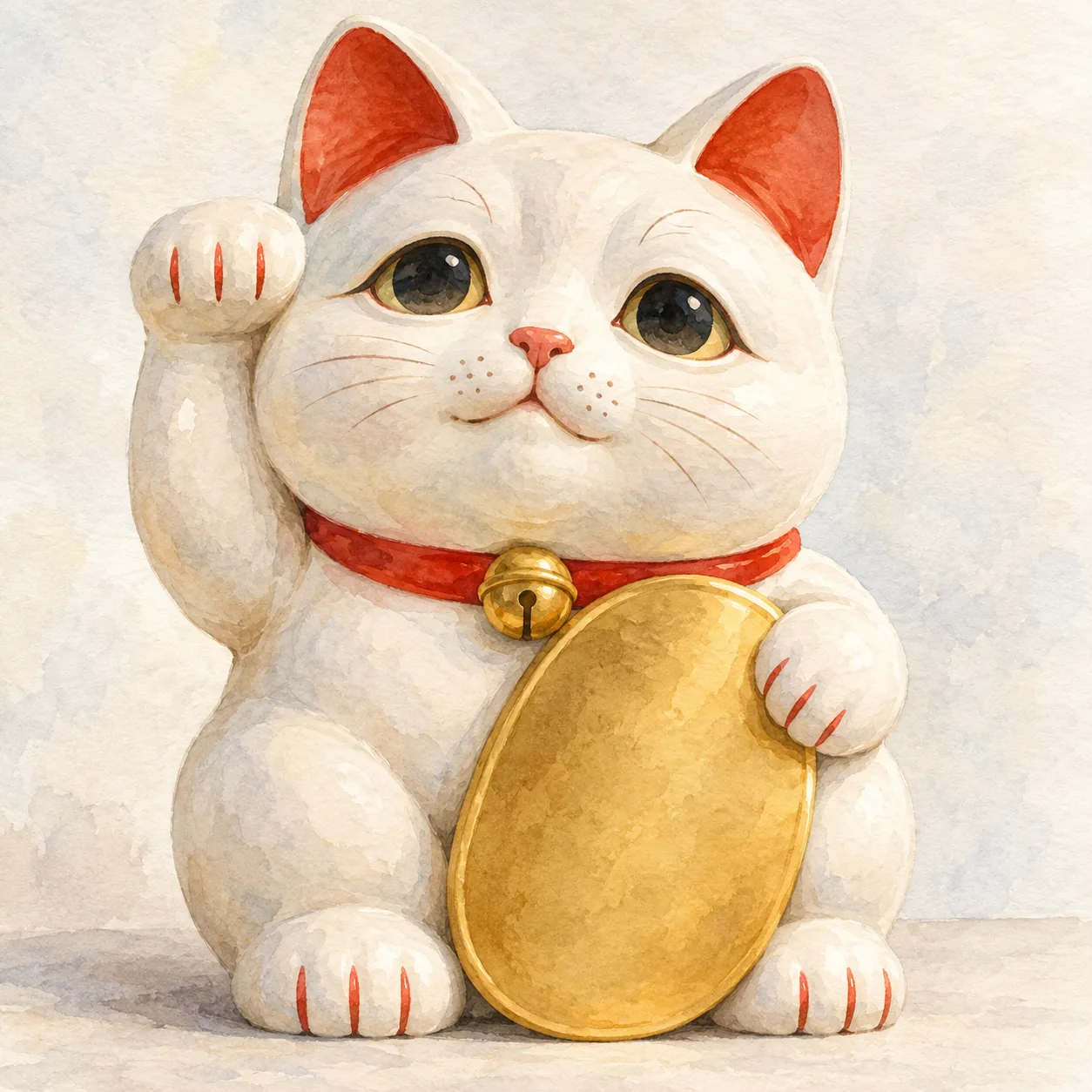
Tokoname-ware white maneki neko, right paw (7.5 in)
The classic Tokoname face in white. White is the colour of "inviting good fortune," and the raised right paw invites money — the standard choice for a shop counter or a business-opening gift. Listed as made in Japan, in Tokoname.
Tokoname-Ware White Maneki Neko, Right Paw (7.5 in)
Loading product details…
Tokoname-ware white maneki neko, left paw (7.5 in)
The same white cat, beckoning with the left paw. The left paw invites customers and people. Set it beside a right-paw cat and display them as a pair — one for money, one for people.
Tokoname-Ware White Maneki Neko, Left Paw (7.5 in)
Loading product details…
Did you know: Tokoname has a 3.8-metre lucky cat
On the road from Tokoname Station to the tourist information centre, a giant lucky cat peers over the top of a wall. Its nickname is "Tokonyan," the watching cat — 3.8 m tall and 6.3 m wide (Tokoname Tourism Association). Along the wall below it runs "Tokoname Maneki Neko Street," lined with 39 ceramic lucky cats by local makers, each with its own blessing, and 11 lifelike cats.
3. Seto: The Slender, Arched-Back "Old Seto" Cat
A cat born from European plaster moulds
Chugai Toen, founded in Seto in 1952, explains where Seto's lucky cats came from: by adapting plaster-mould techniques brought in from Europe, Seto potters created the "Old Seto" (Furuseto) maneki neko in the first decade of the 1900s — slim, with an arched back, like a real cat.
Its Seto Maneki Neko line carries on that technique and that look, made one by one from forming the body to painting. Chugai Toen also keeps its product design in-house rather than outsourcing it, which is unusual among makers.
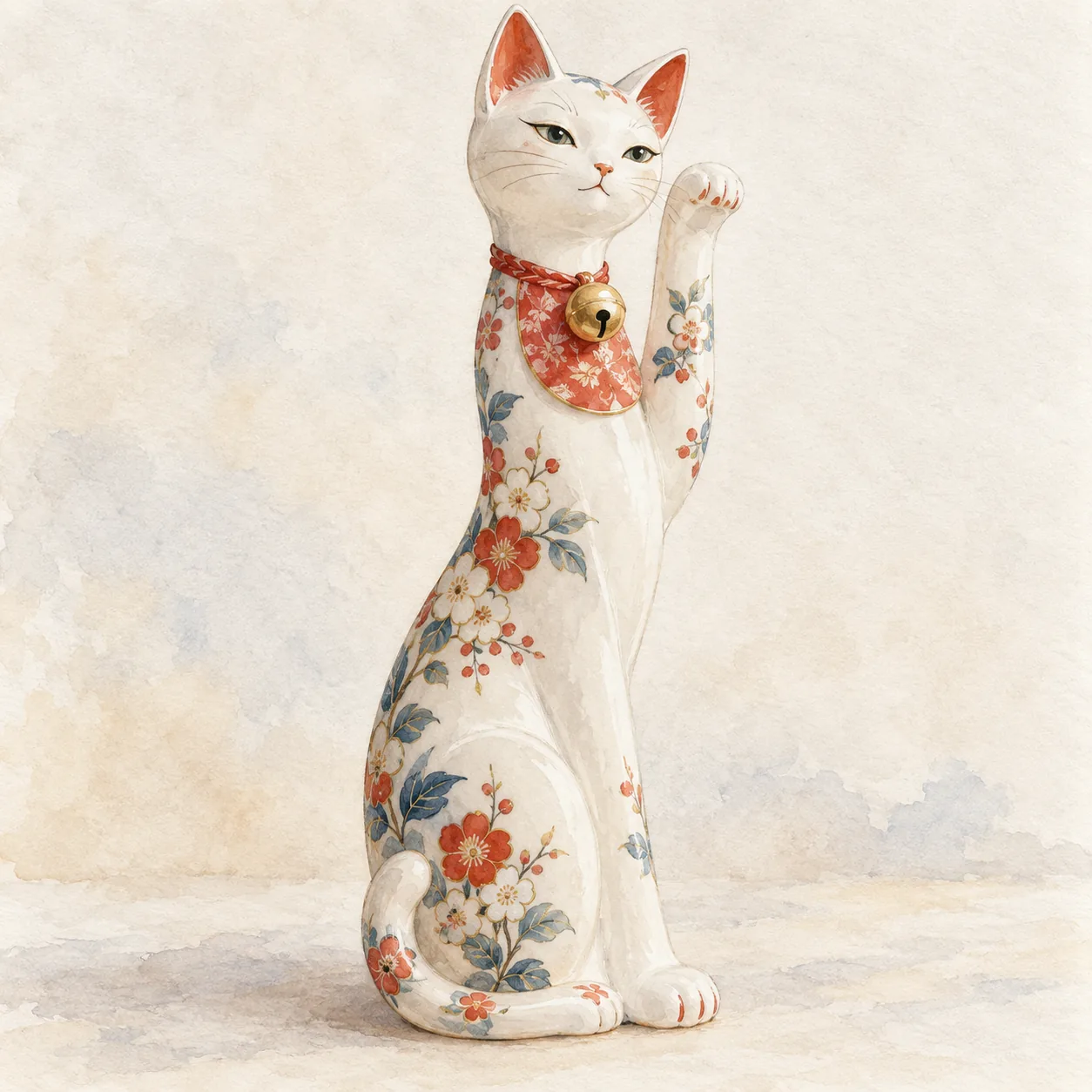
SETOMANEKI: the Seto cat for modern rooms
Chugai Toen runs a second brand, SETOMANEKI, which reworks the Seto lucky cat that has been made since the late Meiji era for the way people live now. These are smooth porcelain cats stripped of ornament, each painted by hand, so the colour falls a little differently on every one. It is a lucky cat that sits as comfortably in a Scandinavian-style room as in a Japanese one.
When we checked in November 2026, neither Seto Maneki Neko nor SETOMANEKI had an English shop page; both are sold through Japanese retailers. Small SETOMANEKI cats stand about 10 cm (4 in) tall; the Seto Maneki Neko size 3 is 9.3 cm (3.7 in).
4. Right Paw for Money, Left Paw for Customers — and the Colours
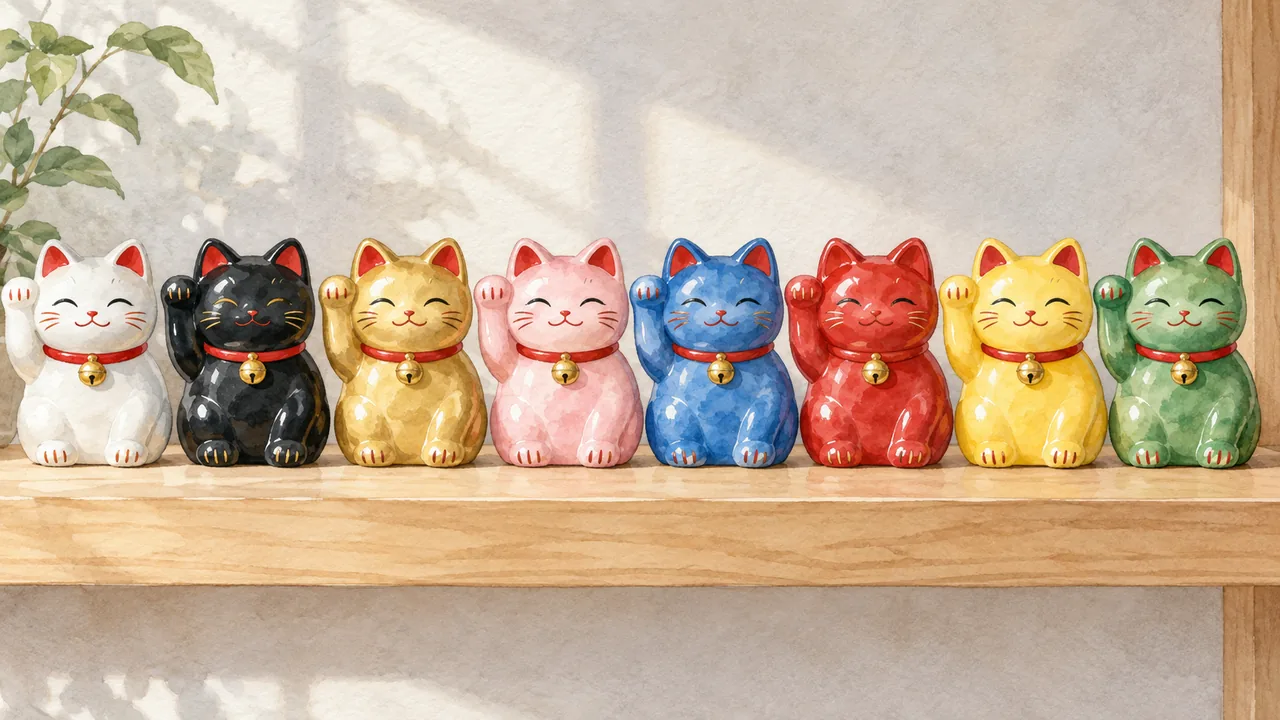
Which paw is raised changes what it invites
According to Aichi's tourism site, a cat with its right paw raised invites money, and a cat with its left paw raised invites customers. A shop that wants more people through the door might choose the left. If you can't decide, display a right and a left together as a pair.
What each colour is meant to bring
The Tokoname Tourism Association lists the wish behind each colour:
- Pink (sakura): love
- Blue: safety
- Yellow: good relationships
- Green: passing exams
- Gold: wealth
- White: good fortune coming in
- Black: warding off bad luck
- Red: good health
Choose the colour to match what the person receiving it is going through, and the cat becomes a message in itself — green for a student facing exams, blue for someone with a new car.
5. How to Choose: Earthenware or Porcelain, Size and Place
1. Tokoname earthenware or Seto porcelain
Aichi's tourism site classes Tokoname cats as earthenware and Seto cats as porcelain. Seto porcelain is good at fine detail — soft lines, the frill of a bib — while Tokoname cats are plump and full. They feel as different in the hand as they look.
2. Match the height to the spot
Japanese lucky cats are sized by number ("gō"), and the height for each number varies by maker, so always check the actual height. For reference: Baigetsu's white koban cat is 16 cm (6.3 in) at size 5 and 19 cm (7.5 in) at size 6.
On a desk or beside a till, about 10 cm (4 in) is right. At an entrance or a shop doorway, go a size or two bigger. Measure the spot first and you'll find the right cat.
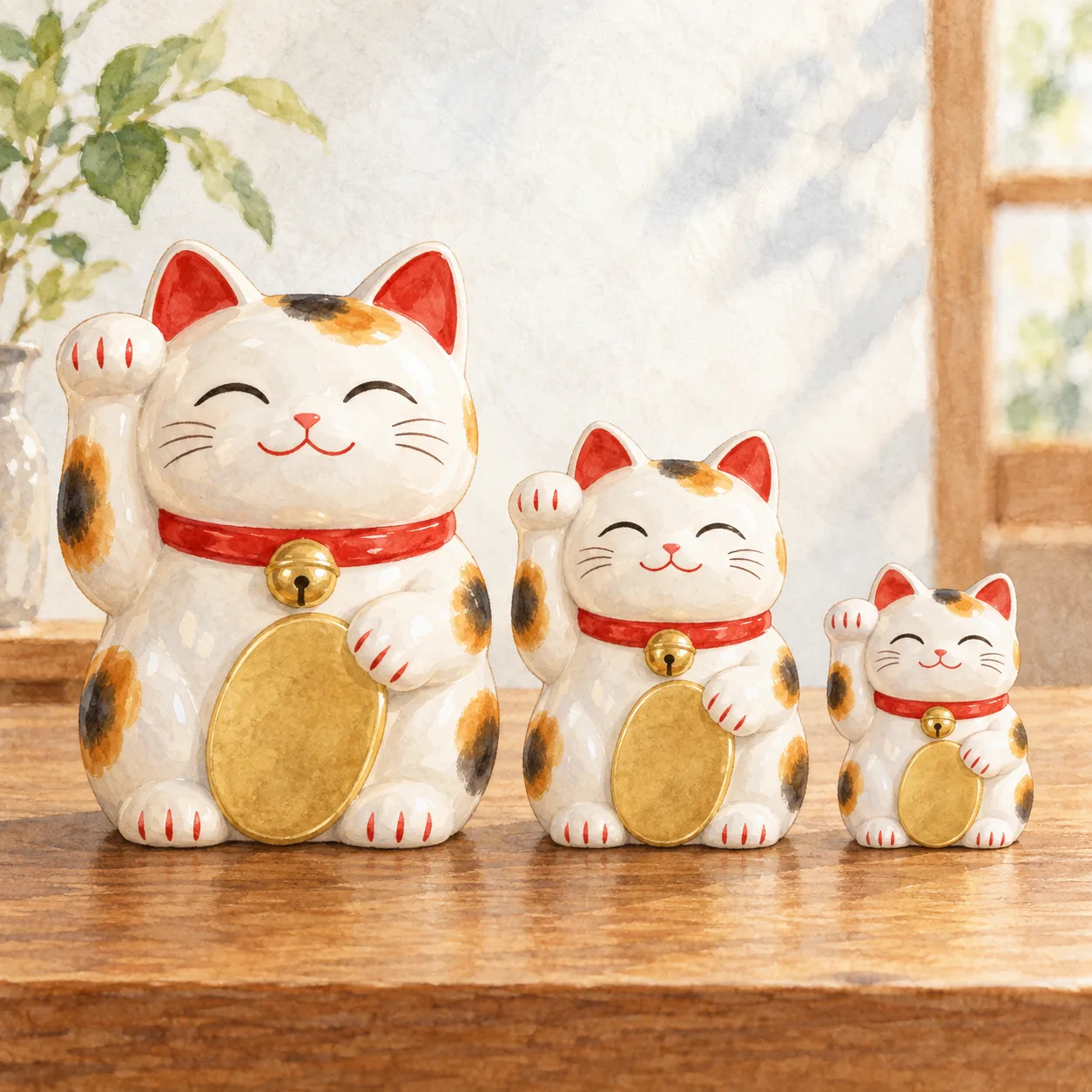
3. Sizes at a glance
| Lucky cat | Height | Where it suits |
|---|---|---|
| SETOMANEKI small (Seto) | about 10 cm / 4 in | Desk, shelf, till |
| Seto Maneki Neko size 3 (Seto) | 9.3 cm / 3.7 in | Desk, shelf, till |
| Baigetsu white koban cat size 5 (Tokoname) | 16 cm / 6.3 in | Entrance, shop counter |
| Tokoname white cat, 7.5 in (above) | about 19 cm / 7.5 in | Entrance, shop doorway |
6. Buying From Outside Japan
Lucky cats are everywhere abroad, but many are not made in Japan. If you want one from Tokoname or Seto, these are the things to check.
- Look for "Tokoname" or "Seto" and "Made in Japan" on the listing. The two Tokoname cats in section 2 are listed that way on Amazon.com.
- Earthenware or porcelain should match the town. Tokoname cats are earthenware; Seto cats are porcelain.
- The makers' own shops are in Japanese. Baigetsu says it exports overseas; as of November 2026, neither Baigetsu nor Chugai Toen lists international shipping or an English shop.
If you visit Japan, the two towns themselves are the best place to buy — you can see each face in person before choosing.
7. Visiting the Two Lucky-Cat Towns
Tokoname: Maneki Neko Street and Tokonyan
A short walk from Meitetsu Tokoname Station, Tokonyan looks down from its wall. According to Aichi's tourism site, you can see it from the station platform and even from the train. Each of the 39 ceramic cats along the wall has its maker's name and blessing beside it; look for your favourite as you walk on into the town's pottery path.
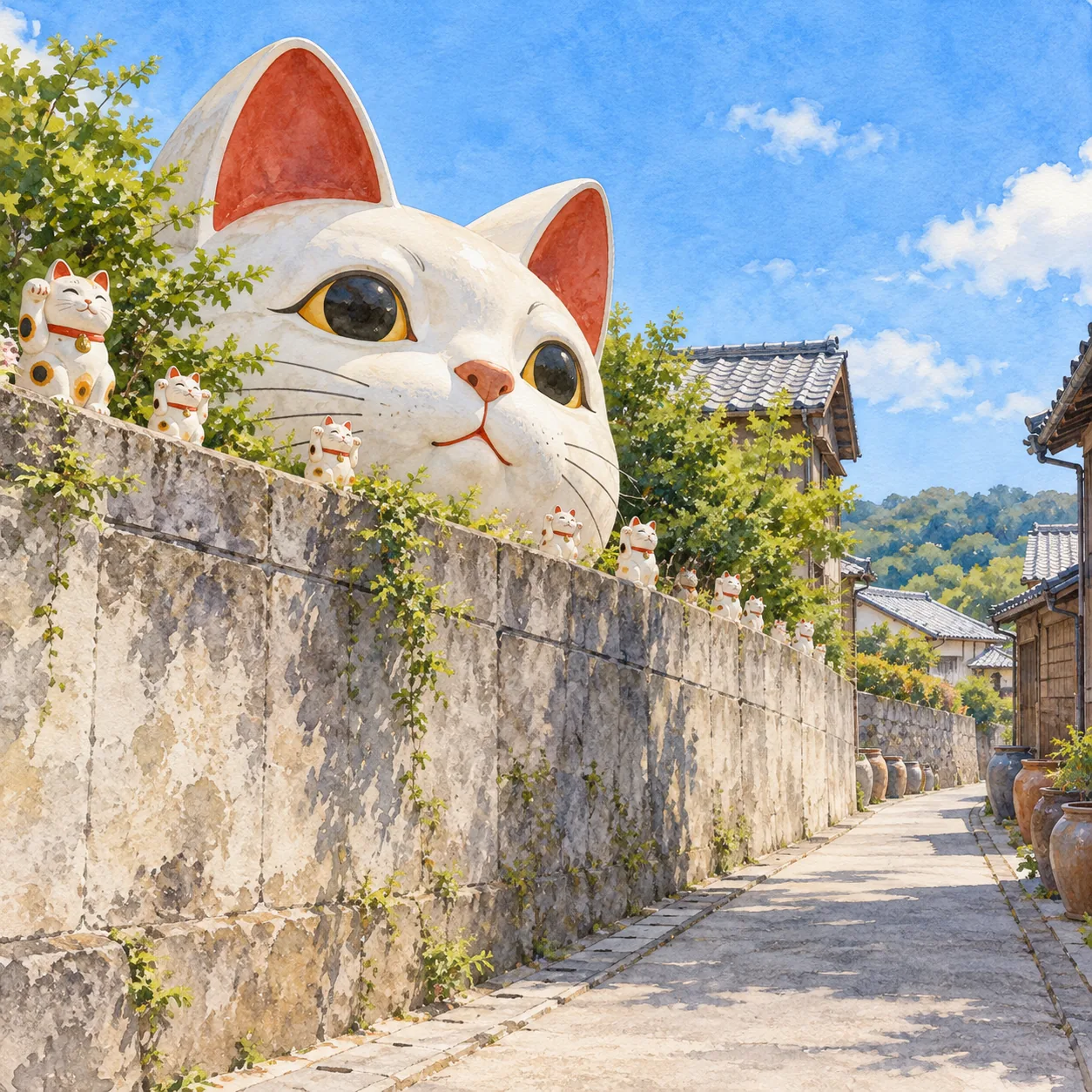
Seto: the Maneki Neko Museum
Seto is home to the Maneki Neko Museum, run by Chugai Toen, which Aichi's tourism site describes as Japan's largest museum devoted to lucky cats, with thousands of pieces on display. With old and unusual cats side by side, it's the perfect place to find out which face you're drawn to. Check opening days before you go.
8. Frequently Asked Questions
What is the difference between Tokoname and Seto lucky cats?
Tokoname cats have round faces, big eyes and chibi proportions; Seto cats are slender with an arched back. Aichi Prefecture classes Tokoname cats as earthenware and Seto cats as porcelain. The round Tokoname face was created in the decade after the war (1945–1954); Seto's "Old Seto" style dates to the early 1900s.
Should I choose a right paw or a left paw?
A raised right paw invites money; a raised left paw invites customers. A shop that wants more visitors might choose the left. Displaying a right and a left together as a pair is also common.
Do the colours mean anything?
Yes — each colour carries a wish. According to the Tokoname Tourism Association: pink for love, blue for safety, yellow for good relationships, green for exams, gold for wealth, white for good fortune, black to ward off bad luck, and red for health.
Which lucky cat makes a good gift for a new business?
A left-paw cat, which invites customers, says it best. For a shop counter, around 16–19 cm (6–7.5 in) is a good size. If the shop has a modern look, a SETOMANEKI cat from Seto fits in well.
Where did the maneki neko come from?
There are several stories. Aichi's tourism site tells one from Edo-period Asakusa: an old woman dreamed of a cat that told her to make its figure in clay, good things followed, and lucky cats became a craze. The round face most people know today came much later, from postwar Tokoname.
Is a lucky cat made in Japan different from others?
A Tokoname or Seto cat is made where the tradition lives — Baigetsu finishes each cat by hand, and Chugai Toen forms and paints each one individually. Look for the town name and "Made in Japan" on the listing.
Final Thoughts: Round Tokoname or Slender Seto?
The round lucky-cat face so many people know was born in Tokoname in the decade after the war, shaped by the third generation of Baigetsu Tomimoto Ningyoen and a sculptor friend. Tokoname cats are earthenware, big-eyed and plump, holding their gold coin tight, each finished by hand.
Seto's cats are older and slimmer: the arched-back "Old Seto" style from the early 1900s, carried on in porcelain by Chugai Toen, with SETOMANEKI reshaping it for modern rooms.
Right paw for money, left paw for people, a wish in every colour. Is it the round Tokoname face that calls to you, or the slender Seto one? Either way, a lucky cat from the towns that made it is a small piece of Japan that keeps beckoning.
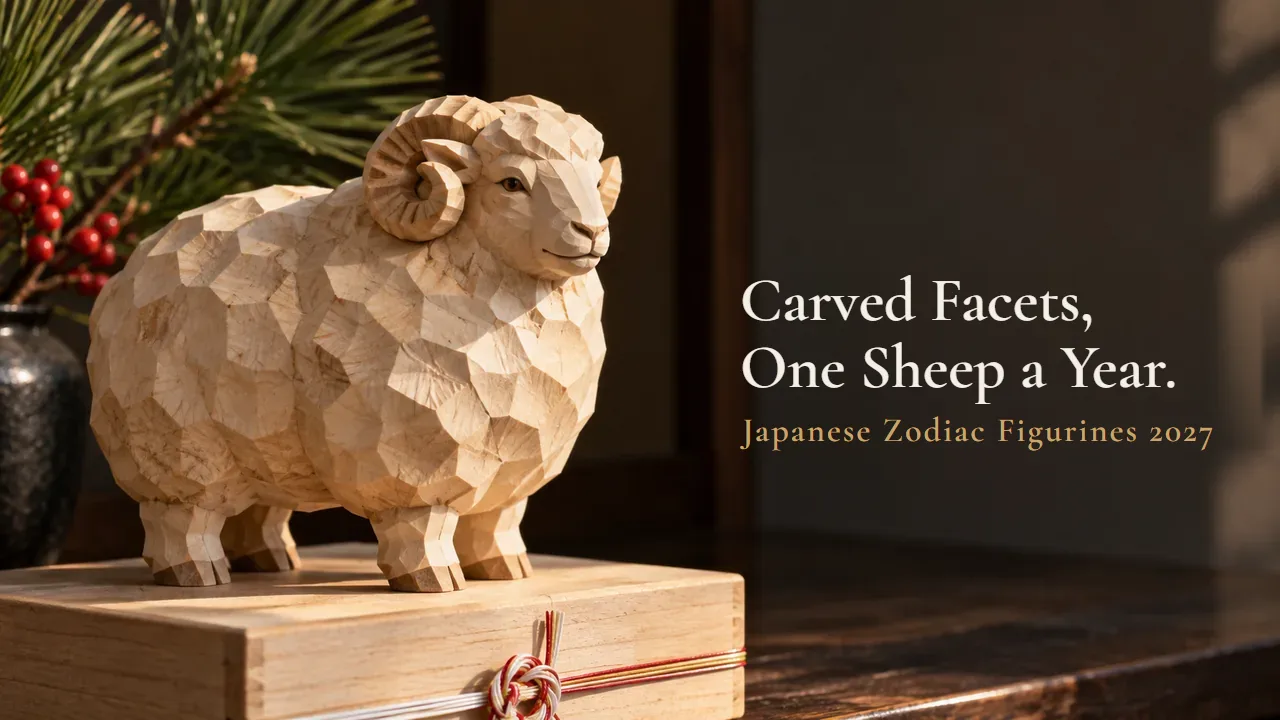
Japanese Zodiac Figurines for 2027, the Year of the Sheep
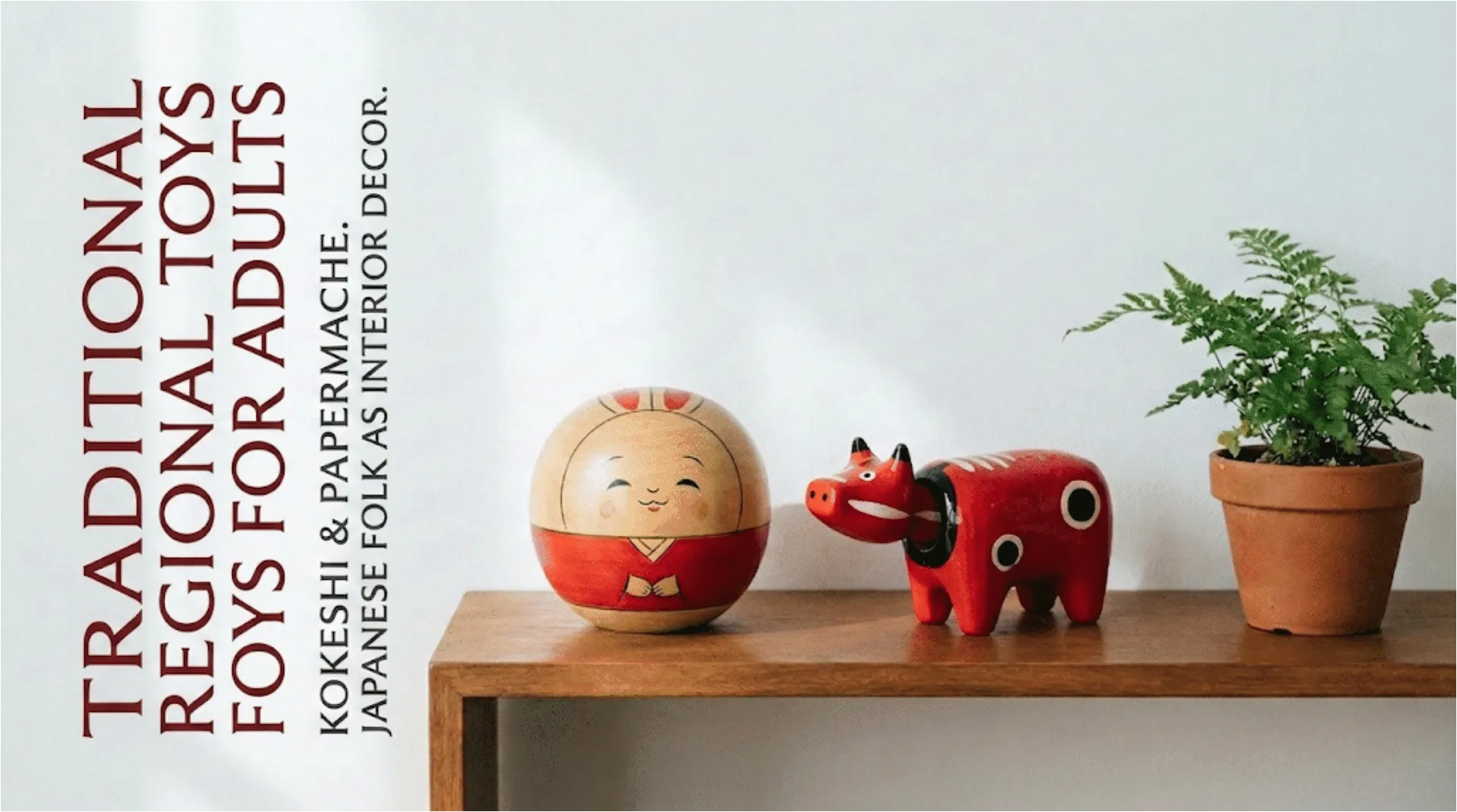
Kokeshi & Japanese Folk Toys