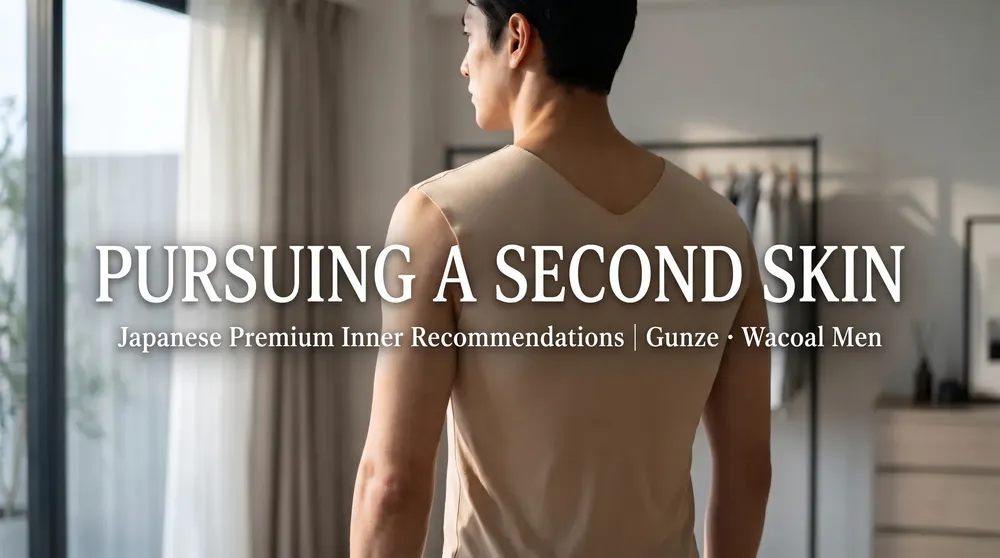
Japanese undershirts solve three specific problems: the seams that show through a dress shirt, the label that scratches the back of your neck, and cotton that holds sweat against you in humid weather. The engineering behind each is genuinely interesting, and all three are things you can verify on your own body within a day.
⚠ One warning before anything else. Japanese sizing runs noticeably smaller than European or American sizing, and innerwear is cut close to begin with. Ordering your usual letter is the single most common way to be disappointed by these — there is a section below on what to do instead.
Premium Japanese Innerwear vs. Standard Cotton
| Feature | Japanese Seamless Tech | Standard Cotton Undershirt |
|---|---|---|
| Construction | Completely seamless (glued/laser cut) | Bulky stitched seams at shoulders/sides |
| Tags | Printed directly on fabric | Sewn-in tags that scratch the neck |
| Visibility | Invisible under dress shirts | Visible lines and bulk |
1. The Magic of Cut-Off (Seamless) Tech
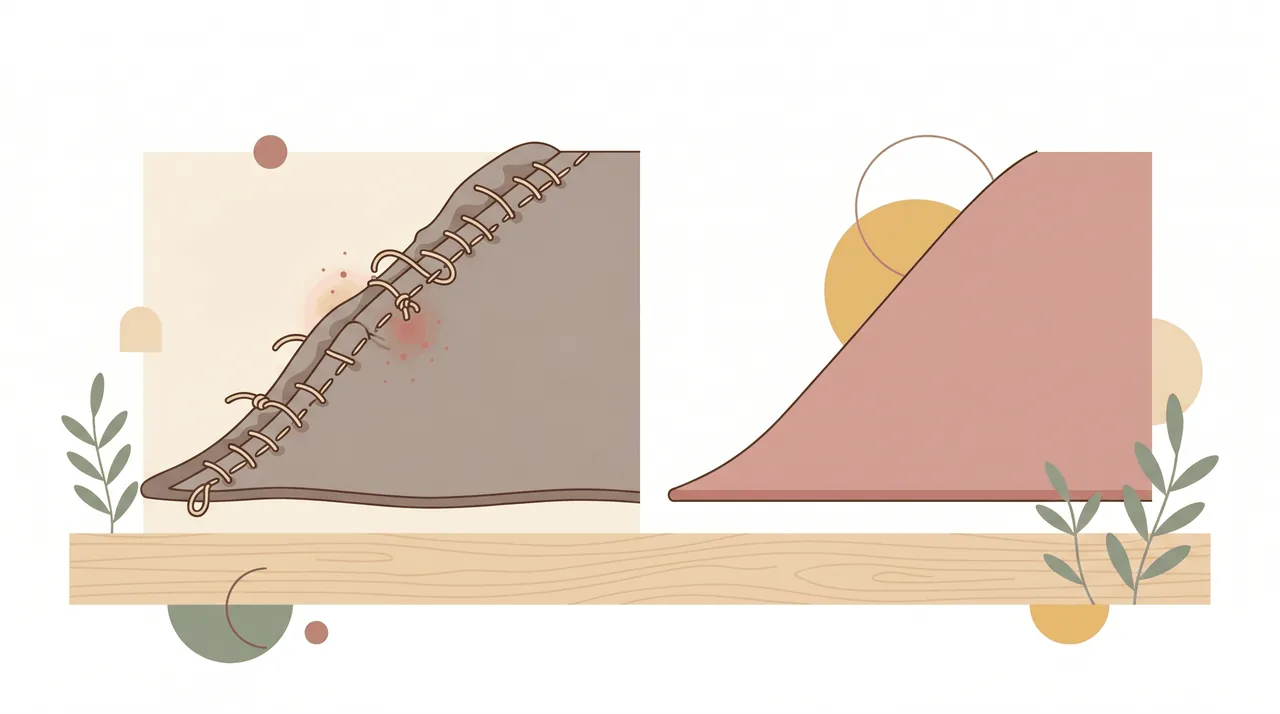
The biggest innovation in Japanese innerwear over the last decade is the "Cut-Off" technology pioneered by Gunze. Traditional undershirts require folded and stitched hems at the neck, sleeves, and bottom. These hems create bulky lines that show through your outer clothing and dig into your skin.
Cut-off construction uses a knit structure that will not unravel at a raw edge, so the hem can be dispensed with entirely rather than folded and stitched. The edge simply stops. It lies flat against the skin with no ridge at all, which is what removes the outline that shows through a thin shirt.
It is worth knowing that "seamless" covers two different constructions, because they age differently. Cut-off deals with the hems. Bonded seams — where panels are glued rather than sewn — deal with the side and shoulder joins. A shirt may use one, the other, or both. Bonded seams are the ones with a lifespan: the adhesive eventually gives up, usually at the underarm, and heat is what kills it. That is the real reason these should not go in a hot dryer.
2. Moisture Wicking: Defeating the Japanese Summer
Engineering Sweat Away
The Japanese summer is notoriously humid. Wearing a 100% heavy cotton undershirt in Tokyo in August is a recipe for disaster, as the cotton absorbs sweat and holds it against your skin, making you feel cold and clammy when you enter an air-conditioned room.
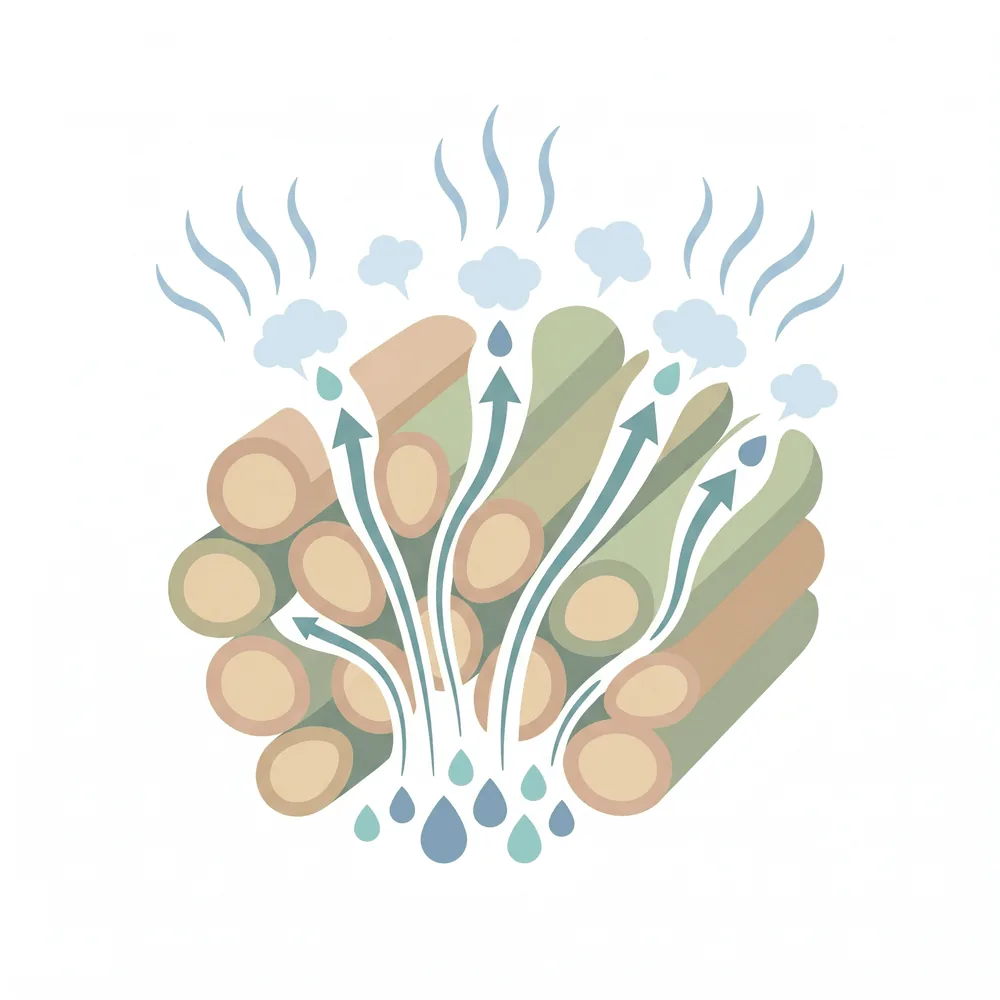
The answer these shirts use is a blend: cotton for how it feels, plus a synthetic or regenerated fibre such as cupro or a fine polyester. The synthetic does not absorb water into the fibre the way cotton does — it moves it along the surface by capillary action, spreading it thin across a wide area where it can evaporate instead of pooling in one place.
⚠ Be clear about what this does and does not do. It does not stop you sweating, and in genuinely severe humidity nothing will. What it changes is what happens to the sweat afterwards — whether it sits against your skin in a cold patch or spreads out and dries. That is a smaller claim than the marketing makes, and it is the one that actually holds.
It also explains the specific misery this is designed around. Japanese summer means moving between a humid street and a heavily air-conditioned building, repeatedly. A saturated cotton undershirt turns cold the moment you step inside, which is the sensation these blends exist to prevent. If your climate is dry, or you are not doing that transition several times a day, the benefit is real but much smaller — worth knowing before paying for it.
3. Tagless Comfort for Sensitive Skin
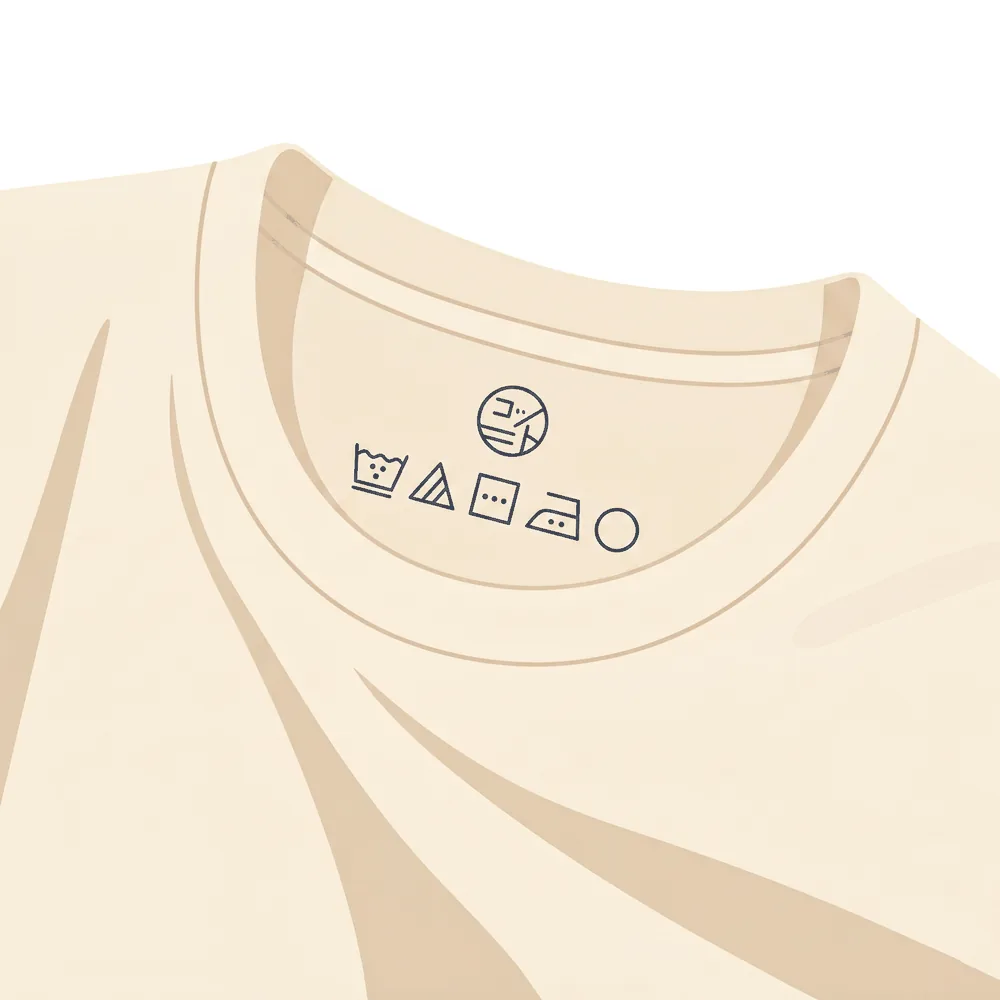
Zero Irritation
The washing-instruction label at the back of the neck is a small thing that turns out to matter, and it is one of those details you only notice once it is gone.
Most Japanese innerwear brands have dropped sewn-in labels entirely, printing the size and care instructions straight onto the inside of the fabric instead. The printing is soft enough that you cannot feel it, and it stays legible far longer than a folded label stays comfortable.
⚠ The printing does fade with washing, which is the trade-off. If you buy several sizes or several people's shirts at once, note which is which before the print goes — there will be nothing else to tell them apart.
What the Odour-Control Finish Actually Is
Many Japanese shirts carry a silver-ion finish or a weave designed to slow the bacterial growth that turns sweat sour. It is a textile finish, not a guarantee — it buys you hours rather than days, and it washes out gradually over the life of the garment.
4. Top Japanese Innerwear Brands
Gunze (YG / Seek)
The one that developed cut-off, and the default choice.
Founded in 1896 as a silk company, and the originator of the cut-off construction described above. The YG line is the everyday range and the sensible starting point; Seek sits above it and is aimed squarely at people wearing thin dress shirts who do not want anything visible underneath.
Gunze has an English corporate presence, but the innerwear range is sold almost entirely in Japan. We could not confirm a reliable retail route in English. It is easy to buy in Japan, and we would rather say so than send you to a search that returns something else.
Wacoal Men
Pattern-cutting borrowed from the lingerie side.
Wacoal's men's line draws on the body-measurement research behind their women's business, and it shows in the panelling — the shaping is done by how the pieces are cut rather than by compressing you into the garment. The fabrics run silkier and thinner than Gunze's, which some people love and others find insubstantial.
Wacoal has a substantial international business, but Wacoal Men is a largely domestic line. We could not confirm a reliable English-language route to these specific products. Buying in Japan is straightforward.
5. The Secret to Invisible Undershirts
⚠ Order one or two sizes up
This is the practical thing to get right, and it catches almost everyone. Japanese sizing is not a translation of Western sizing — a Japanese L is not a European L, and innerwear compounds the problem because it is cut close by design.
Ignore the letter and read the chest measurement in centimetres. Japanese makers publish it, usually as a range such as 88-96 cm, and it is the only figure that transfers between countries. Measure around the fullest part of your chest and buy to that number.
As a starting point, most Western buyers land one size up from their usual, and broad-shouldered buyers two. If you are between ranges, take the larger — a seamless shirt that is slightly loose still lies flat, while one that is stretched taut shows every edge you were trying to hide.
Beige, not white
If you wear a white dress shirt, a white undershirt underneath it is the wrong choice — which is counter-intuitive enough that most people get it wrong for years.
- The Problem with White: A white undershirt creates a stark contrast against your natural skin tone. This contrast is visible right through the dress shirt, clearly showing the outline of the undershirt.
- The Japanese Solution (Beige): Japanese businessmen wear beige (nude) colored undershirts. Because the beige matches the skin tone, the contrast is eliminated, making the undershirt completely invisible even under the thinnest white linen shirt.
6. Frequently Asked Questions
Will "Cut-Off" hems fray in the wash?
No — the knit structure is what stops it, not a finish that wears off. The fabric is engineered so that a raw edge has nothing to unravel from, and it holds up through repeated machine washing. What does eventually go is the elastane in the blend, which slackens with heat and age. That is a lifespan question rather than a fraying one.
Can I put them in the dryer?
Avoid high heat. High-tech synthetic blends and the adhesives used in some seamless joints can be damaged by high dryer heat. Hang drying is highly recommended to extend their lifespan.
Is 100% cotton better than a blend?
Not for innerwear. While 100% cotton is soft, it dries very slowly. A blend of cotton and advanced synthetics (like polyester or rayon) gives you the softness of cotton with the rapid drying power of sports gear.
Why V-neck instead of Crew-neck?
To hide the shirt. If you unbutton the top button of your dress shirt, a crew-neck undershirt will show at the collar. A deep V-neck ensures the undershirt remains completely hidden.
Do they make winter versions?
Yes, heat-generating innerwear. Similar to Uniqlo's Heattech, brands like Gunze make "Hot Magic" shirts that trap body heat and generate warmth by absorbing moisture from your skin.
⚠ What size should I order?
One or two sizes up from your usual. Japanese sizing runs noticeably smaller than European or American sizing, and innerwear is cut close to begin with.
Check the actual chest measurement in centimetres rather than trusting the letter on the label — makers publish it, and it is the only number that transfers.
7. Making Them Last
Seamless innerwear does not wear out the way a stitched shirt does. Nothing frays and no seam splits — instead the garment slowly stops fitting, and most people cannot say when it started.
- Heat is the enemy, and specifically the dryer. Bonded seams are held by adhesive and elastane loses its recovery when cooked. A shirt that has been through a hot dryer twenty times has not visibly changed and no longer holds its shape. Hang them; they dry quickly by design.
- Wash inside out, in a mesh bag. Printed labels and bonded joins both live on the inside. This costs nothing and adds a season.
- Skip the fabric softener. Softener works by coating the fibre, which is precisely what stops a moisture-moving fabric from moving moisture. It is the most common way people accidentally disable the feature they paid for.
- Buy several and rotate. Elastane recovers with rest. A shirt worn every third day outlasts the same shirt worn daily by more than three times.
Crew or V-neck, decided properly
The rule is simply whether the collar of your outer shirt will be open. If you ever undo the top button, a crew neck will show, and a visible undershirt collar defeats the entire exercise. A deep V stays hidden. If you always wear a tie, a crew neck is more comfortable and covers more of your chest — so this is a wardrobe question rather than a quality one, and buying a few of each is not a bad answer.
8. Final Thoughts: Beige, and Buy in Centimetres
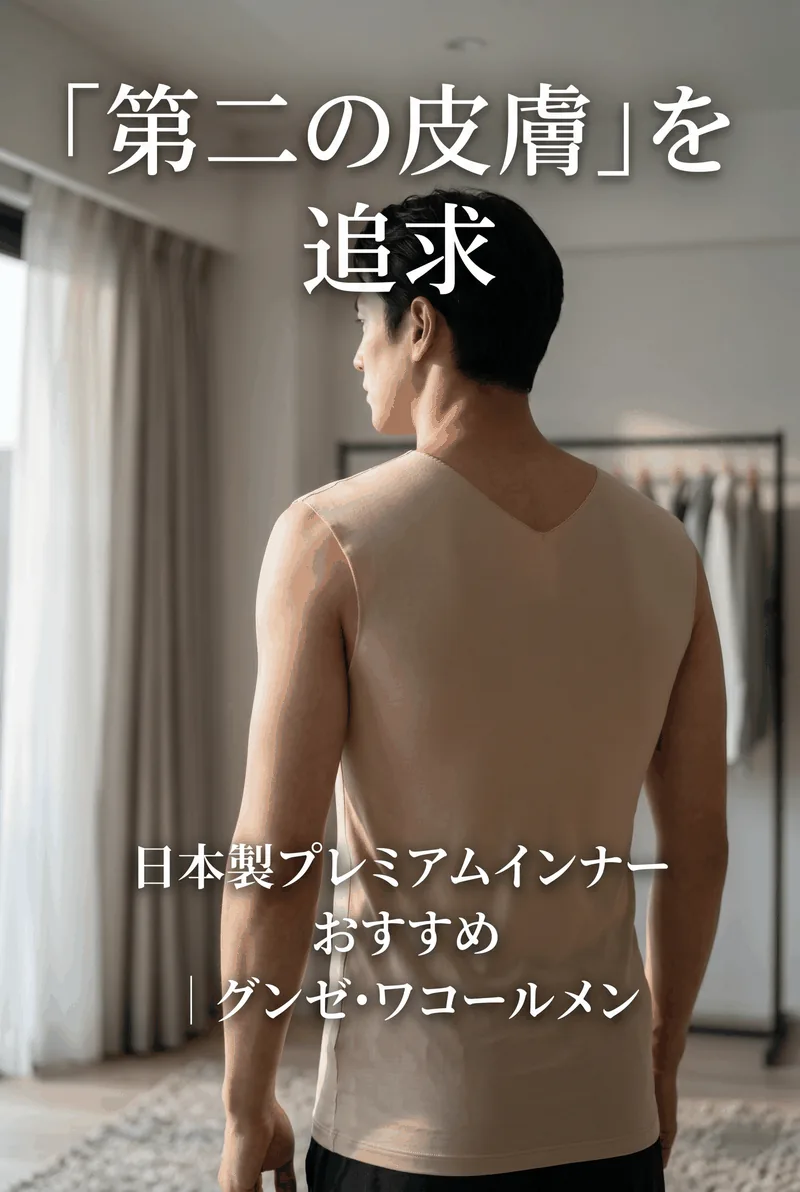
Three pieces of engineering, each aimed at a specific annoyance: cut-off edges for the lines that show through, printed labels for the itch at the neck, and a cotton-synthetic blend for the clamminess when you walk into air conditioning.
If you take two things from this, make them these: buy beige rather than white if it is going under a light shirt, and buy by the chest measurement in centimetres rather than by the letter on the label.
And keep them out of a hot dryer. The bonded seams are the part with a lifespan, and heat is what shortens it.
Haramaki: Why Japan Warms the Middle, Not the Ends
Japanese Heavyweight T-Shirts That Won't Go Sheer