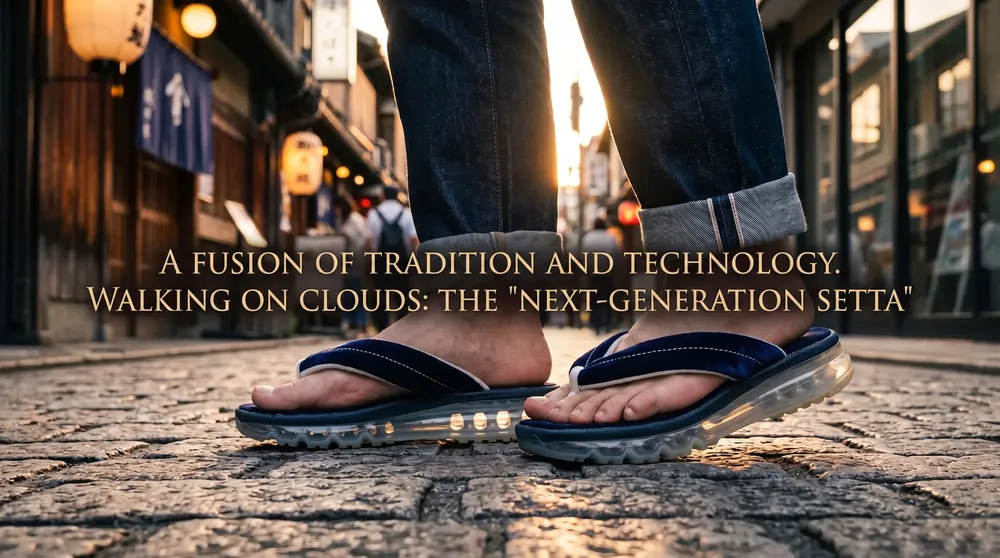
A setta is a flat Japanese sandal held on by a Y-shaped thong. The traditional version has a woven top and a hard leather bottom, and it is not built for pavement. The modern version keeps the thong and puts it on a sneaker sole — EVA foam, rubber outsole, sometimes a visible air unit in the heel.
Three things will catch out anyone buying from a shoe-shaped mental model. There is no left or right. The sizing rule is not the one you know — your heel is meant to overhang. And the thong needs breaking in, which takes a few wears and is the reason most people who dislike these gave up in the first week.
Traditional Setta vs. Modern Sneaker-Setta
| Feature | Modern Setta (e.g., Unda) | Traditional Setta |
|---|---|---|
| Sole | EVA foam and rubber, sneaker-like | Flat leather or woven bamboo (Hard) |
| Style Pairing | Streetwear, jeans, wide trousers | Yukata, Kimono |
| Walking Distance | All-day city walking | Short distances |
1. The Evolution: Why Change a Classic?
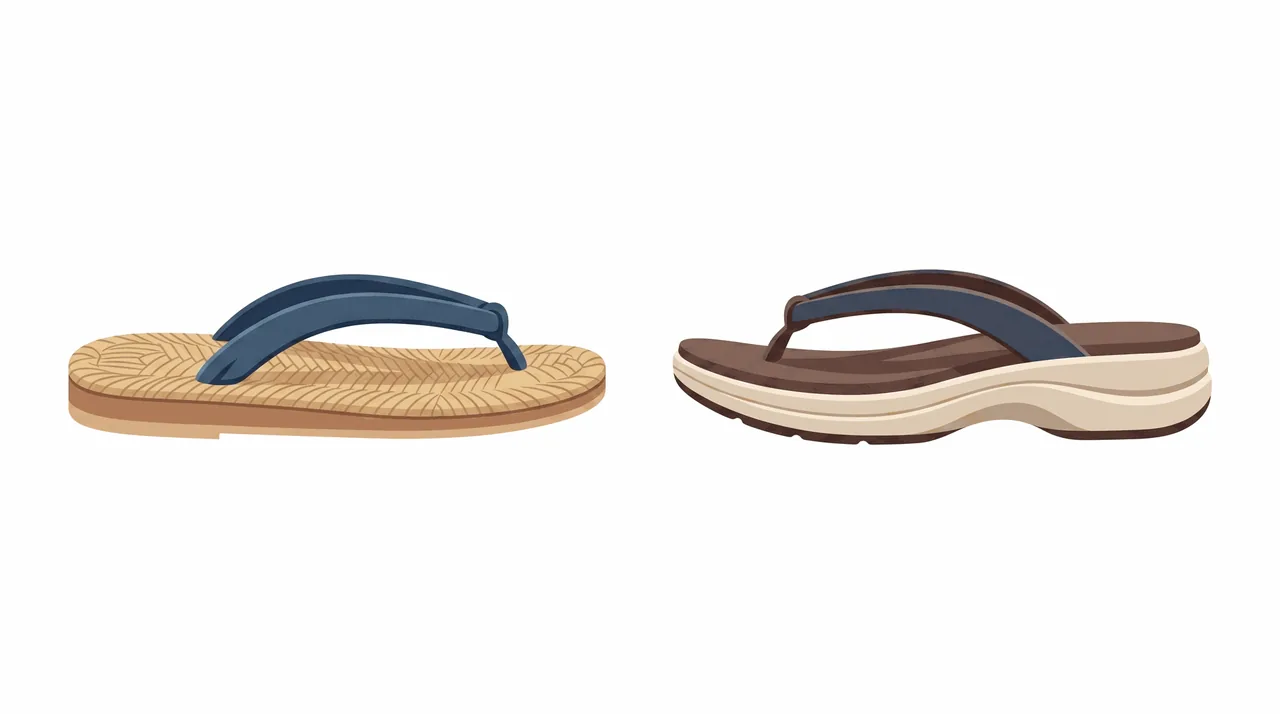
The setta is traditionally credited to the tea master Sen no Rikyū, who is said to have backed a woven sandal with leather so it could handle a damp garden path. Whether the attribution is literally true or not, the construction it describes is the one that lasted: a flat woven top, a leather sole, and nothing underfoot to absorb anything.
That works on tatami and packed earth. It produces a gliding, shuffling gait, which is what the clothing of the period wanted. On asphalt it is punishing, because every heel strike goes straight up your leg — which is precisely the problem the modern versions set out to solve.
The insight behind the modern setta is that the hanao — the Y-shaped thong — was never the weak part. Held correctly between the toes, it grips the foot better than most sandal straps do. What needed replacing was the board underneath it. Swap that for a moulded sneaker sole and you have a sandal that is genuinely wearable for a day of walking.
There Is No Left or Right
Japanese setta and geta are symmetrical. There is no left and no right, and nothing in the box will tell you otherwise because there is nothing to tell.
This is not a curiosity — it is useful. Swap them over every few wears and the soles wear evenly instead of each developing its own tilt. On a sandal you will walk hundreds of kilometres in, that noticeably extends the life of the pair. It also means a shop display with them "the wrong way round" is not a mistake.
2. Air Cushions and EVA: The Tech Inside
What Is Actually Under Your Foot
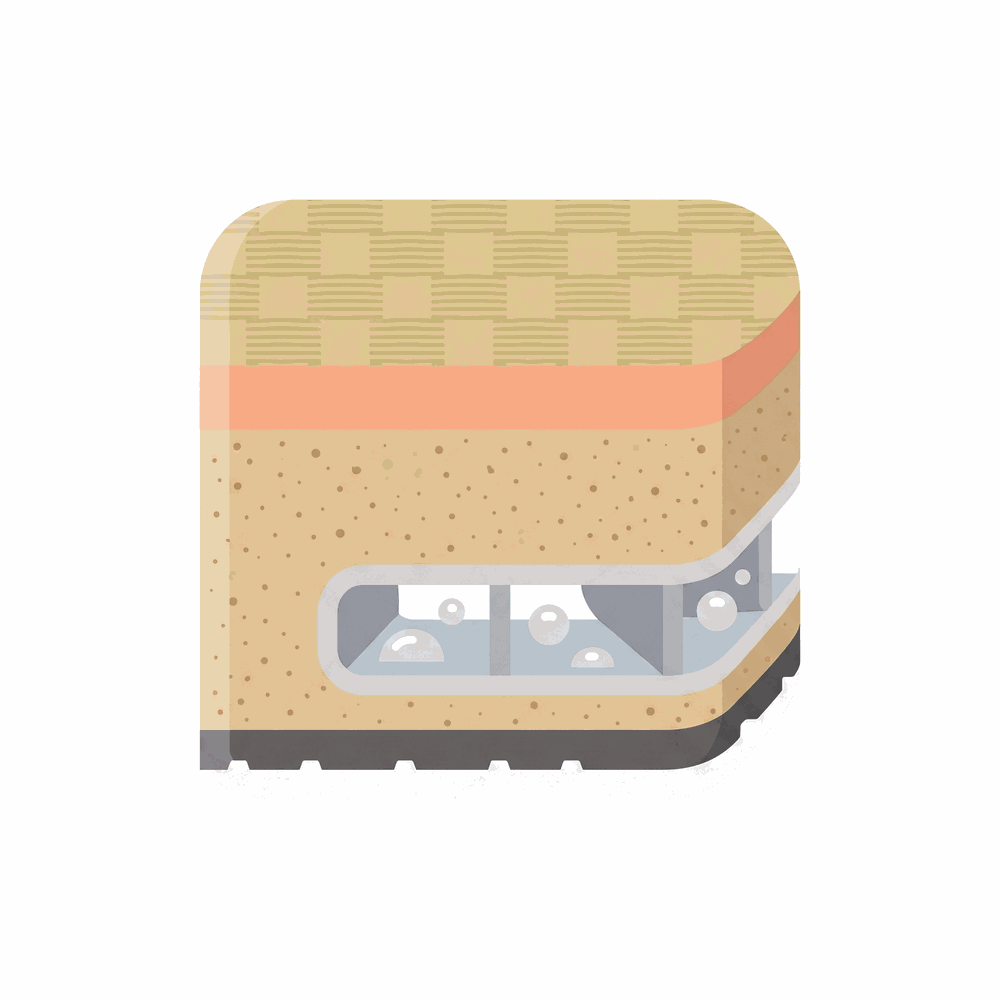
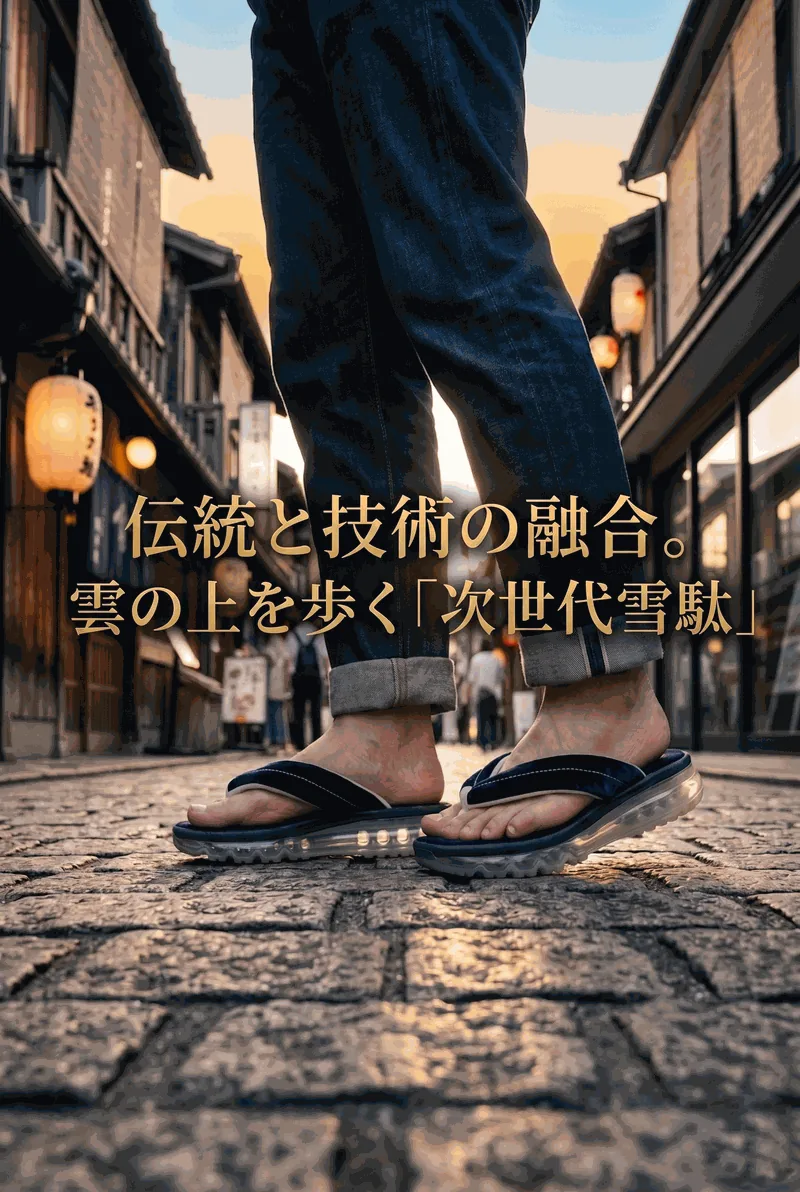
The best-known modern setta is unda, made by goyemon — a traditional sandal top set on a sole with a visible air unit in the heel, in the manner of a 1990s running shoe. It is the model most people picture when they hear "sneaker setta".
Underneath that is the same stack a trainer uses: shock-absorbing EVA foam, and a rubber outsole with actual tread. This is the entire difference in how far you can walk. A traditional setta transmits the heel strike; a foam sole spreads it out over time. It does not make the sandal disappear from your awareness the way a running shoe does, but it removes the reason your legs ache after an afternoon on pavement.
⚠ One thing to be realistic about: EVA compresses permanently. A foam sole worn most days will feel noticeably flatter after a couple of summers, and unlike a leather sole it cannot be rebuilt. Treat these as long-lived footwear rather than lifetime footwear.
3. How to Style Modern Setta
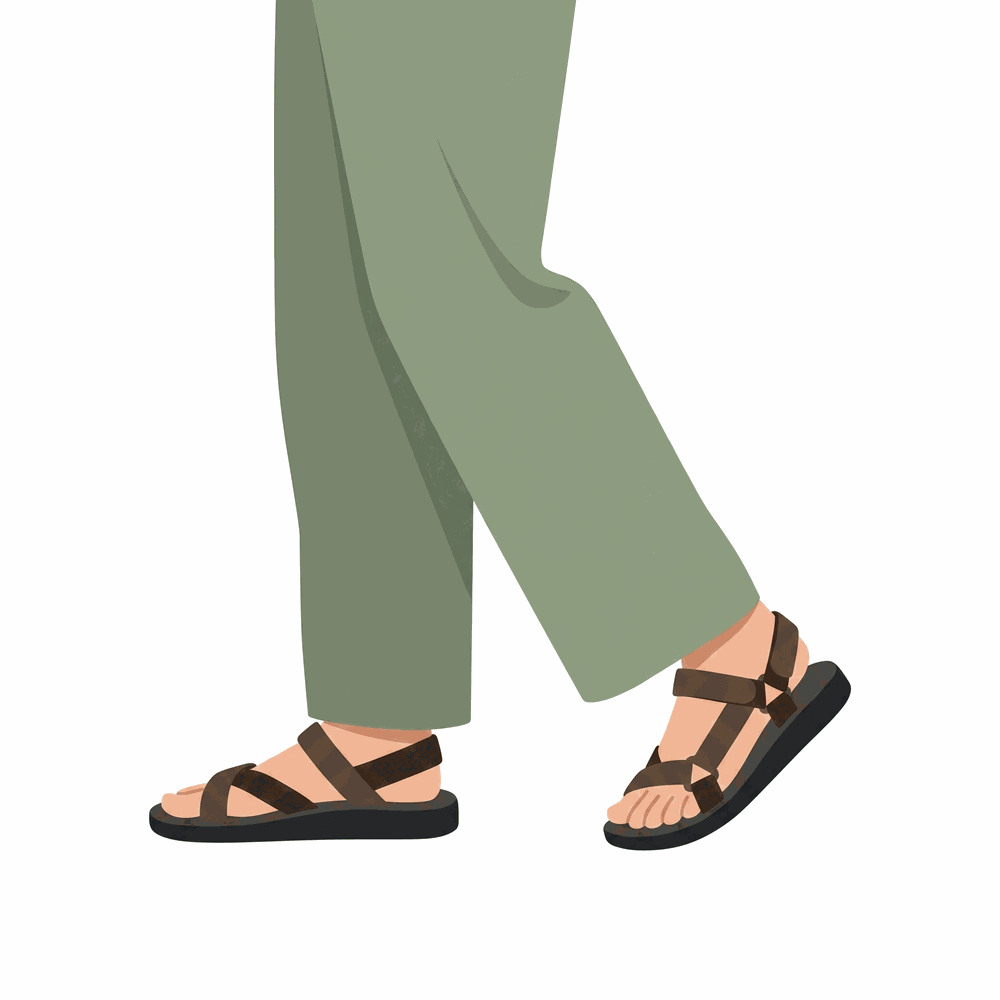
Streetwear Harmony
These are not costume, and nobody in Tokyo wears them with a yukata unless it is a festival. They are worn with ordinary clothes: wide-legged trousers, loose linen shirts, cropped denim. The thing that makes them work is a hem that ends above the ankle — anything that breaks over the top of the sandal fights the shape of it.
The thick sole adds a little height and a squared-off, chunky silhouette, which is what stops a loose summer outfit from looking shapeless at the bottom. A flat traditional setta does the opposite — it is a quieter, more formal line, and it wants tidier clothes above it.
On socks: tabi — the split-toe kind — are the answer, and they extend the season by a couple of months at both ends. Ordinary socks do not work, because there is nowhere for the thong to go. This is worth knowing before you decide these are a summer-only purchase.
4. The Engineering of the Hanao (Strap)
While the sneaker sole provides the suspension, the true magic of a Setta lies in the Hanao (the thong strap). Unlike cheap flip-flops that use hard plastic between the toes, authentic Japanese Hanao are deeply padded and wrapped in premium materials like velvet, silk, or corduroy.
The strap is also anchored down into the body of the sole rather than glued to the top surface. That is what lets the hanao hold the instep, so the sandal follows your foot instead of slapping the heel with every step — the noise a cheap flip-flop makes is the sound of a strap that is not holding anything.
The thong needs breaking in — plan for it
A new hanao is deliberately tight. It is set firm because it will loosen, and a strap that starts loose is a strap you will be fighting by the end of the season. Almost everyone who tries Japanese sandals and decides they are uncomfortable made their judgement during this stage.
Two things make it painless:
- Do not push your foot all the way in. There should be a visible gap between the strap and the web of your toes. The thong is meant to be gripped, not wedged against.
- Loosen it by hand before wearing. Take hold of the strap where it meets the sole and work it up and down a few times, on both sides. Japanese shops do this for you at the counter; if you bought online, do it yourself.
Give it three or four short wears before a long day out. After that the strap settles to your foot and stays there. If it still rubs after a week, the sandal is too small — not broken in badly.
5. Top Modern Setta & Geta Brands
goyemon (unda)
The maker that started the sneaker-soled setta.
goyemon builds the traditional woven top by conventional methods and then sets it on an air-cushioned sneaker sole. Their unda model is the one that defined the category. The house also runs a steady stream of streetwear collaborations — fun, but limited runs, and not the thing to chase if you actually want to wear them. A standard colourway is the same sandal and stays in production.
We could not confirm an English-language route to this maker. It is straightforward to buy in Japan, and we would rather say so than send you to a search that returns something else.
Mizutori (Modern Geta)
Wooden geta, carved to the shape of a foot.
Mizutori has been making footwear in Shizuoka since 1937. Their approach is the opposite of goyemon's: rather than adding foam, they shape the wooden footbed itself to follow the arch. It is still a hard sole and it will never feel like a trainer — but the contact is spread across the whole foot instead of two points, and the padded straps do the rest. If you want the traditional material without the traditional punishment, this is the compromise.
6. Sizing: The Japanese Way
If you have never worn Japanese sandals, the sizing rule might shock you: Your heel is supposed to hang off the back.
- The 1-2cm Rule: Traditionally, a Setta or Geta fits perfectly when your heel extends 1 to 2 centimeters past the back edge of the sole.
- Why?: It shifts your center of gravity forward, allowing you to grip the thong with your toes and walk elegantly without dragging the heel. It also prevents the hem of a kimono from getting dirty.
- Modern adjustment: sneaker-soled models are usually worn closer to the foot than traditional ones, but a slight overhang is still normal and correct. Do not size up to eliminate it.
- Sizes are in centimetres: Japanese footwear is sold by foot length, not by a UK or US number. Measure your bare foot heel-to-toe against a wall and buy to that figure — it is more reliable than any conversion chart.
- ⚠ Wide feet: the sole width matters more here than on a closed shoe, because there is no upper to contain the foot. If the ball of your foot sits over the edge, go up a size even though the length is right.
7. Frequently Asked Questions
Will the strap hurt between my toes?
Not if you wear them correctly. Modern straps (Hanao) are deeply padded. However, the trick is NOT to push your foot all the way in. There should be a slight gap between the webbing of your toes and the strap.
Can I wear them with socks?
Yes, with tabi socks. Tabi socks (which have a split for the big toe) look incredibly stylish with modern Setta and allow you to wear them well into the cooler autumn months.
Are they water-resistant?
It depends on the top sole material. If the top is synthetic or leather, they can handle light rain. If the top is woven igusa (rush grass) or bamboo, avoid getting them soaking wet.
How do I clean the white sneaker soles?
Just like normal sneakers. Use a magic eraser or a sneaker cleaning brush with mild soap on the EVA/rubber portions, being careful not to soak the traditional fabric straps.
Do they offer arch support?
Modern Setta like Unda do, traditional ones do not. The thick EVA soles of modern versions compress and contour to your foot over time, providing decent support compared to flat boards.
Can I drive in them?
In many jurisdictions, no. Driving in slip-on sandals or thongs is illegal in some places and generally unsafe. Swap them out before getting behind the wheel.
8. Final Thoughts: The First Week Decides It
Buy to the length of your foot in centimetres, accept that the heel overhangs, and expect the thong to feel tight for the first few wears. Those three things account for nearly every complaint people have about Japanese sandals, and all three are expectations rather than faults.
Swap them left to right every few wears — they are symmetrical, and it doubles how long the soles last.
Get past the first week and what you have is a flat, quiet, genuinely walkable summer sandal, which is a harder thing to find than it sounds.
Japanese Dress Shoes: Wide Fittings and How to Buy
Japanese Heavyweight T-Shirts That Won't Go Sheer