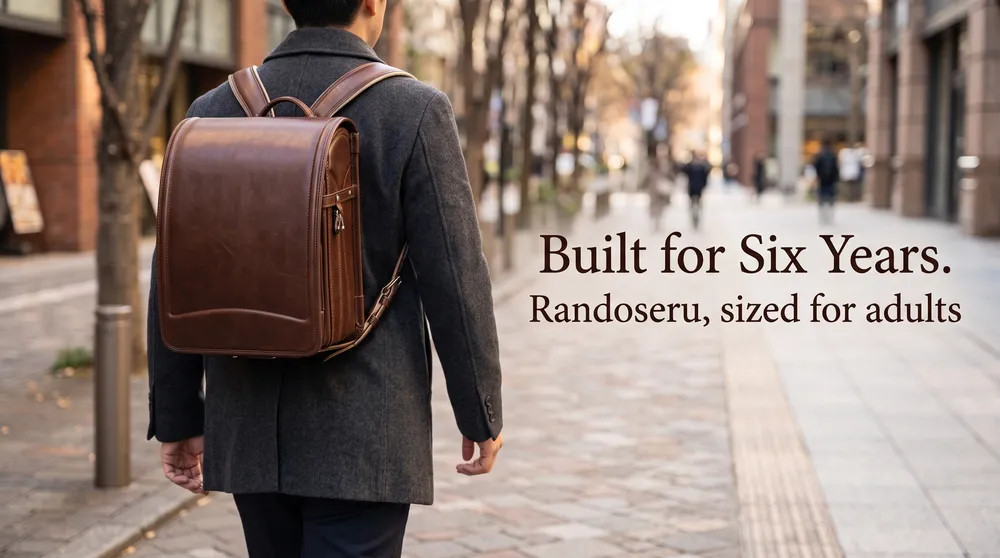
In March 2014, a photographer caught Zooey Deschanel walking through New York with a bright
red Japanese school bag on her back. It made the morning news in Japan — not because she is
famous, but because the sight of an adult wearing a randoseru is genuinely startling
there.
A decade later it is an established overseas want, and the obvious question has an answer most
people miss: yes, you can buy one — and if you are an adult, you probably should not buy the
child's version.
There is a proper adult model, made by one of the best randoseru workshops, using the same
construction. This guide covers what these bags are, why they cost what they do, and what
the weight debate is actually about.
Quick Reference: Randoseru at a Glance
| Question | Answer |
|---|---|
| What is it for? | One bag for all six years of primary school |
| What does it cost? | $350–$1,000+, often bought by grandparents |
| Most common material | Clarino — synthetic, light, water-resistant |
| Weight empty | 1–1.5kg. Loaded, 4–6kg |
| If you are an adult: buy the adult model. A child's randoseru is sized for a six-year-old, and in Japan an adult wearing one reads as a costume. | |
Can You Buy One? And Which One?
Yes, and more easily than most Japanese products in this price bracket. Tsuchiya Kaban — one of the most respected randoseru workshops — runs a full English site and ships internationally from Japan, taking a few business days to arrive.
The harder question is which one, and here the honest answer is not the obvious one.
If you are buying it for yourself, there is an adult model
Tsuchiya Kaban makes the "OTONA RANDSEL" — otona meaning adult — designed as a work bag rather than a school bag. It is built in Italian Vachetta leather, and the back pad and shoulder straps use the same techniques as their children's randoseru.
This is the thing to buy. It is sized for an adult body and an adult's contents, it does not read as fancy dress, and it carries the actual engineering you were interested in — rather than the silhouette of it.
Worth knowing before you decide
In Japan, a randoseru is unambiguously a primary-school object. Children carry one from age six to twelve and stop, permanently. That is why the Deschanel photograph made Japanese television — it was not read as fashionable, it was read as bewildering.
None of which makes it wrong to want one. The bags are extraordinary and the overseas interest is real — Chinese and Taiwanese families are among the largest foreign buyers, and shops at Kansai International Airport began stocking randoseru for tourists, selling around a hundred and twenty a month.
It just means the child's version and the adult version are two different purchases, and knowing which you are making is worth thirty seconds of thought.
Why Japanese — A Bag Built for Six Years
The design brief is unusual and explains everything about the object: one bag, carried
daily, for six consecutive years, by a child who will roughly double in size during them.
Nothing else is built to that specification. A school backpack elsewhere is expected to be
replaced when it fails; a randoseru is expected not to fail, and good ones carry
six-year guarantees to say so.
What that produces, concretely:
- A rigid box structure. The body holds its shape empty, so contents are not crushed and the bag cannot collapse onto the child's back.
- An adjustable shoulder mechanism that shifts the load as the child grows and keeps the bag's centre of gravity close to the spine. This is the single most important component and the one you cannot see.
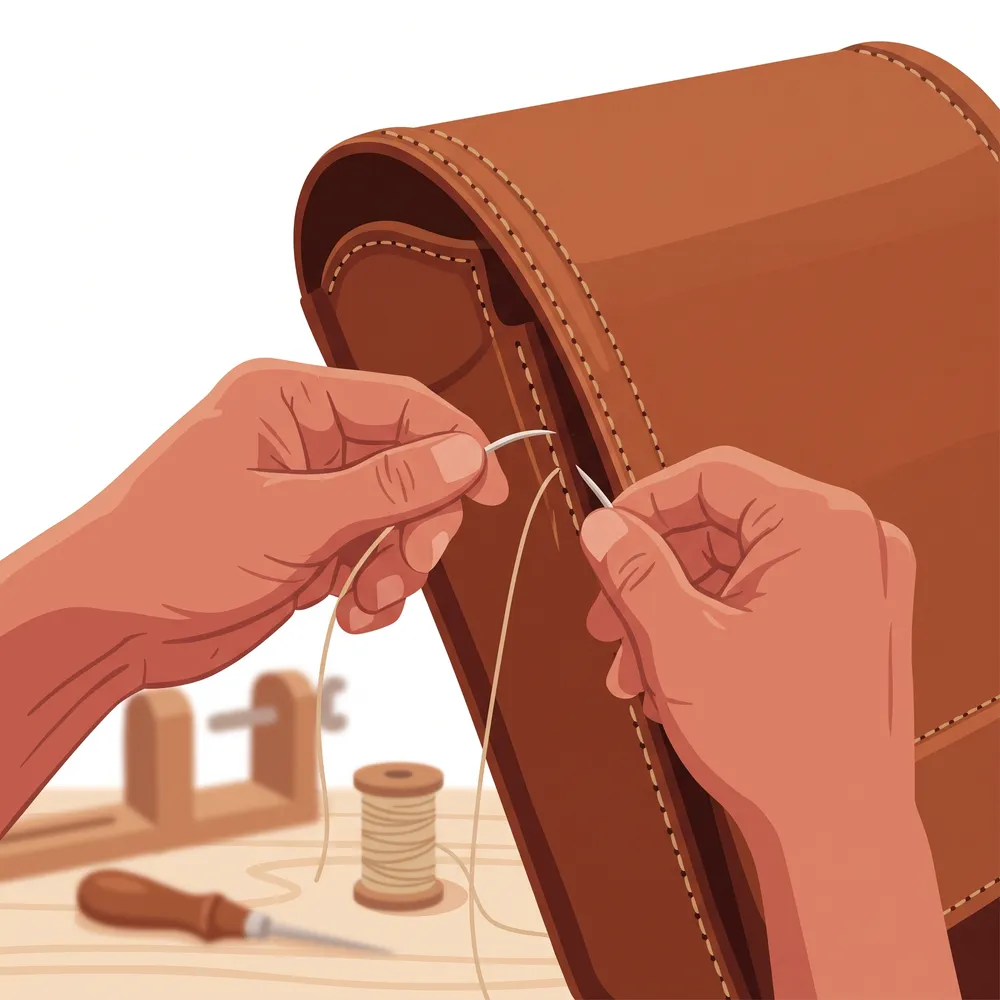
- Hundreds of stitched and reinforced points, with the stress corners doubled up. A randoseru is assembled from over a hundred parts.
- Safety hardware — reflective panels, and a side hook designed to release under load so a child cannot be dragged if a bag strap catches.
- A repair culture. Makers repair their own bags during the six years, often lending a replacement while they do.
The price makes sense once you see it as six years of daily use rather than as a backpack. At $500 across six school years, it is roughly $80 a year for something used every single school day — and it is customarily bought by grandparents, which is part of why the market can sustain the figure at all.
Clarino, Cowhide, Cordovan
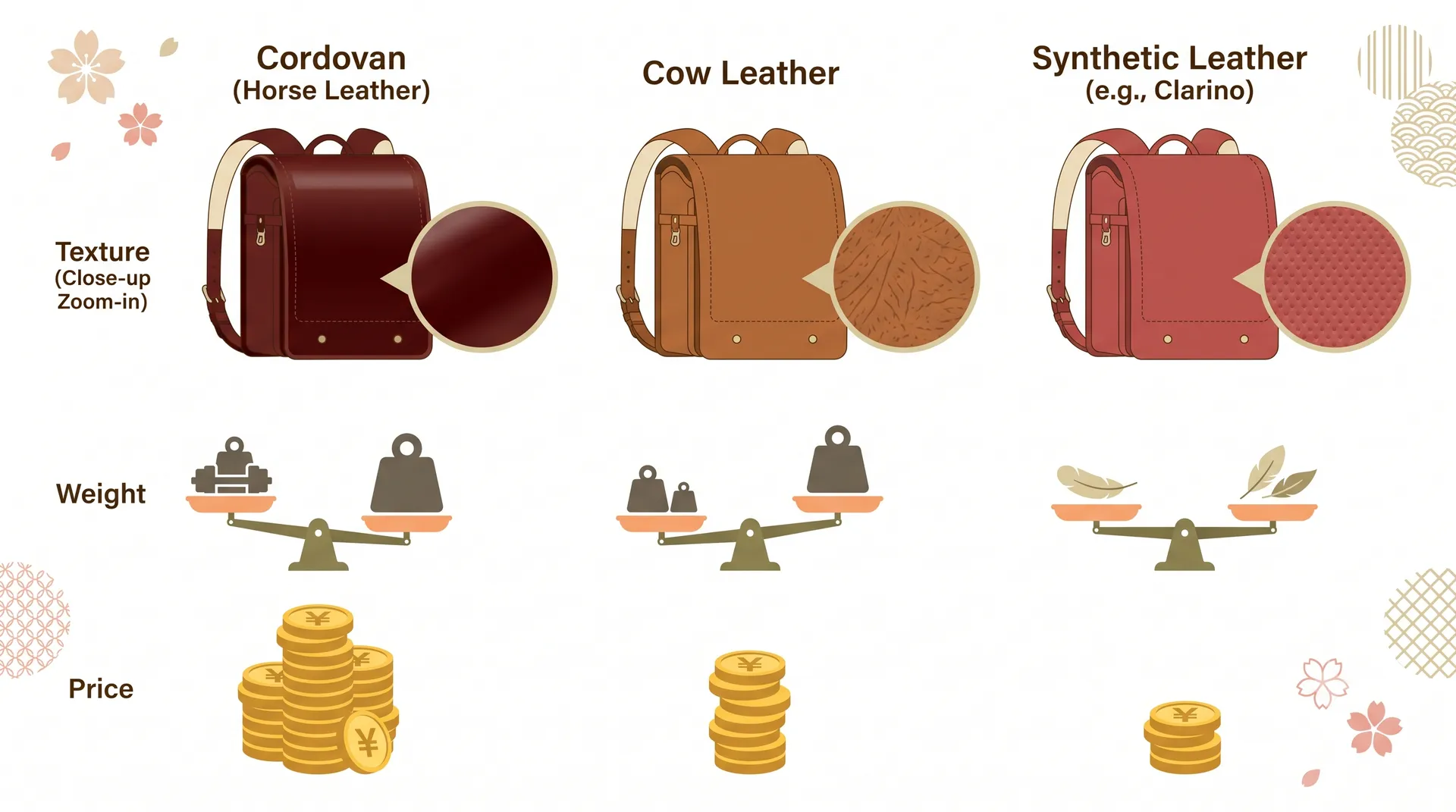
- Clarino — synthetic, and the default. A Japanese-developed man-made leather, the most common randoseru material by a wide margin. Light, water-resistant, needs no care, holds colour. For a child, this is usually the right answer, and choosing it is not a compromise.
- Cowhide — heavier, and it ages. A few hundred grams more, which matters on a six-year-old, in exchange for a surface that softens and darkens with handling. Needs occasional care and dislikes being soaked.
- Cordovan — the extravagant one. Shell cordovan, the dense layer from a horse's hindquarters, the same material English readers know from expensive shoes. It is the most expensive randoseru material by some distance, extremely hard-wearing, and develops the deep gloss cordovan is prized for.
A cordovan school bag is a genuinely startling idea if you have priced cordovan
shoes. It is also the clearest signal of what this market is: a category where the top of
the range is made from a leather most adults never buy in their lives, for a
seven-year-old.
Buy cordovan for yourself, not for a child. It is heavier, and the ageing that
makes it wonderful takes longer than primary school.
The Weight Question
An empty randoseru weighs 1 to 1.5kg. Loaded with textbooks, notebooks, lunch and a water bottle it commonly reaches 4 to 6kg — nine to thirteen pounds. A Japanese first-grader weighs around 20 to 25kg, so the loaded bag can be a fifth of their body weight or more.
Japan has a phrase for the complaint — randoseru shōkōgun, "randoseru syndrome" — and the government has taken it seriously enough to study, encouraging lighter materials, letting children leave textbooks at school, and moving material onto tablets.
Being accurate about this: the loads are documented, but the causal link between school
bag weight and back pain is not settled in the research. Studies disagree, and at least
one large study of schoolchildren found no association between bag weight and reported back
pain.
What is not in dispute is that carrying is easier or harder depending on how the load
sits — which is why the shoulder mechanism matters more than the gram count.
Which leads to the practical point: do not choose by weight alone. A slightly heavier bag that holds the load high and close to the back is easier to carry than a lighter one that hangs away from the body. The difference between those two is the shoulder fitting, and it is what you are paying for.
What to Buy
OTONA RANDSEL — the adult one
Tsuchiya Kaban's randoseru built for grown-ups, in soft Italian Vachetta
leather that develops a lustre with handling. Sized and shaped as a work bag — it takes a
laptop and a day's things rather than a set of primary-school textbooks.
The back cushion and shoulder straps are made with the workshop's randoseru
techniques, which is the whole reason to choose it over any other leather backpack.
- Leather
- Italian Vachetta — ages with use
- Construction
- Randoseru back pad and strap technique
- Use
- Work bag; laptop-capable
- Shipping
- English site, ships worldwide from Japan
- Price range
- $500–$900
Perfect for: Anyone who saw a randoseru and wanted one. This is the version that actually works for you.
Tsuchiya Kaban randoseru — for an actual child
If you are buying for a child — living in Japan, or wanting the real thing —
Tsuchiya Kaban is the workshop-made randoseru that is genuinely reachable from
abroad, with both cowhide and synthetic models on the English site.
Order early. Workshop randoseru are made in limited runs and Japanese
families begin choosing more than a year before school starts. Popular colours sell out by
early summer.
- Materials
- Cowhide, synthetic; cordovan at the top
- Guarantee
- Six years, with repairs during
- Colours
- Far beyond the traditional red and black
- Timing
- Order a year ahead — this is not an exaggeration
- Price range
- $450–$1,000+
Perfect for: A child starting Japanese primary school, and for families abroad who want one properly rather than as a souvenir.
Japan has a whole tier of workshop makers — small ateliers producing a few
thousand bags a year, each with its own house construction and a following among parents who
queue for them. Kurokawa Kaban, Kaban Kobo Yamamoto, Ikedaya and Murase Kabanko are the names to
know.
Most sell domestically only, so a forwarding service is the route — and their
order books open more than a year ahead.
Frequently Asked Questions
Can adults wear a randoseru?
Physically yes; in Japan it looks strange. A randoseru is worn from six to twelve
and then never again, which is why the 2014 photograph of Zooey Deschanel with one made Japanese
morning television.
The better answer is the adult model — Tsuchiya Kaban's OTONA RANDSEL is built as
a work bag using randoseru construction, and it is sized for you.
Why do they cost so much?
They are built to survive six years of daily use by a growing child, assembled
from over a hundred parts, and sold with a six-year guarantee and repairs during it.
Spread over six school years, $500 is roughly $80 a year. It is also customary
for grandparents to buy it, which is part of why the price holds.
Leather or synthetic?
Synthetic for a child, leather for yourself. Clarino is the most common material
by a wide margin — lighter, waterproof, no maintenance — and choosing it is not settling.
Cowhide and cordovan age beautifully, but they are heavier and the payoff takes
longer than primary school does.
Are they too heavy for children?
Loaded, they reach 4–6kg against a first-grader's 20–25kg, and Japan has a term
for the complaint — randoseru shōkōgun. The government has responded by encouraging
lighter bags and leaving textbooks at school.
That said, the research linking bag weight to back pain is genuinely mixed. How
the load sits matters more than what it weighs, which is why the shoulder mechanism is the part to
judge.
Can I get one shipped outside Japan?
Yes. Tsuchiya Kaban operates an English-language site with international shipping
direct from Japan, covering both their randoseru and the adult model.
Most other workshop makers sell domestically only, so a forwarding service is the usual route
for those.
When do Japanese families buy them?
Far earlier than you would guess — the process starts more than a year before school
begins, and has a name, ran-katsu, "randoseru activity."
Workshop makers produce limited runs and popular colours sell out by early summer of the preceding
year. If you want a specific maker and colour, treat it as a year-ahead purchase.
Final Thoughts: Buy the One Made for You
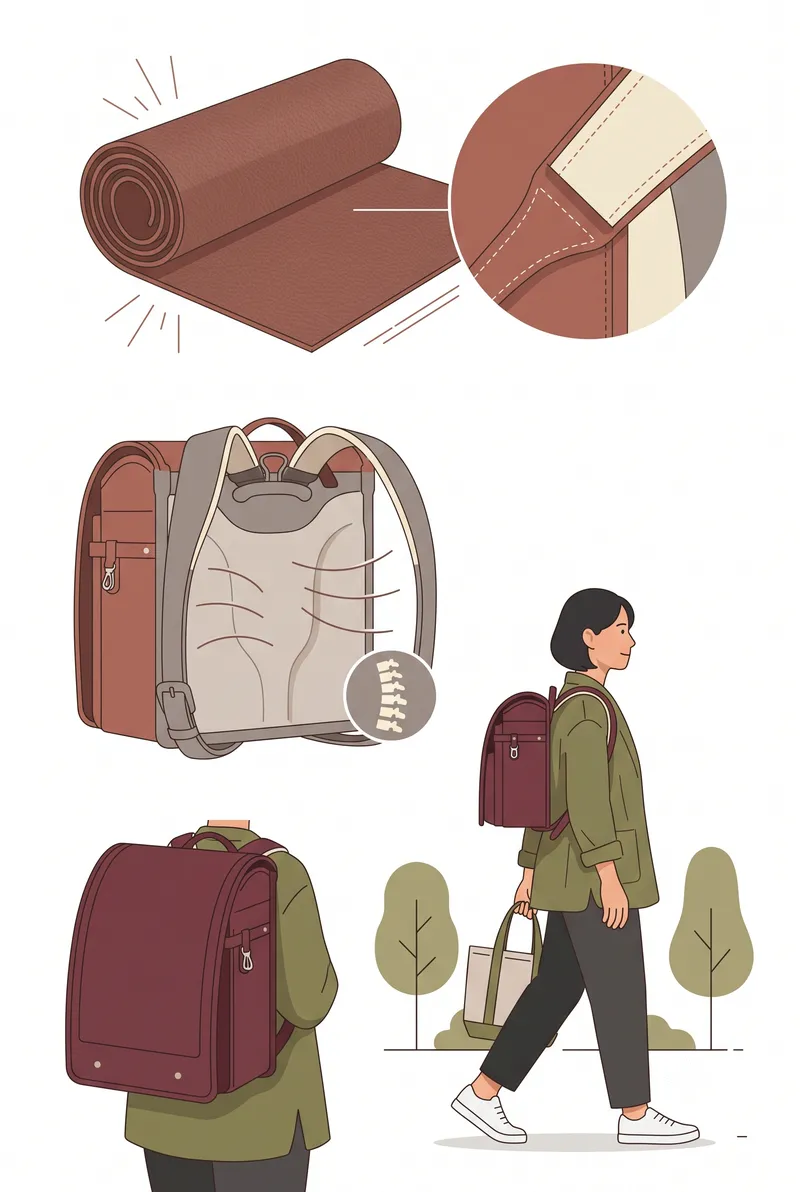
The randoseru is one of the few objects designed around a fixed six-year span — one bag, one child, first day to last. Everything expensive about it follows from that, and it is why the thing survives the six years looking like it could do another.
If you want one for yourself, the adult version exists and is the better bag for you — same workshop, same shoulder construction, sized for a person who has stopped growing.
And if you are buying for a child: synthetic, ordered a year early, and judged on how the shoulders sit rather than what the scale says. The gram count is the part everyone argues about and the part that matters least.
Japanese Leather Shoes: Widths Made for Real Feet
Japanese Formal Bags: Structure Over Branding