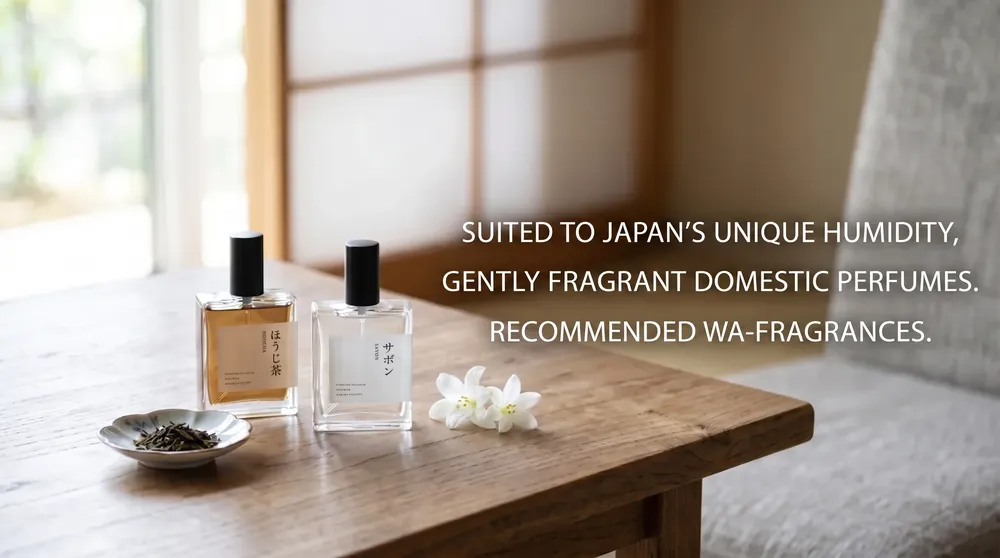
If you want to try Japanese fragrance, start with J-Scent's Yawahada — and buy a
sample, not a bottle. It is the one that explains what the whole category is doing.
Japanese perfumery is built around a different goal from French or American perfumery.
It is not trying to fill a room. The compositions are deliberately quiet, designed
to be noticed at conversational distance and nowhere else — what English-speaking perfume people
call a skin scent.
That used to read as a weakness. It does not anymore. This guide covers four brands worth knowing,
the concepts they build scents around — roasted tea, soap, cypress wood, a bottle of
Japanese lemonade — and, more usefully, how to actually buy them in the US,
which most English guides get wrong.
Quick Reference: Four Japanese Fragrance Houses
| Brand | Doing what | Start with | Buying in the US |
|---|---|---|---|
| J-Scent | Bottling specific Japanese memories — hojicha, ramune, skin | Yawahada | Easy. US-based site plus indie retailers |
| SHIRO | Clean, transparent, universally wearable | Savon | Easiest. Official US store |
| KITOWA | Japanese timber oils — hinoki, hiba, camphor | Hinoki | Official site ships within the US only |
| AUX PARADIS | Natural materials, very soft projection | Fleur | Hardest. No official export — resellers only |
| Buy samples before bottles. These are quiet fragrances that behave differently on different skin, and a full bottle runs $100+. Decant services carry most of J-Scent's line from around €9 — one evening of testing saves an expensive mistake. | |||
Why Japanese Perfume?
Western perfumery grew out of a culture where fragrance announces you. Sillage — the trail a scent leaves behind — is something perfumers are judged on, and a compliment like "I could smell you from the lobby" makes sense in that frame.
Japanese perfumery grew out of the opposite instinct. The relevant tradition is kōdō, the incense ceremony, where the verb used is not "smelling" but "listening to" incense — monkō. Something you lean toward, not something that arrives before you do.
Practically, this produces fragrances with deliberately low projection: lighter on animalic musks and heavy oriental bases, built instead on citrus, tea, soap and wood. They are designed to be discovered at arm's length by someone who is already close to you.
Ten years ago that was a niche taste in the West. It is not now — skin scents and quiet, clean compositions have become one of the most in-demand categories in Western perfumery. Japan has been building nothing else for decades.
Did you know: there is a Japanese word for wearing too much of it
Kōgai — literally "fragrance harm" — is a common term in Japan for
scent that intrudes on other people, and it is used seriously enough that offices and hospitals
post notices about it.
Whether or not you agree with the concept, it explains the design brief. When a market treats
over-projection as a social problem, its perfumers build for the opposite.
Roasted Tea, Soap, and Lemonade: Japanese Scent Concepts
The other difference is where the idea starts. A Western brief often begins with a family —
"a modern chypre," "a woody amber." Japanese houses more often begin with a specific
memory and work backwards into materials.
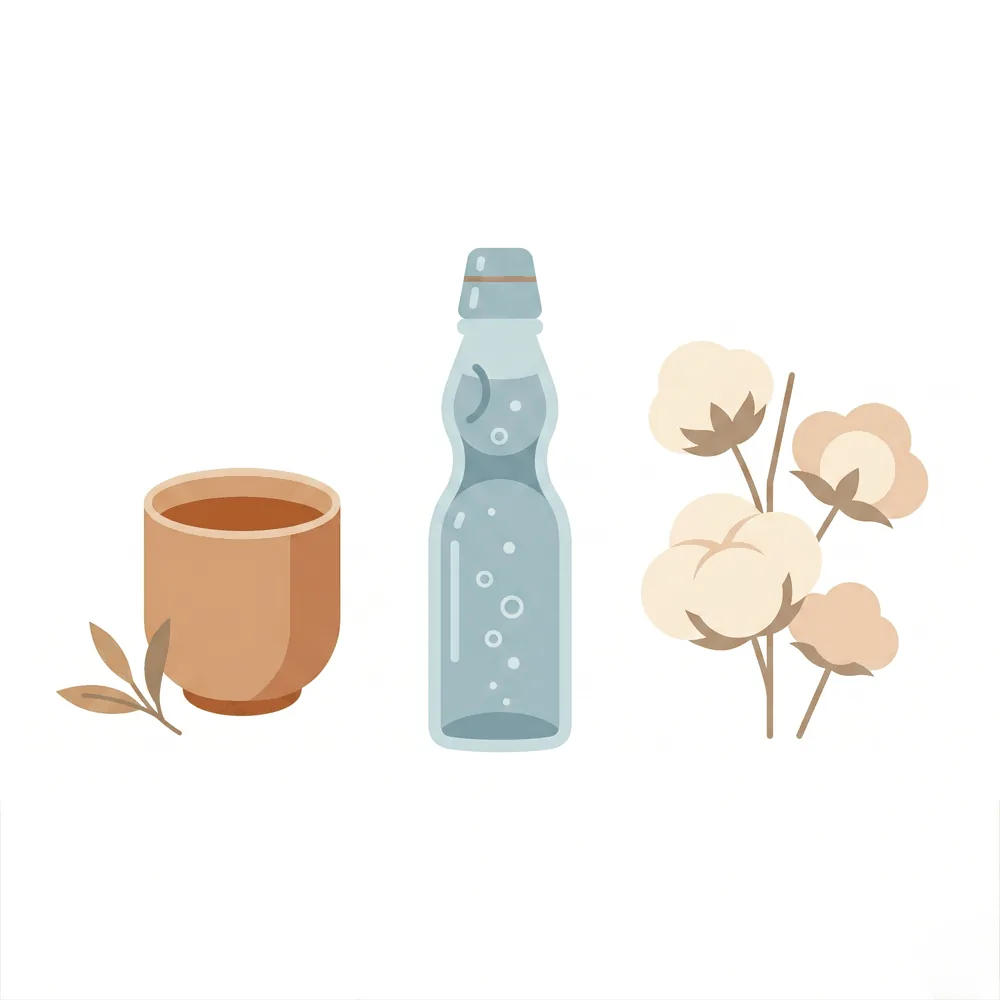
Hojicha. Roasted green tea: the toasted, nutty smell of the pot, resolving into
coconut and vanilla warmth. Nobody in Europe was making this.
Ramune. The Japanese summer soda with a marble in the neck of the bottle —
sharp, fizzing, faintly melancholy. A scent about the end of summer holidays.
Savon. Not "soapy" as a note, but the specific feeling of ten minutes after a
bath. It is the single most popular scent profile in Japan.
This is why Japanese fragrance is worth your attention even if you own plenty of perfume already. These are compositions that do not exist anywhere else, because they come from a set of shared memories that European houses have no reason to reach for.
The Four Brands
J-Scent — Yawahada, the one to try first
J-Scent's whole line is Japanese concepts rendered literally, and it is the house that has travelled furthest internationally. Yawahada — "soft skin" — was inspired by Kawabata Yasunari's novel House of the Sleeping Beauties. It opens clean, almost like soap, then settles into a powdery musk that reads as warm skin rather than as perfume.
- Try
- Yawahada (soft skin); then Hojicha, Ramune
- Style
- Concept-led, literal, low projection
- Made in
- Japan
- Price range
- ~$100–$120 for 50 ml
Perfect for: Anyone who wants to smell like themselves, slightly improved — and anyone bored of the standard fragrance families.
SHIRO — Savon, and the easiest one to buy
From Sunagawa, Hokkaido. SHIRO builds around natural materials and clean transparency, and Savon is the most worn fragrance of its type in Japan — citrus opening, settling into the warmth of freshly washed skin. It is the safest thing here: office-appropriate, unisex in practice, and very hard to dislike.
- Try
- Savon; then White Lily
- Style
- Clean, transparent, universally wearable
- Made in
- Hokkaido, Japan
- Price range
- ~$70–$100
Perfect for: A first Japanese fragrance, a gift, or anywhere you cannot risk being noticed for the wrong reason.
The only one of the four with a proper official US storefront.
KITOWA — hinoki, if you have ever been in a Japanese bath
Built on oils from Japanese timber — hinoki (cypress), hiba, kusunoki (camphor) — the woods used for bathhouses, shrines and joinery. Hinoki is the smell of a wooden Japanese bathtub, and if you have ever been in one you already know this scent. Dry, clean, resinous; not sweet in the way Western woody fragrances usually are.
- Try
- Hinoki
- Style
- Dry Japanese woods, formal, calming
- Made in
- Japan
- Price range
- ~$90–$130 for 100 ml
Perfect for: Readers who like woods but find Western cedar and sandalwood too sweet.
The official store states it ships to the contiguous US only — no international shipping beyond that.
AUX PARADIS — the quietest, and the hardest to get
Natural materials and sugarcane-derived alcohol, composed for very soft projection — the gentlest of the four, and a common recommendation in Japan for people who find most perfume irritating. The catch is distribution: there is no official export channel, so buying means going through resellers.
- Try
- Fleur
- Style
- Natural, extremely soft, close to the skin
- Made in
- Japan
- Availability
- Resellers only — no official overseas shipping
Perfect for: Readers who react badly to conventional perfume — if you are willing to deal with the sourcing.
Japanese sellers list it on eBay with international shipping. Check seller feedback, and expect to pay above Japanese retail.
How to Buy Them Without Going to Japan
Most English writing on Japanese fragrance says you have to visit Japan or use a proxy service. That was true a few years ago. It is no longer true for three of these four brands.
Buy samples first. This is not optional advice
These are low-projection fragrances that behave very differently depending on skin chemistry — the whole design intent is that the scent merges with you, which makes blind buying riskier here than with a loud, assertive perfume that smells the same on everyone.
Decant and sample retailers carry much of J-Scent's line from around €9 per sample, often crediting the cost against a later full bottle. Spending $20 on three samples before spending $110 on one bottle is simply the correct order of operations.
Then the routes, in order of ease
- SHIRO — official US online store. Straightforward domestic order
- J-Scent — a US-based site plus several indie fragrance retailers who stock the line
- KITOWA — official store, contiguous US only
- AUX PARADIS — no official route. Japanese eBay sellers, at a markup
Outside the US, samples from European decant services are often the most practical entry point, since several of these official stores do not ship internationally at all.
Wearing a Quiet Fragrance
Lower than you think, and never rubbed
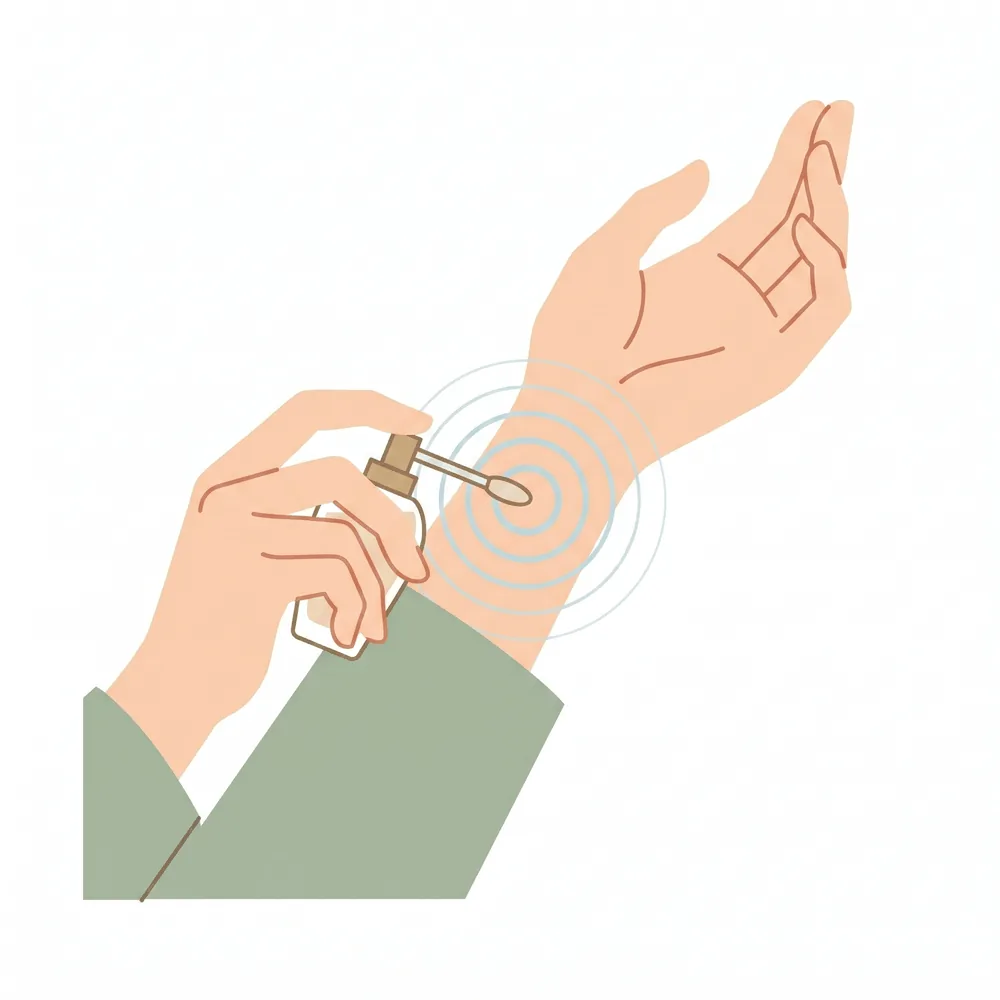
Do not rub your wrists together. The friction and heat break the top notes and
push the composition forward before it should arrive — this is the single most common mistake,
and it matters more with a delicate fragrance than with a robust one. Spray and let it dry.
Then apply lower on the body than you would a Western perfume: waist, inner
elbow, behind the knee. Scent rises. Applied low, it drifts up gradually through the day instead
of arriving all at once at neck height.
Expect to stop smelling it. That is correct
You will go nose-blind to a skin scent within the hour, and the instinct is to reapply. Resist it — other people can still smell it perfectly well. If you genuinely cannot detect it at arm's length on a blotter, that is the point at which to top up.
Roll-on oils, if alcohol bothers your skin
Several Japanese houses offer perfume oils in roll-on form. Oil sits even closer to the skin than an eau de parfum does, lasts longer, and avoids the alcohol that irritates sensitive skin. It is also the easiest format to carry and to try in public without spraying.
Frequently Asked Questions
What makes Japanese perfume different?
It is composed for low projection on purpose. Where Western perfumery often prizes sillage — the trail you leave — Japanese houses build fragrances meant to be noticed only at conversational distance, using citrus, tea, soap and wood rather than heavy musks. The compositions are also concept-led, built around specific memories like roasted tea or a bath.
Can I buy Japanese perfume in the US?
Yes, for most of them, and more easily than older guides suggest. SHIRO runs an official US online store. J-Scent has a US-based site and is stocked by several indie fragrance retailers. KITOWA's official store ships within the contiguous US. AUX PARADIS is the exception — no official export route, so resellers only.
What is the difference between eau de toilette and eau de parfum?
Concentration, which controls how long it lasts and how far it travels. Eau de cologne is roughly 2–5% aromatic compounds and fades in a couple of hours; eau de toilette is about 5–15%; eau de parfum is around 15–20% and lasts most of a day. With Japanese fragrances, even the eau de parfum concentrations usually project less than a Western equivalent.
Which Japanese perfume should I start with?
J-Scent Yawahada if you want to understand the category; SHIRO Savon if you want something you will definitely wear. Yawahada is the clearest example of the skin-scent idea. Savon is the safest — clean, unisex in practice, and appropriate anywhere. Sample both before committing to a bottle.
How long does perfume last once opened?
Three to five years if you store it properly, and about one if you don't. The enemies are light, heat and temperature swings — which makes a bathroom shelf the worst place in the house. Keep the bottle boxed, somewhere dark and stable. Citrus-heavy openings, common in Japanese fragrances, degrade first.
Is Japanese perfume good for sensitive skin?
Often better, though "natural" is not the same as "hypoallergenic". The lighter concentrations and reduced animalic musks mean less material on your skin overall. If alcohol is the problem rather than the aromatics, a roll-on perfume oil avoids it entirely. Patch test on your inner arm regardless.
Final Thoughts: Samples First, Then One Bottle
Order three samples — Yawahada, Savon, Hinoki — and wear each for a full day before deciding
anything. Twenty dollars answers a question that a hundred and ten dollars only gambles on.
If none of them land, you have learned that quiet fragrance is not your register, which is
genuinely useful to know.
The incense tradition these houses descend from does not talk about smelling. It talks about
listening — leaning in, paying attention, letting something reveal itself slowly. That
is an odd thing to ask of a perfume. It is also, once you have tried it, difficult to go back from.
Premium Japanese Soap Gifts

Japanese High-End Tweezers: Pain-Free Precision