"My skin gets so dry after wearing a mask all day…"
"It's so hard to breathe, I keep reverting to mouth breathing."
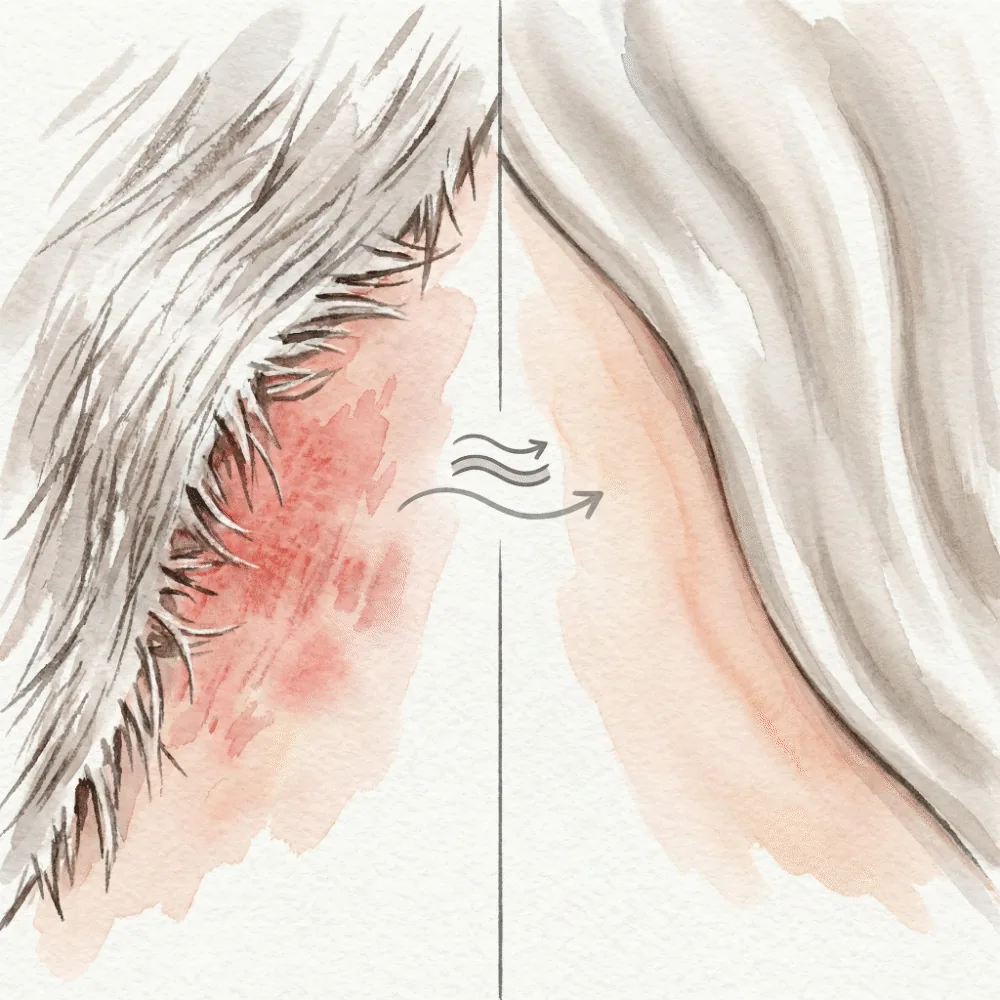
Masks have become part of daily life, but the friction and moisture build-up from synthetic nonwoven fabric are causing skin problems for many wearers.
Since a mask touches your face every single day, why not give the material the same attention you'd give your underwear or bedding?
What we recommend are Japanese-made masks that won't irritate your skin — born from Japan's tradition of fine textile craftsmanship.
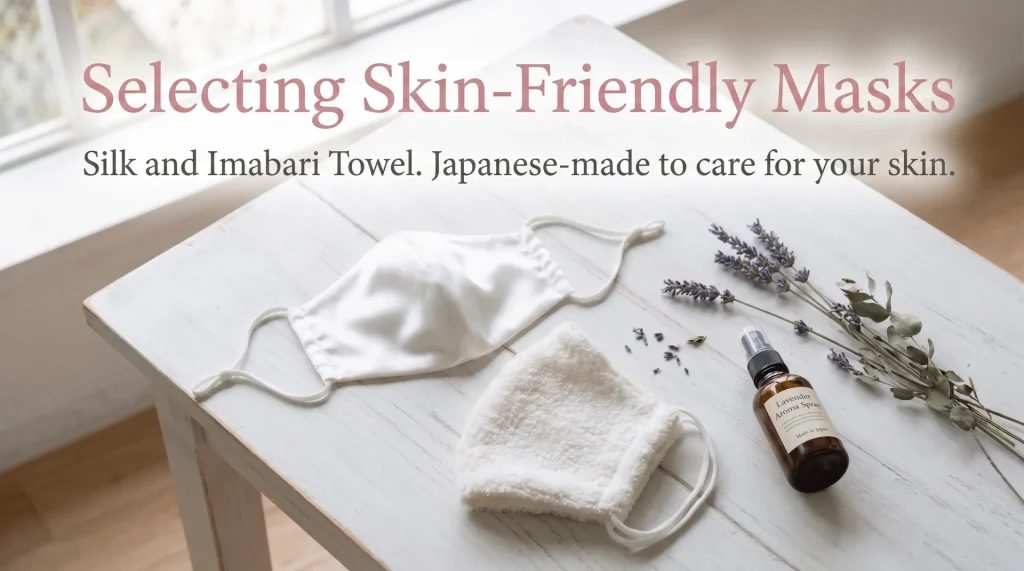
Silk — rich in moisture-retaining proteins — and Imabari towel cotton — legendarily absorbent — are more than just filters. They function like skincare, gently protecting your face as you wear them.
This guide covers how to combine natural-fabric masks with nonwoven masks for the best of both worlds, plus Japanese hygiene accessories that make daily mask life more comfortable.
Series: This article is Part 3 of the "Prepare & Organize (Hygiene, Disaster Prep & Food Storage)" series.
Quick Reference: Mask Materials at a Glance
| Material | Features | Fit | Care |
|---|---|---|---|
| Nonwoven | High filtration; best for infection control | Good (3D shaped) | Disposable |
| Gauze | Soft and gentle on skin; absorbent and breathable | Average | Hand wash or machine wash OK |
| Silk | Moisturizing; anti-static; ideal for sensitive or dry skin | Excellent | Hand wash recommended |
| Polyurethane | Highly stretchy; conforms closely to the face | Very good | Hand wash recommended (degrades with age) |
1. Worn Every Day: How to Choose a Japanese Mask That Protects Your Skin
The main causes of mask-related skin problems are friction and dryness.
Constant contact with synthetic nonwoven fibers gradually damages the skin's outer layer, breaking down its natural barrier function.
Rediscovering the Power of Natural Fibers
The most effective fix is switching the layer that touches your skin to a natural material.
Silk: Made of the same proteins as human skin, it has exceptional moisture retention and generates almost no static electricity.
Cotton: Highly absorbent, wicking away perspiration quickly — the ideal choice for preventing heat rash in warm weather.
The smart approach is to use the right mask for the right situation: nonwoven when you need maximum filtration, natural fabric on recovery days or as an inner liner.
2. Silk: Kosugi & Kinuya — Moisture-Rich Masks That Won't Cause Breakouts
Silk is sometimes called "wearable skincare."
Textile artisans from Fukui Prefecture — long known for obi sash weaving — have applied their expertise to create washable, high-quality silk masks.
Kosugi Orimono — Suzuyaka Kinu Mask (Cool Silk Mask)
The mask made famous when shogi champion Sota Fujii was spotted wearing one — a pinnacle of Japanese silk weaving.
Made by a long-established obi sash manufacturer in Fukui Prefecture, this mask uses 100% silk on the skin-contact side.
A special weave construction makes it breathable for a silk mask, while the shape holds up beautifully through washing.
It delivers a refreshing cool-touch sensation the moment you put it on, combined with sustained moisturizing properties — equally effective against winter dryness and summer stuffiness.
Kinuya — Inner Silk Mask
Silk where it counts most — an understated design you can wear anywhere.
The exterior uses durable cotton or linen, while the inner face layer is finished in moisturizing silk.
It looks like an ordinary mask, but feels extraordinary — that quiet luxury is what makes it so popular.
Even the ear loops are made from soft, gentle material, so there's no discomfort even after wearing it all day.
3. Cotton: Imabari Towel Masks — Highly Absorbent & Breathable
When the weather heats up or you're physically active, a mask made from Imabari towel fabric is hard to beat.
It brings the towel's legendary absorbency to face coverage, with a contoured cut that fits the face properly.
The Engineering Behind Towel-Country Craftsmanship
Kontex (Imabari towel maker):
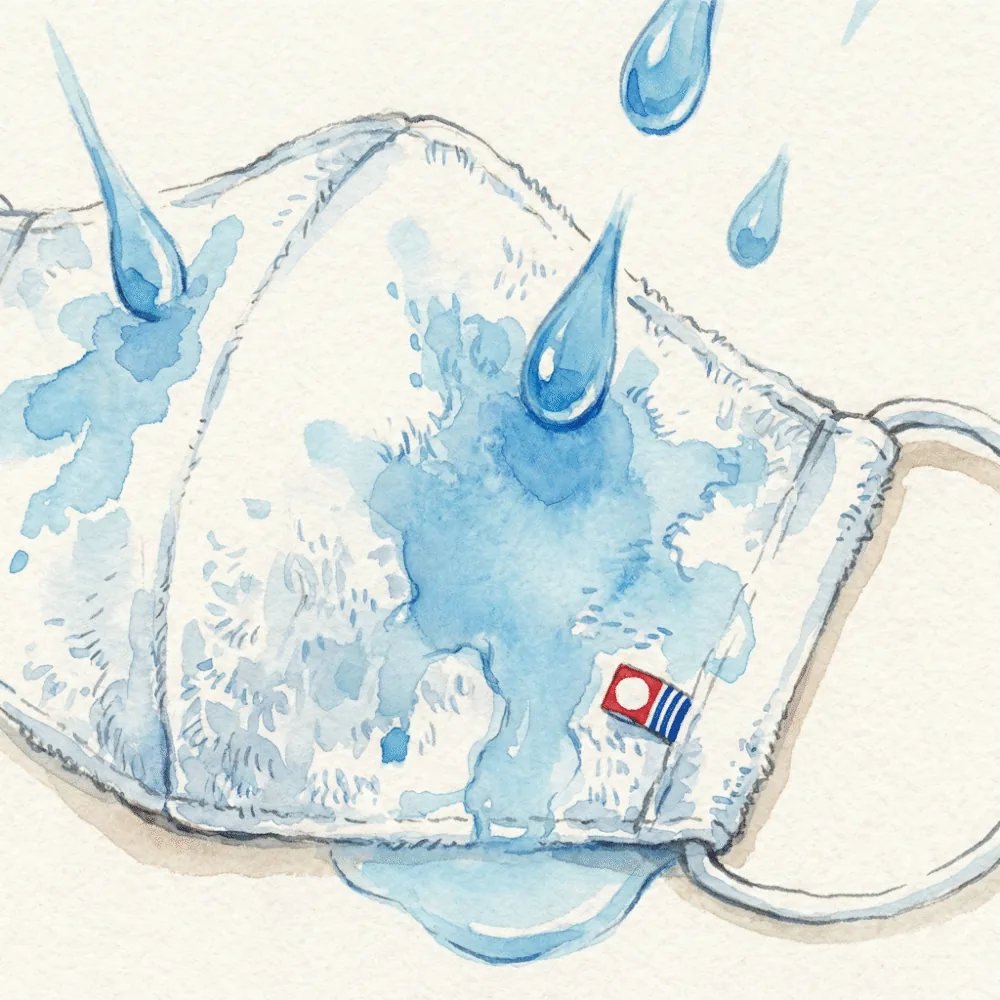
This Imabari towel manufacturer makes masks from organic cotton — safe enough for babies to mouth. The terry-loop pile absorbs the moisture from your breath, which also means significantly less glasses-fogging — an unexpected bonus.
Machine-washable durability without losing shape is exactly what you'd expect from Imabari craftsmanship.
Kontex — Imabari Towel Mask
Wrap your face in the comfort of a towel.
Made from soft gauze and terry-loop towel fabric, this mask is structured with a 3D cut so it drapes cleanly along the face — nothing bulky about it despite the towel material.
It also excels as a sleep mask for throat moisture protection — ideal in dry hotel rooms and airplane cabins.
4. Layering with Nonwoven Masks: The "Double Mask" Method
If you're not ready to give up nonwoven filtration entirely, try layering a natural-fabric mask as an inner liner — you get the best of both approaches.
How to Protect Your Skin Without Sacrificing Filtration
- Silk inner sheet (inside the nonwoven mask):
Slide a thin piece of silk fabric inside your nonwoven mask. That one layer dramatically reduces friction and helps regulate moisture from your breath.
The outer appearance is unchanged — perfectly appropriate for professional settings. - Cloth mask over nonwoven (over-mask):
Layer an attractive cloth mask on top of a disposable nonwoven mask.
The cloth presses the nonwoven more firmly against your face, improving the seal — and adding a personal style touch at the same time.
Kosugi Orimono — Silk Inner Mask Sheet
One silk insert transforms your disposable mask into a luxury experience.
A 100% silk inner sheet woven by the same long-established obi maker.
Simply place it inside your nonwoven mask and the rough, scratchy feeling disappears — replaced by a smooth, moisturizing touch.
Available in styles designed to stay in place and versions that clip onto your nonwoven mask for a secure fit.
Alphax — Moisturizing Silk Inner Mask
A 3D-shaped silk sheet that creates breathing room.
The skin-facing layer is 100% silk combined with a breathable mesh structure in a contoured 3D shape.
The dome-shaped space over your mouth and nose reduces the stuffy, clingy feeling that comes with standard nonwoven masks.
A reliable fix for summer stuffiness and makeup transfer — if either bothers you, this is worth trying.
5. No More Ear Pain: Japanese Sewing Techniques for All-Day Comfort
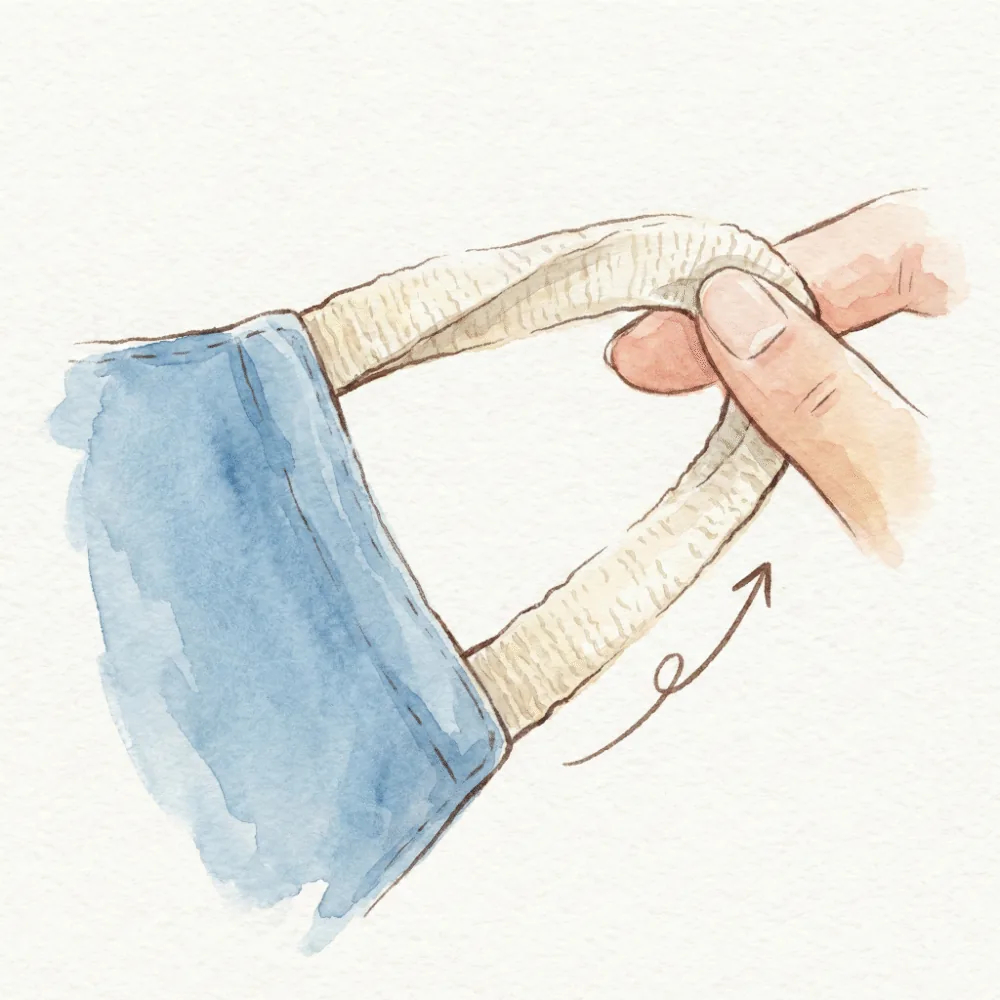
Ear pain from prolonged mask wear usually comes from loops that are too tight or too thin.
Japanese manufacturers take these ear loops just as seriously as the mask fabric itself.
Earloop-Free and Wide-Strap Innovations
Knitwear production regions like Niigata and Wakayama have adapted their "whole-garment" seamless knitting technology to masks.
The result is a knit mask where the body and ear loops are a single, seamless piece.
The exceptional stretch and wide surface contact mean you can wear them all day without any discomfort behind the ears.
Adjustable sliders that let you customize loop length for your face shape are also increasingly common.
6. Mask Cases & Sprays: Japanese Hygiene Accessories Worth Having
Setting a removed mask directly on a table is poor etiquette — and unhygienic.
For temporary storage during meals or breaks, use an antibacterial mask case.
Maruzen — Choju Giga Mask Case (Made in Japan)
Carry a piece of 12th-century Japan in your bag.
A hard-shell mask case printed with the Choju Giga (literally "frolicking animals") motif — the famous illustrated scrolls from Kozan-ji temple in Kyoto, depicting rabbits, frogs, and monkeys in playful human scenes.
The rigid case keeps your mask clean and in shape while removed during meals or meetings, protecting it from contact with the inside of your bag.
Made in Japan, compact enough to slip into any pocket, and a quiet conversation piece every time you take it out.
Perfect Potion — Mask Spray (Japan-manufactured line)
Reset the stuffiness and odor inside your mask.
A spray that uses the power of natural aromatherapy to freshen the stale air that builds up inside masks.
Peppermint and eucalyptus scents open up the airways and lift your mood throughout the day.
※ While the brand is Australian, several products in their lineup are manufactured in Japan and meet Japanese quality standards.
7. Washing Tips & Antibacterial Coating Durability
To get the most out of a quality silk or cloth mask, correct washing technique is essential.
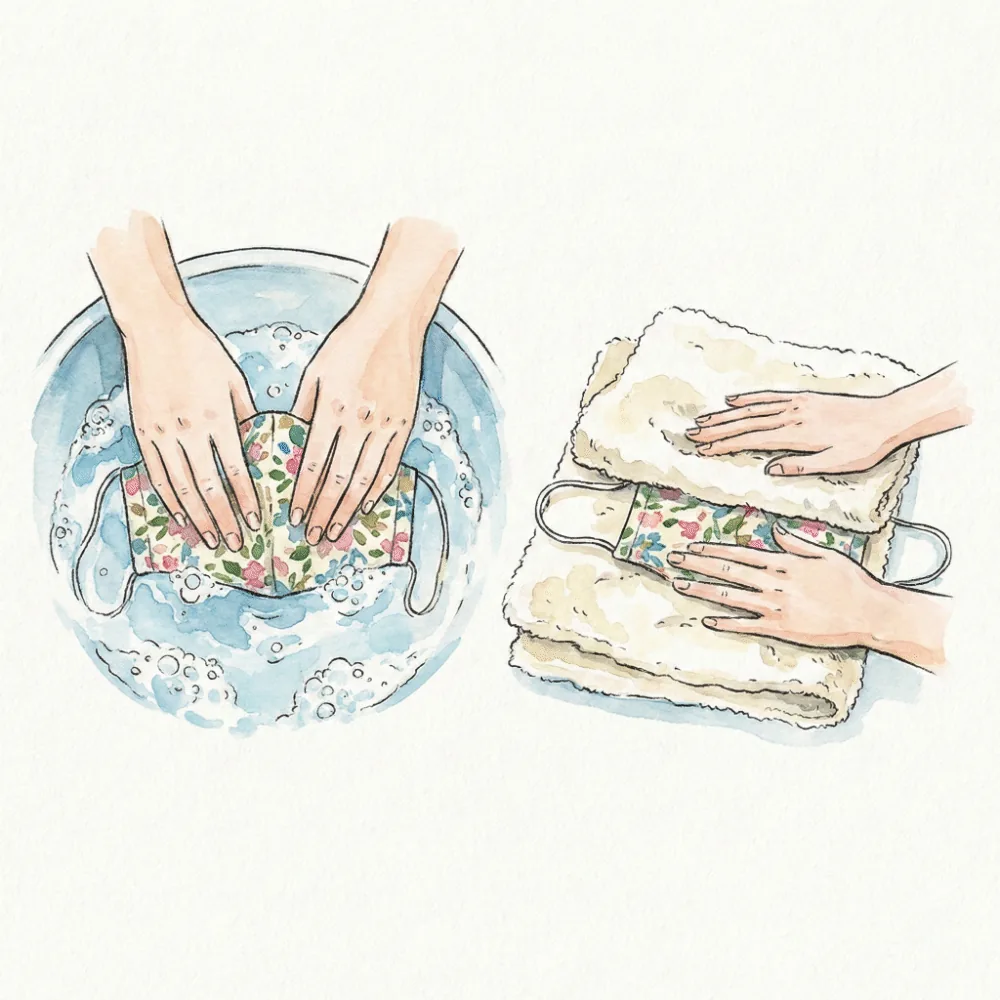
Hand Wash Is Best — Pat Dry, Don't Wring
- Detergent: Use a mild, delicate-garment detergent. Avoid bleach — it damages fibers. Reserve it only for whitening yellowed white masks.
- Press washing: Fill a basin and gently press the mask in and out. Scrubbing or rubbing causes pilling and damage.
- Towel drying: Never wring like a dishcloth. Press between clean towels and pat gently to transfer moisture.
- Dry in the shade: Direct sunlight discolors silk. Shape the mask and hang in a shaded spot.
※ Most antibacterial and antiviral coatings (such as TioTio treatments) retain effectiveness through repeated washing — but always check the manufacturer's stated wash-cycle limit.
8. Frequently Asked Questions
My makeup keeps rubbing off on my mask. What can I do?
Choose a 3D-shaped mask, and finish your makeup with a setting powder.
A "3D mask" or boat-shaped mask creates space around your mouth and nose so lipstick and foundation have much less surface to transfer onto.
Smooth materials like silk generate less friction, which also helps keep makeup intact.
Finishing with a setting mist over your makeup is another effective strategy.
How long does a cloth mask last?
Replace it when the elastic stretches out or the fabric starts to pill.
With daily washing, most cloth masks last about 3 to 6 months, depending on the material and construction.
For pocket-style masks that hold a filter insert, once the outer fabric loses its structure and the fit loosens, its effectiveness drops — so monitor the fit regularly.
Isn't silk too hot to wear in summer?
Actually, summer is when silk really shines.
Silk's moisture absorption and release capacity is about 1.5 times that of cotton. Even when you're perspiring, it dries quickly — the evaporative cooling effect keeps it feeling refreshingly light.
Silk also provides natural UV protection, making it a practical choice for sun defense as well.
Are there cloth masks that work for men?
Denim-like dungaree fabric and linen are popular choices.
For men who find silk too shiny, masks made from shirting-weight dungaree cotton or textured linen are a natural fit.
Muted tones like grey, navy, and khaki pair seamlessly with business attire without looking out of place.
Should I wash a new mask before wearing it for the first time?
Yes — a first wash is recommended.
Japanese-made masks are produced in clean facilities, but residual sizing agents or mild manufacturing odors may be present.
One wash lets the fabric relax and actually improves absorbency, making it more comfortable from the very first use.
Which is more hygienic — cloth masks or disposable nonwoven masks?
For infection control, nonwoven; for skin health, cloth wins.
Disposable masks are always fresh and clean, but the daily cost and environmental impact add up.
A cloth mask (especially silk or gauze) washed daily is equally hygienic when properly maintained.
The smartest approach is to use each type in the situation it suits best.
Final Thoughts: A Mask That Cares for Your Skin and Your Mood
"Just a mask" — and yet so much more.
Something you wear for most of your waking hours has a direct impact on your quality of life.
Instead of tolerating the scratch and stiffness of a disposable, try the feel of silk or cotton that your skin actually enjoys.
"I'm kind of looking forward to putting on my mask today" — that feeling, from your favorite mask, can turn a routine hygienic habit into a small daily act of self-care.

Japanese Disaster Preparedness Essentials: Emergency Food, Gear & Sets

Stylish Medicine Boxes: Wood & Steel Picks for Display-Ready First Aid Storage