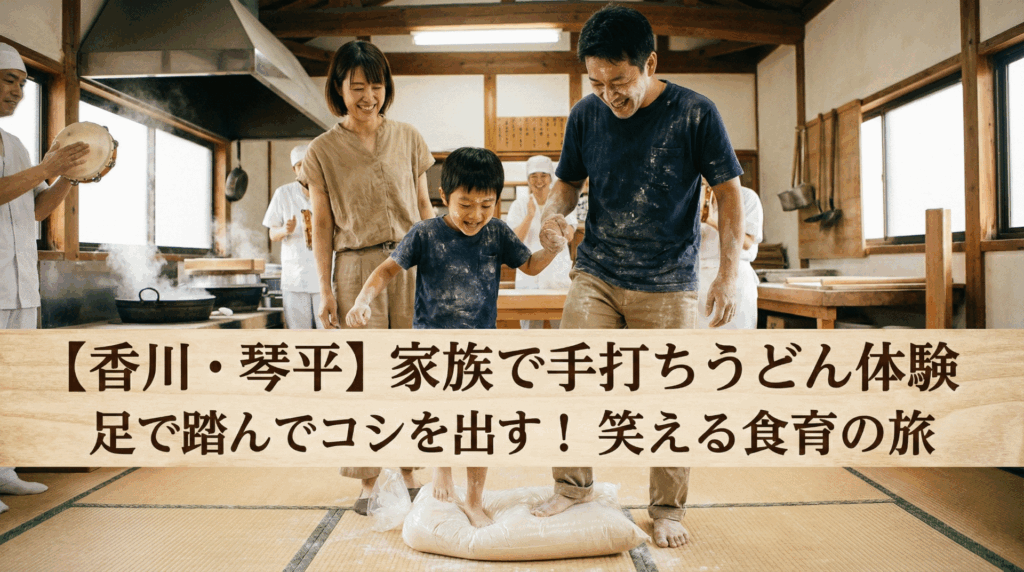
"Wait — we're actually STOMPING on food?!"
If you're taking the family to Kagawa — Japan's self-proclaimed "Udon Prefecture" — there's one hilariously fun activity you absolutely cannot miss: an authentic Sanuki udon hand-making experience.
Mix flour with salt water, knead it together, stuff the dough into a plastic bag, and then stomp all over it in time with music. Then roll it out thin with a rolling pin and slice it up with a special knife.
For kids who are usually told "don't play with your food!", this wild and boisterous udon-making session is the ultimate break from everyday life. Their eyes will light up as they gleefully pound that dough underfoot.
In fact, that "stomping" step is the scientific secret (and a great food lesson!) behind Sanuki udon's legendary firm, springy texture. Slurping up your own unevenly cut noodles fresh from the pot is a memory that will last a lifetime.
This guide covers everything from fascinating behind-the-scenes trivia to a classic day-trip plan combining the udon experience with a visit to Kotohira-gu (Kompira-san).
How to Get the Most Out of Your Family Udon Experience (30-second version)
- The "foot stomping" is the main event!: Most venues have you stomp to music like you're dancing — this is Dad's moment to shine
- Expect to get covered in flour: Aprons are provided, but skip the black clothes — wear casual, easy-to-move-in clothes you don't mind getting dusty
- Uneven noodles are totally fine: The thick, wide noodles your kids cut — like a rustic kishimen — are all part of the handmade charm!
- Pair it with Kompira-san: Experience venues in the Kotohira area are perfect for fueling up before or recovering after the famous stone staircase climb
- You can recreate it at home: No special equipment needed — take home what you learned and become a "weekend udon chef"
1. [Before You Go] Prepare for a Flour Fight! What to Wear and Nail Length Tips
Udon-making is both a genuine "sport" and a real cooking lesson. Set yourself up for maximum fun with a little preparation.
The 3 Golden Rules — Don't Skip These!
- ① Avoid dark colors and knit fabrics!
You'll be using plenty of "dusting flour" when stretching the dough. Even with an apron, flour will drift onto your pants and sleeves — go for smooth-textured fabrics you can easily brush clean. - ② Trim your nails short beforehand
The first step — called "mizumawashi" — involves mixing flour and salt water and kneading with your hands. Long nails can dig into the dough or tear it, so trim them before you go. - ③ Wear slip-on shoes (or shoes that are easy to take off)
You'll be placing the dough in a plastic bag and stomping on it in your socks (or barefoot), so you'll need to remove your shoes. Skip the boots and anything fiddly — easy-on, easy-off footwear is the way to go.
2. [Fun Trivia] Why Stomp With Your Feet? The Science Behind Udon's Chewiness
It might sound like terrible table manners, but stomping with your feet is a completely essential step in making Sanuki udon. Here's how to explain it to the kids!
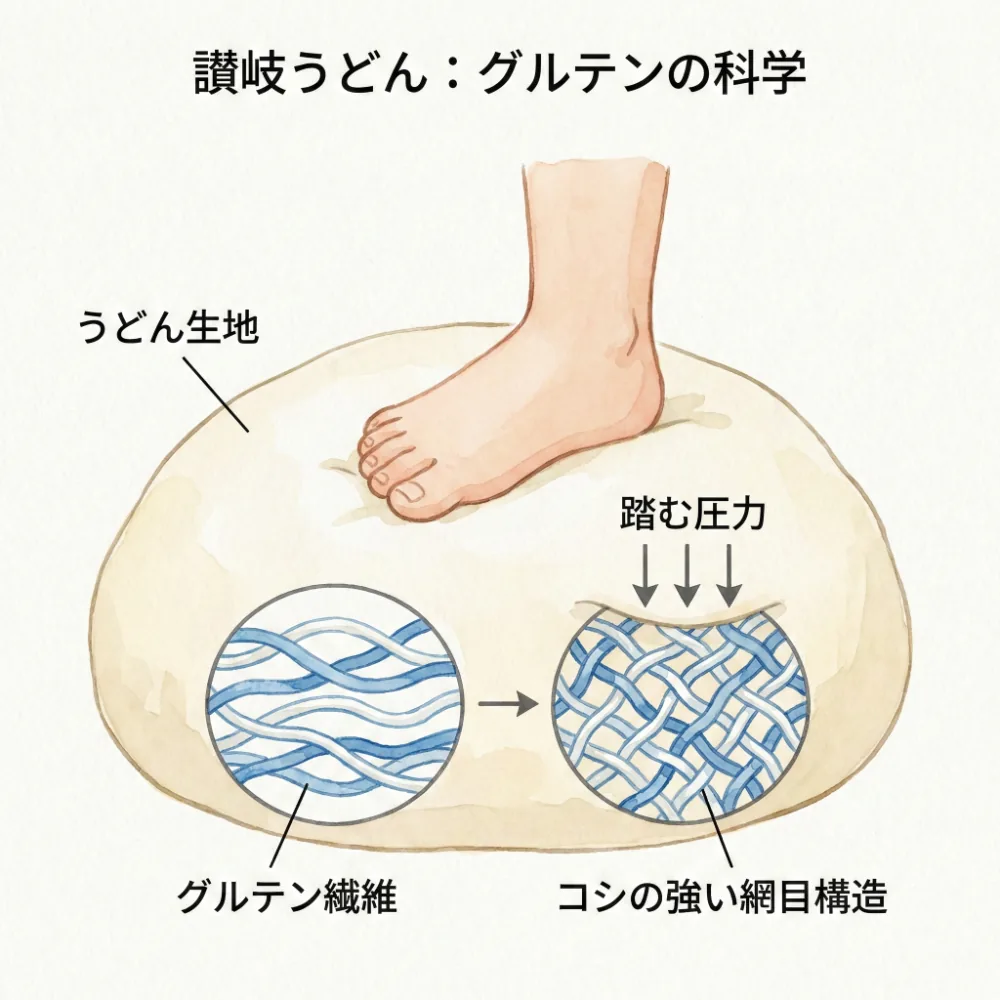
Building the "Gluten" Network!
When you mix flour with water and salt and knead it, a protein called "gluten" forms a tangled, net-like web throughout the dough. That web is the secret behind udon's springy, chewy texture.
Sanuki udon dough is very stiff and low in moisture — human hands alone simply aren't strong enough to knead it thoroughly. That's why people use their "feet" to stomp with their full body weight, squeezing and compressing the gluten network to create that famously firm, satisfying bite. Pure ancestral wisdom!
💡 Fun Trivia The Secret of "Do-san Kan-roku"
The salt concentration in udon brine changes with the seasons. Craftspeople have long followed the rule "Do-san Kan-roku" (summer: 1 part salt to 3 parts water; winter: 1 part salt to 6 parts water), carefully adjusting the saltiness to match the temperature and humidity. Salt plays a crucial role in tightening the gluten network.
3. Entertainment or Artisan? Choosing Your Udon Experience Style
Udon-making experiences in Kagawa fall into two broad camps — pick the vibe that suits your family!
| Style | What It's Like & Who It's Best For |
|---|---|
| Full-On Fun! Dance & Stomp Style (e.g., Nakano Udon School) |
[Big hit with toddlers through elementary schoolers] Shake tambourines and stomp the dough to upbeat J-pop hits. Loud, lively, and full of laughs — perfect for families who want to go all out and make happy memories. |
| Serious Craft! Artisan Instruction Style (e.g., Sanuki Mengyou) |
[Best for older kids and adults] A professional udon chef guides you carefully through the logic behind rolling the pin correctly and stretching the dough properly. Ideal for families interested in genuine food education or improving cooking skills. |
4. [Kagawa / Kotohira] Top 3 Family-Friendly Udon-Making Spots
*Map pins indicate the spots featured in this article. Please check the official website for the latest pricing and hours.
① Nakano Udon School (Kotohira Campus) | Can't Decide? Start Here — Dance, Laugh, and Stomp!
Located right on the approach to Kotohira-gu (Kompira-san), this is one of the most famous udon experience facilities in all of Japan.
The signature highlight? Stomping the dough to music! You're handed a tambourine and the whole family dances and stomps together to an upbeat track. At the end, you even receive a "graduation certificate" (with a rolling pin attached) — a fun keepsake to take home. The classic spot to visit before or after your Kompira-san climb.
👨👩👧👦 Family-Friendly Checklist
- Entertainment factor: The instructor's energy is contagious — even shy kids will be smiling within minutes
- Souvenir: The "graduation certificate" doubles as a rolling pin (scroll style), so you can actually use it at home
- Convenience: Right in the heart of Kotohira sightseeing, so it fits into any itinerary easily
Basic Information (Approximate)
- Experience: Udon-making + eating your creation
- Duration: Approx. 40–50 minutes (+ eating time)
- Price: From ¥1,760
- Reservations: Advance booking required (book early — this one fills up fast!)
② Nakano Udon School (Takamatsu Campus) | First Stop for Families Flying or Ferrying In!
A second campus of the same Nakano Udon School, this one located in Takamatsu city.
If Kotohira feels a little far but you want easy access from Takamatsu Airport or Takamatsu Station, this is your best bet. Of course, it delivers the same high-energy, tambourine-and-music udon-stomping fun as the Kotohira campus.
👨👩👧👦 Family-Friendly Checklist
- Convenience: Close to central Takamatsu, making it easy to slot into the first or last day of your trip
- Content: Just as entertaining as the Kotohira campus — same great experience
Basic Information (Approximate)
- Duration & Price: Same as Kotohira campus
- Reservations: Advance booking required
③ Sanuki Mengyou (Takamatsu) | Learn from the Pros! A Serious Handmade Udon Class
For families who want to truly understand the craft of hand-cut udon, the workshop run by long-established udon restaurant "Sanuki Mengyou" (at their Takamatsu locations) is the one to choose.
A professional chef teaches you the "why" behind every step — how to roll the pin, how to angle the knife. And you get to eat your freshly made udon with the restaurant's own extraordinary house-made dashi broth — a perk only a legendary establishment can offer.
👨👩👧👦 Family-Friendly Checklist
- Food education value: Follow the full process from flour to noodle, with the reasoning explained at every step
- Flavor: Eating your homemade udon with a legendary restaurant's dashi and soy sauce is genuinely moving
📦 Bring Kagawa Home! Mail-Order Sanuki Udon & Premium Dashi
"Kagawa is just too far away…" or "I want to taste that amazing flavor one more time!" — we hear you. Authentic Kagawa udon with its famous firm bite, and the "dashi soy sauce" that makes everything taste incredible (like Kamada Shoyu), are both available to order online. Why not turn your next weekend lunch into an amazing "homemade Sanuki udon" experience?
5. [Sample Itinerary] Stone Steps + Udon! A Kotohira Day-Trip Timeline
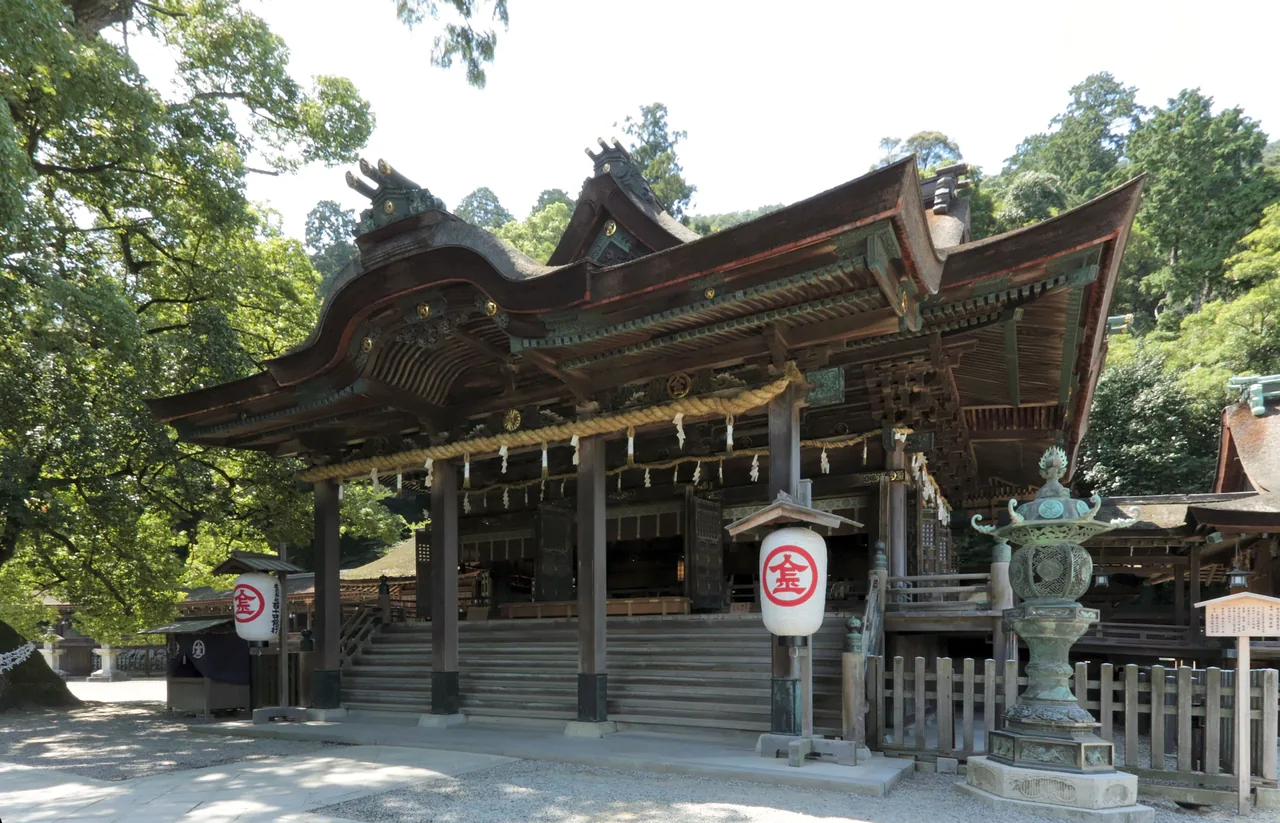
Any visit to Kotohira should include climbing the famous stone steps at Kompira-san (Kotohira-gu)! Exercise your legs on the steps, make udon, then eat it — the perfect healthy day out.
- 9:30 | Arrive in Kotohira. Start climbing the stone steps from the Kompira-san approach!
- 10:30 | Reach the Main Shrine (785 steps up). Take in the panoramic view and pay your respects.
- 11:30 | Head back down. Reward yourself with an "Oiri soft-serve ice cream" on the approach.
- 12:30 | Start the udon-making experience at "Nakano Udon School"!
(Stomp away to the music!) - 13:15 | Boil and eat your own unevenly cut udon as lunch, right then and there.
- 15:00 | Soak away tired legs at a nearby "Kompira Onsen" day-use hot spring.
6. Where to Play After the Experience! Family-Friendly Spots Nearby
① Kotohira-gu (Kompira-san)
Long celebrated as a place "everyone must visit at least once in their life," Kompira-san is a major power spot enshrining the god of the sea. The climb to the Main Shrine involves a whopping 785 steps.
It's a bit of a workout for little ones, but along the way you'll find a real white horse called "shinme" and rows of souvenir shops — take it slow and the sense of accomplishment at the top is extraordinary. Cheering each other on with "just a little further!" is exactly the kind of experience that brings families closer together.
② Fuel Up on the Famous "Oiri Soft-Serve"
On the approach to Kompira-san (at the foot of the stone steps), there's one treat you absolutely cannot walk past: "Oiri Soft-Serve."
"Oiri" are colorful, round, melt-in-your-mouth traditional rice puffs traditionally given as wedding favors in Kagawa. Piled generously on top of soft-serve ice cream, this treat is visually adorable and absolutely Instagram-worthy. The best reward for tired legs after all those stone steps!

7. Soak Away the Stone-Step Soreness! Family-Friendly Hotels in Kotohira
After 785 stone steps at Kompira-san plus a full-on udon-stomping session, both kids and adults will have legs that feel like jelly.
Heading straight home is perfectly fine, but if you can swing it, spending the night at a ryokan in the famous Kompira Onsen hot spring village — or adding a theme park to the mix — is the secret to squeezing every last drop of joy from your family trip!
♨️ Kotohira Area (Walking Distance from the Shrine Approach! One of Shikoku's Largest Hot Spring Inns)
Kotohira Onsen Kotosankaku
Just a short walk from the Kompira-san approach — one of Shikoku's largest hot spring ryokan with an unbeatable location as a sightseeing base.
The spacious indoor baths and open-air baths are absolutely perfect for soaking away legs sore from climbing steps and stomping udon. Generous buffet dinner plans are available too, making for a lively, quintessential family hot-spring getaway.
🎡 Near Leoma World (Amusement Park + Grand Buffet = Kids Going Absolutely Wild!)
Oedo Onsen Monogatari Hotel Leoma no Mori
About 15 minutes by car from the Kotohira area. A resort hotel directly next to "NEW Leoma World," one of Shikoku's largest theme parks — and massively popular with families.
After making udon, spend the next day riding all day at the amusement park: the ultimate "golden 2-day itinerary." Oedo Onsen Monogatari's lavish buffet and natural hot spring baths guarantee satisfaction for kids and adults alike.
7. [After You Get Home] Keep the Fun Going with Premium Dashi & a Beautiful Bowl
At venues like Nakano Udon School, you often get to take home a portion of dough that you personally stomped — separate from the dough you eat on site.
Continue Your "Udon Chef" Journey at Home
- Roll it out and cut it with a rolling pin (Use the "graduation certificate rolling pin" you received, roll the dough out on your kitchen table, and cut it with a knife. Uneven thickness? That's the whole point!)
- Put real effort into the dashi broth (You made the noodles from scratch — the broth deserves the same love. Store-bought mentsuyu is delicious, but simmering your own broth from kombu, iriko (dried sardines), and katsuobushi is the ultimate food education experience.)
🥢 Make Your Homemade Udon Even More Delicious! Premium Dashi & Beautiful Bowls
The right tools to enjoy your homemade udon to the absolute fullest at home. Premium dashi packs like those from "Kayanoya" make restaurant-quality flavor effortlessly achievable. Pair them with beautiful Japanese donburi bowls (Hasami-yaki or Mino-yaki) that keep udon hot and look stunning on the table — and your everyday kitchen transforms into a proper noodle restaurant!
Wrap-Up: The Best Bowl You'll Ever Make — With Your Own Feet and Hands
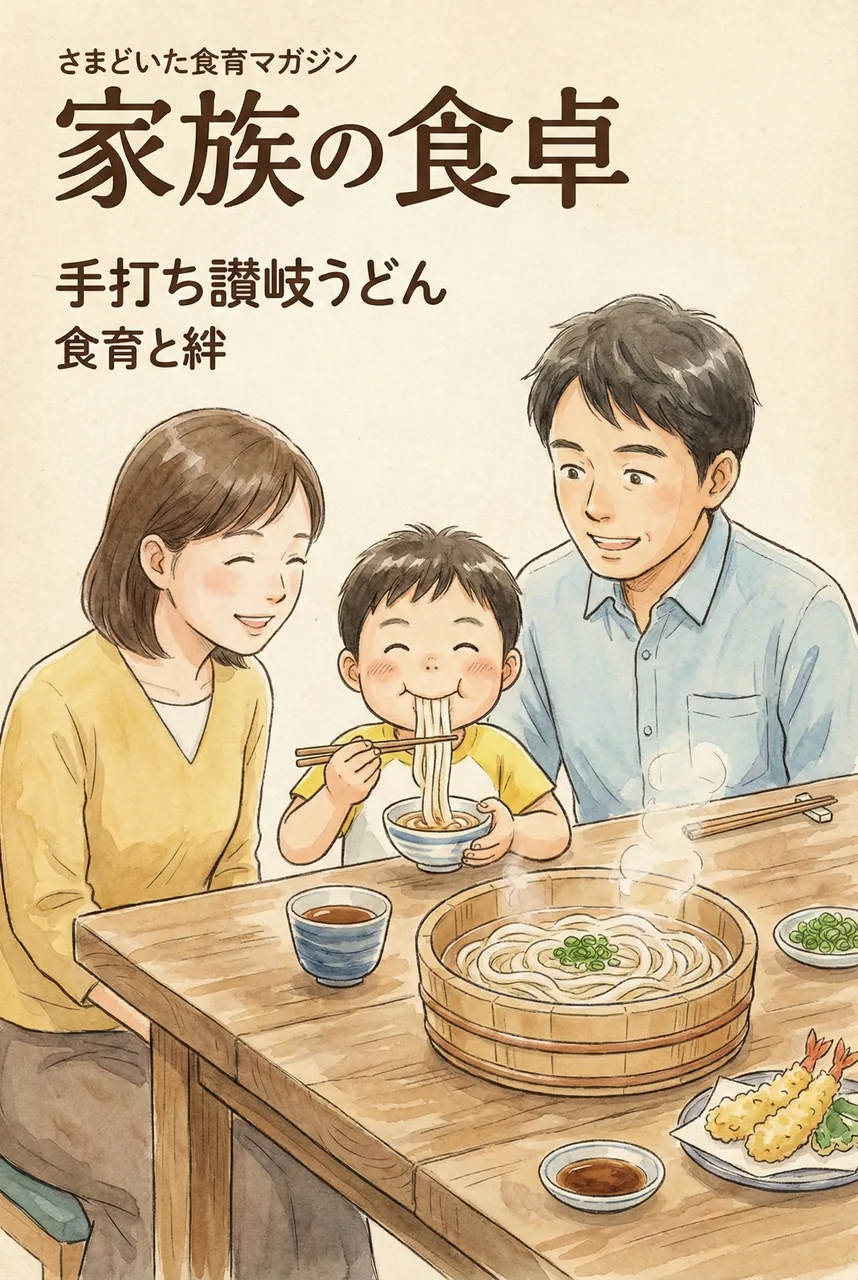
"Dad, your udon is SO thick!"
"It's like kishimen noodles!"
Simple ingredients — flour and salt water — transformed through stomping, kneading, and cutting into springy, chewy Sanuki udon.
A bowl of noodles that costs mere cents at the supermarket somehow becomes more delicious than any fine dining experience when you've made it yourself — and infinitely funnier.
The irresistible smell of dashi drifting over while you wait for your noodles to cook.
This weekend, why not head to Kagawa to stomp, slurp, and discover the joy of Japan's beloved flour-based food culture together as a family?