Taste the four seasons. Encounter the "true deliciousness" nurtured by Japan's climate and landscape.

The Japanese archipelago spans roughly 3,000 kilometers from north to south. From the drift-ice-filled seas of Hokkaido to subtropical Okinawa, this diverse climate and landscape has birthed a "treasury of ingredients" unparalleled in the world.
Here, we comprehensively feature "delicious foods" from all over Japan, including agricultural products, seafood, processed foods, and famous confectioneries.
We have carefully selected masterpieces you'd want to order even just to try, and gourmet gifts you'd want to give to loved ones—like farm-direct freshness you can't find in supermarkets, flavors from hundreds-of-years-old established shops, and the passion of the producers. "To eat" is "to live." We deliver heart-fulfilling moments through Japanese food.

How to choose Food & Drink

Why is "Japanese Food" loved around the world today?

Registered as a UNESCO Intangible Cultural Heritage, "Washoku" (Japanese cuisine). The Japanese ingredients forming its base boast a quality that leads top chefs worldwide to specifically request them. The secret to this deliciousness is supported by three major elements:

1. Delicate flavors nurtured by "Soft Water"
Most of Japan's water is soft water with a mild mouthfeel. Soft water has the power to soften the fibers of ingredients and maximize the umami (savory taste) of dashi (broth). Vegetables and rice grown with this water, as well as sake and tofu prepared with it, acquire a delicate taste that other countries cannot imitate.

2. A distribution network chasing "Seasonality (Shun)"
Japan not only has four seasons but also the concepts of "24 solar terms" and "72 micro-seasons," dividing the seasons even finer. It differentiates between the three periods of "Hashiri" (early/start), "Sakari" (peak), and "Nagori" (end), cherishing the taste of each specific moment. The advanced cold chain (low-temperature logistics) that delivers this "Shun" to consumption areas while maintaining freshness is the lifeline supporting the richness of the Japanese dining table.

3. "Fermentation" technology living with microorganisms
Japan's hot and humid climate is a paradise for microorganisms like koji mold. Miso, soy sauce, sake, bonito flakes, natto—these are all born through the power of fermentation. Rather than simply enhancing preservability, Japan's fermentation technology, which transforms proteins into "umami (amino acids)" through the work of microorganisms, is biotechnology boasted to the world.
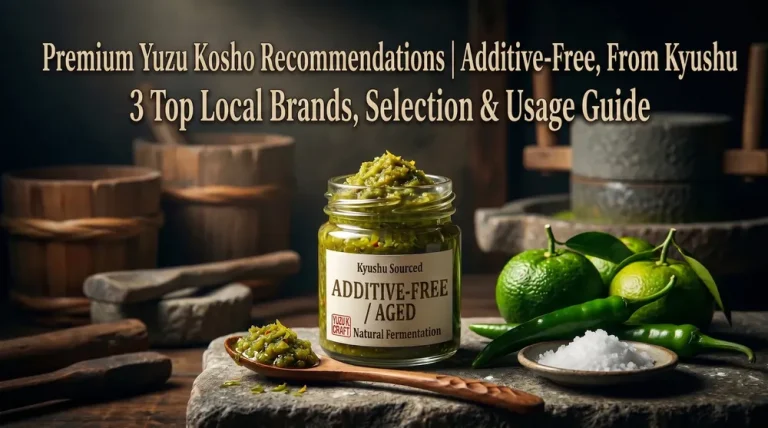
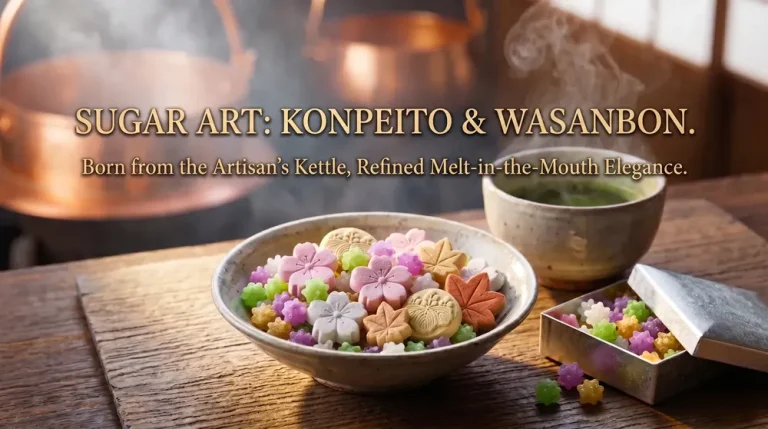
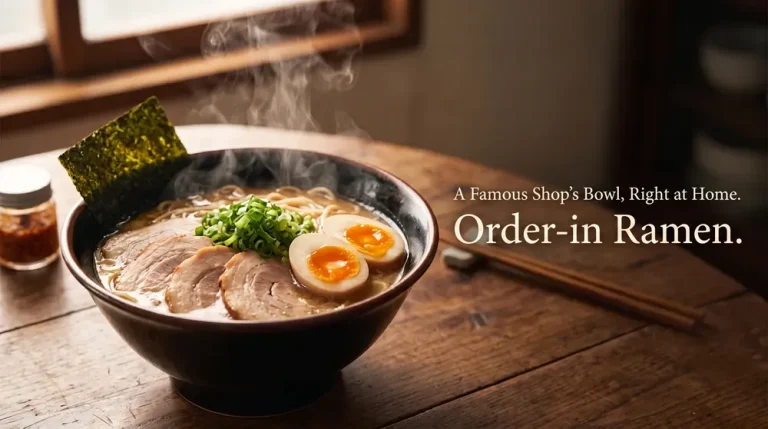
[Save for Reference] The Best Seasons for Ordering (Seasonal Calendar)

To make sure you don't miss the "most delicious time," here are the target ingredients for each season:

🌸 Spring (March - May): The breath of life
・Wild vegetables (Aralia sprout, butterbur scape): Popping up with the snowmelt, a slightly bitter spring taste.
・First bonito (Hatsu-gatsuo): The refreshing lean meat is a lucky charm signaling the arrival of spring.
・Spring cabbage & new onions: Characterized by high moisture content and surprising sweetness even when eaten raw.
・Strawberries: Farm-direct strawberries shipped fully ripe have a distinctly strong aroma.

🌻 Summer (June - August): Stamina and coolness
・Eel: For the Midsummer Day of the Ox. The plump meat of domestic eel is exceptional.
・Summer vegetables (Tomatoes, corn): Morning-harvested vegetables whose flavors have deepened from soaking up the sun.
・Rock oysters: Unlike winter's true oysters, they reach their peak in summer with a rich creaminess.
・Peaches, grapes, watermelons: Water-rich fruits highly appreciated even as gifts.

🍁 Autumn (September - November): Autumn of harvest
・New rice: The freshly cooked aroma and gloss are luxuries unique to this time. Comparing varieties is also recommended.
・Pacific saury (Sanma) & returning bonito: Fatty fish superb either as sashimi or grilled.
・Matsutake & mushrooms: Their mellow aroma is synonymous with the Japanese autumn.
・Persimmons, pears, chestnuts: Elegantly sweet autumn flavors used even in Japanese confectioneries.

❄️ Winter (December - February): Concentration of umami
・Crabs (Snow, King): The kings of winter. Enjoy them in hot pots or grilled.
・Winter yellowtail (Kan-buri) & Pacific cod: Their flesh tightens in the cold sea, and their fat reaches its peak.
・Root vegetables (Radish, lotus root): Root vegetables increasing their sugar content in the cold become the stars of simmered dishes.
・Gibier (Wild boar, deer): During the winter hunting season, you can obtain the finest gibier brimming with fat.


How to choose and identify "authentic" foods without failing

While numerous foods line online shopping sites, checking the following points will help you make highly satisfying purchases:

1. Know the "GI Mark (Geographical Indication)"
Like "Yubari Melon" and "Kobe Beef," this is a system where the government protects special products tied to the land's climate. Products with this mark are proof of being "genuine brand goods" that have cleared quality standards.

2. Check after the "Slash (/)" in the ingredients list
Under Japanese law, there is a rule to list additives after the "/" (slash) in the ingredient names. Products with no slash, or few items after it, are highly likely to be high-quality foods competing with the original taste of the ingredients.

3. Confirm the reason for "Wakeari (imperfect/discounted)"
"Wakeari" products discounted for reasons like "irregular shapes" or "slight scratches" offer supreme cost performance for home use. However, it's safer to avoid excessively cheap products where the reason is not clearly stated.


Delivering your thoughts. Gourmet gifts by scene

Food gifts are called "consumables" and are popular as presents that don't burden the recipient.

[Summer & Winter Gifts (Ochugen/Oseibo) / Business]
In situations where you absolutely cannot fail, well-known "established shops" or "brand ingredients" provide peace of mind. High-grade somen noodles in wooden boxes, Matsusaka beef sukiyaki meat, tsukudani (simmered foods) sets from historic restaurants—choose items whose value conveys itself just by seeing the wrapping paper.

[Celebratory Returns (Wedding / Childbirth)]
If you don't know the recipient's preferences, items with a long shelf life that the whole family can enjoy are appreciated, such as "high-grade rice tasting sets," "domestic fruit juices," or "assorted dressings."

[Casual Souvenirs]
Items sparking conversation are recommended, like trendy "craft canned goods," locally famous sweets with cute packaging, or "local craft beer sets" for those who enjoy alcohol.


The magic that stops freshness. The evolution of "Freezing Technology"

The idea that "freezing drops the taste" is a thing of the past. Today, technologies like "CAS freezing" and "3D freezers" that freeze without breaking the cells have evolved, allowing the freshness of the catch to be reproduced as is on the dining table.
Products rapidly frozen utilizing the absolute best ingredients harvested during their peak season are often far more delicious and nutritious than buying out-of-season fresh ingredients. Including the convenience of keeping them stocked in the freezer, it is a choice to be utilized wisely.


Frequently Asked Questions (Q&A)

Q. What is the difference between "Best Before" (Shomi Kigen) and "Use By" (Shohi Kigen)?
A. "Best Before" is the period it can be eaten deliciously (mainly for snacks and canned goods). It doesn't mean it immediately becomes inedible after the date, but the flavor degrades. "Use By" is the period it can be eaten safely (bento boxes, raw meat). Failing to observe this date carries a risk of food poisoning.

Q. What is an excellent thawing method for ordered meat?
A. The one with the fewest failures is "natural thawing in the refrigerator." By moving it to the fridge half a day to a day before eating and letting it thaw slowly, you can minimize the outflow of umami components (drip). If you are in a hurry, soaking it in "ice water" while still in a sealed bag thaws it faster and with higher quality than running water.

Q. What is the difference between pesticide-free and organic cultivation?
A. "Organic cultivation" can only be claimed by those that clear strict government standards (Organic JAS) and receive certification. "Pesticide-free" is not a certification system and is often a self-declaration by the producer. If you emphasize reliability, choose products with the "Organic JAS Mark."


GUIDES & STORIES for this category

We've picked up related guides and stories for this category from our selection of Japanese-made products.

Expanded Image

Welcome to MADE in JAPAN.JP

Register for free to save your favorite tools, post reviews, and earn scores.