There's something about a Japanese hot spring inn bathroom that makes you feel relaxed before you
even step into the water. Part of that feeling is the scent — the clean, faintly sweet smell of
hinoki (Japanese cypress).
You don't need to renovate your bathroom to bring that experience home. A hinoki bath stool and a
wooden bucket are enough to change the atmosphere completely. The wood releases its scent when it
meets warm water. The natural grain replaces the institutional look of plastic. The bath stops being
a chore and becomes a ritual.
This guide covers the difference between hinoki and Aomori hiba, how to choose by use type, and
Japan-made picks across bath stools, buckets, and bath trays — most available directly on Amazon.com.
Quick Reference: Japanese Wooden Bath Accessories
| Item | Material | Best for |
|---|---|---|
| Bath stool (low, 7–8 inch) | Hinoki / Aomori hiba | Traditional onsen-style seated wash |
| Bath stool (high, 9–11 inch) | Hinoki | Easier to stand up from; older users |
| Bath bucket (with copper hoop) | Hinoki + copper | Ryokan atmosphere; gifting |
| Bath tray / caddy | Hinoki / bamboo | Long soak; reading in the bath |
1. Why Hinoki Changes the Bath Experience
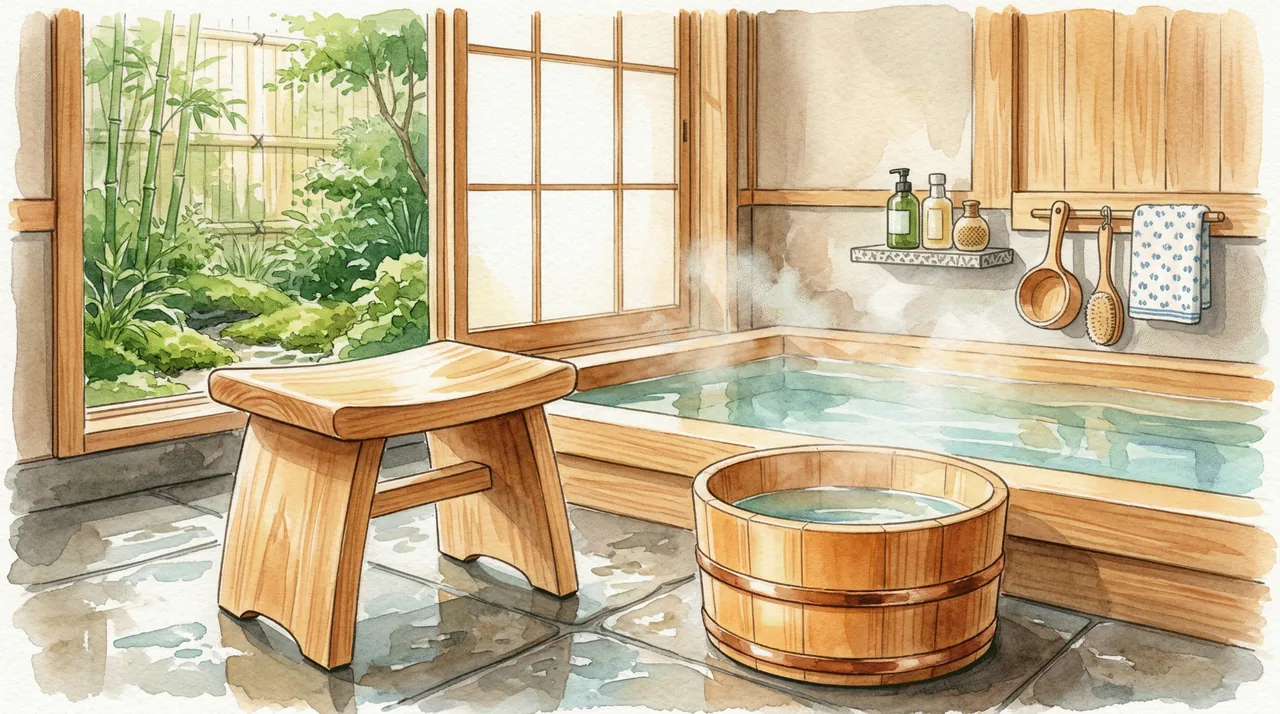
What makes a ryokan bathroom feel different isn't just the quality of the water. It's the five senses all engaged at once: the visual warmth of pale wood grain, the slight roughness of the stool against wet skin, the sound of water hitting wood differently from plastic, and above all, the scent.
Hinoki cypress contains volatile compounds — primarily α-pinene — that are released when the wood encounters heat and moisture. Research published in Japanese forestry and environmental medicine journals indicates that these compounds measurably reduce cortisol levels and heart rate. This is the scientific underpinning of why Japanese hot spring inns have always invested in hinoki baths: the wood does something that plastic and ceramic cannot.
Replacing a plastic bath stool with a hinoki one costs relatively little. The difference in the experience is larger than the price difference suggests.
2. Hinoki vs Aomori Hiba: Which to Choose?
Hinoki Cypress (桧 / ひのき)
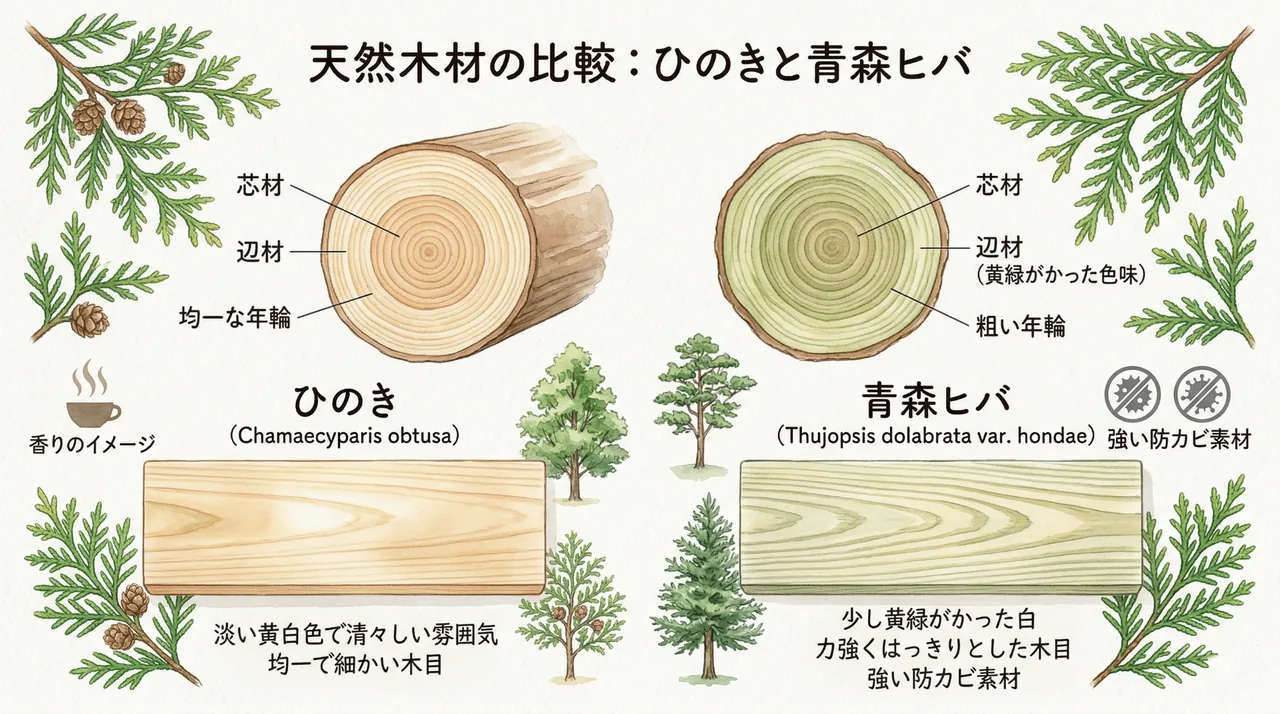
Japan's iconic bath wood. Pale cream-yellow colour, clean straight grain, and the fresh, slightly citrus-sweet scent that defines the Japanese hot spring aesthetic. Hinoki is naturally water-resistant — particularly the heartwood (core), which contains higher concentrations of oil than the sapwood. Primary producing regions: Kiso (Nagano/Gifu) and Tono (Gifu). Old-growth Kiso hinoki is considered the finest grade. The scent is mild and universally appealing — this is the safe choice for households with guests.
Aomori Hiba (青森ヒバ)
A conifer endemic to Aomori Prefecture in northern Japan. Hiba contains higher concentrations of hinokitiol (a natural antimicrobial and antifungal compound) than regular hinoki — meaning stronger natural mould resistance and a longer lifespan in wet environments. The colour is a paler yellow-green, the texture slightly denser and heavier than hinoki. The scent is more herbaceous and intense — some find it reminiscent of cedar or eucalyptus. This is the technical choice: if you want the most durable wood for a permanently wet environment, Aomori hiba is the answer.
Summary
Choose hinoki if scent experience is the priority and the wood will be dried properly between uses.
Choose Aomori hiba if maximum mould resistance and durability in a continuously damp bathroom matter most.
3. Choosing by Item Type: Stools, Buckets & Bath Trays
Bath stool height
Japanese bath stools (風呂椅子, furo isu) come in several heights. The right choice depends on how you use the bathroom:
- Low (under 8 inches / 20 cm): The traditional ryokan style. Seated close to the floor, you have room to lean over and scrub. A relaxed, almost meditation-like posture.
- Standard (8–10 inches / 20–25 cm): The most practical height for the majority of users. Easy to sit and stand without strain.
- High (10–12 inches / 25–30 cm): For users who find low seating difficult — older users, those with knee or hip issues, or taller individuals.
Bath bucket (湯桶 / 手桶)
The oke (wooden bucket) is used to pour water over the body before and during bathing. A copper hoop (doga) around the outside reinforces the staves and adds the visual quality associated with high-end ryokan bathrooms. Volume is typically 1–2 litres — enough for two or three pours. A stool and bucket set from the same wood creates a visual coherence that makes the difference between a bathroom and a bathing room.
Bath tray / caddy
A tray that bridges the bathtub to hold a book, phone, or drink. Hinoki bath trays have become popular alongside the growing interest in extended soaks and mindful bathing. Choose one with adjustable or flexible width so it fits your tub. Waterproof-coated models handle the wet environment better than untreated wood for this specific use.
4. Japan-Made Picks Available on Amazon
No.1 — Yamako Hinoki Bath Stool (7.5 inch, Made in Japan)
Yamako (ヤマコー) is one of the longest-established Japanese wooden bath goods manufacturers, supplying both consumer and commercial ryokan markets. This stool sits at 7.5 inches — the classic low height of traditional Japanese bathrooms and hot spring inns. Made from genuine hinoki in Japan with the characteristic pale grain and fresh scent. The slatted top surface allows water to drain freely so the stool dries faster between uses.
- Material
- Hinoki cypress, made in Japan
- Height
- 7.5 inches (approx. 19 cm)
- Best for
- Traditional onsen-style wash; lower bathing posture
No.2 — Yamako Hinoki Bath Chair (Large High, 9.1 inch)
The same Yamako hinoki quality at a higher sitting position — 9.1 inches (23 cm). This height is easier to stand up from and more comfortable for extended use if you find low seating strains your knees or back. The larger, wider seating platform also provides more stability. A practical choice for households with older family members or for users who bathe for longer periods.
- Material
- Hinoki cypress, made in Japan
- Height
- 9.1 inches (approx. 23 cm)
- Best for
- Easier sitting and standing; longer bathing sessions
No.3 — Yamako Natural Wood Bath Bucket (Made in Japan)
Yamako's hinoki bath bucket pairs naturally with their stools. The stave construction follows traditional cooperage technique — each narrow plank fitted precisely against the next, held by the hoop. Pour warm water and the hinoki scent intensifies immediately. Buying the stool and bucket together creates the complete ryokan bathing environment.
- Material
- Natural wood (hinoki), made in Japan
- Best for
- Completing the stool-and-bucket set; daily onsen bathing ritual
No.4 — Umezawa Hinoki Bath Bucket with Copper Hoop
Umezawa Mokuzai Kogei (梅沢木材工芸) is a specialist hinoki woodworker supplying commercial ryokan across Japan. Their bath bucket uses copper hoops (doga) rather than stainless steel — copper has natural antimicrobial properties and the warm tone reads as distinctly more premium than metal hardware. This is the bucket that looks most like a traditional inn. An excellent gift option for anyone with an interest in Japanese bathing culture.
- Material
- Hinoki cypress + copper hoop, made in Japan
- Best for
- Ryokan aesthetics; gifting; premium bathroom setup
No.5 — IPPINKA Hinoki Bath Stool, Square Type (Made in Japan)
IPPINKA curates and distributes Japanese craft objects internationally, and their square hinoki bath stool is one of their core bath pieces. The square top platform is slightly larger than traditional round stools — more surface area, more stability. The four-leg construction with slatted top allows thorough drainage on all sides. Pure Japanese cypress, made in Japan, with no synthetic coatings that would block the wood's natural scent and moisture regulation.
- Material
- Pure hinoki cypress, no coating, made in Japan
- Best for
- Stability; those who prefer a larger sitting surface
5. Mould Prevention & Care
After every use: dry it
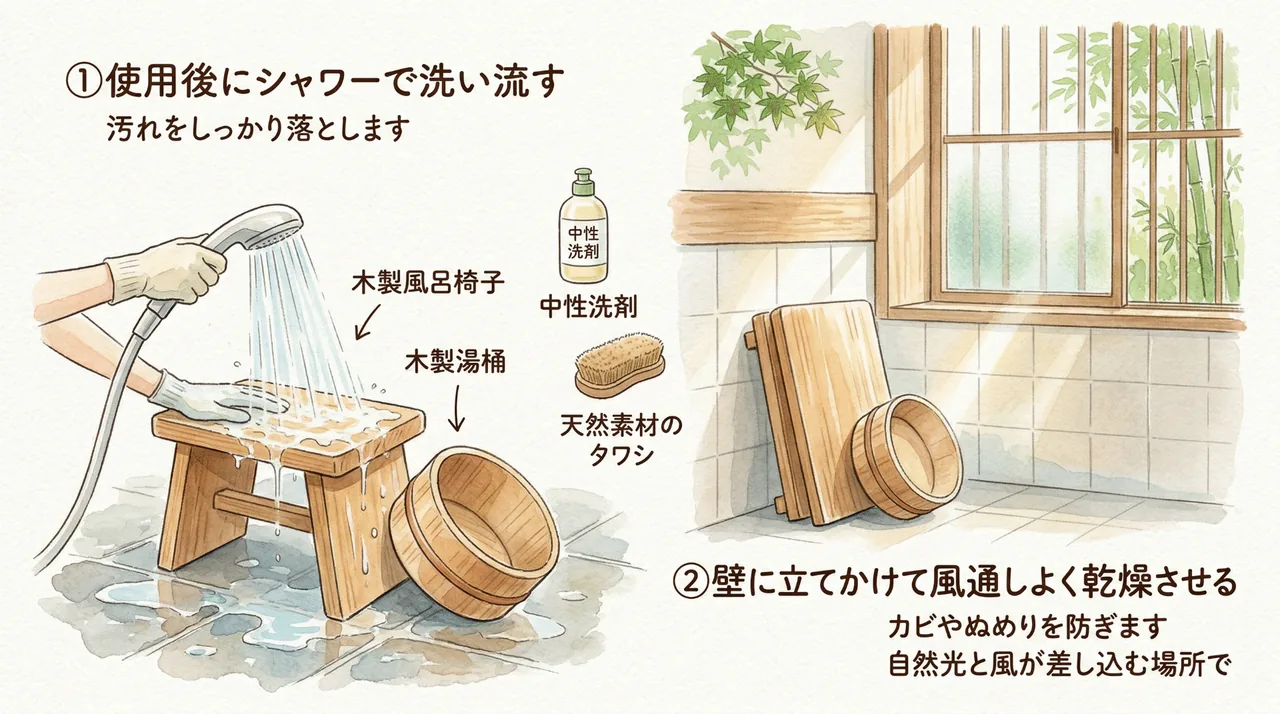
Mould grows on wood that stays wet. After bathing, rinse the stool and bucket under clean water, then stand them vertically — or tilt them against the wall — so air circulates on all surfaces. Ideally, move them out of the bathroom: the ambient humidity in a closed bathroom is the main cause of mould. If the bathroom has a ventilation fan, run it for at least 30 minutes after bathing.
Monthly: sun exposure
Once or twice a month, bring the wood into indirect sunlight for 1–2 hours. UV light has a mild sterilising effect on the wood surface and helps the remaining moisture evaporate from deeper in the grain. Don't leave it in harsh direct sun for hours — this can cause cracking.
When dark staining appears
Surface darkening (often mistaken for mould) is usually mineral deposit from water combined with tannins in the wood. Light staining can be scrubbed off with a natural-fibre brush (tawashi) and mild soap. For stubborn staining, sand the surface lightly with 240-grit sandpaper — this removes the stained layer and reveals fresh wood underneath. After sanding, let the item dry fully before returning it to the bath.
What to avoid
Never use bleach-based cleaners on hinoki — they damage the wood structure, remove the natural oils, and accelerate deterioration. Do not put wooden bath items in the dishwasher. Metal scouring pads will scratch the surface. Stick to a natural-fibre brush with mild soap.
6. Frequently Asked Questions
I'm worried about mould forming on wooden bath items.
Mould is the main concern, but it's manageable with one habit: dry the items after every use. Move them out of the bathroom, stand them upright, and let air reach all surfaces. Hinoki's natural hinokitiol content gives it inherent mould resistance — more than most woods. Aomori hiba has even higher resistance if this is your main concern. Anti-mould treated products are also available for maximum peace of mind.
How long will a hinoki bath stool last?
With proper drying after use and monthly sun exposure, 5–10 years is normal for a well-made Japanese hinoki stool in a household bathroom. Commercial ryokan, where stools are used dozens of times a day and less carefully dried, typically replace them every 2–4 years. Home use is much gentler. The wood can also be sanded back to fresh surface if staining develops.
How long does the hinoki scent last?
The strongest scent is in the first few months of use — when the wood is fresh and the volatile compounds are most concentrated near the surface. After six months to a year, the scent settles to a quieter background note. It doesn't disappear — warm water continues to release it during use indefinitely. To refresh the scent, lightly sand the surface with fine sandpaper. This exposes fresh wood and restores the original intensity.
Can I use hinoki bath accessories in a standard unit bathroom?
Yes — hinoki products are designed for standard household bathrooms, not just traditional Japanese-style baths. The main variable is ventilation: in a unit bathroom with limited airflow, make a point of moving the wood out of the room after use and running the fan. In a well-ventilated bathroom, leaving them inside is fine as long as they're positioned for airflow.
Should I buy the stool and bucket as a set?
A matching set looks intentional in a way that mix-and-match doesn't — it creates the ryokan atmosphere more effectively. Practically, though, buying one item first and adding the other later is fine if budget is a consideration. Start with the stool — you use it every time you bathe, so the impact is immediate and frequent. The bucket can come later if you want to complete the set.
Are hinoki bath accessories good gifts?
Excellent gifts — especially for housewarming, new home, or wedding presents. Hinoki has strong associations in Japanese culture with welcome, purification, and fresh starts. A stool-and-bucket set is practical (used daily), high-quality, and carries cultural meaning that's easy to explain to non-Japanese recipients. The scent makes the gift memorable when first unwrapped.
Final Thoughts: A Bathroom That Asks You to Take Your Time
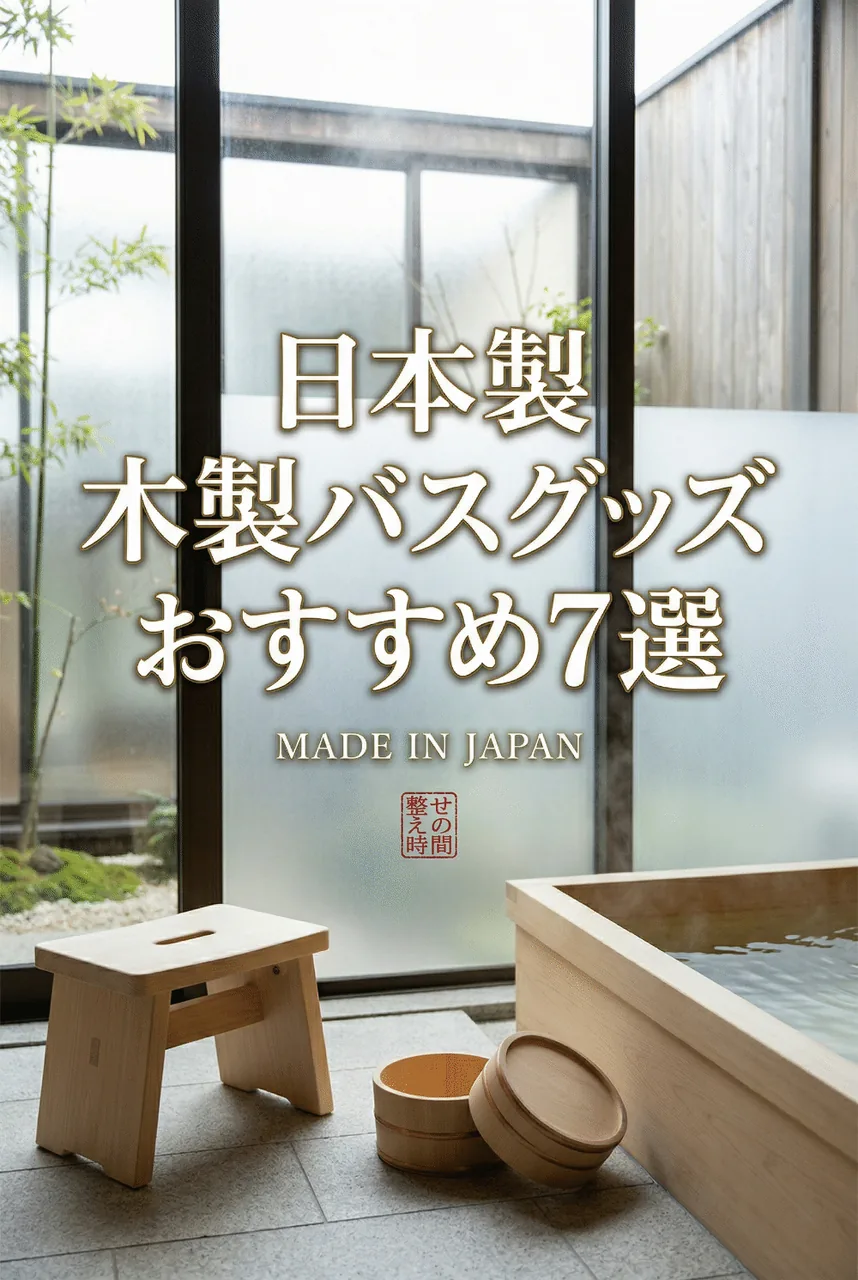
The bath is one of the few daily moments with no task attached to it. A wooden stool and
bucket don't make the water hotter or the shower more powerful — what they do is tell you,
through scent and material, that this is a space worth pausing in.
The investment is modest. A good Yamako hinoki stool and bucket pair costs less than many
single bathroom accessory purchases and will last a decade. The effect — an everyday bath
that feels more like a considered practice — is harder to put a number on, but easy to
notice after the first use.

Japanese Bath Additives: Onsen Minerals, Hot Spring Salts & Natural Blends
Japanese Incense Guide: Awaji, Kyoto Brands & How to Burn