You wake up to rain and immediately start calculating: will the water get in? Will your feet be cold and damp by
noon?
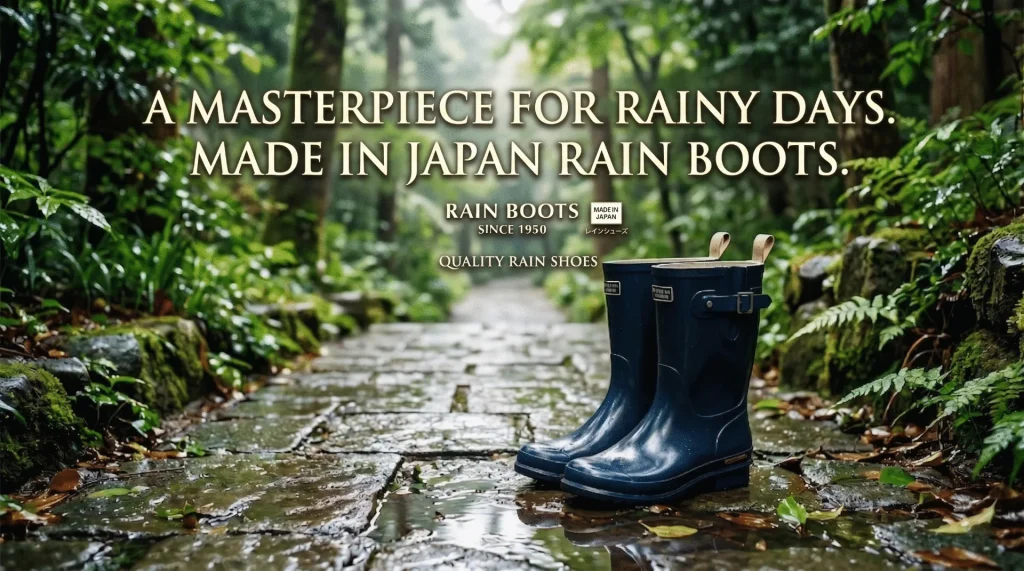
That mental overhead disappears entirely when you own a pair of well-made Japanese rain boots.
Japan's rain boot manufacturing tradition is, quietly, among the best in the world. The country's climate — humid, rainy, occasionally snowy — has driven domestic manufacturers to engineer footwear that solves problems that stylish European imports often create: poor fit for Japanese-shaped feet, PVC that stiffens in the cold, soles that slide on wet tile. This guide explains the technical differences that matter, and introduces four Japanese brands worth knowing — from Kurume's century-old vulcanized sneaker-boots to Hokkaido's all-terrain natural rubber workhorses.
Quick Reference: Recommended Japanese Rain Boot Brands at a Glance
| Brand | Origin / Method & Highlights | Best For | Details |
|---|---|---|---|
| Moonstar (MOONSTAR) |
Kurume, Fukuoka Fine vulcanized construction |
Wear them like sneakers — all-weather urban use without looking like rain boots. | Details ↓ |
| Daiichi Rubber | Otaru, Hokkaido Natural rubber, anti-slip double spike sole |
Snow country living or serious outdoor use — the grip-first choice. | Details ↓ |
| Asahi Shoes (TOP DRY) |
Kurume, Fukuoka GORE-TEX waterproof-breathable |
Commuters and office workers who need dry feet without any sweat buildup. | Details ↓ |
| Shibata Industries | Akashi, Hyogo Professional-grade high-durability rubber |
Serious farming, gardening, or anyone drawn to the aesthetic of professional-grade gear. | Details ↓ |
1. Why Japanese Rain Boots Are Chosen
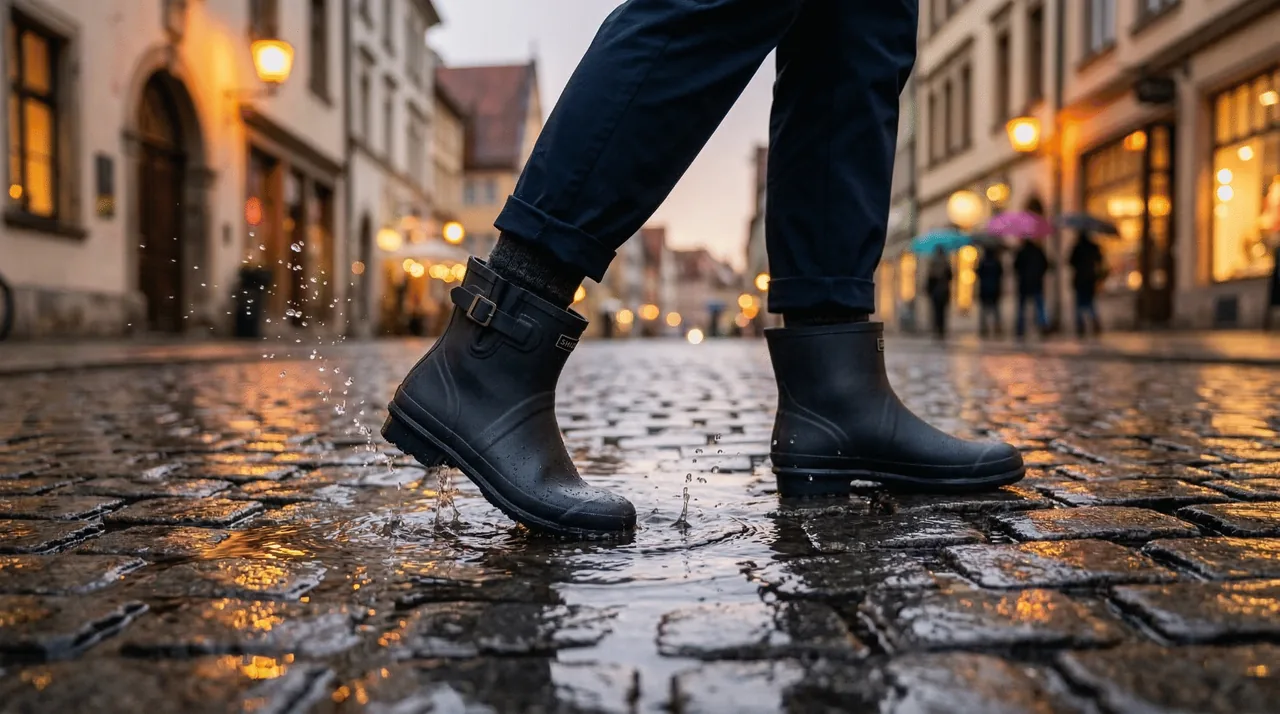
There's no shortage of stylish rain boot brands worldwide. Many of them also come with a well-known problem: they hurt. Toes squeezed, heels sliding, ankles chafing after a few hours — these are common complaints from people buying European and North American rubber boots sized for narrower, lower-arched feet.
Japanese-made rain boots are chosen for a different reason: they were engineered for the conditions and the foot shapes of Japan. High humidity, frequent rain, occasional heavy snowfall, and the characteristic Japanese foot shape — wider in the forefoot, higher in the arch — all shaped the design priorities of domestic manufacturers. The result is footwear that is genuinely comfortable to wear all day, doesn't slide on wet stone or tile, and doesn't stiffen in cold weather the way plastic boots do.
2. The Vulcanized Construction Method — Why Soles Don't Peel
The defining characteristic of Japan's best rain boots is their manufacturing process: vulcanized construction (karryu seihō — 加硫製法). Today in Japan, only a handful of factories — Moonstar and Asahi Shoes among them, both in Kurume, Fukuoka — still operate the large vulcanizing chambers required for this process.
Heat and Pressure That Fuse the Shoe Into a Single Unit
Cheap rain boots are either glued together or injection-molded in one piece from plastic. Glued boots are
vulnerable to bending stress — the sole peels or cracks under repeated flexing. Injection-molded PVC boots don't
peel, but they don't flex naturally either.
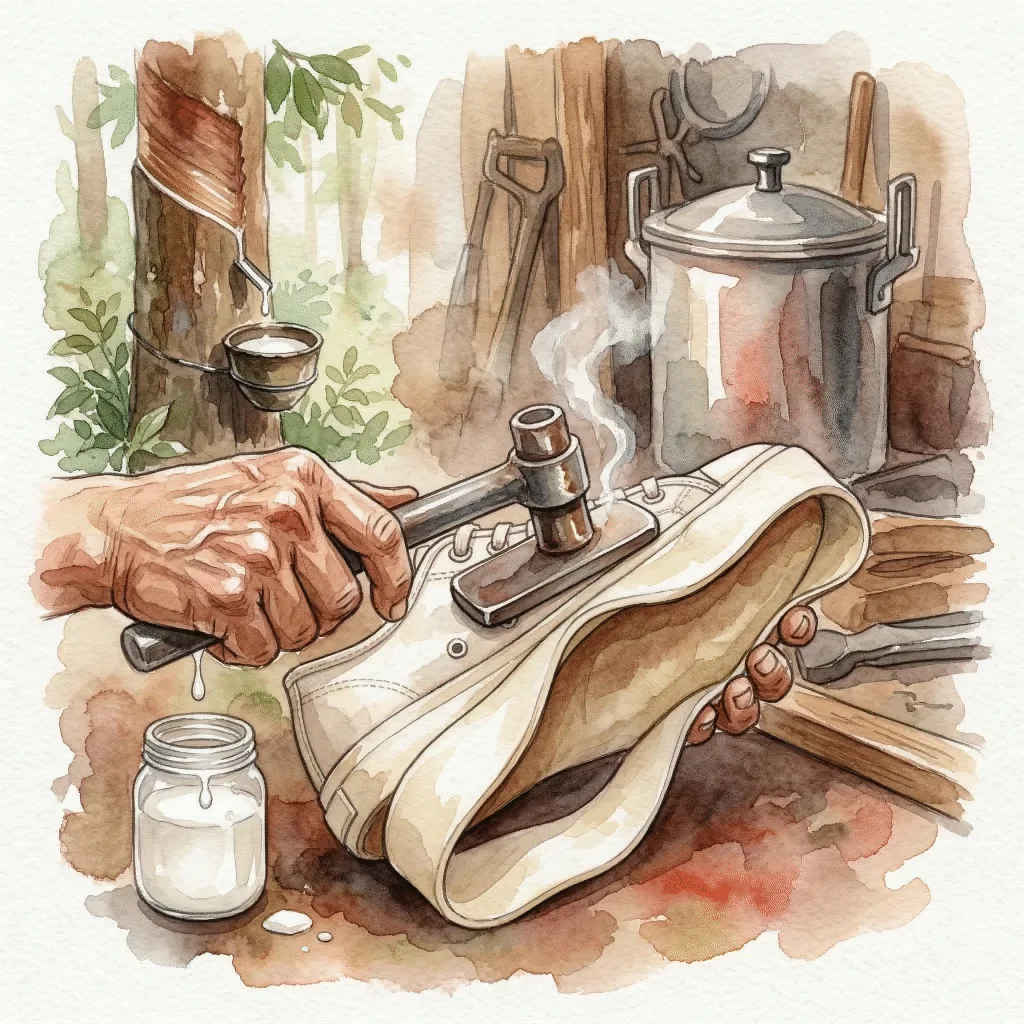
Vulcanized construction works differently. Raw rubber is loaded with sulfur, formed around the shoe, and then
subjected to approximately 120°C of heat and pressure for around 70 minutes. The sulfur causes
the rubber molecules to form chemical cross-links (a process called vulcanization), permanently fusing the upper
and sole into a single, molecularly bonded structure. The sole cannot peel because it isn't attached —
it has become part of the shoe.
3. Natural Rubber vs. PVC: The Decision That Matters Most
Why PVC Becomes Unwearable in Cold Weather
Most inexpensive rain boots in fast fashion retail are made from PVC (polyvinyl chloride). PVC is lightweight and takes color easily — a reasonable material in mild temperatures. Its critical weakness is that it stiffens significantly as temperature drops. Below about 10°C, PVC boots become rigid around the ankle, restricting natural walking motion and causing fatigue. In winter conditions, this isn't a minor inconvenience — it's a significant problem.
Premium Japanese rubber boots, particularly from Daiichi Rubber (第一ゴム) in Otaru, Hokkaido, use high-quality natural rubber (latex). Natural rubber retains its flexibility to below −20°C. It bends with the foot's natural motion, grips frozen ground rather than gliding over it, and resists cracking even after years of use in extreme conditions. In snow country, natural rubber is not a preference — it's a requirement.
4. Why Japanese Boots Don't Hurt: The Last (Foot Form)
Rain boots can't be broken in the way leather shoes can. You wear them as-is from day one. If they don't fit from the start, they never will — which is why so many European rain boot buyers end up with blisters on the pinky toe or a bruised instep.
The Japanese foot shape tends to be wider in the forefoot, higher in the arch, and smaller in the heel relative to foot length compared to European averages. Moonstar and Asahi Shoes have been studying and measuring Japanese feet since the Meiji era — their proprietary lasts (the 3D molds around which boots are shaped) encode decades of foot-shape data. Putting on a pair of well-fitted Japanese boots has a noticeably different quality: they feel secure around the heel from the first moment, without squeezing anywhere along the way.
5. Choosing by Lifestyle: Height, Grip & Breathability
Height: Match the Boot to the Situation
Short / sneaker height:
Ideal for commuting, city walking, and situations where you'll be putting boots on and off throughout the day. They
look like ordinary shoes in most contexts — no embarrassment on the train home when the rain has stopped.
Mid / tall height:
For typhoons, heavy rain, outdoor festivals, farm work, and snow. Tall boots let you tuck in trousers to completely
seal out mud splatter. When the goal is truly dry feet regardless of what's on the ground, taller is better.
Breathability: The Moisture Problem You Might Not Have Considered
Wet socks inside rain boots are often caused not by incoming rain but by your own sweat. Rubber is
impermeable — moisture from perspiration has nowhere to go. For office workers or commuters spending hours in their
boots, this becomes miserable quickly.
Asahi Shoes' TOP DRY line incorporates GORE-TEX waterproof-breathable membrane — the same
technology used in high-end hiking gear. Rainwater cannot enter; water vapor (sweat) can exit. The result is dry
feet from every direction, not just from the outside.
For snow and icy surfaces, look specifically for soles incorporating anti-slip materials: glass fiber, ceramic particles, or kongosha (金剛砂 — industrial abrasive grit). These grip ice in the same way tire studs do on a frozen road. A flat smooth sole on a glazed pavement is genuinely dangerous.
6. Four Recommended Japanese Rain Boot Brands
The best in class — from century-old vulcanized sneakers to professional-grade rubber engineered for the harshest conditions.
1. Moonstar (MOONSTAR) | ALWEATHER
Kurume's 150-year legacy — an all-weather sneaker boot that looks at home on any street.
Moonstar traces its history to the manufacture of tabi (split-toe work socks) in Kurume, Fukuoka, 150 years
ago. Their signature model, the ALWEATHER (オールウェザー), wraps a canvas sneaker upper in a continuous rubber shell
— a form that has barely changed since the design was established because it works so well.
This is one of the last boots in the world made using "fine vulcanized construction" (fainu barukanaizu seihō)
— a meticulous hand-assembly process where rubber is applied and bonded by skilled craftspeople around the
shoe before vulcanizing. Fewer than a handful of factories globally still do this.
The ALWEATHER reads as a casual sneaker until rain arrives — at which point it performs as serious rain footwear. For the commuter who wants one pair of shoes that handles both a dry Monday morning and an unpredicted Tuesday downpour, this is the most elegant solution.
Best for: Urban all-weather use; design-conscious buyers who don't want to carry a backup pair of shoes.
View on Amazon ↗2. Daiichi Rubber | Field Boots & Anti-Slip Long Boots
Forged in Hokkaido's winters — the natural rubber boot that refuses to slip.
Founded in 1935 in Otaru, Hokkaido, Daiichi Rubber has spent nearly 90 years solving the specific problem of
walking safely on Japan's most treacherous winter surfaces. Their most distinctive feature is the proprietary
"Double Spike Sole" — slots and kongosha (industrial abrasive grit) compounded directly into the rubber
outsole in a pattern borrowed conceptually from studless winter tires.
The natural rubber formula retains supple flexibility at −20°C, when PVC boots become rigid boards. The heel
fits snugly enough that the boot moves with the foot rather than dragging behind it.
These are genuine working boots with a cult following among outdoor enthusiasts, farmers, and anyone who takes winter walking seriously. Function defines the design, and the design is honest about it.
Best for: Snow country residents; serious outdoor and agricultural use; anyone for whom a fall on ice is simply not acceptable.
Visit Official Website ↗3. Asahi Shoes (TOP DRY)
GORE-TEX breathability in a rain boot — office-appropriate, sweat-free, all day.
Based alongside Moonstar in Kurume, Fukuoka, Asahi Shoes created the TOP DRY series to address the one problem
that standard rain boots cannot solve: internal moisture. Using GORE-TEX Fabrics — the gold standard in
waterproof-breathable membranes — TOP DRY boots block incoming rain entirely while allowing perspiration vapor
to pass outward through the membrane. Feet stay dry from both directions.
The ceramic-particle outsole provides meaningful grip on wet tile and polished concrete, where ordinary
flat-soled boots become skating rinks.
The design is purposely restrained — pump-style heeled models and trim short boots that pass as office-appropriate footwear. For the professional commuter who needs rain protection during the rainy season and wants to walk into a meeting without changing shoes, TOP DRY is the answer.
Best for: Office commuting in rain; anyone bothered by sweaty feet inside rubber boots.
Visit the Asahi Shoes brand page
View on Amazon ↗4. Shibata Industries (シバタ工業)
Built for firefighters and extreme conditions — functional brutalism for serious users.
Shibata Industries, headquartered in Akashi, Hyogo, built its reputation manufacturing specialized safety
boots for firefighters and industrial workers in extreme environments. Their products must meet strict JIS
(Japanese Industrial Standards) safety certifications — the same standards that govern workwear used in
hazardous conditions.
Their BARE (ベア) series brings that professional-grade engineering into consumer products, with an aesthetic
that makes no effort to disguise what it is: industrial rubber, purpose-built for hard use, executed with
precision.
The rubber compound blends natural and synthetic rubber optimized for the application; the outsole tread pattern is engineered to expel mud; the heel features a "kick-down grip" (a protruding heel tab for hands-free removal after muddy work). Every decision is functional.
Best for: Serious farming and gardening; buyers drawn to professional-use tool aesthetics and uncompromising durability.
Visit Official Website ↗7. Care and Storage | What "Bloom" Actually Means
A pair of quality natural-rubber boots, maintained properly, should outlast five or ten pairs of cheap alternatives.
White Surface Powdering (Bloom) Is a Feature, Not a Defect
After purchase, or following extended storage, you may notice a faint white haze or powdery coating developing on
the rubber surface. This is "bloom" (burūming), not mold.
Natural rubber is vulnerable to UV degradation, so manufacturers compound a protective wax agent into the rubber
during production. Over time, this wax migrates to the surface — exactly as intended — where it forms a protective
barrier against UV rays and surface abrasion. Bloom is the rubber protecting itself. Apply a silicone-based rubber
care spray and buff with a soft cloth to restore the original luster.
Post-Use Storage Routine to Prevent Odor and Mold
After wearing on a rainy day, never put boots directly into a closed shoe cabinet.
1. Rinse off surface mud with water.
2. Wipe down the exterior with a dry towel.
3. Stuff with crumpled newspaper to absorb interior moisture, then dry in a shaded, well-ventilated
spot. Direct sunlight accelerates rubber cracking — keep boots out of it. Newspaper is the most effective
moisture absorber available in most homes and works better than commercial desiccant inserts.
8. Frequently Asked Questions
Rain boots feel heavy — are there lighter options?
Full-length natural rubber boots are genuinely heavier than fashion rain boots, because the material is dense by nature. However, Japanese-made boots designed for the Japanese foot hold the heel firmly and flex naturally at the ankle, which means the weight feels less tiring to carry than the number suggests. If weight is your priority, a short sneaker-height model (like the Moonstar ALWEATHER) or a GORE-TEX short boot (Asahi TOP DRY) will be meaningfully lighter than a full-length rubber boot while still providing real rain protection.
Can worn-down soles be replaced?
It depends on the construction method. One-piece injection-molded boots cannot be repaired — the sole is inseparable from the upper. Vulcanized-construction boots like the Moonstar ALWEATHER, where the outsole is a distinct bonded component, can often have heel and toe repairs done by a specialized shoe repair shop. If long-term ownership matters to you, confirm repairability before purchasing.
Can I wear standard rain boots on an icy winter road?
A rain boot with a flat smooth sole on frozen or icy pavement is genuinely dangerous — perhaps more so than wearing dress shoes, because the false sense of security encourages faster walking. For icy conditions, you need a boot with dedicated anti-slip sole technology: kongosha (industrial grit), glass fiber, or ceramic particles compounded into the rubber. Daiichi Rubber's Double Spike Sole is engineered specifically for this. Don't try to use a summer rain boot as a winter safety boot.
How should I size rain boots?
Unlike leather shoes, rubber boots don't stretch or mold to the foot over time — they stay exactly as they started. Size up if in doubt: order your normal size, or go half a size larger if you plan to wear thick socks in winter, or if you want to add an insole. Starting too small has no remedy; starting slightly large is managed with a good insole.
Is it safe to drive in rain boots?
Full-length boots and boots with restricted ankle flex are genuinely hazardous for driving — pedal feel is reduced, and a boot sole that catches on the pedal edge during quick transitions between accelerator and brake is a serious risk. If you need to drive during or after rain, change into flat-soled shoes with thin, flexible soles before getting behind the wheel.
Final Thoughts: Make Rainy Days Worth Looking Forward To
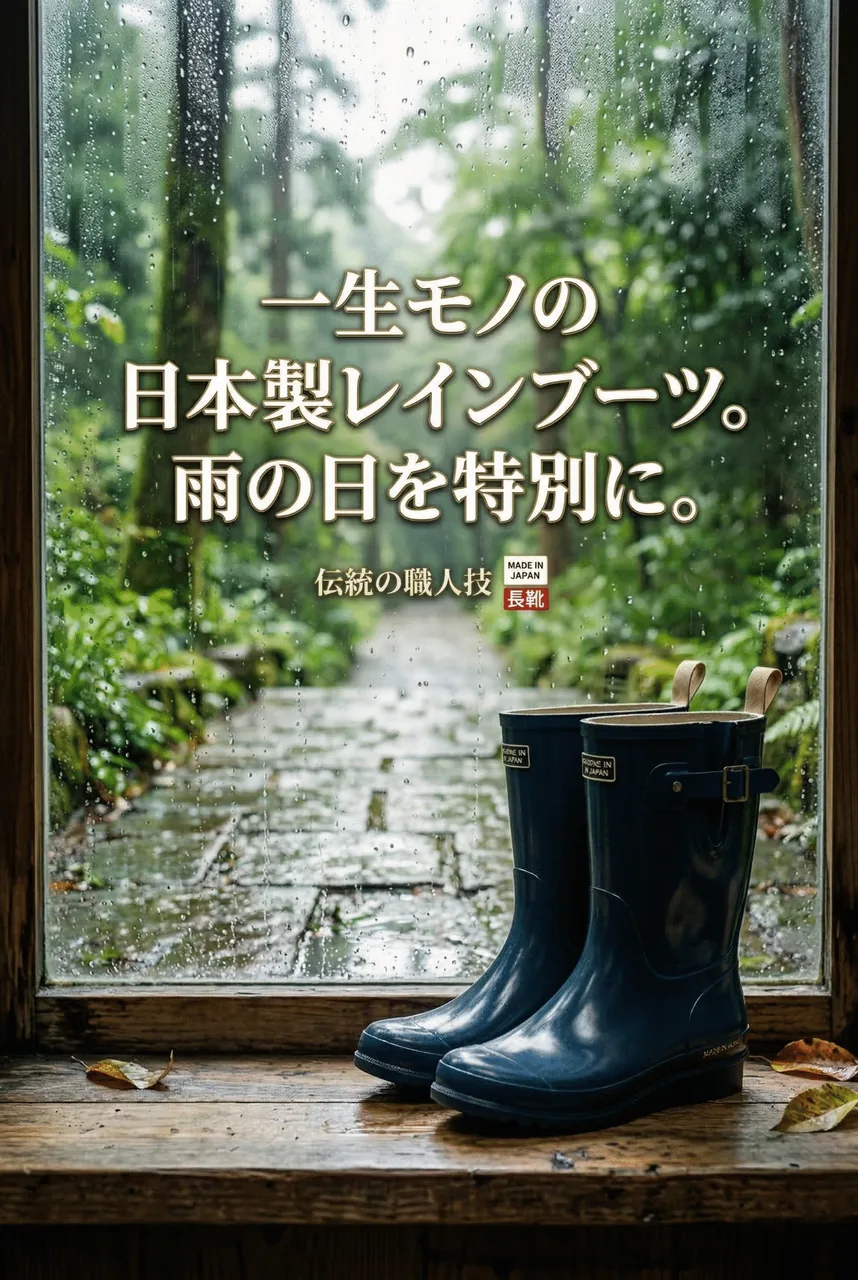
The best reason to own a pair of quality Japanese rain boots is the moment they reframe what a rainy morning
means. Not a problem to manage — an occasion to wear your favorite boots.
The vulcanized sole that refuses to peel, the natural rubber that doesn't stiffen in the cold, the last that
was carved from decades of Japanese foot data — these aren't marketing points. They're the reason people who
own these boots stop being interested in alternatives.
Find your fit from the four brands above, and see what the next rainy season feels like.
Complete your rainy-day outfit with more Japanese essentials:
Wagasa & Premium Rain Umbrellas | A Lifetime Umbrella Worth Repairing
Imabari vs. Senshu | Comparing Japan's Best Towels