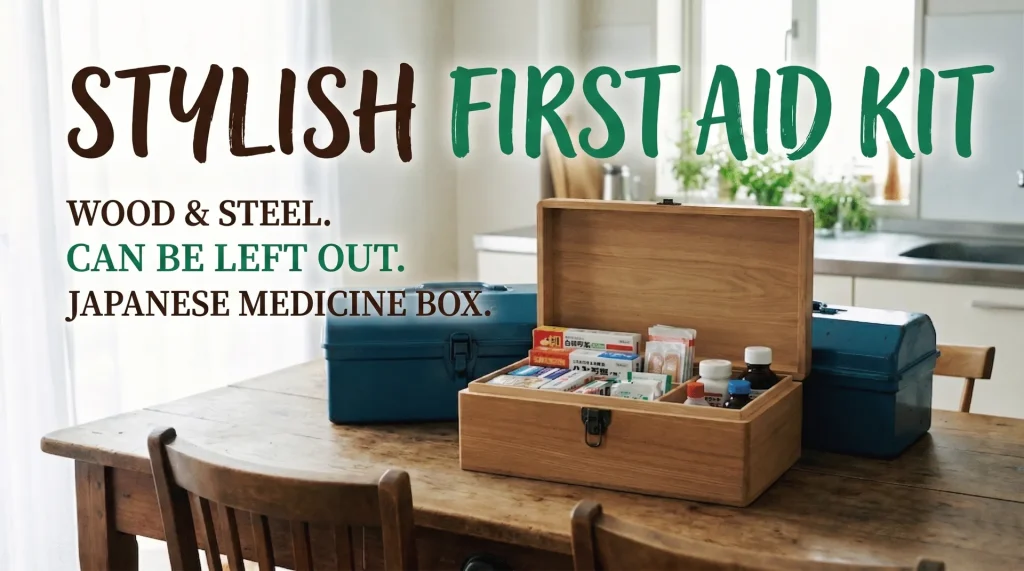
"Wait — where are the bandages?"
"The thermometer's out of batteries…"
When someone gets hurt or falls ill suddenly, there's nothing more stressful than not being able to find what you need.
A medicine box is your home's "small clinic" — the first line of defense for your family's health.
But a dull plastic case tends to get shoved to the back of a shelf, out of sight and out of mind.
The answer is to choose a medicine box beautiful enough to leave on display.
When it's always within reach, you'll use it for everyday grooming too — nail clippers, tweezers — and when emergencies happen, you won't lose precious seconds searching.
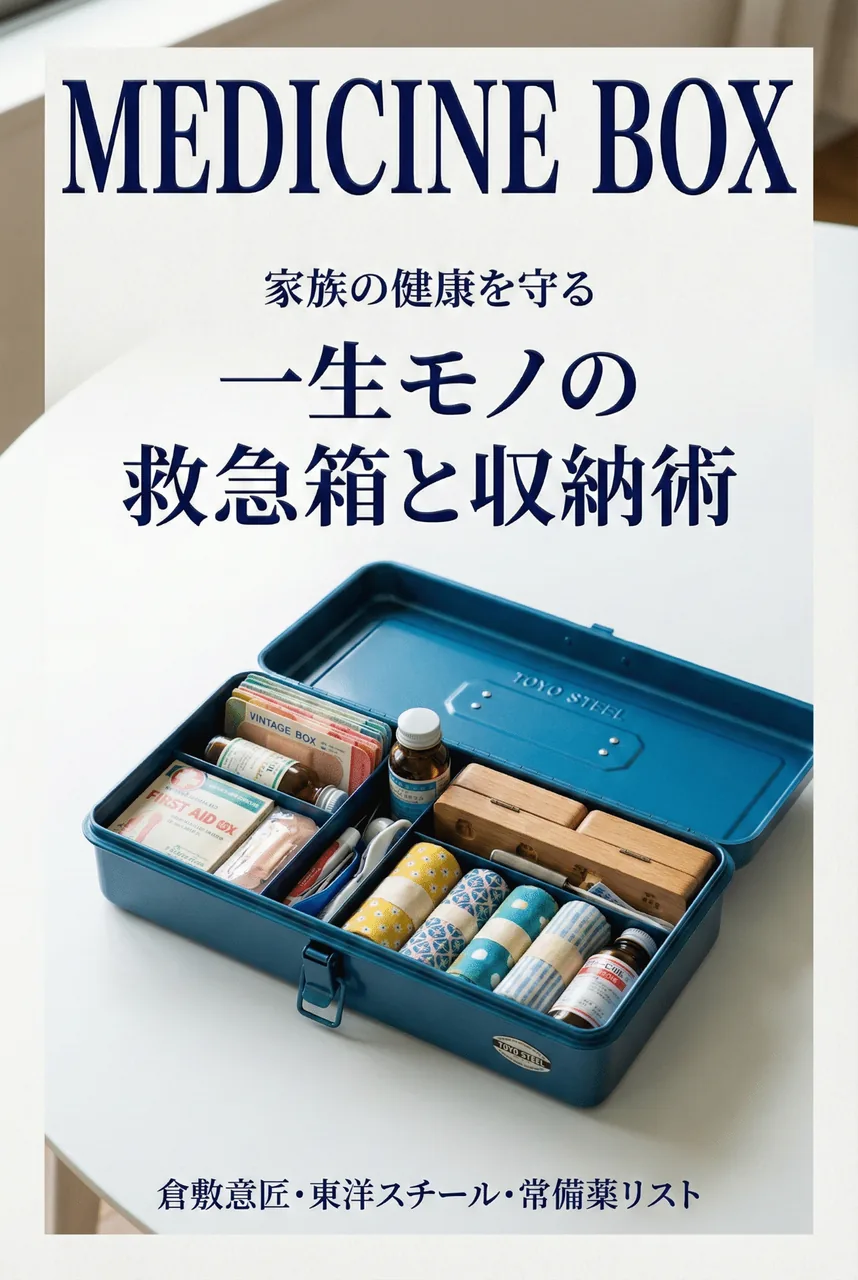
This guide introduces Japanese-made medicine boxes you'll genuinely love for a lifetime: Kurashiki Isho (Kurashiki Isho) wood boxes that develop a beautiful amber patina with age, and the robust, handsome steel toolboxes from Toyo Steel (Toyo Steel).
Series: This article is Part 2 of the "Prepare & Organize (Hygiene, Disaster Prep & Food Storage)" series.
Quick Reference: Medicine Box Materials at a Glance
| Material | Features | Capacity | Price Range |
|---|---|---|---|
| Tin / Steel | Durable; classic look; magnetic surface | Medium–Large | $15–$50 |
| Plastic | Lightweight; affordable; some see-through options | Small–Large | $5–$25 |
| Wood | Ages beautifully; blends with interior décor | Medium–Large | $30–$100 |
| Pouch | Portable; great for travel and camping | Small–Medium | $10–$35 |
1. Can't Find It in an Emergency? The Case for Leaving It Out
From "hidden storage" to "display storage."
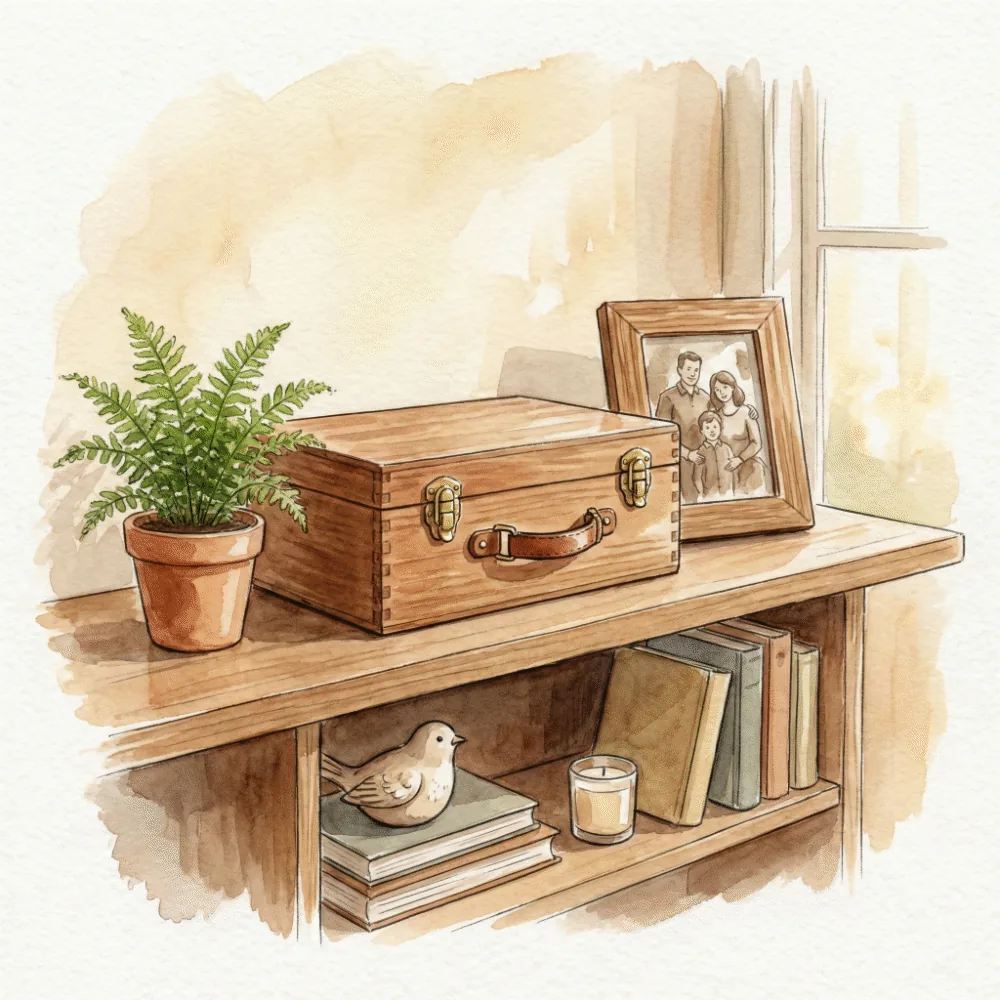
Making the medicine box part of your home décor means it's always visible — and always accessible.
Everyone in the House Should Know Where It Is
In an emergency: "Can you grab the bandages?" — "Where are they?"
That's a situation worth preventing.
A box placed on a living room shelf or kitchen counter, somewhere everyone passes every day, means even children know exactly where it lives.
For that to work, the box needs a presence beautiful enough to earn its spot in plain sight.
2. Wood: Kurashiki Isho — A Medicine Box That Grows More Beautiful Over Time
There's something reassuring about a wooden medicine box — it calls to mind the school nurse's office.
Unlike plastic, wood deepens in color with age, quietly recording the years of a family.
Kurashiki Isho (Kurashiki Isho Keikakushitsu)
Kurashiki Isho is a Japanese lifestyle goods maker that merges traditional craftsmanship with thoughtful design.
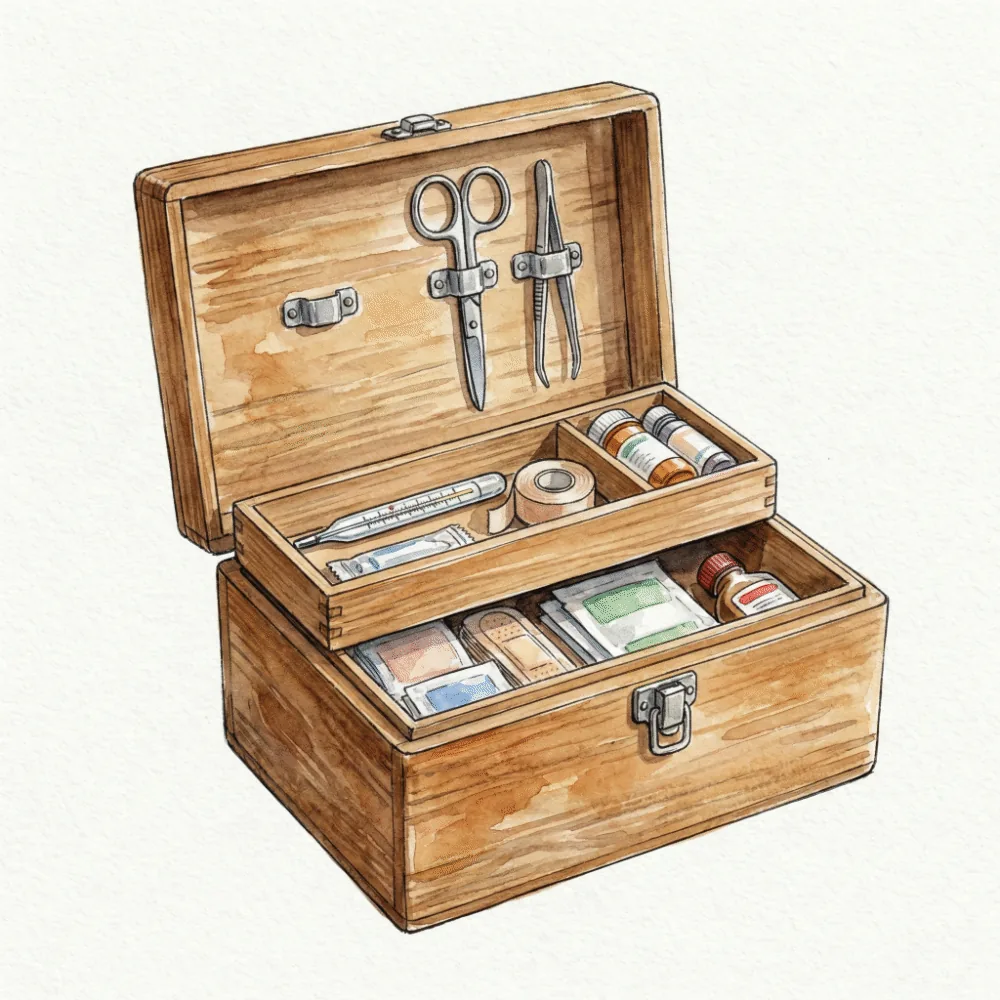
Their signature product is a first-aid box made from hemlock (tsuga) wood.
The fine, close grain is beautiful, and the lid interior has built-in holders for scissors and tweezers.
Simple yet functional — it carries that inherently reassuring quality of a "proper Japanese medicine box."
Available in S, M, and L sizes to match your household size.
Kurashiki Isho — Rescue Box M Size
The definitive wooden medicine box — one you'll want to use for a lifetime.
Finished with urethane coating for easy cleaning, made from hemlock wood that develops a rich amber patina over the years.
A removable tray makes for two levels of storage: the upper tray holds ointments and a thermometer, while the deeper lower level fits tall bottles and medicine boxes upright.
The retro-style metal clasp is charming on its own — just having this box on a shelf makes the room look more considered.
3. Steel: Toyo Steel's Vermeer Blue Tool Box — Sturdy, Handsome, Magnetic
A popular alternative to purpose-built medicine boxes: using a rugged tool box instead.
Steel's magnetic surface lets you attach notes or labels to the lid — a practical bonus.
Toyo Steel — Mountain-Lid Tool Box Y-350
Repurpose a tool box as a medicine box — a beloved Made in Japan classic worldwide.
Formed from a single sheet of steel with no seams, its durability is beyond question — keeping your medicines protected from moisture and impact.
The striking color known as "Vermeer Blue" makes it an ideal accent piece in any interior.
The domed mountain-shaped lid provides exceptional storage height — tall bottles and spray containers fit inside with room to spare.
A built-in handle makes it easy to carry from room to room with one hand.
4. Trays & Dividers: Organizing So Nothing Gets Lost
A beautiful box means nothing if the contents are a jumble.
Good organization means reaching for exactly what you need in seconds — not moments.
Stand Upright, Sort by Category
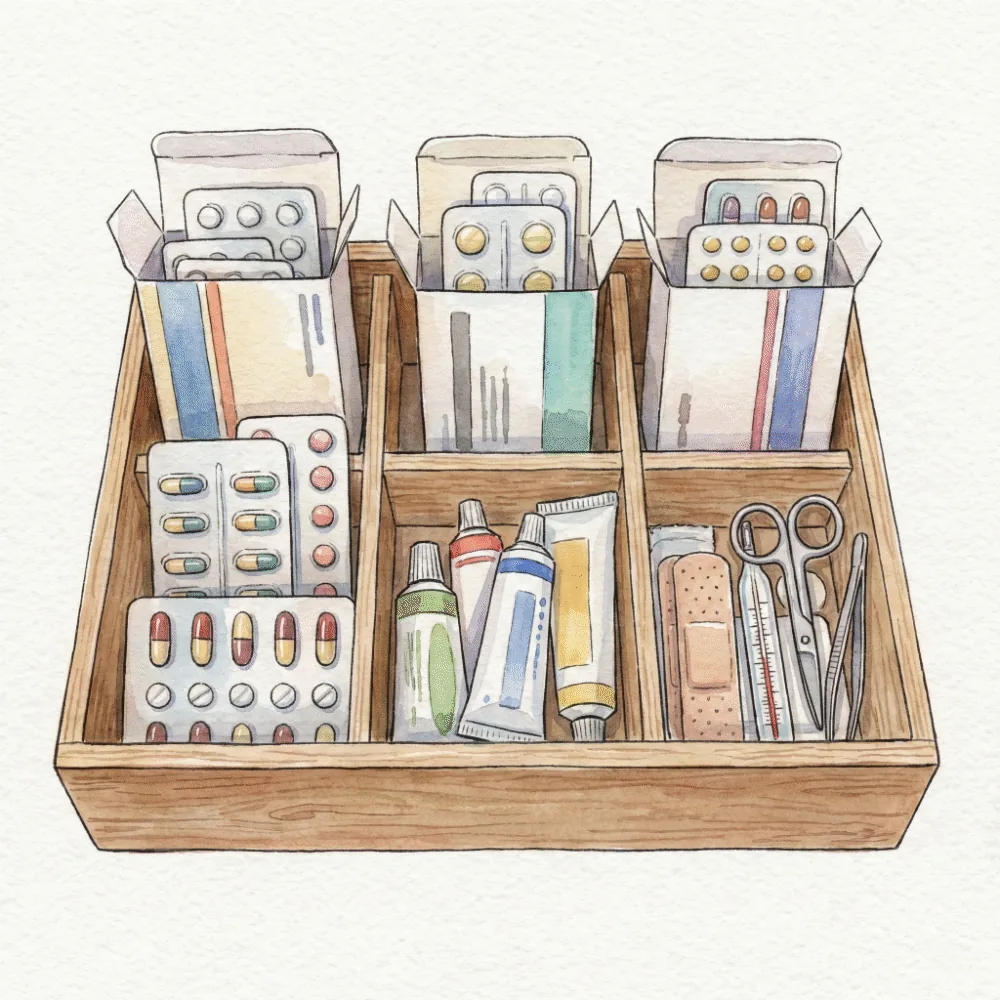
- Keep medicines in their boxes: Dosage instructions and expiry dates are printed on the packaging. Cut off the lid, keep the box intact, and store everything standing upright — that's the standard approach.
- Sort by category: Divide into "oral medicines (cold & pain relief)," "topical (ointment & patches)," and "wound care (bandages & antiseptic)."
- A small tray for instruments: Thermometers, nail clippers, tweezers — small tools need a defined home. Use the included upper tray or a small container to give everything a fixed place.
5. What to Stock: A Household Medicine Box Checklist
A useful reference for sizing your box — and making sure you have the basics covered.
Keep this separate from your disaster preparedness kit; this is for everyday household needs.
Essential Checklist
| Category | Examples |
|---|---|
| Wound care | Bandages (assorted sizes), antiseptic, sterile gauze, bandage roll, surgical tape, adhesive patches |
| Oral medicines | Cold medicine, pain & fever reducer, antacid, digestive aids, antihistamine |
| Topical medicines | Anti-itch cream (insect bites), antibiotic ointment, hand cream, petroleum jelly |
| Instruments & other | Thermometer, nail clippers, tweezers, scissors, cotton swabs, cooling patches, medication record booklet |
※ Keep prescription and chronic condition medicines in a separate pouch or case to prevent family members from taking them by mistake.
6. Annual Checkup & Moisture Control: Keeping Medicines Fresh
"I went to use it and it expired three years ago." This is the universal medicine box problem.
Medicines need maintenance too.
Schedule a Once-a-Year Review Day
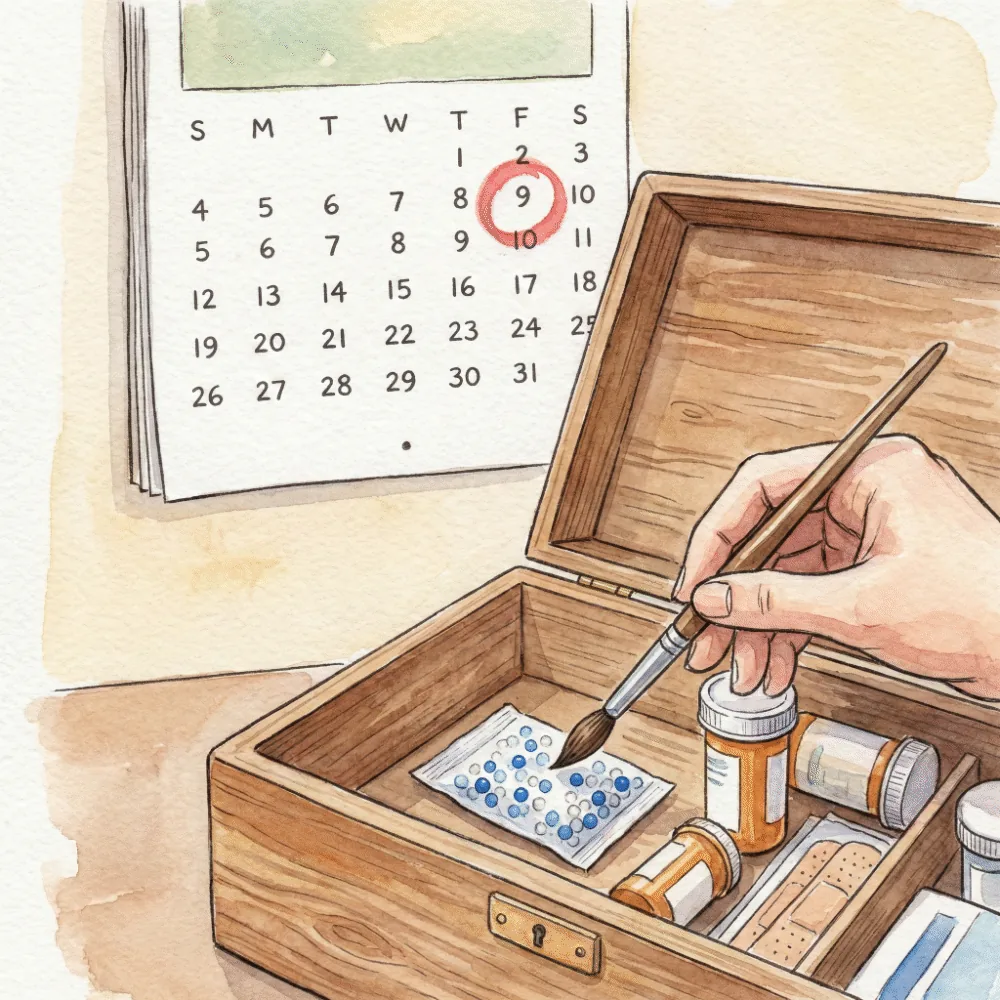
Tie it to a recurring date — Japan's Disaster Prevention Day (September 1st) or your year-end cleaning — and make it a habit to empty the box completely and check every item.
Discard expired medicines, restock depleted bandages, replace dead batteries in the thermometer.
Moisture control tip:
Japan's humid summers are hard on stored medicines.
Instead of throwing away the silica gel packets from snacks and nori (dried seaweed), save them and drop a few into the bottom of your medicine box. It costs nothing and noticeably slows deterioration.
7. Wedding & Housewarming Gifts: A Lifetime Medicine Box
A medicine box is one of those things people rarely splurge on for themselves — which makes it an especially welcome gift.
A Gift That Says "I Wish Your Family Well"
Giving a medicine box as a wedding or housewarming gift sends a heartfelt message: "I'm thinking of your family's health and safety."
The convention is to give it empty — but tucking in a quality pair of nail clippers or a pack of premium bandages adds a personal, practical touch.
A wooden medicine box will bring warmth to a new home's décor long before the walls are fully decorated.
8. Frequently Asked Questions
Won't young children get into it unsupervised?
Check the latch type, or store it out of reach.
Kurashiki Isho boxes use a simple snap-style clasp — sturdy but not locked.
With young children, placing it on a high shelf is the safest rule to follow.
Alternatively, a Toyo Steel tool box can accept a standard padlock for an added layer of security.
How should I store prescription medicines?
For daily medications, keep them separate and visible to prevent missed doses.
Place regularly taken medicines on the dining table or next to the water dispenser — somewhere you'll see them every day — with a dosing tracker or a small dedicated dish.
Leftover prescription medicines (such as as-needed doses) should be kept according to your doctor's instructions, or disposed of when they expire.
How do I clean the inside of the medicine box?
Dry cloth or a tightly wrung damp cloth only.
For wood boxes, never rinse with water — it causes mold and warping.
Spilled medicine powder is common, so empty the box completely, vacuum the interior, wipe with an alcohol-based antibacterial wipe, and allow it to air dry fully before restocking.
How do I dispose of old medicines?
Leave tablets in their blister packs and place in regular burnable trash.
There's no need to pop tablets out of the packaging before disposal.
For liquid medicines, absorb them in newspaper or cloth first, then discard as burnable waste.
For aerosol cans, use them completely, release any remaining gas, and follow your local council's disposal guidelines.
Will a steel box rust?
The coating protects it, but scratches can expose bare metal.
Toyo Steel boxes are finished with a durable paint coating, but a knock that chips the surface can allow rust to form at that point.
Storing it in a humid location — a bathroom, for example — accelerates rust. A dry spot in the living room is the best choice for longevity.
Where is the best place to keep the medicine box?
The living room or hallway — somewhere every family member passes daily.
The top priority is "findable in an emergency without thinking." Tucking it away in a closet or storage room defeats the purpose.
A well-designed wood or steel box looks at home on a living room shelf — no need to hide it.
If you have young children, balance visibility with height to keep it out of reach.
Final Thoughts: A Beautiful, Reliable Companion for Your Family's Health
We open a medicine box when someone is hurt or unwell.
In that anxious moment, there's a real difference between a battered plastic case clattering out of a cupboard, and a warm, well-worn wooden box that comes calmly to hand.
A beautiful medicine box is more than storage.
It becomes a quiet presence in the home — something that absorbs the small dramas of family life and holds them gently.
Not just a container, but a little keeper of family history. That's what a truly good medicine box can be.
Japanese Disaster Preparedness Essentials: Emergency Food, Gear & Survival Sets
Japanese Masks for Sensitive Skin: Silk, Gauze & Imabari Towel Picks