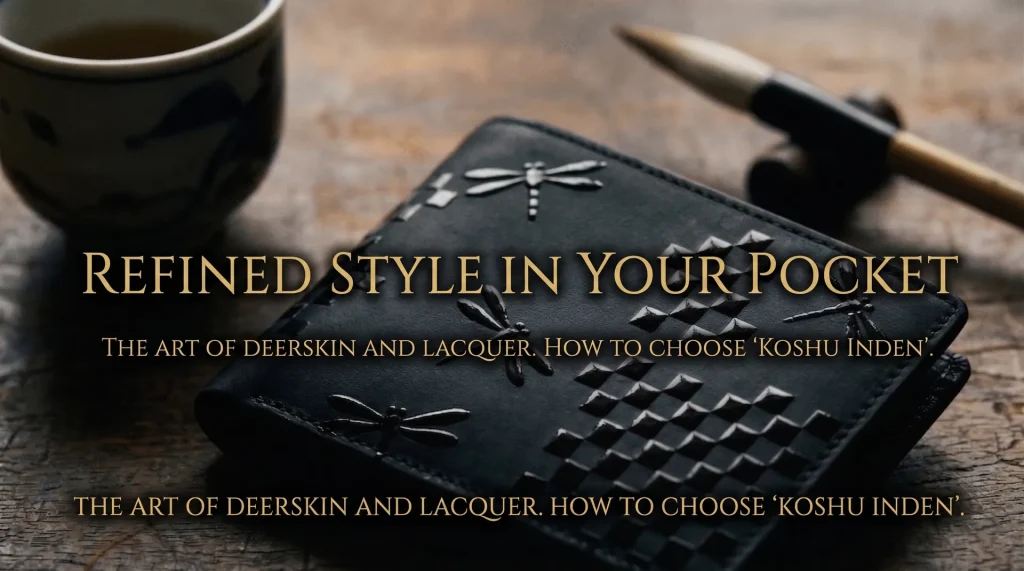
A luxury logo wallet makes a statement — but what truly commands quiet admiration is the wallet that reveals itself
slowly: a flash of lacquer sheen as you reach into your pocket, a softness that feels like it was made for your
hand.
If you're looking for something that sets you apart — something with genuine individuality and a touch that improves
with every use — the answer is Koshu Inden (甲州印伝), one of Japan's most refined
leather crafts.
Said to have been favored by the warlord Takeda Shingen, inden combines deerskin (shikagawa) —
light, supple, and incredibly durable — with hand-applied urushi lacquer pressed through
hand-carved stencils to create raised, tactile patterns.
The result is a wallet that only gets better: the leather softens and clings to the hand, while the lacquer
brightens into a luminous glow over years of use.
This guide focuses on the masterworks of Indenya, the 400-year-old founding house of inden craft, and helps
you find the right piece for your modern life.
Series: This article is part #5 of the "Wearable Japanese Masterpieces" series.
1. What Is Koshu Inden? | Deerskin Patterned with Lacquer
Koshu Inden is a leather craft tradition with over 400 years of continuous history in Yamanashi Prefecture (historically known as Koshu). It stands at the apex of Japanese leatherwork.
The Skin "Closest to Human Skin" — and Natural Lacquer Resin
The defining feature of inden is its use of deerskin. Deer leather has an extraordinarily fine fiber structure —
it is light, strong, and plush with a velvety softness often described as "the leather closest to human
skin."
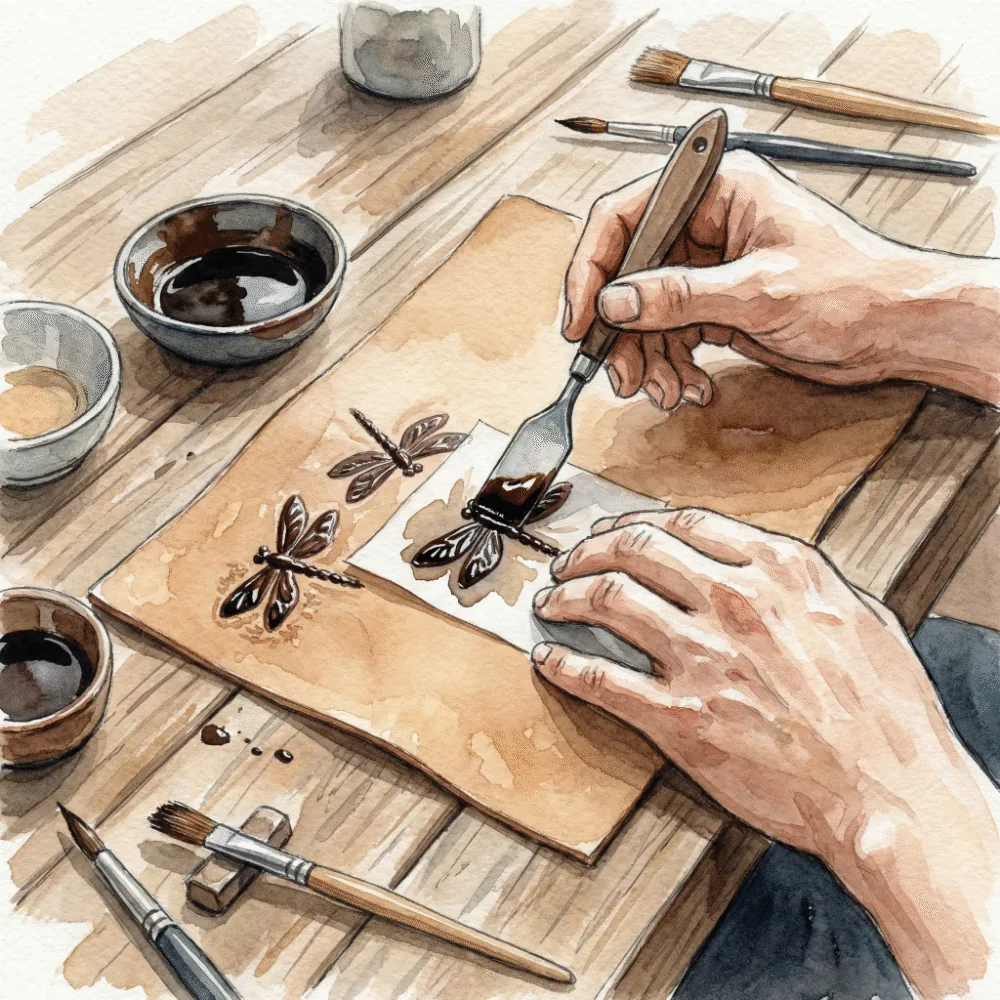
Artisans place hand-carved paper stencils onto the hide, then press urushi lacquer in with a spatula to create
raised, three-dimensional patterns.
The interplay between the supple leather and the firm lacquer gives inden its distinctive texture — soft yet
resilient, delicate yet long-lasting.
2. Lucky Traditional Motifs | The Meaning of Dragonfly and Seigaiha
Every inden pattern carries a specific meaning and wish. Understanding them makes choosing your piece far more personal.
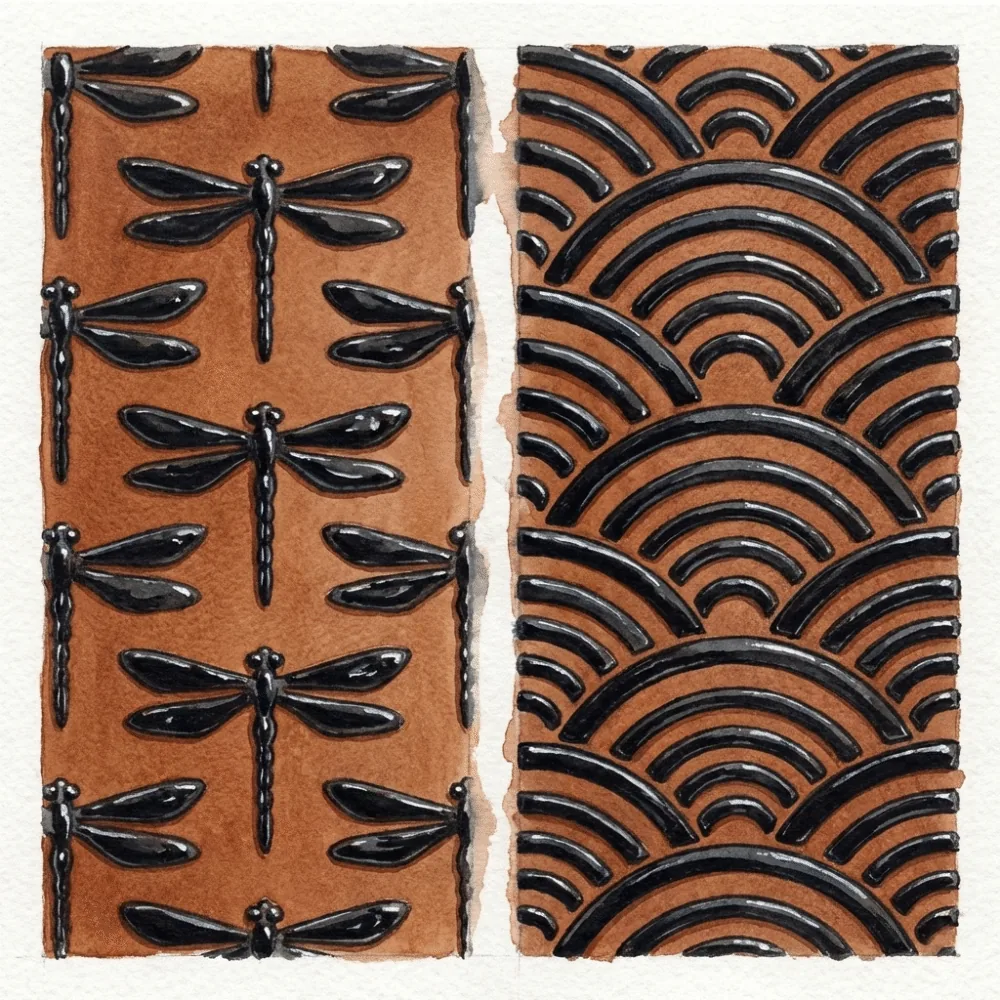
Dragonfly (Kachi-mushi — the Victory Insect)
Meaning: Victory and unwavering resolve
The dragonfly only flies forward — it never retreats. This earned it the nickname "kachi-mushi" (victory insect)
among Japan's samurai, who wore it as a battle talisman.
Today it remains the most popular men's pattern, a subtle wish for success in business or competition.
Seigaiha (Blue Ocean Wave)
Meaning: Peace and enduring happiness
The overlapping wave pattern, stretching endlessly in every direction, carries a wish for happiness that
continues into the infinite future.
3. Modern Wallet Styles | L-Zip and Slim Long Wallets
"Traditional craft = impractical" is a thing of the past. Today's inden wallets are engineered for cashless, modern life — remarkably slim while retaining the beauty of the craft.
Under 1 cm Thick — the Bifold Long Wallet That Fits Any Suit
Because deerskin can be finished to an extraordinary thinness, even inden wallets with coin compartments are
impressively slim.
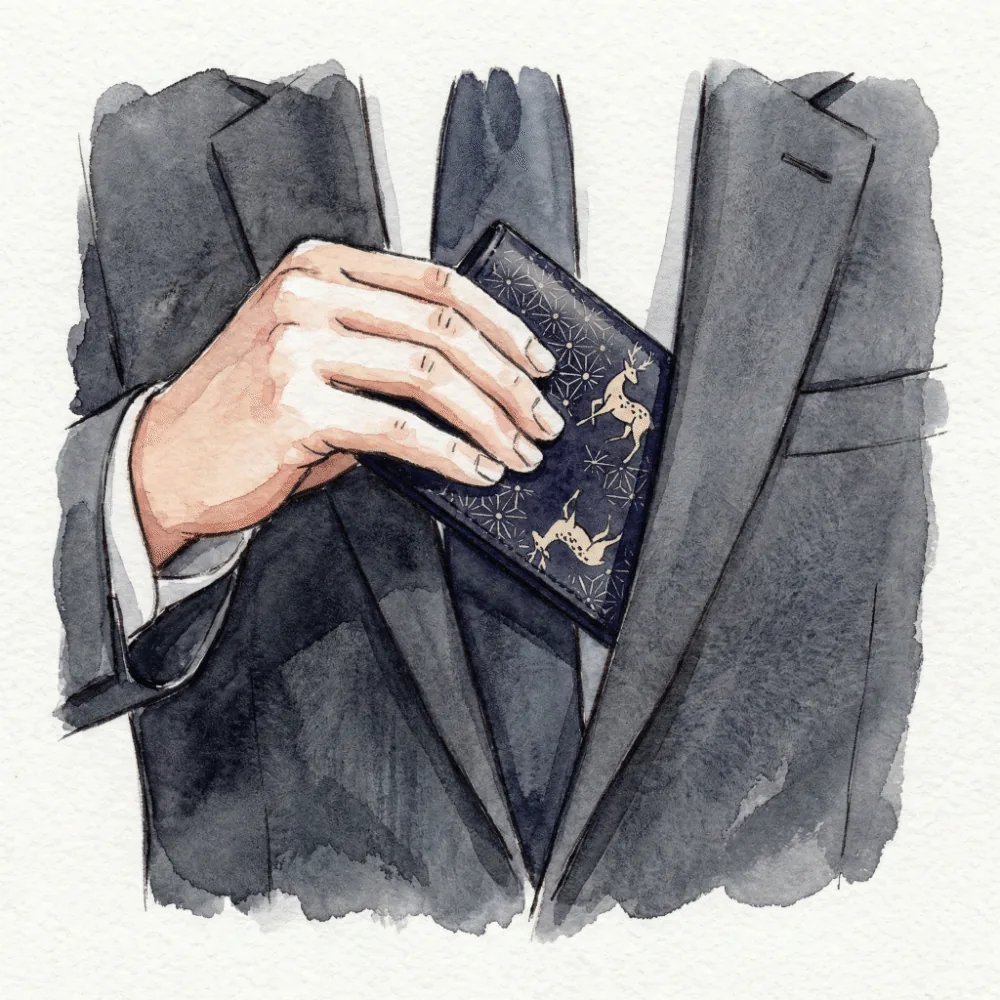
They slide into a suit's breast pocket without distorting the silhouette, and slip in and out effortlessly.
The increasingly popular L-zip long wallet opens with a single motion to reveal everything at a
glance — it's spacious enough for a smartphone yet maintains a clean, minimal profile.
4. Top Inden Brand: Indenya | 400 Years of Mastery
Founded in 1582 (Tensho 10). Indenya is not merely a brand within inden craft — it is the living origin of the tradition itself, headquartered in Yamanashi.
Indenya Uehara Yushichi
The founding house of inden craft — guardians of a secret passed down through the
generations.
In the Edo period, the ancestor Uehara Yushichi developed the technique of applying lacquer to deerskin. For
centuries the method was transmitted orally only to each successive head of the family, also named "Yushichi."
Today the craft is openly shared and celebrated.
The range is extraordinary — from classic auspicious patterns to modern geometric designs — and the quality is
matched by a genuine repair service. When people say "start with Indenya," they mean it without hesitation.
INDEN-YA Round Zipper Long Wallet — Black Deerskin × Black Lacquer, Dragonfly
Authentic Koshu inden from Japan's founding house: black deerskin with hand-applied black urushi lacquer in the classic dragonfly (kachi-mushi) motif. Made in Yamanashi, Japan.
View on Amazon5. Lacquer Aging | How Inden Gets More Beautiful Over Time
Buying an inden wallet is not the end of the story — it is the beginning. The true beauty of inden emerges through use.
Lacquer That Brightens With Age
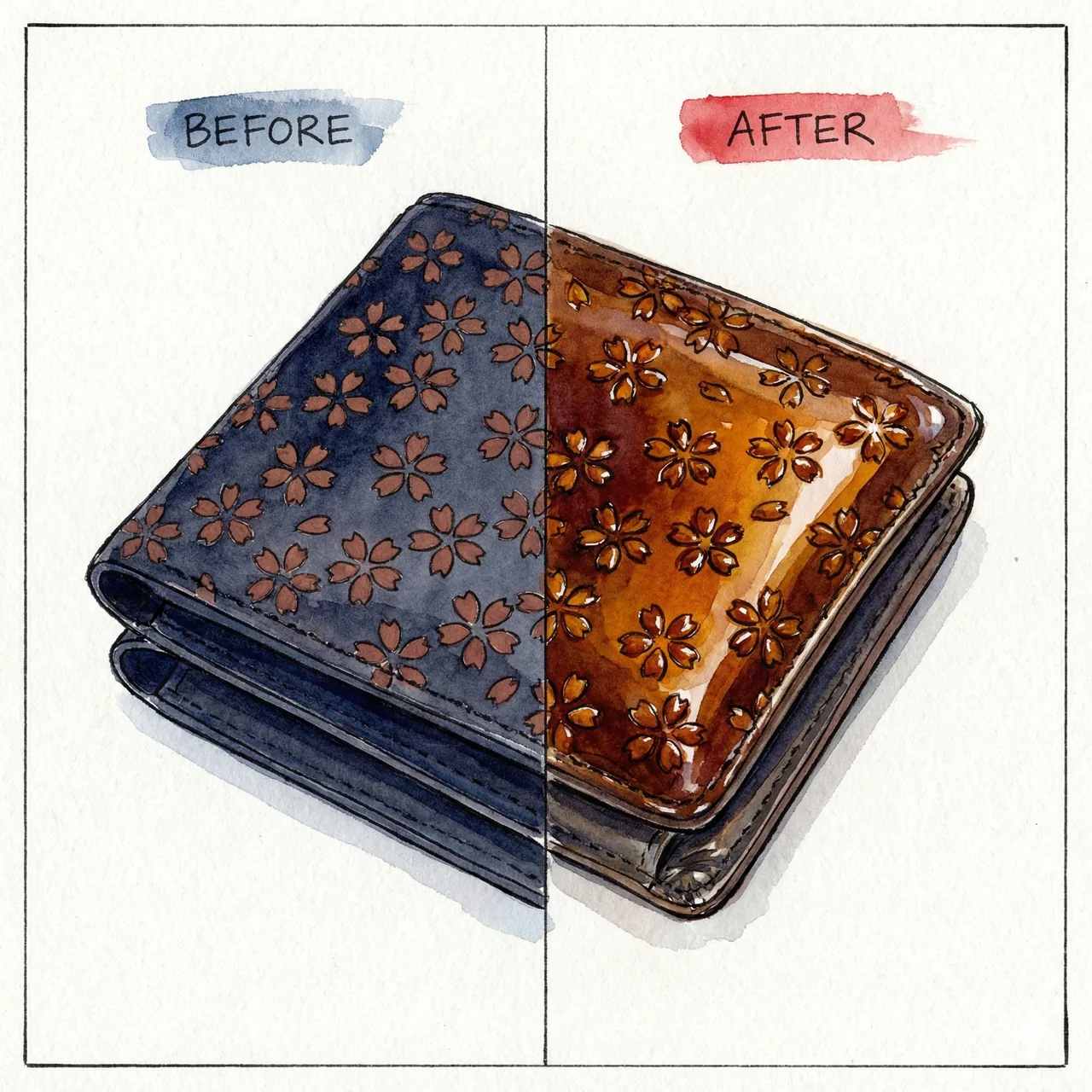
When new, inden lacquer has a slightly muted, matte quality. But as you carry and use the wallet, the lacquer is
gradually refined by friction and handling — developing a clear, luminous sheen known in Japanese as "urushi ga
saeru" (the lacquer clears and brightens).
At the same time, the deerskin absorbs the natural oils from your hands, becoming smoother and more supple with
every passing year.
After five or ten years of daily use, your inden will carry a patina that is entirely your own — impossible to
replicate, impossible to buy new.
6. Care & Maintenance | Keep It Dry, Wipe It Gently
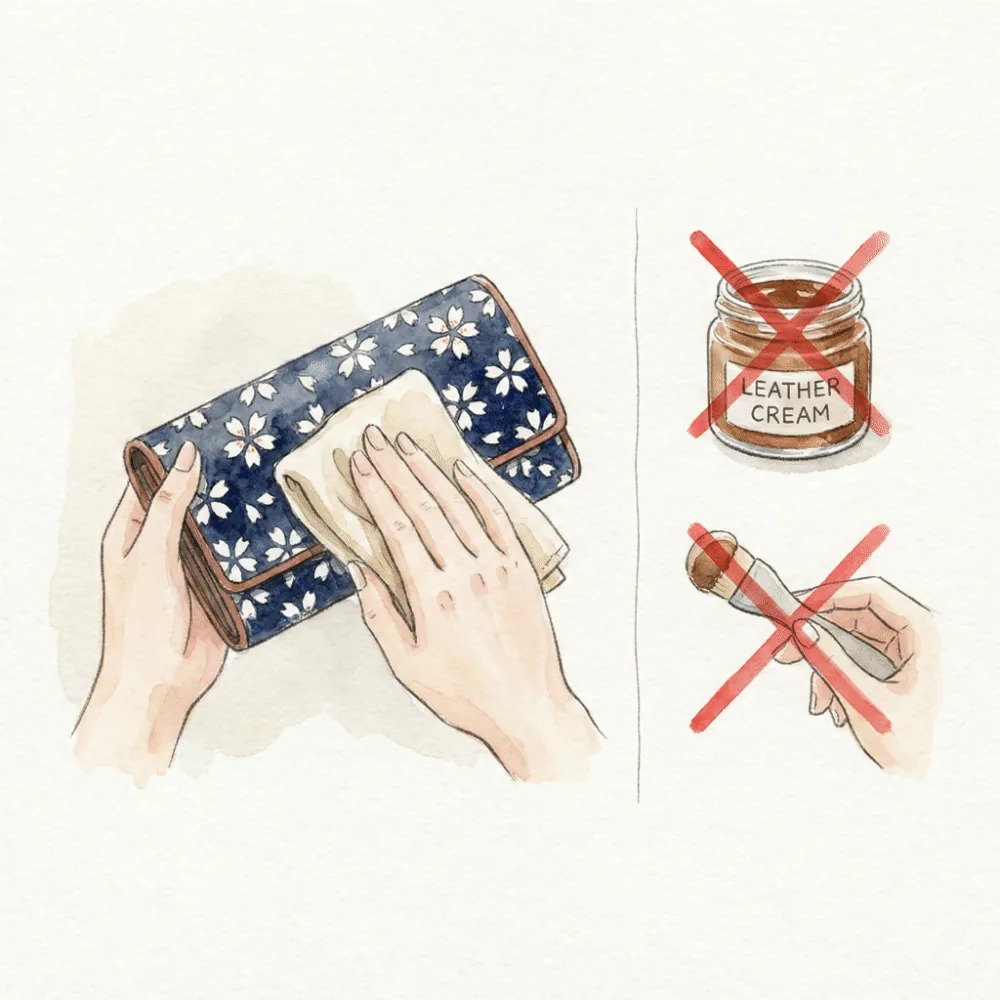
Deerskin is durable, but it does not tolerate moisture well. The good news: leather creams and conditioners are neither needed nor recommended.
No Cream — Dry Wiping Is All You Need
Avoid standard leather creams or oils. Oil-based products can cause the lacquer to lift and peel, and they
damage the natural absorbency of deerskin.
For everyday care, simply wipe the surface gently with a soft, dry cloth — that is enough to keep it in
excellent condition.
If the wallet gets wet, blot (do not rub) with a dry cloth immediately, then allow it to air-dry in the shade.
Never apply heat.
7. Frequently Asked Questions
Will the lacquer crack or peel?
Sharp bending can cause hairline cracks, but this is part of the character — not a defect.
Because urushi lacquer is hard, the fold lines of a wallet may develop fine cracks or slight peeling over years of
heavy use.
However, it rarely flakes off unsightly — most owners find the aged lacquer adds to the wallet's charm as evidence
of a well-lived life.
Note: avoid scratching or picking at the lacquer, as that can cause it to lift.
Can inden wallets be repaired?
Zipper replacement and loose stitching can be fixed.
Authorized makers such as Indenya offer repair services for their products.
Leather tears and lacquer re-application (repainting the pattern) are generally not possible, but re-lining the
interior fabric is often available. Don't throw it away — contact the maker first.
Is inden more for men or women?
The pattern and color determine the feel — most are genuinely unisex.
Black leather with black lacquer or navy leather with white lacquer tend to appeal to men; red leather with white
lacquer is popular with women.
Motifs like dragonfly, ocean wave, and ichimatsu (checkerboard) work beautifully regardless of gender.
Modern colorways — forest green, slate grey — are increasingly available and broaden the options further.
I've heard some inden items have a smoky smell — is that normal?
The smoke smell applies only to "fusubé" (smoke-treated) items — standard lacquer inden smells faintly of
leather, not smoke.
Traditional "fusubé" inden is smoked over burning rice straw to create a rich amber color, and those pieces do
carry a strong, pleasant smoky scent.
The majority of inden wallets in circulation today use only the lacquer-stencil technique and have a mild, natural
leather scent that fades quickly.
How durable is deerskin compared to cowhide?
Extremely durable — strong enough to be used in kendo armor.
Deer leather's interwoven fiber structure makes it highly resistant to tearing, and it ages far more gracefully
than cowhide: it does not stiffen, crack, or harden with age.
Instead, it retains its suppleness indefinitely — a quality that makes inden wallets genuine lifelong companions.
Final Thoughts: A Quiet Piece of Japanese Tradition in Your Pocket
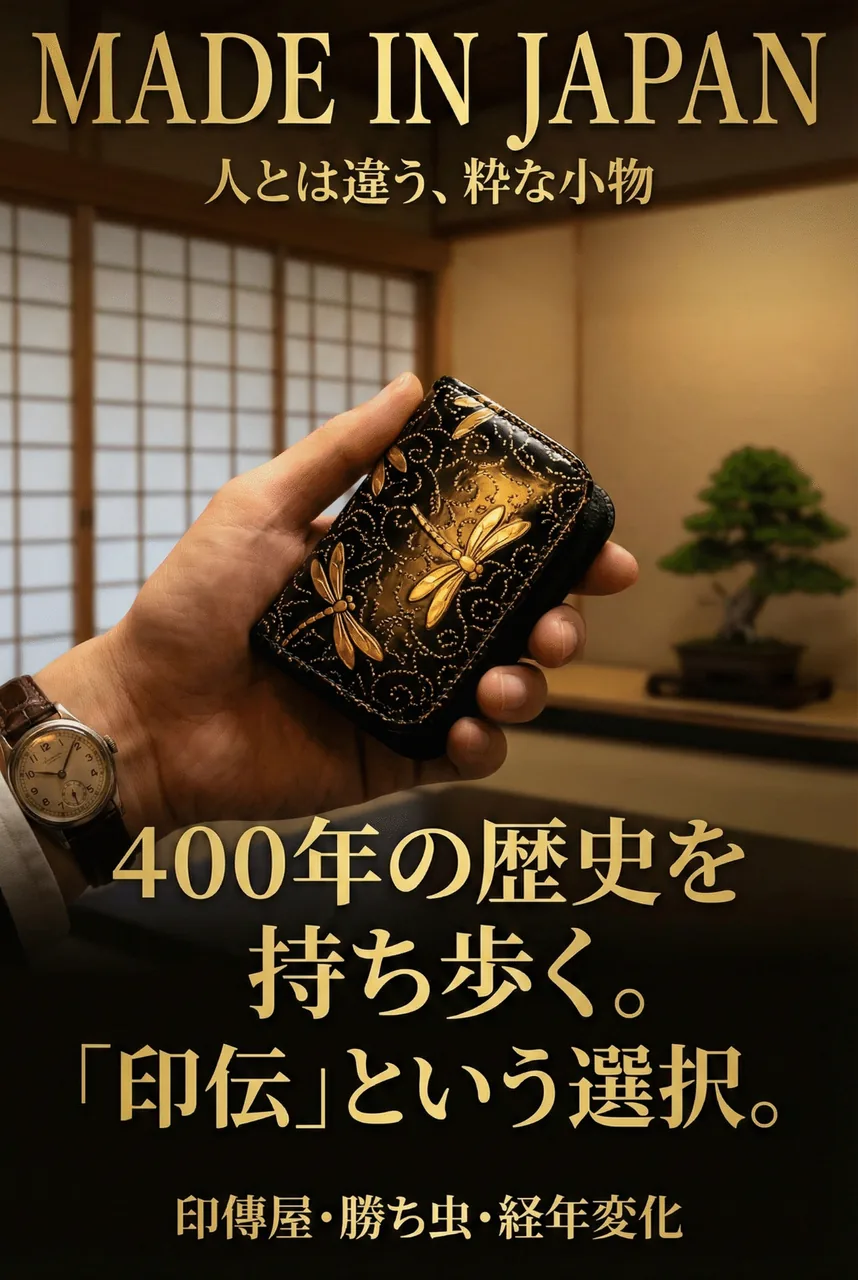
Koshu inden does not announce itself with a logo. It makes no loud statement.
But in an unguarded moment — when the lacquer catches the light, or the deerskin settles perfectly into your
palm — it quietly communicates something about the person who chose it.
Choose the dragonfly if you carry ambition. Choose the ocean wave if you seek peace.
Pick the pattern that speaks to you, and carry it every day. Over years, it will develop a patina that belongs
to you alone — a living record of the life you've lived with it.
That is a wallet that no trend can touch, and no amount of money can replicate from a store shelf.