"I bought a fountain pen but I only ever use the black cartridge it came with…"
"I just got a glass pen — I want to write in every color I can find!"
Welcome. You are standing at the entrance of the ink rabbit hole — and there is no exit.
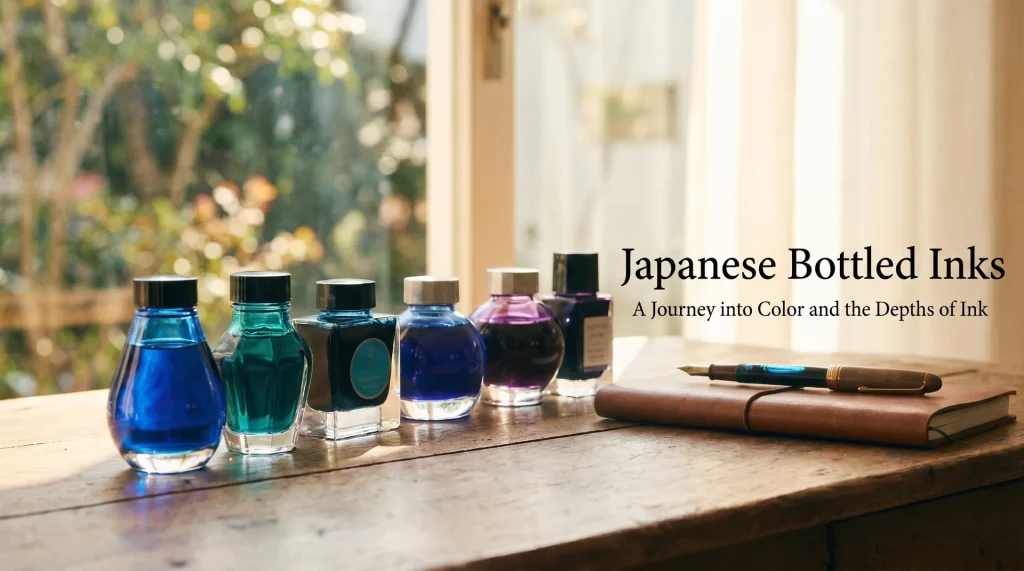
Right now, stationery fans across the world are obsessing over Japanese bottle inks.
Japanese inks are not merely writing tools. Names like "Moonlight," "Cosmos," and "Winter General" evoke entire seasons and landscapes. Colors that shift as the ink dries, shading from deep to pale within a single stroke — these are closer to liquid art than office supplies.
This guide introduces the best Japanese bottle inks for beginners and seasoned collectors alike, including the incredible world of regional "local inks" you can only get from specific shops.
1. What Makes Japanese Inks Different from Everything Else?
While Western inks tend to prioritize bold, vivid color, Japanese inks are engineered around atmosphere and change.
Names That Tell a Story
Take blue — Japanese ink catalogs offer dozens of distinct blues.
"Ajisai" (hydrangea), "Tsuyukusa" (dayflower), "Konpeki" (ultramarine deep sea)…
Each name carries a season, a mood, a memory. The names don't just describe the color — they invite you to imagine the scene it's named after.
Shading and Color Shift
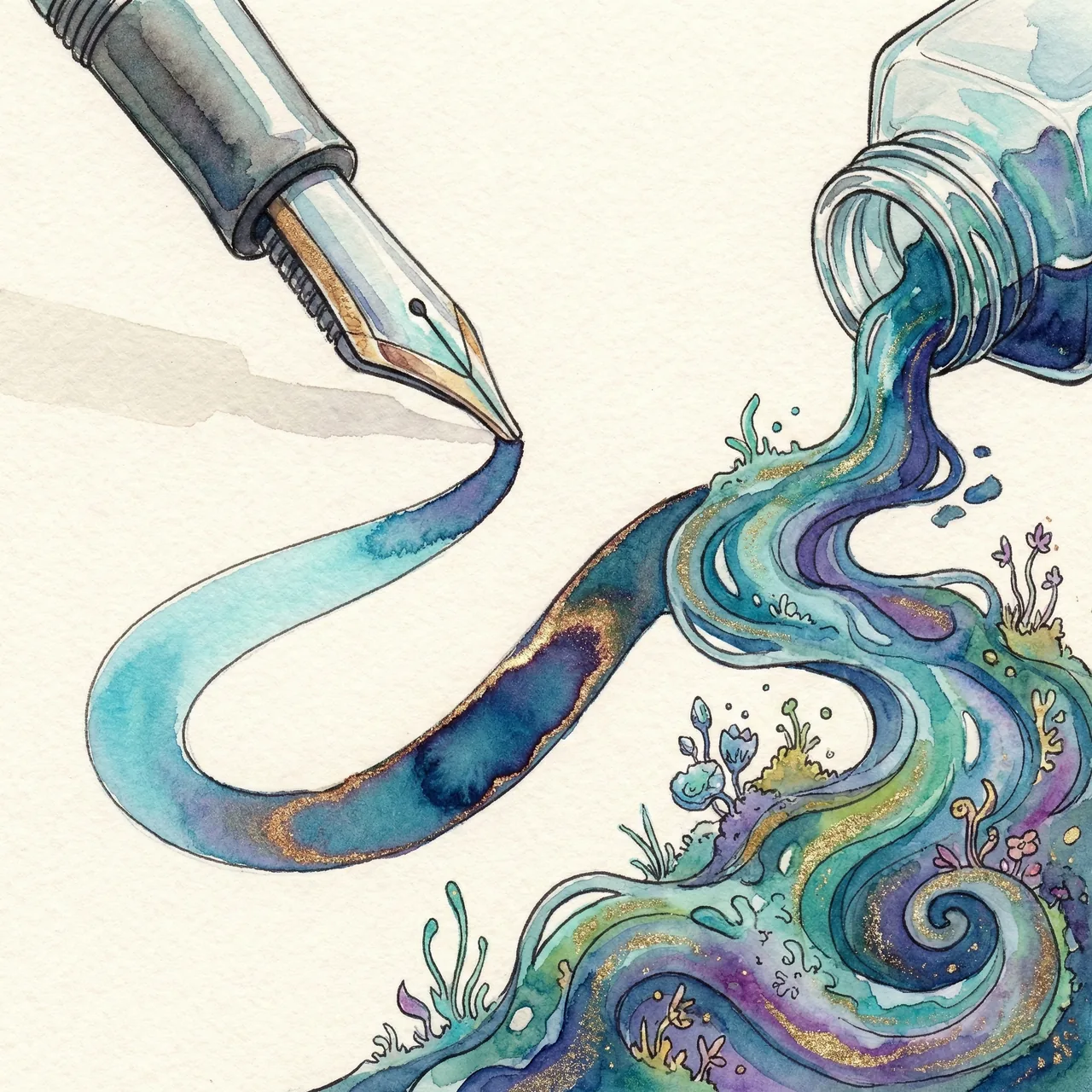
Japanese inks are known for pronounced shading — the way color darkens at the start of a stroke and lightens as the pen lifts. This gradient within each letter is the hallmark of fine Japanese ink on fountain pen-friendly paper.
Beyond shading, some inks exhibit color shift (yuushoku) — appearing to separate into two distinct hues as they dry, showing a flash or sheen visible at an angle. Writing with these feels like painting.
2. Start Here: Japan's Two Legendary Ink Lines
If you're buying your first Japanese bottle ink, these two lines are the natural starting point.
Universally available, reliably excellent, and beautiful in every sense — bottle design included.
PILOT "Iroshizuku" (色彩雫)
Japan's most beloved ink series — the one that started the worldwide boom.
Launched in 2007, Iroshizuku (literally "drops of color") is credited with sparking the global interest in Japanese fountain pen inks.
The perfume-bottle-inspired glass flask is designed with a small well at the base, so you can use every last drop.
The most popular color is "Tsuki-yo" (Moonlit Night) — a deep blue-green inspired by a night sky lit by the moon. If you're not sure where to start, start here.
SAILOR "Shikiori" (四季織)
Twenty colors that travel the four seasons of Japan.
Where Iroshizuku is vivid and saturated, Shikiori (Four Seasons Weave) leans toward softer, more evocative tones — spring cherry blossoms, summer evening haze, autumn foliage, winter frost.
The breakout hit of the line is "Yamadori" (Mountain Bird): a teal-green base with a striking red-brown sheen that flashes at certain angles. It caused a viral sensation on social media and remains one of the most photographed inks in the world.
The 20ml bottles are compact enough to collect many colors without cluttering your desk.
3. Going Deeper: Regional Inks and Shimmer Inks
Beyond the major brands, Japan has a thriving culture of regional inks — colors commissioned by local stationery shops, inspired by the specific landscapes, foods, and festivals of their hometowns.
Some you can only find in person. All of them feel like bringing home a piece of a place.
Kobe INK Monogatari (Nagasawa Bungu Center)
Over 100 colors. Every one named after a corner of Kobe.
The ink that launched Japan's regional ink movement. Nagasawa, a venerable Kobe stationery shop, developed this series to capture the city's distinct neighborhoods and waterfront landmarks in color.
"Rokko Green," "Harborside Blue," "Kitanozaka Night Blue" — each bottle tells you exactly where it came from.
Browsing the color charts feels like taking a walking tour of Kobe without leaving your desk.
Tono & Lims
The ink lab that keeps breaking the rules.
A Japanese-Korean creative partnership that has quickly become the most exciting brand in fountain pen inks.
Their specialty: shimmer inks with fine metallic particles that catch the light and gleam as the ink dries; fluorescent inks that glow under blacklight; limited-edition seasonal releases that sell out in hours.
Tono & Lims inks pair especially well with glass pens — the sparkle is spectacular on a broader nib.
TAG STATIONERY "Kyo-no-oto" (京の音)
Kyoto's traditional dye colors, brought back to life.
A collaboration between a Kyoto stationery shop and a botanical dye research institute. Each color in the "Sound of Kyoto" series is a recreation of the traditional hues used to dye Japanese kimono fabrics — colors that have been refined over hundreds of years.
"Nure-bairo" (wet crow black), "Koke-iro" (moss green) — the names are as quietly poetic as the colors.
No pyrotechnic sheen, just a deep, restrained elegance that suits adult correspondence and handwritten letters on washi paper.
4. Dye vs. Pigment Ink — And How to Store Them
Before buying, here's the one thing you need to know about ink chemistry.
For almost everyone: start with dye ink.
For Most People: Dye-Based Ink
Made from water-soluble colorants.
Flows freely through fountain pens, cleans out easily with water, and rarely clogs — even if you go weeks without writing.
Iroshizuku, Shikiori, Kobe INK, and approximately 90% of commercially available inks are dye-based.
For Advanced Users: Pigment-Based Ink
Made from insoluble particles suspended in liquid.
Once dry, pigment ink resists water and light — making it suitable for official documents, envelopes, and archival writing.
The tradeoff: pigment particles can settle and clog the feed if the pen sits unused. Pigment inks require more frequent cleaning and should generally not be left in a pen for weeks at a time.
5. Frequently Asked Questions
Do bottle inks have an expiration date?
No hard expiration, but 2–3 years after opening is a reasonable guideline.
Over time, water evaporates and concentrates the ink; mold can develop in humid conditions.
Store bottles in a cool, dark place away from direct sunlight — this dramatically extends shelf life.
If the ink smells musty or has become visibly thick, discontinue use.
Can I mix different colored inks together?
Generally, no — mixing inks from different brands or types can cause clogging.
Incompatible inks can react chemically, causing the mixture to coagulate or precipitate, potentially damaging your pen's feed or nib.
If you want to blend custom colors, use inks explicitly designed for mixing, such as Platinum's "Mixable Ink" line.
How do I dispose of old ink?
Absorb it into paper or cloth first — don't pour large amounts down the drain.
Pouring significant quantities of ink into plumbing risks staining pipes and adds unnecessary dye to the water system.
The safest method: soak old newspaper or a rag with the ink, seal it in a plastic bag, and dispose of it as combustible household waste.
Can shimmer inks (with glitter particles) be used in fountain pens?
It's technically possible with a broad nib, but not recommended for expensive pens.
The metallic particles in shimmer inks can clog the narrow channels of fine fountain pen feeds, potentially requiring disassembly to clear.
The ideal tool for shimmer inks is a glass pen or dip pen — their simple, open structure flushes clean in seconds under running water.
I spilled ink on my clothes. Can I get it out?
Dye-based inks can sometimes be reduced significantly, but complete removal from fabric is difficult.
Act immediately: rinse with cold water and work in mild soap by pressing (not rubbing). This can lighten dye inks considerably.
Ink is fundamentally designed to stain, so white or light fabrics may be lost causes.
When working with ink, wear dark clothes or an apron — prevention is far easier than removal.
Final Thoughts: Ink Is Art for Writers
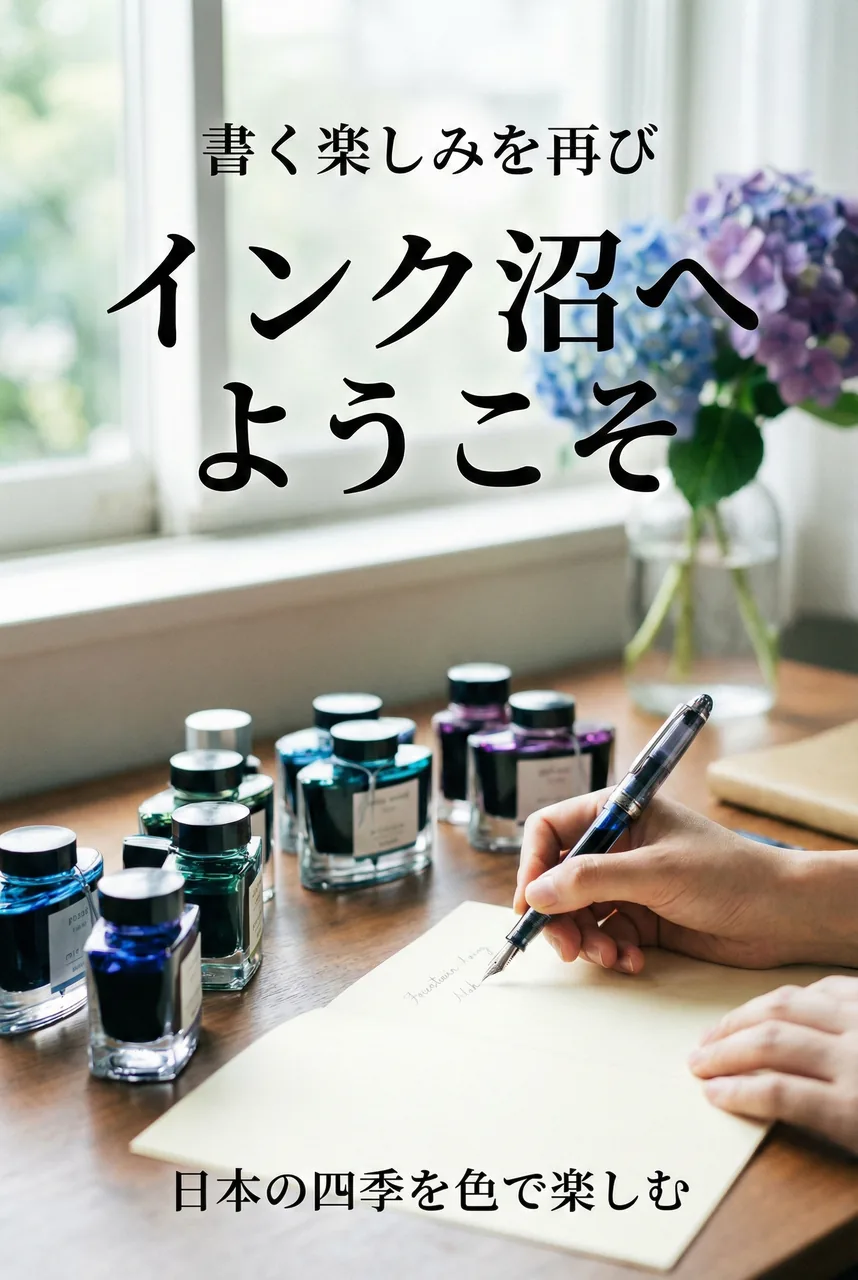
Since falling into the ink rabbit hole, I see the world differently.
I'll catch the sky at dusk and think, "that's Iroshizuku Yuyake right now." I'll see rain-soaked hydrangeas and immediately reach for the Iroshizuku Ajisai bottle.
When the color in the bottle connects to something in the world outside, even an ordinary diary entry becomes something worth keeping.
One 50ml bottle of fountain pen ink can write approximately 50,000 characters — years of writing for around $20.
Find your color. Let it mark the time.