
"Never wash your jeans for six months."
"Detergent destroys the color."
If you've been following this advice — sweating through wears, waiting it out — you're actually doing more damage.
Sweat and body oils left in the fabric oxidize over time, weakening the fibers and accelerating wear at the
crotch seam.
Fine denim — like Okayama selvedge — is meant to be washed. The goal isn't to avoid washing; it's to wash correctly
so the jeans age beautifully rather than just falling apart.
This guide covers the first-wash ritual for raw denim, how washing frequency shapes the fade, and the specific
habits that quietly ruin even the best pair of jeans.
1. The First Wash: Removing the Sizing (Raw Denim Only)
⚠️ This section is for raw (unwashed) denim only.
If your jeans came pre-washed (one-wash / OW), skip ahead to Section 2: Everyday Washing.
Raw denim is treated with a heavy sizing agent (starch) during weaving to hold the fabric together. The first wash removes that starch and allows the fabric to shrink to its true dimensions — conforming to your body from that point forward.
Step 1: Soak in Hot Water (40–50°C / 105–120°F)
Fill a bathtub or large bucket with hot water in that temperature range. Turn the jeans inside-out and submerge
them fully — weigh them down with a filled plastic bottle to keep them under the surface.
Leave them to soak for 1–2 hours.
The water will turn yellowish as the sizing and surface dye dissolve — this is completely normal.
Step 2: Rinse Out the Sizing and Spin-Dry
Drain the water, then run the jeans through a rinse-and-spin cycle in the washing machine.
No detergent needed at this stage — the goal is simply to flush out the sizing and let the fabric shrink down, not
to clean.
Step 3: Tumble Dry on High Heat (Advanced)
Some denim enthusiasts finish the first wash with a gas dryer at a coin laundry — the intense heat forces the
fabric to its absolute maximum shrinkage.
This ensures the jeans won't shrink further with later washes. The tradeoff: leather back patches
can distort or crack under the heat. If you're unsure, line drying works perfectly well — it just leaves a small
margin for future shrinkage.
2. Everyday Washing: Inside-Out and the Right Detergent
The goal of every regular wash is the same: remove sweat and dirt without erasing the indigo. These two rules handle both.
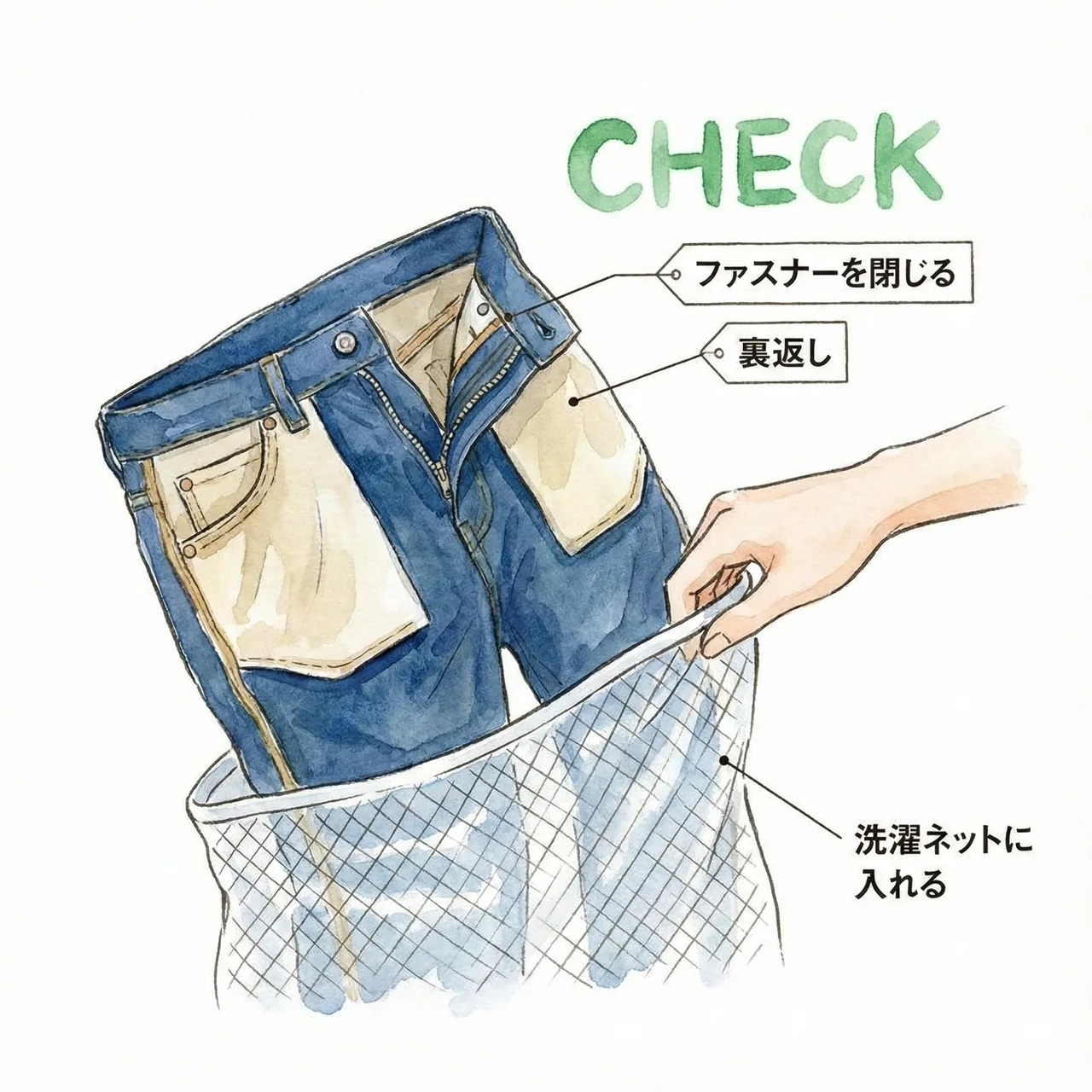
Rule 1: Always Turn Inside-Out and Use a Laundry Bag
When denim tumbles in the wash with the right side facing out, the agitation creates friction marks and streaks
in places you never intended to fade.
Always close the button and zipper, turn the jeans inside-out, and place them in a mesh laundry
bag before washing.
Rule 2: Choose a Detergent with No Optical Brighteners
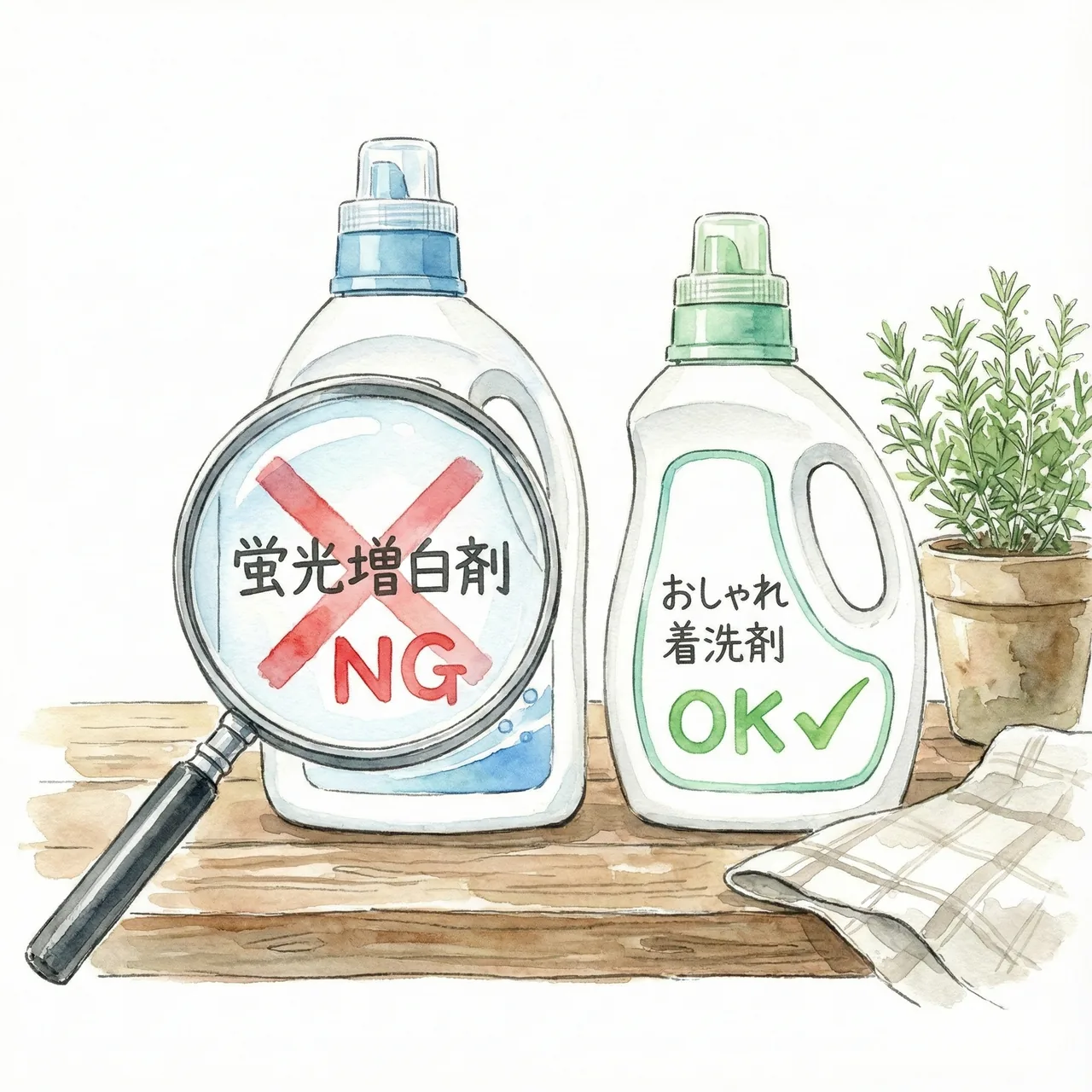
This is the most important detail.
Standard household detergents contain optical brightening agents (OBAs) — compounds that make white appear
whiter under UV light. When used on indigo denim, they cause the entire fabric to develop a flat, grey-white
cast over time.
Always check the label and choose a detergent explicitly marked "no optical brighteners" — a
gentle delicates detergent (neutral pH) or a dedicated denim detergent both work well.
3. Washing Frequency: High-Contrast vs. Natural Fade
There's no single correct frequency — it depends on the kind of fade you're after.
| Style | Wash Frequency | What You Get |
|---|---|---|
| High-Contrast ("Baki-baki") |
Every 3–6 months | Sharp, bright whiskers (thigh creases) and honeycombs (behind the knee) with strong indigo-to-white contrast. Dramatic aging — but harder on the fabric. |
| Vintage (Natural) |
Every 5–10 wears | Gradual, all-over shift to a soft, pale blue. Clean and wearable in any context, with longer fabric life. A natural 1990s-style fade. |
For beginners: once a month is the right starting point.
Going too long without washing lets sweat and body oils oxidize in the fibers — this is the actual cause of crotch
blowouts, not washing too often.
A rough guide: wash after every wear in summer, once a month in winter. This balances clean fabric with room for a
gradual, even fade.
4. Drying: Hang Upside-Down to Prevent Shrinkage
Hang from the Hem, Not the Waist
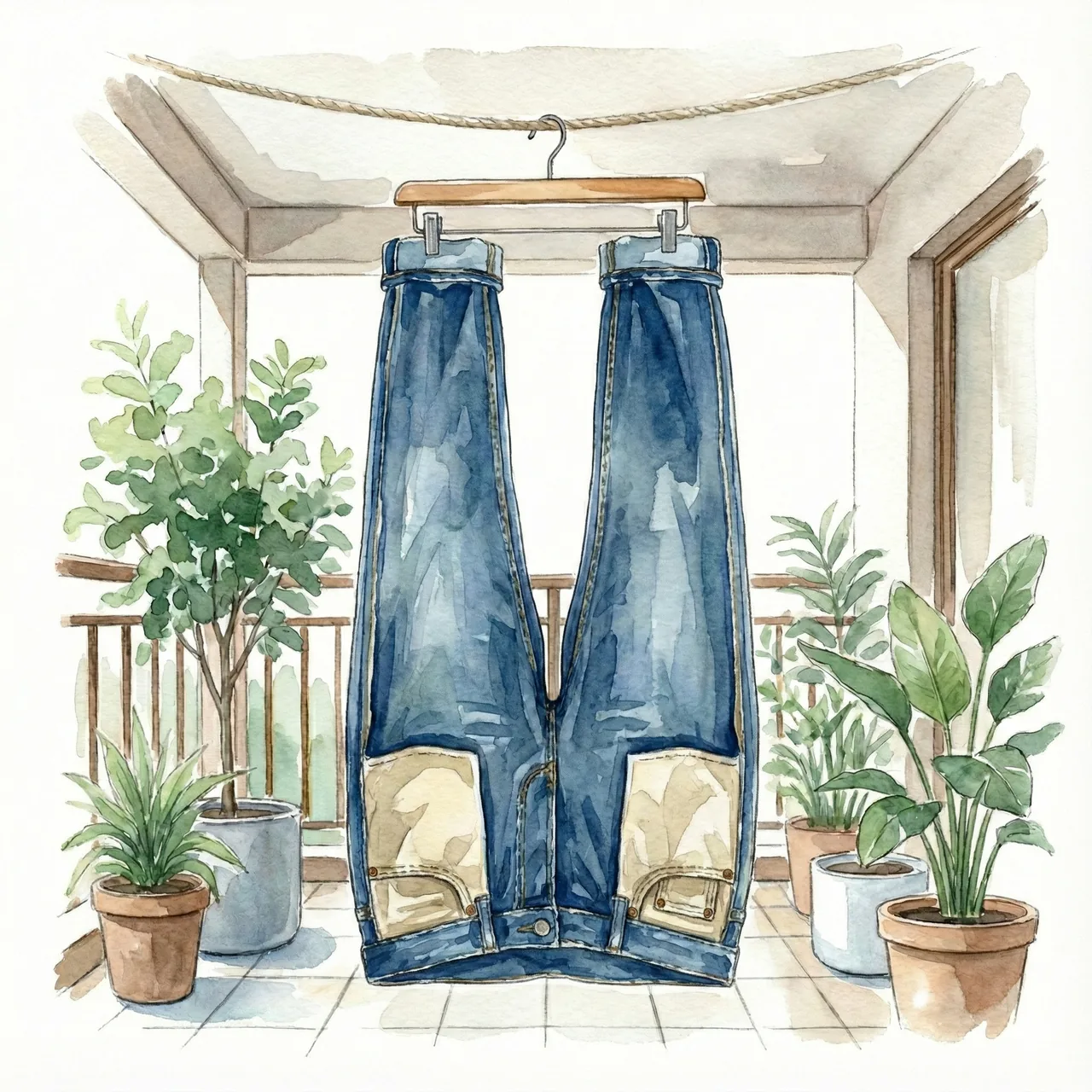
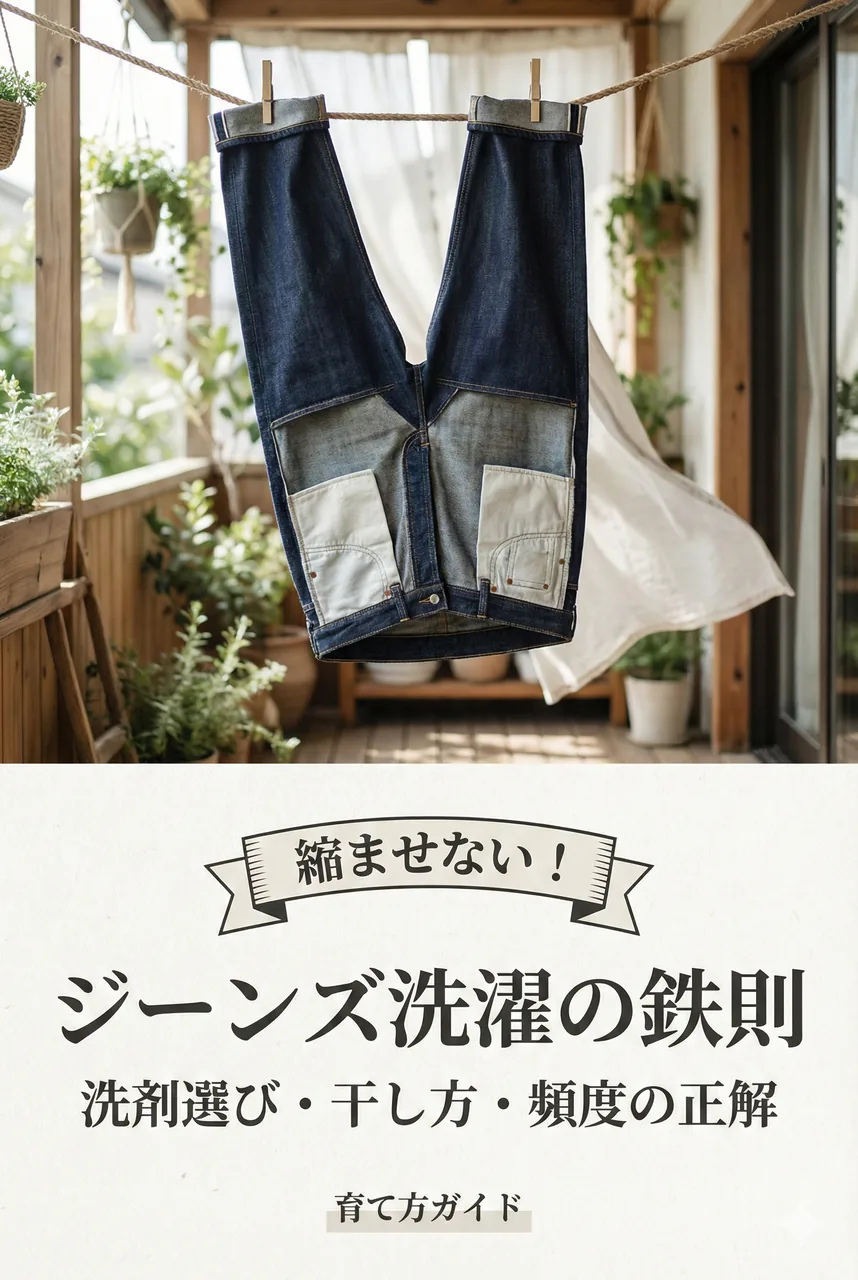
Denim shrinks lengthwise. To counteract this, hang the jeans upside-down — clip the hem (cuffs)
with clothespins and let the waistband hang freely at the bottom.
The weight of the waistband pulls down against the shrinkage as the fabric dries, keeping the length closer to
its intended measurement and smoothing out wrinkles in the process.
Dry Inside-Out in the Shade — No Direct Sunlight
Wet indigo exposed to strong UV light will sunburn — the fabric develops a yellowish cast that isn't
reversible.
Always dry the jeans inside-out in a well-ventilated shaded spot.
5. Frequently Asked Questions (Vinegar, Ocean Washing)
Does vinegar or salt actually help set the color?
Vinegar has a real effect — salt is more myth than science.
Acetic acid (white vinegar) can help neutralize alkaline residue and has mild antibacterial properties. Some denim
purists do a no-detergent first soak with vinegar and salt. In practice, the effect is subtle — a good
denim-specific detergent achieves similar results without the extra steps.
What about washing them in the ocean?
Don't.
Seawater leaves salt residue that continues to draw moisture and causes stiffness. Worse, sand particles work
their way deep into the weave and act like fine sandpaper from the inside — accelerating fiber breakdown with
every subsequent movement. The ocean legend sounds cool; the result is ruined denim.
Can I use a tumble dryer for regular washes?
Not for everyday use.
A dryer causes uneven shrinkage and can set unnatural crease marks and wear patterns that don't match how you
actually move in the jeans. Reserve dryer use for the raw denim first-wash ritual if you choose that route — for
all subsequent washes, air dry in the shade.
6. 90% of the Fade Is Determined by the Denim Itself
Everything in this guide helps — but there's one fact that matters more than any washing technique.
Cheap denim fades cheap, no matter how carefully you wash it.
Ring Dyeing vs. Solid Dyeing: Why the Core Stays White
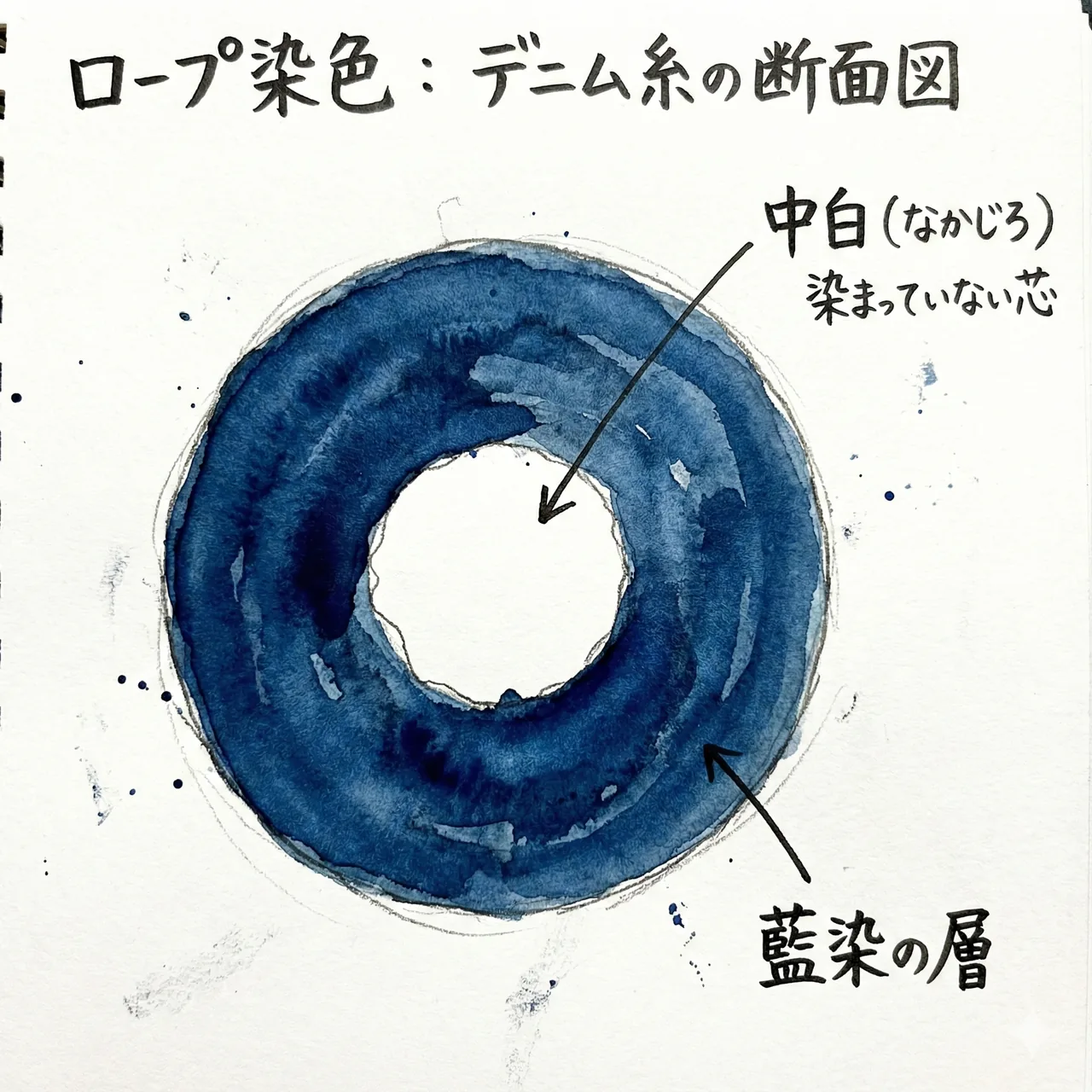
Fast-fashion denim is typically dyed uniformly all the way through the thread. As the surface indigo wears away,
what's revealed underneath is more indigo — the result is a flat, grey-toned fade with no contrast.
Premium Okayama denim uses a technique called rope dyeing (ring dyeing): the thread is dyed
only on the outer layer, leaving the core a bright, undyed white.
As the surface indigo wears away through use, that white core is exposed — and that contrast is precisely what
creates the vivid whiskers and honeycombs that denim enthusiasts around the world are chasing.
7. Final Thoughts: Remove the Dirt, Keep the Color
Avoiding the wash isn't loyalty to your denim — it's neglect.
The right approach is to wash properly and let the jeans age on your terms.
· Use a detergent with no optical brighteners
· Wash and dry inside-out
· Hang from the hem, upside-down
Follow these three rules and you'll keep the fabric clean while building a fade that belongs to you alone — and
nobody else.