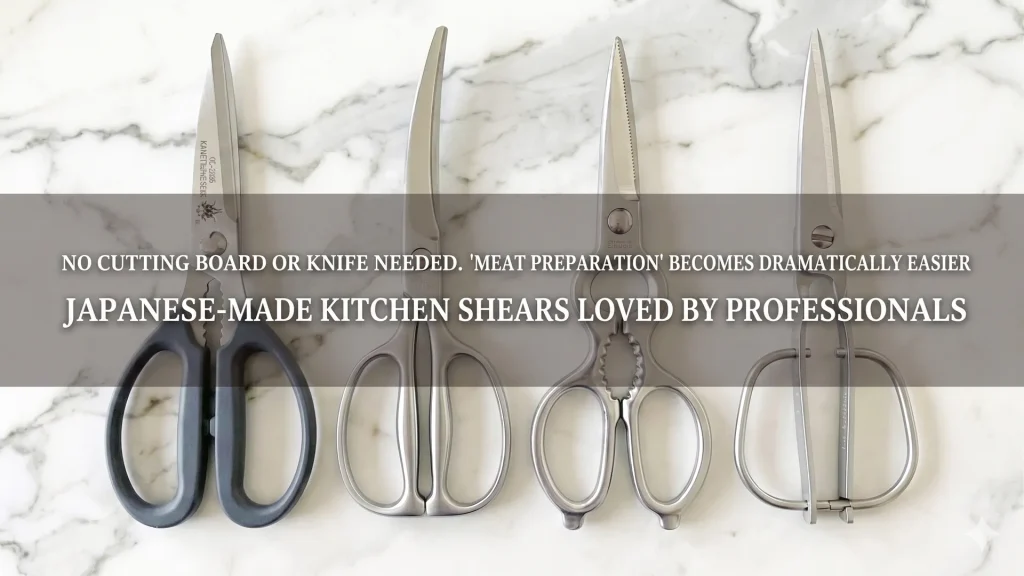
The Japanese kitchen
scissors worth buying come apart for washing and are still made in two of Japan's blade towns, Seki
in Gifu and Sanjo-Tsubame in Niigata. Toribe's Kitchen Spatter, KAI's Seki
Magoroku forged scissors and Hasegawa's CANARY are three of them.
The part people don't expect: a Japanese brand name on a pair of kitchen scissors does not mean they were made in
Japan. While checking the pairs for this guide, we found kitchen scissors from a well-known Sanjo maker listing
China as the country of origin. Every pair below lists Japan.
This guide explains what to look for, gives five pairs you can order, and covers how to keep them sharp.
Quick Reference: 5 Japanese Kitchen Scissors at a Glance
| Scissors | Made in | Build | Pick it for |
|---|---|---|---|
| Toribe Kitchen Spatter KS-203 | Sanjo, Niigata | All stainless, unpainted, 114 g | Hygiene, a light pair, resharpening by the maker |
| KAI Seki Magoroku DH3345 | Seki, Gifu | Forged, all stainless, one piece | A heavy, rigid pair for tough jobs |
| KAI Seki Magoroku DH3311 | Japan | Thick blade, resin handles, 150 g | The lowest-priced pair here |
| CANARY EL-210 | Seki, Gifu | Micro-serrated, tools in the handle | One pair that also opens cans and bottles |
| Shimomura Kihan Mama Cook 36781 | Japan (Tsubame-Sanjo line) | Curved blade, soft handles | Slippery food that slides out of straight blades |
1. Why Japanese Kitchen Scissors? Two Blade Towns, and One Label to Read
Seki, Gifu
Seki has made Japanese swords for more than 800 years, and its blade makers now turn out kitchen knives and scissors. KAI's Seki Magoroku brand takes its name from Magoroku, a Seki swordsmith, and KAI's head factory is in the city. Hasegawa Cutlery, the maker of CANARY scissors, is also a Seki company, working from know-how built up since 1933.
Sanjo and Tsubame, Niigata
The neighbouring towns of Sanjo and Tsubame in Niigata are another of Japan's great metalworking areas. Toribe Seisakusho has made scissors in Sanjo since 1959, starting with cast-iron scissors and moving to stainless steel early on. Its staff still do the two final steps by hand: setting the pivot and matching the blades, which decide how a pair cuts and closes.
Read the Country of Origin, Not the Brand
Japanese blade makers sell some products made abroad. Shimomura Kogyo is a Sanjo maker with roots going back to 1874, but the Amazon listing for its Verdan OVK-2 kitchen scissors gives China as the country of origin. That is not a judgment on how they cut; it is simply not what this guide is about. If "made in Japan" matters to you, read the "Country of Origin" line on the listing, not the brand name. All five pairs below list Japan.
2. What to Look For
1. They Come Apart
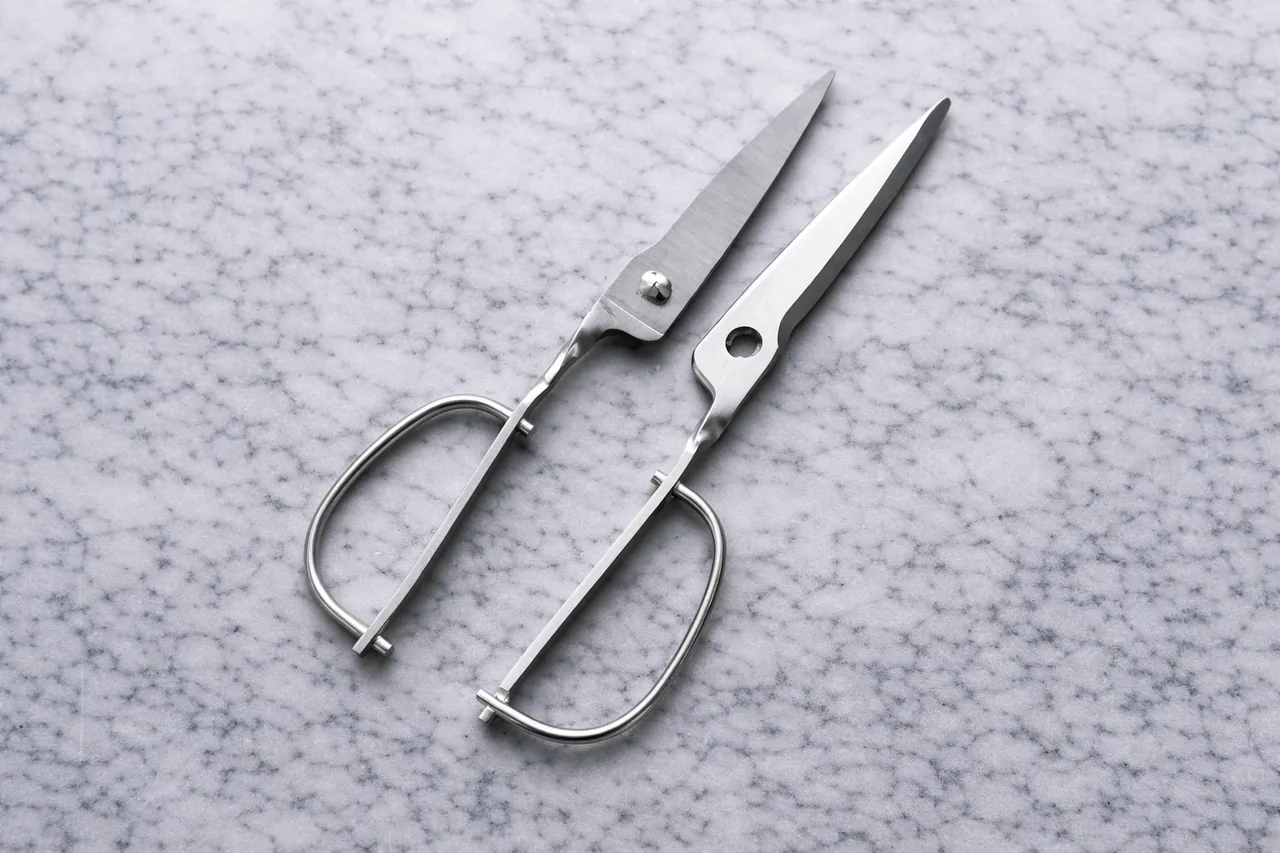
The pivot is where kitchen scissors get dirty: bits of chicken fat and fish collect where you can't reach them. Every pair in this guide separates into two halves so you can wash each blade on its own. On the Toribe Kitchen Spatter, you open the blades wide and click them apart.
2. A Serrated Blade
A fine row of teeth on one blade holds slippery things, fatty meat, squid, fish skin, so they don't slide out of the cut. KAI's DH3345 and DH3311 and CANARY's EL-210 all have one.
3. All Stainless, or Resin Handles
All-stainless scissors have no handle coating to chip or crack. Toribe points out that its unpainted Kitchen Spatter can be boiled, wiped with alcohol and put through a commercial dishwasher. Resin handles are softer and warmer in the hand and usually cheaper; check the heat limit before boiling them (KAI gives 100°C for the DH3311's handles).
4. Weight
A light pair is easier for long prep sessions and smaller hands; a heavy forged pair does more of the work on crab shells and chicken. The Toribe weighs 114 g and the KAI DH3311 150 g; the forged KAI DH3345 is the solid one.
3. 5 Japanese Kitchen Scissors Made in Japan
Toribe Kitchen Spatter KS-203: Built Around Washing
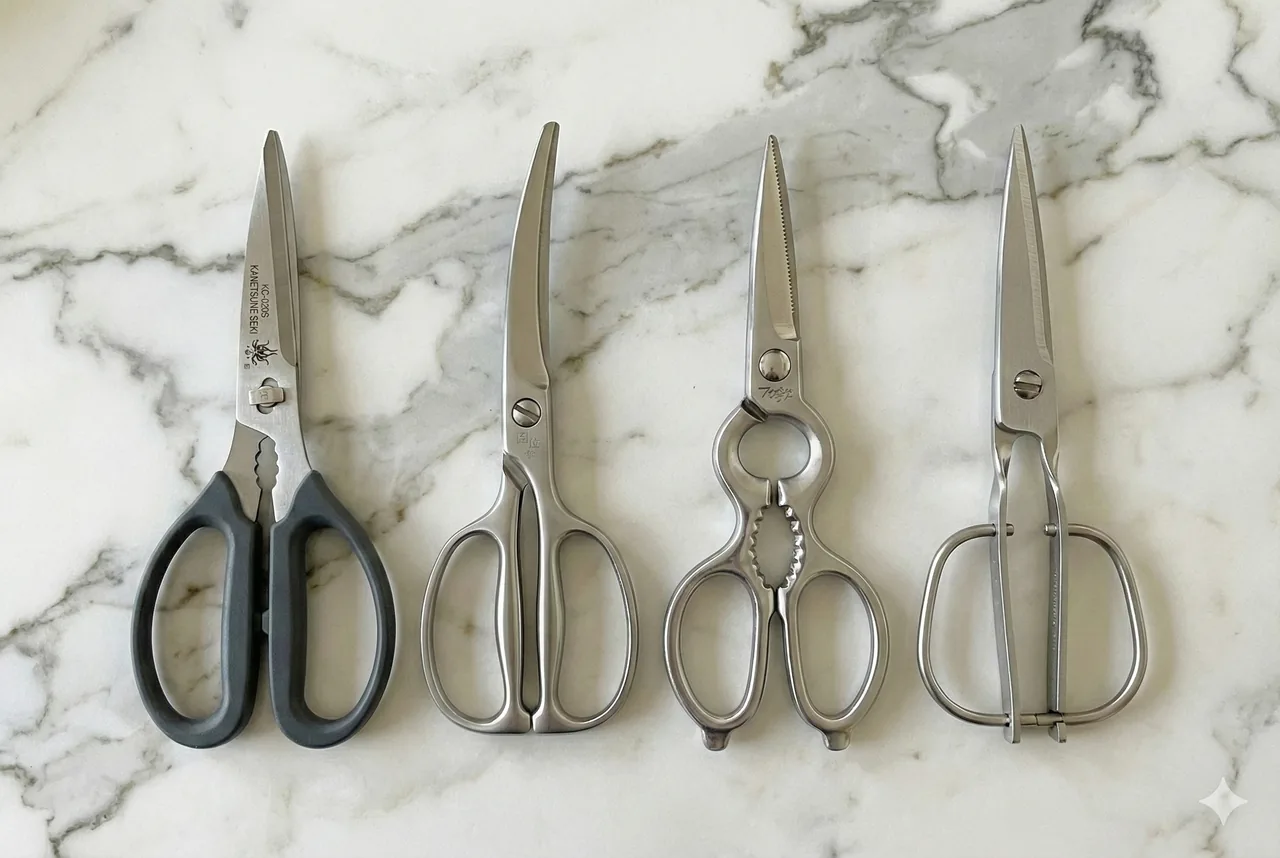
Toribe started developing the Kitchen Spatter in 2005 and released it in 2007 to fix what actually goes wrong
with kitchen scissors: they get dirty, they are hard to clean, and you are never sure they are clean. It is all
stainless and unpainted, so there is no coating to chip into food, and it can be boiled, wiped with alcohol or run
through a commercial dishwasher. It is 203 mm long and weighs 114 g. Toribe says every stage of production is done
in Japan.
It is also built to last: Toribe accepts KS-203 scissors from individual owners for resharpening and blade
adjustment, so you send them back instead of replacing them.
View Toribe Seisakusho Brand Details
Toribe Kitchen Spatter KS-203
Loading product details…
KAI Seki Magoroku DH3345: Forged in One Piece
KAI's forged, all-stainless kitchen scissors from its Seki Magoroku line. Each half is a single seamless piece, so there is no joint between blade and handle for food to get into, and the two halves come apart for washing. One blade is serrated. This is the rigid, solid pair to reach for when you cut through crab shells and chicken. Its Amazon listing gives Japan as the country of manufacture.
View Seki Magoroku Brand Details
KAI Seki Magoroku Forged Kitchen Scissors DH3345
Loading product details…
KAI Seki Magoroku DH3311: The Everyday Pair
A thick stainless blade that resists flexing, a serrated edge that stops food slipping, blades that come apart for washing, and resin handles rated to 100°C. At 150 g it is easy to use for a whole evening of cooking, and it is the least expensive pair in this guide. Made in Japan.
KAI Seki Magoroku Kitchen Scissors DH3311
Loading product details…
CANARY EL-210: Scissors With a Toolkit in the Handle
From Hasegawa Cutlery in Seki. The blade has a fine micro-serrated edge meant to "cut all ingredients in one cut," soft or slippery, and the handle adds a can opener, bottle opener, lid opener, nutcracker and meat tenderiser. The blades come apart, and the scissors take heat up to 130°C, so they go in the dishwasher. CANARY says each pair is made by hand by craftsmen in Seki. A good pick for a camping box or a small kitchen with one drawer.
CANARY Kitchen Scissors EL-210
Loading product details…
Shimomura Kihan Mama Cook 36781: A Curved Blade
From Shimomura Kihan's Mama Cook line of Tsubame-Sanjo kitchen tools (a different company from Shimomura Kogyo). The curved blade wraps around what you are cutting so it does not slide forward out of the scissors, and the soft elastomer handles are kind to your hands. The blade is high-carbon stainless steel, and the listing gives Japan as the country of manufacture.
Shimomura Kihan Mama Cook Curved Kitchen Scissors
Loading product details…
4. Care and Sharpening
Take Them Apart, Wash, Dry
Separate the halves after use, wash the pivot area, and dry both halves before putting them back together. Even stainless steel is happier dry.
Sharpening: Ask the Maker First
Scissors are sharpened differently from knives, and a pair that is ground wrong will not close cleanly. The safest route is the maker: Toribe, for example, accepts its KS-203 back from individual owners for resharpening and blade adjustment. Snipping folded aluminium foil is a popular quick fix, but treat it as no more than that.
5. Frequently Asked Questions
What are the best Japanese kitchen scissors?
For hygiene and a pair you can have resharpened, Toribe's Kitchen Spatter. For a heavy, solid pair, KAI's
forged Seki Magoroku DH3345.
For the lowest price, KAI's DH3311; for scissors that also open cans and bottles, CANARY's EL-210. All four list
Japan as the country of origin.
Are all Japanese-brand kitchen scissors made in Japan?
No.
Some Japanese blade makers sell kitchen scissors made in other countries; one Sanjo maker's scissors we checked
list China. Read the country of origin on each listing.
Can Japanese kitchen scissors go in the dishwasher?
The all-stainless ones, yes. Check the heat limit on pairs with resin handles.
Toribe's Kitchen Spatter handles a commercial dishwasher, and CANARY's EL-210 is rated to 130°C. KAI gives
100°C for the DH3311's resin handles.
Why do Japanese kitchen scissors come apart?
So you can wash the pivot.
That is where food collects on scissors that stay together. Taking them apart lets you wash and dry each half
completely.
Can kitchen scissors cut chicken bones?
Small ones, with a heavy pair.
A forged pair such as KAI's DH3345 or the heavy-duty CANARY EL-210 is the right tool. For large bones, use a
cleaver rather than forcing scissors through them.
How do I sharpen Japanese kitchen scissors?
Ask the maker or a scissors sharpener.
Scissors need the two blades to stay matched after sharpening. Toribe accepts its KS-203 for resharpening; for
other pairs, check what the maker offers before trying a whetstone yourself.
Final Thoughts: A Pair You Can Wash Completely
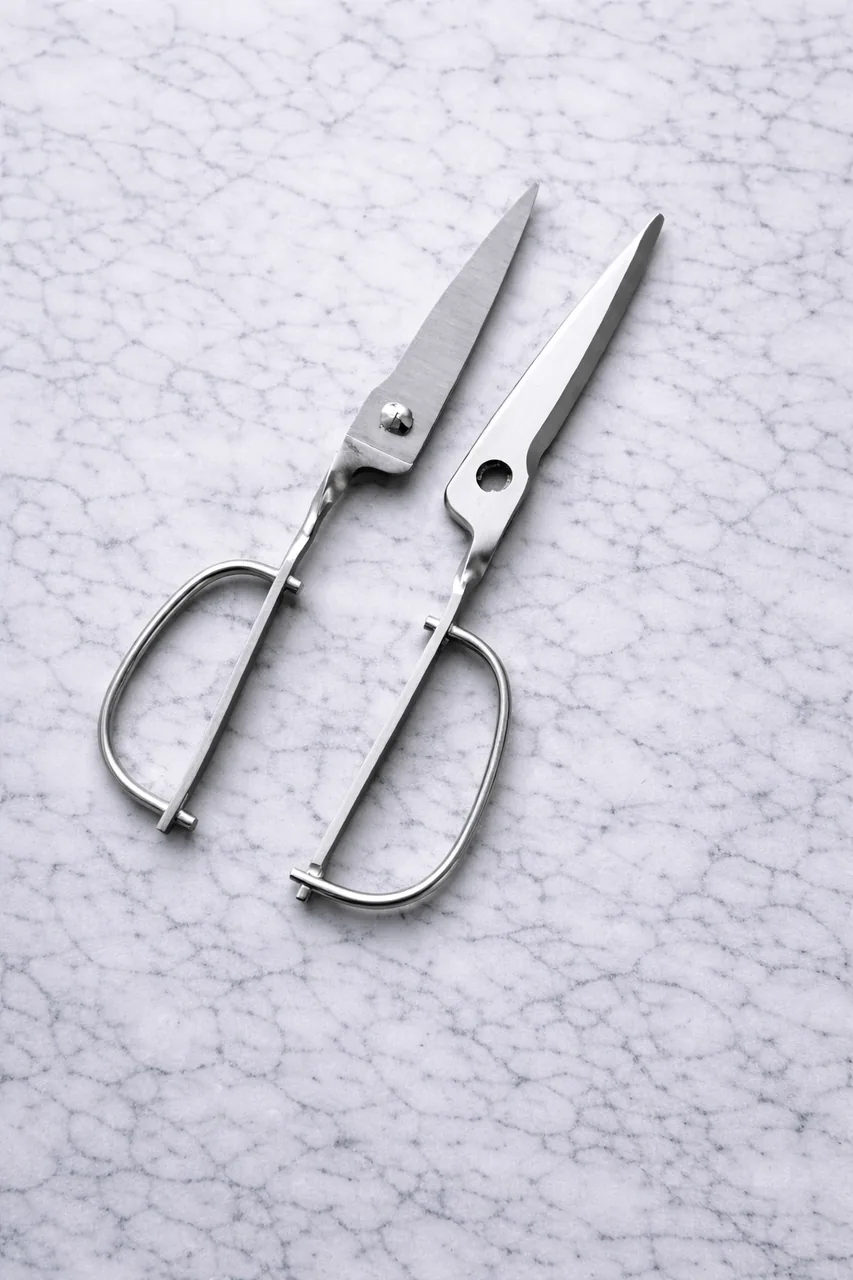
Good kitchen scissors do one thing more than cut: they come apart, so the last bit of chicken fat in the pivot
goes down the drain instead of into tomorrow's salad.
Start with the job. For a pair you will keep for years, Toribe's Kitchen Spatter. For crab legs and chicken,
KAI's forged DH3345. For a first pair, KAI's DH3311. And whatever you buy, check where it was made.