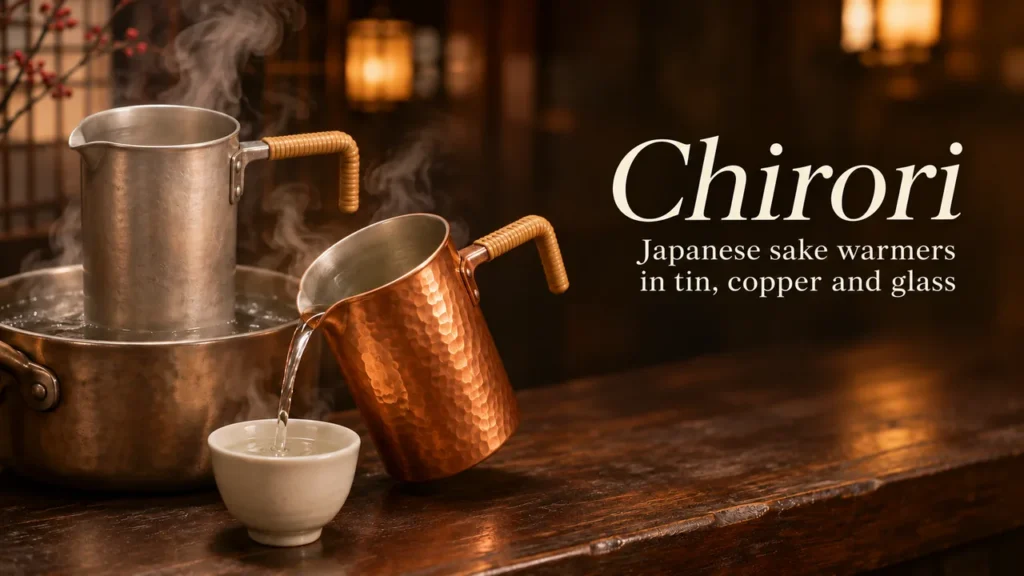
A chirori is a small metal pot with a handle and a spout, made for warming sake in a bath of hot water.
Before the ceramic sake flask took over, this is how Edo-era taverns served hot sake: the server warmed it in a chirori and poured it straight into your cup. The appeal is control. How long you leave it in the water decides the temperature, from barely warm to properly hot. This guide covers what a chirori is, how tin, copper, glass and aluminum compare, the Japanese-made ones you can buy outside Japan, the craft makers worth knowing in Japan, and how to warm sake with one.
Quick Reference: Japanese Chirori at a Glance
| If you want... | Pick | Where to buy |
|---|---|---|
| Fast, even warming in copper | Asahi Copper Sake Warmer CNE41 ▾ | Amazon.com |
| A glass chirori for hot and cold sake | Hirota Glass Square Chirori ▾ | Amazon.com |
| The everyday izakaya warmer, for little money | Wahei Freiz Aluminum Tanpo No. 2 ▾ | Amazon.com |
| Tin or hand-hammered copper from a craft maker | Nousaku, Osaka Suzuki, Satsuma, Shinkodo ▾ | Japanese online stores |
Tap a name to jump to its review.
1. Why Japanese: How Edo Taverns Warmed Sake
In the Edo period, sake was usually drunk warm, whatever the season. In taverns it was warmed in a chirori standing in hot water, and the server poured from the chirori straight into the drinker's cup. In Kyoto and Osaka the same pot was called a tanpo, which is why Japanese stores still sell it as a sake tanpo.
The ceramic tokkuri flask you see in most sake sets came later, around the 1820s and early 1830s. For a long stretch before that, the chirori was the way to serve hot sake.
There is nothing to plug in. A chirori is simply a pot that sits in hot water, so it works in any kitchen, anywhere.
2. Tin, Copper, Glass or Aluminum?
The material changes how fast the sake warms and how you look after the pot.
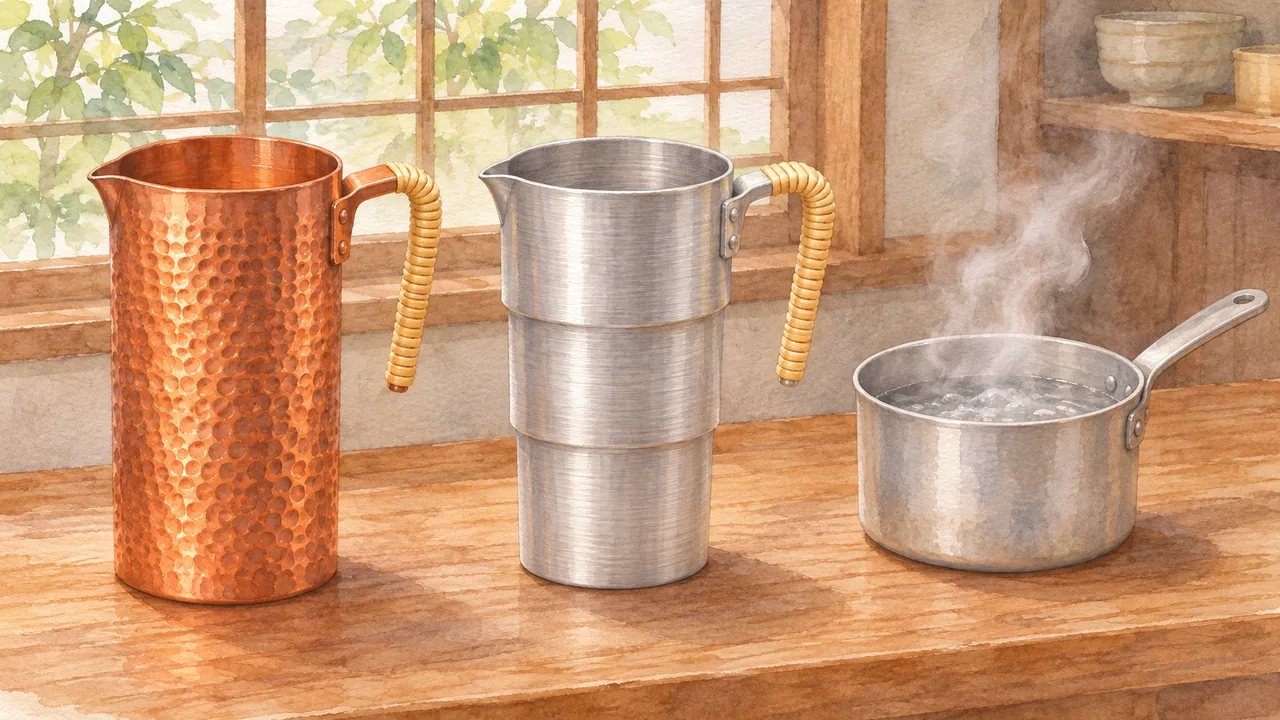
| Material | Warms | Why choose it | Watch out for |
|---|---|---|---|
| Tin | Faster than glass or ceramic | Said to make sake taste rounder. Does not rust | Soft, with a low melting point. No flame, microwave or dishwasher |
| Copper | Very fast | Hits the water's temperature quickly. Darkens with use | The body gets hot. Hold the handle |
| Aluminum | Fast | Light and cheap. The izakaya standard | Purely practical looks |
| Glass | Slower than metal | You can see the sake. Also works for tea or dashi | Lay a cloth on the bottom of the pan |
For warming sake well, start with tin or copper. If you also want something handsome to pour from at the table, choose glass.
3. Japanese Chirori You Can Buy Outside Japan
Asahi Copper Sake Warmer (Tanpo) CNE41
For fast, even warming without paying craft prices. A copper body lined inside with tin, and a brass handle wrapped in cane. It holds about 330 ml (11 fl oz) and weighs about 152 g, finished in a dark bronze tone. Japanese buyers say it warms very quickly and evenly. It is light enough to float as it empties, so hold it down for the last cup's worth.
Asahi Copper Sake Warmer (Tanpo) 330ml CNE41
Loading product details…
Hirota Glass Square Chirori 154-SLF
For a chirori you put on the table. Hirota Glass, founded in Tokyo in 1899 and one of the city's oldest glassmakers, took the chirori, traditionally a metal pot, and made it in heat-resistant borosilicate glass so you can see the sake. Square glass pots are rare, and this one stands out on the table. It holds 450 ml (15.2 fl oz) with its inner core for ice, which chills cold sake without watering it down. For hot sake, warm it on a cloth in a pan of hot water. The coated metal lid does not hold smells, so it doubles as a pot for tea or dashi.
Hirota Glass Square Chirori 154-SLF 450ml
Loading product details…
Wahei Freiz Aluminum Sake Warmer Tanpo No. 2
For the plain aluminum warmer you see behind izakaya counters. Aluminum warms fast and weighs almost nothing. The No. 2 holds 350 ml, enough for two go (a go is the traditional sake measure of 180 ml / 6 fl oz). At this price, it is the easy way to find out whether warming sake in a chirori suits you.
Wahei Freiz Aluminum Sake Warmer Tanpo No. 2 350ml
Loading product details…
4. In Japan: Tin from Three Regions and Hand-Hammered Copper
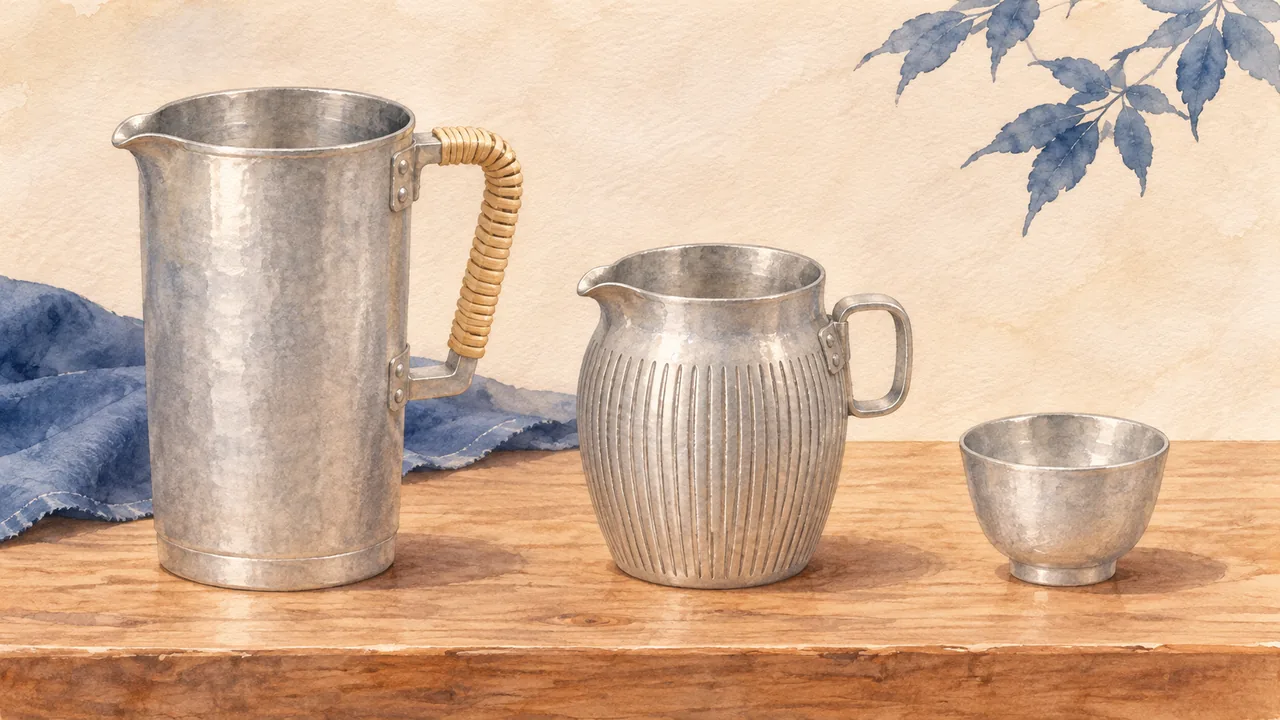
We couldn't find these on Amazon.com; look for them in Japan or through Japanese online stores and proxy shopping services.
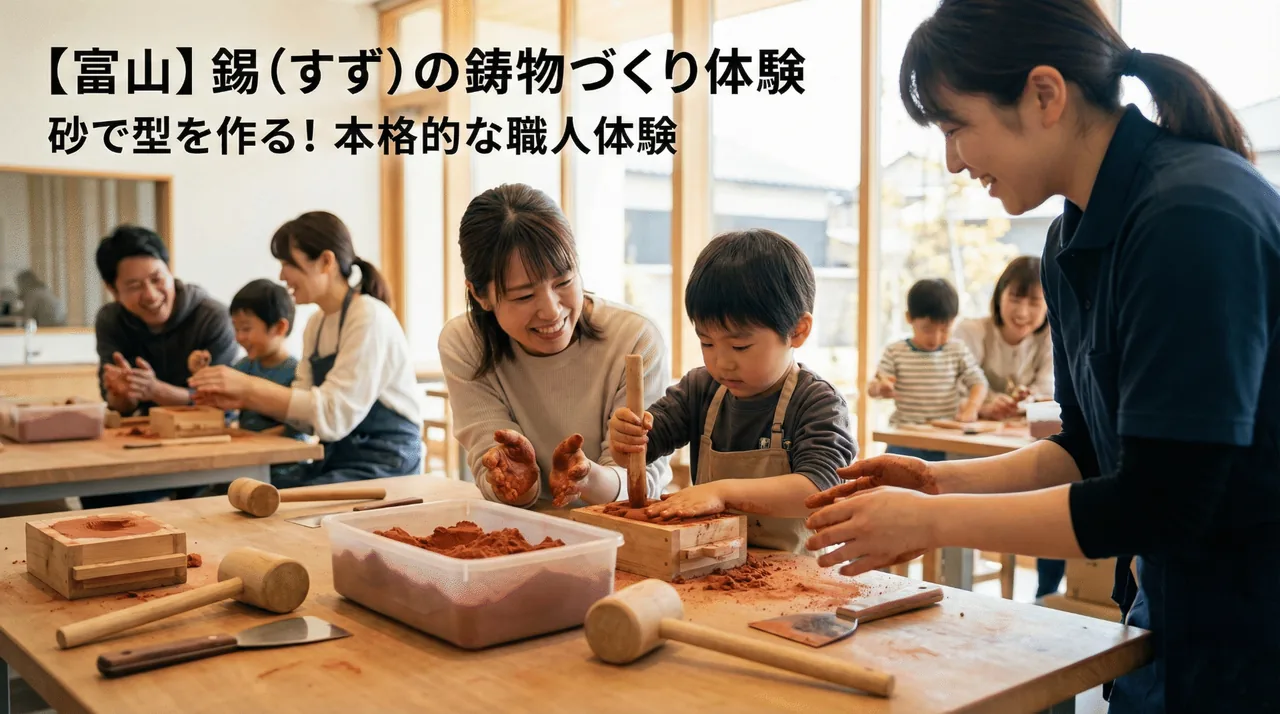
- Nousaku Chirori S (Takaoka, Toyama): Nousaku, founded in 1916, casts 100% tin in its own Takaoka factory, from design through manufacturing. The S holds 245 ml, about right for one go.
- Osaka Suzuki "Chirori" (Osaka): its tinware is designated a national traditional craft, Osaka Naniwa Suzuki. Because tin is soft and can dent over the years, the company repairs its pieces for a fee, so they last 20 or 30 years.
- Satsuma Suzuki chirori (Kirishima, Kagoshima): turned and shaped by hand, with fine vertical grooves that add surface area and help the heat through. Drop it in ice water in summer for cold sake.
- Shinkodo hand-hammered copper chirori (Tsubame, Niigata): a craftsman hammers marks into the copper right up to the rim. The extra surface means it reaches the water's temperature almost at once; set the water at 40°C (104°F) and the sake follows. Tin-lined inside.
5. How to Warm Sake in a Chirori
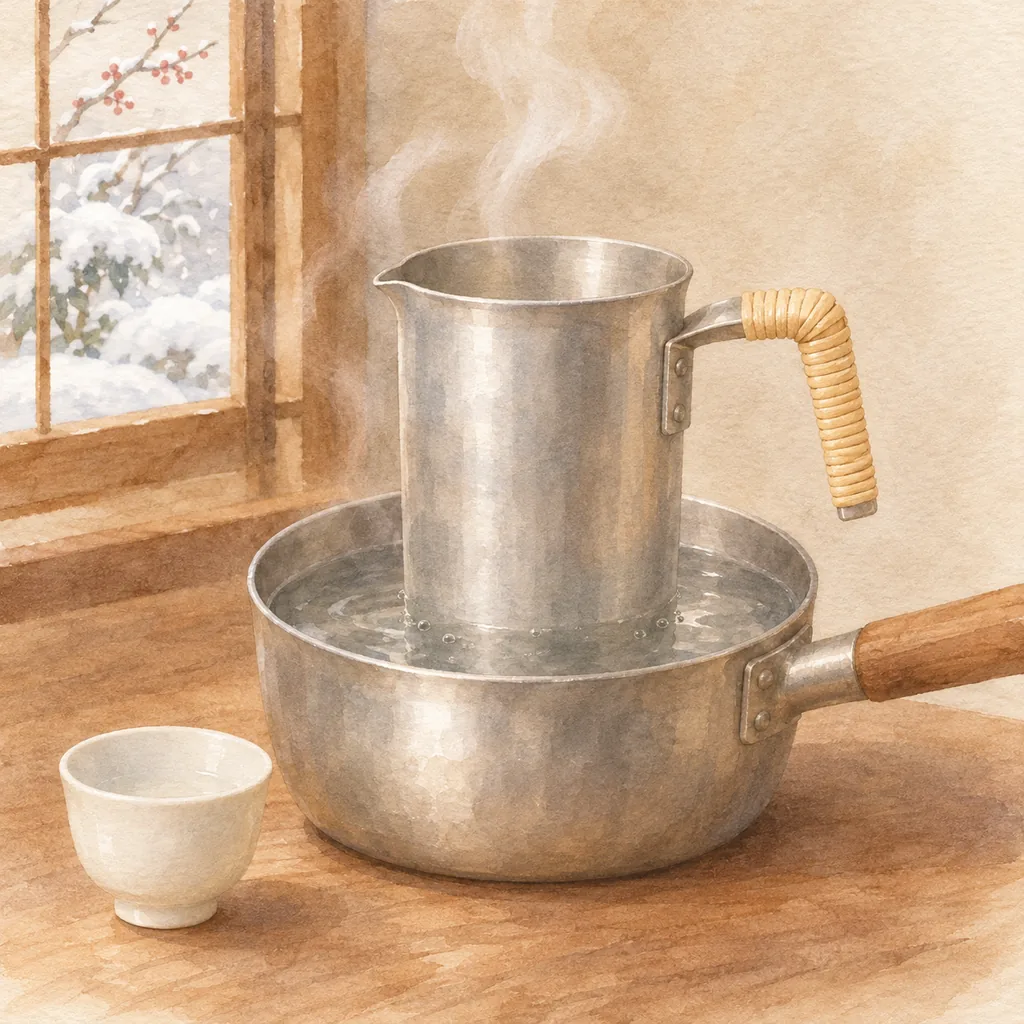
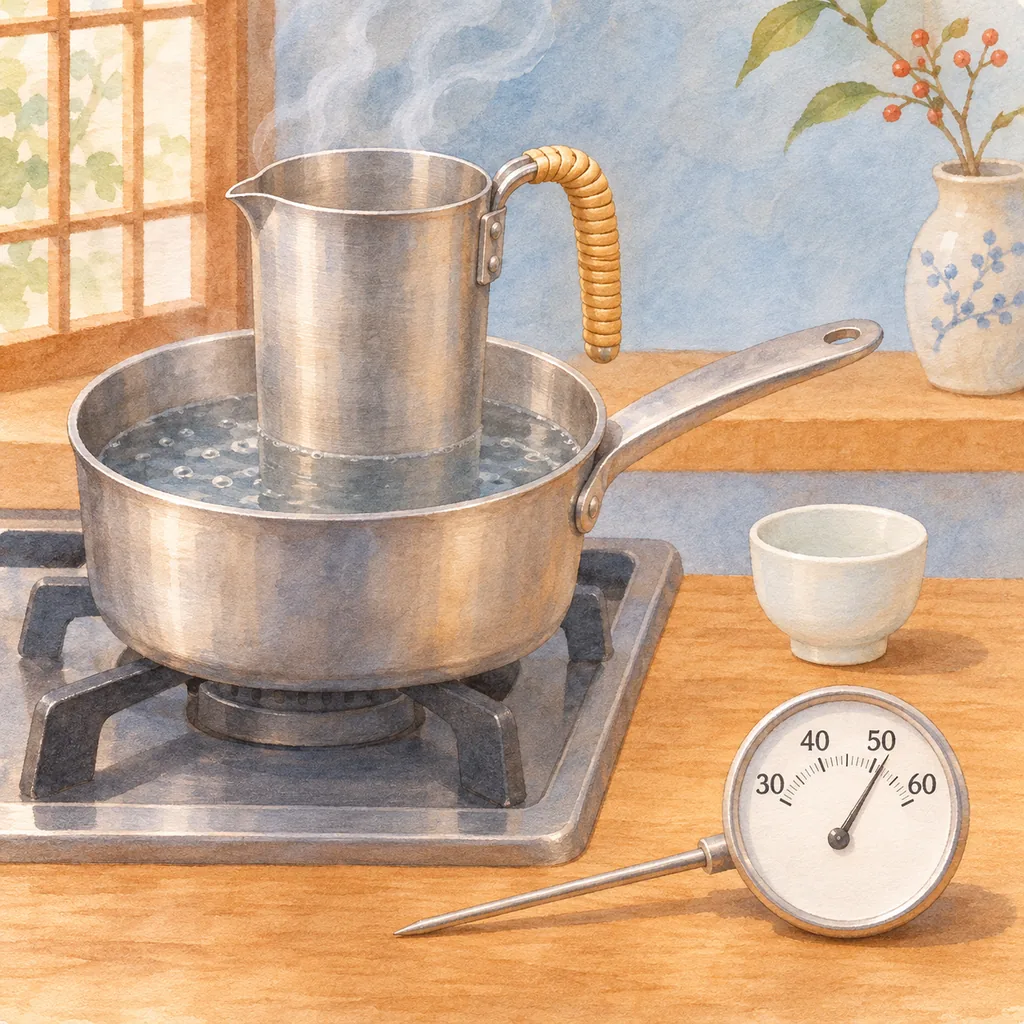
- Bring a pan of water to a boil, then turn off the heat. Never put a chirori on a flame; tin in particular has a low melting point.
- Pour the sake into the chirori and stand it in the water. For glass, lay a cloth on the bottom of the pan first.
- In tin or copper, one go (180 ml) of room-temperature sake takes about 2 to 3 minutes. Glass takes a little longer.
- Lift it out by the handle and pour straight into the cup. The body will be hot.
A thermometer lets you aim: nurukan (lukewarm) is about 40°C (104°F), jokan about 45°C (113°F), and atsukan (hot) about 50°C (122°F).
A chirori works for cold sake too: stand a metal one in ice water and it chills in moments. Hot sake in winter, cold in summer.
6. Frequently Asked Questions
What is the difference between a chirori and a tokkuri?
A chirori is for warming; a tokkuri is a flask for pouring. The chirori is metal and goes into hot water. Edo-era taverns warmed sake in a chirori and poured from it directly; the ceramic tokkuri came into use later in the period.
Is a tanpo the same thing as a chirori?
Yes. In the Edo period, people in Kyoto and Osaka called the chirori a tanpo. Japanese stores sell them under both names today, often as sake tanpo.
Can I put a chirori on the stove or in the microwave?
No to both. Warm it in water that is off the heat. Tin melts at a low temperature, so keep it away from flames. Metal chirori cannot go in the microwave, and most should not go in the dishwasher.
Does a tin chirori really change the taste?
Tin has long been said to soften sake and take the edge off. It has long been a favorite metal for sake vessels in Japan, and Japanese owners often describe the sake as rounder.
What size should I buy?
For one or two people, a one-go size is easiest. A go is 180 ml (6 fl oz), so look for a chirori of about 200 to 300 ml when full. Larger ones can be awkward in a home saucepan.
How do I look after a tin or copper chirori?
Wash with mild detergent and dry it straight away. Metal polish and steel wool will scratch it, and acidic drinks should not be left standing in it. Copper slowly darkens and gains a glow with use.
Final Thoughts: Warm It Your Way, Pour It Straight
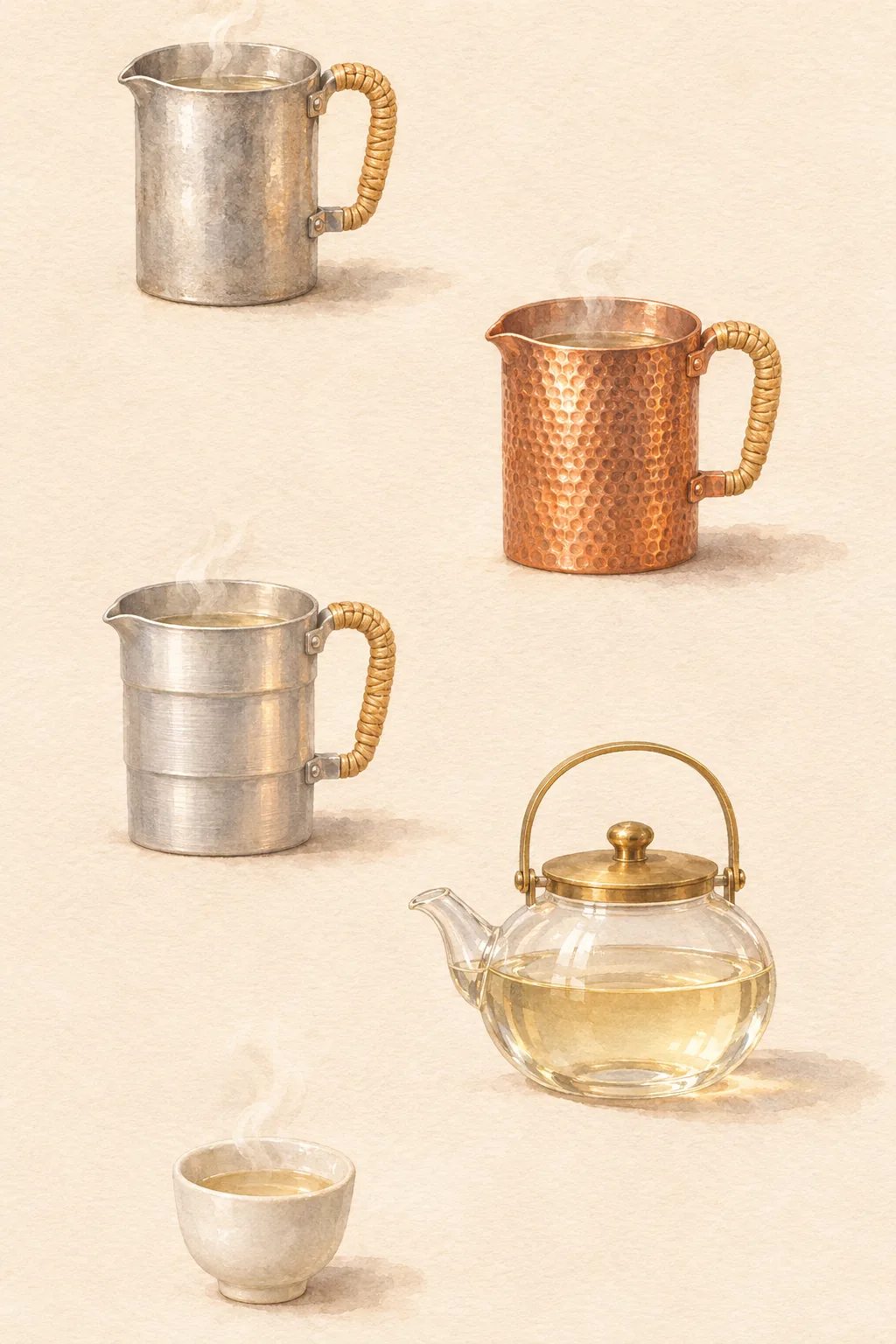
Outside Japan, Asahi's tin-lined copper warmer is the quick, even one, Hirota's glass chirori is the one to bring to the table, and the Wahei Freiz aluminum tanpo is the everyday izakaya classic.
If you can buy from Japan, look at the tin of Nousaku, Osaka Suzuki and Satsuma, and Shinkodo's copper, hammered by hand up to the rim.
Warm it in hot water and pour it straight into the cup, the way Edo taverns did.

Japanese Sake Cups by Material: Nousaku Tin vs Usuhari Glass
How to Choose Sake: Kimoto, Yamahai and Rice Polishing