Working from home and can't get your brain into focus mode?
Feeling like the air in your room has gone stale?
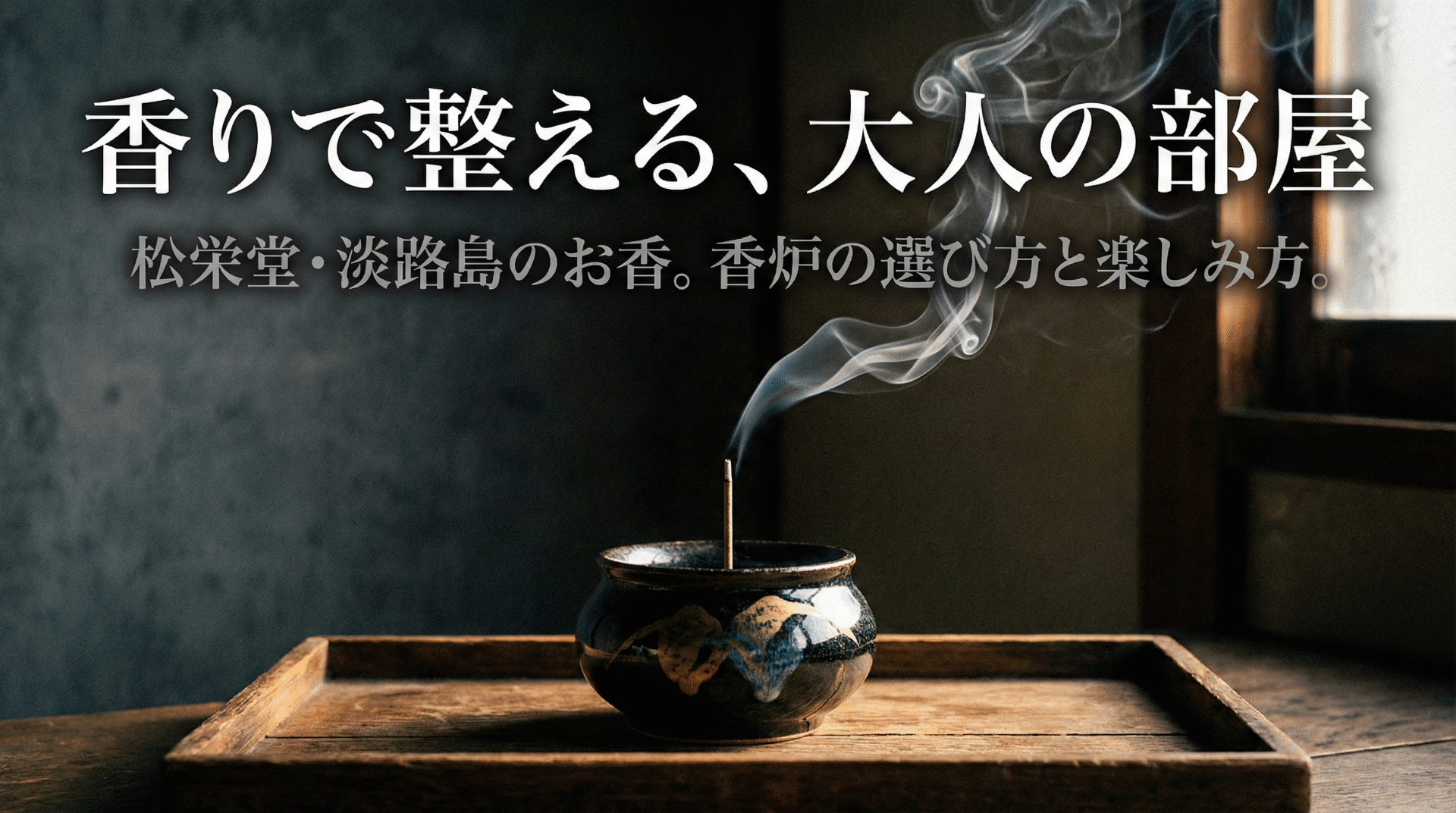
One stick of Japanese incense (okoh) is often all it takes to reset the space.
Light the tip, fan out the flame, and within seconds the rising smoke begins to clear your head — switching it into focus or wind-down mode depending on the scent you choose.
Japanese people have long described this as "purifying the room," and the ritual has only grown more relevant in an era of blurred home-work boundaries.
This guide covers how to choose Japanese incense without getting overwhelmed — from the two key production regions (Awaji Island and Kyoto) to scent types, shapes, and the little techniques that make the whole experience better.
Quick Reference: Incense Shapes at a Glance
| Shape | How to Use | Burn Time | Notes |
|---|---|---|---|
| Stick (senko) | Stand upright in a holder | ~15–30 min | Most common; even, consistent fragrance |
| Cone | Place directly on an ash plate | ~10–15 min | Scent intensifies toward the end; minimal ash scatter |
| Coil (banka) | Hang or rest on a dedicated stand | ~1–2+ hours | Long burn; suited for large rooms or open spaces |
| Match-style (hibi type) | Strike on box; rest on fireproof mat | ~10 min | No holder needed; portable; great for desks |
1. Why Incense Works: Focus, Relaxation & the Sense of "Purification"
Why has incense crossed from temples into modern apartments, home offices, and hotel lobbies?
Scent Takes a Direct Route to Your Emotional Brain
Among all five senses, smell is the only one that bypasses the thinking brain and connects directly to the limbic system — the part that governs emotion and instinct.
That's why a familiar scent can shift your mood before you've even registered what you've smelled.
Use a sharp, spiced scent for work and a warm, woody sandalwood for evenings, and you can create a genuine on/off boundary inside your own home — without changing rooms.
The visual of smoke drifting through a space also carries a strong psychological effect: many people describe the room as feeling "cleared" once the smoke has settled.

2. Two Production Regions: Awaji Island vs. Kyoto
Japanese incense production is concentrated in two very different places.
Checking the back of the packaging for the production region is one of the easiest ways to understand what you're buying.
| Region | Character & Strengths | Best For |
|---|---|---|
| Awaji Island (Hyogo) ~70% of domestic production |
Craftsmanship and innovation. The island's consistent westerly winds made it ideal for drying incense. Known for quality at scale — and for pioneering modern formats like hibi's match-style incense. |
Those looking for reliable quality, or modern takes on the traditional format. |
| Kyoto The center of Japan's incense culture |
Tradition and blending. Heir to the court nobility's kneaded incense (takimono) culture. Known for complex, layered blends developed over centuries using closely guarded recipes. |
Those who want the depth of traditional Japanese fragrance — the scent of a temple or old inn. |
3. Choosing a Scent: Sandalwood for Beginners, Agarwood for Depth
Traditional Japanese incense is built around fragrant woods (koh-boku).
Two types cover most of what you'll encounter.
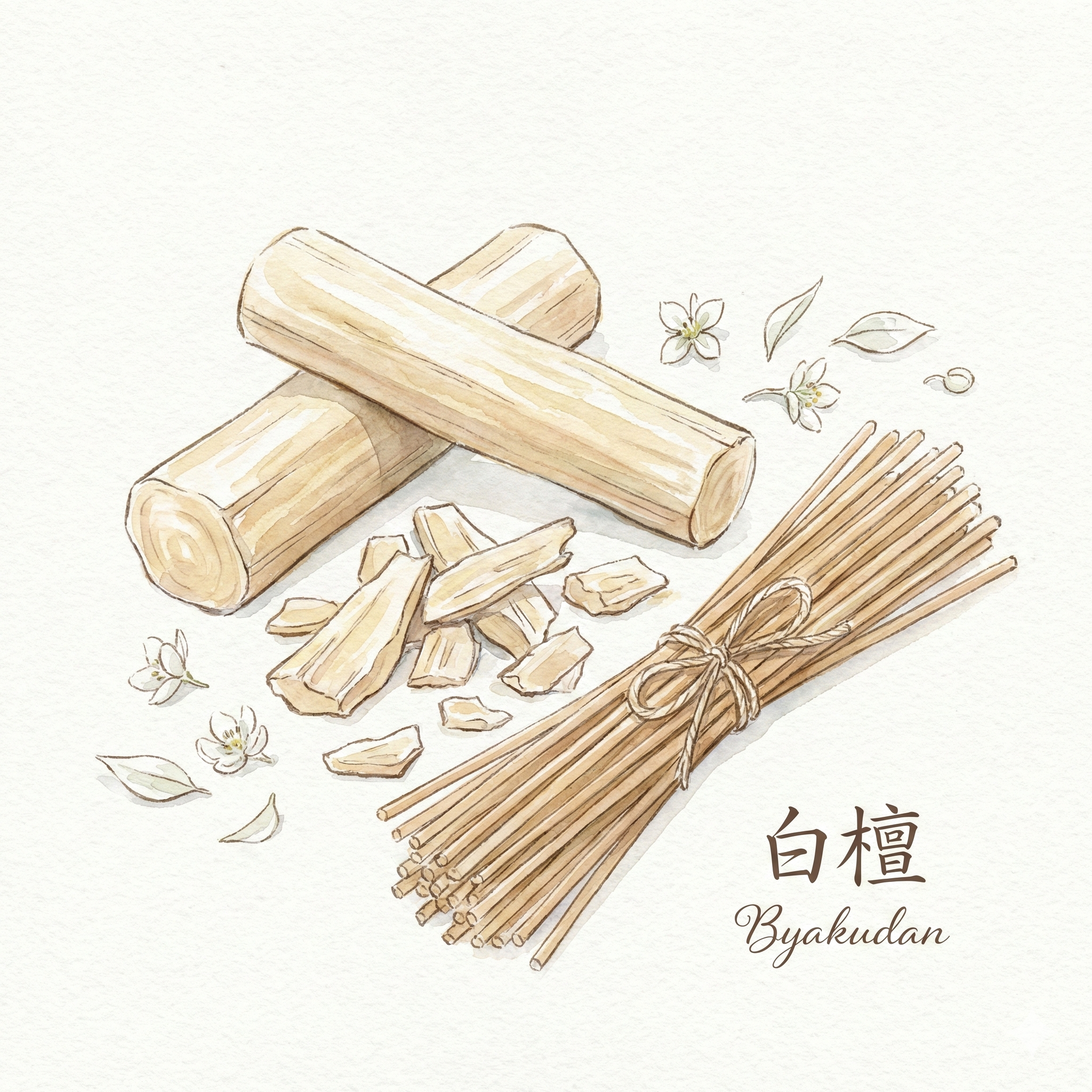
① Byakudan — Sandalwood: The Beginner's First Choice
Warm, sweet, and approachable — the most widely loved incense wood.
Even at room temperature, sandalwood carries a faint natural fragrance. Burned, it opens into a gentle, warm sweetness that most people find instantly relaxing.
Familiar enough that it's used in fans and cosmetics — unlikely to polarize anyone, which also makes it an excellent gift.
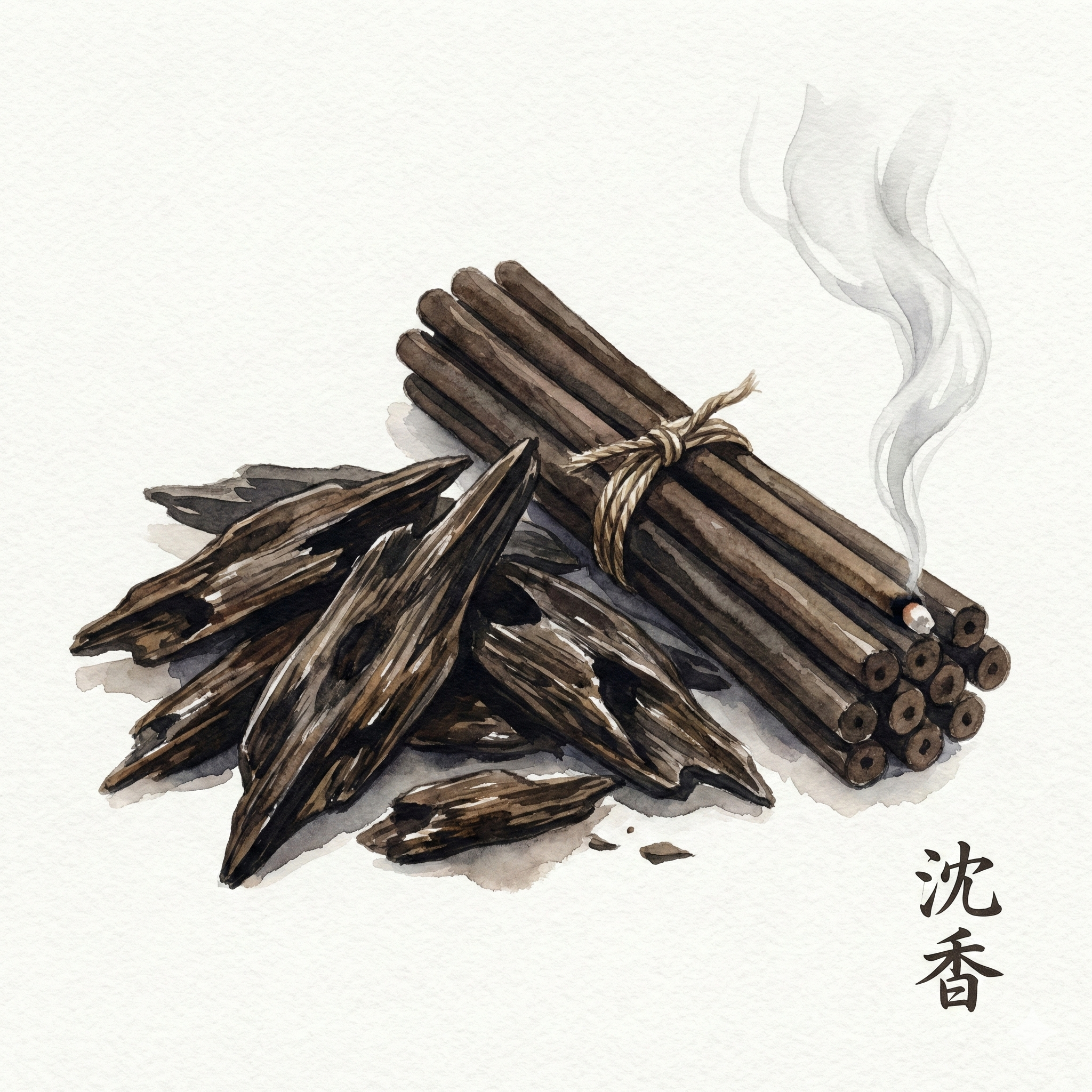
② Jinkoh — Agarwood: The Contemplative Wood
Intermediate to advanced — deep, still, and mysterious.
Agarwood (jinko) is resin that has accumulated inside a tree over many decades, forming a precious and rare material.
Spicy, bitter, and sweet all at once — an almost indescribable complexity that samurai and tea masters have prized for centuries.
Ideal for meditation or moments when you want stillness. The rarest grade, kara (kyara), commands extraordinary prices.
4. Choosing a Shape: Stick, Cone, and Coil Burn Times
The shape of incense isn't an aesthetic choice — it's a functional one.
Choose based on how long you want to fragrance the space, and how large it is.
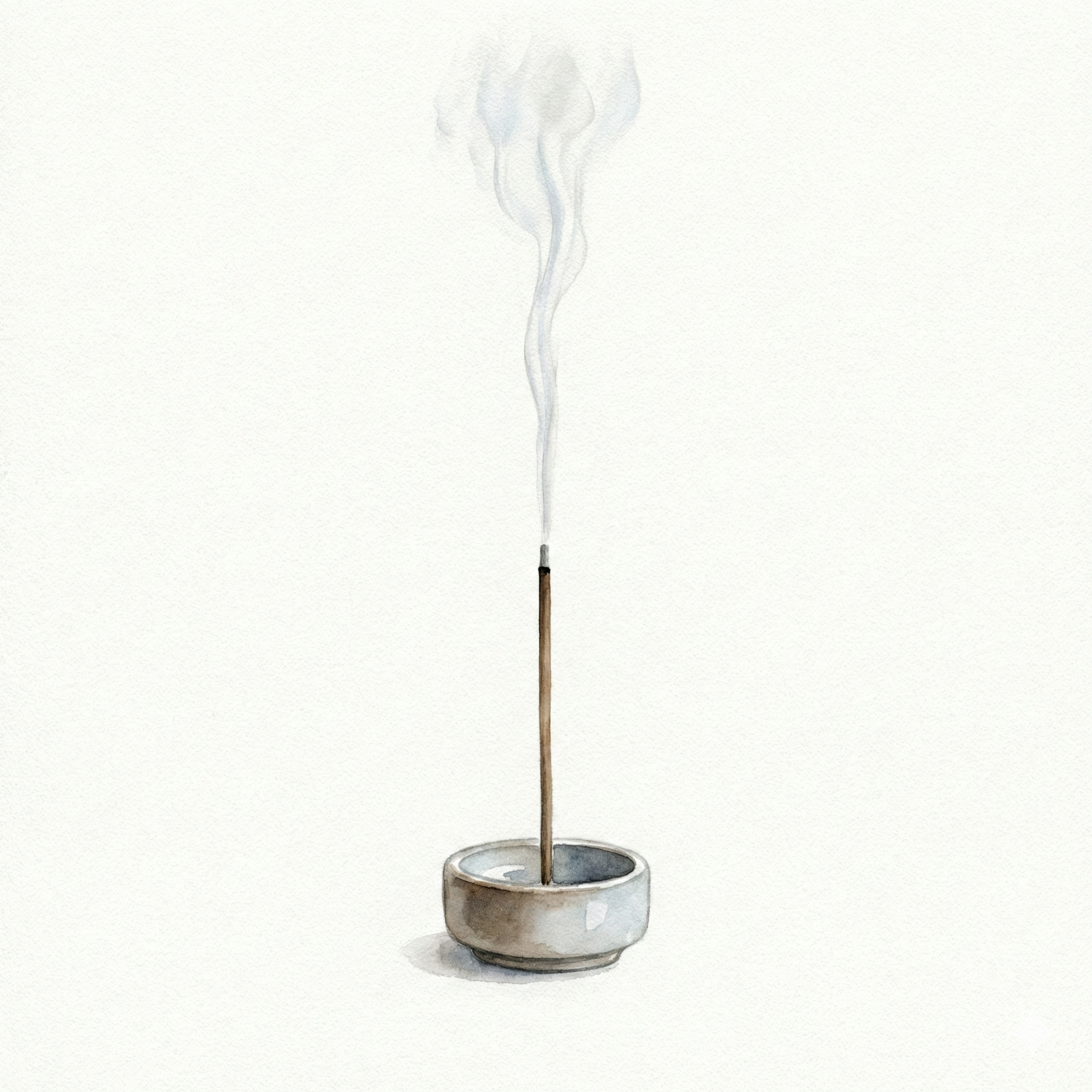
Stick (Senko)
Burn time: ~15–30 minutes (standard length)
The most versatile and widely used form. Consistent burn surface means consistent fragrance from start to finish.
Suited for a 10–16 m² (100–170 sq ft) room, or any short break that needs a reset.
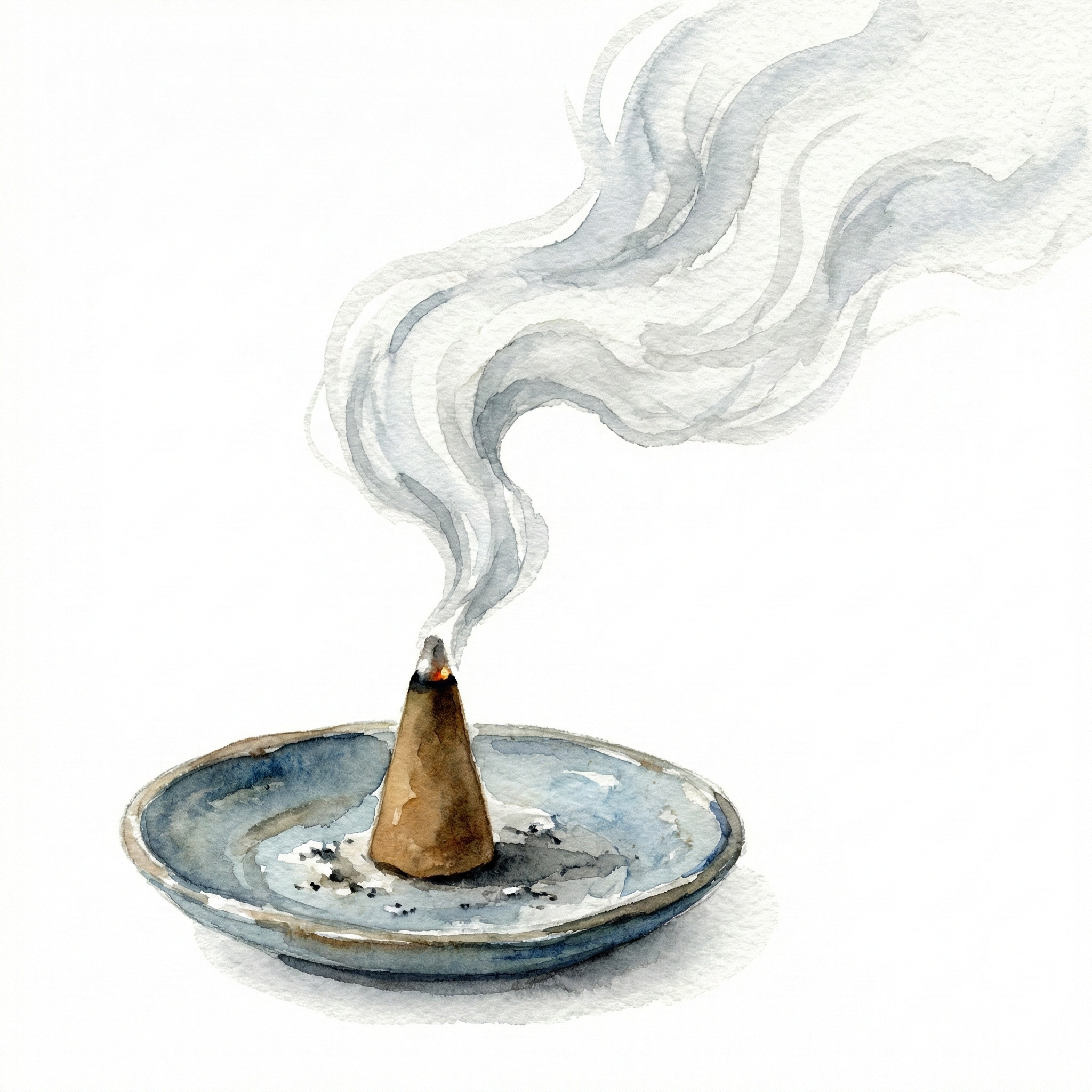
Cone
Burn time: ~10–15 minutes
Gets wider toward the base, so fragrance intensifies in the final minutes — a burst of scent at the end.
Good for a large living room or when you want to quickly neutralize odors at the entrance.
A practical bonus: ash stays compact and contained.
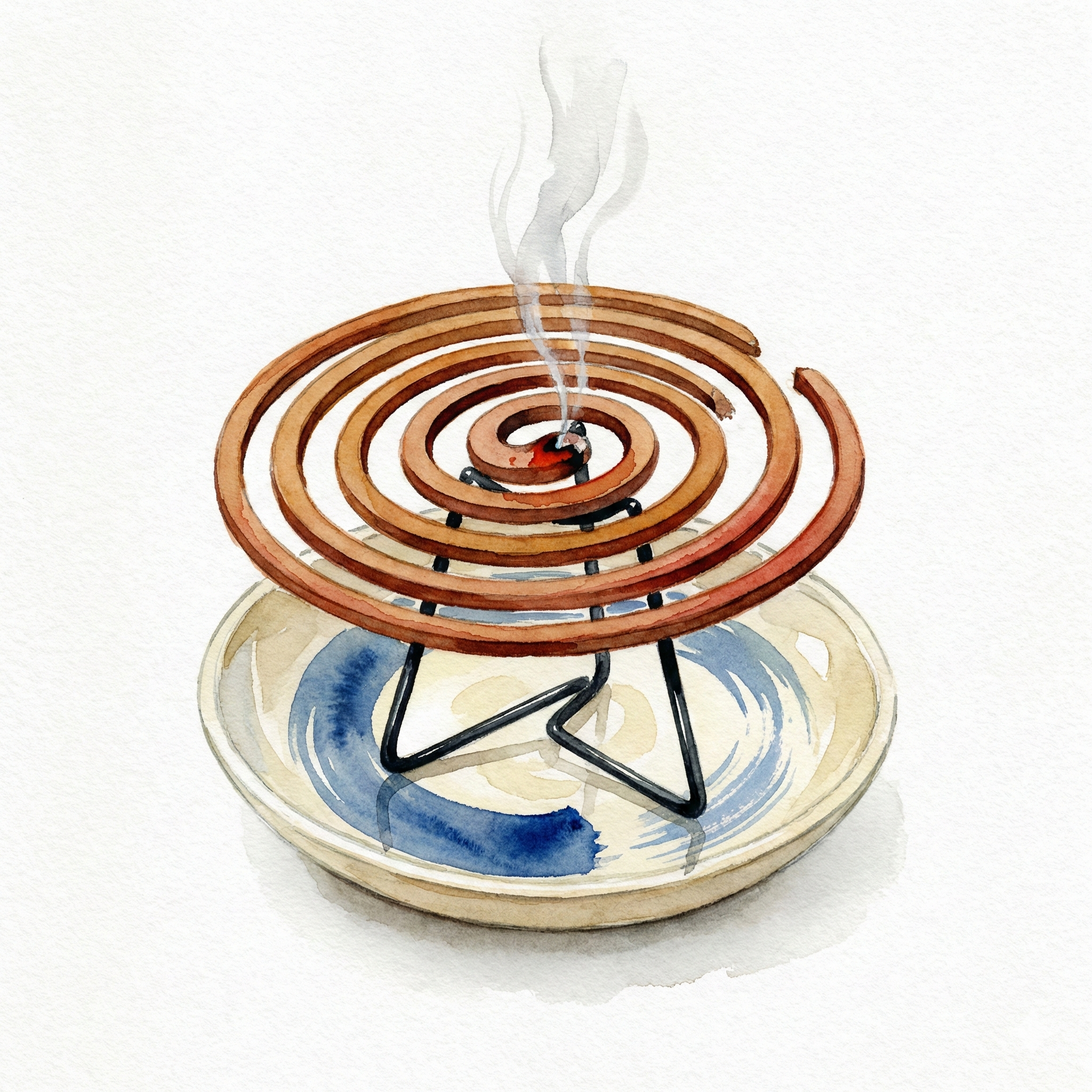
Coil (Banka)
Burn time: ~1–2+ hours
Long-lasting and suited to large spaces or anywhere with airflow.
Useful for extended work sessions, gatherings, or rooms where you want a sustained background fragrance.
5. Incense Holders: Cast Iron, Brass, and Ceramic Options
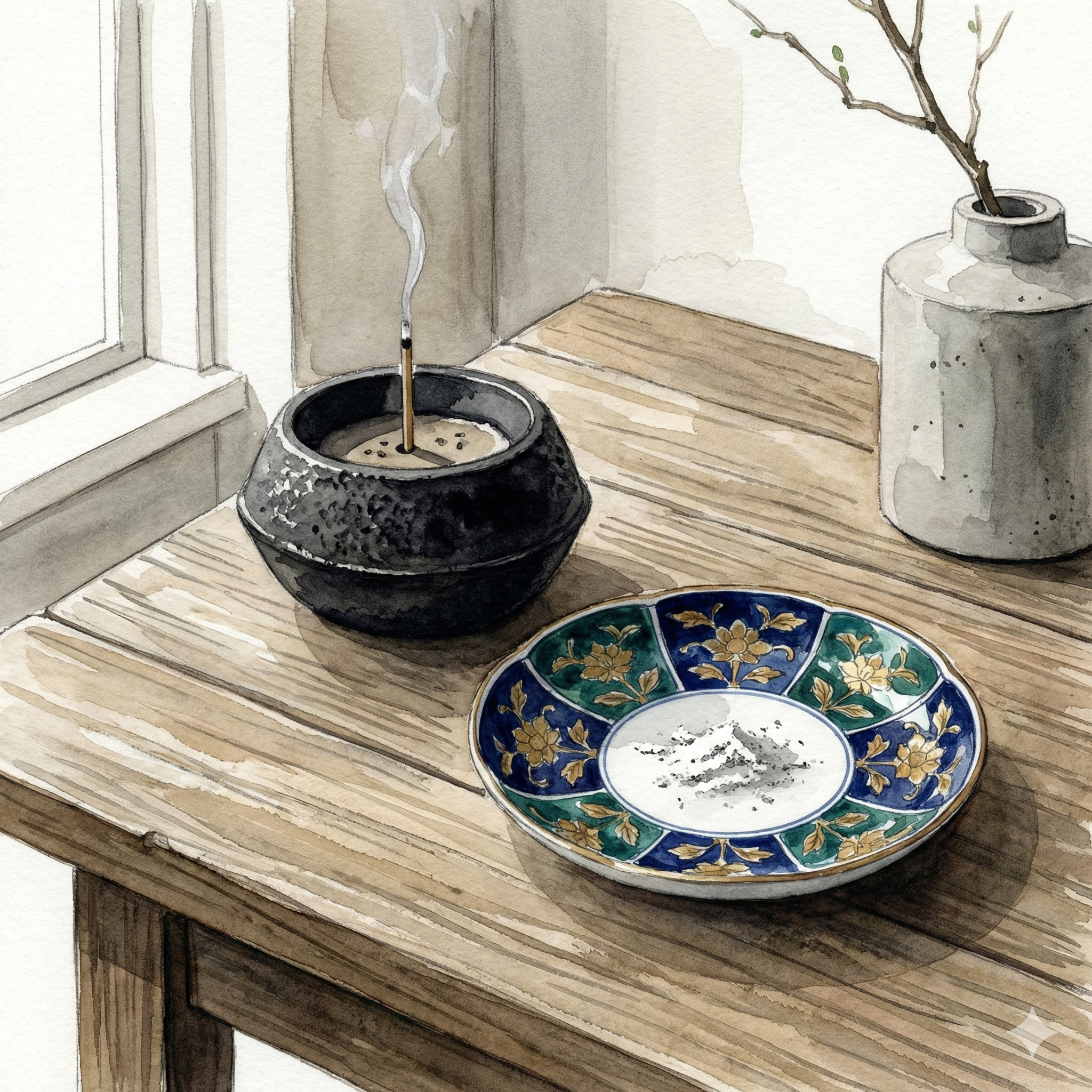
You'll need a holder (ko-date) and an ash plate (ko-zara) to burn incense properly.
This is where Japanese craft quietly shines.
Choosing a Material Worth Keeping
Cast iron or brass: Substantial and modern-feeling. Heat-resistant and washable — genuinely lifelong pieces that work in contemporary interiors.
Ceramic (Kyoyaki, Shigaraki): Warm and organic. Suits traditional rooms or any space where you want texture. Easy to rinse clean.
You don't need anything expensive to start. A small plate you already own plus an inexpensive metal holder works fine — the experience is in the incense itself, not the stand.
6. How to Burn Incense: Lighting, Placement, Ventilation & Ash
"Will it cause a fire?" "What do I do with the ash?"
Here are the four steps that answer every beginner concern.
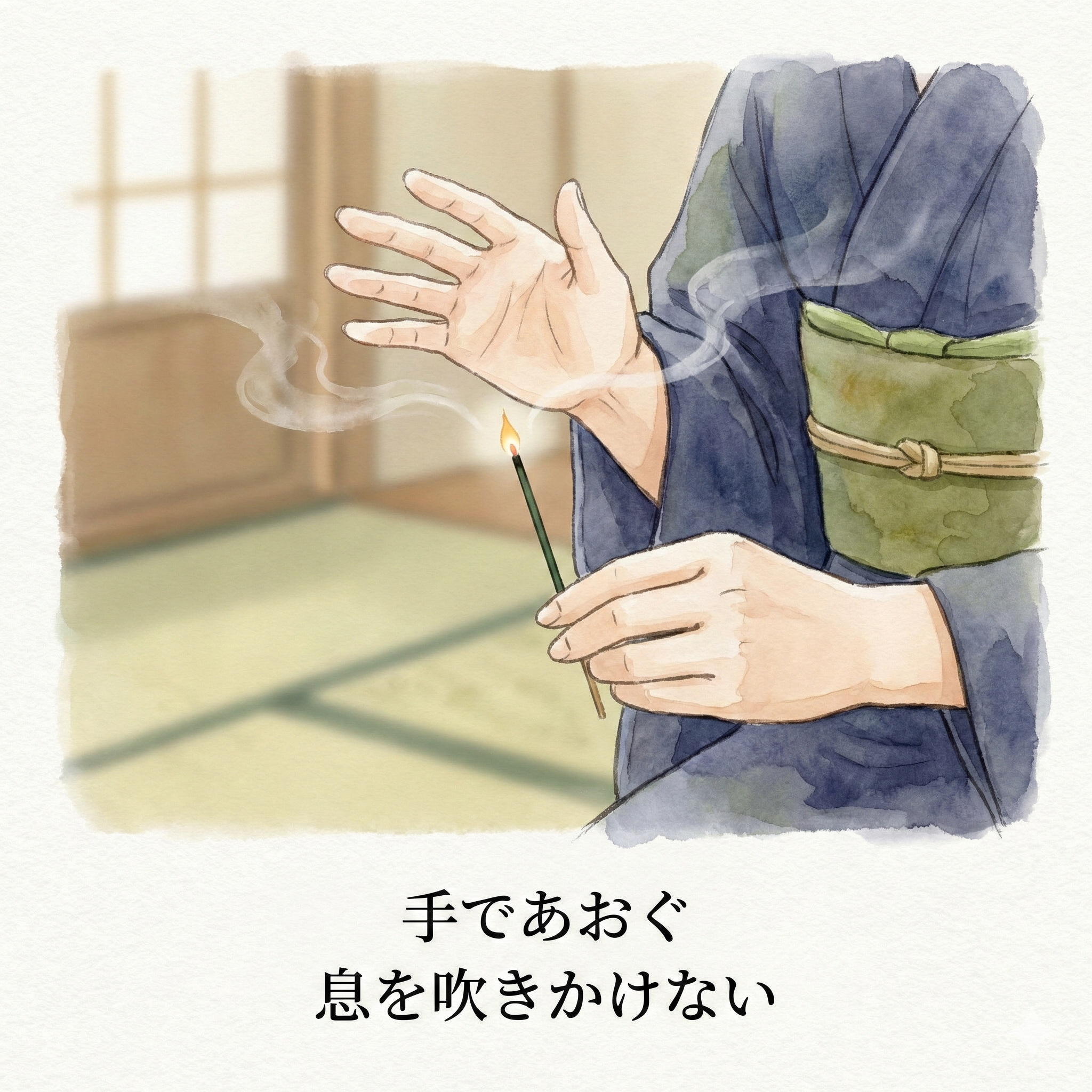
Step 1: Light, Then Fan Out the Flame
Hold the tip to a lighter or match until it catches.
Once lit, do not blow it out with your mouth — in Buddhist tradition, breath is considered impure, and the etiquette has stuck even outside religious contexts.
Instead, fan it gently with your hand, or give the stick a quick vertical flick. You want a glowing ember, not a flame.
Step 2: Set in the Holder at the Right Angle
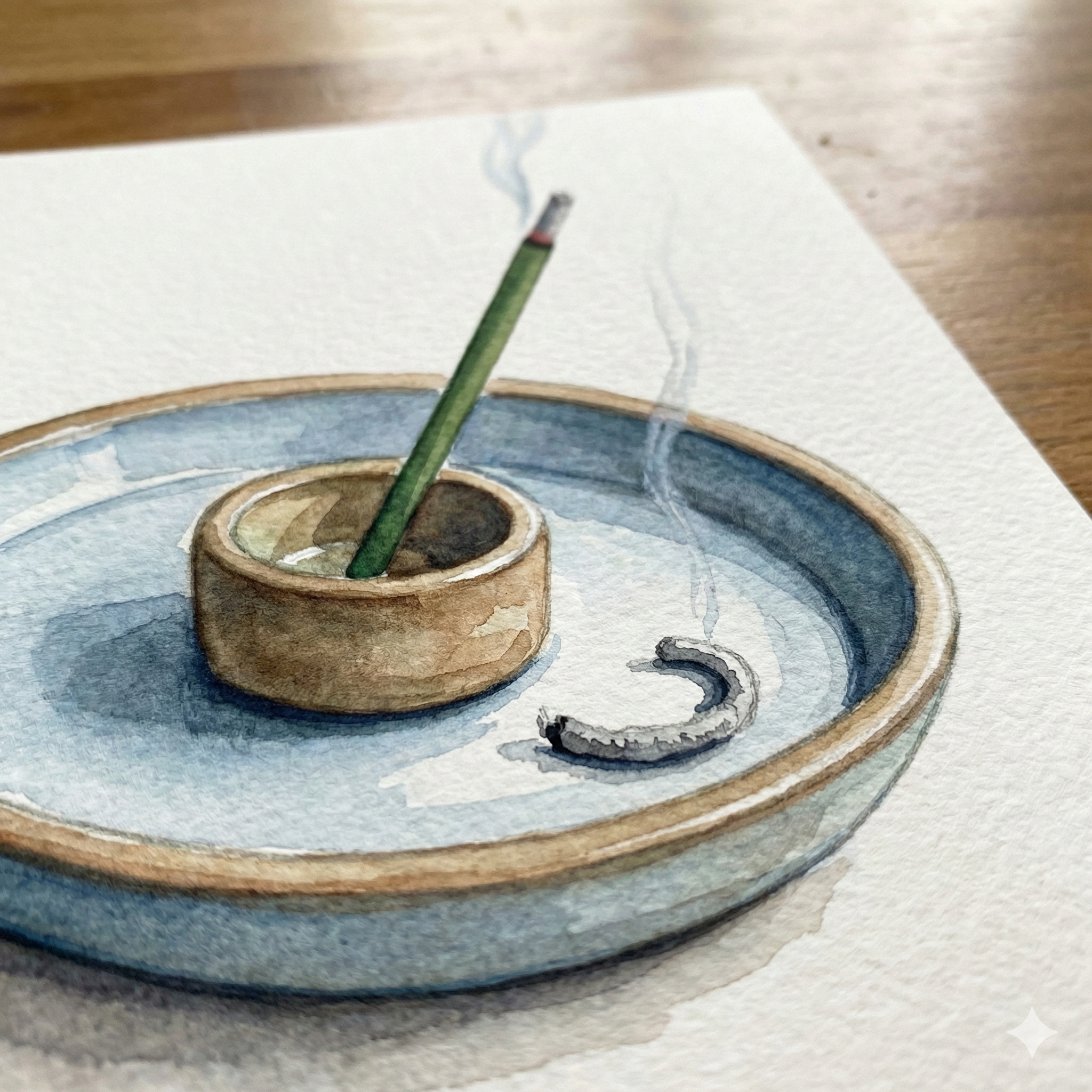
Place the stick vertically or at a slight angle in the holder.
Before settling in, confirm that all ash will fall inside the plate — not off the edge.
Ash landing on a table can scorch or stain the surface.
Step 3: Keep the Room Ventilated
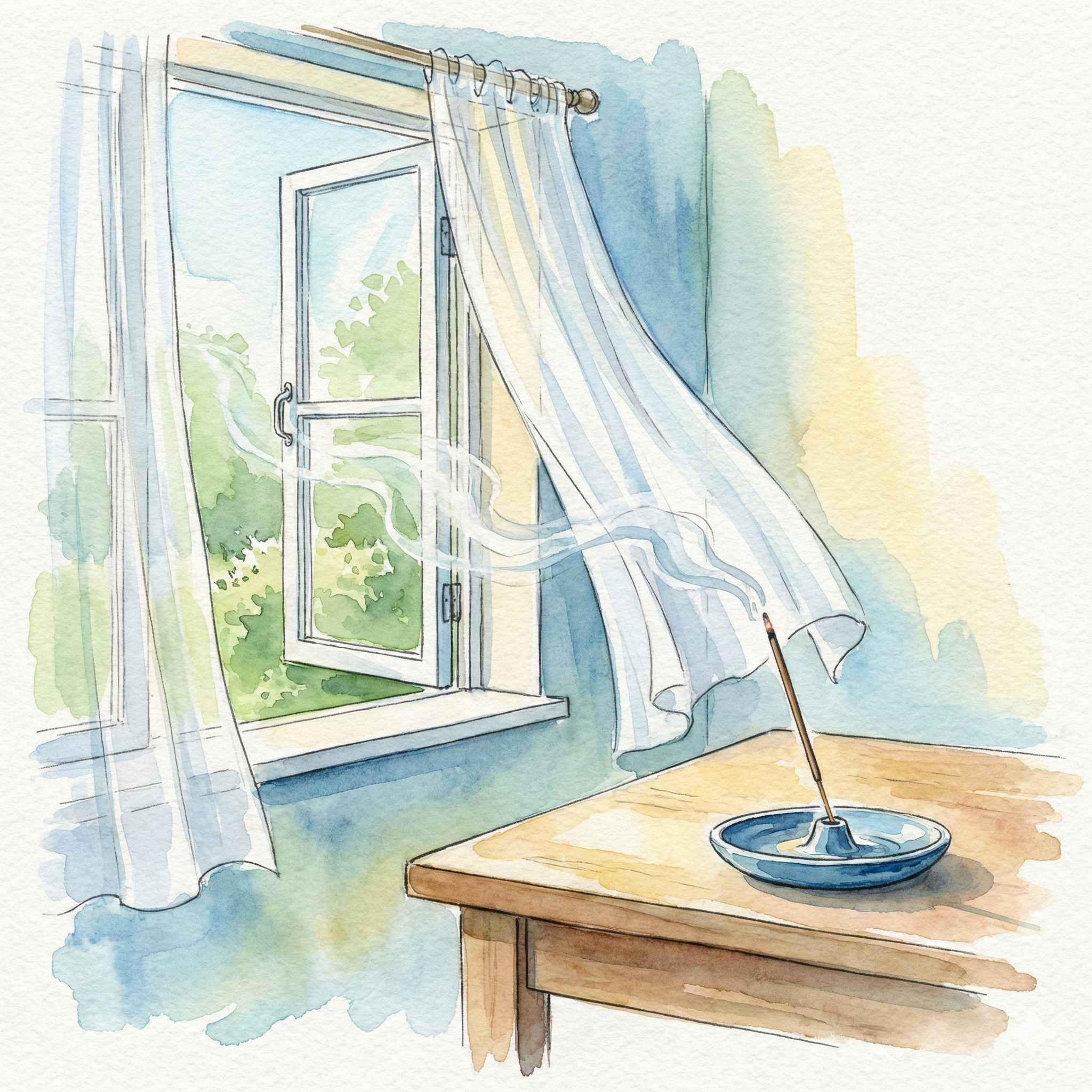
A sealed room with incense burning will turn smoky and stuffy quickly.
Crack a window or run a ventilation fan to create a gentle airflow — this actually helps the scent disperse more evenly through the space rather than pooling in one spot.
Step 4: Dispose of Ash Safely
Wait for the ash to fully cool before discarding.
If you're unsure whether it's out, add a small amount of water before placing it in the burnable waste bin.
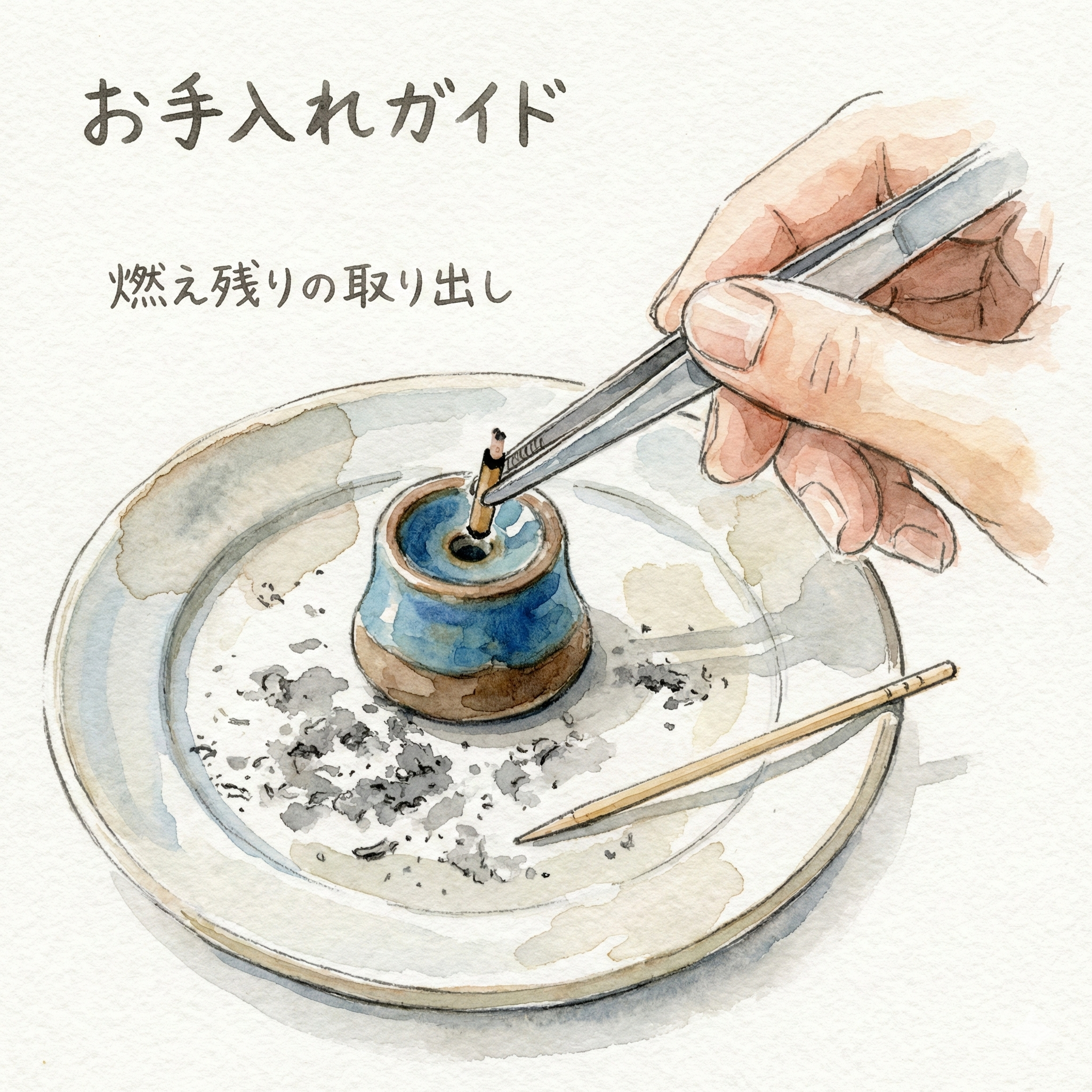
Any short unburned stub left in the holder can be pushed out with tweezers or a toothpick.
7. Three Top Japanese Incense Brands: Shoyeido, hibi, Kunjudo
Whether you're buying for yourself or as a gift, these three brands cover the full range — traditional, modern, and in between.
Shoyeido — "Horin" Incense Assortment (Kyoto, est. 1705)
The scent of Kyoto's finest inns and restaurants.
Over 300 years in business. Their "Horin" series includes Shirakawa, Nijo, and other blends rooted in traditional sandalwood but carrying a modern, subtly sweet character that is broadly loved. Once you've smelled it, it's hard to forget. The assortment set includes a small holder so you can start immediately after opening. The most gift-friendly of the three — elegant packaging and a name that carries genuine weight.
- Type
- Stick incense (5 scents, 20 sticks + holder)
- Made in
- Kyoto, Japan
- Best for
- Traditional fragrance lovers; impressive gifts
- Price range
- $15–$25
hibi — 10 Minutes Aroma (Awaji Island / Harima)
No lighter needed. Strike it like a match.
Born from a collaboration between Awaji Island incense makers and a Harima matchstick manufacturer. Strike it against the box, rest it on the included fireproof mat, and it burns for about ten minutes — no holder, no ceremony, no hassle. Scents lean toward modern aromatherapy (sandalwood, lemongrass, lavender), making it at home on a Western-style desk as easily as a tatami room. The most approachable entry point for incense beginners.
- Type
- Match-style incense (no lighter needed)
- Made in
- Hyogo (Awaji Island), Japan
- Best for
- Beginners; desk use; those without a holder
- Price range
- $12–$20 (box of 30)
Kunjudo — HA KO Paper Leaf Incense Set (Awaji Island)
Shaped like fallen leaves. Good Design Award winner.
These leaf-shaped washi paper incense pieces can be used two ways: placed in a dish for gentle ambient fragrance, or lit and burned for a fuller scent. Tucked into a book as a bookmark, they release a faint scent every time the pages are turned — a quietly charming everyday use. The set comes with a ceramic plate for immediate gifting. The most distinctive-looking gift of the three — immediately feels considered and unusual.
- Type
- Washi paper leaf incense + ceramic plate
- Made in
- Hyogo (Awaji Island), Japan
- Best for
- Design-conscious recipients; those who like subtle, everyday fragrance
- Price range
- $15–$25
8. Frequently Asked Questions
Will incense stain my apartment walls?
With proper ventilation, it shouldn't be a problem.
That said, burning large quantities daily in a sealed room over years could gradually yellow wallpaper — similar to cigarette smoke.
Burning one or two sticks a day with a window cracked is very unlikely to cause any visible staining that would matter at move-out.
If you're especially cautious, look for low-smoke (bisenkoh) varieties, which produce significantly less visible smoke.
Is incense safe around pets or infants?
It's best to avoid it in rooms with very young children or animals with acute senses.
Cats in particular may have difficulty metabolizing certain aromatic compounds — the same concern applies to essential oils.
If you want to burn incense in a household with pets, use a separate room with good ventilation, and keep the incense well out of reach to prevent accidental contact or ingestion.
Can I put out incense partway through and reuse it?
Yes.
To extinguish, pinch the burning end with a metal clip, or press it gently against the edge of the holder until the ember goes out. Avoid wetting it — a damp stick won't relight cleanly.
When you reuse it, snap off the charred black tip first for a cleaner burn.
Does incense expire?
No hard expiry date — but moisture is the enemy.
Store in a dry place and incense will keep for years. High-end agarwood-based incense is sometimes said to mellow beautifully with age, like wine.
Fruity or synthetic fragrance blends tend to lose their top notes faster, so use those within a year or two of opening.
Ash keeps scattering everywhere. What can I do?
The simplest fix is a larger ash plate.
For stick incense, the plate should be at least as long as the stick — otherwise ash will land outside it.
Alternatively, fill a wide mug with incense ash (ko-ro-bai) and stand the stick in that. The ash cushions the fall and keeps everything contained.
Final Thoughts: Learning to "Listen" to Fragrance
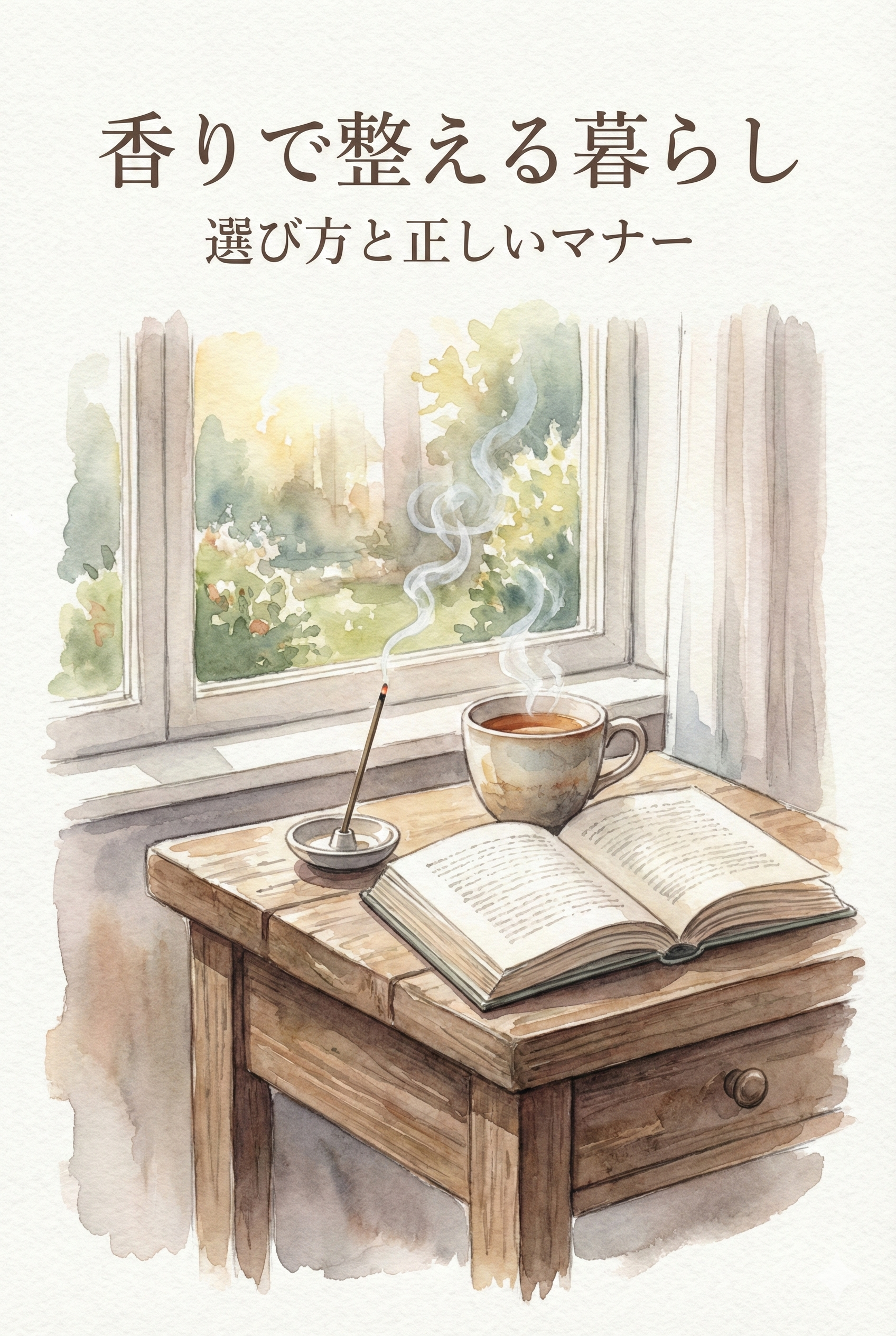
In the traditional art of kodo (the way of incense), fragrance isn't "smelled" — it's "listened to."
The idea is that a scent tells a story, and your job is simply to be still enough to hear it.
In a world that rarely gives you an excuse to put down your phone, fifteen minutes with a stick of good incense might be the most honest kind of break there is.
Start with one. Find the scent that shifts your room. Go from there.
Japanese Green Tea Gifts: Uji vs. Shizuoka and Top Brands

Matcha Sweets by Mail: Terrine, Daifuku & Ice Cream from Kyoto
