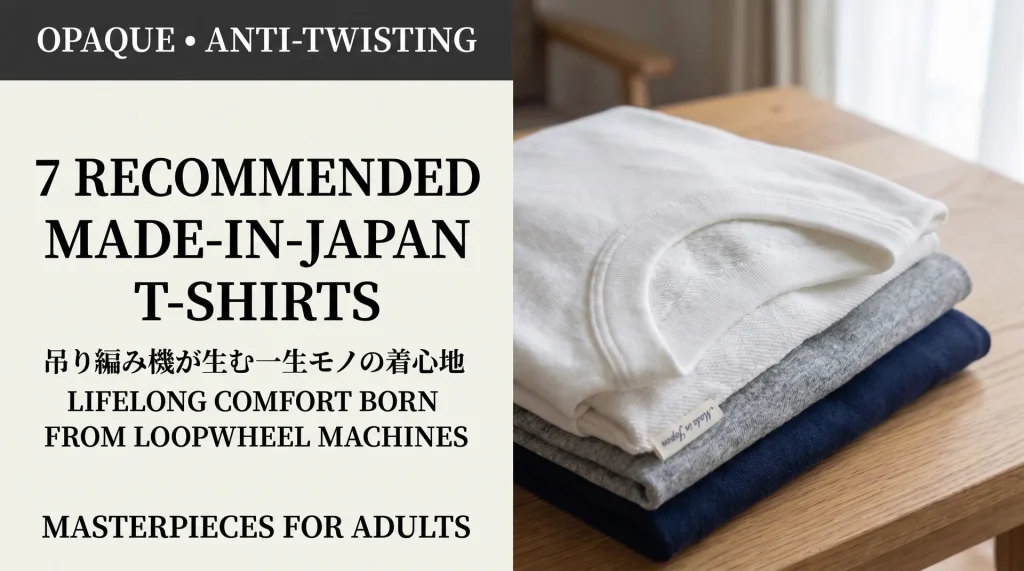
The seven Japanese T-shirt brands most worth buying are Loopwheeler, Jackman, KUME.JP, Entry SG, Tieasy,
BARNS OUTFITTERS, and FilMelange — makers of heavyweight loopwheel and dense-knit tees from Wakayama
and Fukui that hold their shape for years without going sheer.
Because one of the most basic standards for a man's T-shirt is simple: it should not be
see-through.
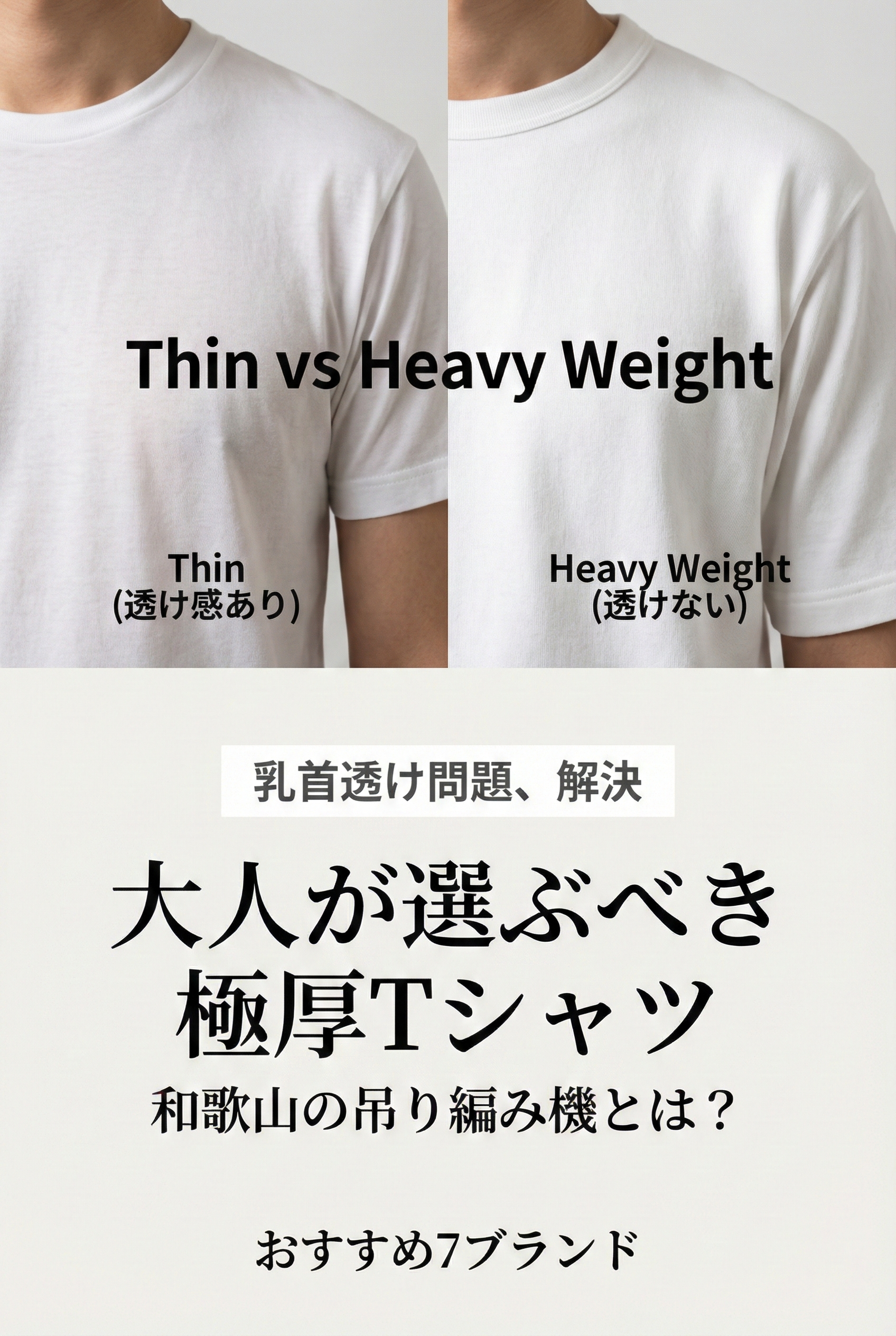
A lightweight tee might feel cool on a summer morning, but by noon it's showing through — and after a few washes, the neckline has stretched into a permanent slump that no amount of ironing fixes.
Japanese T-shirts operate by different rules.
Fabric knitted on loopwheel machines dating from the Meiji era — spinning slowly by gravity alone, filling each stitch with air — produces a softness indistinguishable from hand-knitting, combined with a durability that outlasts years of regular washing. And the dozume (dense-knit) method, packing threads to the limit of the machine's tolerance, produces a fabric so structured it holds its shape like armor.
These T-shirts don't wear out. They wear in — like vintage denim.
This guide introduces the key techniques behind Japanese T-shirts and recommends 7 brands that have mastered them.
Quick Reference: Japanese T-Shirt Types at a Glance
| Type | Knitting Method | Feel | Best For |
|---|---|---|---|
| Loopwheel (吊り編み) | Hanging loom, gravity-fed | Air-filled, supremely soft | All-day comfort; long-term investment |
| Dense-knit (度詰め) | Maximum thread density | Firm, structured, body-concealing | Professional appearance; hard daily use |
| HDCS ultra-dense | Vintage narrow-gauge loom | Textured surface, breathable | Adult casual; Basque shirt aesthetic |
| Organic jersey | Fine-gauge loopwheel | Like wearing a towel — extreme softness | Maximum skin comfort; luxury everyday |
1. Only in Wakayama — Why Loopwheel Machines Produce the World's Best Knit
The story of Japan's finest T-shirts begins with a machine called the loopwheel (吊り編み機, tsuri-amiki) — and a coastal city in Wakayama Prefecture that refused to replace it.
Modern high-speed knitting machines produce fabric in minutes. These machines take hours.
One Meter Per Hour
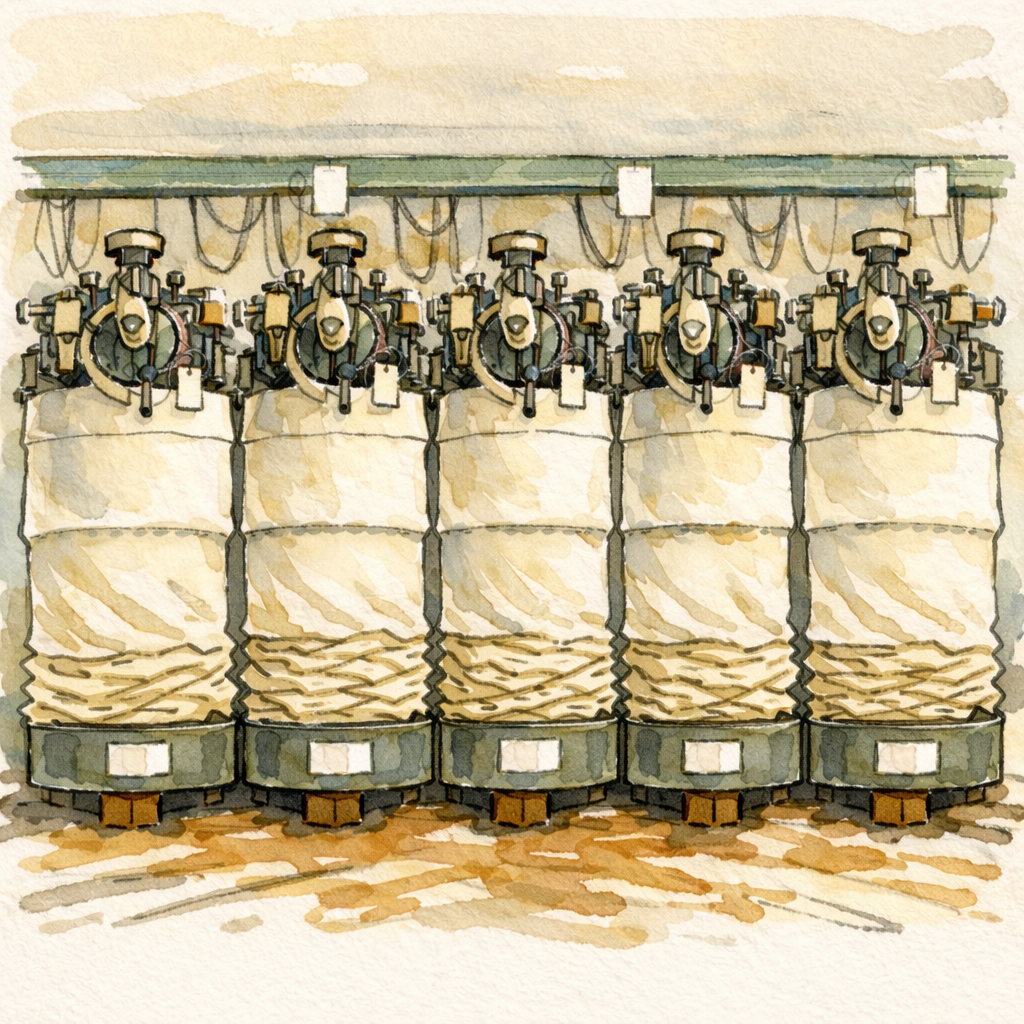
The loopwheel hangs from the ceiling and rotates slowly downward under its own weight — using gravity rather than mechanical tension to feed the thread. This means the yarn is never stretched during the knitting process.
The result is a fabric where each stitch contains air — genuinely air-filled, the way a hand-knitted sweater is air-filled — producing a softness and elastic memory that high-speed machines cannot replicate at any price.
It is also extraordinarily durable. The unstretched fibers hold their structure through years of washing. A Loopwheeler sweatshirt does not shrink, stiffen, or lose its drape. It softens.
International fashion brands from Paris and New York specifically seek out this fabric — and there is only one city in the world where it is produced at scale.
2. How to Choose a Non-See-Through T-Shirt — Understanding Ounce Weight
"Will this show through when I'm wearing it alone?"
For adult men especially, this is a non-negotiable question. The answer is in ounce weight (oz).
The 6-Ounce Threshold
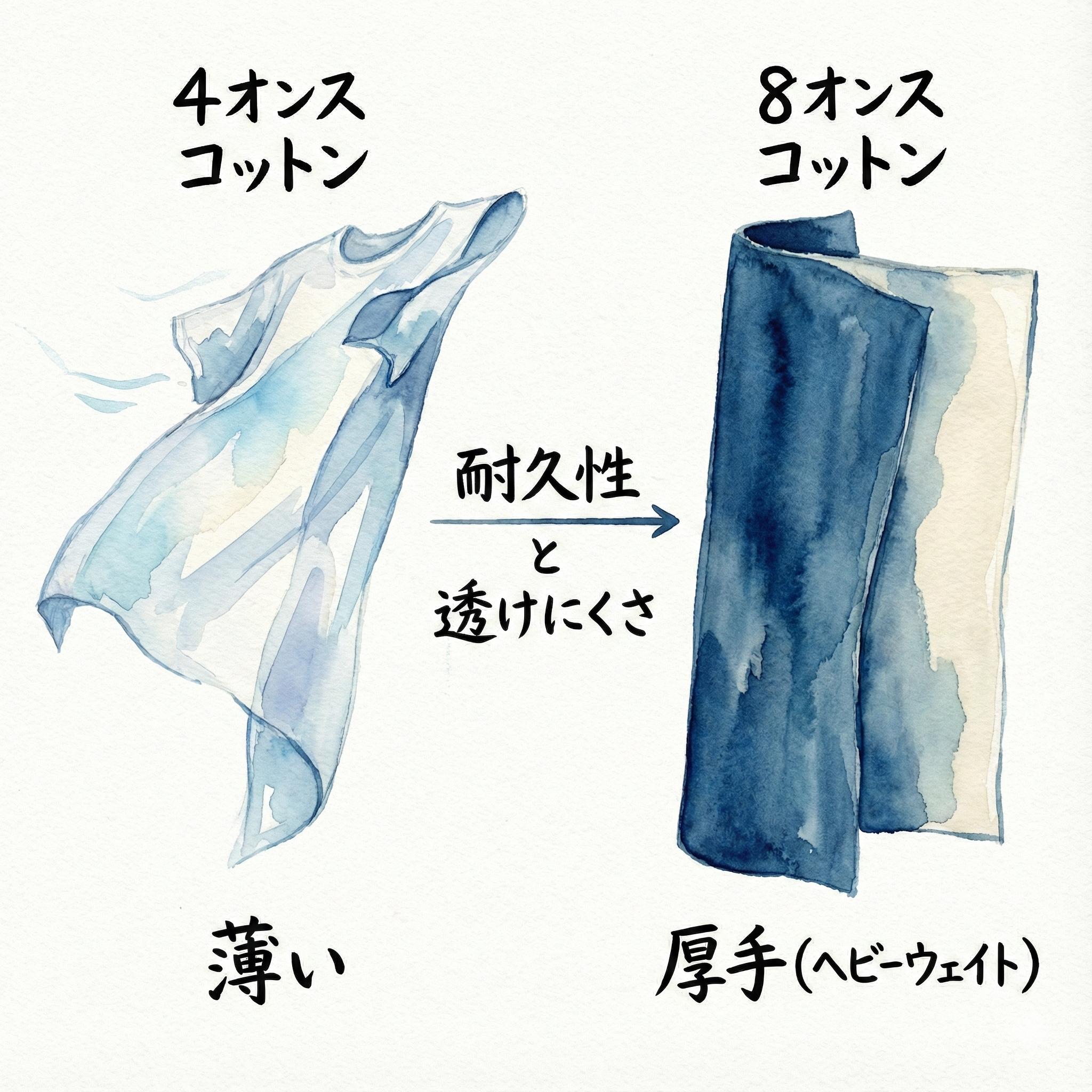
Standard pack T-shirts and undershirts run 3–4 oz — that is underwear weight, designed to be worn under something else.
If you are wearing a T-shirt as your outermost layer:
5–6 oz: The minimum for a respectable standalone T-shirt. Holds its shape, will not show through under most conditions.
7 oz and above (heavyweight): True structure. These T-shirts maintain their silhouette even after repeated washing, do not cling to the body in ways that reveal what's underneath, and develop a character over years of wear that lighter shirts simply cannot.
Japanese T-shirt makers are almost universally obsessed with this dimension. Weights above 7 oz are standard for serious domestic brands.
3. 7 Japanese T-Shirt Brands Worth Buying
Loopwheel softness or dense-knit structure — find the one that matches how you want to feel wearing a T-shirt.
No.1 — Loopwheeler: The King of Loopwheel
Loopwheeler was the brand that introduced loopwheel fabric to the broader fashion world. Their sweatshirts are iconic, but the T-shirts are equally refined — a barely-there weight that holds its shape through hundreds of washes without hardening or deforming. Once you have worn one, ordinary T-shirts feel fundamentally compromised. The katakana brand name woven into the cuff is the quality mark.
- Based in
- Wakayama / Tokyo
- Technique
- Loopwheel (tsuri-ami) — gravity-fed, air-filled stitch
- Best for
- Those who want the definitive Japanese T-shirt; long-term investment
No.2 — Jackman: The Non-See-Through Dense-Knit Tee
From Fukui — the toughness of a baseball uniform in a T-shirt. Jackman's defining technique is dozume: knitting thread at maximum density, as tightly as the machine physically allows. The fabric does not follow the body's contours, does not show through, and simply does not yield under hard washing and regular wear. This is a T-shirt as gear.
- Based in
- Fukui Prefecture
- Technique
- Dozume (dense-knit) — maximum thread density, firm and structured
- Best for
- Hard daily use; absolute opacity and shape retention
No.3 — KUME.JP: Japan's Original T-Shirt Maker
The first factory to produce T-shirts in Japan — still operating in Sumida, Tokyo. Kume Seni's "01 T-shirt" is the benchmark of the basic: decades of manufacturing experience distilled into the most considered fundamental white tee in Japan. Their "Big Series" is oversized but calculated for Japanese body proportions, in an extremely thick fabric that drapes with purpose.
- Based in
- Sumida, Tokyo
- Known for
- Japan's first T-shirt manufacturer; 01 basic tee and Big Series oversized
- Best for
- Buyers who want the most pedigreed basic white T-shirt in Japan
No.4 — Entry SG: Best Value Loopwheel
Loopwheel garments typically command a significant premium. Entry SG achieves the same knitting process at an accessible price point that makes the first purchase easy to commit to. Their flagship "EXCELLENT WEAVE" combines the softness of loopwheel construction with sufficient structure for daily wear. Wide color range. The best starting point for anyone new to Japanese T-shirts.
- Based in
- Wakayama
- Technique
- Loopwheel — same process as premium brands at a more accessible price
- Best for
- First-time buyers of Japanese T-shirts; those testing loopwheel quality
No.5 — Tieasy: Basque Shirt Texture, Good Design Award Winner
From Sendai, Tieasy uses HDCS (hyper-dense cotton structure) fabric knitted on Taisho-era looms — producing a surface with a subtle, distinctive texture that reads closer to a fine knit or French Basque shirt than standard jersey. Highly breathable and quick to dry. Boat-neck silhouettes predominate, lending an adult weekend quality to the simplest outfit.
- Based in
- Sendai, Miyagi Prefecture
- Technique
- HDCS on Taisho-era narrow-gauge looms — textured surface, Basque-shirt feel
- Best for
- Weekend casual with adult refinement; Good Design Award winner
No.6 — BARNS OUTFITTERS: Vintage Americana, Japanese Precision
BARNS combines loopwheel-knitted bodies with period-accurate vintage distressed prints and tubular (marudo) construction — no side seams — for a silhouette that moves with the body without constraint. New pieces feel broken-in from the first wear. The pairing with selvedge denim is close to perfect. For those who want American heritage aesthetics built with genuine Japanese manufacturing integrity.
- Based in
- Japan (Shimokitazawa)
- Technique
- Loopwheel + tubular (no side seam) construction; vintage-accurate prints
- Best for
- Vintage Americana lovers; pairing with selvedge denim
No.7 — FilMelange: Ultimate Softness — Like Wearing a Towel
FilMelange controls every stage of production in-house, from material selection through final stitching. Their signature organic cotton jersey is knitted to the softest possible state — a genuinely unusual sensation against the skin, closer to terry cloth than conventional jersey. Expensive for a T-shirt. But it changes how you think about what a T-shirt can be.
- Based in
- Japan
- Technique
- Organic cotton jersey, full in-house production; terry-cloth softness
- Best for
- Maximum skin comfort; those who want a T-shirt as a luxury everyday object
4. How to Wash and Dry Without Ruining the Neckline
The One Step After the Spin Cycle That Changes Everything
The lifespan of a T-shirt is determined less by how you wash it than by how you dry it.
The rules that matter:
1. Always turn inside out and place in a mesh bag before washing — this protects printed graphics and prevents pilling on the outer surface.
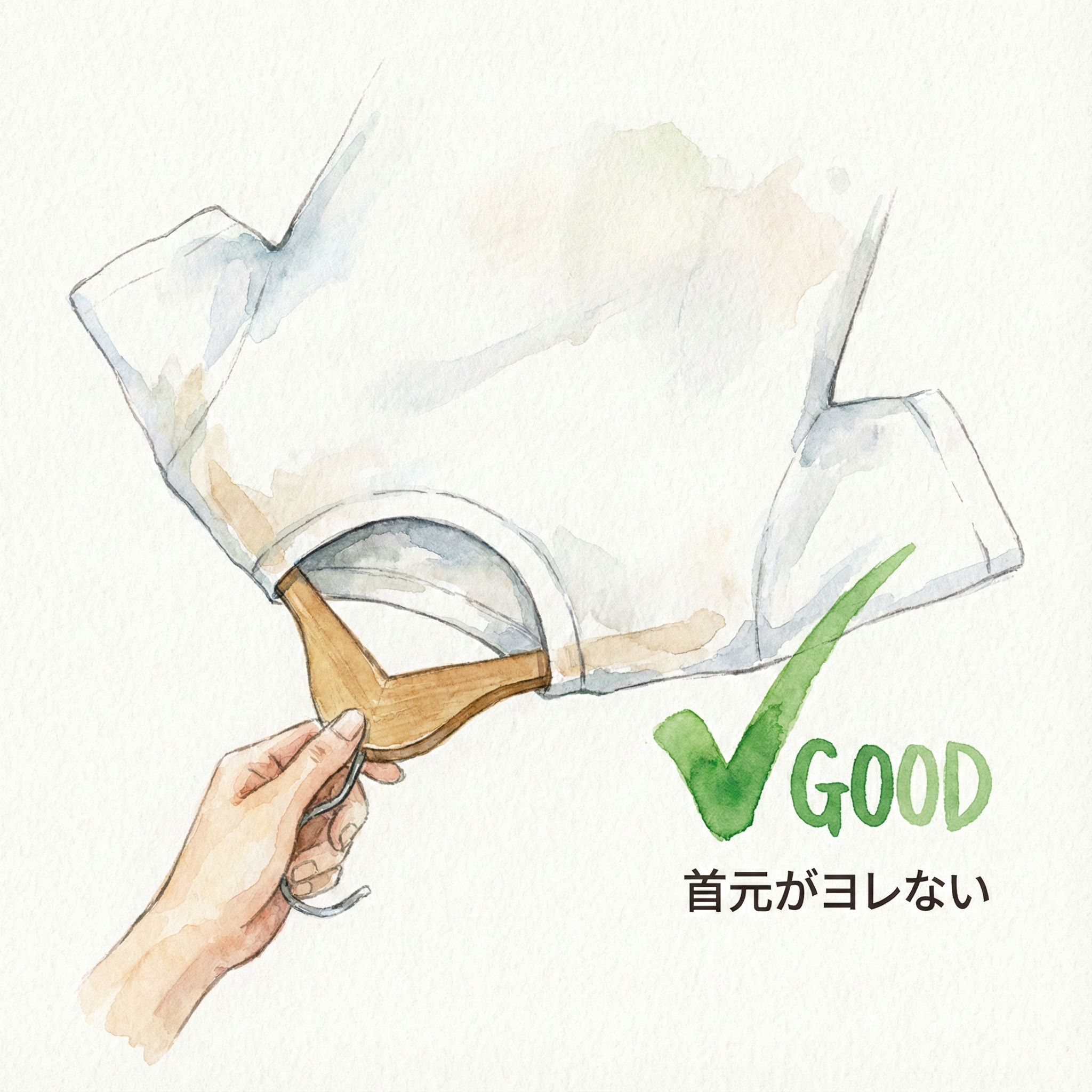
2. When hanging, insert the hanger from the hem, not the neckline — forcing a hanger through the collar is one of the primary causes of neck stretch.
3. Prevent water weight from pulling the neckline down — either use a wide-shouldered hanger that distributes weight properly, or hang the shirt folded over a drying rod (a horizontal pole, not a hanger).
Fabric is most vulnerable to deformation when wet and under tension. The minute you remove a T-shirt from the washer is the minute its shape is set for the next decade. Handle it carefully immediately.
Final Thoughts: Just a T-Shirt — Until It Isn't
If you have spent years buying three-packs that disintegrate in a season, the idea of paying ¥5,000 to ¥10,000 for a single T-shirt sounds unreasonable.
But run the math a different way: three cheap T-shirts per year for three years is nine shirts that go to landfill. One Japanese heavyweight T-shirt worn for three years — softening with every wash, eventually developing the specific drape and patina of your particular body — is nine shirts you never had to buy.
The satisfaction gap is not even close.
This summer, try wearing one that was made to be worn rather than replaced.
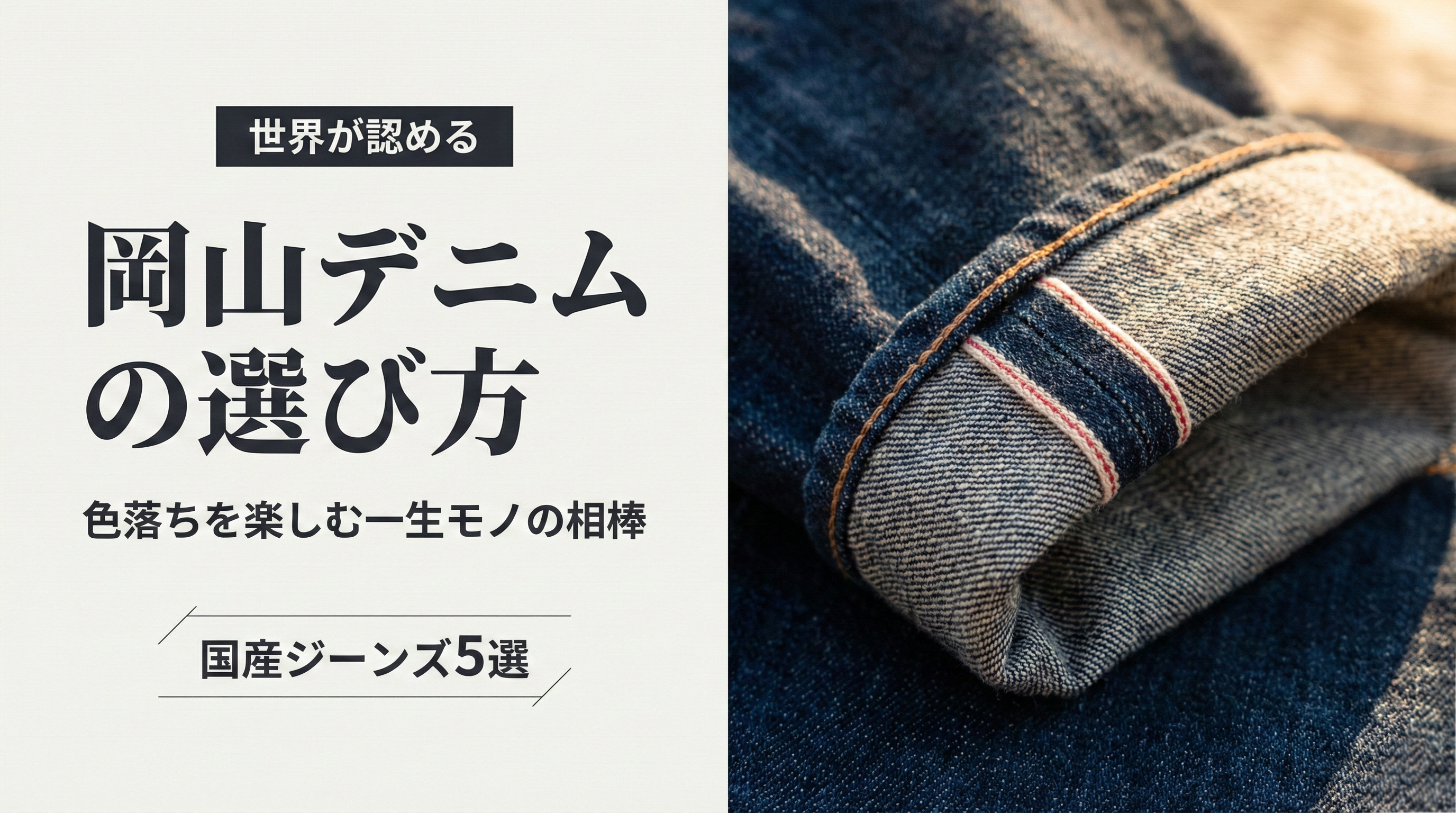
Okayama Denim Guide: 5 Japanese Selvedge Jean Brands Worth Buying
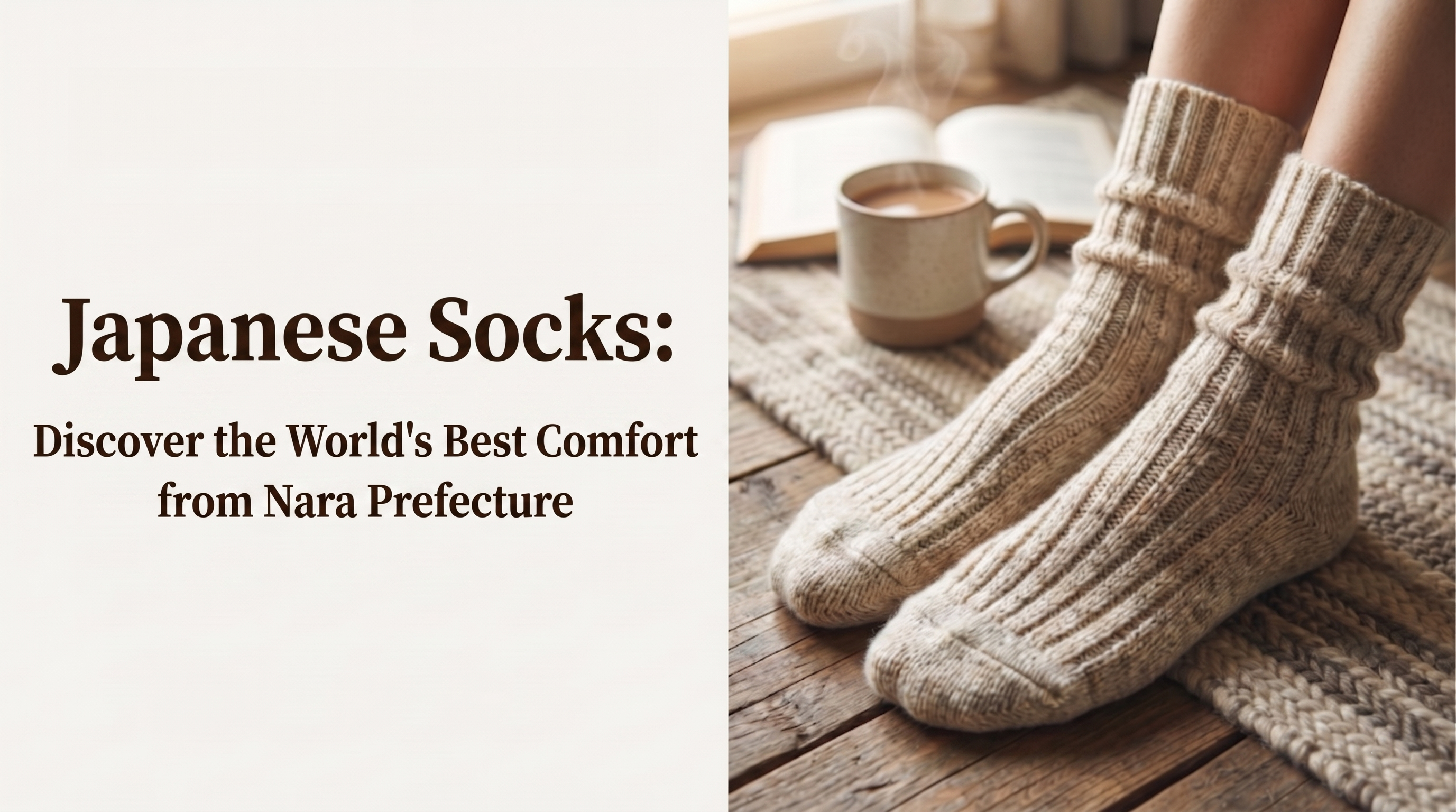
Japanese Socks Guide: Nara & Nishiwaki Brands That Last for Years