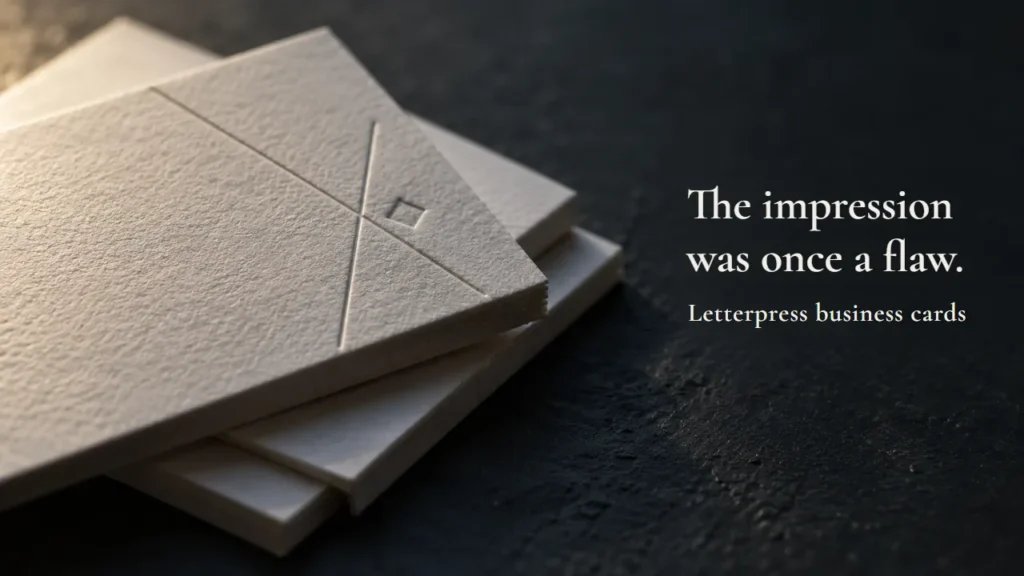
Run a finger over a letterpress business card and you feel the letters pressed into the paper.
That impression was once something printers worked hard to avoid.
Today it's exactly what people order letterpress cards for. And what takes a deep impression is thick, soft paper — the same kind used for paper coasters.
In Japan, where business cards (meishi) are exchanged with both hands at nearly every first meeting, the card itself carries weight. This guide covers a letterpress card shop in Hiroshima, letterpress card stock from Yamazakura, a Tokyo business-card company, and Midori's two-color cards printed one color at a time in Nagareyama, Chiba — plus what to decide before ordering, and which Japanese letterpress you can buy outside Japan.
Quick Reference: Japanese Letterpress Cards at a Glance
| Maker (place) | What you can buy | For you if… |
|---|---|---|
| Yumekobo (Hiroshima) ▾ | Custom letterpress business cards (0.6 mm coaster board) | You want your own cards printed by letterpress |
| Yamazakura (Tokyo) ▾ | Letterpress card stock "kappan" (Toku-A Cushion, Half Air) | You want to choose the paper, or print yourself |
| Midori (Nagareyama, Chiba) ▾ | Card-size letterpress cards (two colors, with envelopes) | You want to feel letterpress first, or add a note to a gift |
| Midori letter sets ▾ | Letterpress letter sets | You're buying outside Japan |
1. Why Japanese: The Impression Printers Once Avoided
Printing without denting the paper was the real skill
Letterpress prints by inking a raised plate and pressing it into paper.
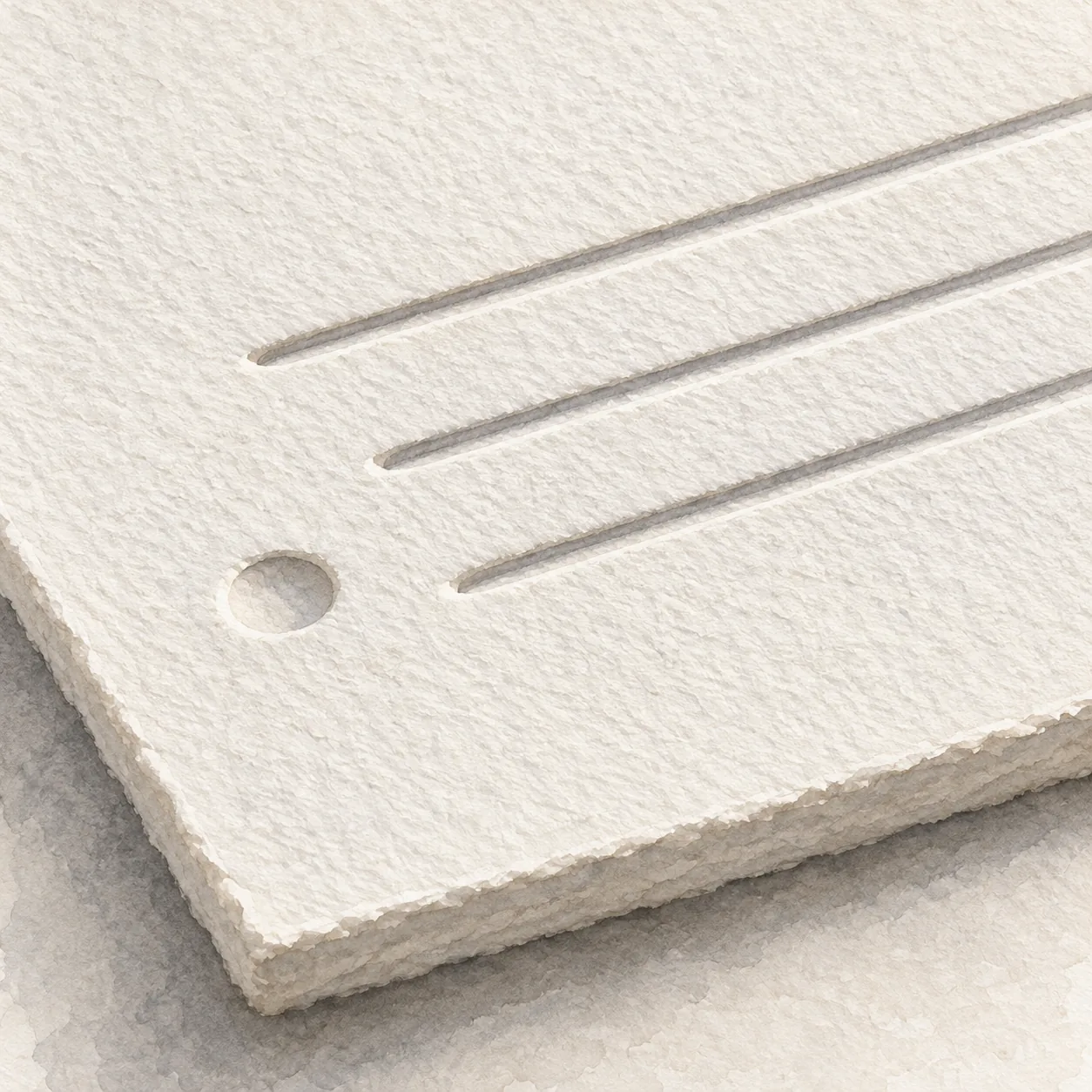
Among Japanese printers, printing with as little indentation as possible is called "kiss touch." As one printer writes, a dented print was once considered sloppy work, and craftsmen competed to print cleanly without denting the paper.
Now, the first thing people do with a letterpress card is run a finger over that very impression. What was once avoided has become the main attraction.
Why some still keep letterpress going
Yamazakura, a business-card company, prints letterpress cards through its card service TSUTAFU. Its page says:
"These techniques were once the mainstream of business-card printing, but with aging equipment and successor machines no longer made, fewer and fewer print shops can handle them. We continue them because we value the unique texture digital printing can't reproduce, the impression the paper gives when you touch it, and the worth of printing skills built up over many years."
The result varies slightly, card to card, in how the ink sits. A hundred cards from one plate each have a slightly different face — and at every exchange, the other person receives one of them.
2. Yumekobo, Hiroshima: Letters Pressed into 0.6 mm Board
"Philosophy in the white space"
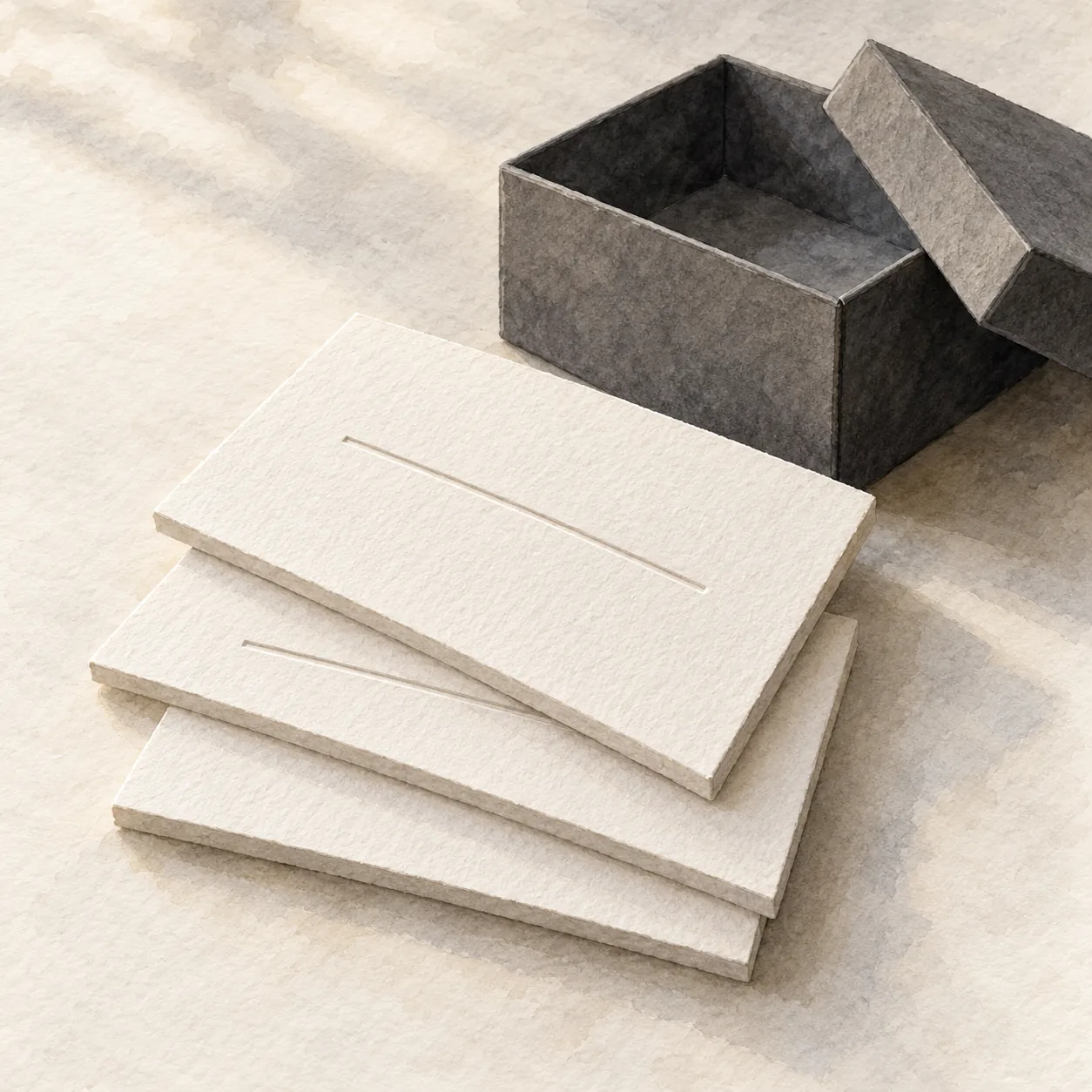
Yumekobo in Hiroshima specializes in letterpress business cards: "We want to deliver cards that make an impression in the moment they're exchanged, so we carefully make each one by letterpress." The paper is 0.6 mm (0.024 in) Toku-A Cushion board, and the shop's concept is "philosophy in the white space."
Fewer words press more cleanly
Yumekobo is clear about how to prepare your text: "With a lot of information, the letters get small, fill in, and don't finish cleanly. A simple layout with as few characters as possible is the key to a beautiful result."
Because the type is pressed in, small letters fill in more easily. One title instead of two; the address on one line. Choosing what goes on the card decides how it turns out. The shop also adjusts letter spacing "until you're satisfied," working with you up to final proof.
Yumekobo Letterpress Business Cards, 100 (Toku-A Cushion 0.6 mm) — Hiroshima
Letters pressed into thick 0.6 mm board. The thickness and the impression come straight through to the fingers of whoever receives it.
Vertical or horizontal, one- or two-sided, with a presentation box. For going independent, opening a shop, a new title — the moment you remake your card from scratch. Orders are taken in Japan, in Japanese.
3. The Paper That Takes the Impression Is Coaster Board
The letterpress paper a business-card company chose
Yamazakura is a paper-products company founded in 1931 in Ginza, Tokyo. In 1948 it was called "Yamazakura Meishi Ichise Shoten" — meishi meaning business card. It has made business cards and envelopes ever since, and opened a new factory in Hachioji in 2009.
Its "kappan" line is card stock made for letterpress. Of Toku-A Cushion, Yamazakura says: "We chose a paper that suits letterpress, which prints under strong pressure — Toku-A Cushion, the highly absorbent board used for paper coasters."
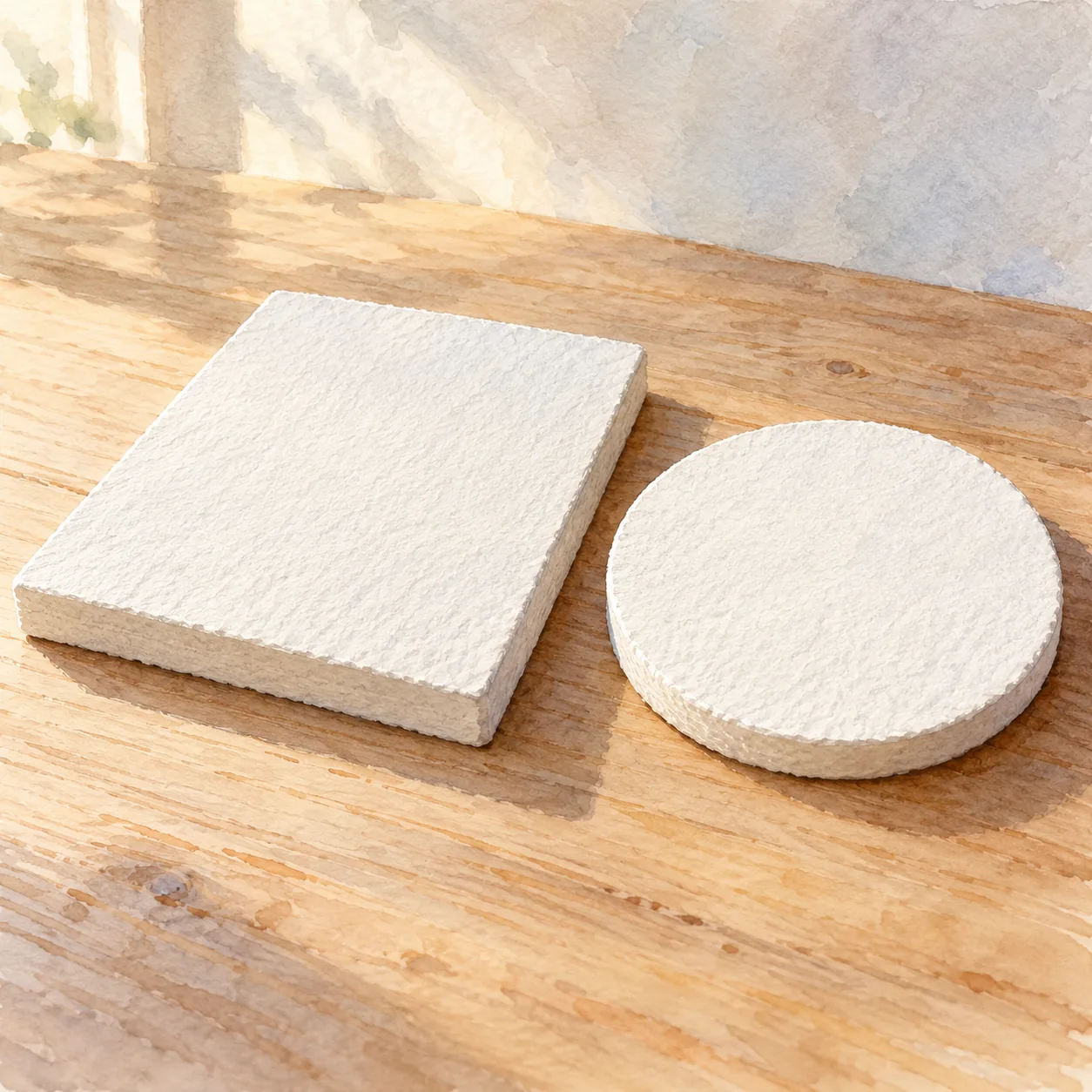
Paper that sinks when pressed
Coaster board is thick, soft and absorbent. Pressed by a plate, it sinks into that shape — a paper chosen precisely to take the deep impression that printers once tried to avoid.
The kappan line has a second paper, Half Air: air is worked into it, so it's thick but doesn't feel heavy. Toku-A Cushion is 0.6 mm; Half Air is 0.42 mm (0.017 in). For a deep impression, Toku-A Cushion; for a lighter finish, Half Air.
Yamazakura kappan Toku-A Cushion, White, 0.600 mm, 100 Cards — Tokyo
Letterpress card stock made from coaster board. At 0.6 mm thick and soft, it takes the plate's pressure deeply.
For bringing your own paper to a letterpress studio, or printing on a hand press yourself. Comes in a handsome box of 100 that doubles as storage for the finished cards. Yamazakura notes that it may not feed through home printers. Sold in Japan.
Yamazakura kappan Half Air Cotton, 0.420 mm, 100 Cards — Tokyo
Air-filled paper: thick, yet light. For those who want a substantial card that doesn't overfill a card case. Its surface is soft to the touch; printed side by side with Toku-A Cushion, the same plate gives a different impression. Sold in Japan.
A company with "business card" in its name
Yamazakura's history: "Yamazakura Meishi Ichise Shoten" in 1948, "Yamazakura Meishi Co." in 1951, and plain "Yamazakura Co." only from 1972. It turns 100 in 2031. A company that has walked with the business card for nearly a century now chooses paper for letterpress.
4. One Color at a Time: Midori's Two-Color Cards
Every added color is another pass through the press
Stationery maker Midori (Designphil) opened its own factory in Nagareyama, Chiba, in 1964, and its letterpress cards are printed there — "carefully printed one by one on our own factory's letterpress machines," as its official store puts it.
A feature on the factory says: "A letterpress machine can print only one color at a time. Lining up several colors exactly is extremely difficult — true craftsmanship!"
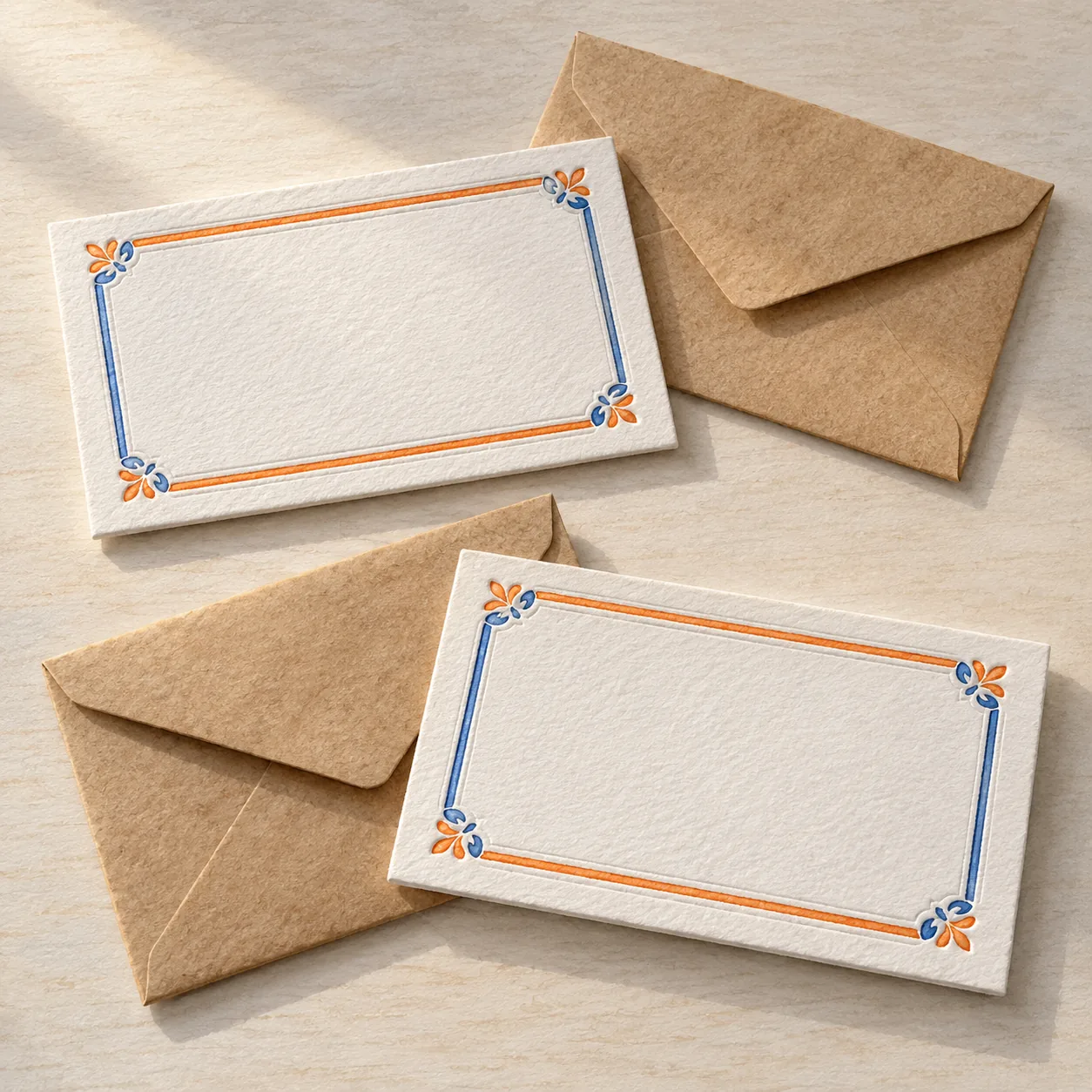
Orange and blue, yellow and gray
Midori's card-size letterpress cards all use two colors: the frame pattern in orange and blue rules, the flower-line pattern in yellow and gray — two colors from a machine that prints one at a time. Look closely where the two colors meet. That's where a craftsman lined them up.
The paper is chosen for letterpress too: "a paper with a natural feel and a soft, cushiony writing surface that shows the impression clearly." At business-card size, it's a good first taste of letterpress.
Midori Card Set, Business-Card Size, Letterpress, Frame Pattern (Blue) — Nagareyama, Chiba
Orange and blue rules, printed one color at a time. Four cards and four envelopes. For a note tucked into a gift, or a thank-you in place of a business card. Writes well with water-based pens and brush pens; the envelopes aren't for mailing. Sold in Japan.
Midori Card Set, Business-Card Size, Letterpress, Flower Line (Yellow) — Nagareyama, Chiba
A flower line in yellow and gray — "a modern combination of yellow and gray," in Midori's words. Where yellow meets gray is where the two colors were registered. Sold in Japan.
5. Four Things to Decide Before You Order
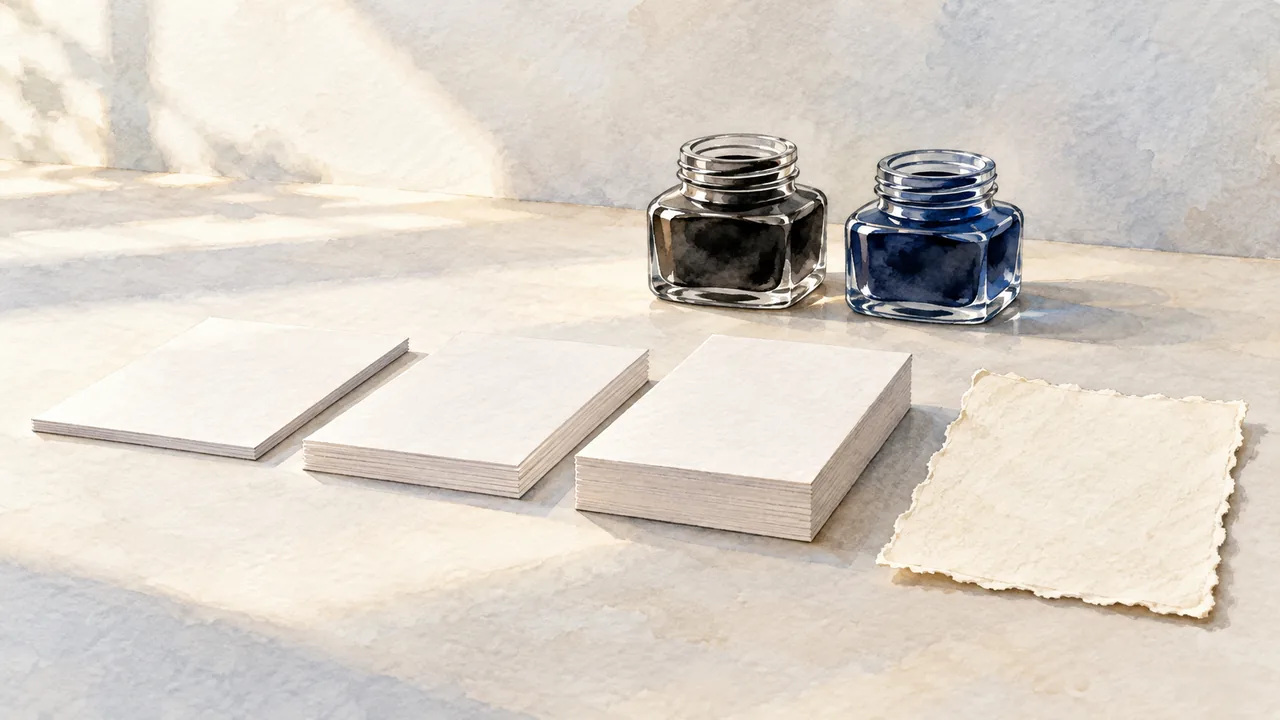
① Cut down the information
As Yumekobo says, more text means smaller letters that fill in more easily. Write out what you want on the card and keep only what you really need before you ask.
② One side or two?
Pressing deep leaves a mark on the back, too. Yamazakura's TSUTAFU offers "one-sided printing only, because the impression affects the reverse." Yumekobo offers both. If you want an English side or a map on the back, choose a printer that does two-sided.
③ Paper thickness and ink color
0.6 mm for a deep impression, 0.42 mm for a lighter one (section 3). Black is standard, but TSUTAFU also offers brown, navy and gray. Color changes how the impression's shadow reads, so check a sample before deciding.
④ Printing on washi
Shinyosha Paper Mill in Echizen hand-makes washi business cards with deckle edges on all four sides, and says on its site that it brought in "a letterpress machine well suited to washi business cards" in 2017. Letters pressed into hand-made paper — both the paper and the print differ card to card.
Modern letterpress doesn't always mean hand-set type
Letterpress may bring to mind setting metal type letter by letter. Yamazakura describes letterpress as "inking a raised plate made of metal, resin or the like, and printing by pressing it into paper," and its TSUTAFU cards use zinc plates. The plate-making has changed, but pressing a raised plate into paper hasn't — which is why the impression appears.
6. Handing Over a Thick Card Gracefully
Ten cards make 6 mm — count what your case holds
A 0.6 mm card means ten cards stack to 6 mm (0.24 in). Fill your card case as usual and it fills up sooner than you expect. Count how many fit before you go out; a case with a gusset makes thick cards easier to take out.
Note too that Japanese business cards are 55 × 91 mm (2.2 × 3.6 in) — slightly larger than the US 2 × 3.5 in — so check your card case's inside size.
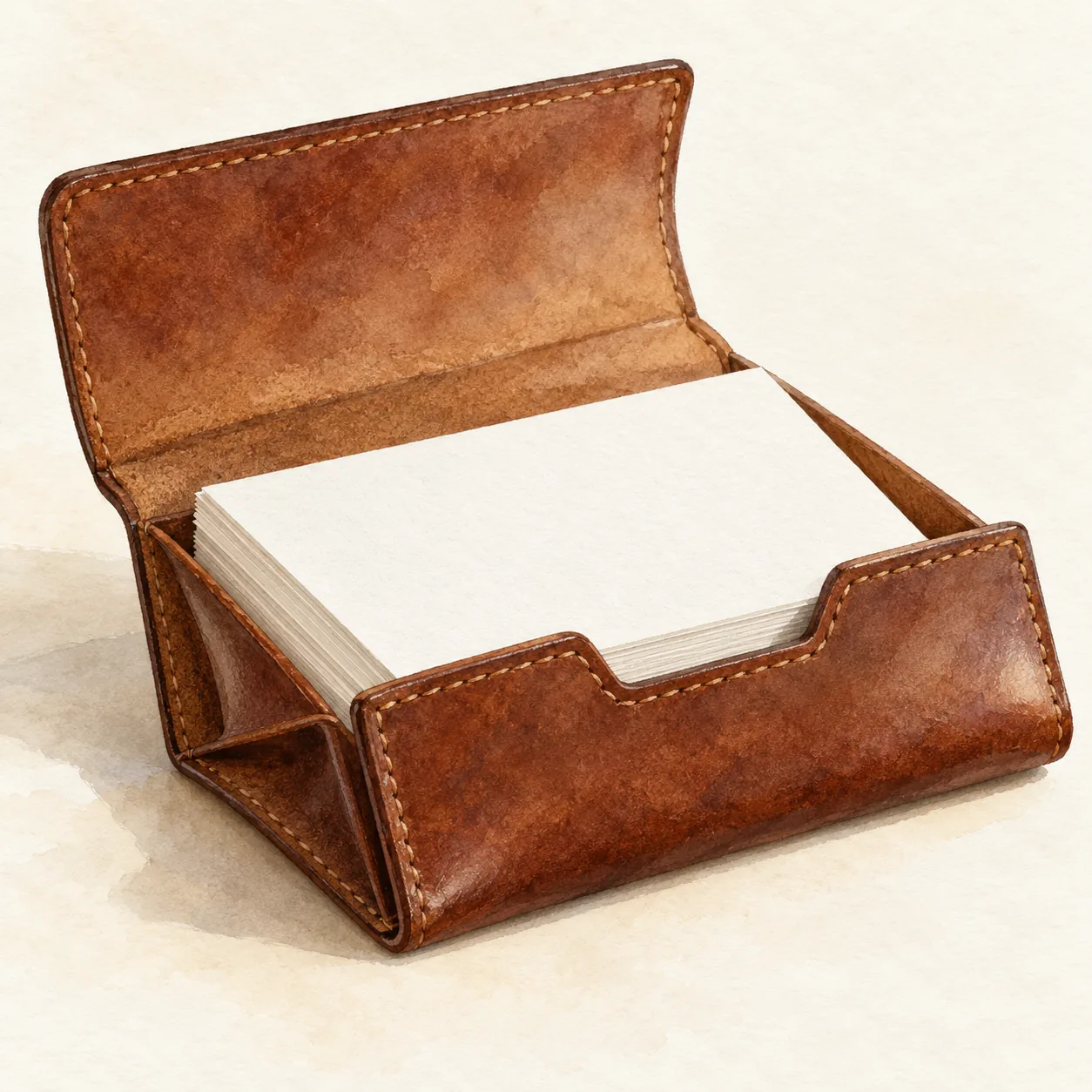
If you'll write on it, choose the pen
Toku-A Cushion is highly absorbent. When you add a handwritten line to a card, watch for bleeding. Midori rates its letterpress cards for writing as "fountain pen △, water-based pen ○, brush/brush pen ○." Test on a spare card first.
7. Buying Japanese Letterpress Outside Japan
The card service, card stock and card-size sets above are sold in Japan; we couldn't find them on Amazon.com. But Midori's letterpress letter sets are there — including the same orange-and-blue frame pattern as the card-size set — and the series is made in Japan.
Midori Letterpress Letter Set, Frame Pattern (Blue)
The same two-color frame as the card-size set, at letter size. Letterpress letter paper and envelopes from Midori. Feel the impression in every sheet.
Midori Letterpress Letter Set, Frame Pattern (Blue)
Loading product details…
Midori Letterpress Letter Set, Die-Cut Lemons
Letterpress lemons with die-cut shapes — a playful letter set for a summer note or a thank-you.
Midori Letterpress Letter Set, Die-Cut Lemons
Loading product details…
8. Frequently Asked Questions
Can letterpress cards be printed on both sides?
It depends on the printer. Yamazakura's TSUTAFU prints one side only, because the impression shows on the back; Yumekobo offers two-sided. If you want information on the back, check before ordering.
How is letterpress different from offset printing?
A raised plate is pressed into the paper, so the letters sink in and each card varies slightly. Yamazakura says the impression creates shadows with the light, giving letters a three-dimensional look — a card you feel as well as see.
Can I put Yamazakura's kappan paper through a home printer?
Yamazakura notes that Toku-A Cushion may not print on home printers. At 0.6 mm, think of it as paper for a letterpress studio or a hand press.
I have a lot of information to include. Will letterpress work?
Less text prints better. Yumekobo says that more characters mean smaller letters that fill in, and a pared-down layout is the key to a beautiful result. Put what doesn't fit on the back, or on a separate card.
Can I write on a letterpress card with a fountain pen?
It may bleed, so test first. Toku-A Cushion is highly absorbent; Midori rates its letterpress cards △ for fountain pens and ○ for water-based and brush pens.
I just want to feel letterpress first.
Midori's card-size letterpress cards are the easiest way in Japan — 55 × 91 mm like a business card, printed on the letterpress machines at its own Nagareyama factory. Outside Japan, Midori's letterpress letter sets give the same feel.
Final Thoughts: The Printer and the Paper Make the Impression
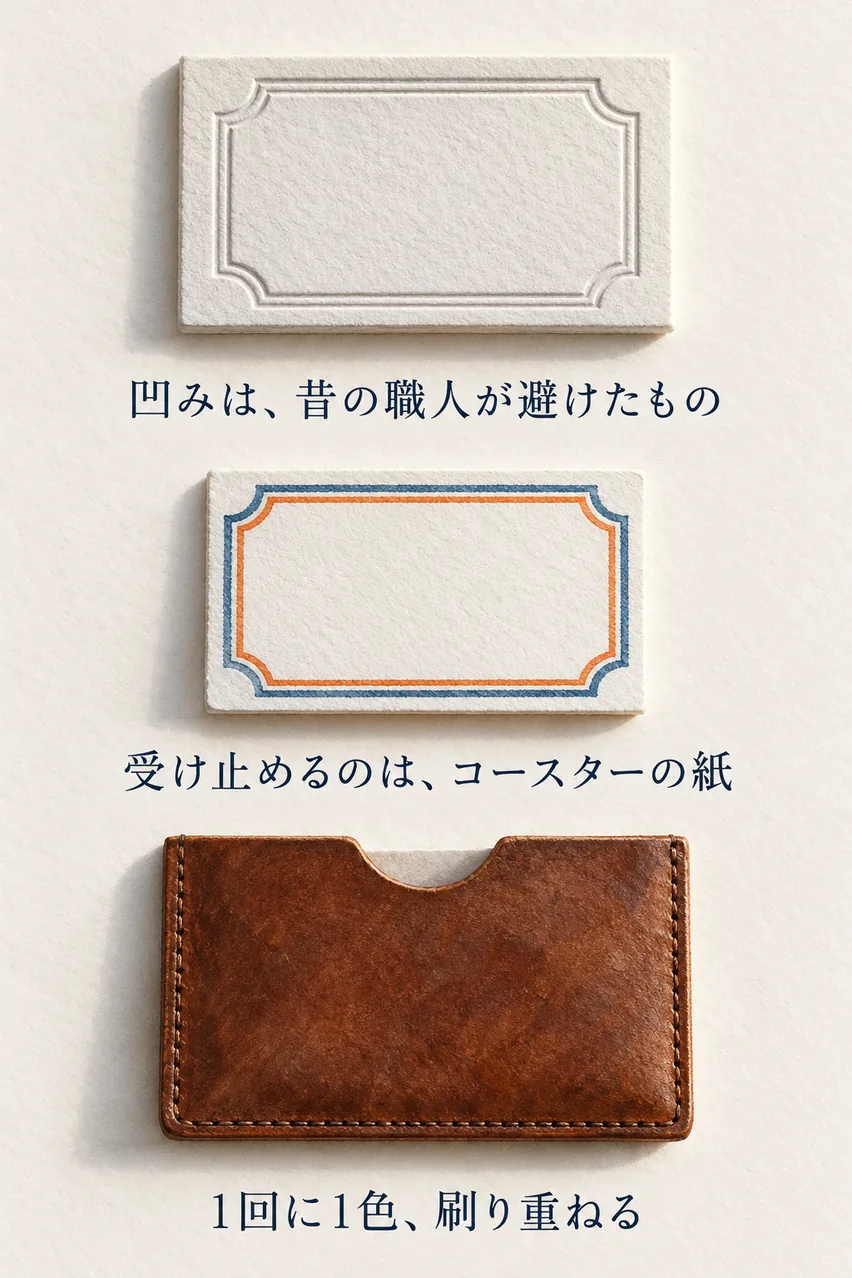
The impression on a letterpress card was once a printer's mistake. Now people order cards for it, and paper is chosen to take it deep.
To have cards printed: Yumekobo in Hiroshima, pressing pared-down text into 0.6 mm board. To choose the paper: Yamazakura's kappan, coaster board and air-filled Half Air, from a company that once had "business card" in its name. To feel it first: Midori's cards, two colors from a press that prints one at a time.
Decide four things before you order — less text, one side or two, paper and ink, and whether washi appeals. After the exchange, someone will run a finger over your card.
Japanese Leather Business Card Holders | Cordovan Picks
Japanese Letter Paper: Washi Feathers, Smooth Doesn't