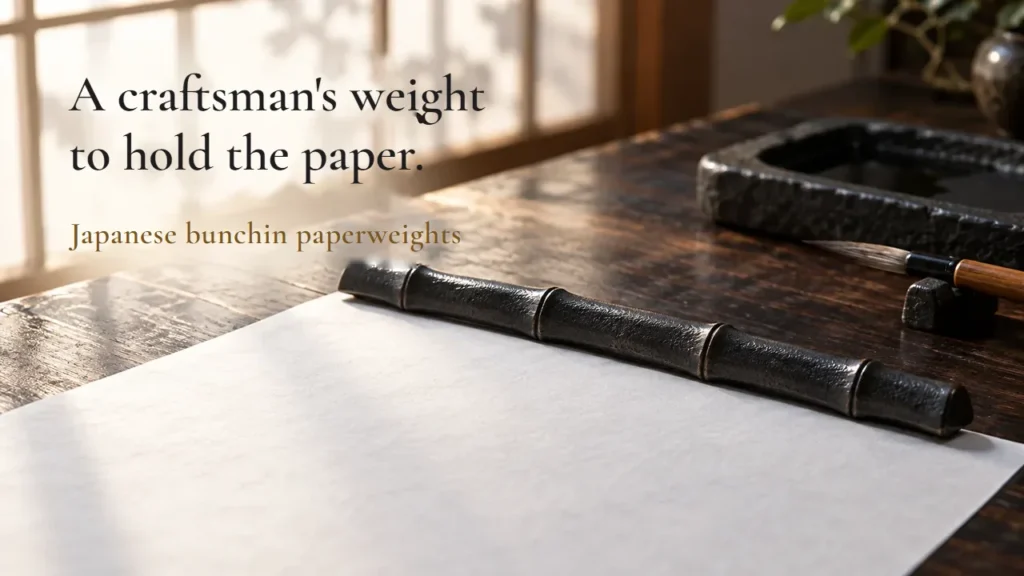
A bunchin — a Japanese paperweight — is something you take out only for calligraphy. That's the usual idea.
In fact, it holds down sewing patterns, keeps a book open, and stands pens on a desk.
It's a simple tool that just uses weight to hold paper still — which is exactly why Japanese makers pour their skill into its material and finish: Nambu ironware from Morioka, copper hammered by hand by craftsmen in Yahiko, Niigata, and a button-shaped weight from a foundry in Mizusawa, Iwate. And for measuring paper, take-jaku rulers in bamboo and brass.
This guide covers three Japan-made paperweights and two rulers, how to choose by paper size and use — and several of them can be bought outside Japan.
Quick Reference: Japan-Made Paperweights and Rulers at a Glance
| Tool | Material / craft | Maker | Best for |
|---|---|---|---|
| Iwachu "Bamboo" paperweight ▾ | Nambu ironware (cast iron) | Iwachu (Morioka, Iwate) | Calligraphy paper |
| Seigado copper "Chidori" ▾ | Hammered copper, silver plovers | Seigado (Yahiko, Niigata) | A study desk |
| cohana button paperweight ▾ | Nambu ironware (cast iron) | Oikawa Chuzosho (Mizusawa, Iwate) | Sewing patterns, pen stand |
| cohana brass take-jaku ▾ | Brass, with bamboo-ruler markings | Marui Techno (Tochigi) | A lasting ruler, a gift |
| Take-monosashi bamboo ruler ▾ | Japanese madake and moso bamboo | Bamboo-ruler workshop × ORIONS | One in your pencil case |
Click a tool to jump to it.
1. Why Japanese: A Bunchin Isn't Only for Calligraphy
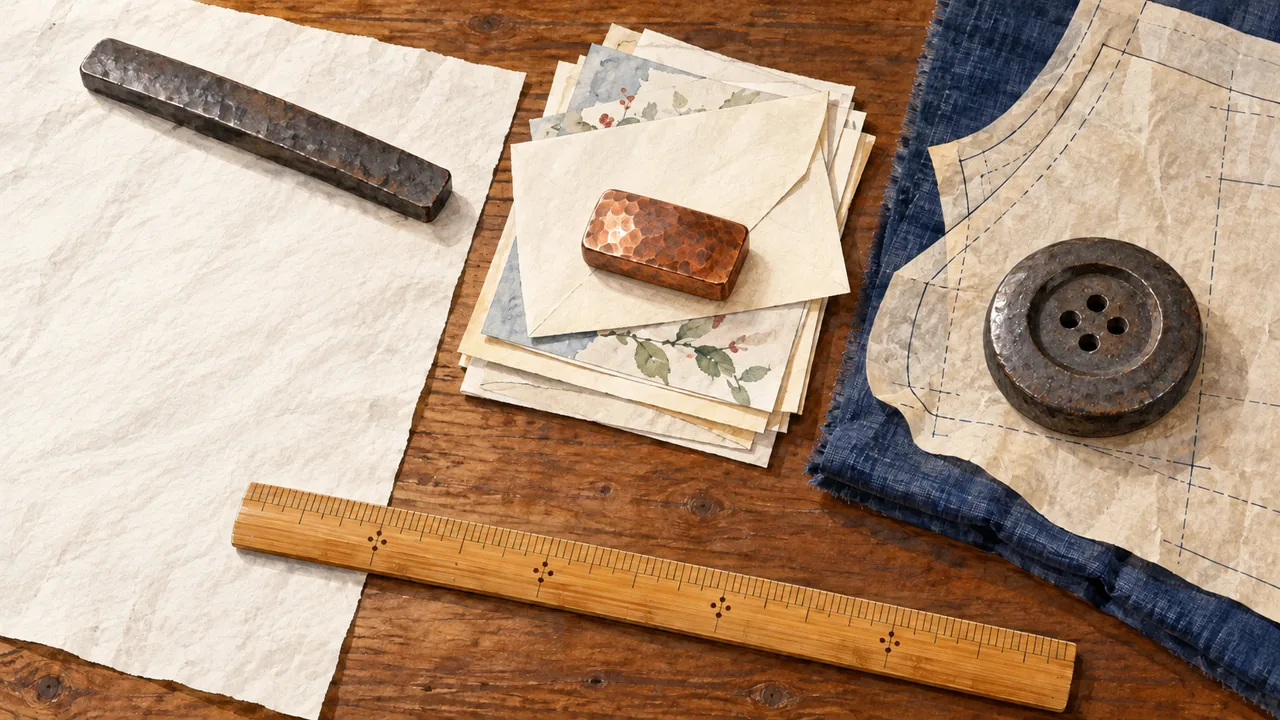
Hold paper, keep a book open, stand a pen
A bunchin's job is to hold paper still with its weight. Calligraphy paper, of course — but also tanzaku poem cards, loose documents, or the pages of an open book (as Kamakura Seigado describes it).
In sewing, it holds a pattern on the fabric. cohana's button-shaped paperweight lists four uses: sewing, book stopper, paperweight and pen stand.
And next to the paper you'll want a ruler. This guide covers three weights that hold paper and two take-jaku rulers that measure it.
2. Iwachu: Morioka Nambu Ironware for Straight Calligraphy Paper
Japan's first designated traditional craft
Nambu ironware (Nambu tekki) began in the mid-17th century, when the lord of the Nambu domain invited kettle makers from Kyoto to Morioka to cast kettles for the tea ceremony. It was the first craft designated as a national traditional craft.
Iwachu is a Morioka Nambu ironware maker founded in 1902, keeping a 400-year tradition while making pieces for life today. Every Iwachu piece carries its stamp.
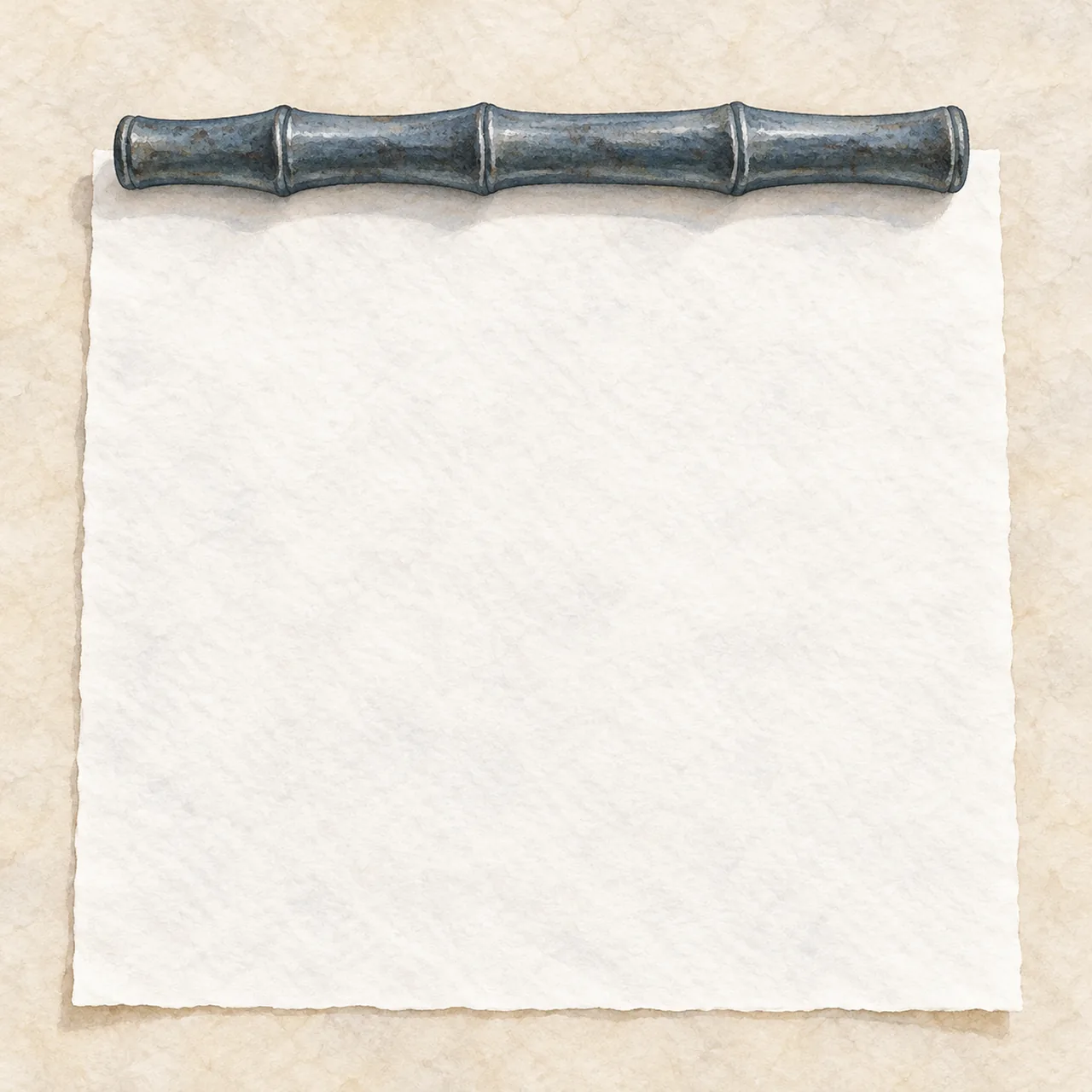
Iwachu Nambu Ironware Paperweight "Bamboo," Blue — iron in the shape of a bamboo stem
A 22 cm (8.7 in) bar of iron that holds calligraphy paper straight. A cast-iron paperweight modeled on a bamboo stem, 22 × 2.5 × 2 cm (8.7 × 1 × 0.8 in). Its long shape lies neatly along the edge of the paper.
In a calm blue. A gift for a child starting calligraphy, or one for an adult to use for years.
Iwachu Nambu Ironware Paperweight, Bamboo (Blue)
Loading product details…
3. Seigado: One Sheet of Copper, Hammered into Shape
Hammer marks become the pattern
Kamakura Seigado, in the Hase district of Kamakura, sells pieces made at a tsuiki workshop in Yahiko village, Niigata. Tsuiki is the technique of taking a single sheet of metal, softened by heat, and stretching and drawing it in with hammers and stakes to form a shape.
On Seigado's paperweight, the hammer marks left by the craftsman are the surface itself. The color comes from finishing the copper in a boiled coloring solution; nothing from the solution remains on the surface, and the workshop has its own refinements in water ratio and process to bring out the hue.
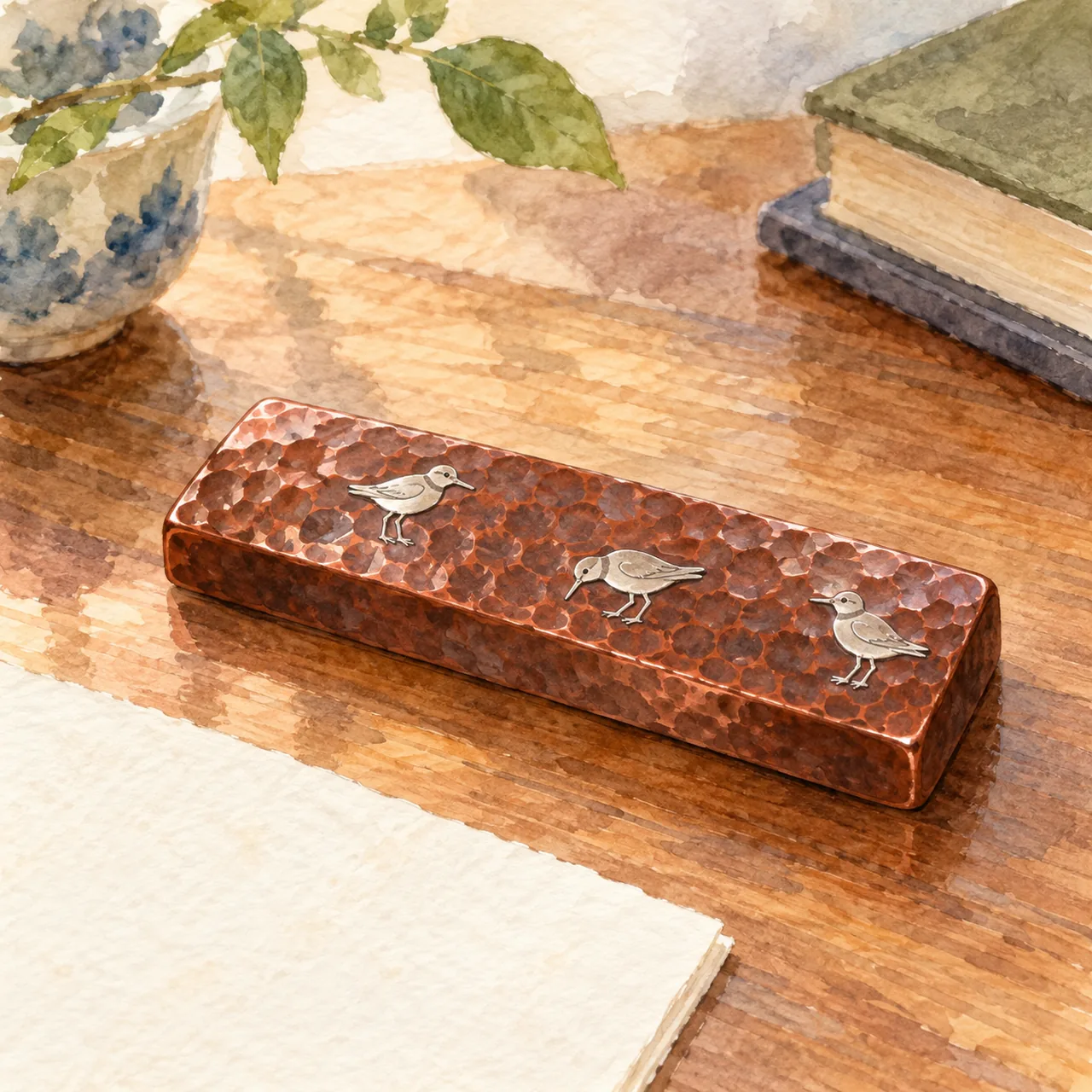
Kamakura Seigado Copper Paperweight "Chidori," Small — silver plovers over hammer marks
Hammer-decorated copper with silver chidori (plover birds). The birds are silver plates attached with silver solder, in a technique akin to inlay. The color is the workshop's own, so the position, number and shade of the plovers differ slightly on each piece.
About 3 × 13 cm (1.2 × 5.1 in), 460 g (16 oz) — presented as a stationery piece for adults that makes desk work a pleasure. Stock is shared with the workshop, so out-of-stock orders take time. Sold in Japan.
4. Oikawa Chuzosho: A Button Paperweight for Sewing Patterns
A Mizusawa foundry makes a sewing tool
Nambu ironware is made in two places: Morioka, and Mizusawa in Oshu City. Mizusawa's Oikawa Chuzosho has been casting since 1916, and values taking traditional skills into new shapes.
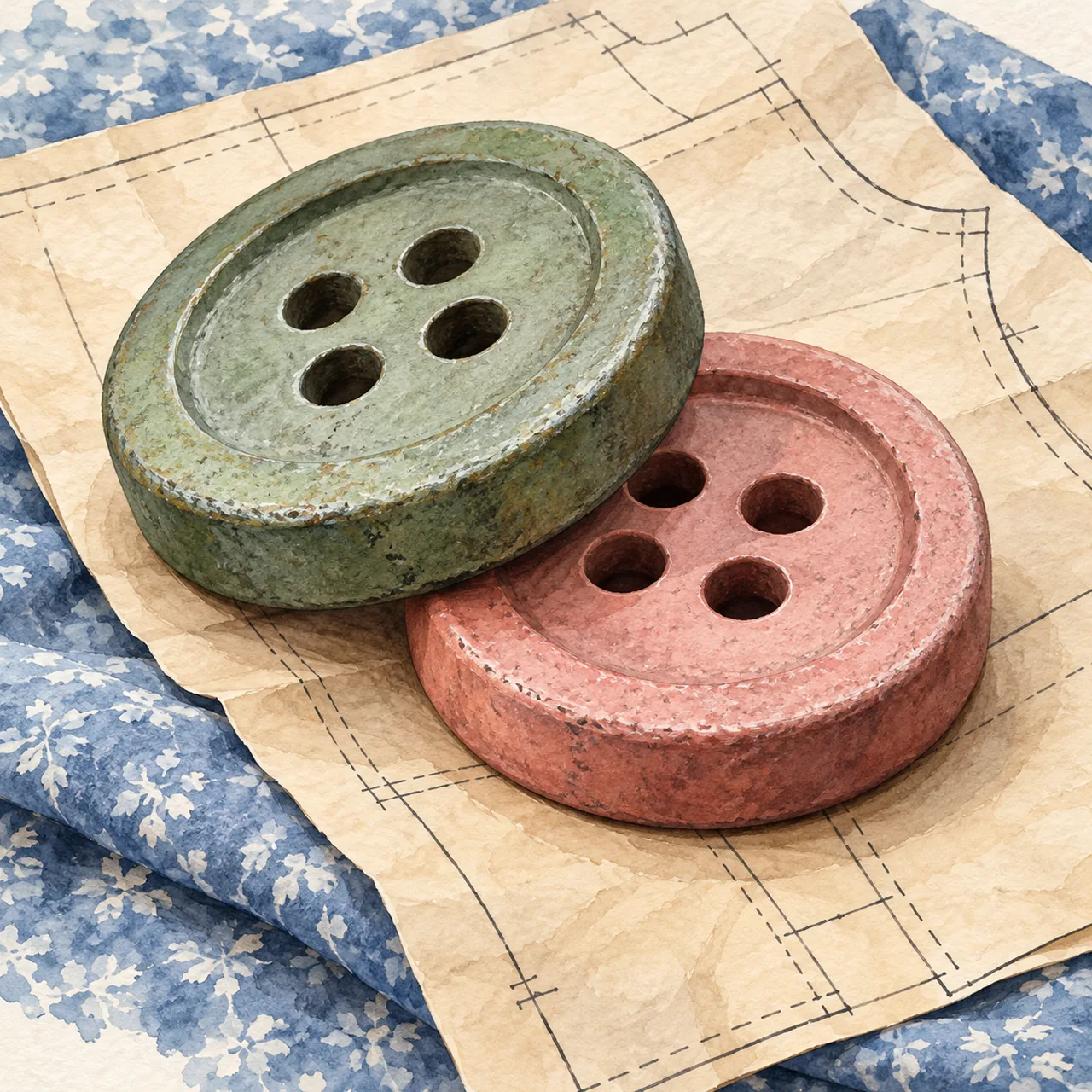
With cohana, a Japanese brand of sewing tools, it made a paperweight shaped like a button. The fine, uneven texture of the cast-iron surface — characteristic of Nambu ironware — sits comfortably in the palm.
Nambu ironware has two homes: Morioka and Mizusawa
"Nambu ironware" means castings made in two areas, Morioka and Mizusawa. In 1975 it was among the first crafts designated as national traditional crafts. Iwate's rich resources and the Kitakami River's water transport made it a casting center from early on. In this guide, Iwachu is in Morioka; Oikawa Chuzosho is in Mizusawa.
cohana Nambu Ironware Paperweight, Button — sized to stay inside a pattern's shoulder
Size and weight designed for holding sewing patterns. Easy to hold even in a small hand, and small enough not to hang over the shoulder of a pattern piece. About 360 g (12.7 oz). They stack, so several colors make a cheerful pile on the desk.
The buttonholes are 9 mm across: put a pen in one and it's a pen stand; set it at the edge of a book and it's a book stopper. Six colors.
cohana Nambu Ironware Button Paperweight (Yellow)
Loading product details…
5. Take-jaku: The Bamboo Ruler Marked with "Stars"
Bamboo barely expands with heat
There's a reason bamboo rulers (take-jaku) have been chosen for so long: bamboo is resilient and expands very little with heat, so the markings stay accurate. It's lighter than plastic or metal, soft to the touch, and settles into the hand with use.
The other hallmark of a take-jaku is the "hoshi" (star) marks along the scale, cut so they can be read from above or from the side. Bamboo rulers have long been used for both kimono and Western sewing.
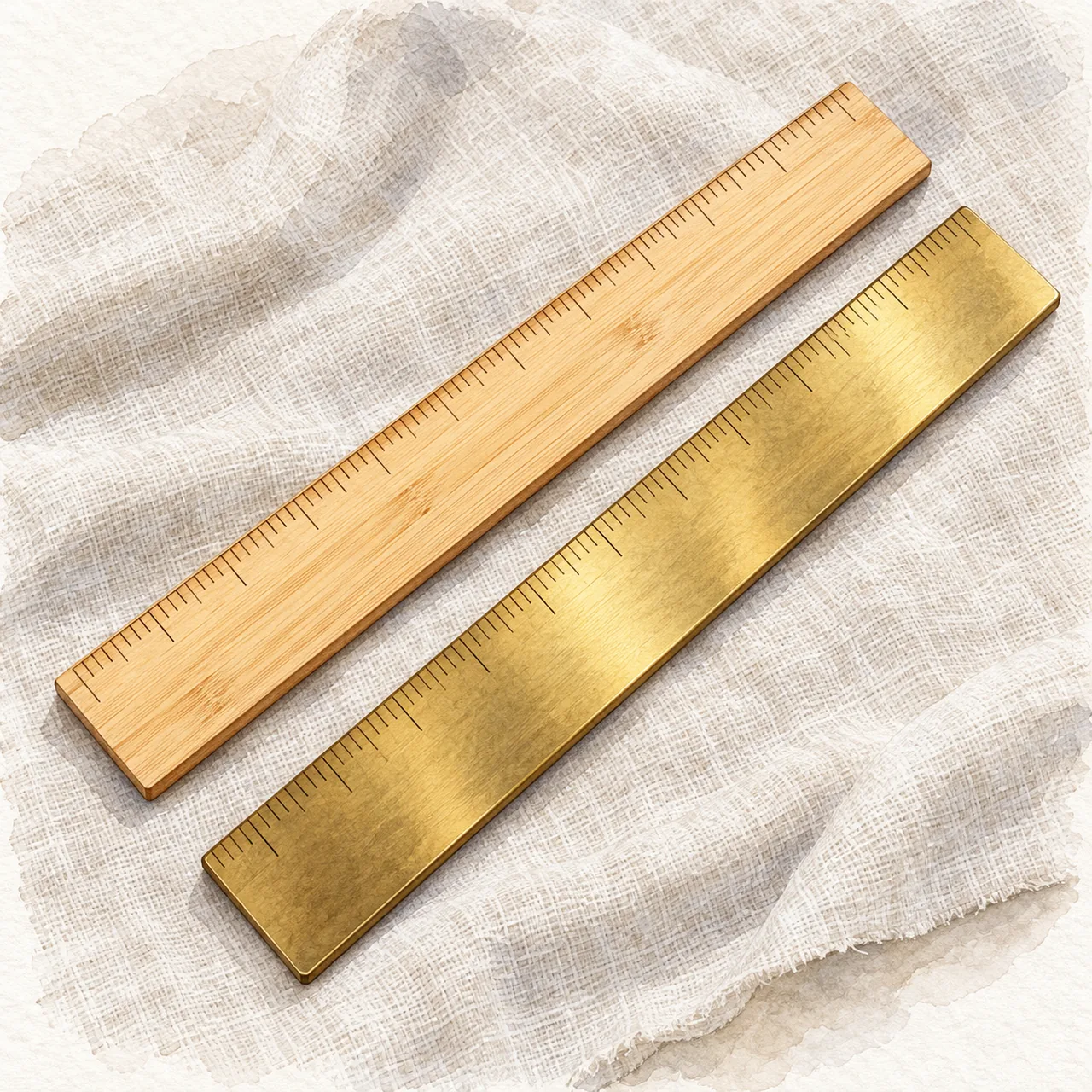
cohana Brass Take-jaku — bamboo-ruler "stars," cut into brass
The nostalgic take-jaku, in brass. The stars and graduations are laser-engraved into brass; the surface is gently rounded, and some stars are filled with vermilion — all to keep the feel of a bamboo ruler.
Made by Marui Techno in Tochigi, whose predecessor was an instrument maker founded in 1959; craftsmen inspect and adjust each one by hand. Brass mellows with use — a good gift. In Japan it's sold in 30 cm (11.8 in); the 15 cm (5.9 in) version is available on Amazon.com.
cohana Brass Take-jaku Ruler (15 cm)
Loading product details…
Take-monosashi 15 cm — Japanese madake and moso bamboo only
With few bamboo rulers still made from Japanese bamboo, this one uses only Japanese madake and moso. A collaboration between a workshop that has made bamboo rulers for 60 years and ORIONS rulers. The markings are laser-burned so they don't wear off, and the scale starts right at the end, so you can measure heights and depths.
13 × 150 × 2 mm (0.5 × 5.9 × 0.08 in), about 4 g. It disappears into a pencil case — with a faint scent of bamboo. Sold in Japan.
6. How to Choose a Paperweight and Ruler
Long for calligraphy, small for the desk
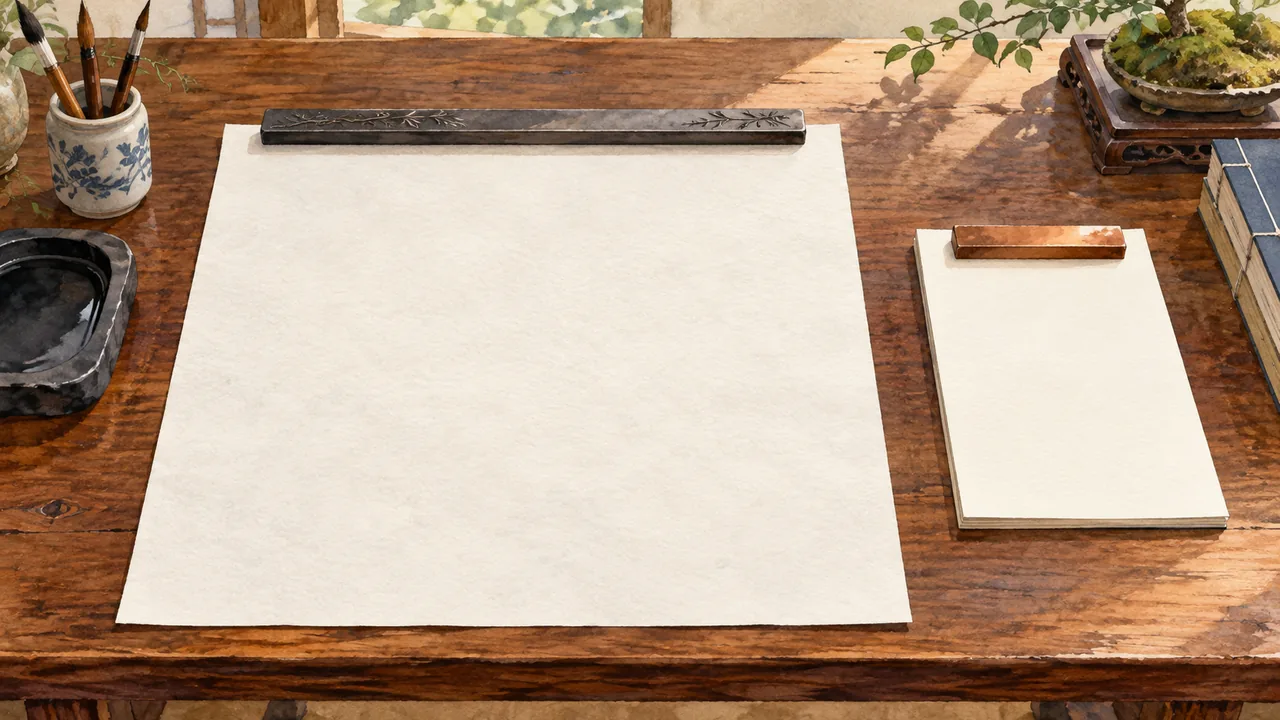
For holding calligraphy paper, a long weight that lies along the paper's width is easiest — Iwachu's "Bamboo" is 22 cm. For documents and books on a desk, a palm-sized weight is enough; Seigado's copper piece is about 13 cm. For sewing, cohana's paperweight is sized to stay inside a pattern.
A ruler to carry, or one for the desk
To carry in a pencil case, the 4-gram, 15 cm take-monosashi — quick to pull out for ruling a line in a letter or measuring a book. For a ruler that lives on the desk, the brass take-jaku, with real heft and a finish that mellows over time.
"Zero start": measuring from the very end
On most rulers, zero sits a little in from the end. The take-monosashi is "zero start" — the scale begins right at the edge. Stand it on the floor or the bottom of a box and you can measure height, depth and inside dimensions directly.
7. Buying Outside Japan
Good news: three of these are on Amazon.com — Iwachu's "Bamboo" paperweight, cohana's button paperweight and cohana's brass take-jaku (in 15 cm). Seigado's copper paperweight and the take-monosashi are sold in Japan.
If you'd like a bamboo ruler in the US, Niigata Seiki, a Japanese measuring-tool maker, sells a 30 cm bamboo ruler labeled made in Japan.
Niigata Seiki Bamboo Ruler, 30 cm
A 30 cm (11.8 in) bamboo scale from a Japanese measuring-tool maker, labeled made in Japan. For sewing, drafting and everyday measuring.
Niigata Seiki Bamboo Ruler (30 cm)
Loading product details…
8. Frequently Asked Questions
How long should a calligraphy paperweight be?
For hanshi calligraphy paper, a long weight that lies along the paper's width is easiest. Iwachu's "Bamboo" is 22 cm (8.7 in); place it across the top edge of the paper.
Can I use a bunchin for sewing?
Yes — it's handy for holding patterns on fabric. cohana's Nambu ironware paperweight is sized and weighted for sewing, and small enough not to hang over a pattern's shoulder.
Is a bamboo ruler more accurate than a plastic one?
Bamboo expands very little with heat, so its markings stay accurate. Bamboo rulers are still used for kimono-making, sewing, crafts and quilting.
What are the "stars" on a bamboo ruler?
Marks cut into the scale of a take-jaku, readable from above or from the side. cohana's brass take-jaku engraves them in brass, with some filled in vermilion.
Does the copper paperweight change color?
Seigado's copper paperweight is colored by finishing in a boiled solution, using the workshop's own refinements in water ratio and process. The plovers' position and shade differ slightly on each piece.
Which is best as a gift?
Iwachu's "Bamboo" for someone who does calligraphy, Seigado's copper for someone who loves their study, and cohana's button paperweight and brass take-jaku for someone who sews.
Final Thoughts: A Craftsman's Weight and Ruler Beside Your Paper
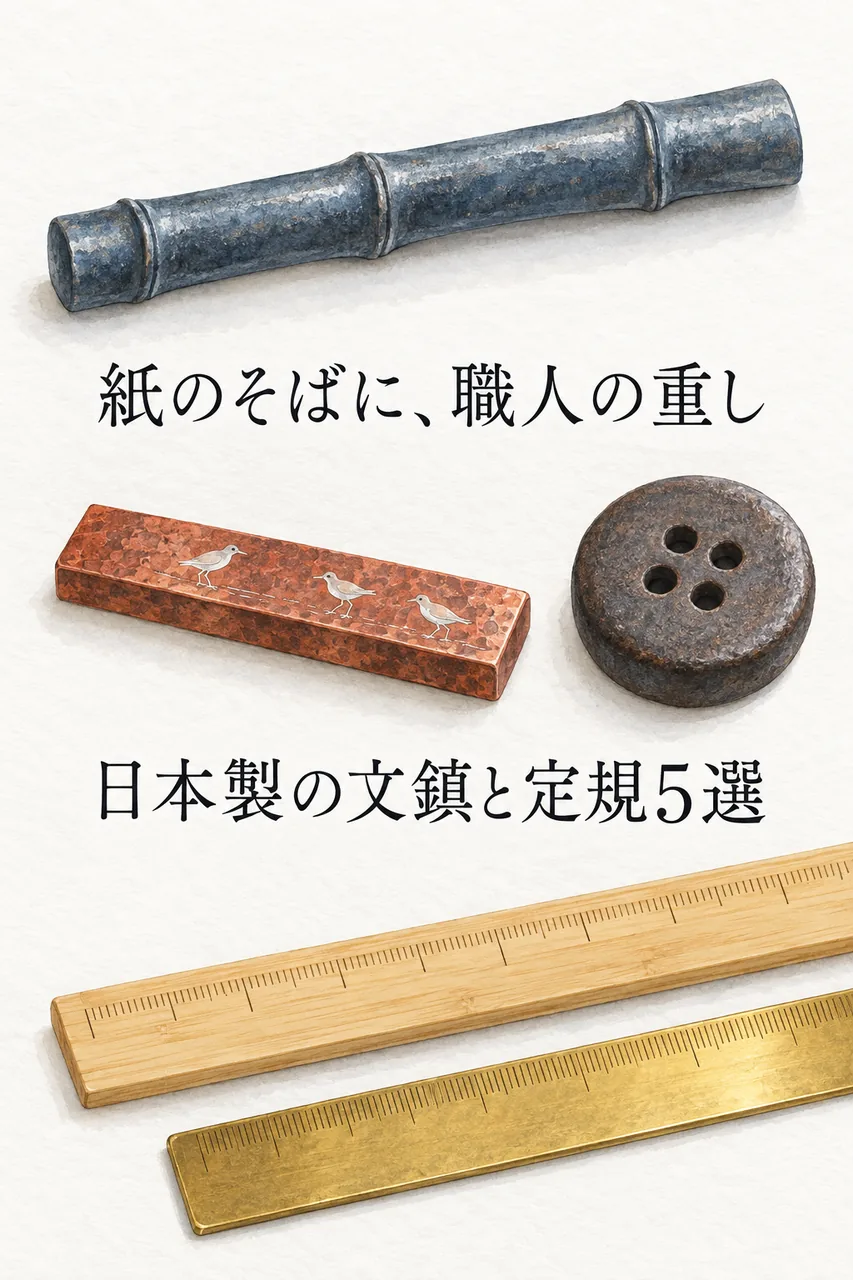
A bunchin does nothing but hold paper down. That's exactly why its material and finish show the maker's skill.
Iwachu's Nambu ironware from Morioka. Seigado's copper, hammered in Yahiko and topped with silver plovers. Oikawa Chuzosho's button paperweight, made in Mizusawa for sewing. And the take-jaku's stars, in Japanese bamboo and in brass. All Japanese handwork for everyday use on a desk.
For calligraphy, for the study, for sewing — choose the one beside your paper from Japan.
Japanese Calligraphy Brushes, Sumi Ink, and Inkstones
Sashigane, Square and Caliper: Japanese Measuring Tools