The short answer: choose shoji paper by what it's made of.
Paper of 100% kozo (paper mulberry) isn't bleached whiter than it needs to be, so it keeps its color in the sun.
This guide covers 100% kozo shoji paper from Ohnao, a washi maker in Ichikawamisato, Yamanashi; handmade shoji paper from Nakamura Seishisho in Yame, Fukuoka; and wheat-starch glue for re-papering.
And the other half of a tatami room: tatami-beri, the woven fabric that edges tatami mats. Takada Orimono in Kojima, Kurashiki found a second life for the edging left over as tatami rooms got smaller — as a material for handcrafts.
Quick Reference: Japanese Shoji Paper and Tatami Edging at a Glance
| Product | Material | Maker | Use |
|---|---|---|---|
| Pure kozo shoji paper ▾ | 100% kozo | Ohnao (Ichikawamisato, Yamanashi) | Re-papering two shoji panels |
| Yame handmade washi ▾ | 100% kozo, handmade | Nakamura Seishisho (Yame, Fukuoka) | Colored shoji |
| Shofu wheat-starch glue ▾ | 100% wheat starch | Ohnao | About 10 sheets of shoji paper |
| Tatami edging (tatami-beri) ▾ | Woven edging, about 8 cm wide | Takada Orimono (Kojima, Okayama) | 10 tatami mats, or handcrafts |
| ONAO shoji paper roll ▾ | Japanese shoji paper | Ohnao | Buying outside Japan |
Click a product to jump to it.
1. Why Japanese: Choose Shoji Paper by Its Fiber
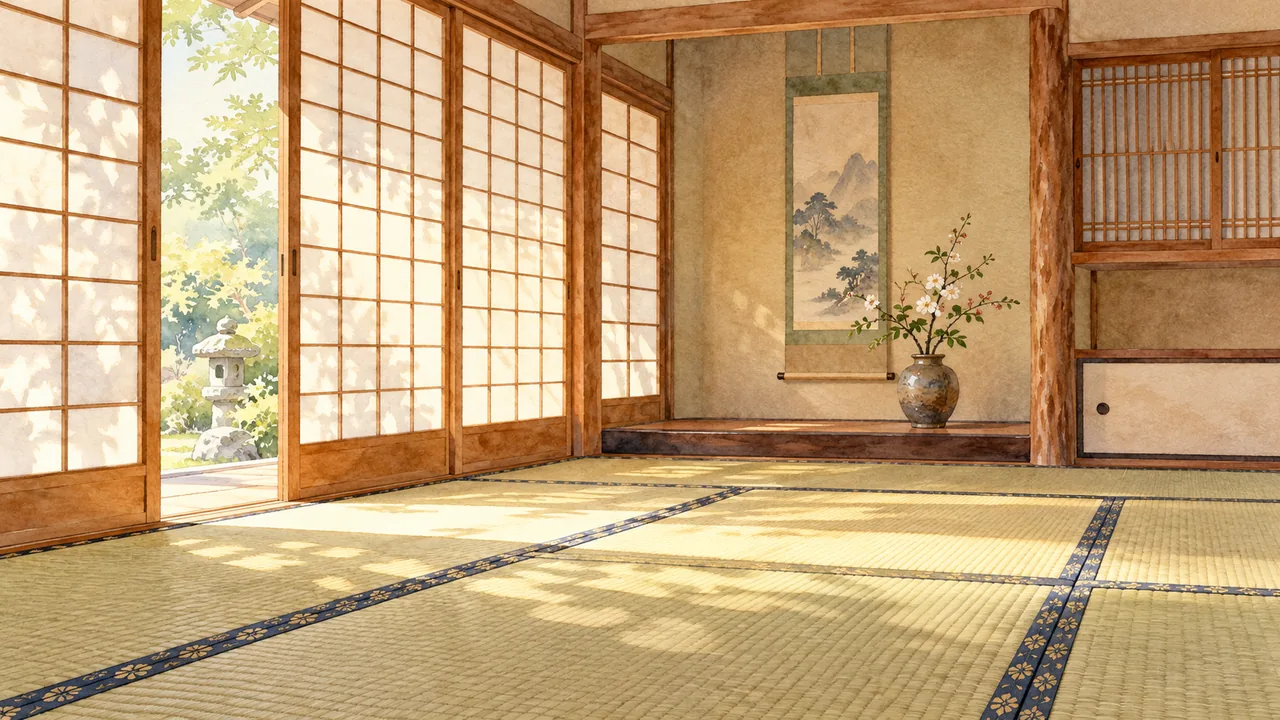
Does it say "100% kozo"?
Shoji paper listings state the material. Some papers blend in wood pulp or synthetic fiber; others are 100% kozo.
Kozo, paper mulberry, is a plant in the mulberry family. Its bark is said to be the strongest, finest of all papermaking fibers, and it has long been the material of handmade washi.
Shoji paper of 100% kozo keeps the subtle unevenness of the papermaking — a soft, living texture. And because it isn't whitened with fluorescent dyes, it resists discoloring in the sun. The natural color you papered with lasts.
2. Ohnao, Ichikawamisato: 100% Kozo Shoji Paper
From a thousand-year washi town
Washi Seikatsu, a shop for shoji paper and washi, is the direct store of Ohnao, a washi maker in Ichikawamisato, Yamanashi. Ichikawamisato is a papermaking town with a thousand years of history, and Ohnao has made washi there for generations.
Its pure kozo shoji paper is made from kozo alone — its top grade. It shows more of the papermaking's light and dark than ordinary shoji paper, and with light behind it, that soft unevenness glows on the screen.
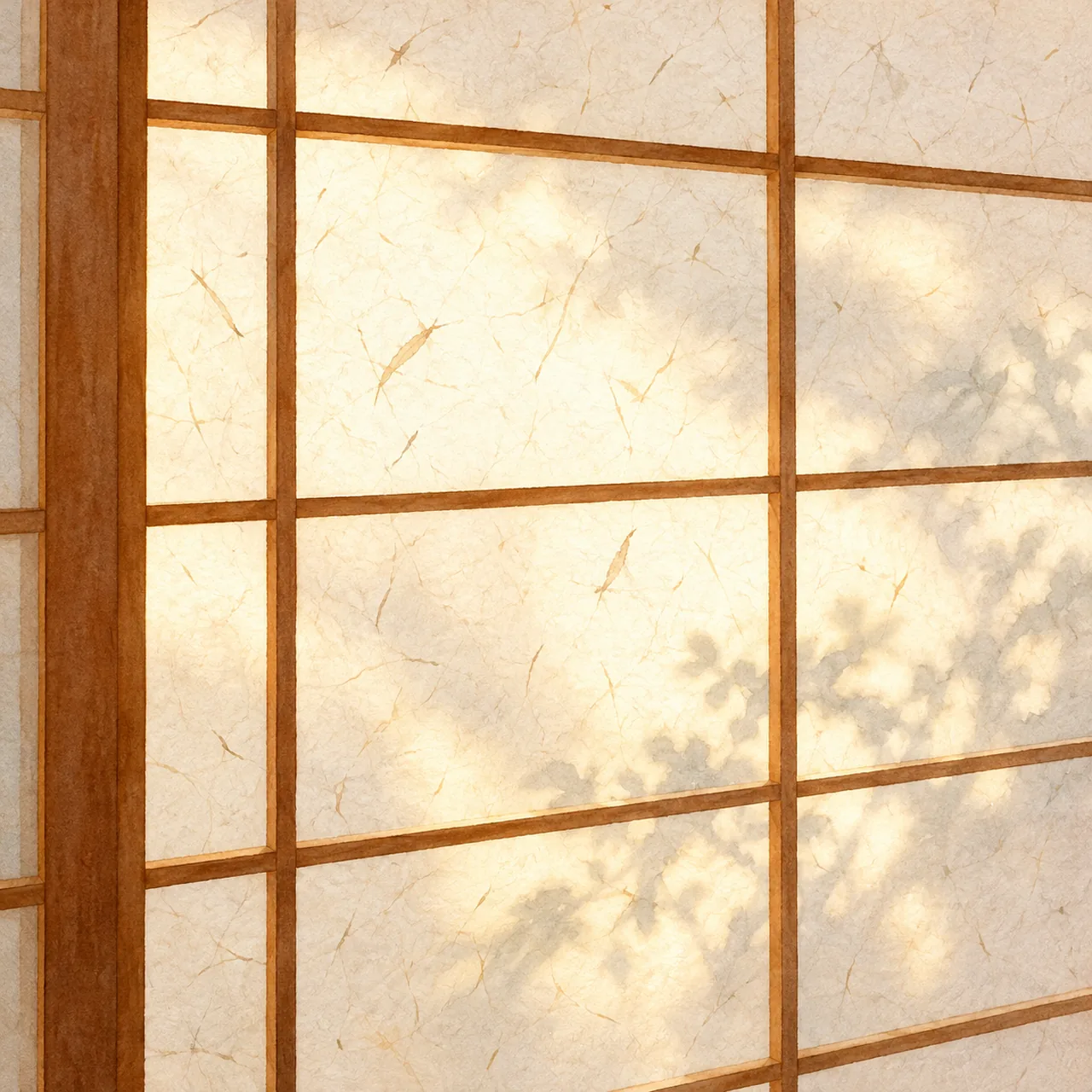
Not-too-white shoji paper keeps its color
Bright white shoji paper may look cleanest. But pure kozo shoji paper is made without fluorescent dyes and isn't whitened more than necessary — so it's less prone to discoloring in sunlight, according to Washi Seikatsu. The natural color you start with stays.
Washi Seikatsu Pure Kozo Shoji Paper (Plain) — daylight, softened
100% kozo, no fluorescent dyes — top-grade shoji paper. 94 cm × 3.6 m (37 in × 11.8 ft), enough for two shoji panels. A gentle white that keeps the light and dark of the papermaking.
Made to bring daylight in softly, and to resist discoloring and last. Also available with an unryu (cloud-dragon) fiber pattern. Sold in Japan.
3. Nakamura Seishisho, Yame: Handmade, Colored Shoji Paper
Washi made by hand in Yame, Fukuoka
Nakamura Seishisho is a washi company in Yame, Fukuoka Prefecture, selling shoji paper and handmade washi under the name "Wanoma."
Yame's handmade washi is natural 100% kozo, made by hand. As shoji paper it comes in ivory, indigo, wisteria, pink and yellow — a way to bring colored light into a room.
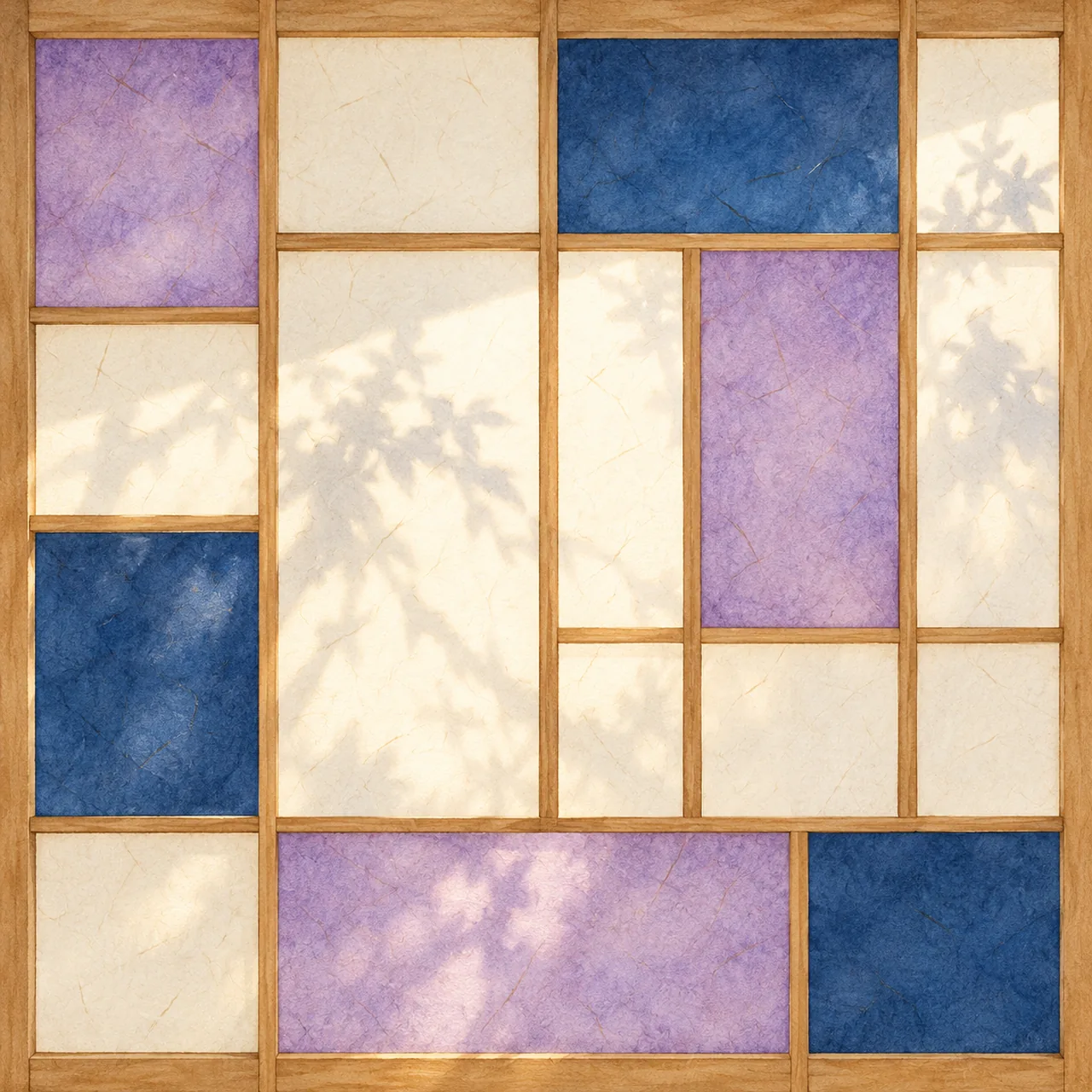
Nakamura Seishisho Yame Handmade Washi, Ivory — color your shoji with handmade paper
100% kozo handmade washi, for shoji. Made in Yame, Fukuoka. Each sheet is 63 × 97 cm (24.8 × 38.2 in). The soft ivory turns warm with light behind it.
With indigo and wisteria also available, you can change the color of a single panel as an accent. Sold in Japan.
4. The Glue: Shofu Made from Wheat
Traditional glue for washi
The glue matters too. Ohnao's shofu-nori is made from wheat starch — 100% wheat starch.
It's the traditional starch paste also used for backing washi and silk and mounting paintings. A 70 g (2.5 oz) pack covers about 10 sheets of shoji paper, or about two fusuma (sliding door) panels.
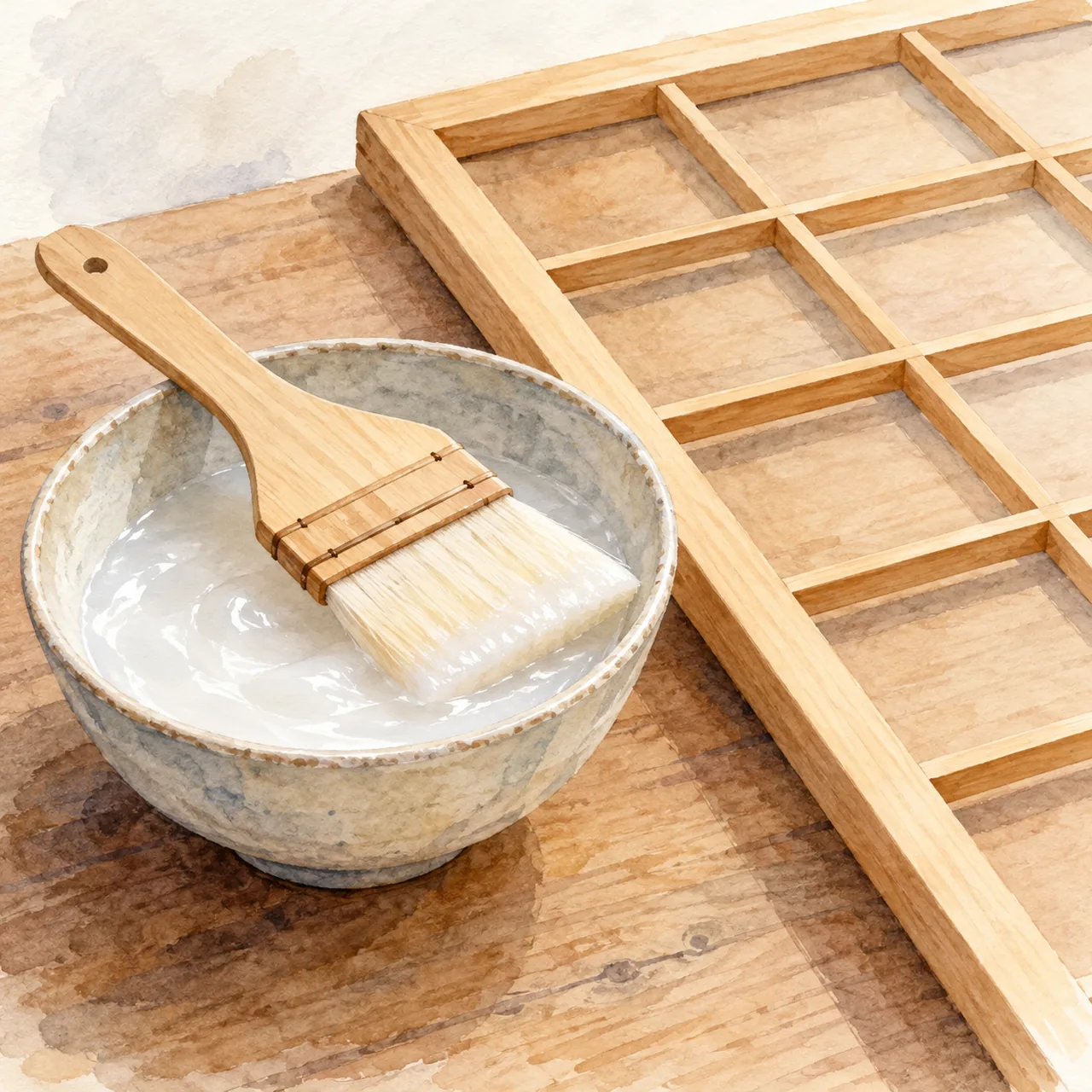
Washi Seikatsu Shoji Glue, Shofu-Nori 70 g — 100% wheat starch
Re-papering glue from a washi maker. Wheat-starch shofu paste; about 10 sheets of shoji paper or two fusuma panels.
Order it with the paper and everything for the year-end re-papering — a Japanese household tradition — comes from one shop. Sold in Japan.
5. Takada Orimono's Tatami Edging: A Craft Material Born from Leftovers
Smaller tatami rooms, leftover edging
Takada Orimono is a tatami edging maker founded in 1892 in Kojima, Kurashiki, Okayama. By the company's own account, it makes about 40% of the tatami edging produced in Japan.
Tatami edging is normally delivered in lots of enough for a ten-mat room. But as rooms shrank to eight, six and four-and-a-half mats, as much as five and a half mats' worth could be left over. So Takada asked the handcraft industry and local textile makers to try making things with it — and the ideas poured in.
Kojima, a town of sewing machines
Kojima in Kurashiki is a textile town, home to many companies known for denim, school uniforms and workwear. Mr. Takada says that having so many people who use sewing machines helped widen the uses for this tough fabric. Today, not only leftover edging but woven lengths too short for tatami are put to use as craft material.
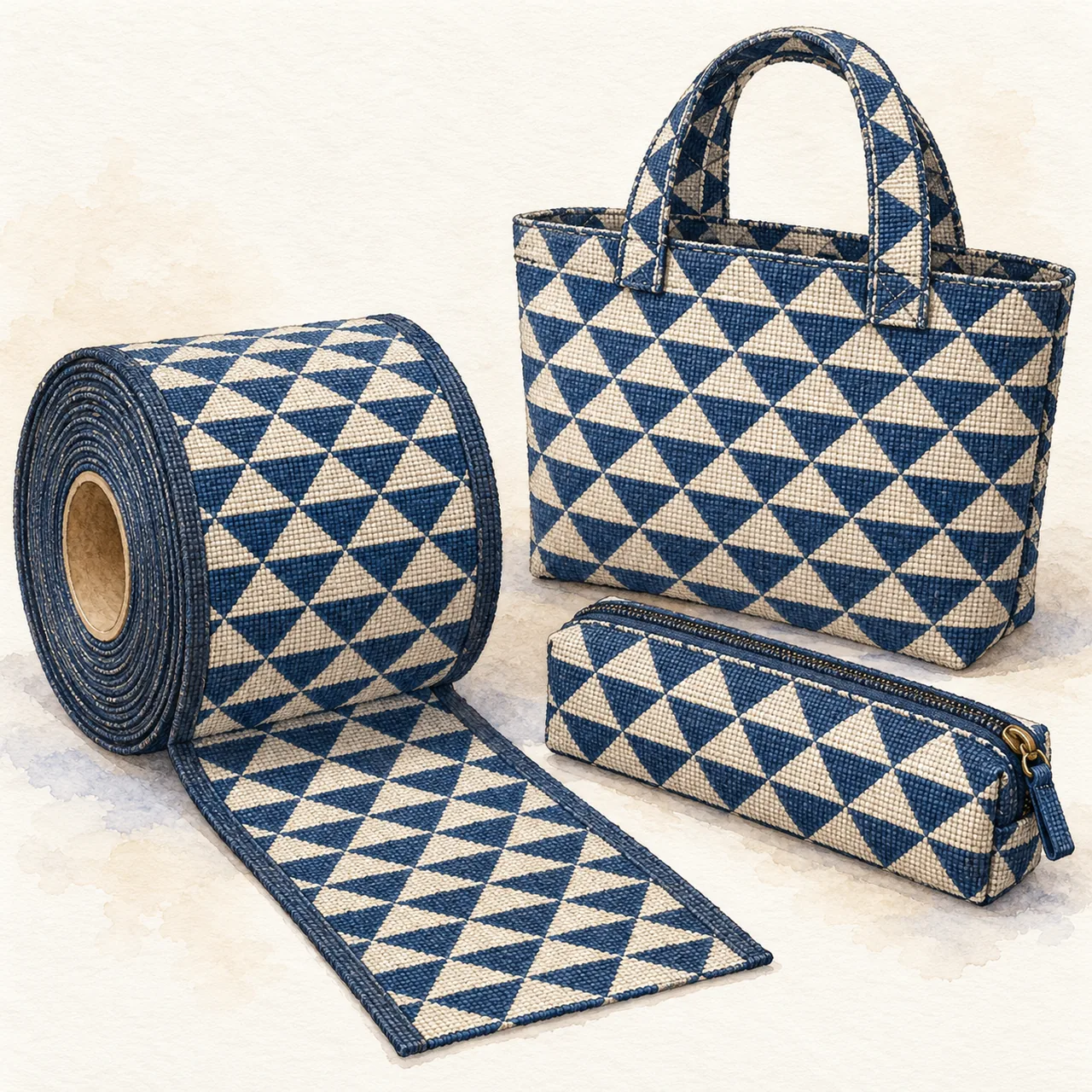
Takada Orimono Tatami Edging, Omiya-beri "Inase" Scale Pattern, 42 m — for tatami, or a bag
Takada's tatami edging, woven with a bold scale pattern. About 8 cm (3.1 in) wide and 42 m (138 ft) long — enough for ten tatami mats. Made for tatami, but used for bags and small goods too.
Tatami edging is durable and resists abrasion — good for bag handles and pen cases you carry every day. Sold in Japan.
6. Choosing and Using
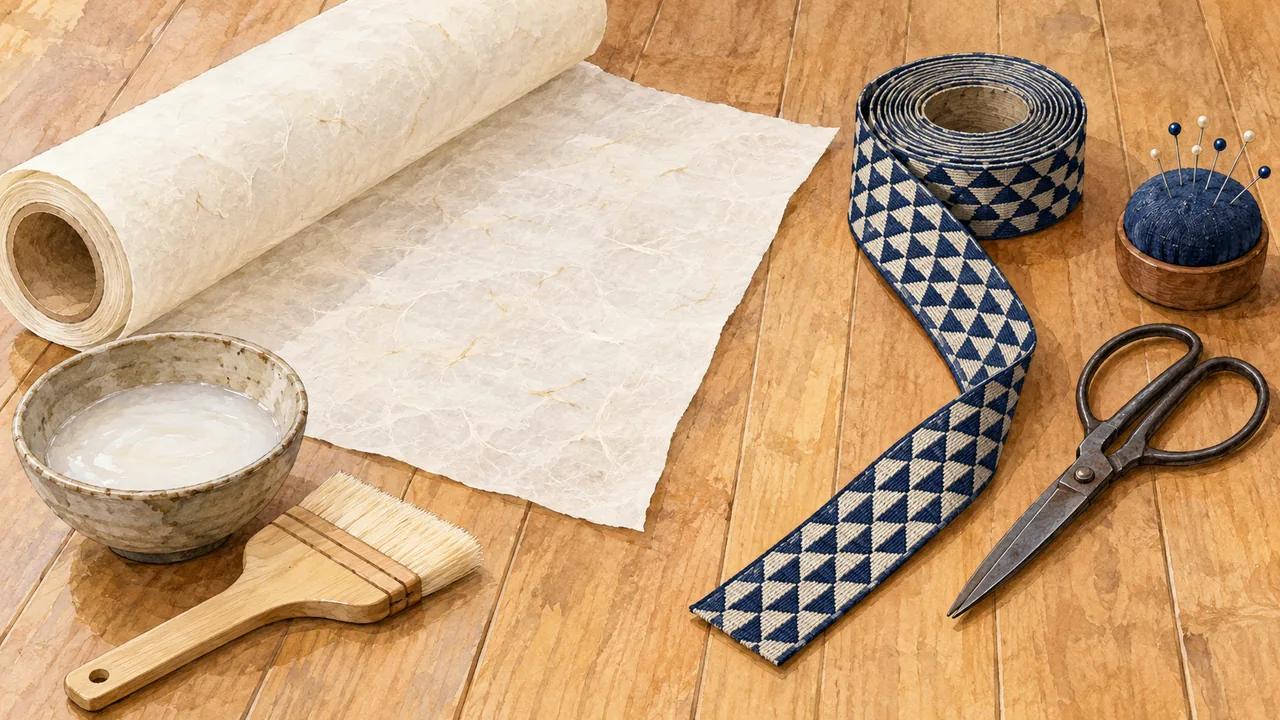
Shoji paper: start from your panels
The pure kozo roll is 94 cm × 3.6 m, enough for two panels. Count your shoji, measure their width and height, then work out how much you need. Nakamura Seishisho's handmade washi comes in single sheets of 63 × 97 cm, so match the number of sheets to your panel size.
The basic sequence: peel off the old paper, clean the lattice, apply glue and lay the new paper.
Tatami edging: for things you won't wash
Mr. Takada puts it this way: tatami edging "can't be washed, and isn't especially heat-resistant. But it excels in durability and abrasion resistance."
So it suits bag handles, pen cases, card holders and key fobs — things where toughness counts — rather than anything you'll launder. Take care with the iron temperature.
7. Buying Shoji Paper Outside Japan
The four products above are sold in Japan; we couldn't find them on Amazon.com. But Ohnao — the Ichikawamisato maker behind Washi Seikatsu — sells its shoji paper on Amazon.com under the name ONAO, labeled made in Japan, in the same 94 cm × 3.6 m roll size. The listing doesn't state the fiber content, so check the description if you're after 100% kozo.
ONAO Japanese Shoji Paper Roll, 94 cm × 3.6 m (White)
Shoji replacement paper from Ohnao in Yamanashi. 37 in × 141.7 in — enough for two standard Japanese shoji panels. ONAO also sells an unryu-pattern version and narrower rolls.
ONAO Japanese Shoji Paper Roll, 94 cm × 3.6 m (White)
Loading product details…
Shopping in Japan? On the label, look for 純楮 or 楮100% (100% kozo), 手漉き (handmade), 生麩のり (wheat-starch glue) and 畳縁 (tatami edging).
8. Frequently Asked Questions
What's good about 100% kozo shoji paper?
A soft texture that keeps the papermaking's light and dark, and resistance to discoloring. Pure kozo shoji paper is made without fluorescent dyes and isn't whitened more than necessary, so it's described as less prone to yellowing in sunlight.
How many shoji panels does one roll cover?
A 94 cm × 3.6 m roll covers two panels. It depends on your shoji size, so measure width and height before you buy.
How much glue do I need?
70 g of shofu wheat-starch glue covers about 10 sheets of shoji paper, or about two fusuma panels. It's also used for backing washi and silk.
Is there colored shoji paper?
Yes — Nakamura Seishisho's Yame handmade washi comes in ivory, indigo, wisteria, pink and yellow. It's 100% kozo handmade washi, and the color glows softly with light behind it.
Can tatami edging be used for crafts?
Yes. Takada Orimono's edging is made for tatami but widely used for bags and small goods. It's durable and abrasion-resistant, but not suited to washing or high heat.
How much is 42 m of tatami edging?
Enough for ten tatami mats. For crafts alone, that's plenty — enough to share with family or a sewing group.
Final Thoughts: The Paper and Cloth of a Tatami Room
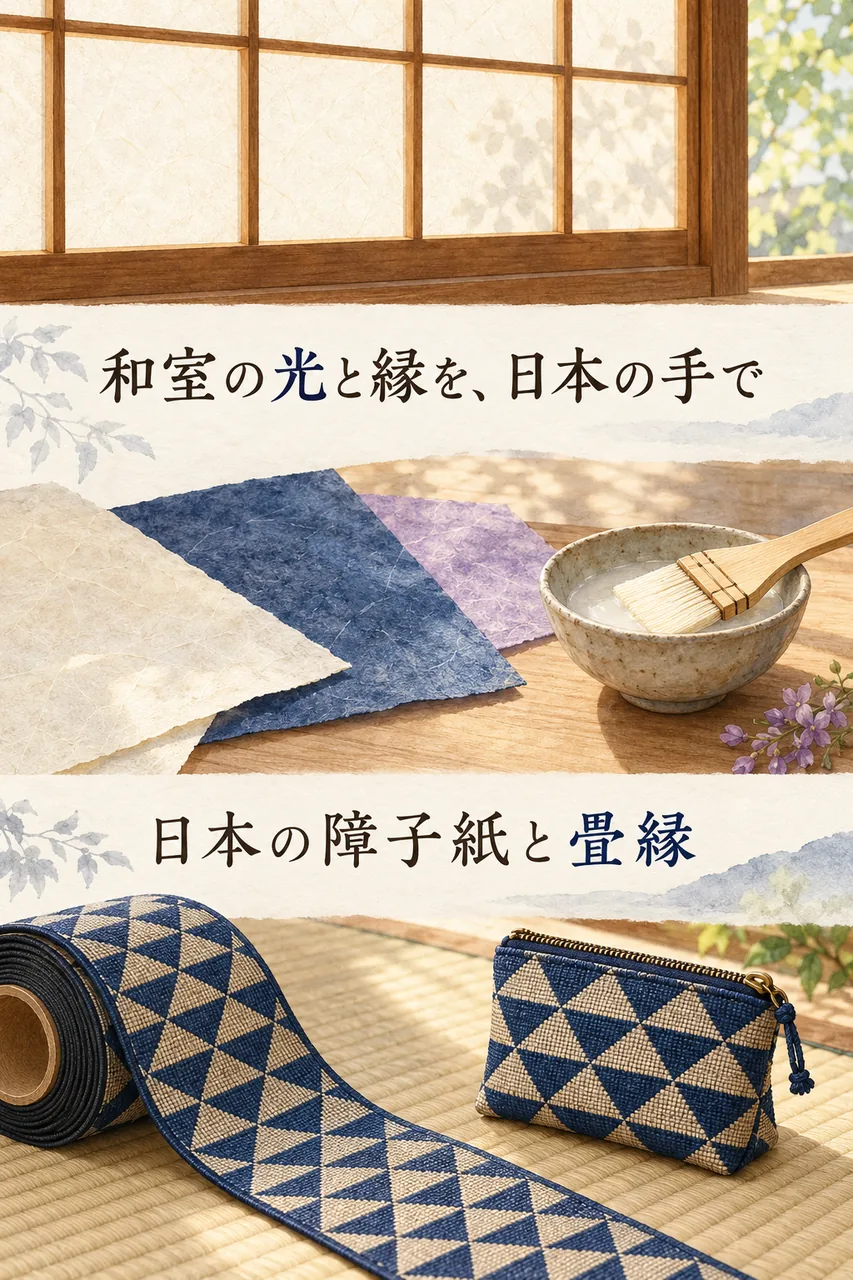
Choose shoji paper by its fiber. With 100% kozo, you get a soft texture and color that doesn't fade.
Pure kozo paper from a thousand-year washi town in Yamanashi. Handmade, colored washi from Yame. Traditional wheat-starch glue. And Takada Orimono's tatami edging from Kojima, given a second life as craft material. All from Japanese makers who have kept the tatami room going.
Try re-papering your shoji with Japanese washi.
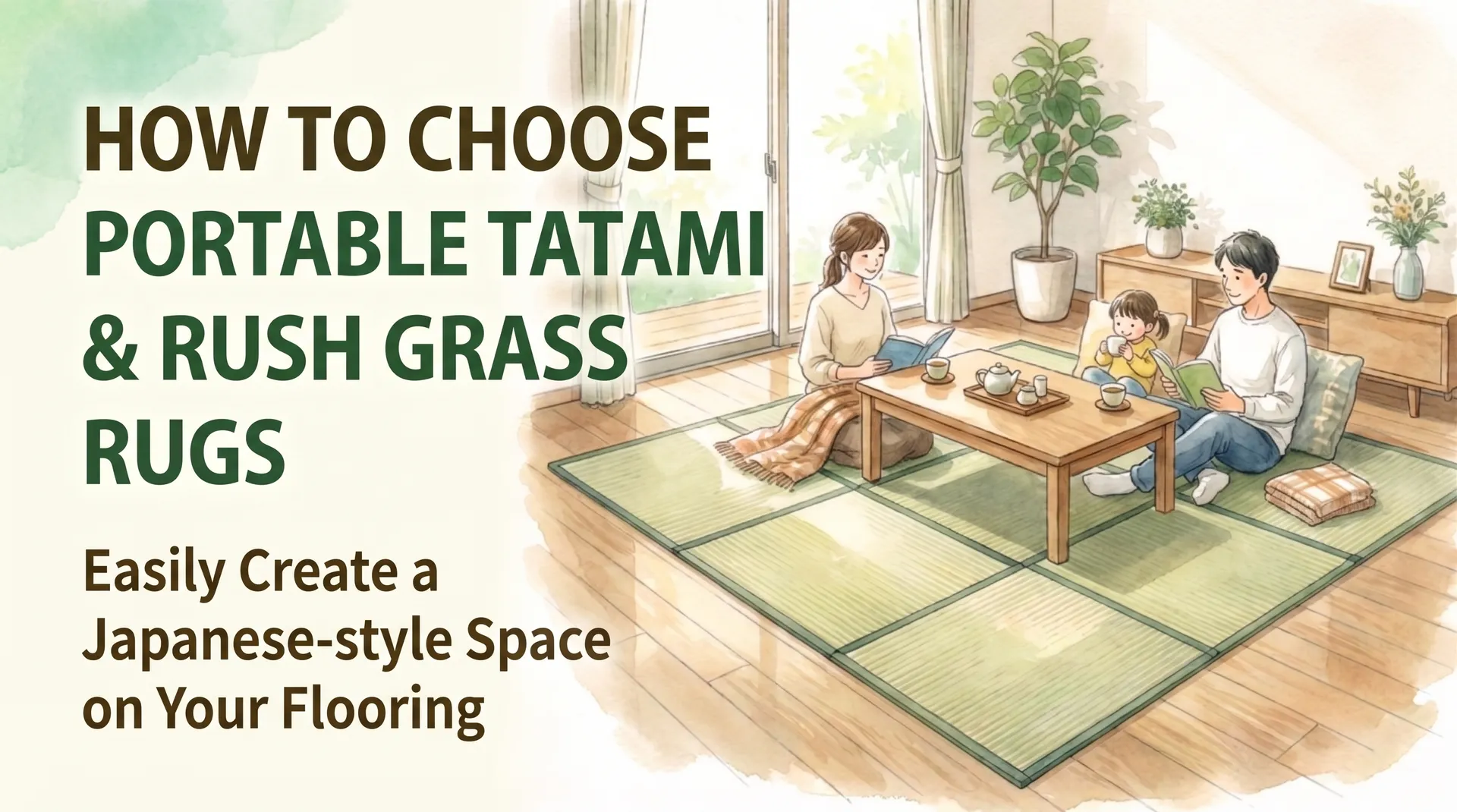
Japanese Igusa Tatami Mats: Humidity Control on Any Floor

Japanese Washi Lighting: Isamu Noguchi AKARI & Gifu Lanterns