
At the end of a recorder's model number there's a (G) or an (E).
Look closely at the box or the name — "204A(G)" — and there's a small letter after the number. It isn't a colour or a finish. It means a different fingering system: (G) is German fingering, (E) is Baroque (English) fingering. In the same maker's same series, that one letter makes the fingering a different thing — and if you only notice after buying, you'll be relearning your fingers. There's also a part of the build you can't see from outside: hollows deliberately made inside the thick sections of the wall. This guide covers reading the letter, why the system changes between soprano and alto, and what's inside the bore.
Quick Reference: Three Labels to Read Before You Buy
| Label | Means | If you miss it |
|---|---|---|
| (G) ▾ | German fingering | Fingering won't match what you learned |
| (E) ▾ | Baroque (English) fingering | Same |
| Soprano / Alto ▾ | Size and pitch | Won't match your songbook |
| "Wood-grain" ▾ | A finish name; the material is ABS resin | You think you're buying wood |
| Remember | One letter switches the fingering system. Start there ▾ | |
1. Why Japanese: One Letter Changes the Fingering
(G) and (E) Aren't Colours
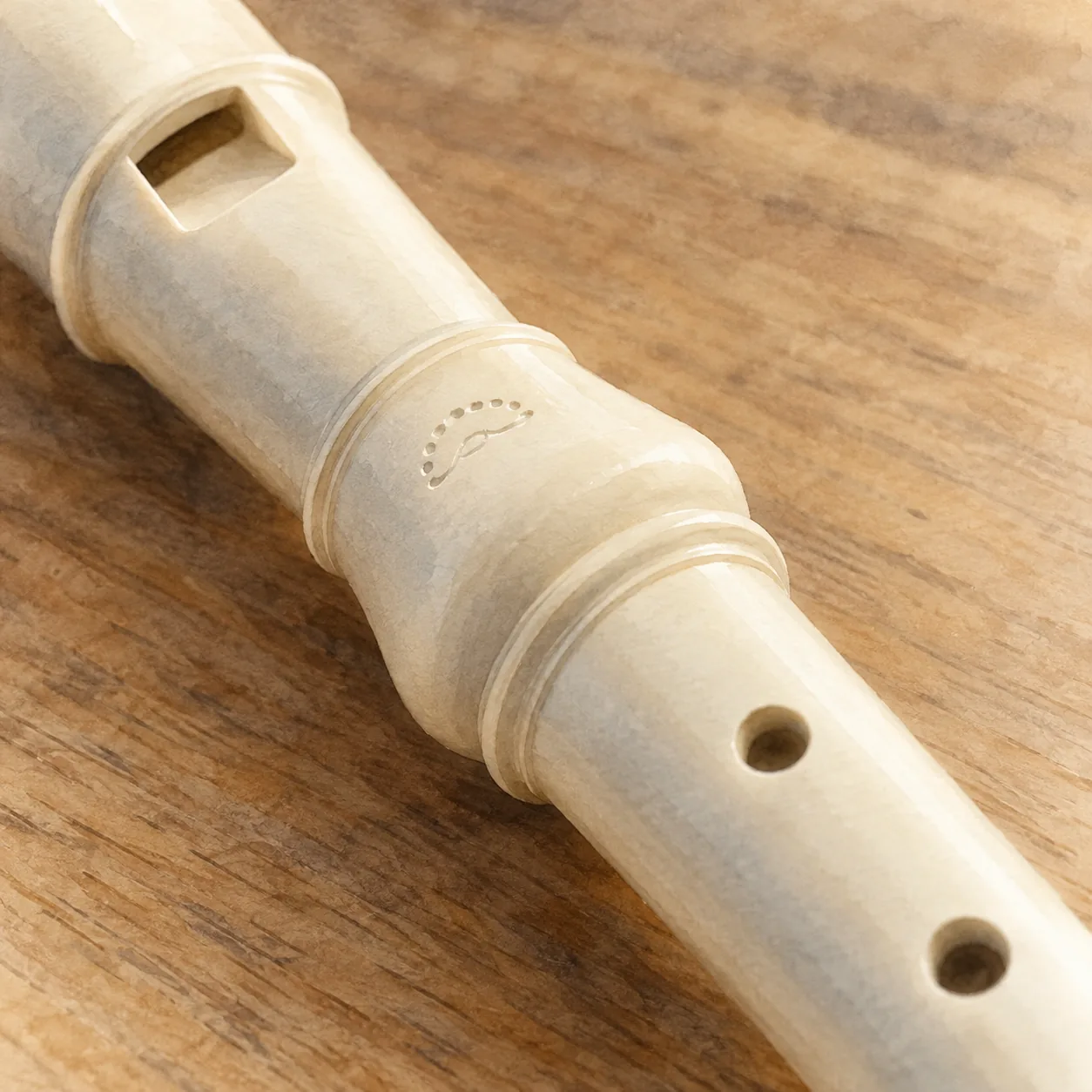
Recorder model numbers end in a letter, as in 204A(G). (G) is German fingering; (E) is Baroque, or English, fingering. The two are different fingering systems — the same score is played with different finger combinations. Not a colour difference, not a grade difference. So switching midway means relearning; decide before you buy whether to match what you learned at school or to choose with the future in mind.
The Same Series Comes in Both
Aulos's soprano "Robin" comes as 204A (German) and 205A (Baroque) — same series, same size, one digit apart. The maker offers both because both have players. Side by side in a shop they're almost impossible to tell apart, which is exactly why you read the letter. Aulos is made by Toyama Musical Instrument, established in 1954, whose business is "manufacturing and selling instruments, and planning sheet music and CDs."
2. School Recorders Are Chosen for a Reason
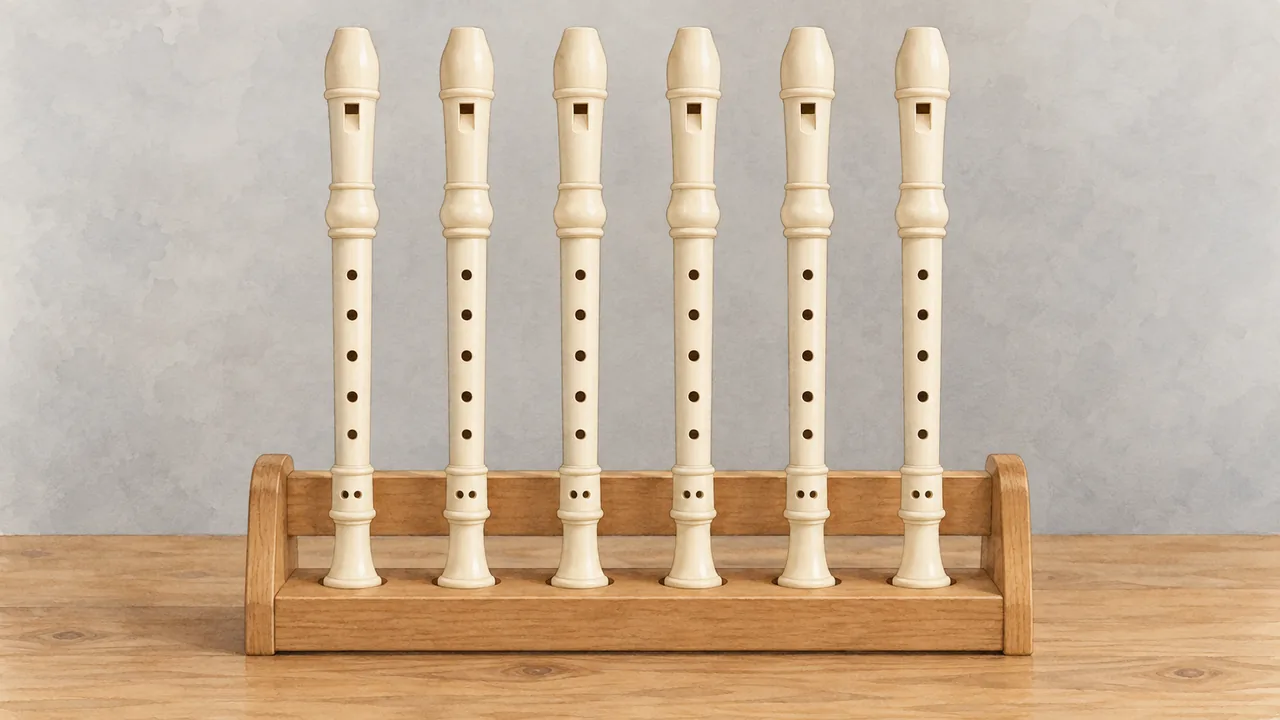
In Japan, some recorders carry the phrase "the standard model for elementary schools" — instruments bought for whole classes. Because one classroom teaches one fingering, the system is matched across the class, and a recorder with the same system as the one handed out at school lets a child play at home just as they were taught. When replacing a child's recorder, copy down the model number of the one they have, letter included, and you won't hesitate in the shop.
School recorders are built not to crack when dropped and to be easy to clean — made for many children to handle every day. Once you know your system, the easiest progression is to move up a grade within the same system — Yamaha's German-fingering YRS-27III and the step-up YRS-301III, for example — so your fingers carry straight over. Mouthpieces are personal, so recorders aren't for lending.
3. Move Up to Alto, and the System Changes Too
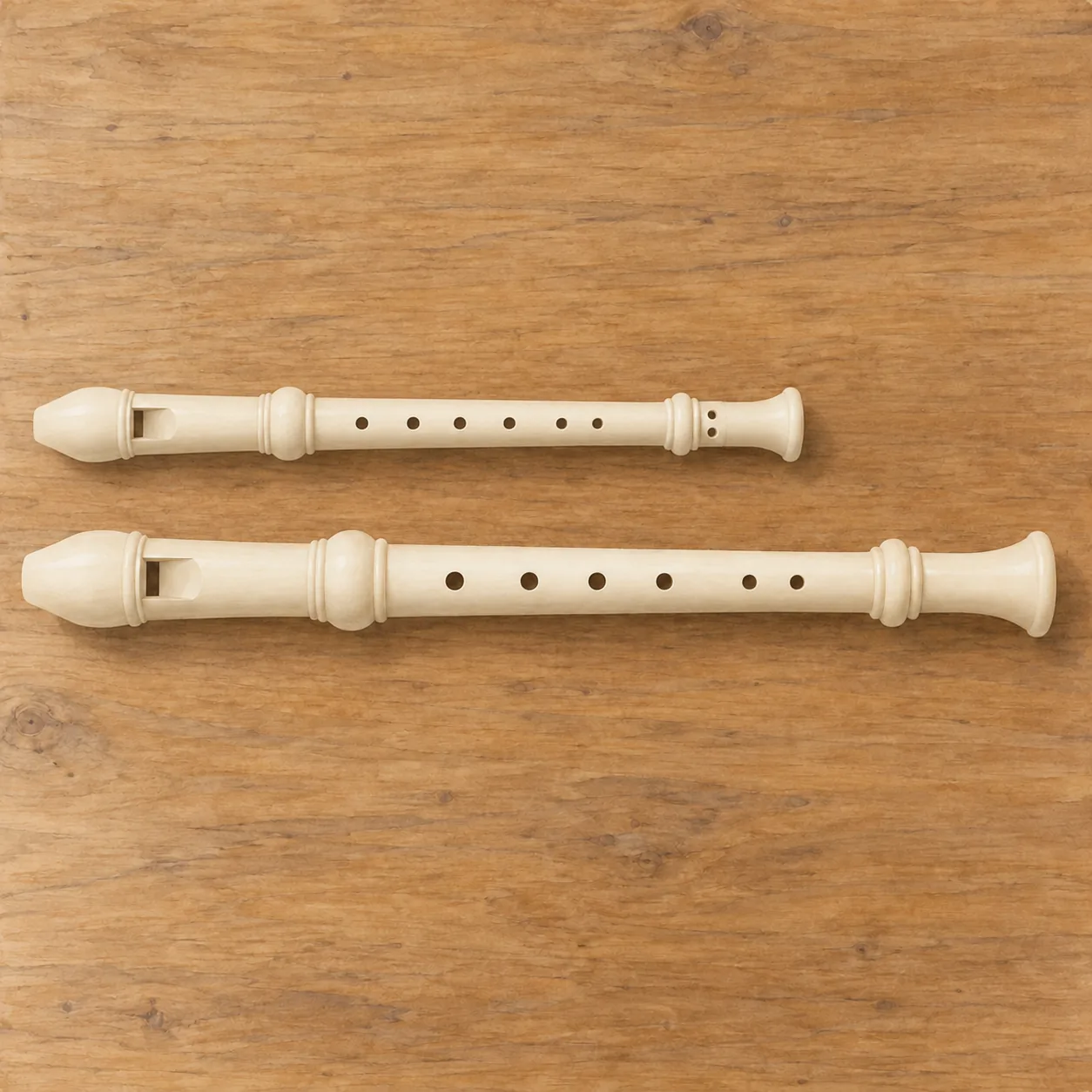
The alto recorder is a size larger than the soprano and plays lower. In the shop, altos are mostly (E), Baroque fingering. So someone who learned soprano in German fingering meets a moment of relearning at the alto. If you mean to go on to alto, choosing Baroque fingering at the soprano stage is one approach — that's where the 204A-or-205A choice leads.
Aulos's 509B "Symphony" alto is Baroque fingering. Toyama's description: "Exquisite voicing and a comfortable feel of breath faithfully reproduce the player's subtle breathing, from the lowest note to the highest." Its official spec lists ABS resin. There's also a 509BW "wood-grain" version — "wood-grain" is a finish name; the material is still resin. Same system and dimensions, so the fingering carries over.
4. Hollows Inside the Thick Parts of the Wall
A recorder looks like a straight tube, but its wall thickness varies — around the finger holes and at the joints it inevitably gets thick, and uneven thickness makes the tone uneven. One solution is to build hollows into the parts that would be thick, evening out the wall. According to a retailer's explanation, those hollows act as resonators, make the instrument less affected by changes in air temperature, and make it lighter.
The joint, where the recorder is pulled apart and pushed together to fine-tune pitch, is described as a precise double structure too, so it doesn't loosen or leak air with long use and adjusts smoothly. Neither shows while you play, and you can't see them in your hand — the care in this instrument is in the parts you can't see.
5. What Makes the Sound Isn't a Reed
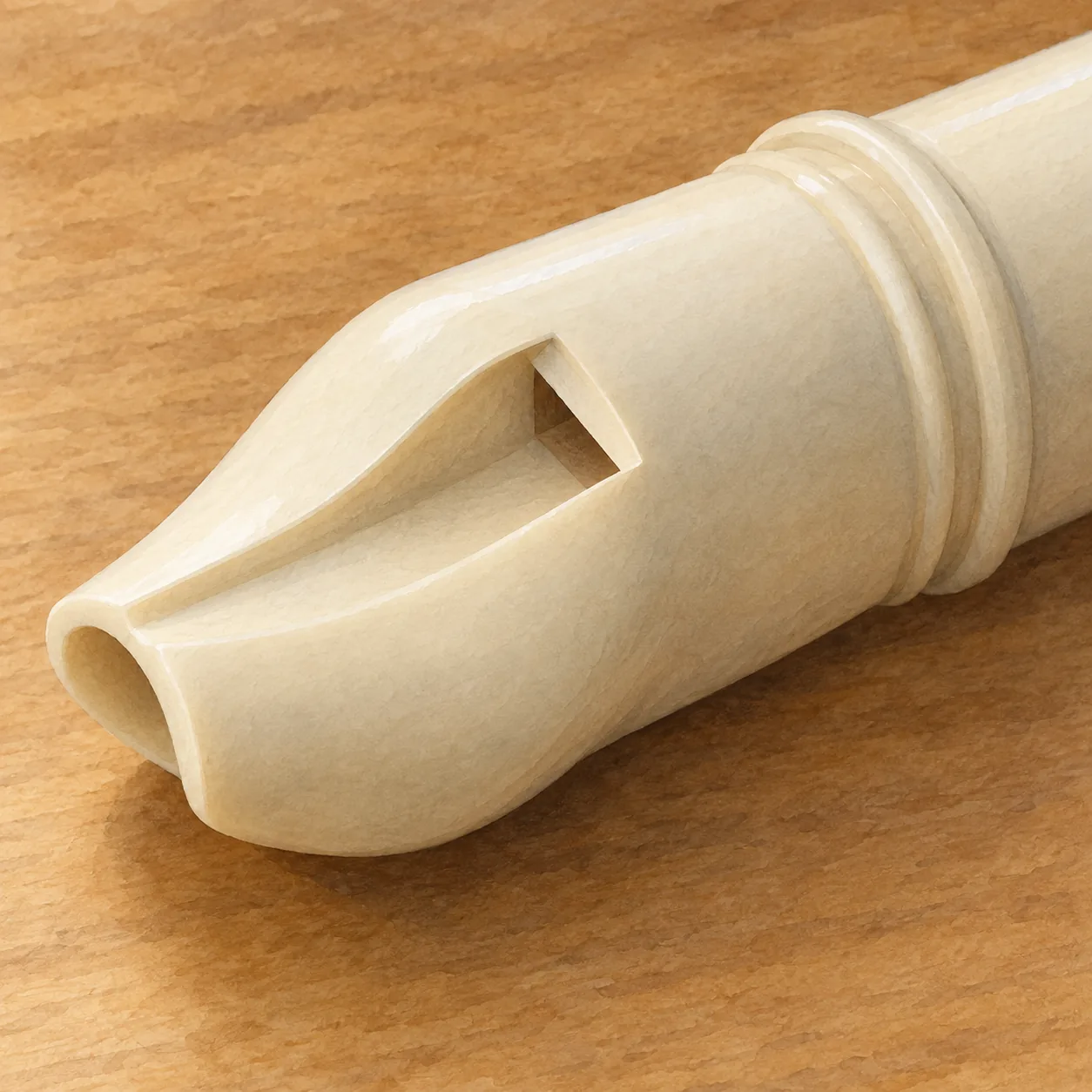
Breath entering the mouthpiece passes through a narrow channel and strikes straight onto the edge of a window cut into the tube. That edge is thin and sharp, shaped like a blade. Hitting it, the air stream flips alternately inside and outside the tube, setting the air in the tube vibrating — the sound. Nothing vibrates; there's no reed. (A harmonica, by contrast, sounds by metal reeds vibrating — both "breath instruments," but built on different principles.)
With no vibrating part, the sound is decided by the shape of the airway alone: the gap from mouthpiece to edge, the size of the window, the angle of the edge. If the shape is off, so is the sound — which is why moulding precision is the instrument's quality.
6. Buying From Outside Japan
Aulos recorders from Japan's Toyama Musical Instrument are widely sold abroad, including on Amazon.com. Check the fingering system in the listing — "Baroque" or "German", or the (E)/(G) letter — before you buy.
Aulos 205 Robin Soprano Recorder (Baroque)
The Baroque-fingering Robin soprano — the 205 of the 204/205 pair. A good choice if you plan to go on to alto, where Baroque fingering is the norm.
Aulos 205 Robin Soprano Recorder (Baroque)
Loading product details…
Aulos 509B Symphony Alto Recorder (Baroque)
Aulos's Symphony alto in Baroque fingering, ABS resin. Altos need more breath than sopranos, so they suit players who've grown into them.
Aulos 509B Symphony Alto Recorder (Baroque)
Loading product details…
7. After Playing, Run It Through Inside
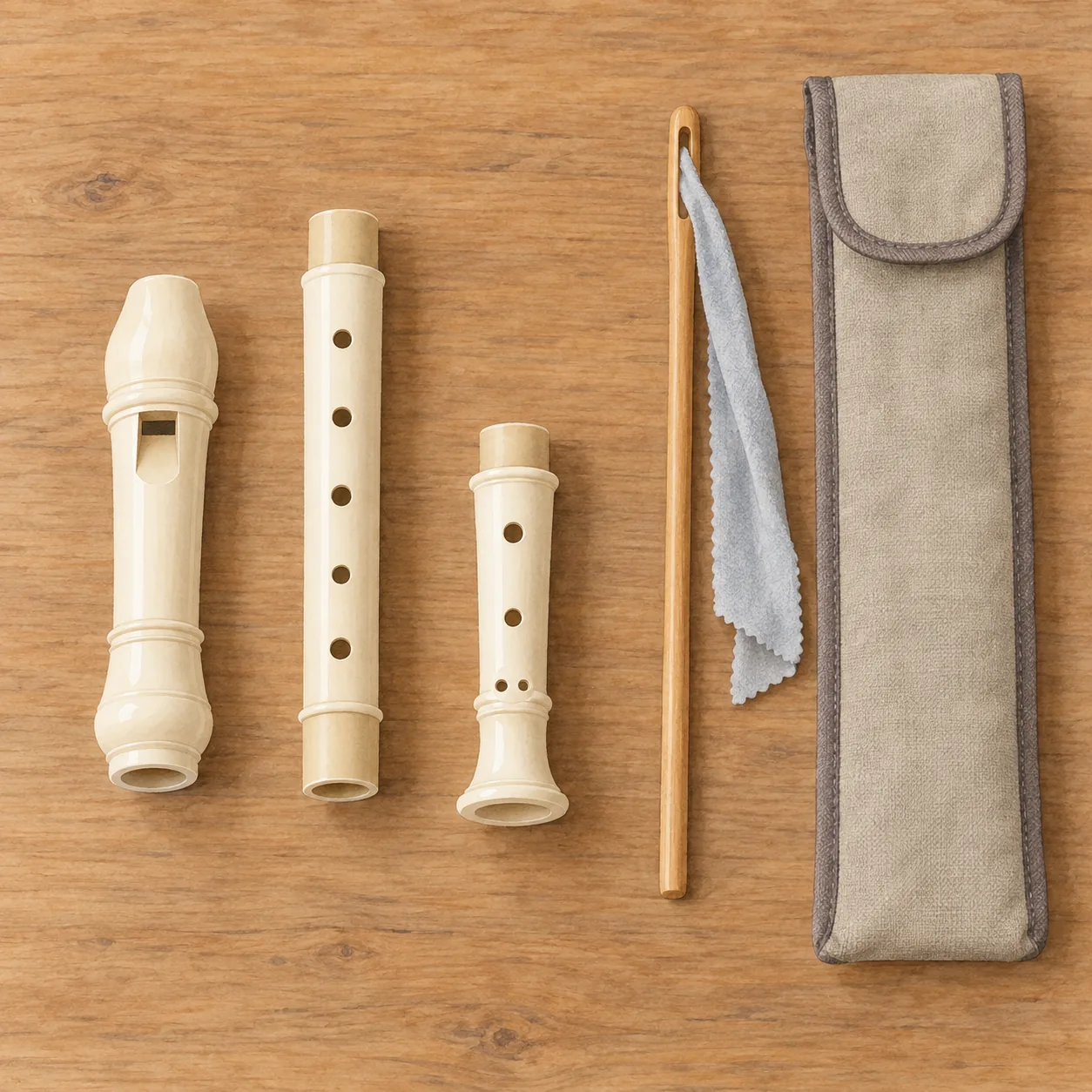
Breath carries moisture, and in a recorder it collects inside the tube. After playing, wrap a cloth around the cleaning rod and run it through the bore, top and bottom joints separately. The narrow channel in the mouthpiece especially collects water — left wet, it makes the next note hard to sound. Cleaning is work for the sound.
Each model has its matching case. Most important: dry before you put it away — closed in wet, moisture stays inside. The mouthpiece where breath hits and the joint you push together both affect the sound, and both are the places most easily knocked.
8. Frequently Asked Questions
(G) or (E) — which should I choose?
Match the fingering you're learning. The same system as your school recorder lets you play as taught. If you plan to move on to alto, choosing Baroque (E) is one way to think about it, since altos are mostly Baroque.
If the system is different, can't I play at all?
It sounds, but the fingering changes, so you relearn. When replacing one, copy the model number of the current recorder, letter and all.
Is "wood-grain" made of wood?
No — it's a finish name. The look imitates wood; the material is resin. Aulos's alto spec says "ABS resin."
Soprano or alto first?
Usually soprano — smaller and needing less breath. The alto is a size up and needs more breath, so there's no hurry. Check which your songbook assumes.
My recorder has become hard to sound.
Water may be sitting in the mouthpiece channel. A recorder sounds by breath hitting an edge, so a wet airway sounds poorly. Run a cloth-wrapped cleaning rod through the bore.
Can I wash it in water?
Check the instructions for your model. Resin handles water, but the narrow channel and the joints hold water easily; dry the inside fully before storing.
Final Thoughts: The Care Is in What You Can't See
A recorder's model number ends in (G) or (E): German or Baroque fingering — not colour or grade, but the fingering system itself. Aulos's Robin comes as 204A(G) and 205A(E), one digit apart.
Altos are mostly Baroque, so German-trained sopranists relearn there. Inside, hollows even out the wall and the joint is double-built — and with no vibrating part, the shape of the airway alone decides the sound.
Run the cleaning rod through after playing, and it lasts. Choosing a recorder starts with reading one letter.

Japanese Harmonicas: Suzuki and Tombo

Japanese Acoustic Guitars: Yamaha, Yairi, Fujigen