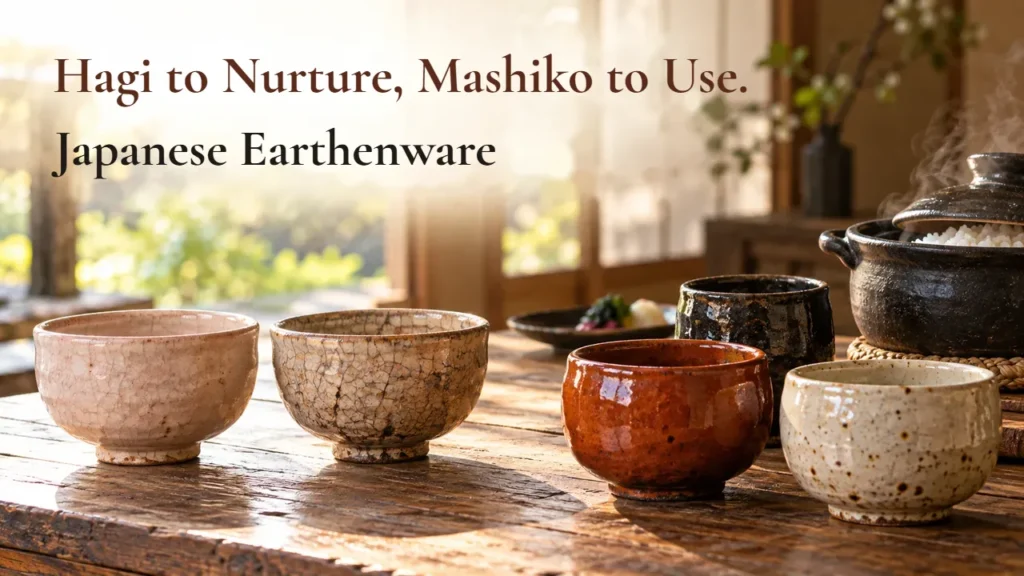
Some pottery is at its most beautiful the day you buy it. Other pottery slowly becomes your own colour the more you use it.
Hagi ware, from Yamaguchi, is the classic of the second kind. Its soft clay slowly absorbs tea, and over years its colour changes — what people who know pottery call "Hagi no nanabake," the seven transformations of Hagi. Mashiko ware, from Tochigi, is chunky, rustic earthenware that began as everyday wares for Edo's kitchens. This guide introduces Hagi's Senryuzan and Shokeian kilns and Tsukamoto, Mashiko's largest kiln, along with how to care for each.
Quick Reference: Hagi or Mashiko?
| Hagi ware (Yamaguchi) | Mashiko ware (Tochigi) | |
|---|---|---|
| Clay and surface | Soft clay, highly absorbent | Rustic, with a calm gloss |
| The pleasure | Colour that changes with use ("nanabake") | Glaze colours — persimmon, black, rice-husk white |
| Kilns in this guide | Senryuzan, Shokeian ▾ | Tsukamoto ▾ |
| Care | Soak in water before use; hand-wash ▾ | Tsukamoto's bowls: dishwasher and microwave safe |
1. Why Japanese: Hagi Changes Colour as You Use It
"The Seven Transformations of Hagi"
According to the Association for the Promotion of Traditional Craft Industries, Hagi ware's great features are "a soft clay texture with little vitrification, and high water absorbency." Through the kannyu — fine crackle in the glaze — tea and sake slowly seep in.
"A fresh tea bowl with clear colours becomes, after years of use, a calm and subdued one." People who know pottery call this "Hagi no nanabake"; in the tea ceremony world it has long been cherished as chanare — "becoming accustomed to tea."
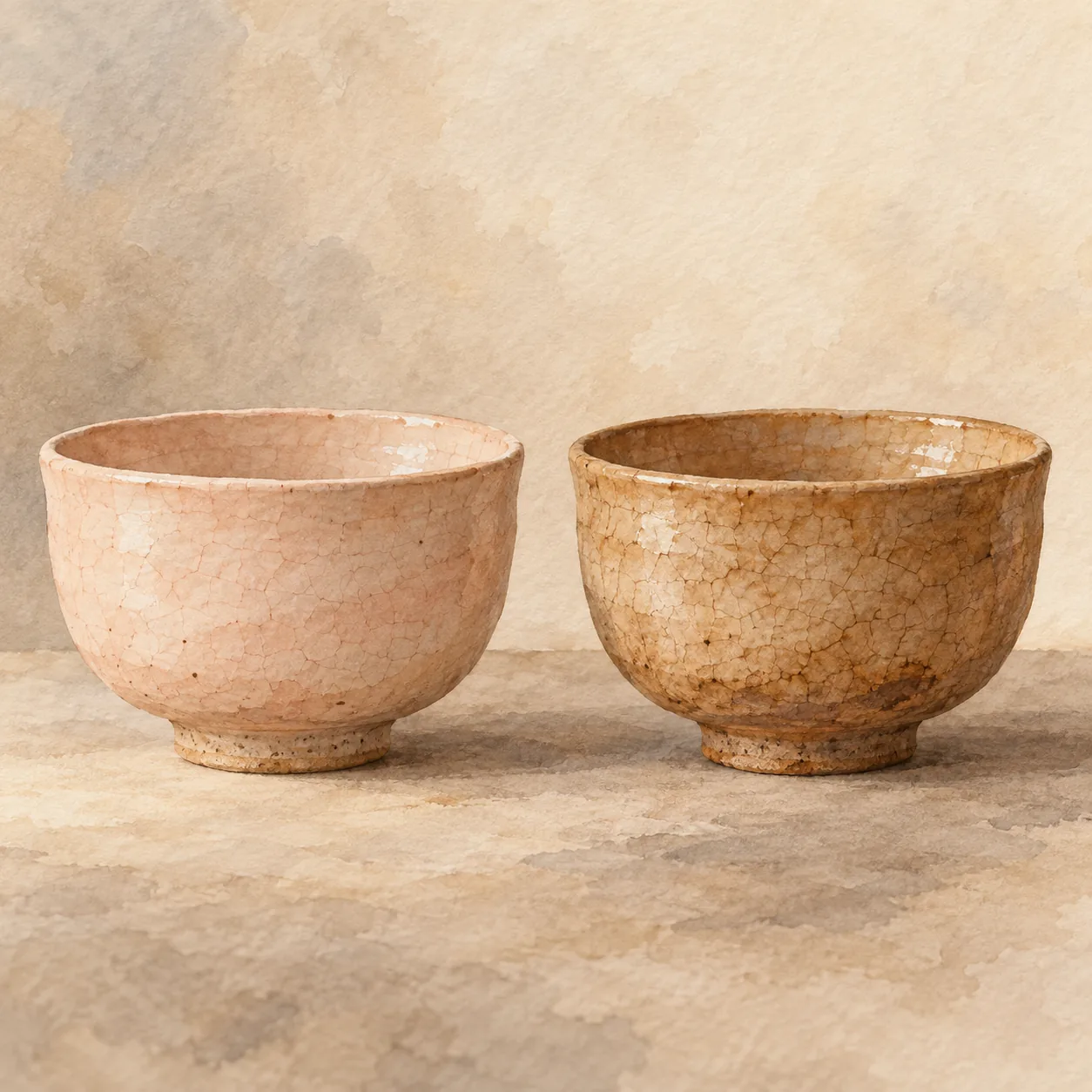
No Painting — Left to Clay and Fire
Hagi ware is almost never painted. Potters shape each piece anticipating how the clay blend, the way the glaze is applied and the spatula marks will turn out in the kiln. The basic clays are three — Daido, Mitake and Mishima — and kilns sometimes blend in clay from their own ground to give each its own character.
2. Hagi Kilns: Senryuzan and Shokeian
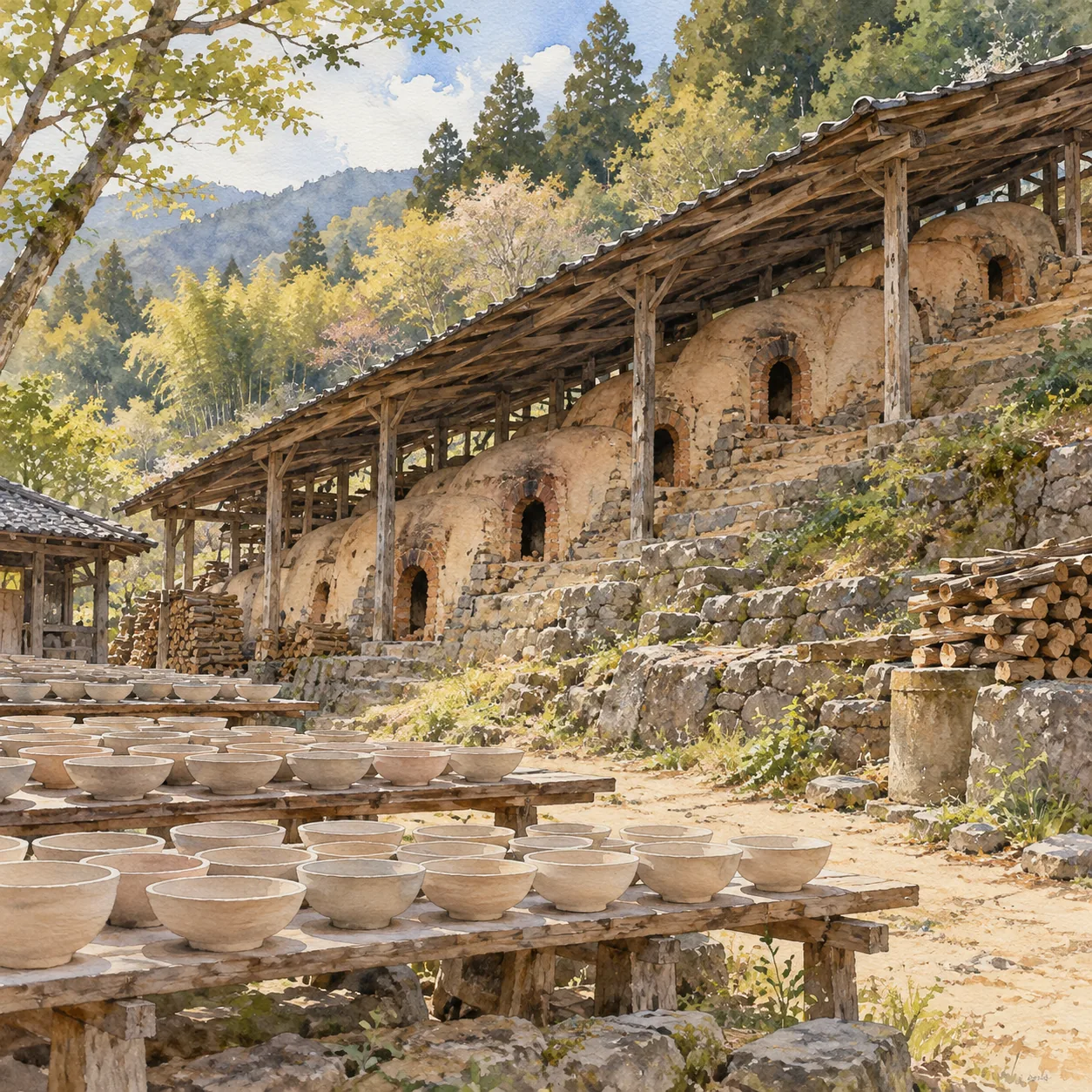
Senryuzan is a Hagi kiln founded in 1826. Its previous head was Yoshika Taibi, honoured as a Person of Cultural Merit. The kiln prepares its own clay and mixes its own glazes, and uses a kick wheel and a climbing kiln to make Hagi ware with a gentle, traditional feel.
Shokeian, deep in the hills of Hagi, has continued for more than 200 years. The eighth-generation head, Kaneta Kaen, and his son Tomoaki fire the climbing kiln together.
Senryuzan Hagi Ware Flat Tea Bowl
A flat matcha bowl thrown in Daido clay, one of Hagi's basic clays: about 15 cm across and 5 cm tall, wide-mouthed and low, with colour shifting from pale pink to beige. The retailer lists it as microwave-safe but advises against the dishwasher, where knocks could crack it. A bowl to wash by hand and raise, Hagi-style. Handmade, so each one differs.
Shokeian Teacup by Kaneta Kaen, 8th Generation
Thrown on the wheel by Kaneta Kaen, glazed with the kiln's own glaze and fired in the climbing kiln: 9 cm across, 6.7 cm tall, 200 ml full, with a faintly reddish glaze. Its foot has the notch of a kiri-kodai (cut foot), often seen on Hagi ware — a shape with a legend that potters deliberately "damaged" pieces from the domain's official kiln so ordinary people could use them. Not for the microwave or direct flame. A cup for watching the colour change a little with every morning's tea.
Uchimura Kobo Hagi Ware Rice Bowl Pair
A pair of rice bowls for two people to fill every day and raise together: the larger about 12.5 cm across and 5.7 cm tall, the smaller about 11 cm and 5.2 cm. The retailer describes them as "easy to use every day while respecting Hagi's tradition." Start using both on the same day, and watch each turn its own colour.
Did you know: A name handed down for 400 years
Hagi ware began 400 years ago, when the warlord Mori Terumoto returned from the Korean peninsula with the potter brothers Ri Shakko and Ri Kei, and Ri Shakko opened a kiln in Hagi to make wares for the domain. After his death, Ri Kei took over the kiln and received from the lord the name "Saka Koraizaemon" — a name still carried on today.
3. Raising Hagi Ware: Water Before, Hand-Wash After
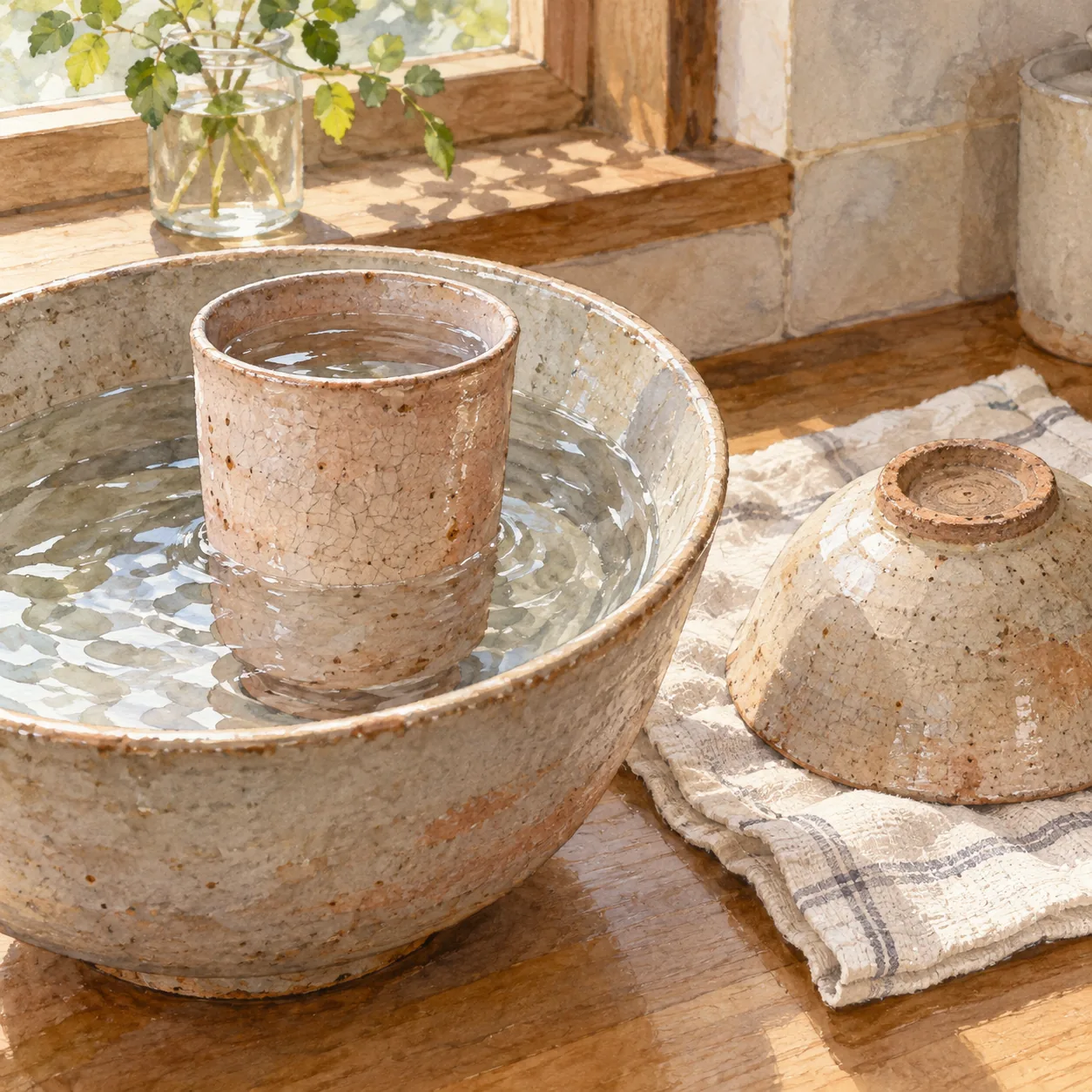
The association describes the basic care for Hagi ware like this: "Before use, let the piece absorb plenty of water; after use, wash it well by hand and let it air-dry until all moisture is gone."
How the colour seeps in varies a lot with how the owner handles it — and the most important thing for a good patina, it says, is simply to keep using it.
Put Hagi Away, and It "Dies"
The association's page quotes this saying: "However fine a tea bowl may be, if you treasure it too much and never use it, it dies." Care for it properly and use it every day, and Hagi ware will show not just "seven" but endless changes of expression. Hagi belongs with your morning tea, not in a display cabinet.
4. Mashiko Ware: Earthenware From Edo's Kitchens
Mashiko ware began in the mid-19th century under the influence of Kasama ware. Early on, with the domain's support, it made everyday wares — which were used in the kitchens of Edo.
The potter Hamada Shoji, who began working in Mashiko in 1924, deeply influenced its potters. Today's Mashiko tableware and flower vessels grew from there.
Persimmon, Black and Rice-Husk White
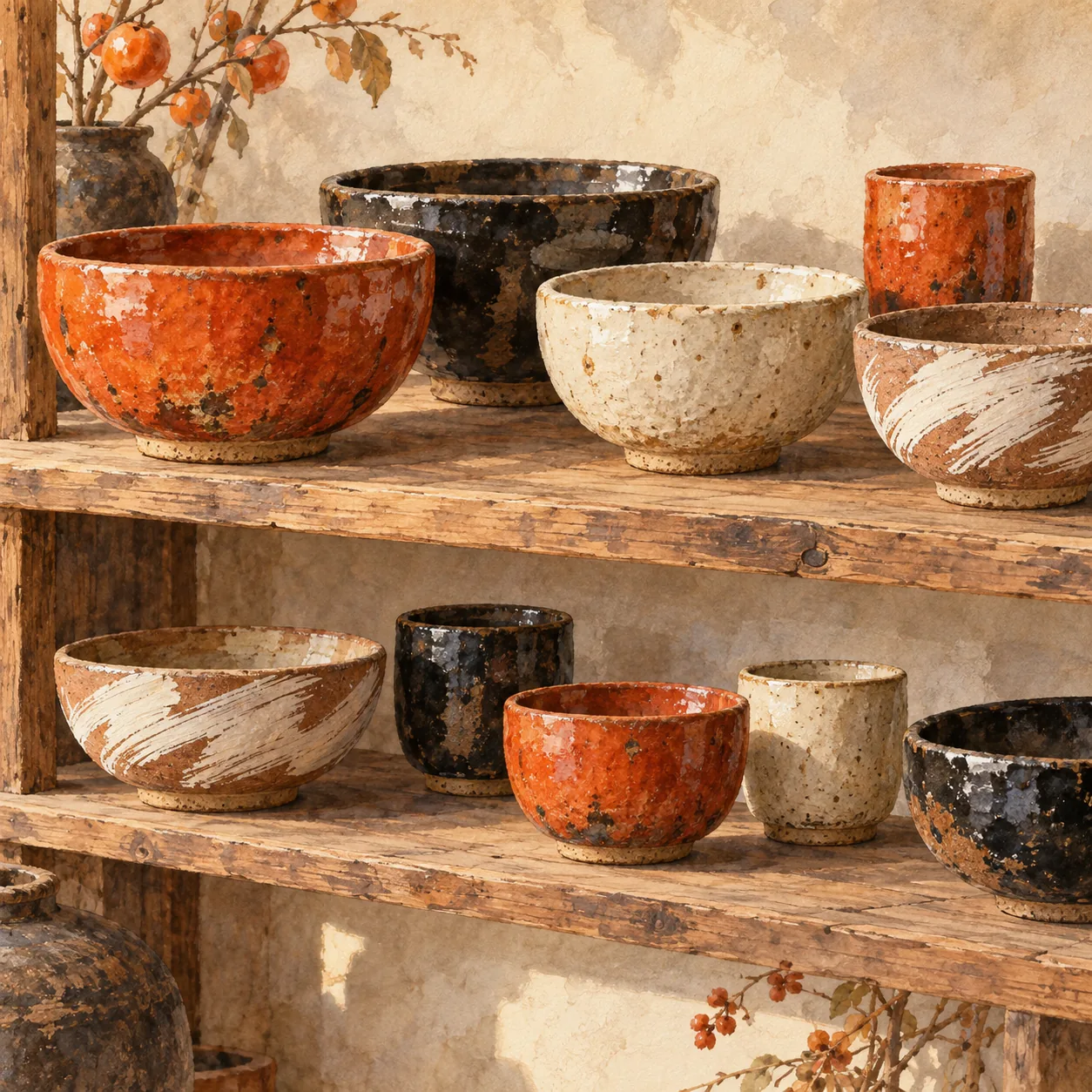
The association calls Mashiko ware "rustic pottery with a calm gloss." Hakeme, where white slip is brushed on; tobikanna, where a plane chatters a rhythm of marks into the surface; and many glazes — kaki (persimmon), kuro (black), and nuka-jiro, a white glaze using ash from straw, wood or rice husks — give Mashiko its character.
5. Tsukamoto: A Kiln Since 1864, and a Station Lunch Pot
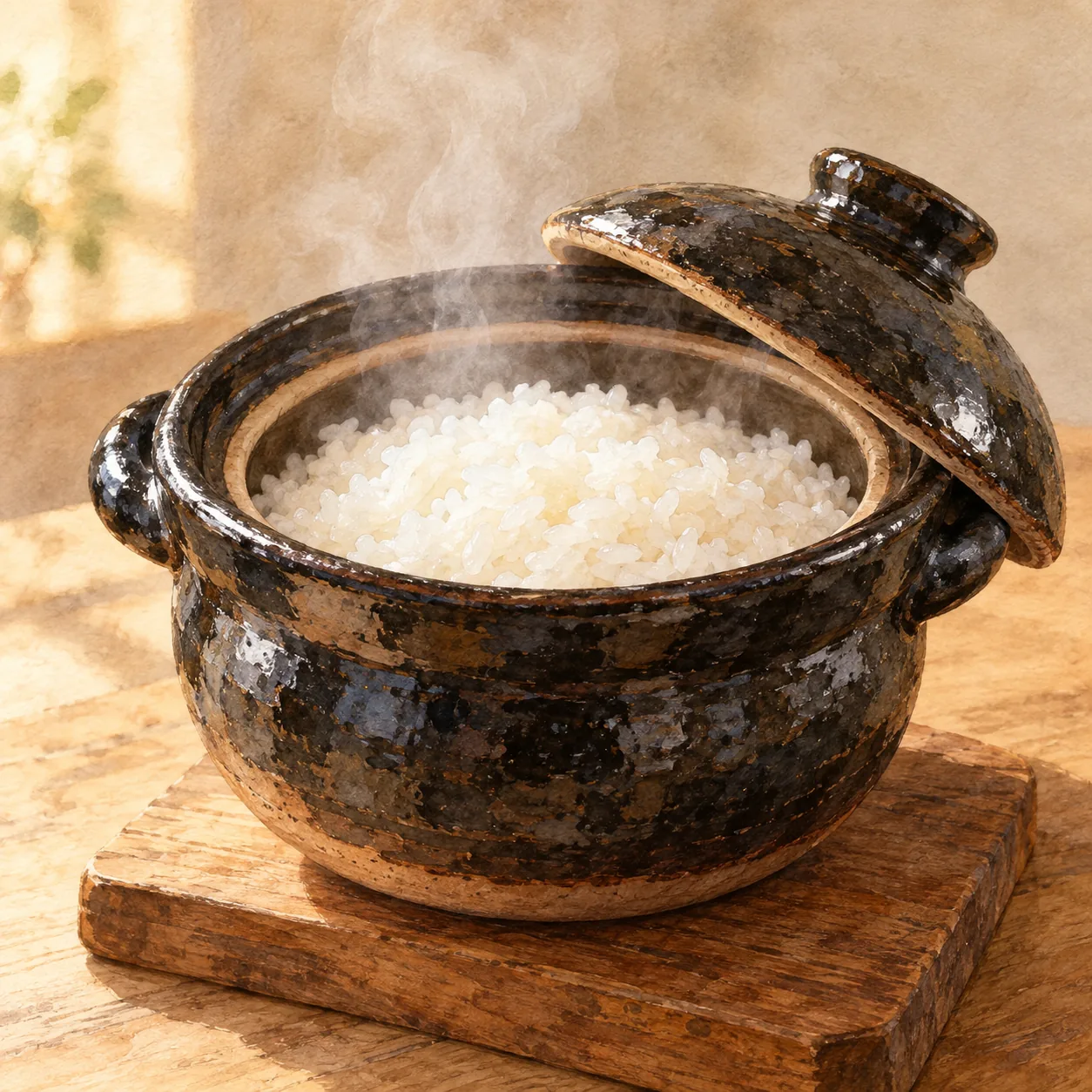
Tsukamoto began in 1864, when its founder Tsukamoto Rihei built a kiln in Fukada, Mashiko — a Mashiko kiln with more than 160 years behind it. Its history lists 1957 as the year it "began making the containers (kama pots) for the ekiben (station lunch) at Yokokawa Station." This is a kiln that has made rice pots.
Tsukamoto's current logo is by Serizawa Keisuke, the dyer and Living National Treasure. He visited several times through Hamada Shoji, who lived and worked in Mashiko, and took on the logo through that connection.
Did you know: Mashiko's autumn pottery fair is around 3 November
Mashiko's pottery fair has run since 1966, in spring over Golden Week and in autumn around 3 November. Some 50 shops and about 500 tents take part, and about 500,000 people visit across spring and autumn — choosing pieces while talking directly with young potters and kiln craftsmen.
6. Pottery to Nurture, or Pottery to Use Freely?
① If you want to watch it change: Hagi
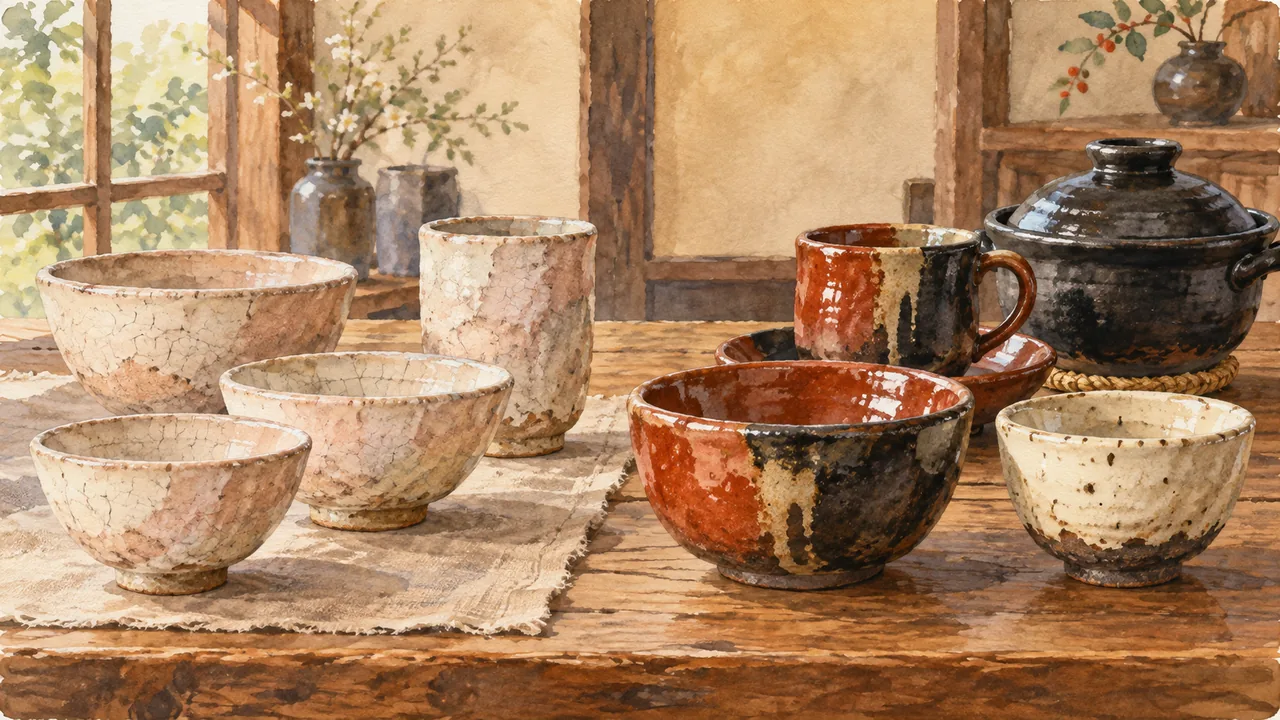
If you want to raise a piece over years into a colour that's yours alone, choose Hagi. Morning tea in a Hagi cup, daily rice in a Hagi bowl. Soak it before use, wash it by hand after, let it air-dry — and that small ritual becomes your time with it.
② If you want to use it hard every day: Mashiko
If you'd rather not think twice about the dishwasher or microwave, choose Tsukamoto's Mashiko ware. Its round bowl and cups are labelled dishwasher- and microwave-safe, and the retailer describes the bowl as made with "just the right weight and an easy grip."
7. Buying From Outside Japan
As of November 2026, the Senryuzan, Shokeian and Uchimura Kobo pieces are sold through Japanese shops. On Amazon.com, we found a Hagi ware sake cup and pieces made by Tsukamoto itself.
Hagi Ware Guinomi Sake Cup, Hagi Murasaki
A small Hagi ware sake cup, made in Japan, in a purple-toned glaze. Hagi drinks in sake as well as tea through its crackle, so a guinomi you use every evening is a small way to watch the "seven transformations" begin.
Hagi Ware Guinomi Sake Cup, Hagi Murasaki
Loading product details…
Tsukamoto Mashiko Ware Kamacco 1-Cup Rice Pot, Black
A one-go (one rice-cooker cup) clay pot from the kiln that made station-lunch rice pots: about 14 cm across and 12.5 cm tall with the lid. Cook rice for one and bring it straight to the table. It's for gas flames only, so check your stove before you buy.
Tsukamoto Mashiko Ware Kamacco 1-Cup Rice Pot, Black
Loading product details…
Tsukamoto Mashiko Ware Rice Bowl, Persimmon Glaze
A rice bowl in kaki (persimmon) glaze, one of Mashiko's traditional glazes, from Tsukamoto's U TOCHIGI DESIGN line. Mashiko's earthy glaze, on the bowl you reach for every day.
Tsukamoto Mashiko Ware Rice Bowl, Persimmon Glaze
Loading product details…
8. Frequently Asked Questions
What is "Hagi no nanabake"?
The way Hagi ware changes colour and character as you use it. Its soft, absorbent clay lets tea and sake seep in through the crackle, so over years it turns a calm, subdued colour. The tea world calls this chanare.
What should I do before using Hagi ware?
Let it absorb plenty of water first. After use, wash it well by hand and let it air-dry completely, as the Association for the Promotion of Traditional Craft Industries recommends.
Is it a defect when colour seeps into Hagi ware?
No — it's the pleasure of Hagi. The colour that seeps in brings out the crackle like a background pattern and gives the piece its character. People who know pottery have long cherished it as the "seven transformations."
What makes Mashiko ware distinctive?
Rustic pottery with a calm gloss, from Mashiko's clay and glazes. It uses glazes such as persimmon, black and nuka-jiro, and techniques like hakeme and tobikanna.
Can Mashiko ware go in the dishwasher or microwave?
It depends on the piece. Tsukamoto's round bowl and cup and saucer in this guide are labelled dishwasher- and microwave-safe; check each piece's label.
When is the Mashiko pottery fair?
Over Golden Week in spring, and around 3 November in autumn. It has run since 1966 and draws about 500,000 visitors across both seasons.
Final Thoughts: Hagi That Grows, Mashiko That Stays Close
Hagi ware drinks in tea through soft clay and changes colour over years — the "seven transformations." Pieces from Senryuzan, founded in 1826, and 200-year-old Shokeian become your own colour the longer you use them.
Mashiko ware is chunky, rustic earthenware that began as everyday wares for Edo's kitchens. Tsukamoto, here since 1864, even made the rice pots for a station lunch.
Pottery to nurture, or pottery to use freely — either way, it's by using clay every day, not putting it away, that you come to know how good it is.

Bizen Ware: No Glaze, No Paint — Patterns Made by Fire
Yunomi: The Japanese Teacup Has No Handle