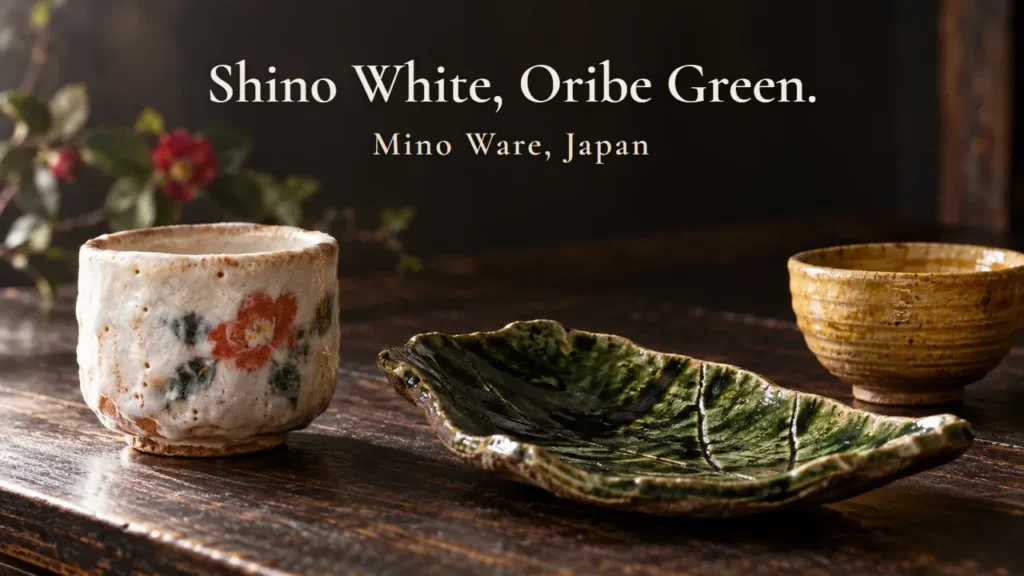
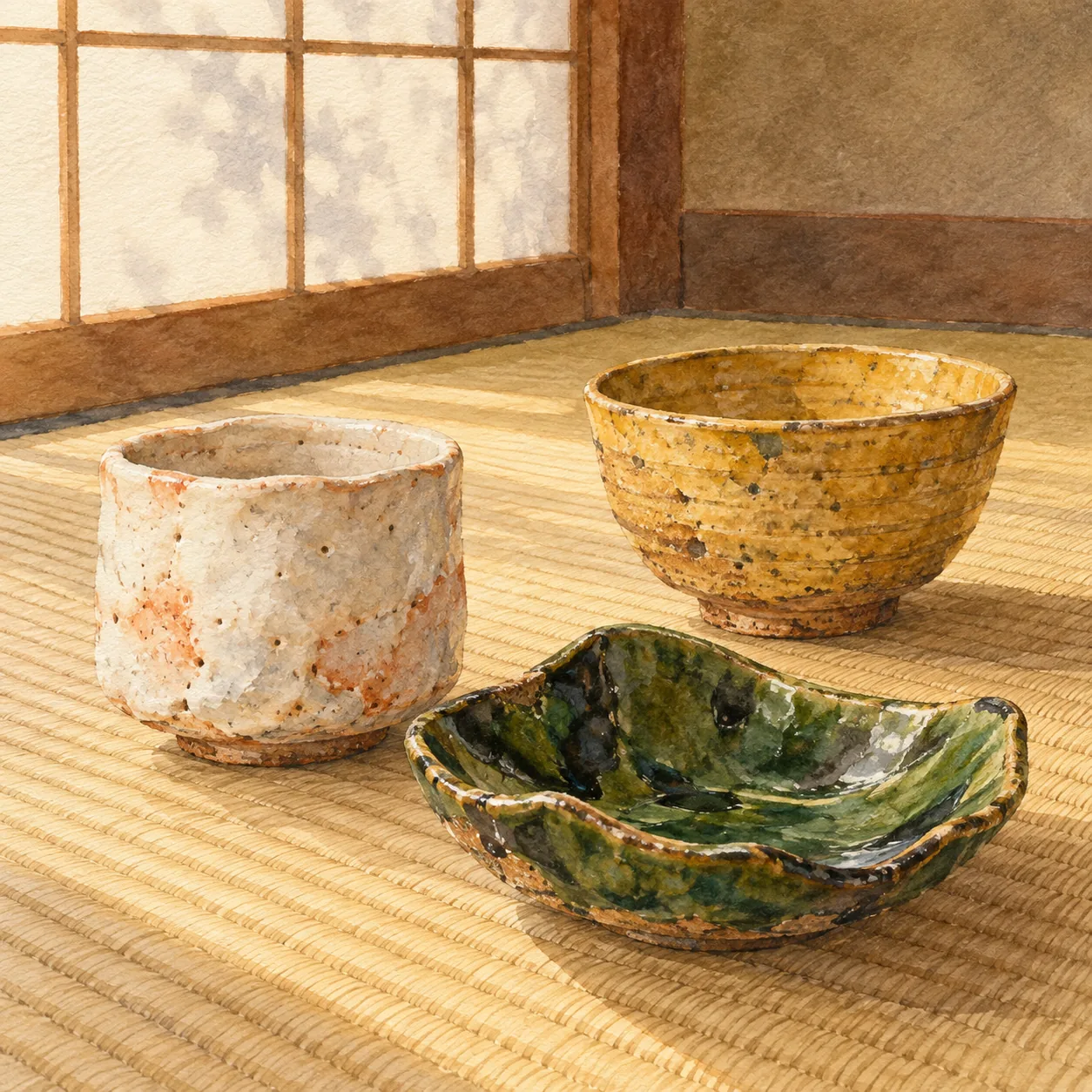
Mino ware's colours were born of the tea ceremony: the soft white of Shino, the deep green of Oribe, the yellow of Kiseto. Four centuries later, kilns in Gifu Prefecture still fire everyday tableware in those glazes.
This guide introduces Zohogama in Tajimi, which makes Shino, Oribe and Kiseto pieces — and grinds its own red pigment for 1,000 days — and SAKUZAN in Toki, whose handmade earthenware is designed for daily meals.
Quick Reference: Which Mino Colour?
| Style | What it looks like | Maker in this guide |
|---|---|---|
| Shino ▾ | Soft white feldspar glaze | Zohogama (Tajimi) |
| Oribe ▾ | Deep green glaze, bold distorted forms | Zohogama (Tajimi) |
| Kiseto ▾ | Mellow yellow with throwing lines | Zohogama (Tajimi) |
| Red overglaze ▾ | Red ground for 1,000 days | Zohogama (Tajimi) |
| Everyday earthenware ▾ | Handmade, nine colours | SAKUZAN (Toki) |
1. Why Japanese: Pottery Shaped by the Tea Ceremony
According to Japan's Association for the Promotion of Traditional Craft Industries, Mino ware's history goes back more than 1,300 years, beginning with stoneware techniques brought from the Korean peninsula. Then, from the Azuchi-Momoyama period into the early Edo period, as the tea ceremony flourished, Mino made pottery that reflected the tastes of tea masters.
Its traditional glazes include Shino, Kiseto and Oribe, among others. It is made today in Tajimi, Toki, Mizunami, Kani, Ena and Mitake in Gifu Prefecture, and was designated a Traditional Craft of Japan in 1978. Even kneading the clay has a poetic name: kiku-neri, "chrysanthemum kneading," because the worked clay looks like chrysanthemum petals.
2. Shino: The Soft White of Feldspar Glaze
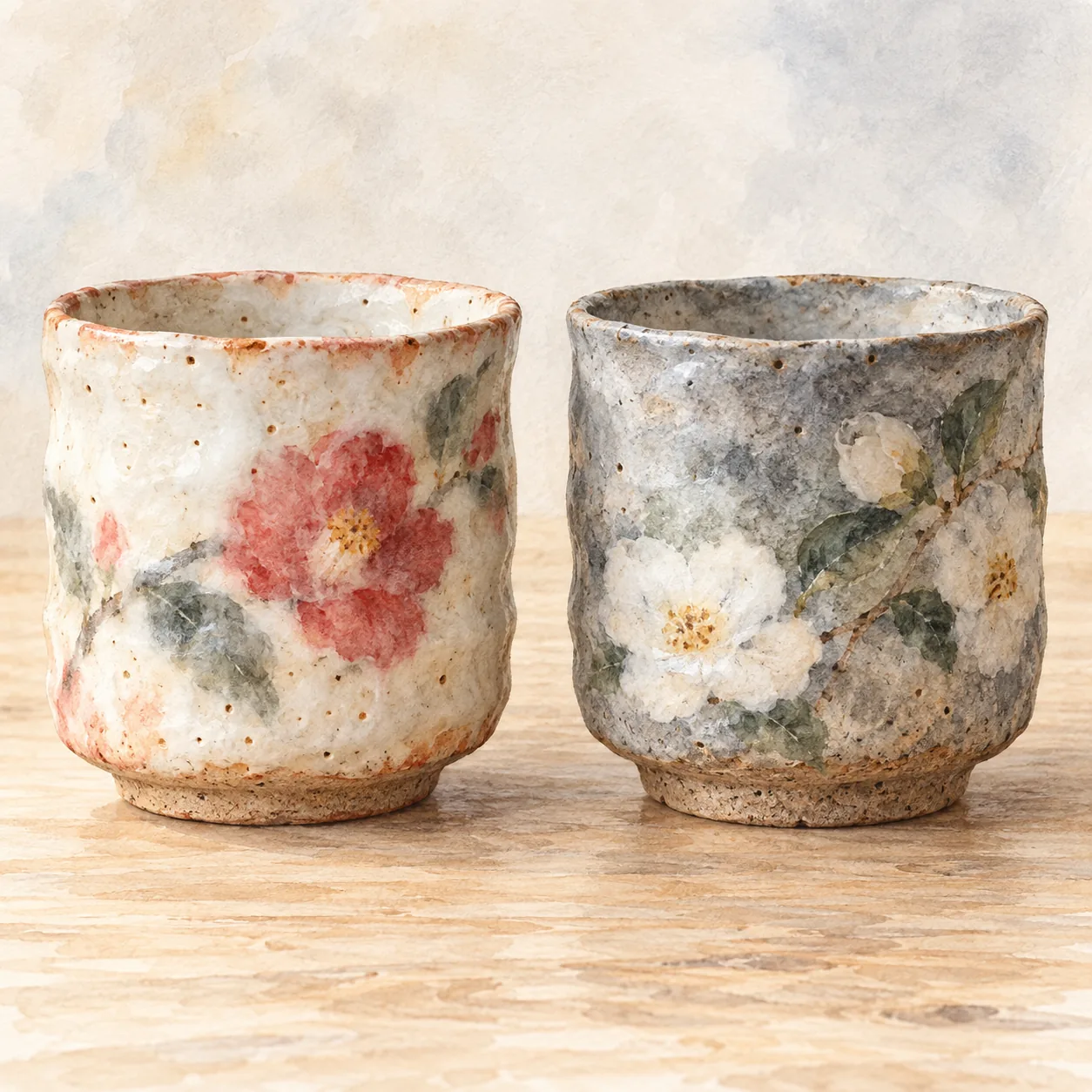
Zohogama in Tajimi opened in 1970, founded by Koizumi Zoho, who trained under Living National Treasure Kato Takuo at Kobei kiln; it is a designated kiln for Gifu's Association of Shinto Shrines. Its Shino red camellia cup is thrown by a wheel potter, coated in soft feldspar glaze, and painted by hand with the auspicious camellia.
Its Nezumi (grey) Shino cup shows one of Mino's signature techniques: an iron-rich slip over the bisque, fired once, then a white glaze over that and fired again — the iron turns dark beneath the glaze, and the cup becomes grey, with the camellia standing out in white.
3. Oribe: Deep Green and Distorted Shapes
The craft association describes Oribe ware by its deliberately distorted, asymmetrical forms, bold geometric designs, and the beautiful green known as Oribe glaze. It is named for Furuta Oribe, a leading disciple of Sen no Rikyu and a warrior who served Nobunaga, Hideyoshi and Ieyasu, who loved to use it.
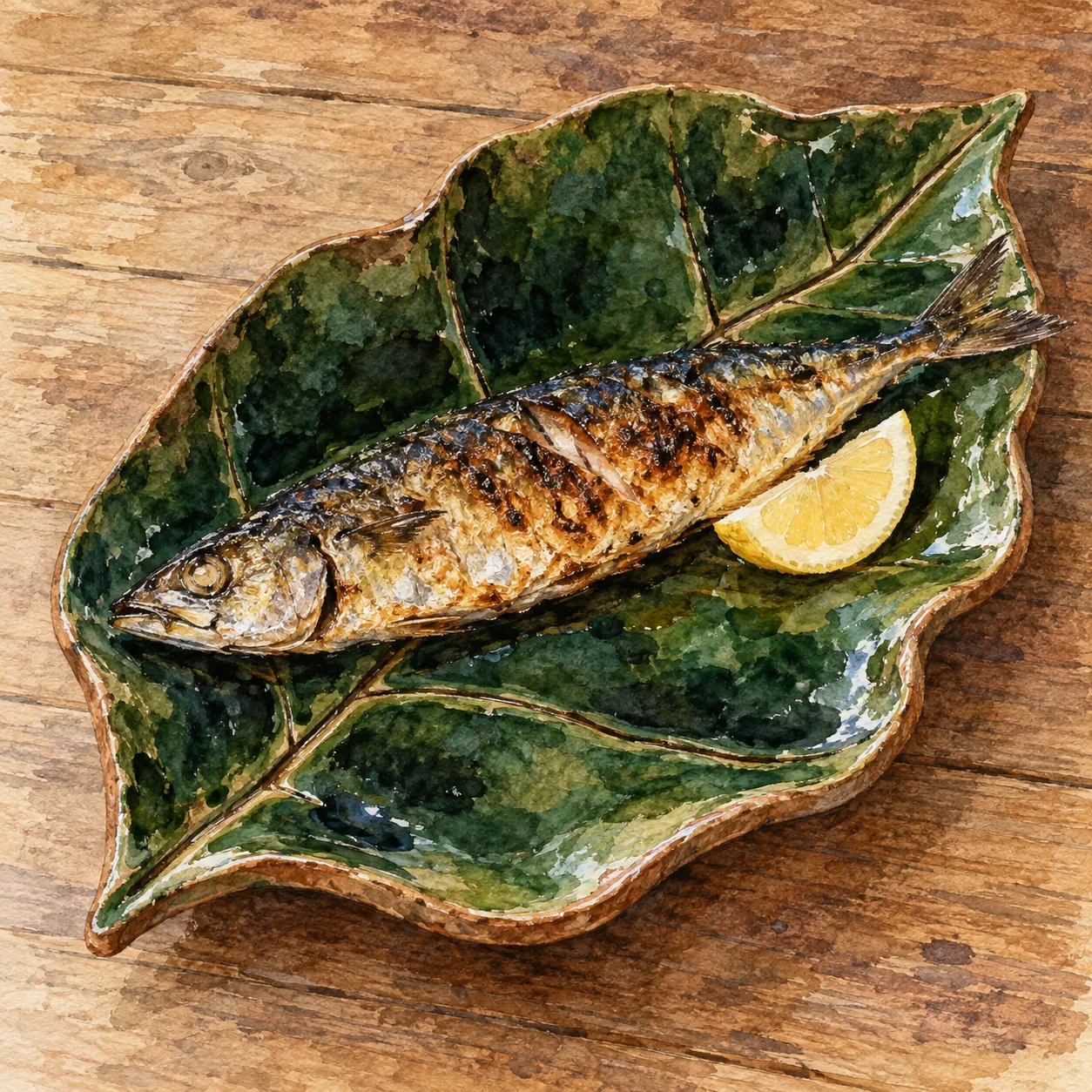
Zohogama's leaf-shaped plate is cut from a slab of clay into the form of a leaf, a shape favoured by Rosanjin, and glazed in a deep, translucent green.
Did you know: February 28 is "Oribe Day"
Oribe ware first appears in the historical record on February 28, 1599, used at a tea gathering hosted by Furuta Oribe — where the guests were astonished to be served tea in a warped bowl. February 28 is now celebrated as Oribe Day.
4. Kiseto: Yellow With the Throwing Lines Showing
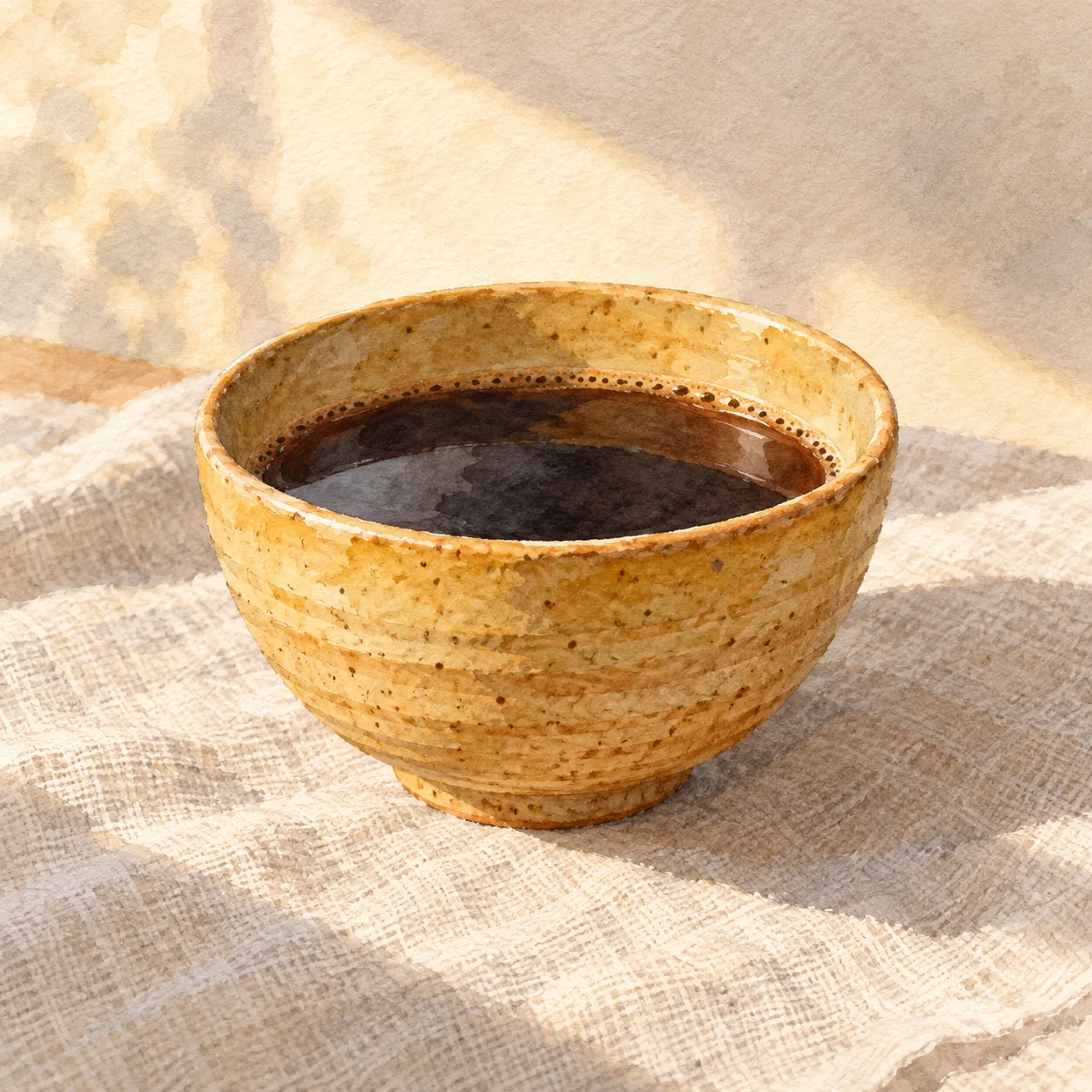
Zohogama's Kiseto "kofuku" bowl is a tea-bowl shape a size smaller than usual, in a calm yellow glaze, with throwing lines rising quietly from the base. It fits neatly in two hands — for matcha, but also for mixed rice or soup.
5. Zohogama: Painting With Red Ground for 1,000 Days
A grandmother of eighty, grinding every day
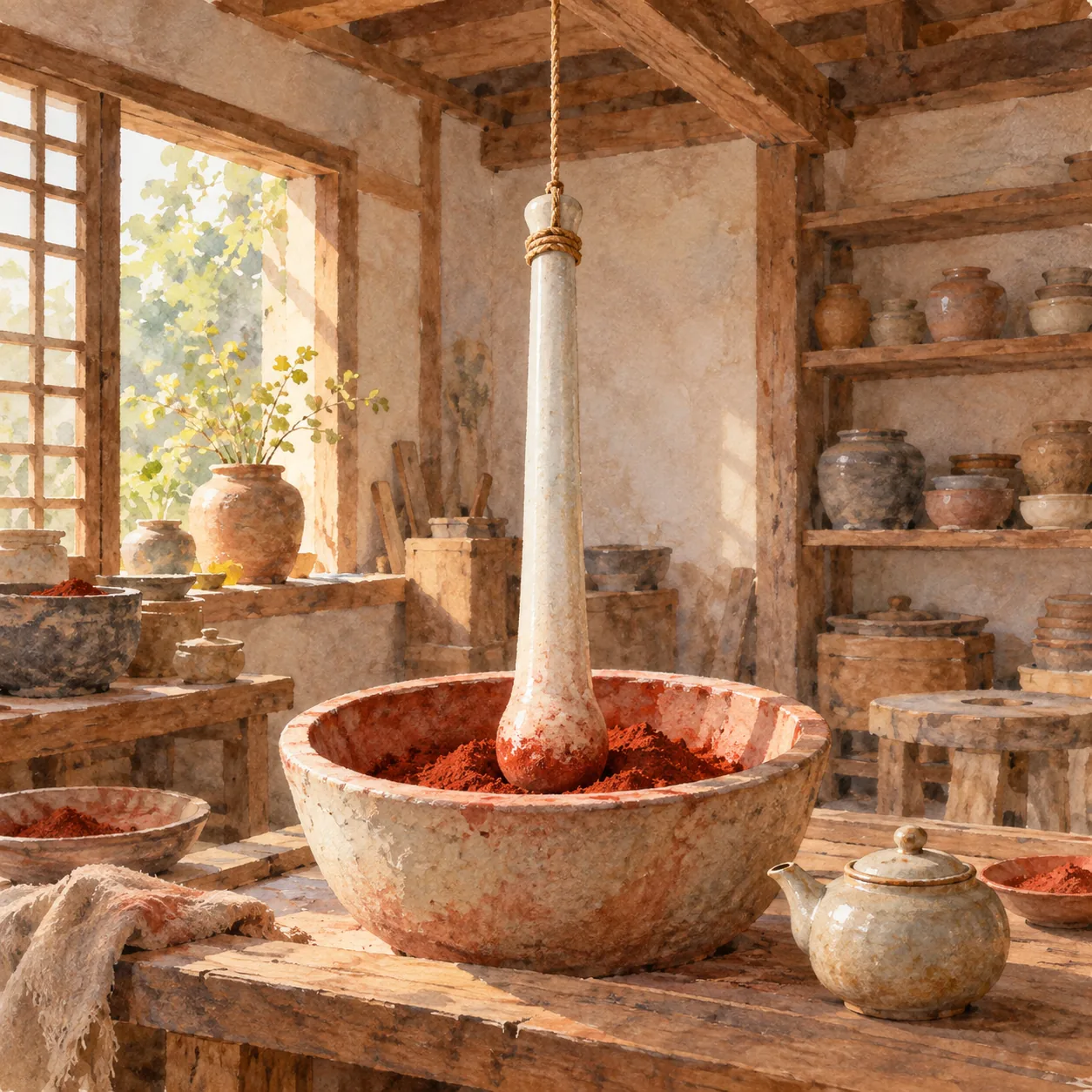
Zohogama makes its red overglaze from bengara (red iron oxide), grown into paint over 1,000 days. Thirty years earlier, its founder met the potter Tōkurō in a bar, and found the method for making red paint written in one of his essays. Into a mortar big enough to hug, the bengara went, with a ceramic pestle hanging from the ceiling and tea poured in as it was ground — and his grandmother, then eighty, ground it every day, for three years: about 1,000 days.
A "phantom" bengara, found in a storehouse
The finest bengara of the early Showa era came from the Katayama family in Okayama, under a maple-leaf mark; when production ended, it became known as "phantom bengara." In May 2003, when an old house was demolished, a large stock of it was found in the earthen storehouse, and Zohogama acquired it. It now passes this red on as "the red ground for a thousand days." Its rice bowls are thrown by hand in porcelain and painted with it by hand.
6. For Every Day: SAKUZAN
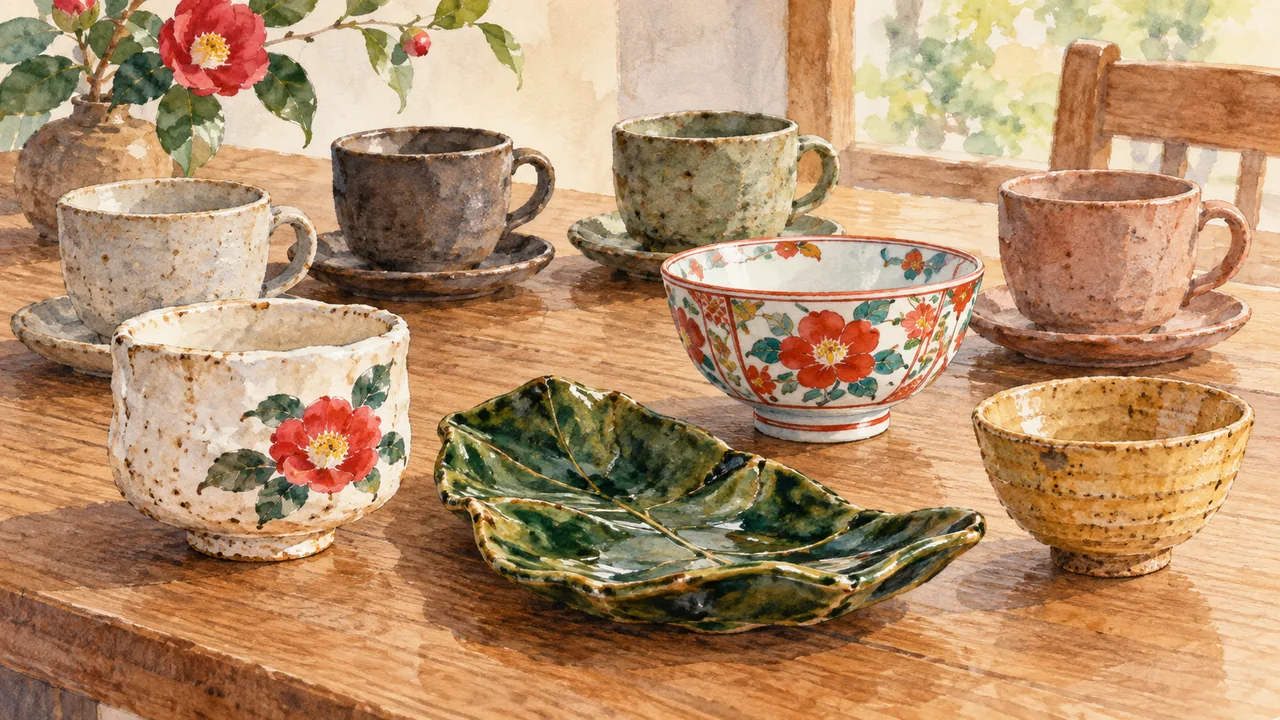
SAKUZAN has its workshop in Dachi, a small mountain town in Toki — rooted in the soil that nurtured Mino ware, while taking in a contemporary sensibility. Its guiding idea: "Everything that shapes our vessels exists for the food served on them." Its Sara cup and saucer comes in nine colours, each handmade one at a time so the glaze falls differently on every piece, and it's microwave- and dishwasher-safe — Mino ware for the daily table.
7. Buying From Outside Japan
Zohogama sells through its own store on Rakuten Ichiba, and SAKUZAN through Japanese retailers; as of November 2026 we didn't find either on Amazon.com. A hand-painted Oribe matcha bowl, listed as handmade Mino ware made in Japan, is available there:
Hand-painted Oribe matcha bowl, Mino ware
Oribe green in a matcha bowl. Handmade Mino ware, made in Japan — good for matcha, or a small bowl at any meal.
Hand-Painted Oribe Matcha Bowl, Mino Ware
Loading product details…
For pottery from a particular kiln, look for the kiln's name — Zohogama, SAKUZAN — on the listing. Zohogama's product pages don't list dishwasher or microwave use, so check with the kiln.
8. Frequently Asked Questions
Where is Mino ware made?
In Gifu Prefecture — Tajimi, Toki, Mizunami, Kani, Ena and Mitake.
Where does the name Oribe come from?
From Furuta Oribe, a disciple of Sen no Rikyu and a warrior, who loved to use these wares. It first appears in the record at his tea gathering on February 28, 1599.
What's the difference between Shino and Nezumi Shino?
Nezumi (grey) Shino adds an iron-rich slip under the white glaze, which darkens in the second firing and turns the piece grey.
What is "the red ground for a thousand days"?
Zohogama's red overglaze, made from rare bengara ground for about 1,000 days, using a stock of "phantom" maple-leaf bengara found in a storehouse in 2003.
Is Mino ware dishwasher- and microwave-safe?
It depends on the piece. SAKUZAN's Sara is; Zohogama's pages don't say, so ask the kiln.
When is Oribe Day?
February 28 — the date of the 1599 tea gathering where Oribe ware first appears in the record.
Final Thoughts: Tea-Ceremony Colours on the Everyday Table
Shino white, Oribe green, Kiseto yellow — colours the tea masters shaped four hundred years ago.
Zohogama still fires them in Tajimi, and paints with a red ground for a thousand days. SAKUZAN in Toki makes handmade earthenware for every meal.
Put one piece of Mino on the table, and four centuries of tea come with it.
Arita Ware: 4 Kilns From Japan's First Porcelain Town
Kutani Ware: Bold Colour, Fine Red Lines, Quiet White