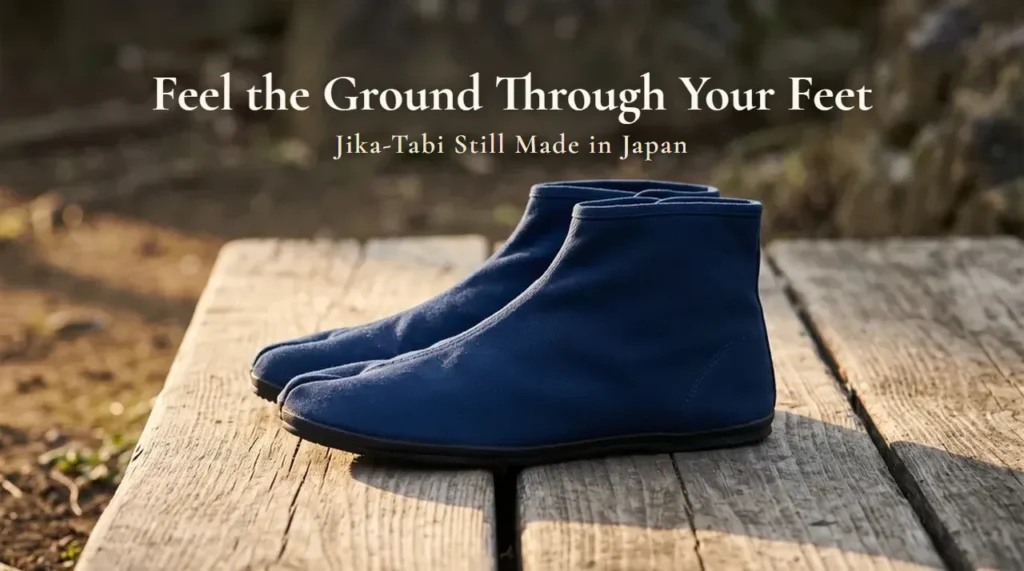
Jika-tabi were born in Japan — but only a handful of companies still make them there. The makers say so themselves: Takasago Sangyo, which makes jika-tabi in Takasago, Hyogo Prefecture, writes on its own site that domestically made jika-tabi are rarely seen in shops any more.
The word itself needs no translation. Abroad, "jika-tabi" has been found by people looking for footwear that feels as close to barefoot as possible: a thin sole, a split toe, a fit that follows the foot. This guide introduces, one by one, the Japanese companies that still make them in Japan, from materials to stitching — and explains what the "5" or "12" printed on the box really means.
Quick Reference: Who Still Makes Jika-Tabi in Japan
| Company | Where | Best for |
|---|---|---|
| Takasago Sangyo (Wamon) ▾ | Takasago, Hyogo | Everyday wear, festivals |
| Daido Sekiyu ▾ | Kita, Tokyo | Forestry work, river fishing |
| Marugo ▾ | Kurashiki, Okayama | Festivals, everyday wear |
| SOU・SOU ▾ | Kyoto (made by the companies above) | Bold patterns for daily wear; ships overseas |
| Remember | The "5" or "12" on the box isn't a size — it's the number of clasps, i.e. the height | |
1. Why Japanese: Why Japan-Made Jika-Tabi Are Hard to Find
Jika-tabi take more handwork than ordinary shoes. The cloth is cut to follow the shape of the foot, stitched, and a rubber sole is bonded on. Much of that is still done by hand, so labour shows up directly in the price — which is why production moved to countries with lower wages. Even so, some companies kept their factories in Japan. Those are the companies in this guide.
The "5" or "12" on the box isn't a size
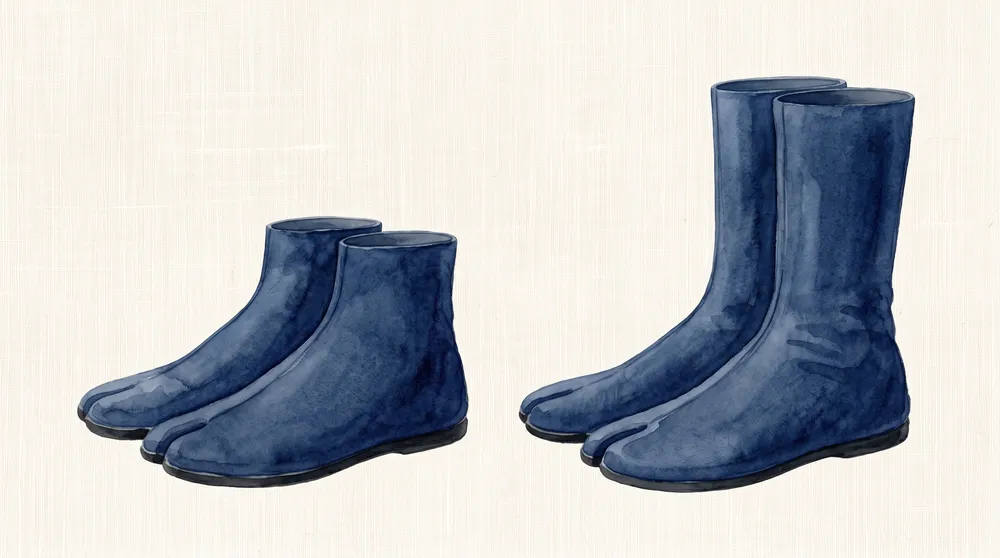
One thing first. The number on a jika-tabi box — "5," "12" — is the number of kohaze, the small claw-shaped metal clasps that run up the opening and hook onto a cord on the other side. Kohaze are said to have become common on tabi in the Meiji era. They're stacked vertically, so the number equals the height: about 2 cm (0.8 in) per clasp.
Five reaches the ankle — quick to put on and take off, light to move in. Twelve to fifteen reaches the calf, protecting the leg from grass and stones for a full day of outdoor work. Neither is better; they just cover different amounts of leg.
Did you know: east and west Japan disagree about white tabi
The white tabi socks worn with kimono have kohaze too, and tastes differ by region: four clasps are said to be preferred around Tokyo, five around Osaka and Kyoto — showing a little ankle is stylish in the east, while the west prefers not to show bare skin. For formal wear and Japanese dance, five is standard, and at weddings four is avoided because it suggests "shimai," an ending. That's white tabi, not jika-tabi — but the same small clasp carries a regional sense of style.
2. Takasago Sangyo: Every Material, Every Step in Japan
Canvas from Okayama, dyeing in Kyoto, clasps from Higashi-Osaka
Takasago Sangyo in Takasago, Hyogo, was established in 1969; its own brand is Wamon. For consistent quality and to keep traditional Japanese techniques alive, it makes every material and every process Japanese.
"Japanese" here has place names attached. The No. 8 canvas is woven in Okayama, the dyeing is hand-printed in Kyoto, the kohaze are made in Higashi-Osaka, and the rubber sole comes from Hyogo — the work of the few craftspeople left in each place, gathered into one pair.
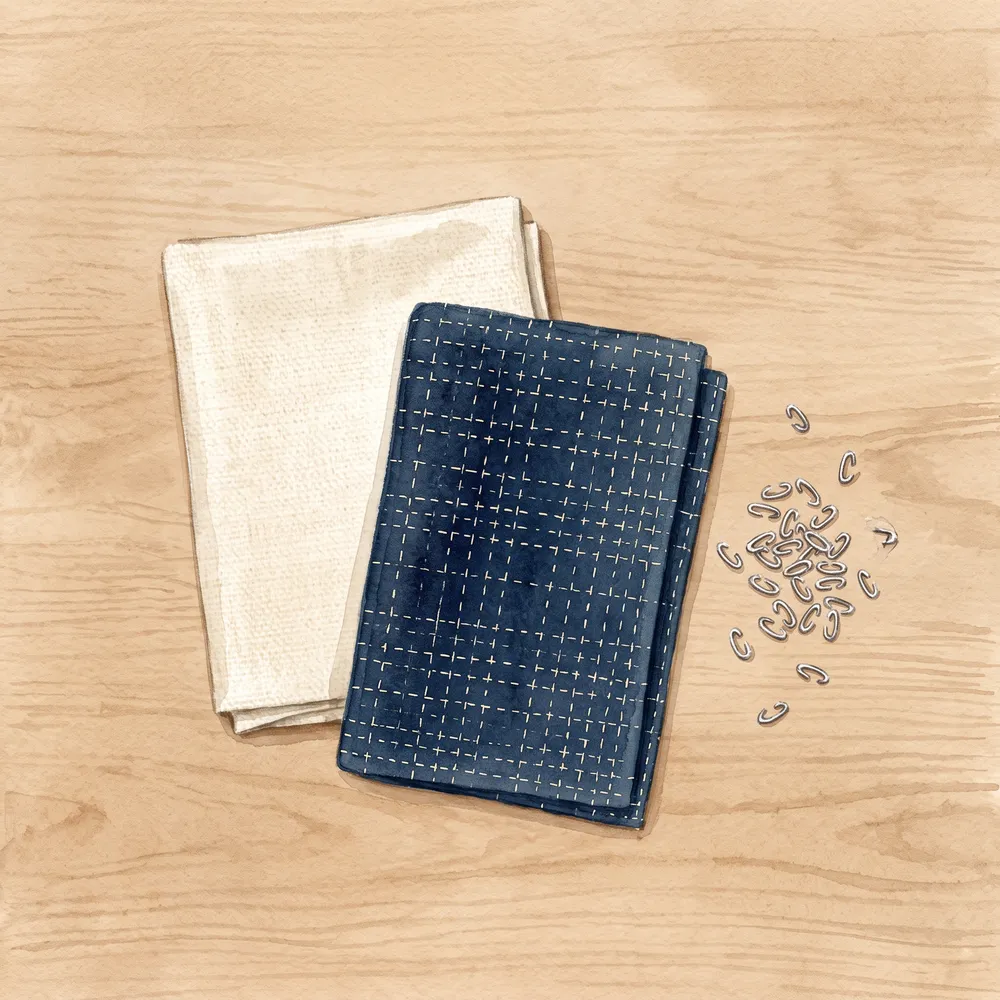
Cutting and sewing are still done by hand
In the factory, cutting, sewing and finishing are all done by hand, with veteran craftspeople working alongside younger ones still learning. Some Wamon pairs use Mikawa cotton sashiko weave, the tough textured cloth of kendo and judo uniforms, which gains character the more it's worn; others use the Okayama No. 8 canvas, firm at first and settling into the shape of the foot. The thin sole suits walking on soil — in a garden or a field, feeling the ground through your feet is safer. Sizes run from 22.0 to 28.0 cm.
Did you know: this factory once made tabi boots for American surfers
Takasago Sangyo hasn't only made work tabi. Its own company history lists exports to O'Neill in the United States, entry into the surfing industry, and tabi-style boots that became a big hit in the US, followed later by diving. It also makes SOU・SOU's jika-tabi. A split-toe shoe works on a surfboard and underwater, too — and people across the ocean noticed. While Japan-made tabi were disappearing from Japanese shops, this factory was connected to the world.
3. Daido Sekiyu: Made in Japan for Mountains and Rivers
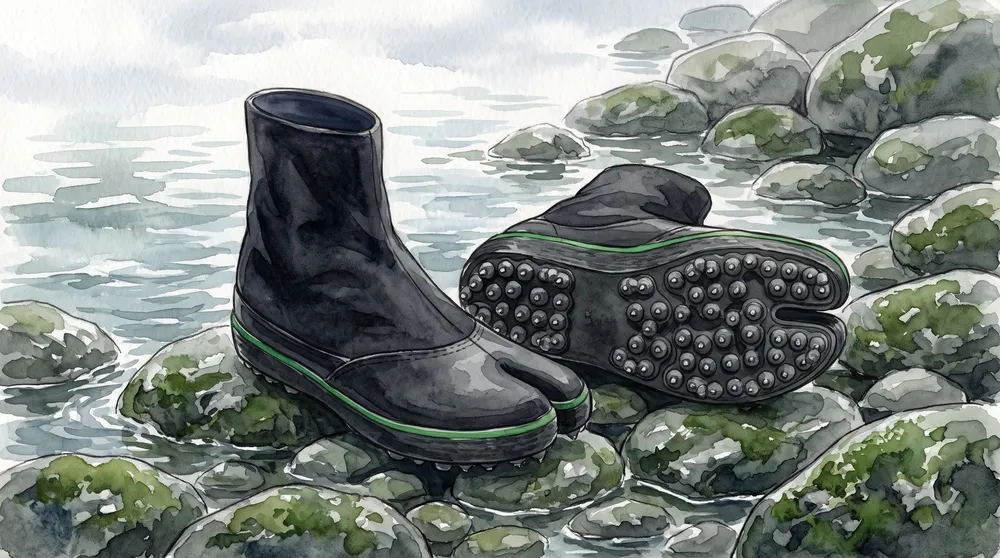
Daido Sekiyu in Kita, Tokyo, is hard to guess from its name: it makes non-slip footwear — boots, waders and jika-tabi. Its jika-tabi have clear jobs: forestry work and ayu (sweetfish) fishing, both of which mean standing on wet rock and moss. So the soles carry spikes.
The range splits by use: four- and eight-clasp forestry tabi, hook-and-loop versions with split or round toes, and fully waterproof tabi for standing in rivers. Eight clasps cover the leg up to just below the calf against undergrowth. Spikes aren't for indoors or pavement — they damage floors and slip on metal. Think of these as mountain and river tools.
4. Marugo: It Moved Production Abroad, Then Brought It Home
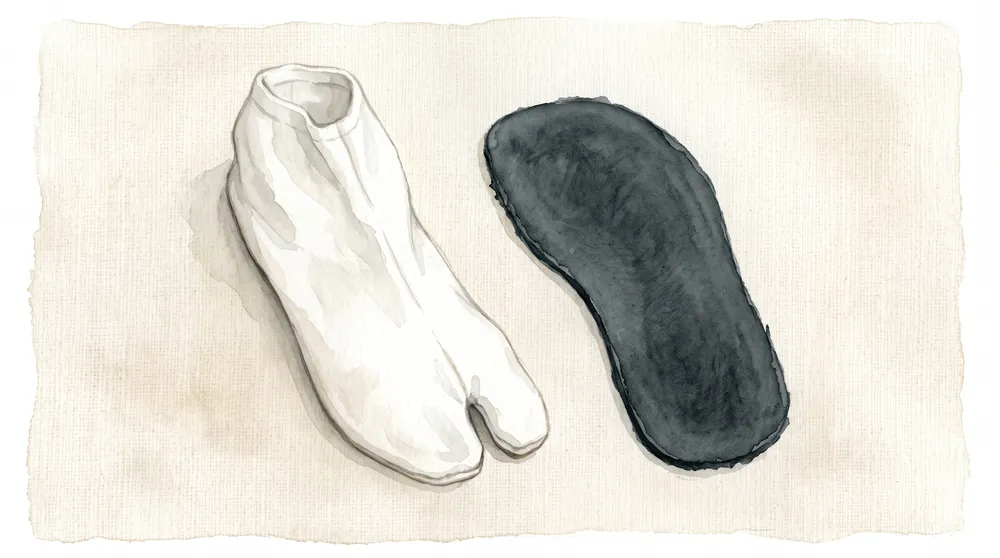
Marugo of Kurashiki, Okayama, was founded in 1919 and has passed its hundredth year. In the company's own telling, its founder glued rubber from rickshaw tyres onto tabi — giving cloth tabi a sole that wouldn't wear through outdoors. Who first made rubber-soled tabi isn't certain; other companies make the same claim.
Production went abroad — and came back
Marugo too moved some production abroad: around 2008 it began making fashion tabi at its own overseas factory. What happened next is the interesting part. In 2010 it restarted production in Japan, in a small workshop with about four craftspeople, under the banner "Made in Kurashiki."
Among the revived models are five-clasp split-toe and round-toe jika-tabi, sold as Marugo's first domestically made jika-tabi in about forty years — with a sole reproduced from the oldest jika-tabi sole mould the company still had. Marugo's range is large and some series are made abroad, so if you want Japan-made, choose a model clearly labelled as made in Japan.
Did you know: the "five" in Marugo stands for five continents
The company name is said to carry the idea of travelling across the five continents, and its logo uses the numeral 5. A tabi company in 1910s Kurashiki put the world in its name — and a century later, tabi-style shoes really are bought around the world.
5. SOU・SOU: Japan-Made Jika-Tabi for Everyday Wear
It doesn't make them — it keeps selling them
Kyoto's SOU・SOU, founded in 2003, has no factory of its own. Its jika-tabi are made by Takasago Sangyo and by Marugo's Japan-made line. It's in this guide because it keeps Japan-made jika-tabi on the shelf, describing itself as Japan's only brand of domestically made jika-tabi.
What's on that shelf isn't work-wear colours: SOU・SOU designs its own bold textiles and turns them into jika-tabi, pulling a work shoe back into the street. Clasp, hook-and-loop and children's versions are all available.
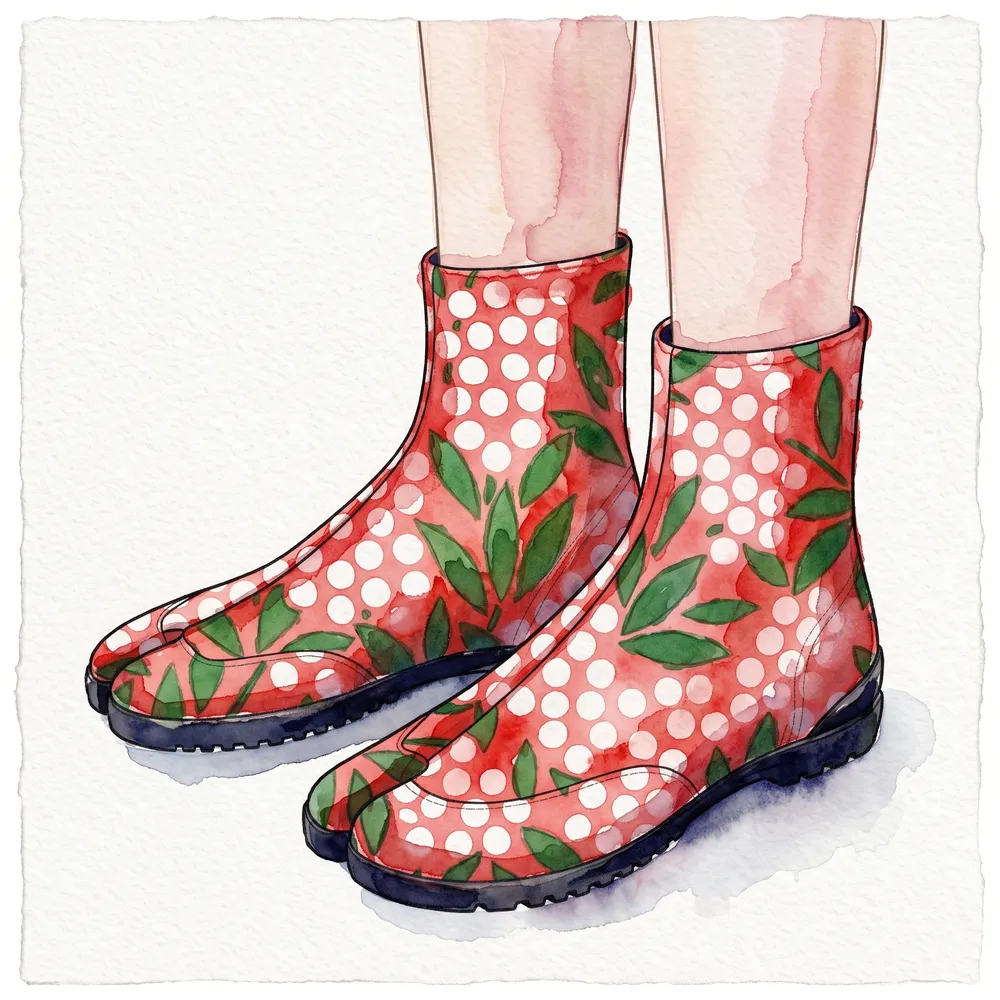
Abroad, what people love about jika-tabi is a little different from how they're used in Japan: a thin sole, split toes, a fit that follows the foot. A work shoe went out into the world as everyday footwear — and behind it stand small factories in Hyogo and Okayama.
6. How to Choose: Clasps, Sole and Size
1. Fastening: kohaze or hook-and-loop
Kohaze hook one by one, so you set the tightness yourself; they follow the leg and stay snug. Hook-and-loop goes on in one motion — good for jobs with lots of on and off, and for children. If you'll wear them all day, choose kohaze; if you'll take them off often, hook-and-loop.
2. Sole: the thinner, the more you feel
A thin sole lets you feel the shape of the ground; it also means stones hurt and long walks tire you. Thicker and air-cushioned soles are easier on hard surfaces; spiked soles are for wet rock and leaves. Rougher footing, thinner sole; long walks on flat ground, thicker sole.
3. Size: measure length and width
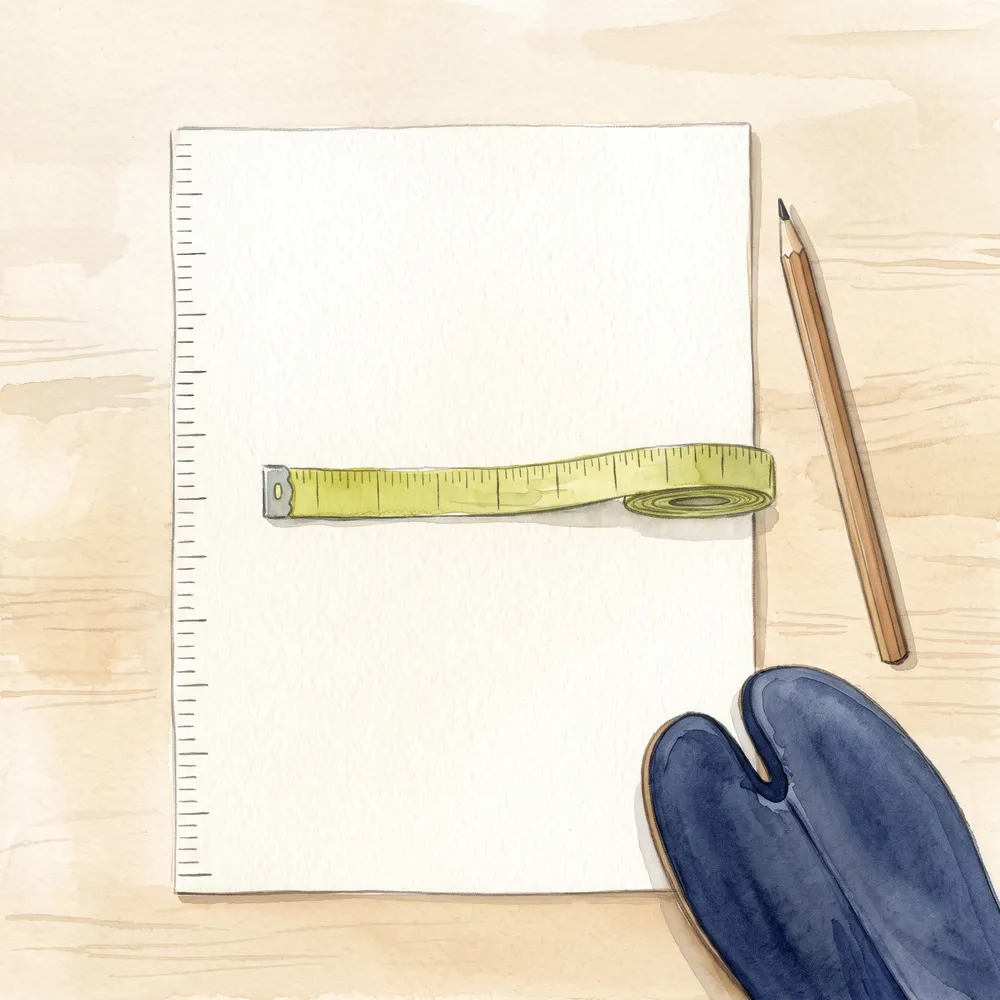
Jika-tabi follow the foot, so your shoe size alone won't do. Measure foot length (heel to toe) and girth (around the ball of the foot). Marugo offers a free printable measuring sheet.
If in doubt, go larger. Takasago Sangyo advises that its jika-tabi are designed to let the toes stretch out fully, so it recommends 26.0 cm over a snug 25.0 cm. Tabi don't stretch to fit the way socks do.
7. Buying From Outside Japan
- SOU・SOU has an English online store, and its jika-tabi product pages list overseas shipping. Its jika-tabi are made by Takasago Sangyo and Marugo's Japan-made line.
- Marugo jika-tabi are widely listed abroad, but some series are made outside Japan. Buy only a model whose listing says made in Japan.
- Takasago Sangyo (Wamon) sells through its own store on Rakuten Ichiba, and Daido Sekiyu through Japanese retailers; as of November 2026 we didn't find international shipping for either.
8. Frequently Asked Questions
Is the "12" on a jika-tabi box the size?
No — it's the number of kohaze clasps, which sets the height. About 2 cm per clasp: five reaches the ankle, twelve to fifteen the calf. The size is listed separately.
Can I wear spiked jika-tabi every day?
No. Spikes are for biting into wet rock and slopes. On hard floors they don't grip and can slip, and they damage wood and tile. For the street, choose an unspiked thin sole.
Why are Japan-made jika-tabi more expensive?
Because so much of the work is done by hand. At Takasago Sangyo, cutting, sewing and finishing are all handwork. You're paying for the hands of the people who cut, sew and attach the sole.
Should I buy my usual shoe size?
Not necessarily. Measure foot length and girth. Marugo offers a free measuring sheet, and Takasago Sangyo recommends going up rather than down, since its tabi are designed for the toes to stretch out.
Why is the big toe separate?
Because a jika-tabi is a tabi with a sole attached, not a shoe. The original tabi shape remains, which lets the toes grip the ground on uneven footing. They protect less than shoes, so wear safety boots where heavy objects can fall. Round-toe versions also exist.
Are jika-tabi good as barefoot-style shoes?
That's how they were discovered abroad. A thin sole, split toes and a close fit let you feel the ground. Start with an unspiked, thin-soled pair, and go up a size if you're between sizes.
Final Thoughts: The Companies Still Making Them
Jika-tabi were born in Japan, but only a handful of companies still make them there. Takasago Sangyo takes its canvas from Okayama, its dyeing from Kyoto and its clasps from Higashi-Osaka, and still cuts and sews by hand. Daido Sekiyu makes spiked tabi for mountains and rivers. Marugo brought its production home in 2010 as "Made in Kurashiki." SOU・SOU keeps Japan-made jika-tabi on the shelf in bold patterns.
Start with height — the "5" or "12" on the box is the number of clasps — then fastening, sole, and a careful measurement of your feet.
If nobody buys them, these factories stop. If you want Japan-made, check the listing and choose a pair that says so.
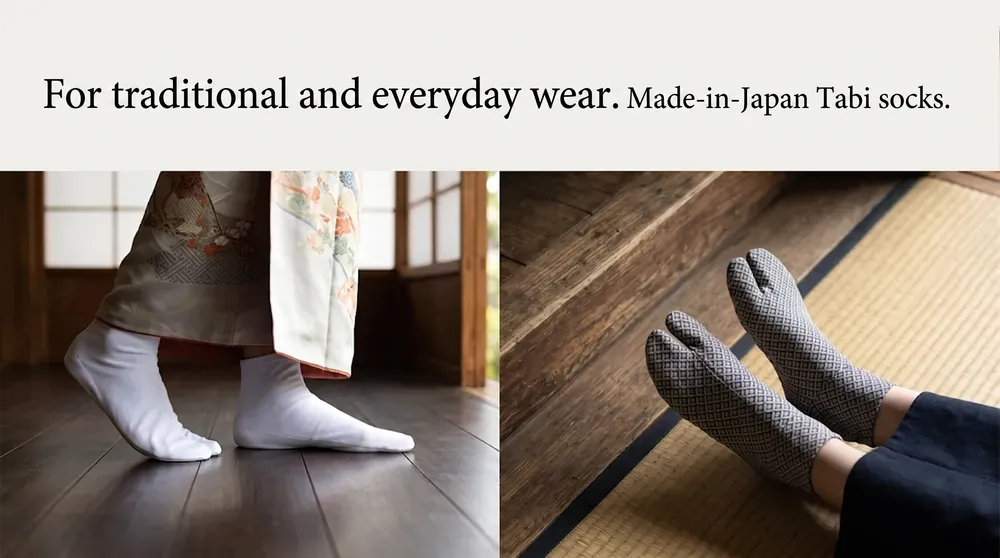
Tabi Socks: Why the Toe Is Split, and Which Kind
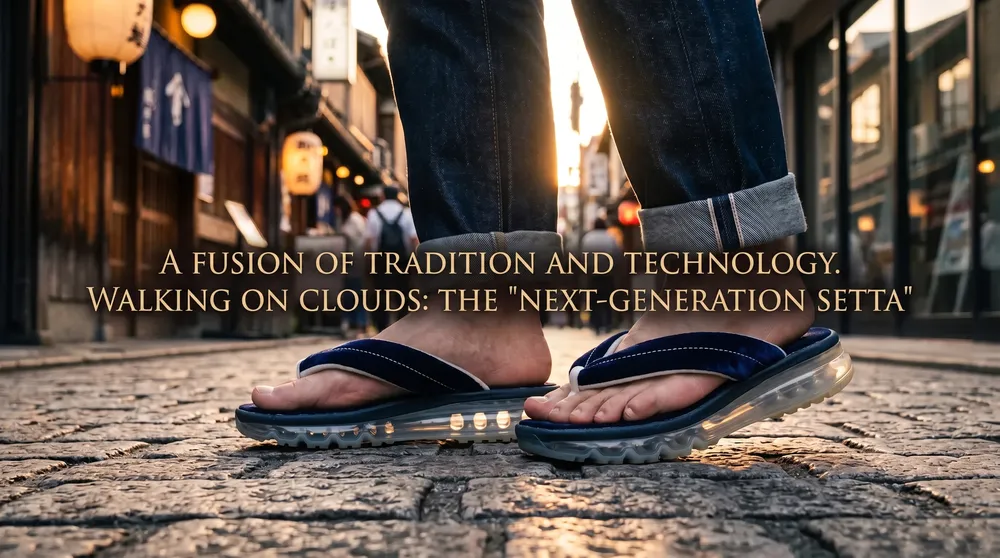
Setta Sandals: Traditional Thong, Modern Sole