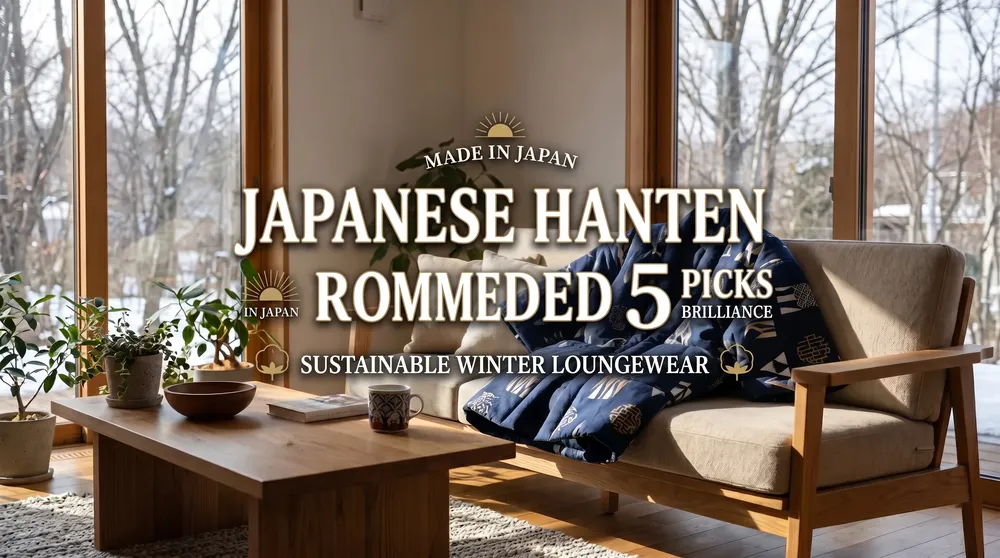
If you are picturing the short Japanese jacket with big kanji across the back that staff
wear at festivals — that is a happi, and this is not it. A happi is unlined,
thin and made for working outdoors in summer heat.
A hanten is the padded winter version: the same wrap-over silhouette,
but filled with cotton wadding and worn indoors over your clothes. In Japan it is described as a
wearable futon, and that is not a metaphor — the good ones are made by futon
craftsmen using futon technique.
Which leads to the thing to check before you spend $200 on one. Most listings
abroad state neither the filling nor where it was made, and both are the entire product.
Quick Reference: Which Japanese Jacket Is This?
| Hanten | Happi | Chanchanko | |
|---|---|---|---|
| Padded? | Yes — cotton wadding | No | Yes |
| Sleeves | Long or short | Wide, short | None |
| Worn | Indoors, winter | Outdoors, festivals | Indoors, over layers |
| Back of the garment | Pattern or plain | Large kanji or a crest | Plain |
| Washing | By hand only | Machine | By hand only |
| That last row is also a buying test. A "machine washable hanten" is telling you it is not filled with cotton. | |||
⚠ The Filling Is the Product
Hanten are widely sold internationally, typically between about $200 and $275. We went through several of those shops, and the pattern was consistent: no statement of what the padding is, and no statement of where the garment was made.
That is a problem, because a hanten is essentially a bag of filling. The outer
cloth matters, but what you are paying for is cotton wadding put in by hand.
A polyester-filled jacket in the same shape is a different product at the same
price, and nothing in the photographs will tell you which one you are looking at.
The test you can run from the listing text
If it says machine washable, the filling is not cotton.
Cotton wadding cannot survive a washing machine — the agitation shifts it, it clumps at the bottom of each panel, and it never recovers its loft. That is why every Japanese maker of cotton-wadded hanten specifies hand washing only.
So "machine washable" is not a feature on a hanten. It is a confession.
It means synthetic fill, which is genuinely more convenient — and if that is
what you want, buy it knowingly and pay less for it. What you should not do is pay
cotton-wadded prices for it.
What to look for instead
- A stated filling — cotton wadding (watairé), with a weight if you are lucky.
- A stated fabric origin — Kurume-ori from Fukuoka is the benchmark.
- Hand-wash instructions. Counterintuitively, this is the good sign.
- A named maker, rather than "traditional Japanese hanten".
If a listing gives you none of those, it is selling a silhouette. That is not fraud and the jacket may well be warm — but it is not the thing this article is about.
Why Japanese — Made by Futon Makers
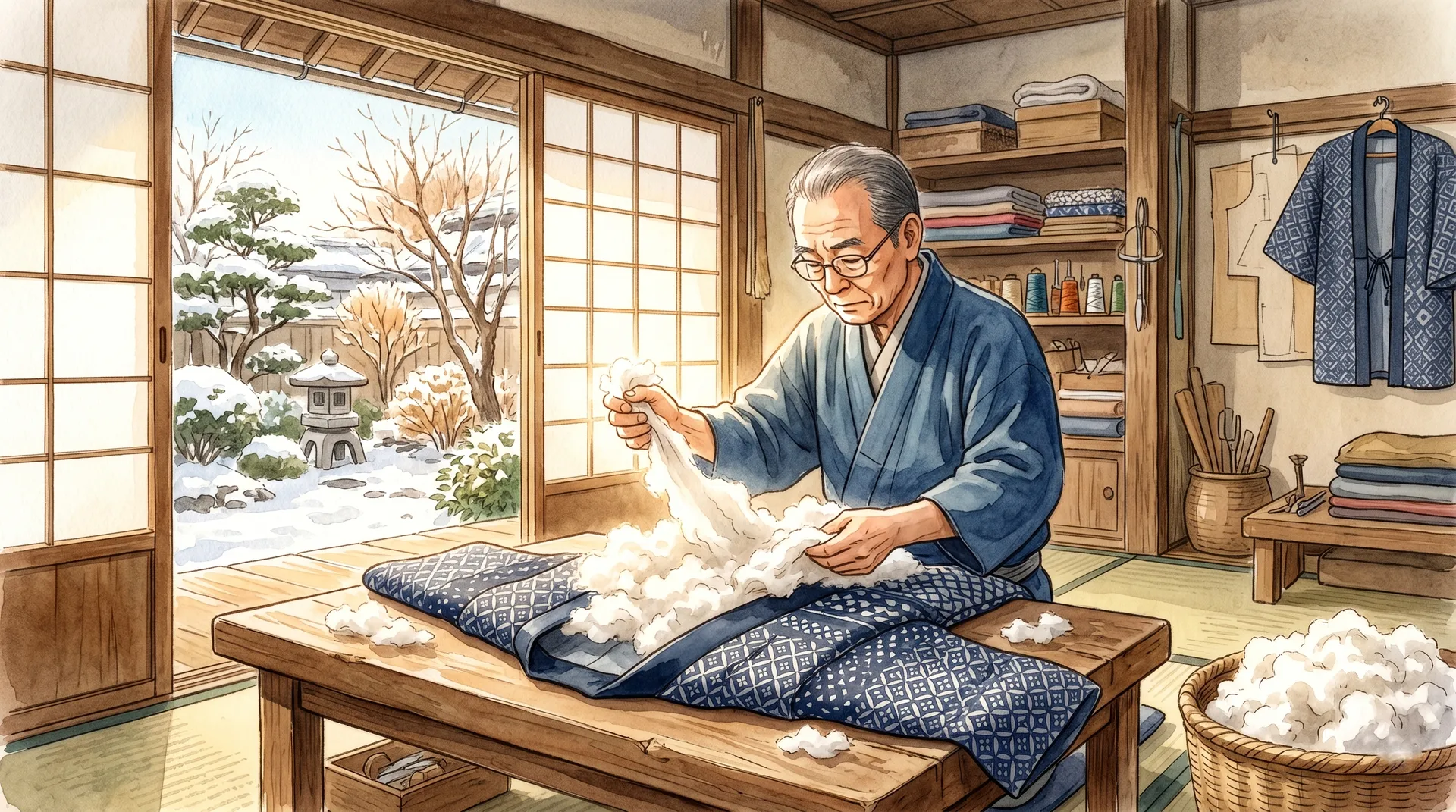
"Wearable futon" is a literal description of the manufacturing. A proper hanten is filled by the same craftspeople, using the same technique, as a Japanese futon — the wadding is laid in by hand, thicker in some places and thinner in others.
That hand-laying is the skill. Machine-filled garments get an even layer everywhere, which sounds better and is not: you want more over the shoulders and back and less under the arms, or the garment is bulky where it needs to move and thin where you lose heat.
It is also why they are repairable. Wadding that has flattened after some years can be opened up and replaced, which is normal practice for a futon and unheard of for a fleece.
Kurume, and why the fabric is from there
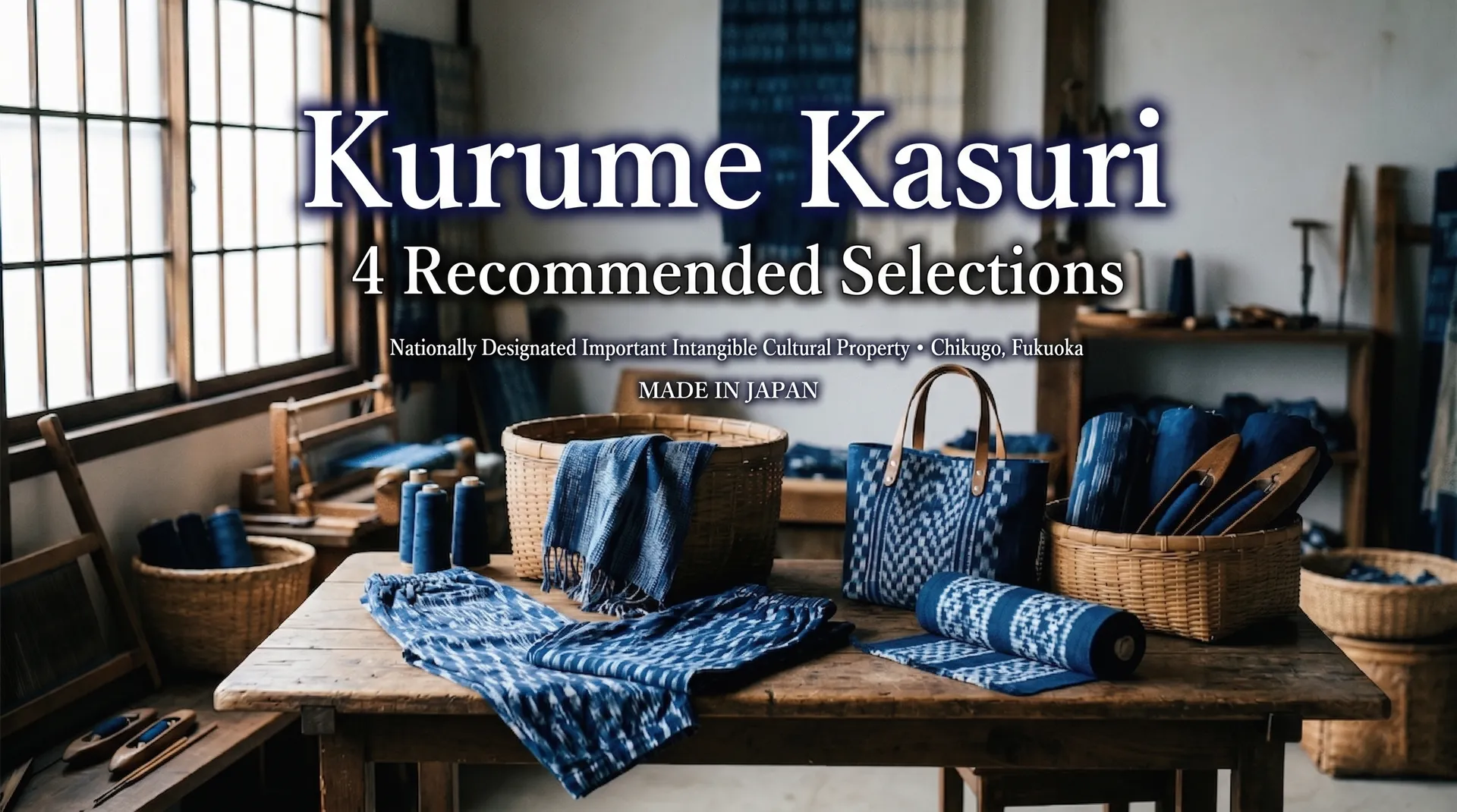
The benchmark cloth is Kurume-ori, woven in Kurume in Fukuoka — the same city and the same weaving tradition that produces Kurume kasuri, the indigo ikat cloth with several centuries behind it.
What it gives you is a cotton that is soft immediately and gets softer, with enough body to hold the shape of a padded panel. A stiff outer cloth fights the wadding; a limp one lets it sag.
Cotton Wadding vs Fleece and Down
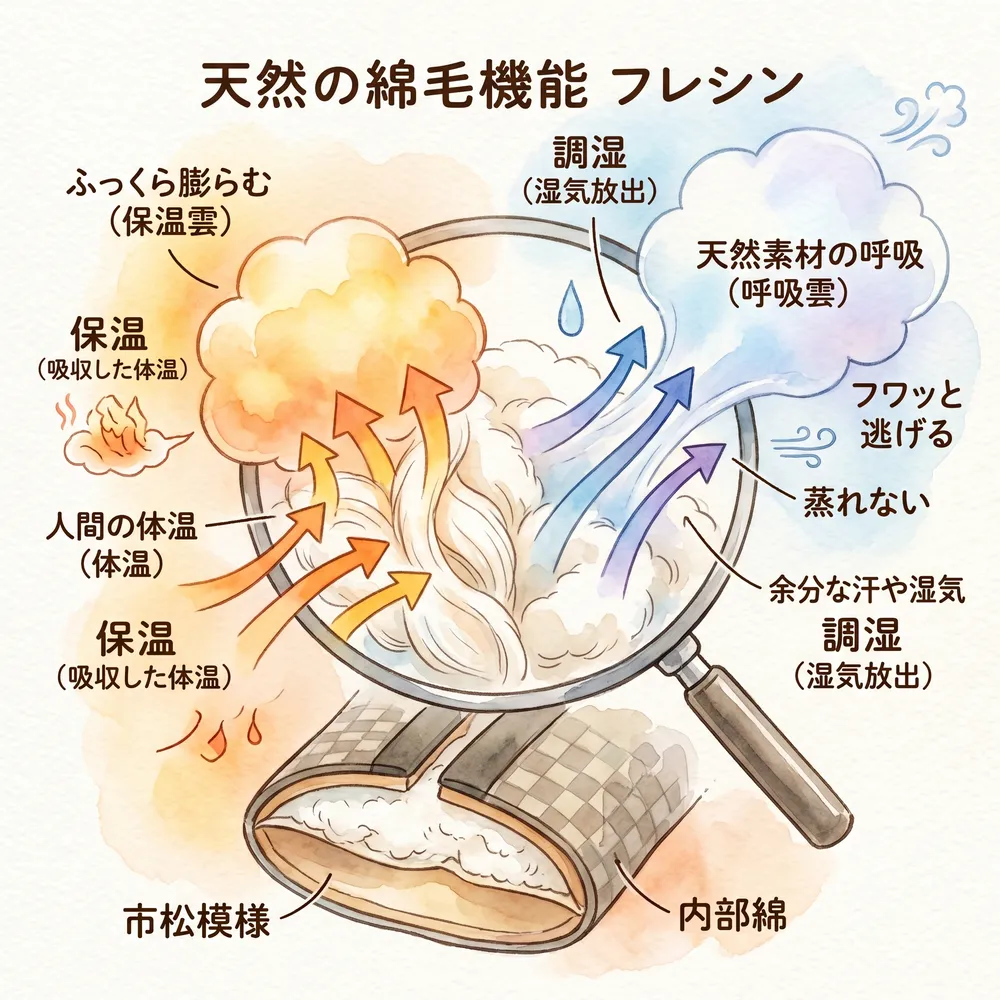
Cotton wadding is heavier than either alternative, and that is the honest starting point. A hanten has weight to it, and people who want something weightless should buy something else.
What the weight buys is a different kind of warmth. Cotton takes up moisture and gives it back, so a hanten worn for hours indoors does not develop the clammy feeling a fleece does when you have been sitting in it since morning.
And unlike down, it does not collapse into nothing at a fold. Down is warmer per gram and dies when compressed or damp; cotton wadding holds a consistent, even warmth and is indifferent to being sat on.
The thinking behind it: heat the person, not the room
Japanese homes are heated room by room rather than centrally, and are
historically not well insulated. The response has been a whole category of clothing and
objects aimed at the person rather than the building — the hanten, the
kotatsu, the haramaki.
That logic transfers directly to a cold room and an energy bill you would rather not
grow. A padded jacket worn indoors lets you sit at a lower room temperature without
noticing it, which is the entire argument and needs no cultural framing at all.
Shapes and Fit
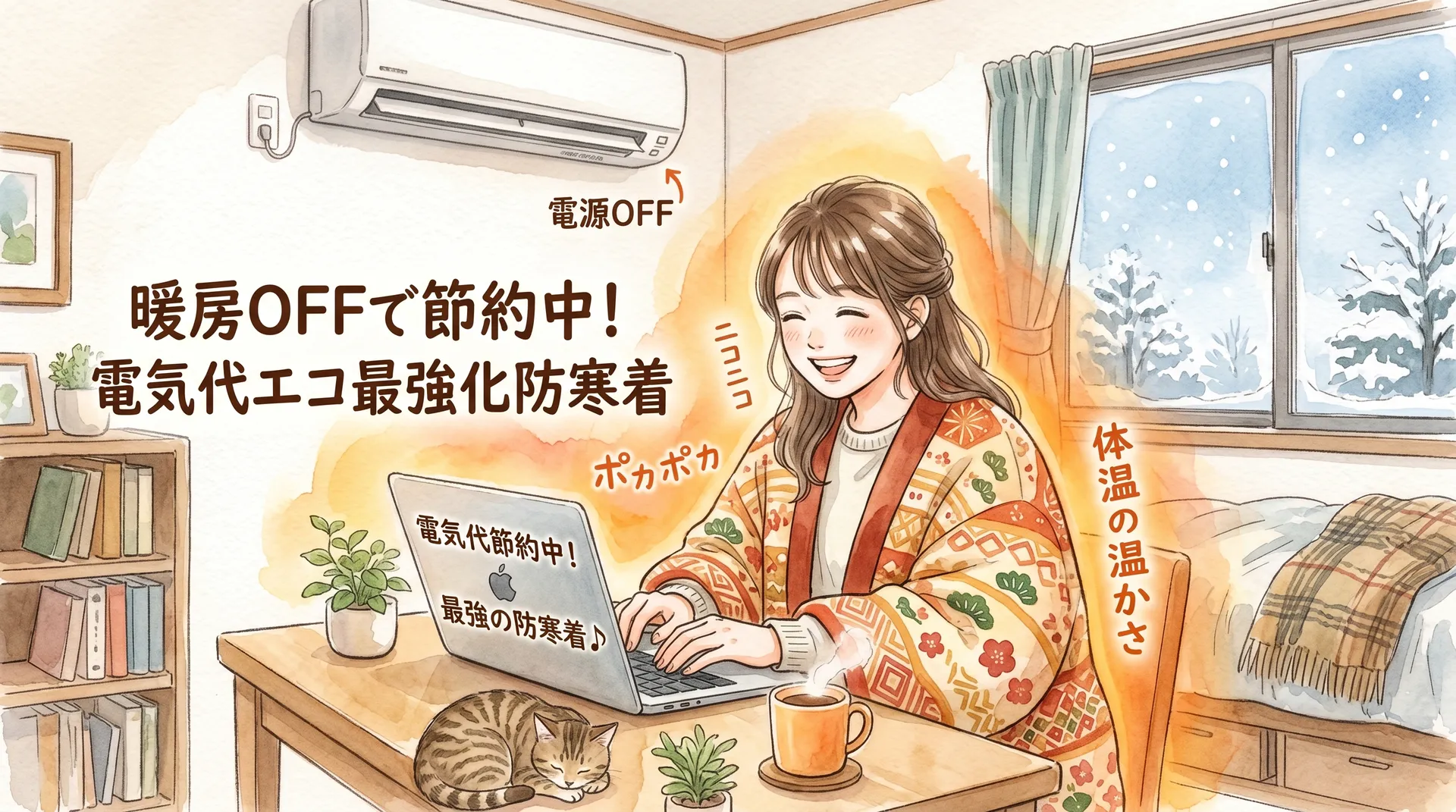
- Long sleeves — the standard. Full coverage, and the one to buy if you only buy one. The sleeves are wide, so they push up easily when you need your hands.
- Short sleeves. Warmth over the torso with your forearms free — better if you are cooking or typing, and less likely to trail through anything.
- Sleeveless (chanchanko). A padded gilet, worn over a jumper. Least in the way, and enough for a mildly cold room.
Buy loose. The padding needs air around it to work, and a hanten is meant to go over whatever you are already wearing. A snug hanten is a cold hanten.
There is no fastening on a traditional one — it wraps left over right and is
held with a tie or simply by sitting down in it. Some modern versions add a zip or a button,
which is convenient and slightly beside the point.
Japanese sizing runs small by Western standards, and this is a garment where you
want the extra room anyway. Size up.
What to Buy
We are not naming a shop here, deliberately. Hanten are easy to buy online with
worldwide shipping — and every listing we examined at the $200–$275 level stated neither the
filling nor the country of manufacture.
Recommending one of those would mean recommending an unknown object, which is
the opposite of what this guide is for. The checklist below is the recommendation.
What a good one says about itself
- Filling
- Cotton wadding, stated. Not "padded"
- Fabric
- Kurume-ori, or a named Japanese mill
- Made in
- Japan, stated explicitly
- Care
- Hand wash only — the good sign
- Maker
- A company name you can look up
- Weight
- Heavier than you expect. That is correct
Any listing that gives you four of those six is worth buying from. One that gives you none is selling a jacket shaped like a hanten, which may be perfectly warm and is not worth $250.
Japan's established makers — the weaving companies in Fukuoka that have been doing this
for generations — do not appear to sell into English-language retail directly, and we
could not confirm a route to any of them.
If you are travelling, they are ordinary purchases in department stores and
home shops from about October, at prices well below the international listings.
It is one of the better things to bring back: flat, light for its bulk, and
genuinely used rather than displayed.
Washing It Without Ruining It
This is the part that decides whether your hanten lasts a decade or one winter.
- Press-wash it by hand in a bath or a large basin. Lukewarm water, neutral detergent, and press down and release rather than rubbing or wringing. Wringing is what displaces the wadding.
- Rinse the same way, pressing clean water through until it runs clear.
- A very short machine spin is acceptable and a full cycle is not. Thirty seconds to a minute to get the bulk of the water out, then stop.
- Dry it flat first if you can, then hang it. A soaking hanten hung on a hanger drags all its wadding to the hem under its own weight.
- Finish in the sun. Cotton wadding regains its loft when dried in direct sunlight, and this is the step that makes it feel new again.
- Pat it as it dries to redistribute the filling. Do this a couple of times rather than once at the end.
Wash it once a season, not more. It is worn over other clothes, so it does not get dirty the way a shirt does — and every wash is the moment the wadding is most at risk.
Frequently Asked Questions
What is the difference between a hanten and a happi?
Padding. A hanten is cotton-wadded and worn indoors in winter; a happi is
unlined, thin, and worn outdoors at festivals — usually with a large crest or kanji on the back.
The cut is similar enough that the words get used loosely, but they are not
interchangeable garments.
Is "machine washable" a good thing?
No — it tells you the filling is synthetic. Cotton wadding shifts and clumps in
a machine and never recovers, so genuine cotton-wadded hanten are hand wash only.
A synthetic one is more convenient and should cost less; the problem is being
charged cotton prices for it.
Isn't cotton wadding heavy?
Yes, noticeably heavier than fleece or down. That is a real trade and not
everyone wants it.
What it gives back is warmth that does not turn clammy over a long evening, and
padding that does not collapse when you sit on it.
The filling has gone flat. Is it finished?
Not necessarily. Sunlight and patting restore a surprising amount of loft, and
a proper hanten can be opened and re-wadded — which is standard practice for futons.
Uneven lumps usually mean it went through a washing machine at some point, and
that is harder to undo.
What size should I buy?
Loose, and probably a size up. Japanese sizing runs small relative to Western
sizing, and the padding needs room around it to trap air.
It goes over your normal clothes, so allow for a jumper underneath.
What is a chanchanko?
The sleeveless version — a padded gilet worn over your other layers. It is the
least restrictive of the three shapes and plenty for a mildly cold room.
It is also what you want if you type or cook in it, since there are no sleeves to
push up.
Final Thoughts: Ask What Is Inside It
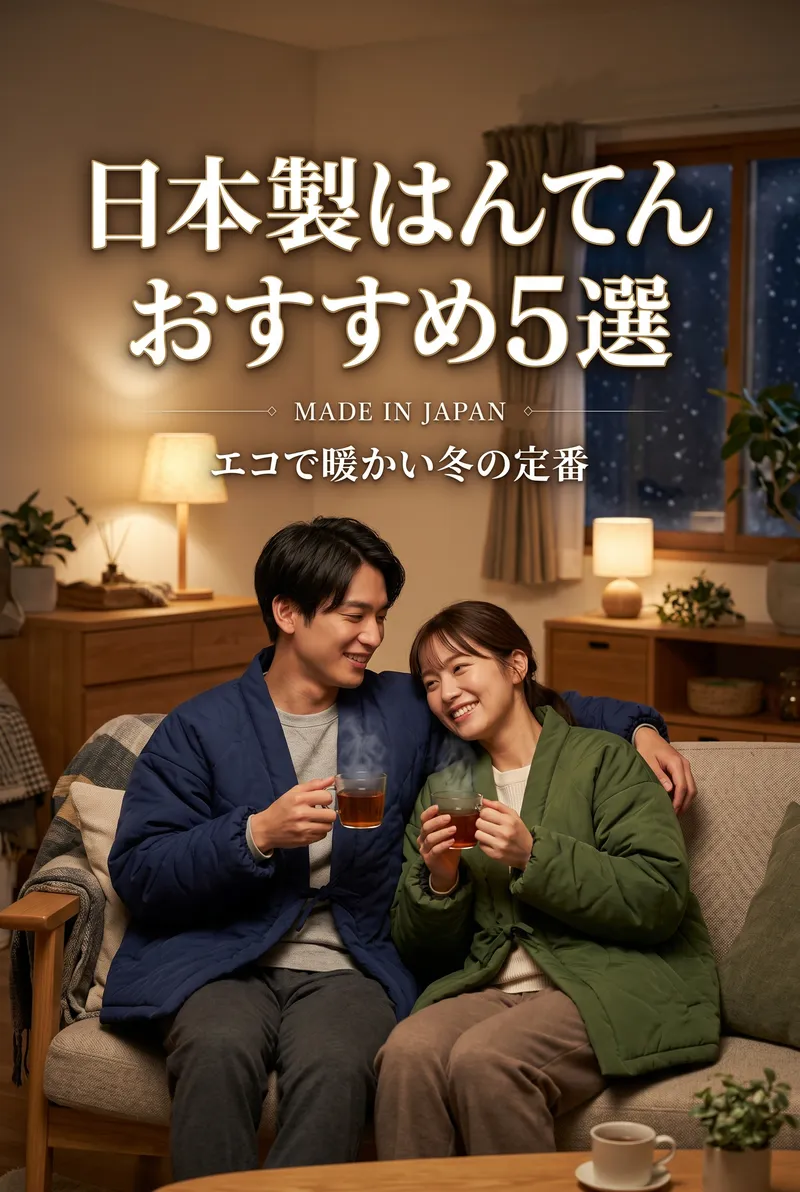
A hanten is a bag of cotton wadding in a nice cloth, laid in by hand by people who make futons. Take away the wadding technique and the fabric and you have a jacket shape that anyone can sew.
So the whole skill in buying one is asking two questions — what is the filling, and where was it made — and noticing when the listing answers neither.
And remember the odd one: hand wash only is the feature. If it can go in the machine, it is not what you came for.
Haramaki: Why Japan Warms the Middle, Not the Ends
Samue vs Jinbei: The Difference and How to Wear It