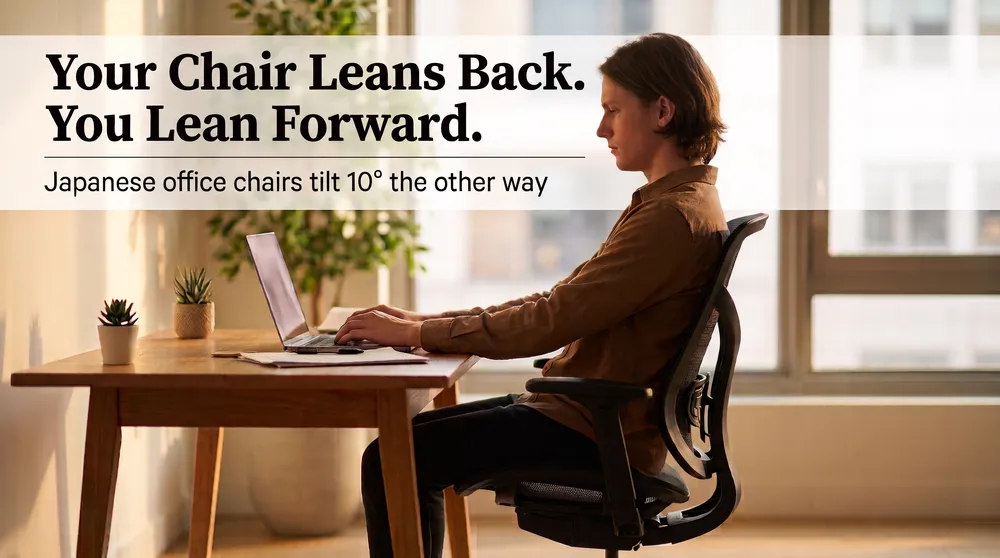
Western task chairs are designed around leaning back. Japanese ones are designed around
leaning forward.
That sounds like a small distinction and it is the whole thing. Okamura's chairs tilt the
seat pan forward by 10 degrees — seat and backrest together — because writing, drawing and
close keyboard work are done leaning in. In a recline-optimised chair, leaning forward means
leaving the backrest entirely, and your lower back is on its own.
They are also cut for smaller frames. But the Aeron wins on warranty, and we are going to say
so.
Quick Reference: Okamura vs Herman Miller
| Okamura | Herman Miller | |
|---|---|---|
| Forward tilt | Yes — 10° on the whole seat | Limited or absent by model |
| Body size | Optimised for smaller frames | Sized A/B/C; B is large for many |
| Warranty | 5–10 years by model and region | 12 years — best in the industry |
| Availability | Dealers; global English site | Everywhere, including used |
| Sit in it before you buy. A chair is the one purchase where body proportions decide everything and a photograph tells you nothing. | ||
The Honest Comparison
The Aeron is the most recognised task chair in the world, and it deserves the reputation. Nothing here is an argument that it is bad.
Where Herman Miller wins
- Warranty. Twelve years, the longest in the industry, against Okamura's five to ten depending on model and region. On a chair you intend to keep for a decade, that is not a detail.
- Availability. You can sit in an Aeron this week, almost anywhere, and the used market is enormous and well understood.
- Parts and service. Casters, cylinders, arm pads — all trivially obtainable worldwide, for decades.
Where Okamura wins
- Forward tilt. The seat tilts 10° forward, which is the section below and the real reason to read this article.
- Fit for smaller bodies. Okamura design explicitly for smaller builds and long sitting sessions — two things Western brands do not always optimise for.
- Adjustment granularity. More points of adjustment, in finer increments, which matters most to people who fall outside the average the chair was drawn around.
The summary: if you are of average Western build, work reclined, and want the safest
long-term ownership, buy the Aeron.
If you are smaller than the average that Western chairs assume, or you work leaning
forward over a desk, Okamura is solving your problem specifically — and no amount of
warranty length makes a chair that does not fit you into the right chair.
Why Japanese — Forward Tilt
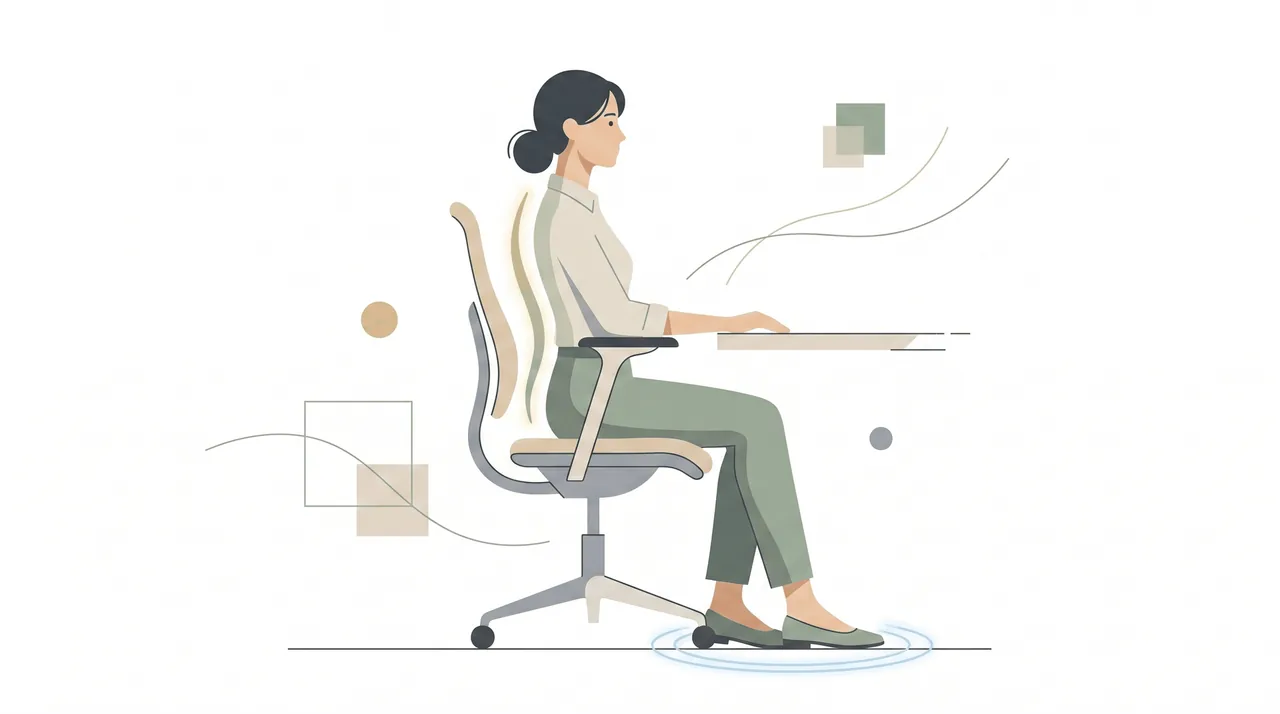
Okamura's synchro-tilt gives about 23° of recline and 10° of forward tilt. The recline is standard. The forward 10° is not, and it is the part worth understanding.
What actually happens when you lean forward
Reading, writing, drawing and precise keyboard work all pull you forward off the backrest. In a conventional chair, that means:
- You lose contact with the backrest entirely. The lumbar support you paid for is now behind you, touching nothing.
- The hip angle closes, which rolls the pelvis backwards and flexes the lower spine.
- Your torso is held up by muscle alone, for hours, which is what an ergonomic chair was supposed to prevent.
Tilting the whole seat forward changes the geometry rather than your posture.
The seat pan drops at the front, the hip angle opens instead of closing, and the
pelvis stays upright — so the spine keeps its curve while you are leaning in.
Okamura describe the effect as avoiding pressure on the abdomen and reducing load on the
lower back, and both follow directly from the geometry. Crucially, seat and
backrest tilt together, so the back support comes forward with you rather than being left
behind.
This is a Japanese office-culture solution to a Japanese office-culture problem — long hours of concentrated desk work. But the problem is not remotely exclusive to Japan, and if you spend your day hunched toward a monitor, this is the feature to try before you decide the category is all the same.
Sizing, and Why It Decides Everything
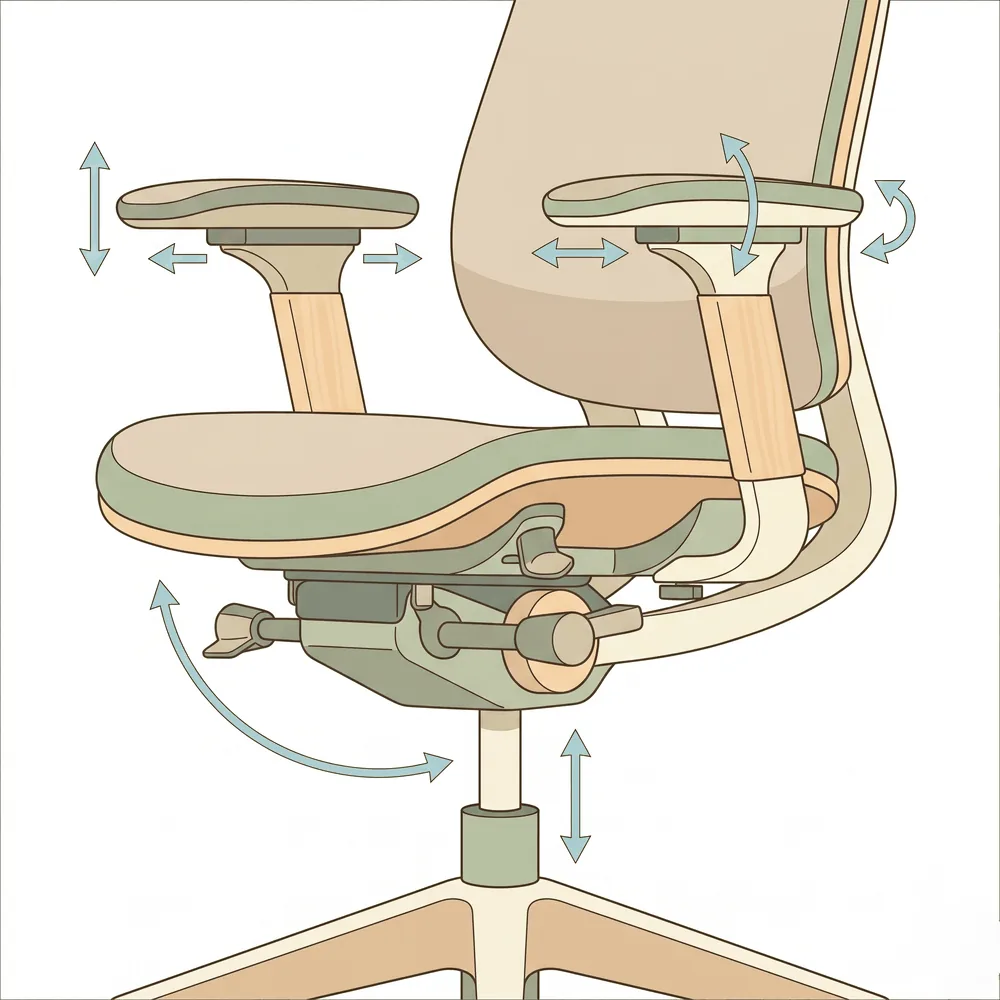
Chairs are drawn around an assumed body, and the assumption differs by market. Japanese chairs assume a smaller one — which is an advantage or a disadvantage depending entirely on you.
The four measurements that matter
- Seat height. Feet flat on the floor, thighs roughly horizontal. This is where Western chairs fail shorter users — the lowest setting is still too high, and the feet dangle or the front edge digs into the thighs.
- Seat depth. Two to three fingers between the seat edge and the back of your knee. Too deep and you cannot use the backrest without sliding forward, which is the most common quiet mis-fit.
- Backrest height and lumbar position. The support should land in the curve of your lower back, not above or below it. Adjustable height beats a fixed "ergonomic" bulge.
- Armrest height and width. Shoulders relaxed, forearms level. Armrests that are too wide are as bad as too high — they push your elbows out and your shoulders follow.
Sit in the chair before you buy it, if there is any way to do so. This is the
one product where we would say that unreservedly.
Specifications cannot tell you whether a chair fits, because fit is the
relationship between the chair's proportions and yours. Twenty minutes in a showroom
settles a question no amount of reading will — and Okamura sell through dealers, which
means showrooms exist.
Mesh or Cushion
| Mesh | Cushion | |
|---|---|---|
| Heat | Breathes. Much cooler in summer | Warmer, holds body heat |
| Support | Tension across a frame; firm edges | Even pressure, softer feel |
| Over years | Tension can slacken | Foam compresses and flattens |
Neither is better for backs, whatever anyone tells you. What matters for your lower back is the lumbar support and the tilt geometry, not the surface material.
Choose on temperature and on edge feel. Mesh if you run hot or your climate is humid; cushion if you find the front edge of a mesh seat cuts into your thighs, which some people do and others never notice.
What to Buy
Okamura Sylphy — the one to start with
The forward-tilt chair, and the reason this article exists. Synchro-tilt with
roughly 23° of recline and 10° of forward tilt on seat and backrest together,
with free-flow or locked positions.
Okamura's own English product page is headed "Comfortable for Larger and Smaller
Builds", which is an unusually direct statement of what the chair is for.
- Forward tilt
- 10°, seat and backrest together
- Recline
- Up to about 23°, free or locked
- Fit
- Designed across a wide range of builds
- Back
- Mesh or cushion versions
- Where
- Okamura global site and dealers
Perfect for: Anyone who works leaning forward, and anyone whom Western chairs have never quite fitted.
Okamura Contessa Seconda — the flagship
The chair Okamura is known for internationally, and the one most often set
against the Aeron directly. Larger, more adjustable, and considerably more expensive than the
Sylphy.
It is also the one increasingly specified on international projects, which
means it turns up in offices outside Japan and is therefore easier to find and sit in.
- Position
- Okamura's flagship task chair
- Adjustment
- The most extensive in the range
- Availability
- Specified internationally; easier to try
- Price
- Aeron territory
Perfect for: Buyers cross-shopping the Aeron directly, who want to sit in both before choosing.
The other Japanese names
KOKUYO and ITOKI are the other two large Japanese office
furniture makers, and their chairs are standard equipment in Japanese offices.
KOKUYO's ing is the unusual one — a seat that moves in every direction
as you shift, on the theory that a chair should not hold you still.
Both sell mainly within Japan, so treat them as things to look for if you are
there rather than as importable options.
We have not linked a marketplace here. Office chairs are sold through dealers, a
generic search returns unrelated furniture, and the thing you most need to do — sit in
it — cannot be done online.
The links above go to Okamura directly, which is where the dealer list is.
Buying One, and Buying Used
Warranty is a real differentiator
Okamura's warranty runs five to ten years depending on model and region; Herman Miller's is twelve. On a chair meant to last a decade, check the specific figure for your country before assuming.
Lead times run the other way — Okamura is commonly quoted at six to twelve weeks against sixteen to twenty for bulk Herman Miller orders. Neither is an off-the-shelf purchase.
If you buy used
- Check the gas cylinder first. A chair that sinks under you needs a new cylinder — cheap and replaceable, but you should know before paying.
- Test every adjustment through its full range. Seized tilt locks and stripped height levers are the common failures, and they are the parts you cannot see.
- Mesh: look for slackness and fraying at the frame edge. Cushion: press hard and see whether the foam returns.
- Casters and arm pads are consumables and easy to replace on a major brand. Do not reject a good chair over those.
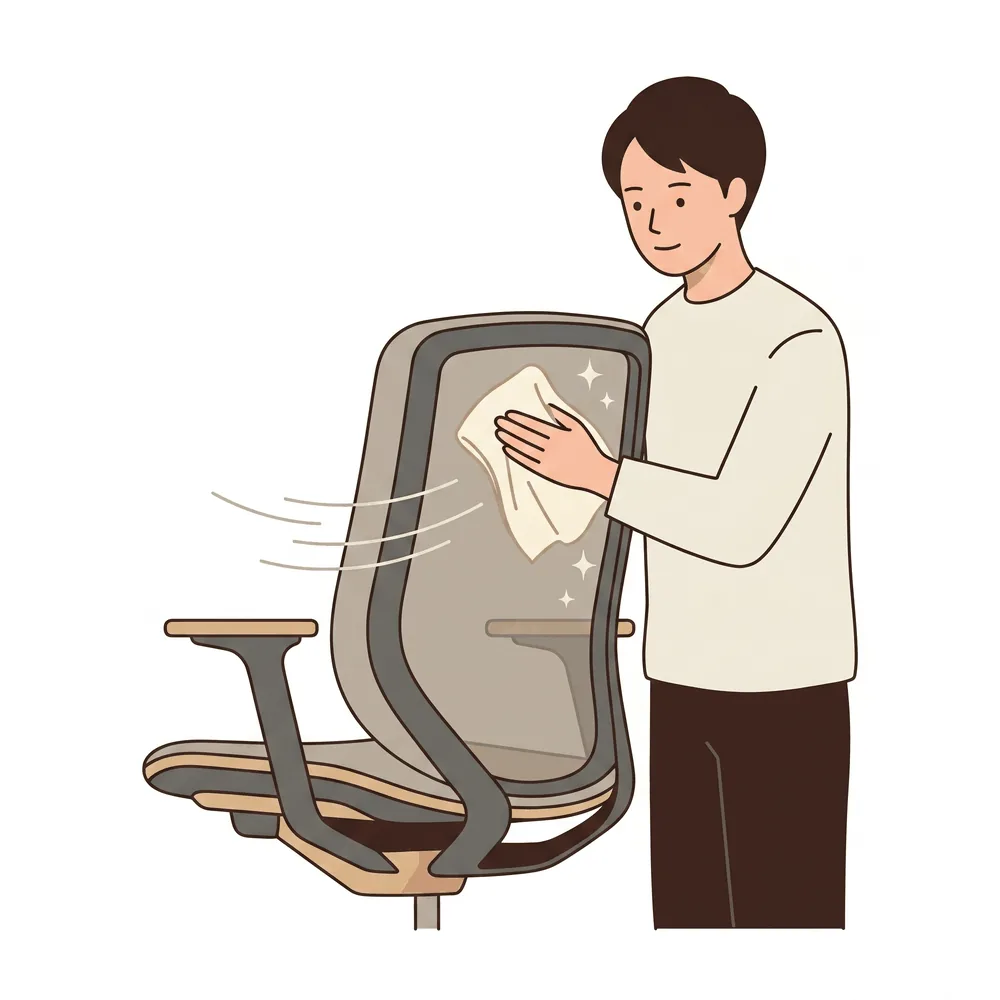
Replace the casters early, whatever you buy. Hard plastic casters on a hard floor are loud, scratch, and roll badly; soft polyurethane ones cost very little and change the experience of the chair more than most upgrades at any price.
Frequently Asked Questions
Okamura or the Aeron?
Aeron if you want the safest long-term ownership — twelve-year warranty, parts
everywhere, and a huge used market.
Okamura if you work leaning forward, or if Western chairs have never fitted you.
The 10° forward tilt and the smaller-frame design are solving specific problems, and a longer
warranty does not make a badly fitting chair correct.
What is forward tilt and do I need it?
The seat pan tilts about 10° forward, taking the backrest with it. That opens the
hip angle and keeps the pelvis upright while you lean toward a desk.
You need it if you spend hours leaning in — writing, drawing, close keyboard work.
In a conventional chair that posture takes you off the backrest entirely, and your lower back is
then unsupported.
Can I buy one outside Japan?
Okamura yes — they have a global English site and international dealers, and the
Contessa in particular is specified on projects worldwide.
KOKUYO and ITOKI are largely domestic, so treat those as things to look for while
you are in Japan rather than importable options.
Mesh or cushion for back pain?
Neither. The surface material is not what supports your back — the lumbar support
and the tilt geometry are.
Choose on temperature and on how the front edge feels against your thighs. Mesh
runs cooler; cushion is softer at the edge. Both are fine backs.
Do I really need to sit in it first?
Yes, more than for any other product we cover. Fit is the relationship between
the chair's proportions and your body, and no specification captures it.
Seat depth is the usual quiet failure — too deep, and you cannot reach the
backrest without sliding forward, so you never use the support you paid for.
Is a headrest necessary?
Only if you actually recline. If you work upright or leaning forward, a headrest
is unused weight and cost — and it can get in the way.
If you lean back to read or think, it is genuinely useful. Decide from how you
work rather than from the options list.
Final Thoughts: The Direction You Lean
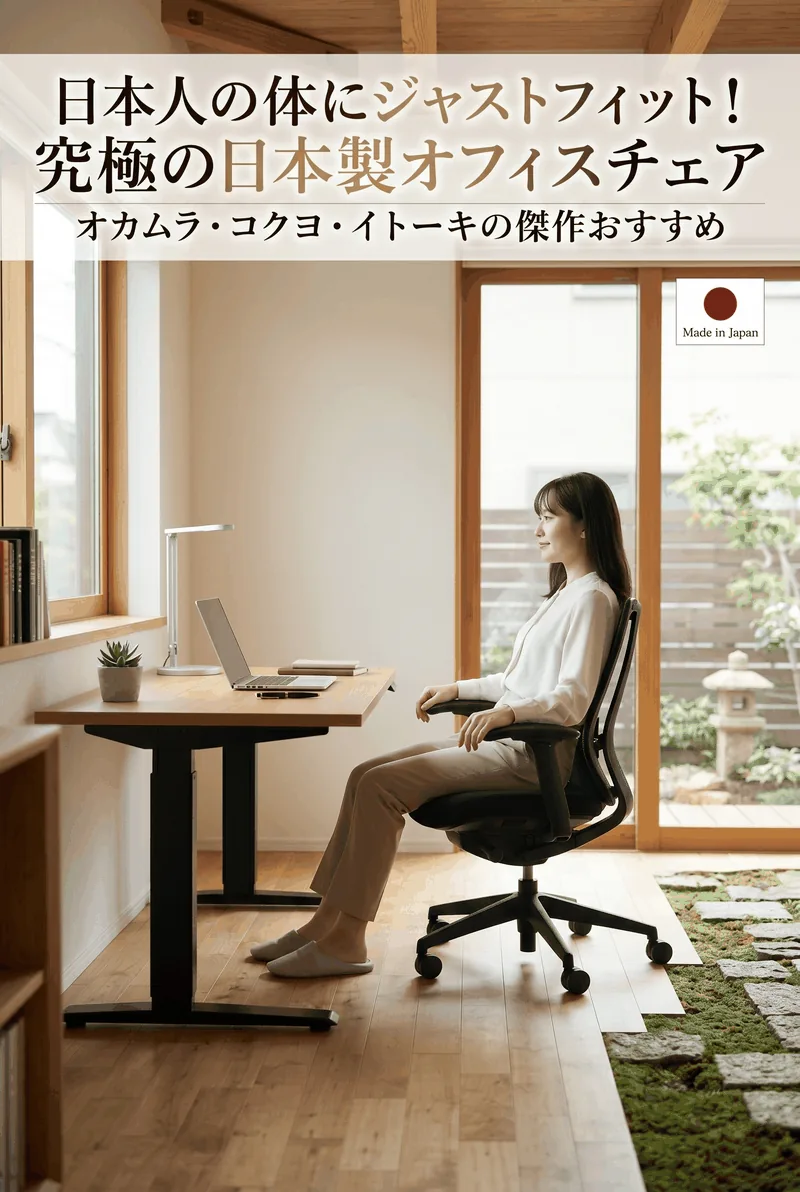
The question is not which chair is better. It is which direction you spend your day leaning. Western task chairs are built around supported recline; Okamura built a mechanism for the other posture, and almost nobody demonstrates it.
Herman Miller genuinely wins on warranty and on parts, and if you are of average Western build and work reclined, the Aeron is the safer purchase. We are not going to pretend otherwise.
But sit in both. Fit is not a specification, and twenty minutes in a showroom will tell you more than every review ever written — including this one.
Japanese Keyboards: HHKB, Topre and the Layouts

Japanese Notebooks: Paper Worth Writing On