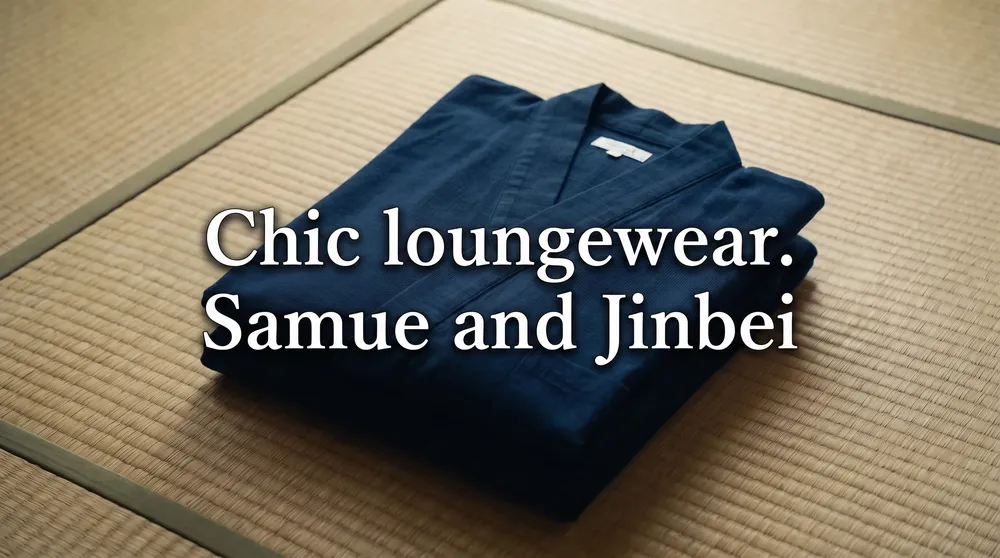
Samue is a word that means "work clothes." Specifically, the clothes Zen monks put
on to sweep the grounds and split firewood — because in Zen those chores are not an interruption to
the practice, they are the practice.
Jinbei is a different garment for a different season, and the two get confused
constantly. Short sleeves and shorts, high summer only.
But before either: there is one rule about how you close the front, it has been in force
since 718, and getting it backwards means you are dressed as a corpse. That part first.
Quick Reference: Samue or Jinbei
| Samue | Jinbei | |
|---|---|---|
| Cut | Long sleeves, full-length trousers | Short sleeves, shorts |
| Season | Year-round (weight varies) | High summer only |
| Origin | Zen temple work clothing | Urban summer loungewear |
| Sides open? | Closed | Laced underarm gussets for airflow |
| Best weave | Kurume-ori | Awa shijira (Japanese seersucker) |
| ⚠ Both close left over right. Right over left is how the dead are dressed — and it is the mistake almost every foreign wearer makes. | ||
Left Over Right, Always
Wrap the left front panel over the right one. From your own point of view looking
down, your left side ends up on top.
The reverse — right over left — is used only to dress the deceased. This holds for
samue, jinbei, yukata and kimono, for men and women alike, without exception.
Why the Japanese name says "right" when your left is on top
In Japanese the correct closure is called migimae — literally "right front" — which sounds like the opposite of what you have just been told. It is not. The Japanese terms describe what the person facing you sees.
| Looking from | Panel on top | |
|---|---|---|
| Someone facing you | Their right | This is where the name migimae comes from |
| You, looking down | Your left | This is what you actually see while dressing |
Both rows describe the same garment. Remember the one you can see — your left goes on top — and treat the Japanese name as a label rather than an instruction.
Your own wardrobe may have trained you wrong
Western shirts do not agree with each other. Men's shirts fasten left over right — the
same direction as a kimono. Men who dress on autopilot tend to get this right without
knowing why.
Women's blouses are built the other way round: the right side laps over the left.
That is the funeral direction. Decades of reaching for the same side every morning is
exactly the reflex that gets it wrong, which is why this mistake is far more common among
women — and why it is worth checking rather than trusting your hands.
The two-second check
Once it is closed, slide your right hand into the front opening at chest height.
If it slips in easily, you have it right. If the fabric blocks you, you are wearing it the wrong
way and should swap the panels.
Photographs are not a reliable guide — a mirror reverses the image, and a great
many stock photos of Westerners in yukata show it worn incorrectly. Use your hand, not your eyes.
It is worth knowing that this is not a matter of etiquette that drifted into being. The Yōrō Code of 718 legislated it, adopting the convention from Tang China, and the rule has held ever since. A dress instruction that has survived 1,300 years is not one to improvise around.
The reason the reverse became funerary is almost accidental: the left-over-right closure was the aristocratic Chinese style, so it was legislated for the living, and the deceased were dressed in the older reversed manner regardless of rank — a small posthumous elevation that hardened into an absolute taboo.
Why Japanese — What the Word Actually Means
Samue breaks into two parts: samu and e. The second simply means clothing. The first is the term for the manual labour of temple life — sweeping, cleaning, chopping wood, working the vegetable plots.
And in Zen, samu is not the chore you do before you get to the practice. It is the practice, on equal footing with seated meditation. Robes are useless for it, so monks wore something they could work in. That garment is the samue, and it is the reason a meditation garment looks like workwear: it is workwear.
The traditional browns and indigos are not aesthetic choices either — they exist to mark the garment as distinct from formal vestments. This is the clothing you wear when you are doing something.
Cotton and linen, not polyester
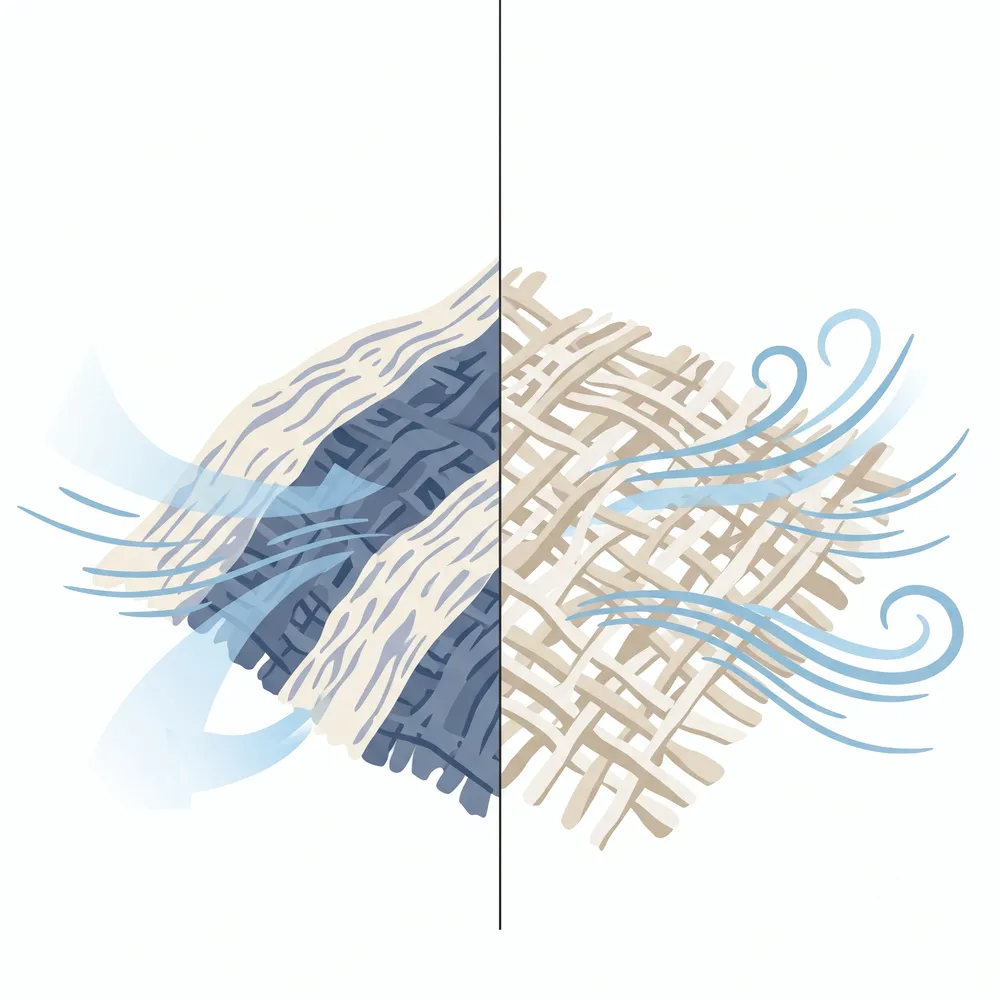
The cheap versions are heavily polyester, and the failure mode is immediate:
synthetic fibre does not absorb sweat, so it sticks to skin and traps a layer
of damp warmth against you.
This matters more than usual because samue and jinbei are worn against bare skin.
Japanese-made pieces are cotton or linen — they take up moisture and release it, which is the
entire point of the garment in a humid summer.
On linen content
100% linen is the coolest and the scratchiest. If you are sensitive to texture — or buying as a gift and cannot ask — a cotton base with roughly 15–25% linen blended in is the safe choice. You get most of the airflow and none of the prickle.
Samue or Jinbei: Choosing Between Them
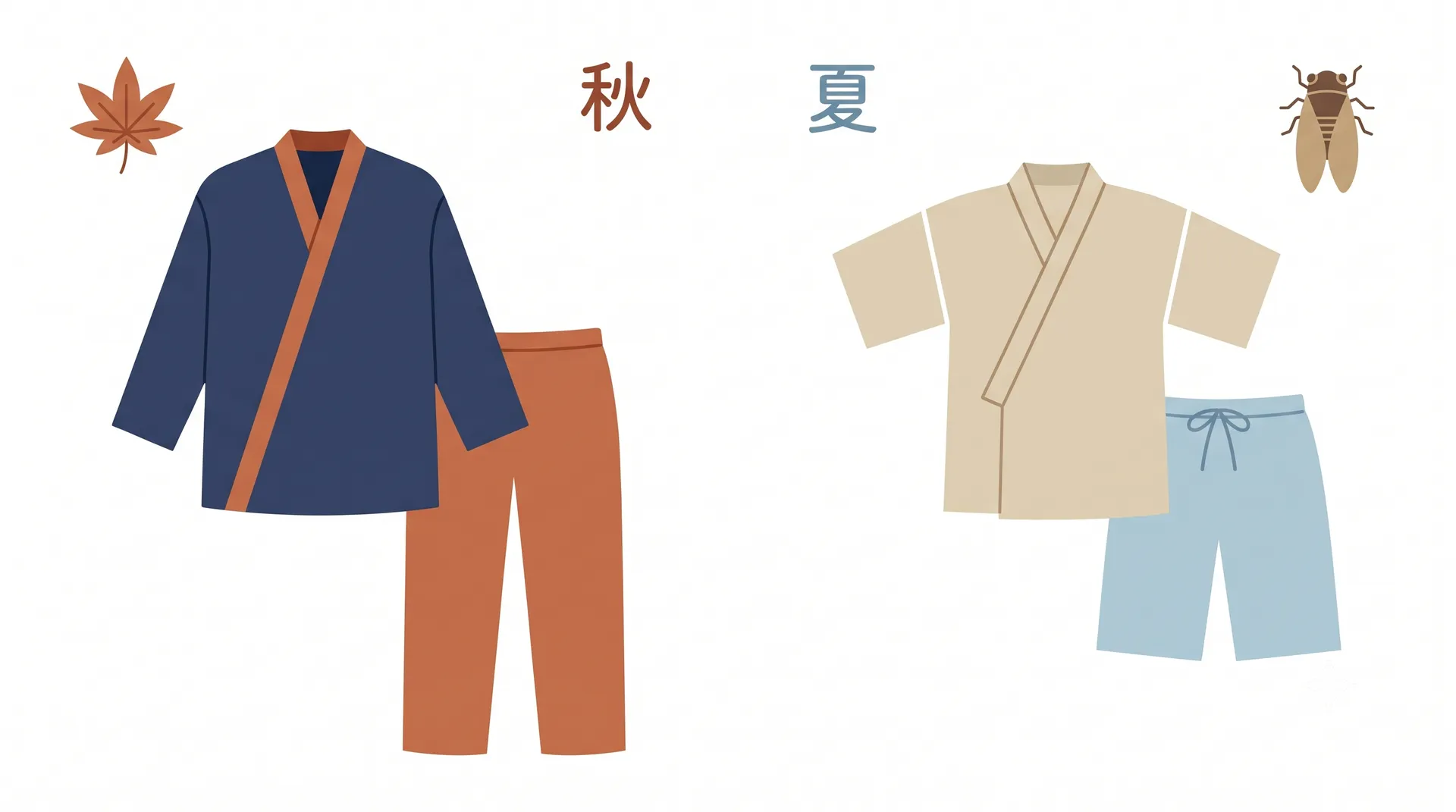
The decision is about season, and nothing else.
- Jinbei — short sleeves, shorts ending above the knee, and open laced gussets under the arms that let air move straight through the garment. Built for the worst three weeks of a Japanese August and not much use outside them.
- Samue — long sleeves and full-length trousers, with drawstrings or elastic at the wrists and ankles so nothing catches while you work. Because fabric weight varies from light cotton to quilted and fleece-lined, samue covers the whole year.
If you can only own one, own a samue. A jinbei is a genuinely better garment in real heat, but it is a specialist. And a winter-weight samue with a padded lining is warm enough that people buy them to keep the heating off.
Two Weaves Worth Paying For
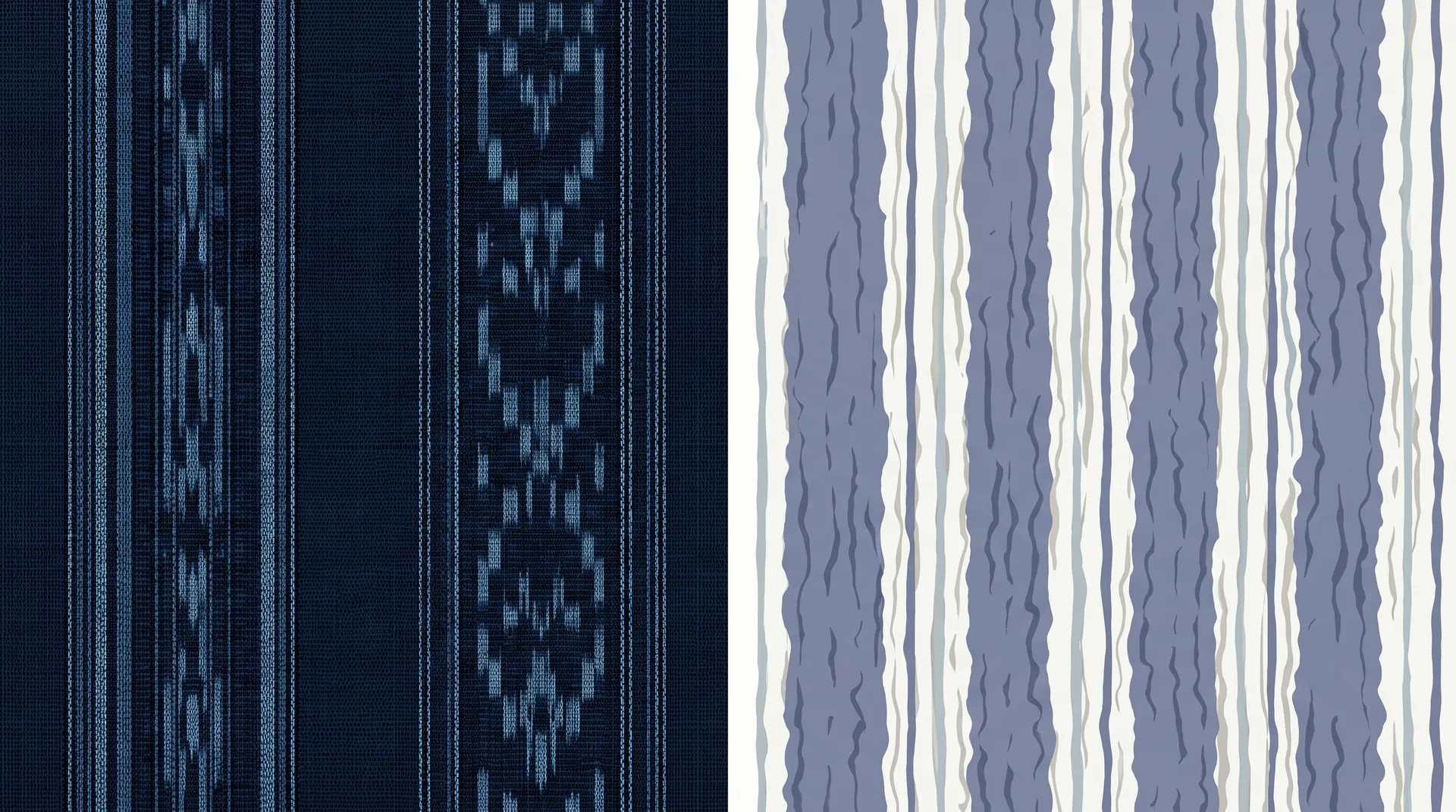
Kurume-ori — Fukuoka, indigo, yarn-dyed
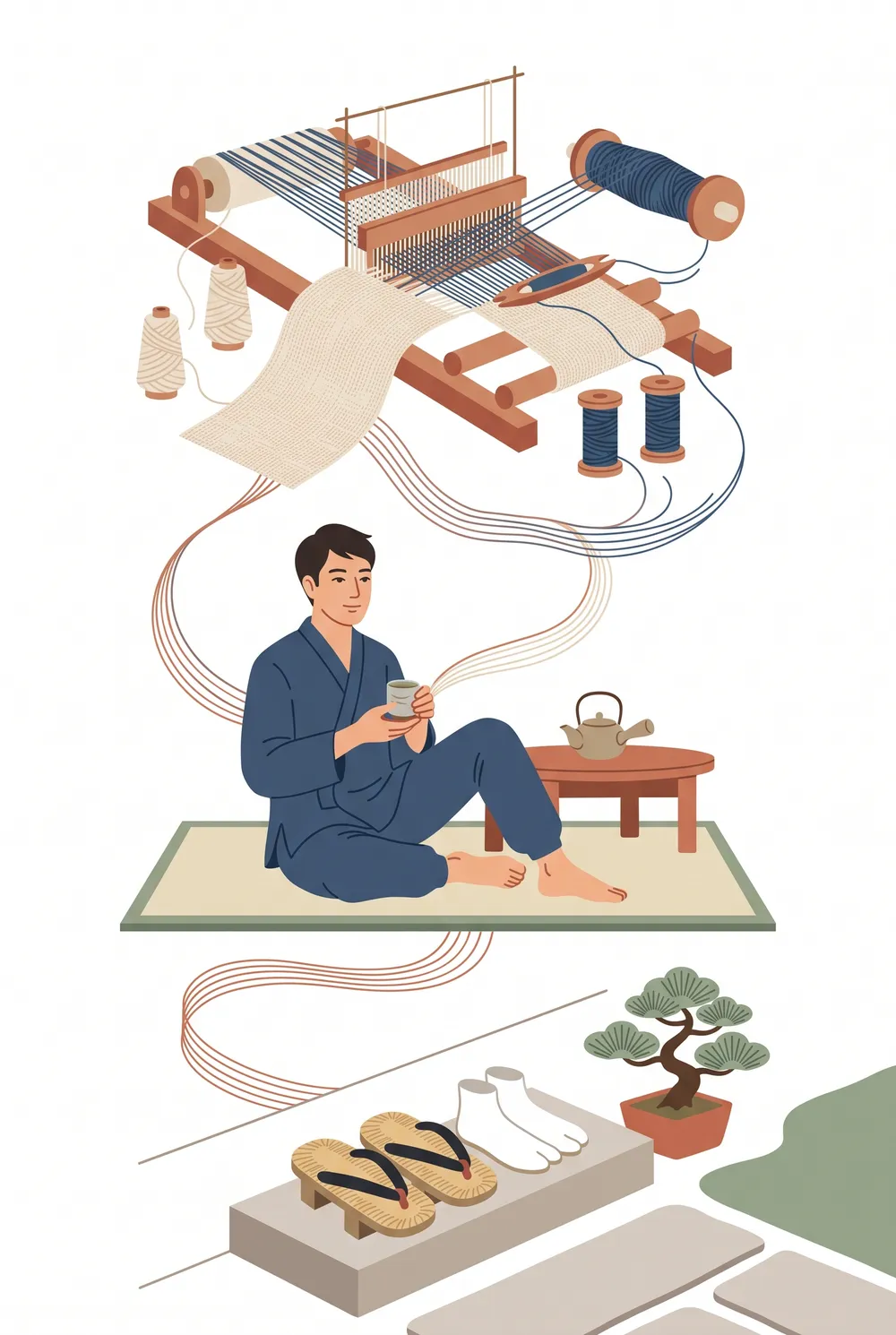
Descended from Kurume kasuri, the Edo-period ikat tradition of Fukuoka. The yarn is dyed before it is woven, not the finished cloth — which is slower, and is why the indigo goes deep rather than sitting on the surface. It holds its colour, it is genuinely hard-wearing, and it softens against the skin every time you wash it.
This is the weave for a year-round samue: robust enough to work in, and better after five years than it was new.
Awa shijira — Tokushima, and a rain shower in 1856
Awa shijira is Japanese seersucker, and the comparison is exact: the surface is covered in fine puckering — shibo — which holds the cloth off your skin so air can move underneath. In humidity, that is worth more than thinness.
It was invented by a mistake and a rain shower
In 1856, a weaver named Hana Kaifu, in Atake village in what is now Tokushima,
left a cotton kimono outside to dry. A sudden shower soaked it.
When it dried she noticed something: in the places where she had miscounted her threads
while weaving, the cloth had shrunk differently and pulled itself into an uneven,
rippling surface. Rather than treat it as ruined work, she thought it was
beautiful — and spent years working out how to produce it deliberately by varying the
tension between adjacent threads.
A counting error and a badly timed rain shower produced a textile that is still made in
Tokushima 170 years later.
For a jinbei, there is nothing better. If you are buying one garment for genuine heat, buy this weave and stop looking.
Sizing, and Why Yours Will Arrive Small
Japanese sizing runs small by Western standards, and samue makers size for a Japanese frame. Order one size up from your usual, and two if you are tall.
- Sleeve and trouser length is where it fails first. Chest measurements are generous because the cut is boxy, but the limbs are drafted for a shorter build. If you are over about 180cm, check the stated yuki (shoulder-to-wrist) and inseam figures rather than trusting the letter size.
- The fit is meant to be loose. This is not a garment that should skim you. Air moving through it is a feature, and a samue worn close to the body loses most of what makes it comfortable.
- Expect shrinkage. Good cotton and linen will pull in on the first wash. Makers generally allow for it, but it is one more argument for sizing up rather than down.
- Wash cool, in a mesh bag, and never tumble dry. Line dry in shade, smoothing the creases out flat by hand while it is damp — this is the whole of the maintenance.
What to Buy
Wasuian (Ida Seni) — the obvious first stop
A traditional garment maker in Kiryu, Gunma — a weaving town for over a
thousand years — producing samue and jinbei under the Wasuian name with fabric selection and
sewing kept in Japan.
They run an English-language store, which puts them well ahead of most
Japanese makers in this category, and the size range is the broadest available.
- Based
- Kiryu, Gunma
- Range
- Samue and jinbei, men's and women's, all weights
- Fabrics
- Cotton, linen blends, Kurume-ori, quilted winter weights
- English
- Yes — dedicated English store
- Price range
- $80–$250
Perfect for: A first samue, and for anyone who wants to buy without navigating a Japanese-only checkout.
Miyata Orimono — Kurume-ori, woven and sewn in one place
Founded in 1913 in Chikugo, Fukuoka — inside the Kurume kasuri district
itself. They weave the cloth, design the garment and sew it, all in house,
which is rare enough now to be the reason to choose them.
Best known abroad for padded hanten jackets, which are the warmest
thing in this whole category and the natural companion to a winter samue.
- Founded
- 1913, Chikugo, Fukuoka
- Speciality
- Kurume-ori — yarn-dyed indigo, woven in-house
- Also
- Padded hanten jackets, kasuri stoles
- Character
- Softens and improves with washing
Perfect for: A samue you intend to wear for a decade, and for cold houses.
Nagao Orifu — Awa shijira for summer
A Tokushima weaver working in Awa shijira, the puckered cloth described
above. This is the material to want in a jinbei, and it is worth seeking out
the weave by name rather than buying whatever cotton a general retailer offers.
Traditionally paired with Awa natural indigo, a dye the region has been known
for since long before the cloth existed.
- Based
- Tokushima
- Cloth
- Awa shijira — puckered surface, holds off the skin
- Best for
- Jinbei, summer yukata
- Dye
- Often Awa natural indigo
Perfect for: Anyone who has tried to sleep through a humid August night.
Buying without importing
Samue has enough of a following abroad that specialist retailers in the US and Europe
stock Japanese-made pieces — martial arts suppliers, Japanese craft shops and meditation
outfitters all carry them.
Check the fabric content before the price. The tell for a poor one is a polyester
blend, and it is usually stated.
Wearing It Outside Without Looking Like Pyjamas
In Japan a samue is ordinary streetwear for short trips — the shops, a walk,
an errand. It reads as a considered thing to wear rather than as clothing you forgot to change
out of, and the difference is almost entirely about fabric quality.
A well-made cotton or Kurume-ori samue hangs properly and holds its shape. A
cheap polyester one clings and creases, which is what actually makes a garment look like
nightwear.
- Footwear decides it. Traditional setta or geta are the classic answer; plain leather sandals or minimal slip-on trainers work perfectly well and are easier to walk in. Avoid anything bulky or technical — that is the combination that looks like a costume.
- Indigo and charcoal read as clothing. Bright colours read as fancy dress.
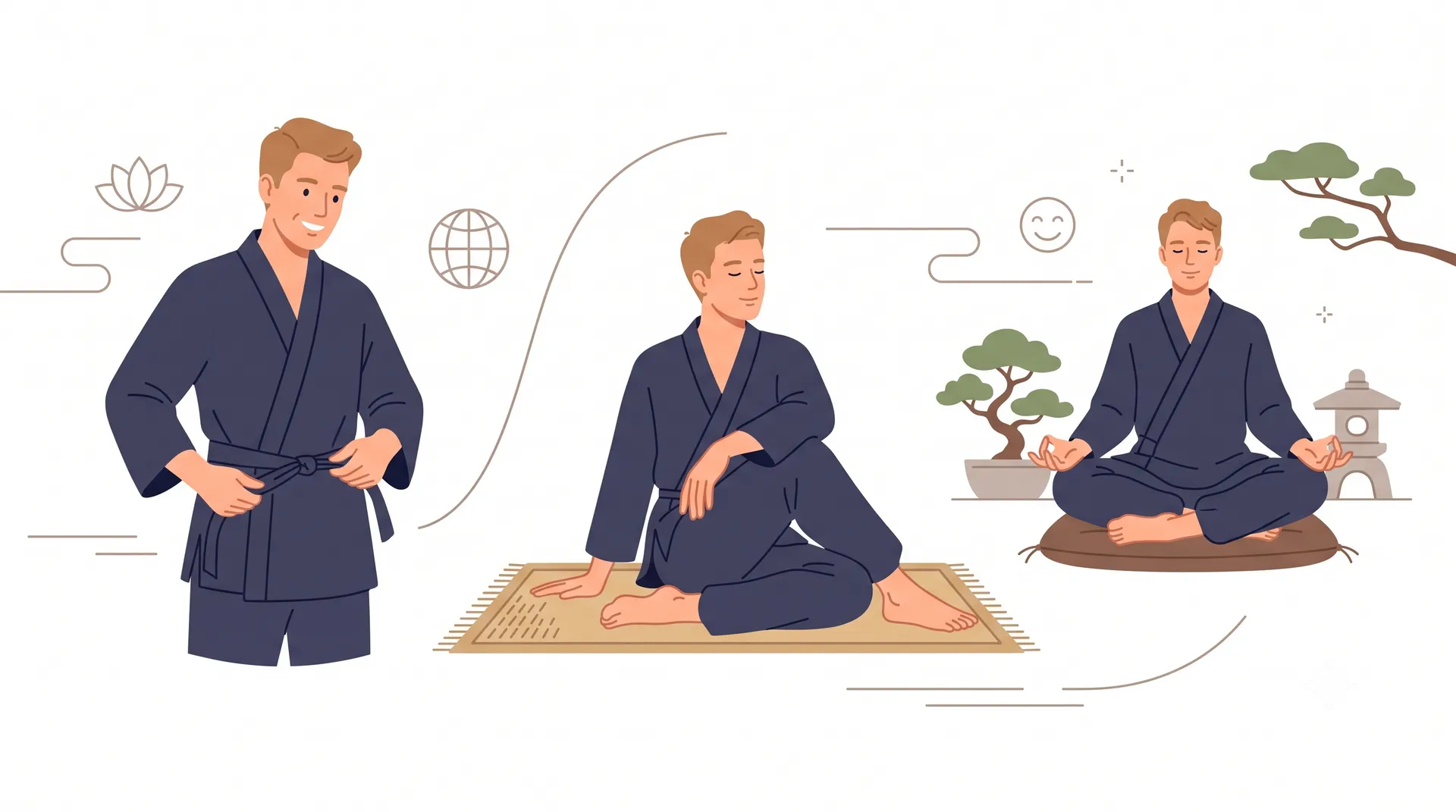
- It works as meditation and yoga wear for a real reason, not a marketed one: it was designed for physical work, so it does not bind at the shoulders or the knees.
- Tie the waist cord properly and check the collar. A loose, sloppy front is what separates "wearing a samue" from "wearing something vaguely Japanese".
Frequently Asked Questions
Which side goes on top?
Left over right, always. Your left front panel covers your right one.
The reverse is used only for the deceased, and the rule has been fixed since the
Yōrō Code of 718.
The Japanese name migimae ("right front") describes
what the person facing you sees, not what you see — the two descriptions are the
same garment.
The check: slide your right hand into the front opening. If it goes in easily,
you are correct.
What is the difference between samue and jinbei?
Sleeve and trouser length, which comes down to season. Samue has long sleeves and
full-length trousers and is worn year-round; jinbei has short sleeves and shorts and is
strictly a summer garment, with laced openings under the arms for airflow.
Samue also carries a meaning jinbei does not — it is Zen temple work clothing.
How is a jinbei different from a yukata?
A jinbei is a two-piece with shorts; a yukata is a single full-length robe closed with a
sash. No obi is involved with a jinbei and nothing needs to be tied at the waist.
Jinbei is far easier to wear and to move in, which is why it is loungewear and
the yukata is not.
What size should I order?
One size up from your usual, two if you are tall. Japanese sizing runs small, and
the limbs fail before the chest does — the cut is boxy, so width is rarely the
issue but sleeve and inseam length often are.
Check the stated measurements rather than the letter size, and remember that cotton and linen
shrink on the first wash.
Can I wash it at home?
Yes — cool water, mesh bag, no tumble dryer. Heat is what causes the shrinkage
you cannot undo.
Line dry in shade and smooth the creases flat by hand while it is still damp.
Done that way, good cotton needs no ironing at all.
Is there a version warm enough for winter?
Yes. Winter samue come quilted or fleece-lined, and they are considerably warmer
than they look — warm enough that people wear them specifically to keep the heating turned
down.
The related garment is the hanten, a padded jacket that goes over the
top and is warmer still.
Final Thoughts: Clothes for Doing Something In
Samue is sold abroad as meditation wear, and the framing is not wrong — but it is backwards. These are not garments designed for stillness that happen to be comfortable. They are work clothes, from a tradition that treats sweeping the floor as seriously as sitting.
Buy the samue if you are buying one thing, in cotton or Kurume-ori, one size up. Buy the jinbei in Awa shijira if you know what a humid August is like — the puckered cloth that a weaver invented by miscounting her threads and leaving the washing out.
And close it left over right. One rule, 1,300 years old, and the only part of this you can actually get wrong.
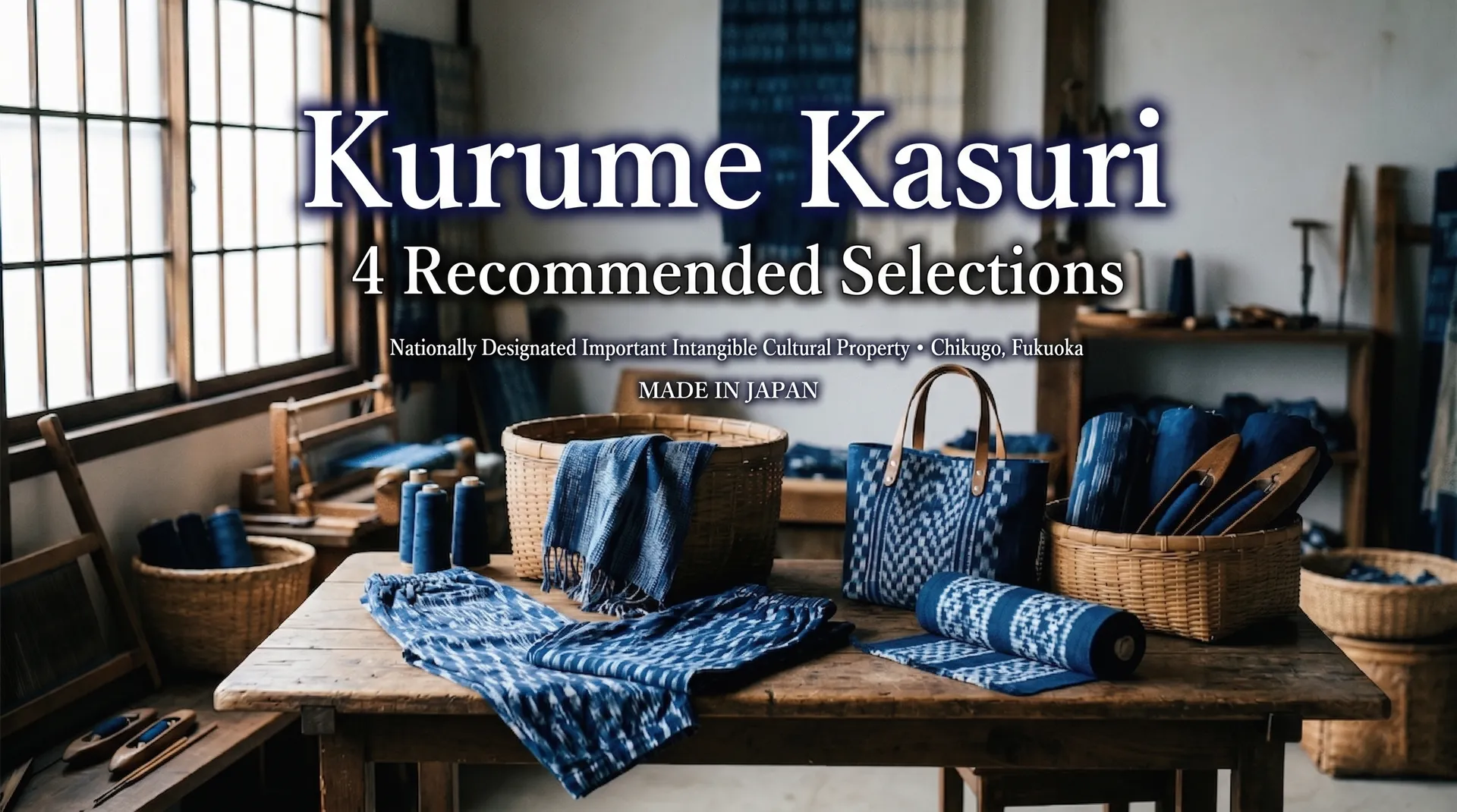
Kurume Kasuri: Japan's Living Indigo Textile
Tenugui: The Cloth That Does Everything