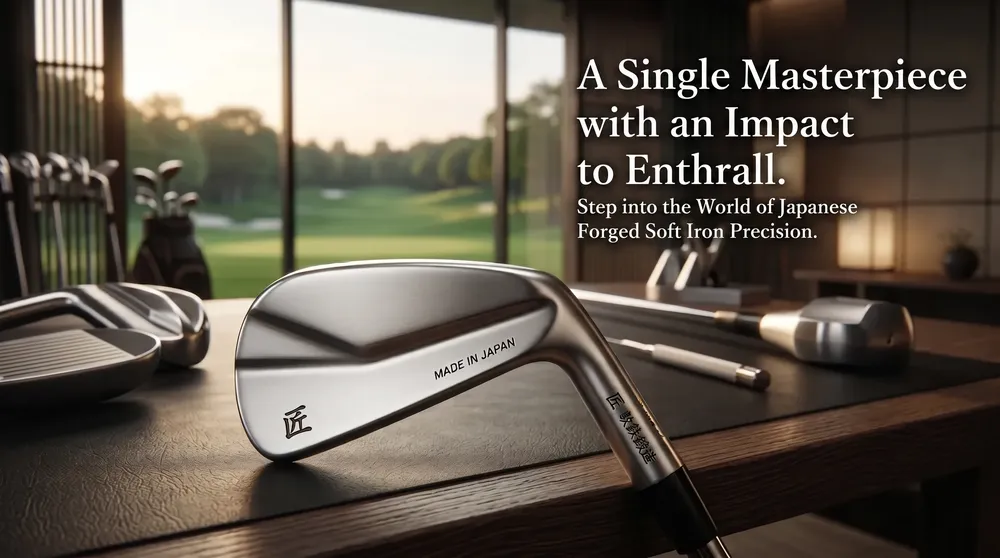
If you know Japanese irons, you know Miura and you know Mizuno. Those two are where the
conversation starts in English, and it usually stops there as well.
It should not. Japan has a whole tier of small forging houses that most English
golfers have never heard of — Epon, Kyoei, Fujimoto — selling clubs that sit alongside Miura on
feel and below it on price. They are known collectively as ji-clubs, and
the category has no English equivalent, which is most of the reason you have
never come across them.
The other thing nobody tells you: many of these are sold as heads only. No shaft,
no grip. That is not an inconvenience — it is the entire point, and understanding why is the
difference between a great import and an expensive mistake.
Quick Reference: Japan's Forged Iron Makers
| Maker | Known for | How it sells abroad |
|---|---|---|
| Mizuno | Grain Flow Forged, Hiroshima. The benchmark for feel in the West | Everywhere. Start here if you are new to forged |
| Miura | Hand-ground heads, Himeji. The name that carries mystique | Official US site and authorised dealers |
| Epon Endo Mfg. |
The forging house other brands quietly use | US official site; JDM specialists |
| Kyoei | Traditional shaping, heavier heads, classic looks | JDM specialists, usually heads only |
| Fujimoto | Hizukuri — heads beaten from a billet, not die-struck | JDM specialists, small runs |
| Heads-only is normal in Japan. You buy the head and have a fitter build it to your shaft, length and lie. Budget for that build — see the buying section below. | ||
Why Japanese Irons Are Different: The Ji-Club System
Ji-club (地クラブ) translates roughly as "local club", and it describes something the Western golf market does not really have: small independent makers who produce iron heads in limited numbers and sell them through specialist fitting shops rather than through golf retail.
A major manufacturer designs a head, tools it, forecasts demand and ships tens of thousands of complete clubs into a distribution network. A ji-club maker forges a few hundred heads, sells them to fitters, and the fitter builds the finished club around one specific golfer. The maker never touches a shaft.
That structure has consequences that are easy to miss:
- There is no marketing budget in the price. No tour staff, no television, no seasonal launch cycle. What you pay for is metal and grinding time.
- Models do not get replaced every year. A good ji-club head can stay in the catalogue for a decade, because there is no commercial reason to obsolete it.
- The fitting is not optional. Buying a ji-club head and bolting a random shaft onto it discards most of what you paid for.
Where the English-speaking world meets this
The term you will actually see used online is "JDM" — Japan Domestic Market — borrowed from the car world. JDM golf has its own retailers, its own forums and its own vocabulary, and it is where you will find the makers below. It is a small scene, and a surprisingly well-organised one.
Forged vs Cast: What You Actually Feel
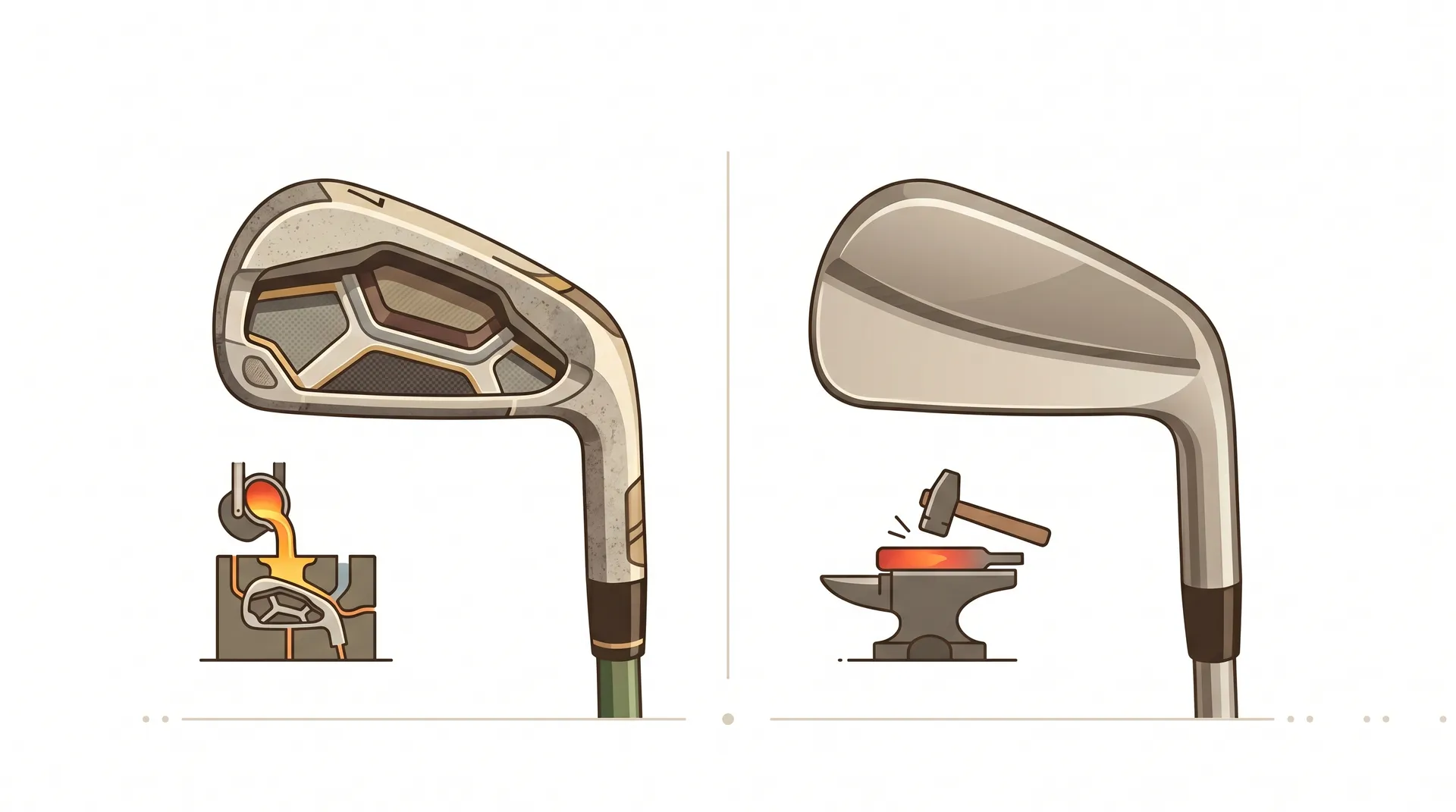
Casting pours molten steel into a mould. It is cheap, repeatable, and it
allows complicated hollow shapes that make a club far more forgiving. Almost every
game-improvement iron is cast, and for good reason.
Forging takes a billet of soft carbon steel and beats it into shape under
pressure. The grain of the metal follows the form rather than being frozen at random, and the
result is denser and more uniform.
Here is the part worth being honest about. Forging does not make the ball go further and it does not make you more accurate. Modern cast irons beat forged blades on both counts, which is why tour players who need distance use hollow-bodied cast long irons.
What forging changes is information. A soft forged head transmits far more of what happened at impact back up the shaft — where on the face you struck it, whether the turf interaction was clean, whether the face was open. A cast head filters that out along with the harshness.
If you cannot yet tell a heel strike from a toe strike, that information is noise. If you can, it is the most useful feedback in the bag. That, and not prestige, is the honest test of whether these clubs are for you.
The steel is deliberately soft
Japanese forged heads are typically made from low-carbon steels in the S20C to S25C range — softer than what most Western makers use. Soft steel dents more easily and rusts more readily. It is chosen anyway because it also bends more predictably, which is what lets a fitter adjust loft and lie by two degrees without cracking the hosel.
The Makers Worth Knowing
Ordered by how easily you can actually get them outside Japan, easiest first.
Mizuno — the one you can already buy
Not a ji-club, and included anyway because it is the honest starting point. Mizuno's forged irons are made in Hiroshima by a process the company calls Grain Flow Forged, and for decades they have been the reference point every reviewer uses for the phrase "buttery feel". If you have never hit a forged iron, find a Mizuno before you import anything.
- Made in
- Hiroshima, Japan (forged line)
- Sold as
- Complete clubs, fully fitted through normal golf retail
- Why start here
- You can hit one this weekend without shipping anything
- Price range
- $1,000–$1,700 per set
Perfect for: Establishing whether you actually like forged feel, before spending ji-club money to find out.
Miura — hand grinding, and the price of it
The Miura family in Himeji finish heads by hand, and the company's reputation rests on how consistent that hand work is from head to head across a set. Miura is the one Japanese ji-club name that broke through internationally, and it is priced accordingly — you are paying a premium for the name as well as the grinding. The clubs still deserve it.
- Made in
- Himeji, Hyogo
- Known for
- Hand-finished heads; unusually tight tolerances across a set
- How to buy abroad
- Official direct site, plus authorised dealers — including PGA TOUR Superstore in the US
- Price range
- $1,800–$3,500+ per set, depending on build
Perfect for: Someone who has decided on forged, wants it hand-finished, and would rather buy through a dealer than import.
Epon — the forging house that put its own name on the club
This is the interesting one. Endo Manufacturing in Tsubame-Sanjo is one of the
largest forging houses in golf, and it has spent decades producing heads that go out under
other companies' names. Epon is the line Endo sells under its own badge — the same
forging floor, without the brand markup on top.
Among people who follow JDM clubs closely, Epon has a reputation for manufacturing
precision rather than romance: sets where every head measures where it should.
- Made in
- Tsubame-Sanjo, Niigata (Endo Manufacturing)
- Known for
- Forging consistency; the AF series of irons
- How to buy abroad
- Endo runs a US site for Epon; also sold by JDM specialists
- Price range
- $1,400–$2,400 per set built
Perfect for: Anyone who would rather pay for the factory than the logo. Tsubame-Sanjo also makes Japan's best kitchen knives — the same forging tradition, different product.
Kyoei and Fujimoto — deeper into the scene
Kyoei Golf builds traditionally shaped heads with more mass and a classic
look at address — the kind of profile that has largely disappeared from Western catalogues.
Fujimoto Giko works in hizukuri, where the head is beaten out from a
heated billet rather than struck in a die, in very small numbers.
Both are usually sold as heads only, and neither has a Western distributor.
You reach them through JDM specialists, and you will be arranging your own build.
- Made in
- Japan, small production runs
- Sold as
- Heads only in most cases
- How to buy abroad
- JDM specialist retailers with worldwide shipping; secondary market
- Price range
- $700–$1,500 for a set of heads, before the build
Perfect for: Someone who already has a fitter they trust and wants something nobody at their club will recognise.
Buying From Outside Japan: Heads, Shafts and Lie Angle
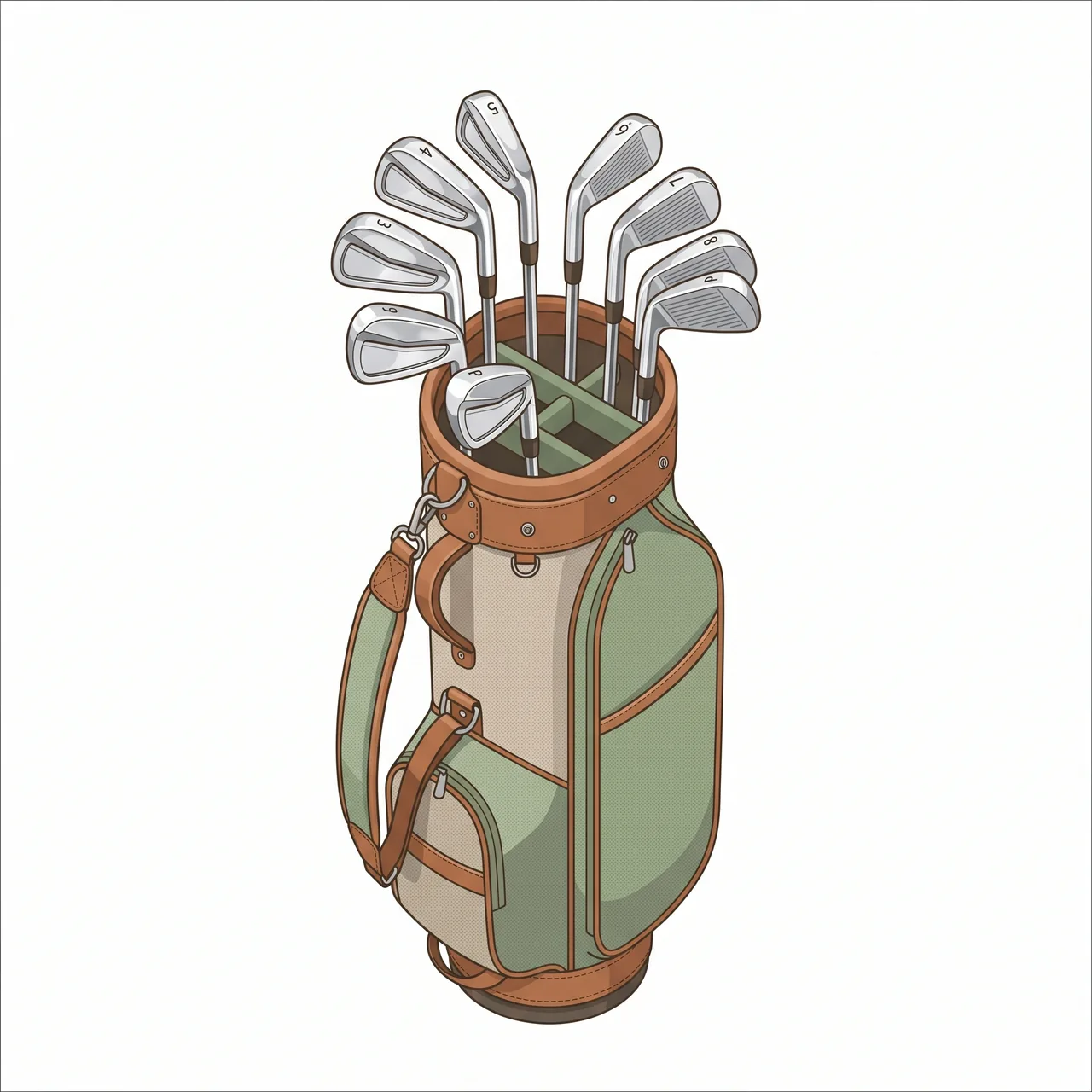
This is where imports go wrong, and it is almost never the head's fault.
1. Heads only means heads only
JDM specialists list iron heads as a product category in their own right. You will receive unshafted heads. Add roughly $200–$400 for shafts, grips, ferrules and a builder's labour, and add the time to find a builder willing to work with supplied components.
2. Japanese-spec shafts are lighter than you expect
When a JDM club does come built, it is usually assembled for the domestic market — and Japanese stock shafts tend to be lighter and softer-tipped than what a comparably-sized Western golfer would normally be fitted into. A shaft flex letter is not a standard measurement in either country, and it is even less comparable across them.
Do not buy on the flex letter. Buy on shaft weight in grams and, if you can, on a measured profile.
3. Lie angle matters more with soft steel, and it is fixable
The soft carbon steel that makes these heads feel good also makes them easy to bend. Any competent fitter can adjust lie by a couple of degrees. This is normal, expected, and part of why the steel was chosen — so build a fitting session into the budget rather than treating it as an optional extra.
4. Where to actually buy
| Route | Good for | Watch out for |
|---|---|---|
| Brand's own Western site | Miura, Epon. Warranty, no customs surprises | Narrower model range than Japan |
| Authorised dealers | Trying before buying — Miura is in some US retail | Stock varies enormously by store |
| JDM specialists | The only route to Kyoei, Fujimoto and heads-only | Import duty; you arrange the build |
| Secondary market | Discontinued heads at sane prices | Bent lies and worn grooves. Check the face |
Rust Is a Specification, Not a Defect
Soft carbon steel oxidises. If you leave a wet Japanese forged iron in a bag overnight, it will show orange spots by morning, and this catches out buyers who have only owned stainless clubs.
Nothing has gone wrong. The steel was chosen for how it feels and how it bends, and corroding easily is the price of both. Some Japanese players deliberately let their wedges rust, on the theory that a roughened face grips the ball better.
- Dry the faces before the clubs go back in the bag. This one habit prevents nearly all of it.
- Wipe with a lightly oiled cloth at the end of a round — any light machine oil works.
- Never store clubs in a car boot. Condensation cycles are far harder on them than rain.
- Light surface rust comes off with a soft brass brush or a rust eraser. Do not use steel wool on a chrome-plated head.
Plated heads resist all of this. Raw or satin finishes do not — and if you are choosing a raw finish, you are choosing the maintenance along with it.
Frequently Asked Questions
Are forged irons too hard for a mid-handicapper?
Forged does not mean blade. That confusion causes most of the fear. Plenty of
Japanese makers forge cavity-backs and hollow-bodied heads that are as forgiving as a cast
game-improvement iron.
What you should ask is whether you strike the ball consistently enough for the extra feedback to
be useful rather than discouraging.
Will I lose distance compared with my current irons?
Possibly, and it may not be the forging that causes it. Distance irons achieve
their numbers with strong lofts and thin fast faces. A traditionally-lofted forged iron will
carry shorter — but with a higher, steeper descent that actually holds a green.
Compare lofts before you compare distances, or you are measuring the wrong thing.
Can I buy Japanese ji-clubs without going to Japan?
Yes. Miura sells direct through its own Western site and through authorised dealers including some US retail. Endo runs a US site for Epon. Smaller makers such as Kyoei and Fujimoto come through JDM specialist retailers that ship worldwide — usually as heads only.
What does "heads only" actually cost me?
Roughly $200–$400 on top for shafts, grips, ferrules and assembly, plus finding a builder who will work with components you supply. Factor it in from the start — a set of heads is not a finished purchase, and pricing it as one is how people end up disappointed.
Is Mizuno a ji-club?
No. Mizuno is a large international manufacturer that happens to forge its
premium irons in Japan. Ji-clubs are small independent forging houses selling through fitters.
Mizuno is still the right first forged iron for most people, precisely because you can go and hit
one this week.
My new irons have rust spots. Are they faulty?
Almost certainly not. Japanese forged heads use soft carbon steel that oxidises readily, and raw or satin finishes will spot if stored damp. Dry the faces after every round and wipe with a lightly oiled cloth. Light surface rust removes with a brass brush.
Final Thoughts: Feel Is Information
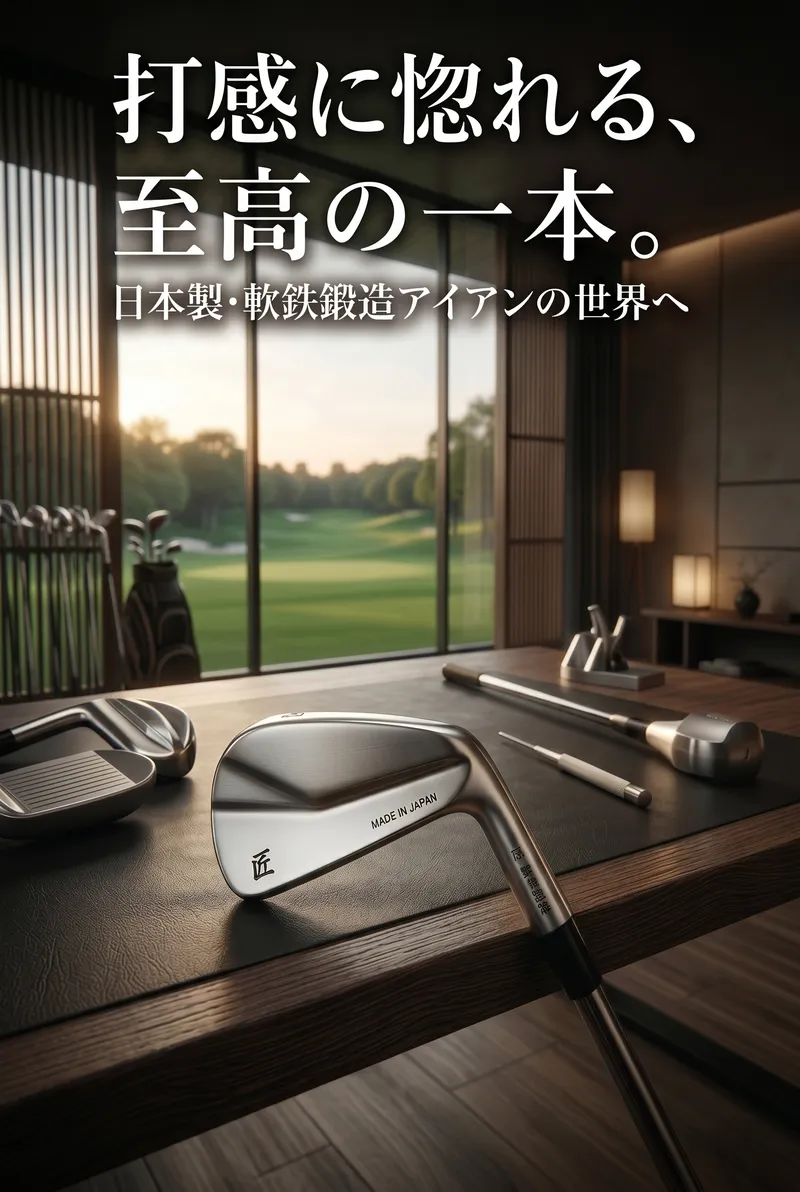
A Japanese forged iron will not lower your handicap by itself. What it does is tell you the truth about every shot you hit — and for a golfer who has reached the point of wanting that, no cast head can substitute.
Start with a Mizuno you can hold in a shop. If the feel is worth chasing, the ji-club world opens up behind it: Miura through its dealers, Epon direct from the forging house, Kyoei and Fujimoto through the JDM specialists.
Budget for the build, buy shafts by weight rather than by flex letter, and dry the faces before they go back in the bag. Do that and these clubs will still be worth playing in twenty years — which was rather the point of forging them.
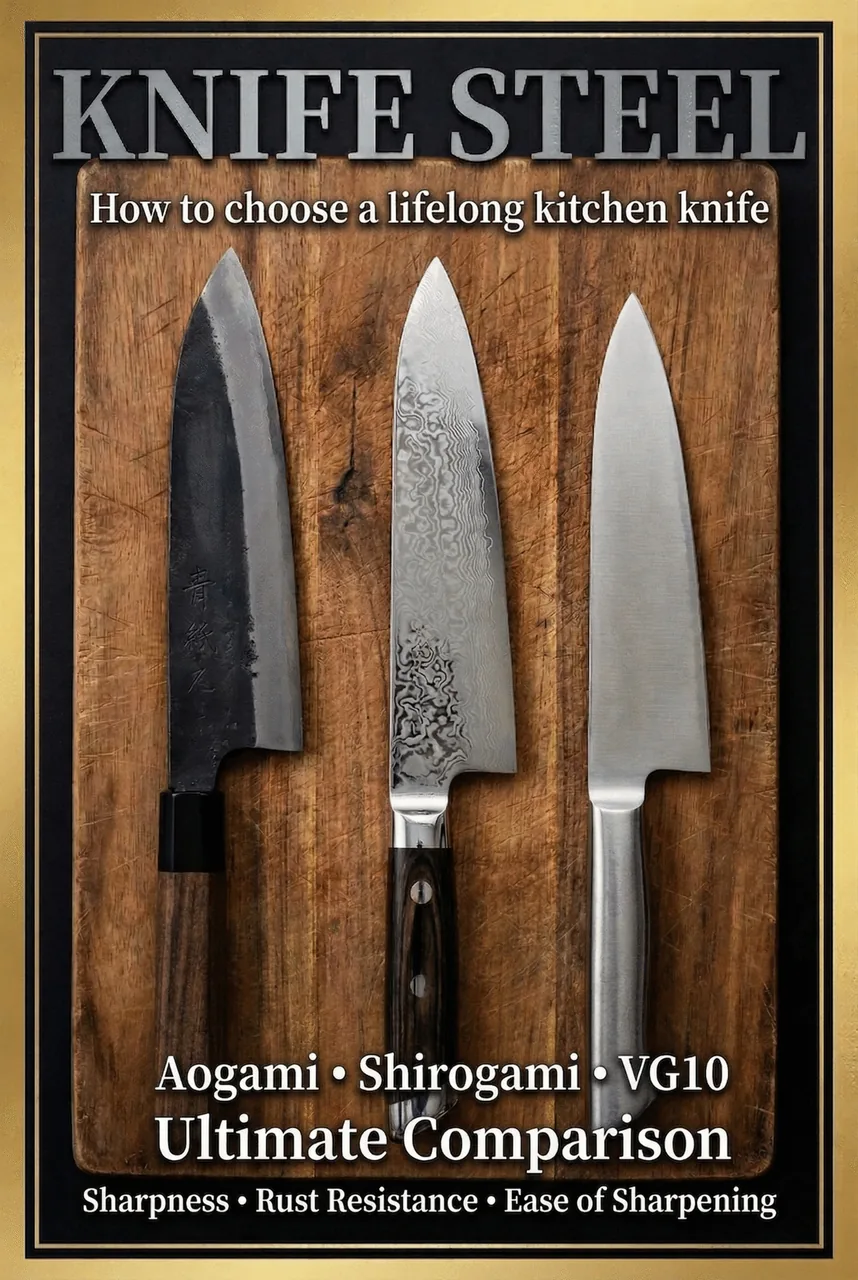
VG10 vs SG2: Every Japanese Knife Steel, Compared
Japanese Kitchen Knives: Brands and Types