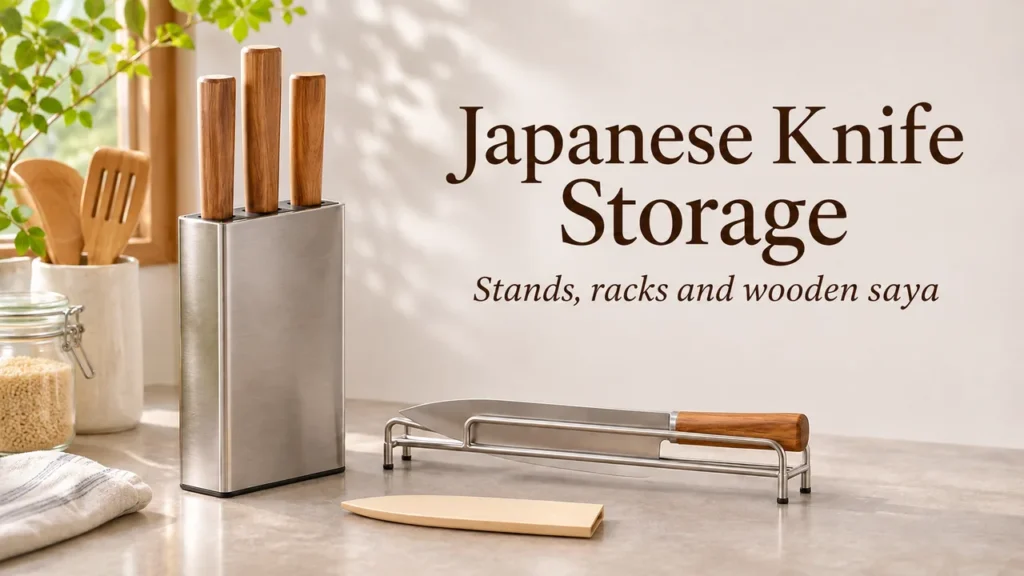
Where should a good Japanese knife live when it isn't cutting? Not loose in a drawer, where the edge knocks against other tools. Not dripping in a crowded dish rack.
Japanese kitchen knives tend to be hard and thin, so they reward storage where the edge touches nothing, moisture doesn't linger, and you can take the knife out without reaching past the blade. The right storage depends on where you have space: stand it on the counter, lay it flat in a drawer, or slip it into a wooden saya (sheath). This guide covers five made-in-Japan options you can buy from outside Japan, from Tsubame-Sanjo, Japan's metalworking town, plus the Japan-only designs worth knowing.
Quick Reference: Japanese Knife Storage at a Glance
| If you want... | Pick | Where it goes | Why |
|---|---|---|---|
| Knives upright, blades hidden | Shimomura Kihan Smart Tower ▾ | Counter | Slim stainless tower from Tsubame-Sanjo |
| Knives and scissors together, airy | Yoshikawa Hi! Horizontal Stand ▾ | Counter or drawer | Open wire, dishwasher safe |
| Two knives on wood | Nichinichi Tools Edge Knife Stand ▾ | Counter or drawer | Low wooden rest, horizontal |
| A sheath for a santoku | Masamoto Saya, Santoku 180 mm ▾ | Drawer, travel | Magnolia wood, locking pin |
| A sheath for a gyuto | Masamoto Saya, Gyuto 210 mm ▾ | Drawer, travel | For the common 8-inch chef's knife |
Tap a name to jump to its review.
1. Why Japanese: Storage That Protects a Hard, Thin Edge
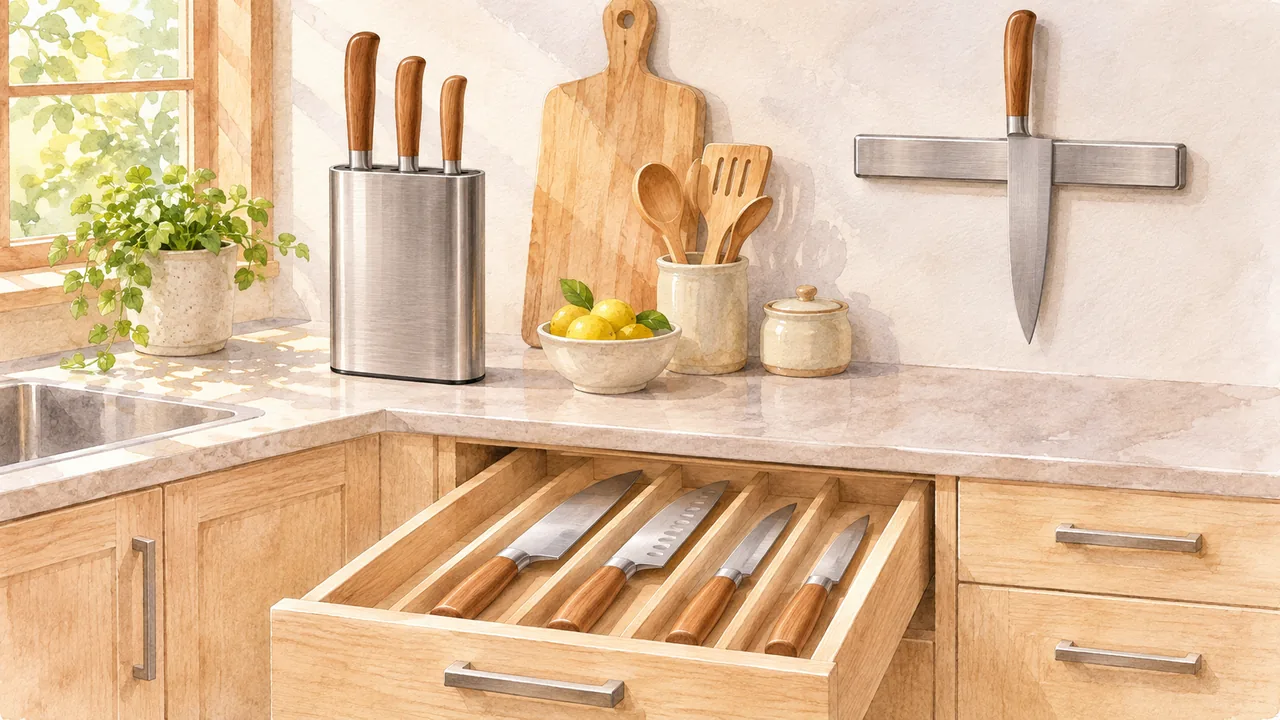
Japanese kitchen knives are prized for thin, hard edges that cut cleanly. That same edge is the part to protect. The makers below design around three ideas: keep the edge from touching anything, let air reach the blade so water doesn't sit, and make the knife easy to draw out safely. One Tsubame-Sanjo stand, for example, holds knives so the handle's weight lifts the tip off the rack, precisely so the edge doesn't chip.
Pick by where you have space
Counter space to spare: an upright stand lets you grab a knife mid-cooking. Tight counter: a low horizontal rack sits at the back of the counter or goes straight into a drawer. Knives that travel, or live in a drawer: a fitted wooden saya covers the whole edge.
2. Upright on the Counter
Shimomura Kihan Smart Tower Knife Stand (41176): A Slim Steel Tower
For counters with little room but a few good knives. Shimomura Kihan is a housewares maker in Tsubame-Sanjo, and its knife stands are made there in stainless steel. This tower is just 7.2 cm (2.8 in) deep, so it fits beside the sink or stove.
Before you buy, check your longest knife against the listing's slot size; most compact stands top out around a 20 cm (8 in) blade.
Shimomura Kihan Smart Tower Knife Stand (41176)
Loading product details…
3. Lying Flat: Counter or Drawer
Yoshikawa Hi! Breathable Horizontal Knife Stand (1306203): Knives and Scissors Together
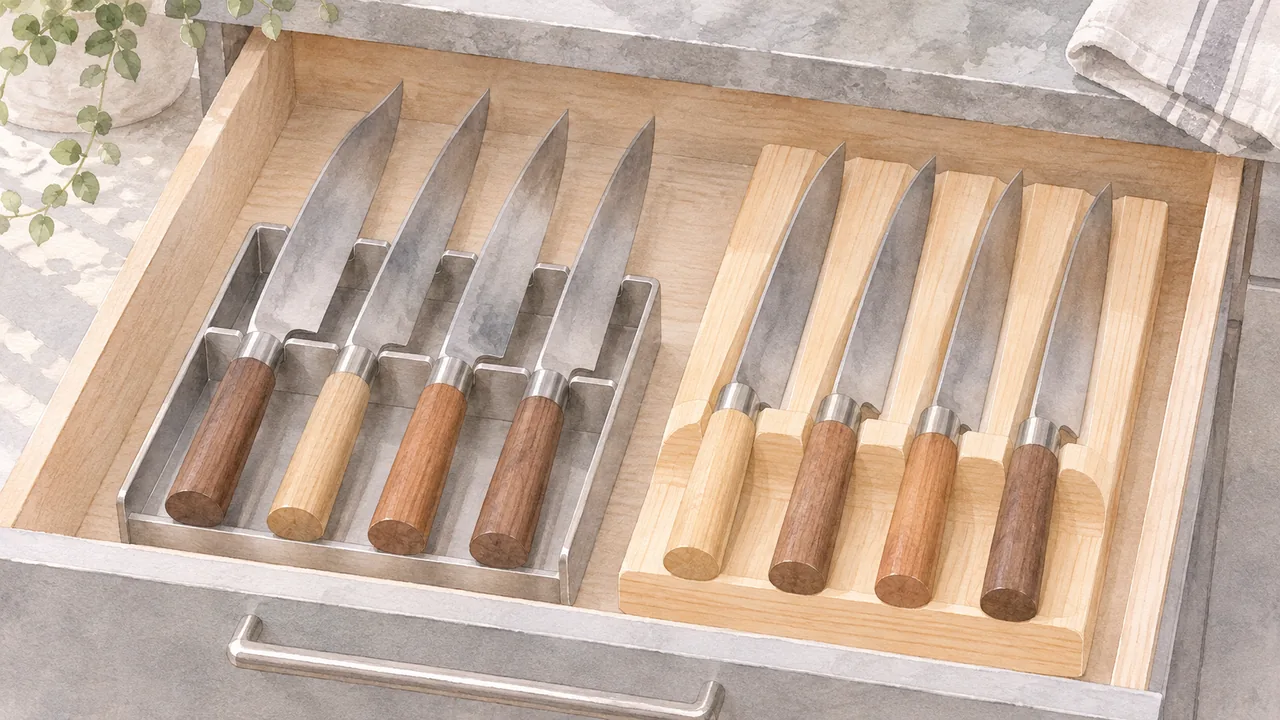
For anyone who wants knives and kitchen scissors in one place. Yoshikawa, a kitchenware maker in Tsubame, Niigata, makes this horizontal stand in 18-8 stainless steel. You lay knives in sideways, so they are quick to grab and quick to put back mid-cooking, and the open design lets air reach the blades.
It measures 22.5 × 7.5 × 9.5 cm (8.9 × 3 × 3.7 in), holds scissors alongside the knives, and the whole thing goes in the dishwasher.
Yoshikawa Hi! Breathable Horizontal Knife Stand (1306203)
Loading product details…
Nichinichi Tools Edge Knife Stand, Double: A Wooden Rest for Two
For two everyday knives on wood instead of metal. A low wooden stand made in Japan that holds two knives horizontally. Wood is soft against an edge, and the low profile means it can live on the counter or slide into a drawer.
Nichinichi Tools Edge Knife Stand, Double
Loading product details…
4. Wooden Saya: Sheathing One Knife
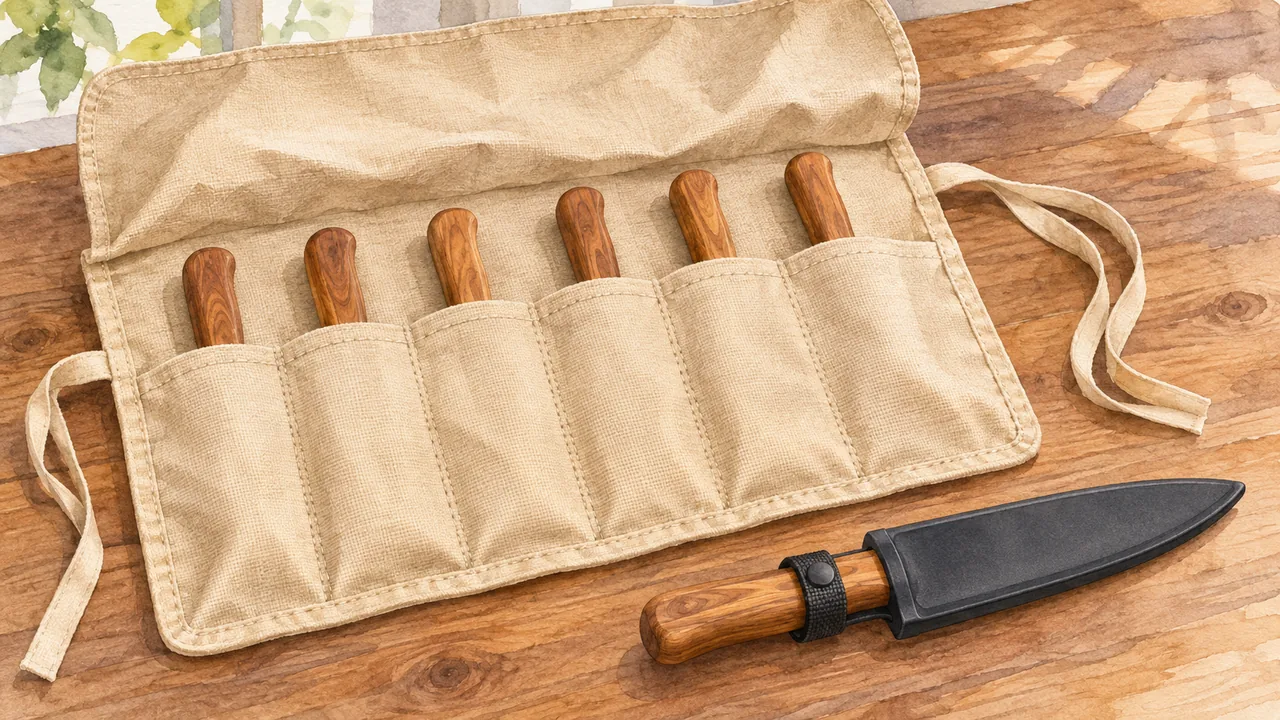
A saya is a wooden sheath shaped to one knife. In Japan they are often made from ho-no-ki (Japanese magnolia), a soft, even-grained wood that is gentle on an edge. A saya lets a knife go into a drawer or a bag safely, and a small pin locks the knife in place.
Masamoto Saya, Santoku / Bunka 180 mm: Magnolia With a Locking Pin
For a santoku or bunka knife that goes into a drawer or travels. Masamoto is a Tokyo knife maker, and its sayas are made in Japan from natural magnolia wood, with a pin that keeps the knife from sliding out. This one is sized for 180 mm (7 in) santoku and bunka blades; Masamoto lists which of its own series it fits, so check the length and blade height of your knife.
Masamoto Santoku Saya Sheath 180 mm
Loading product details…
Masamoto Saya, Gyuto 210 mm: For the Classic Chef's Knife
For the 210 mm (8.2 in) gyuto, the most common Japanese chef's knife size. The same magnolia saya with a locking pin, cut for a longer, pointed blade. A 180 mm gyuto size is also available.
Masamoto Gyuto Saya Sheath 210 mm
Loading product details…
5. Japan-Only Designs Worth Knowing
Several clever Japanese designs don't appear on Amazon.com. If you visit Japan or use a proxy shopping service, these are worth looking for:
- TEORI SPLIT knife stand (Kurashiki, Okayama): a heavy block of laminated bamboo whose cut ends form stripes; there is also a slanted version.
- KAWAKI knife stand by b-worth style (Tsubame-Sanjo): a sideways stainless rack over an absorbent tray, so water from freshly washed knives soaks away instead of pooling. It can hook onto a dish rack.
- Tosaryu hinoki knife rest (Kochi): a drawer-sized block of Shimanto hinoki cypress that cradles two blades.
- Shimizu Smart Hang (Tsubame): a stainless knife holder that simply hooks over a sink cabinet door, with no screws or tape.
- Tojiro canvas knife roll F-359 (Tsubame-Sanjo): the roll-up case used at Japanese cooking schools, for up to five knives.
6. Before You Put a Knife Away
Dry the blade first
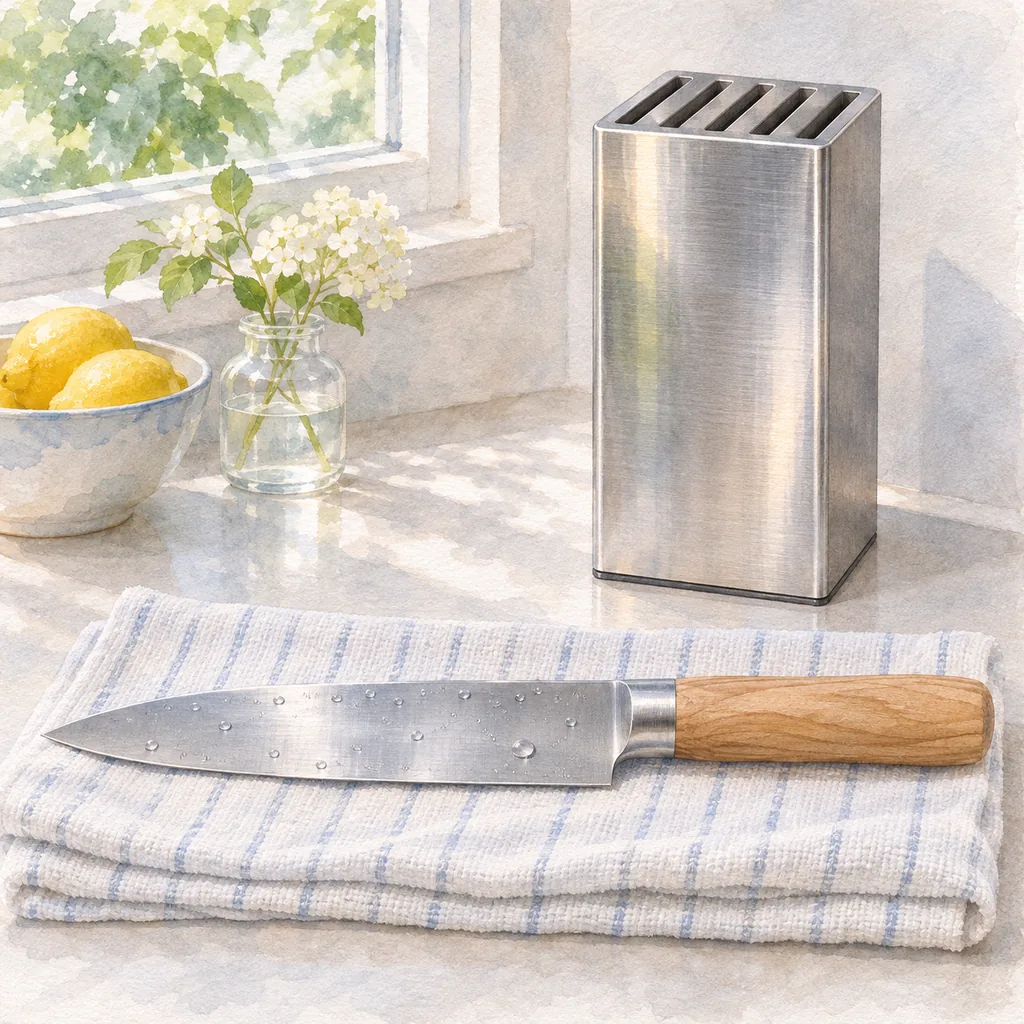
Whatever you store it in, wipe the knife dry before it goes away. Carbon-steel blades in particular rust if they are put away wet. Wash the stand now and then too: the Yoshikawa rack goes in the dishwasher, while wooden stands and sayas should be kept somewhere that doesn't stay damp.
7. Frequently Asked Questions
Is a knife block bad for Japanese knives?
Not if the slot is clean and dry and the edge doesn't scrape going in. Problems come from damp slots and from dragging the edge along the slot. Horizontal racks that leave the edge untouched, or a fitted saya, avoid both.
What is a saya?
A wooden sheath made to fit one knife. Many are made from Japanese magnolia and held closed with a small pin. They protect the edge in a drawer or when you carry the knife.
How do I choose the right saya size?
Match the blade type and length, then check the blade height. Masamoto sells sayas by knife type (gyuto, santoku, sujihiki, honesuki) and length, and lists which of its own series each fits.
Can I keep Japanese knives in a drawer?
Yes, as long as each edge is covered or held apart. Use a low rack that fits in the drawer, or a saya on each knife. Loose knives knocking together are what chip edges.
Will a long gyuto fit a knife stand?
Check the slot length first. Many compact stands are designed for blades up to about 20 cm (8 in). For a long gyuto or sujihiki, a saya cut for that length is the simplest answer.
Do I need to dry a stainless knife before storing it?
It's still a good habit. Stainless resists rust far better than carbon steel, but water left in a stand or saya encourages spots and keeps wood damp.
Final Thoughts: Give the Edge Somewhere Safe
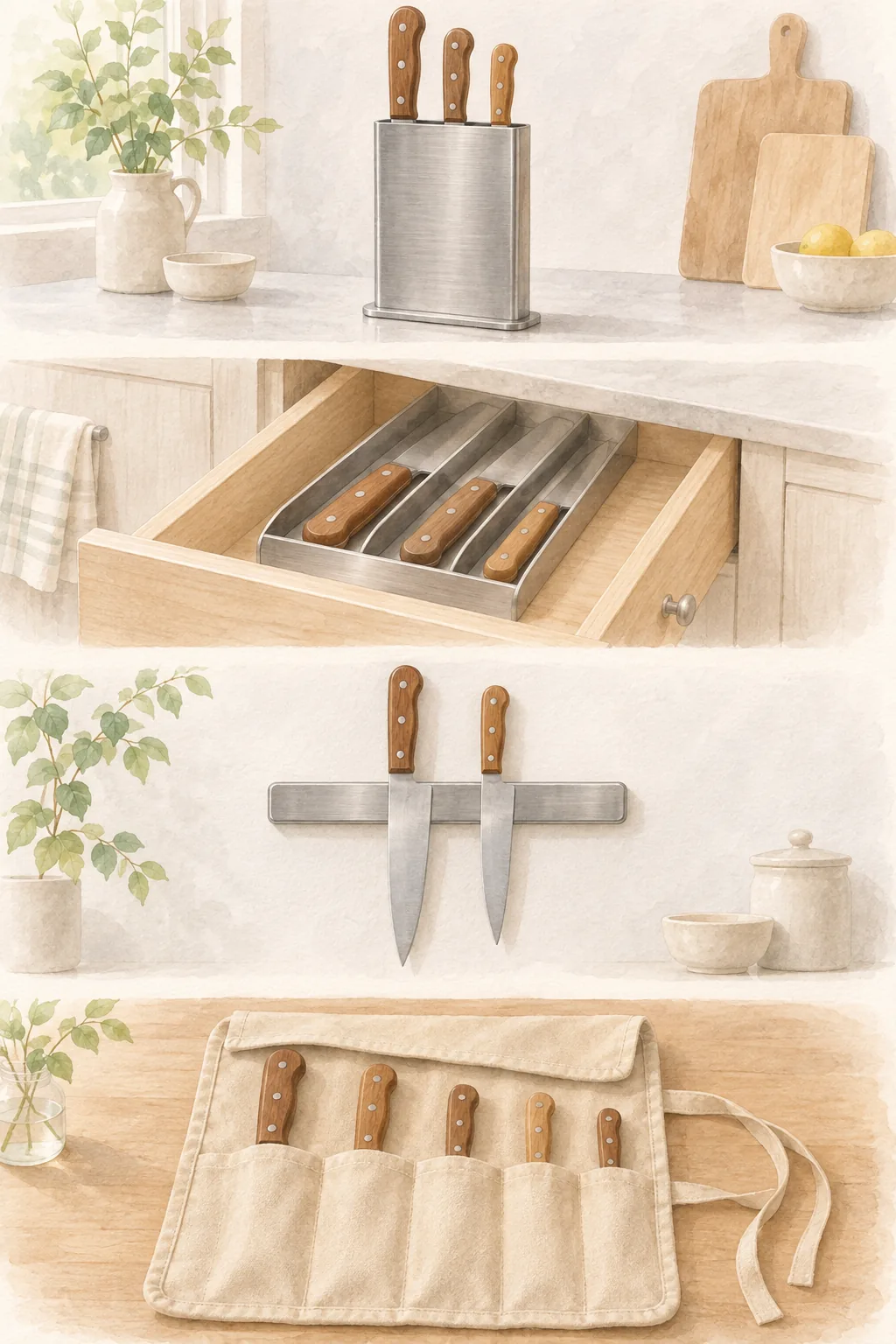
Choose knife storage by where your kitchen has room.
Upright on the counter, the slim Shimomura Kihan tower. Lying flat, the airy Yoshikawa rack for knives and scissors, or the Nichinichi wooden rest for two. For a drawer or a trip, a magnolia saya from Masamoto. And if you're in Japan, look for the bamboo TEORI block and the KAWAKI rack that soaks up water.
A hard, thin Japanese edge lasts longer when nothing touches it between meals.

Japanese Kitchen Knives: Types, 8 Brands & Buying in Japan
Japanese Whetstones: Which Grit You Actually Need