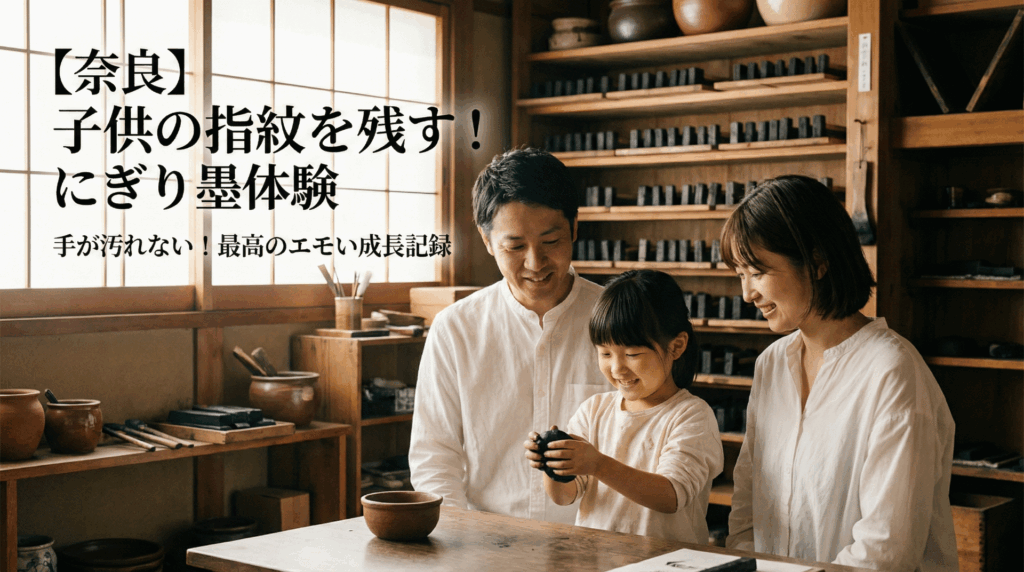
Nara Prefecture is the sacred home of Japanese calligraphy, producing over 90% of the country's ink sticks (sumi). And right here, a deeply unique and emotionally unforgettable experience has quietly become a big hit with families: the "nigiri-sumi" (ink stick squeezing) experience at a workshop with more than 100 years of history.
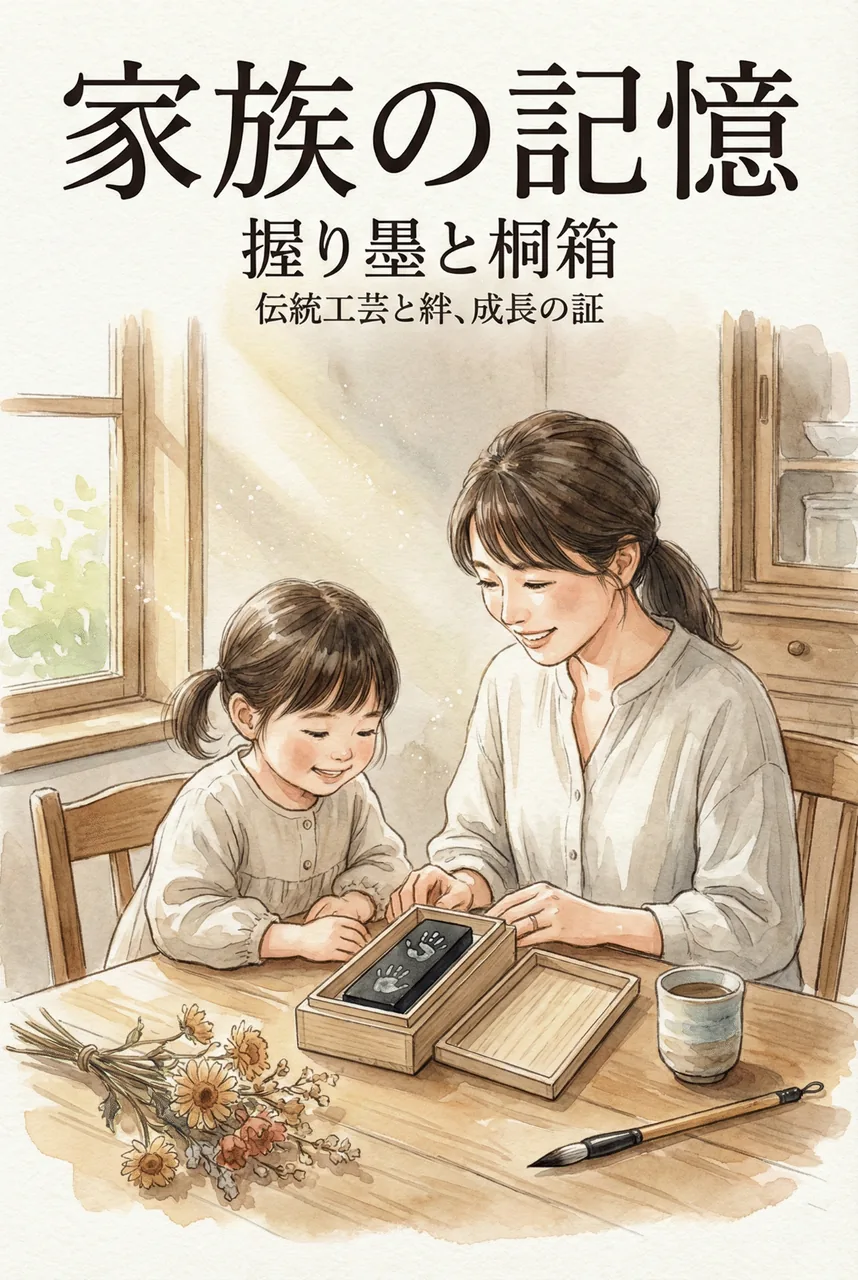
You take a piece of freshly made, warm and soft ink — still moist like a freshly pounded mochi — and squeeze it tightly in both hands. The surface of the clay-like ink captures every detail: your child's tiny "palm lines" and "fingerprints" are imprinted with remarkable precision.
Leave it to dry for several months, and the result is a one-of-a-kind genuine luxury ink stick bearing a permanent record of your child's growth.
"But won't our hands get all black?" Don't worry. Thanks to years of accumulated craft knowledge, your hands barely get dirty during the experience!
In this guide, we cover everything from this soothing, educational experience in the scent of ink, to exploring Nara Park and its deer — a complete Nara day-trip plan where you feel Japanese history and culture firsthand.
Tips for Enjoying the Nigiri-Sumi Experience as a Family (30-second read)
- Hands stay clean!: No clothes-ruining disaster here — you can join in casually right in the middle of a trip
- Soothed by the scent: After squeezing, your palms are left with the rich, deep fragrance of ink — deeply relaxing
- Finished in a few months: Take the ink home in a paulownia box and let it dry slowly in a cool spot for about 3 months
- A rainy-day lifesaver: It's an indoor experience close to the station, so weather won't derail your plans
- A lifelong treasure: An ink stick bearing your child's fingerprints is too precious to ever actually use (laughs). It becomes a true keepsake display piece
1. [Before You Go] Reservations Required! Important Notes for This Conveniently Located Spot
Because the workshop experience requires preparing the materials (fresh ink), careful advance preparation is essential.
Three Absolute Rules You Must Follow
- ① Always book in advance (by the day before!)
Fresh ink is difficult to manage in terms of temperature and humidity, so walk-ins almost always cannot be accommodated. The preparation takes time, so make sure to reserve at least by the evening before you plan to go. - ② Check your child's age
Since you only squeeze and hands stay clean, even very young toddlers can participate. That said, children who can sit quietly and listen to the craftsperson's talk about ink history (around preschool age and up) will get much more out of the experience. - ③ Use a nearby coin parking lot
The workshop is conveniently located just steps from JR Nara Station, but it often has no dedicated parking. If driving, research nearby parking lots in advance.
2. [Deep-dive Knowledge] Why Do Fingerprints Remain? The Secrets of "Nikawa" (Glue) and "Susu" (Soot)
"What is ink even made of?"
Surprisingly few adults can answer this question. Let's do a little prep before the experience!
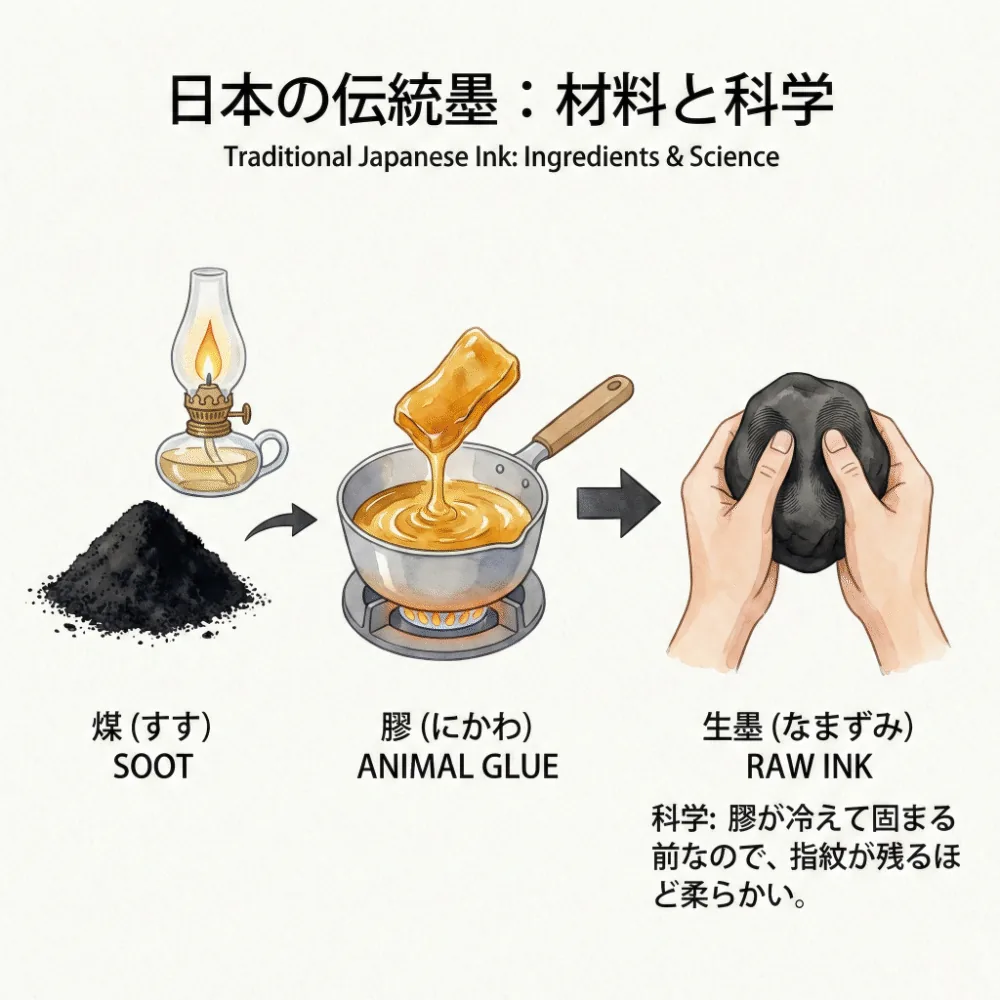
Ink is "soot from burning wood" and "animal gelatin"!
A calligraphy ink stick is made of just three ingredients.
First: "Susu" (soot) — the pitch-black residue from burning wood or oil.
Second: "Nikawa" (animal glue) — a gelatin-like substance (collagen) extracted by boiling animal hides and bones, used as the binder that holds the soot together.
Third: fragrance, added to give the ink its pleasant scent.
Nikawa softens when heated and solidifies when cooled. This is why freshly made "raw ink" (nama-sumi) is warm and pliable like clay. When you squeeze it tightly, even the fine lines of fingerprints and palm creases are captured in precise detail — and then it hardens permanently into that exact shape.
3. The Magic of Clean Hands! The Ultimate Sensory Education Parents Can Watch with Peace of Mind
The greatest appeal of the nigiri-sumi experience is, above all, the fact that hands barely get dirty at all.
Why Don't Hands Turn Black?
- Perfect blend and oil content: The raw ink, kneaded by the craftsperson's well-honed intuition, is made to minimize transfer to skin. So it won't get all over you like mud play.
- Zero stress for parents: Ruined clothes mid-trip would wreck the rest of the day's schedule — but that concern simply doesn't exist here. Parents can truly relax and enjoy watching their child experience this.
- Aromatic relaxation: After the experience, your hands are clean — but your palms carry the lingering "mysterious, deep fragrance" of the ink. This scent calms the mind and offers the best kind of relaxation.
4. [Nara City] Kinkoen | "Nigiri-Sumi" Experience at a 100-Year-Old Ink Workshop
* The pin on the map marks Kinkoen. Please check the official website for the latest information on reservation availability and operating days.
A Tradition Dating to the Muromachi Era! Nara Ink Workshop "Kinkoen"
Just a 3-minute walk from JR Nara Station, Kinkoen is an ink workshop with 150 years of history in an unbeatable location. In Nara — where 90% of Japan's ink is produced — it is one of only a handful of remaining manufacturers of traditional solid ink sticks.
Their most popular offering is the "nigiri-sumi experience."
First, the craftsperson shares the history of ink and demonstrates how it is made. Then comes the main event: you take the still-warm, soft "raw ink" and squeeze it tightly between both hands, as if in prayer.
"It's a strange, tingly sensation!" Kids are thrilled. When you open your palms, there it is — a unique black jewel, one-of-a-kind in the world, bearing your own fingerprints.
The finished ink stick can be taken home that same day, nestled in an elegant paulownia wood box.
👨👩👧👦 Family Checkpoint
- Tool appreciation education: Watching the craftsperson work fosters a natural gratitude for the everyday tools children use (like calligraphy supplies).
- Calligraphy experience also available: An optional add-on lets you grind the ink yourself and write with a brush — a "shodo (calligraphy) experience" (please confirm when booking).
Basic Information (Approximate)
- Experience content: Talk about ink history, demonstration, nigiri-sumi squeezing
- Duration: Approx. 40 min – 1 hour
- Price guide: Adults 2,200 yen (tax incl.) / High school age and under 1,650 yen (tax incl.) *Paulownia box included
- Reservation: Advance booking required (by 9 PM the day before)
🖌️ Fall in love with writing! Lifelong calligraphy tools and washi paper
After being soothed by the scent of ink, why not bring the joy of "writing with a brush" home too? Stock up on quality "Nara brushes" crafted by artisans, eco-friendly water-writing calligraphy sets, and beautiful washi stationery — and watch your child's focus sharpen while the warmth of handwriting deepens family bonds.
5. [Model Itinerary] Deer, Ink, and the Great Buddha! Nara City Day-Trip Timeline
Kinkoen, located near JR Nara Station, is perfectly situated to fit into Nara's classic sightseeing route. Here's the perfect plan: interact with deer, look up at the Great Buddha, and squeeze your own ink stick.
- 09:30 | Arrive at JR Nara Station. Start with a short walk to the nigiri-sumi experience at Kinkoen!
(Hands stay clean, so it's perfect first thing in the morning! Head out wrapped in the lovely scent of ink) - 11:00 | Walk to the "Naramachi" district. Stroll through the historic townscape and stop at a charming cafe for lunch
- 13:00 | Arrive at "Nara Park." Buy shika sembei (deer crackers) and say hello to the deer
- 14:00 | Head to "Todaiji Temple." Pass through the South Gate's Kongo Rikishi (guardian deity) statues and look up in awe at the great Buddha
- 15:30 | Pick up souvenirs (kaki-no-ha zushi, kudzu mochi, etc.) along the approach road, then head home
6. Play Here After the Experience! Top 3 Must-See Sightseeing Spots in Nara City
After your experience at Kinkoen, some of Japan's most iconic World Heritage sites and attractions are all within walking distance!
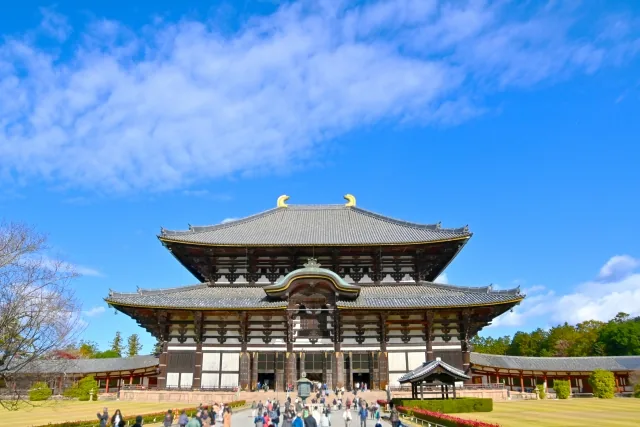
① Todaiji Temple (Daibutsuden) | Look up and witness a 1,200-year-old mega-project
Home to the world-famous "Nara Great Buddha," this is one of the world's largest wooden structures.
The towering Kongo Rikishi (guardian deity) statues at the South Gate send children's excitement soaring — and stepping inside the Daibutsuden to gaze up at the enormous Buddha leaves everyone speechless. "How did they ever build this!?" — that pure, childlike wonder opens the door to a genuine interest in history.
👨👩👧👦 Family & History Checkpoint
- The Buddha's nostril: Inside the Daibutsuden is a pillar with a hole the same size as the Great Buddha's nostril — the "pillar crawl." Children can slip right through, and it's said to bring good health! (*May be temporarily closed due to health guidelines)
- Stroller info: The grounds are vast, but ramps are well maintained, so you can reach the Daibutsuden smoothly with a stroller.
② Nara Park | The messengers of the gods! An exciting encounter with free-roaming deer
A vast natural park that wraps around Todaiji Temple and Kasuga Grand Shrine.
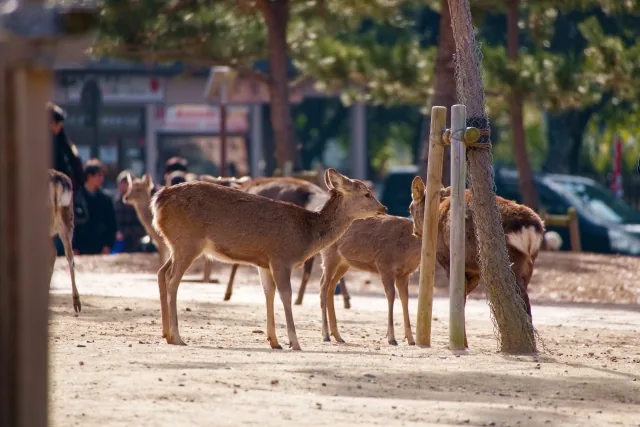
The approximately 1,300 deer living here are wild animals, but they have been protected for centuries as "messengers of the gods." The moment you buy the famous "shika sembei" (deer crackers), deer come rushing from all directions — a thrilling, adorable rush that becomes an unforgettable highlight for children.
👨👩👧👦 Family & Animals Checkpoint
- Bowing deer: Many deer will give a polite little bow when you hold up a cracker for them.
- Note: Cute as they are, these are wild animals. If you tease them by holding back the cracker, they may tug at your clothes — keep small children close and feed the deer quickly.
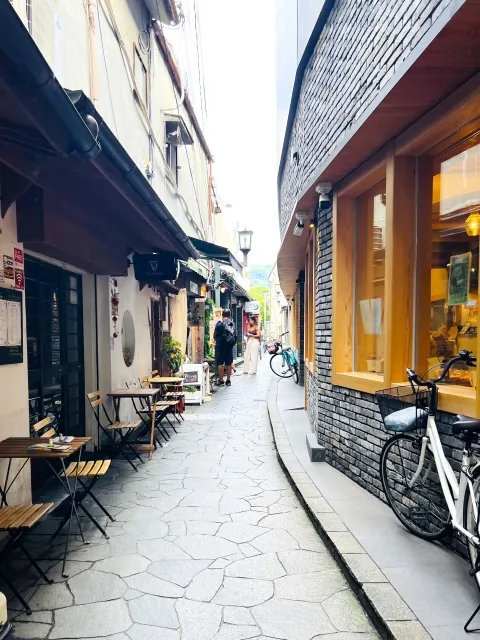
③ Naramachi | Sweets & craft shopping in a historic townscape
A retro, laid-back district lined with charming traditional townhouses (machiya) from the Edo and Meiji eras.
Stylish cafes, gift shops, and traditional craft stores are packed into renovated old buildings. Just strolling while searching for the red monkey-shaped lucky charms ("migawari saru") hanging from eaves is fun in itself — and when your feet get tired, it's the perfect spot to rest with shaved ice or Japanese sweets.
👨👩👧👦 Family & Shopping Checkpoint
- Migawari saru: The red monkey charms for warding off evil. A great game: count how many are hanging from each shop with your kids!
- A treat for Mom: Naramachi is also famous as a "shaved ice battleground." The fluffy, heavenly shaved ice draws long queues!
7. Rest Those Deer-Park Legs! Recommended Family-Friendly Accommodations in Nara
After concentrating on the nigiri-sumi experience and walking through vast Nara Park and Todaiji, both adults and children will have aching feet!
After all that walking and deer-feeding, the classic Nara family trip move is to kick off your shoes and sprawl out on tatami at a "tatami-floored hotel," or to relax at a "family-friendly Japanese inn" right near the sights.
♨️ Nara Station Area (Entire hotel is tatami-floored! The ultimate hot spring inn for babies and families)
Natural Hot Spring Yoshino Sakura no Yu — Onyado Nono Nara
Just steps from JR Nara Station. This wildly popular family-friendly Japanese-style premium hotel is operated by the "Dormy Inn" group.
The entire hotel is tatami-floored — shoes come off as soon as you enter, making it wonderfully safe for crawling babies and small children. Beyond the natural hot spring large communal bath, complimentary late-night ramen ("yonaki soba") and free ice cream after bathing are among the many family-favorite amenities.
🦌 Nara Park Area (Within walking distance of Todaiji! Known for its rooftop terrace views)
Hotel New Wakasa
Just steps from Todaiji Temple and Nara Park — you couldn't ask for a better location as a sightseeing base! This family-friendly Japanese-style hotel is ideal for family trips.
In addition to a large communal bath, private family baths let the whole family bathe together without any worry. The biggest draw, however, is the rooftop terrace with panoramic views of Wakakusayama and Todaiji — perfect for relaxed viewing of the ancient capital's scenery at sunset or in the morning.
8. [After You Return] Box It Up and Let It Dry. A Treasure That Takes Months to Finish
When you get home from your trip, open up the paulownia box you brought back.
The art of "waiting" while your nigiri-sumi ink stick takes shape
- Drying takes 3 months (Raw ink contains moisture and cannot be used as-is. Place the paulownia box in a cool, well-ventilated spot out of direct sunlight, and let it dry slowly for about 3 months)
- The thrill of watching fingerprints harden (Months later, the clay-like ink solidifies into stone-hard permanence. Without shrinking, your child's fingerprints are fixed in an eternal form — a truly moving moment)
- Use it or display it — both are wonderful (You can certainly grind it like a genuine luxury ink stick and write with it, but most families find it far too precious to actually use — and display it as a piece of home decor!)
✨ Display your memories beautifully! Interior decor & the scent of ink
That precious nigiri-sumi bearing your child's tiny fingerprints — don't just tuck it away in the box! Try placing it on a small display stand or under a glass dome as a special piece of living room decor. And the soothing "deep, rich fragrance" of ink you experienced during the workshop can also be enjoyed as incense or a room fragrance — a perfect way to unwind on busy days.
Conclusion: The Scent of Ink in Your Palms — and Family Memories That Last
"Dad's ink overflowed because his hands are too big!"
"Look, [child's name]'s fingerprints came out perfectly!"
Photos and videos are wonderful ways to capture memories — but a "nigiri-sumi" ink stick, where the exact shape of your child's hand, palm lines and all, is physically preserved as a three-dimensional impression, is the ultimate keepsake that surpasses any souvenir.
Back home, you absently bring your palm to your nose — and there it is, a faint, gentle waft of that deep, warm ink fragrance.
Months later, when you hold the fully dried ink stick in your hands, the memories of laughing together on your Nara trip will come flooding vividly back.
This weekend, head to Nara — where Japanese history and the skill of craftspeople still breathe — and create a "family record" that exists nowhere else in the world.