There's a five-second gap between receiving a letter and opening it. Most people close that gap
by tearing the envelope with their fingers. A paper knife closes it differently — a deliberate
motion, the clean slide of a blade along a fold, the contents revealed intact.
This sounds like a small thing, and it is. But the small things at a desk add up to the character
of the work done there. A Hacoa letter opener in walnut or cherry wood, a HORIE paper knife in
pure titanium (8 grams, 0.8mm thick), or a Nikken Hamono samurai sword model made in Seki,
Gifu — each one turns a routine task into a small act with a tool worth noticing.
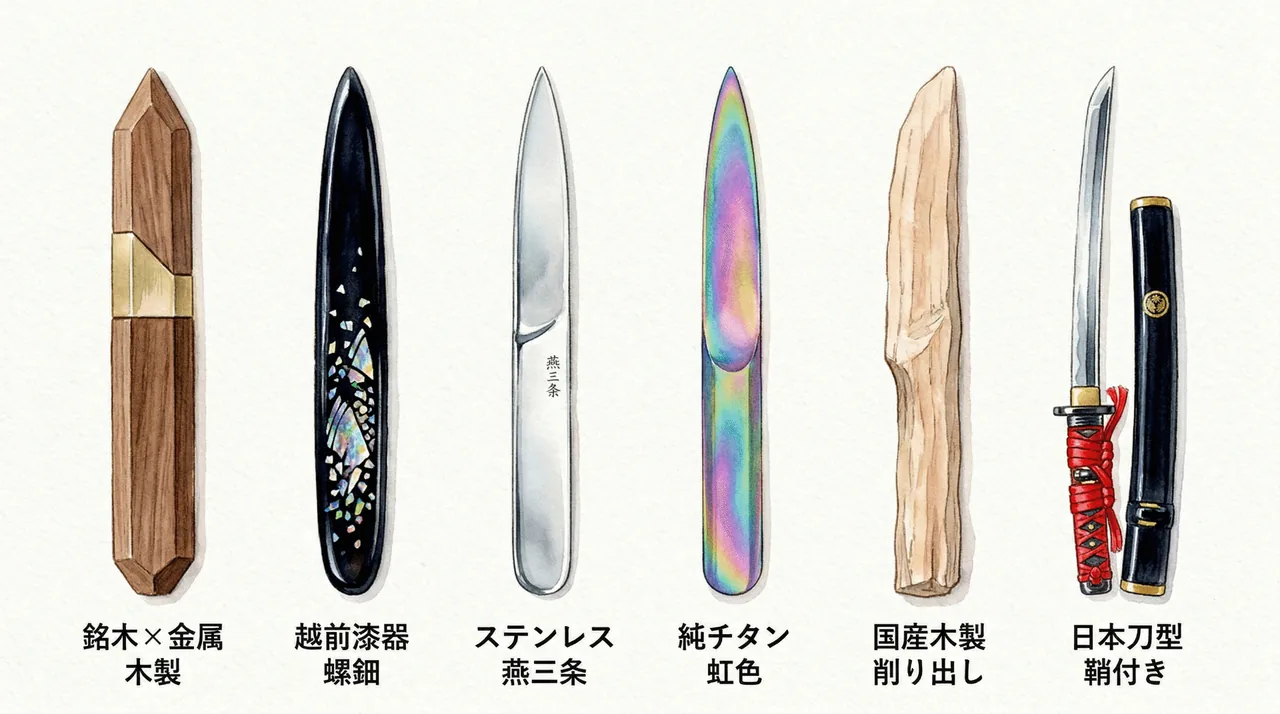
This guide covers six Japan-made paper knives across different materials, styles, and purposes.
Quick Reference: Japanese Paper Knives at a Glance
| Product | Material / Style | Origin | Best for |
|---|---|---|---|
| Hacoa +LUMBER Letter Opener | Noble wood + stainless | Japan (Fukui) | Modern desk; engraving for gifts |
| Echizen Lacquerware raden paper knife | Urushi lacquer + mother-of-pearl | Fukui (Echizen) | Special gift; decorative piece |
| Migakiya Syndicate stainless | Mirror-polished stainless | Tsubame-Sanjo, Niigata | Daily use; clean minimal form |
| HORIE pure titanium | Pure titanium, 8 colours | Tsubame-Sanjo, Niigata | Lightest option; allergy-safe; gift for women |
| Domestic wood paper knife | Solid Japanese wood | Japan | Natural warmth; universal appeal |
| Nikken Hamono Nobunaga sword model | Steel with decorative scabbard | Seki, Gifu | History fans; collectors; memorable gift |
1. What a Paper Knife Does — and Why It Matters
The function and the gesture
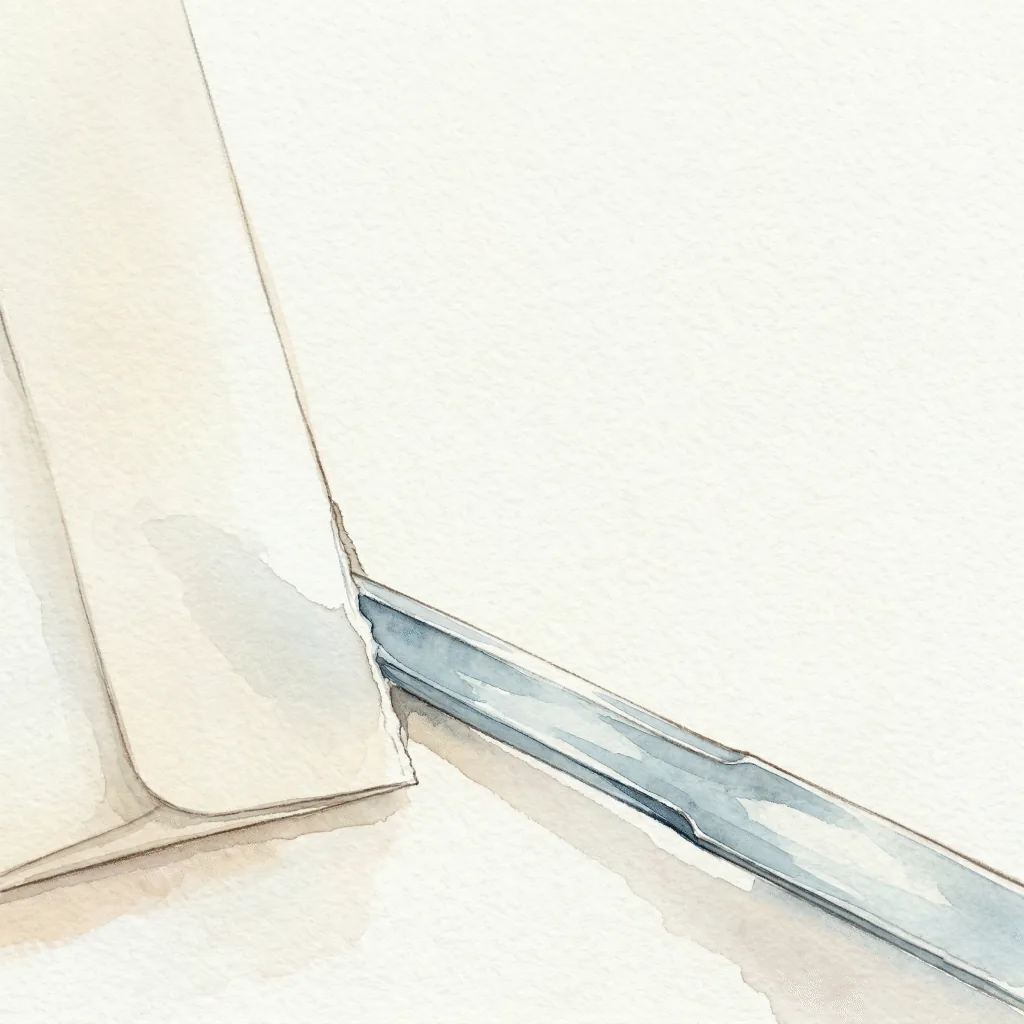
A paper knife opens envelopes cleanly — one smooth cut along the fold, no torn edges.
This is the functional purpose. But the gesture involved — selecting the knife, positioning
the envelope, the single motion — is what makes the difference to how the task feels.
Paper knives originated in 19th-century Europe for cutting the uncut pages of newly printed
books. The practice of reaching for a specific tool to open something valuable never fully
disappeared. A well-made paper knife at a desk is a signal — to the person who uses it —
that the letters and documents arriving deserve to be opened properly.
2. Why Japan Makes the Best Paper Knives
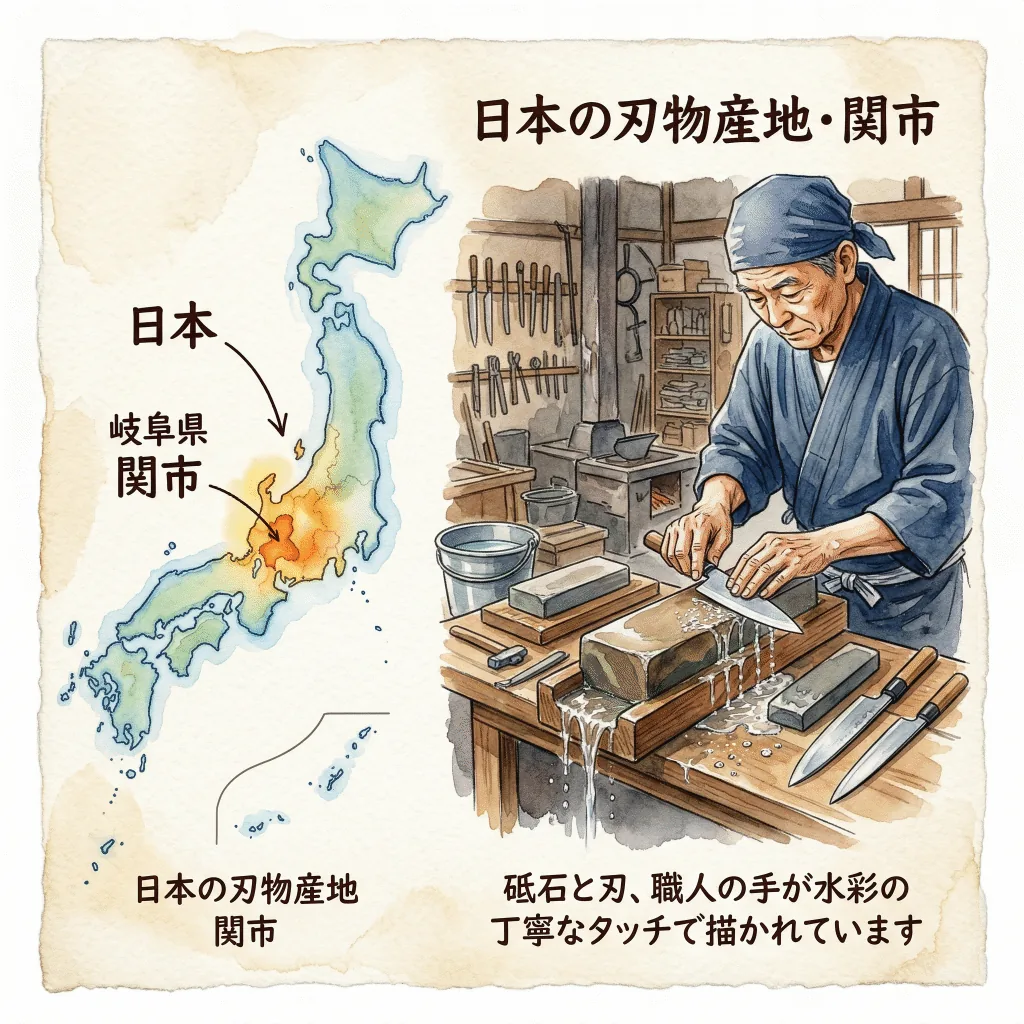
Seki, Gifu — Japan's Blade Capital
Seki City in Gifu Prefecture has been Japan's primary blade-making region since the Kamakura period (13th century). The tradition of sword-making that developed here over 700 years evolved into the production of kitchen knives, scissors, nail clippers, and precision blades that now carry the "SEKI" name internationally. When Nikken Hamono (ニッケン刃物) uses this heritage to make paper knives modelled on historical Japanese swords, the connection to the original craft is direct and genuine.
Hacoa — Noble Wood + Precision Metalwork
Hacoa's +LUMBER series pairs domestic Japanese hardwoods (walnut, cherry, beech, maple) with precisely machined stainless steel. The letter opener design draws on the multi-faceted form of a traditional blade, with a section of carefully chosen wood inset as the grip element. Each wood type ages differently: walnut develops a deeper lustre, cherry shifts from bright honey to rich red-brown. The object you hold in five years is noticeably different from the one you start with.
3. How to Choose: Material, Purpose & Budget
- Wood (Hacoa, domestic timber)
- Warmth and natural character. Hacoa combines wood with stainless for modern form; pure wood versions are softer and more traditional in feel. Both work well in any interior. Neither requires maintenance beyond a dry cloth. Age-changing material: worth choosing if the object's development over time appeals.
- Stainless steel (Migakiya Syndicate)
- Tsubame-Sanjo mirror-polished stainless. Thin, light, low maintenance. The polishing technique from the region's metalwork tradition gives the surface a quality distinguishable from generic stainless. This is the practical daily-use choice.
- Pure titanium (HORIE)
- 8 grams, 0.8mm thick — the lightest option in this guide. Titanium has a distinctive colour response to anodising, producing 8 colour options that shift with the viewing angle. Safe for metal-sensitive users. The gift choice for female recipients or anyone who values lightness.
- Lacquerware (Echizen raden)
- The highest craft level in this guide. Echizen urushi lacquer with mother-of-pearl inlay (raden) produces an object that functions as a paper knife and works as a display piece. For special gifts or self-purchase occasions.
- Sword model (Nikken Hamono)
- A replica of a historical Japanese sword (famous swords of generals like Oda Nobunaga), made in Seki. Steel blade, decorative scabbard with historical details. Functions as a paper knife; works as a collector's piece or conversation object. The gift for history enthusiasts.
4. Six Picks: Wood, Metal, Titanium & Samurai Models
No.1 — Hacoa +LUMBER Letter Opener (Walnut / Cherry)
The defining Japanese wooden letter opener. Hacoa pairs walnut, cherry, beech, or maple with a machined stainless blade in a multi-faceted form that references a traditional blade silhouette. The wood section sits in the hand; the metal section does the work. Walnut is dark and bold; cherry is warm and lightens before deepening over years of handling. Laser engraving is available through Hacoa's official English website — name, date, or brief message engraved on the blade surface makes this a distinctive gift for new employees, retiring colleagues, or milestone birthdays.
- Material
- Domestic Japanese hardwood + stainless, made in Japan
- Best for
- Modern desk; engraved gift; everyday use that improves with age
No.2 — Echizen Lacquerware Raden Paper Knife
Echizen (Fukui Prefecture) has one of Japan's oldest urushi lacquerware traditions. This paper knife is produced with traditional techniques by certified artisans: multiple layers of urushi lacquer applied over a wooden core, with raden (母貝 / mother-of-pearl shell, thinly sliced and inlaid) creating a surface that shifts between black and iridescent colour as light angle changes. A functional paper knife that works equally as a display object. The category above every other pick in this guide — for occasions where the gift needs to be extraordinary.
- Material
- Urushi lacquer + mother-of-pearl (raden), made in Echizen, Fukui
- Best for
- Special occasion gift; traditional Japanese craft display piece
No.3 — Migakiya Syndicate Mirror-Polished Stainless Paper Knife
Migakiya Syndicate (磨き屋シンジケート) is a metalworking collective in Tsubame City, Niigata that specialises in mirror polishing — one of the most technically demanding surface finish techniques in metalwork. The paper knife (YJ2536 by Yoshikawa) is 14.7 cm long, 32 grams, leaf-shaped, and mirror-finished on both sides. Thin enough to use precisely; heavy enough to feel like a tool rather than a toy. The simplest, most purely functional pick in this guide.
- Material
- Mirror-polished stainless, made in Tsubame, Niigata
- Best for
- Daily desk use; clean modern form; practical quality at accessible price
No.4 — HORIE Pure Titanium Paper Knife (Tsubame-Sanjo)
HORIE (株式会社堀江金属工業) has been producing titanium products in Tsubame-Sanjo since 1946. Their paper knife weighs approximately 8 grams and is 0.8mm thick — the lightest and thinnest in this guide. Titanium's anodisation produces distinctive colour: the same object appears to shift colour with viewing angle. Eight colour options available. Pure titanium is hypoallergenic — safe for anyone with metal sensitivity. This is the choice for a gift where weight and colour variety are the priorities.
- Material
- Pure titanium, anodised, made in Tsubame-Sanjo, Japan
- Weight
- Approx. 8 g / 0.3 oz
- Best for
- Lightest option; 8 colour choices; hypoallergenic gift
No.5 — Japanese Domestic Wood Paper Knife
A simple carved-wood paper knife from Japanese domestic timber — no metal components, no lacquer. Just wood shaped into a blade profile, sanded smooth. The material warmth and light weight give it a different quality from all-metal options: it's the most approachable in feel, the most universally giftable, and the one that disappears most naturally into a desk setup without competing with other elements. The natural wood option for those who want material simplicity rather than craft statement.
- Material
- Domestic Japanese wood, made in Japan
- Best for
- Natural material preference; universal gift; desk integration without visual competition
No.6 — Nikken Hamono Famous Sword Paper Knife — Oda Nobunaga Model
Nikken Hamono (ニッケン刃物) in Seki, Gifu has been making blades in the city's 700-year tradition. Their "Famous Swords" paper knife series reproduces historical Japanese swords associated with famous generals. The Oda Nobunaga model replicates the "Heshi-kiri Hasebe" — one of Nobunaga's legendary blades — with a detailed black-and-gold scabbard, hand-guard replica, and the characteristic blade pattern. The blade is functional as a paper knife; the piece works as a collector's item or desk display object. Available on Amazon.com.
- Material
- Steel blade, decorative scabbard, made in Seki, Gifu
- Best for
- History enthusiasts; Japanese sword culture fans; memorable desk gift
5. Displaying Your Paper Knife & Gift Ideas
Keep it visible — keep it used
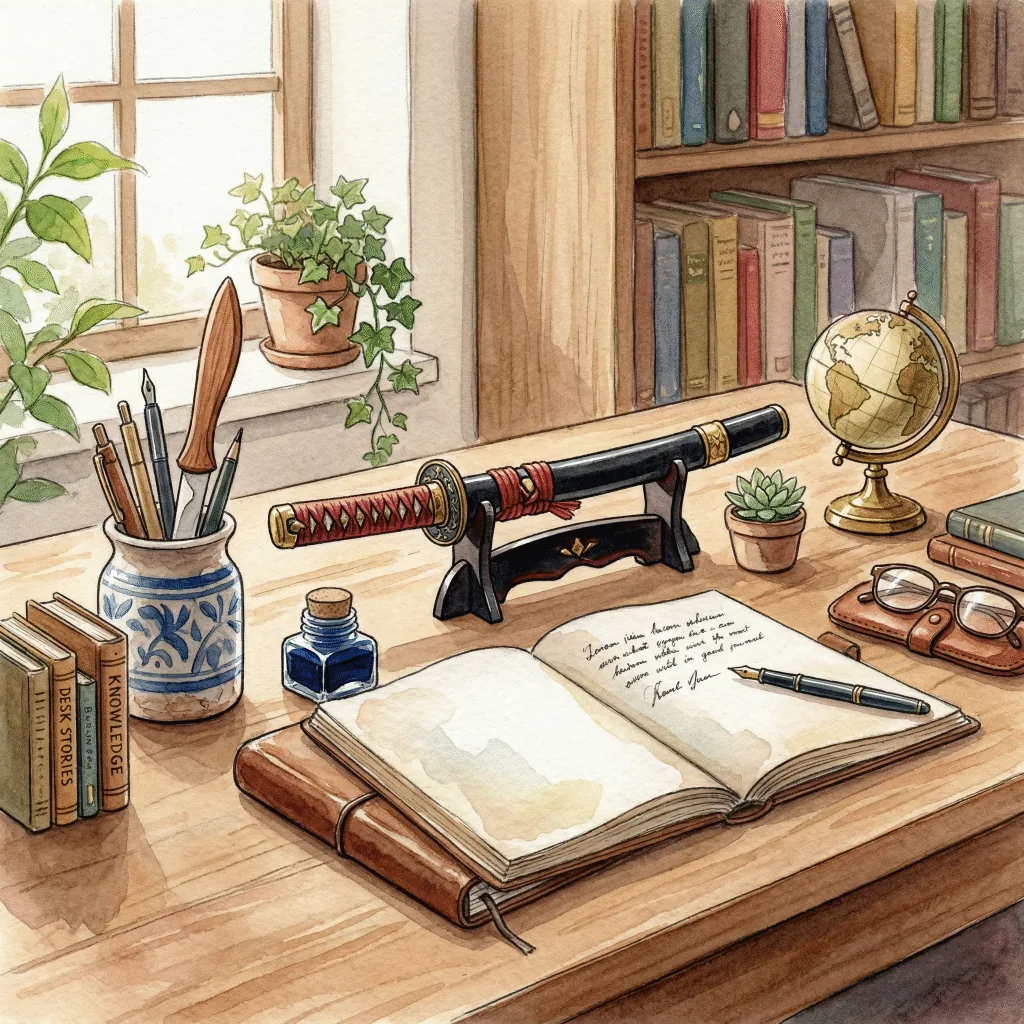
A paper knife in a drawer gets used twice a year. One sitting in a pen holder or on a display stand is used daily. The Hacoa wood knife sits naturally in any pen holder alongside other stationery. The Nikken sword models come with display stands — they work as desk objects whether in use or not. Position the knife where it's the most natural thing to reach for when an envelope arrives.
Gift scenarios
Paper knives are among the best stationery gifts because they're specific without being presumptuous — the recipient makes their own decision about how to use it:
- New job / promotion: Hacoa with laser engraving — name and start date. Permanent record of the occasion on a daily-use object.
- Retirement: A paper knife communicates "there is still correspondence to open, still work worth doing." A Hacoa or Echizen lacquerware model for someone whose desk matters to them.
- Father's Day / birthday (history fan): The Nikken Hamono sword model — if you know the person's interest in Japanese history, a specific general's sword is a much more personal choice than a generic gift.
- International colleague / souvenir: The sword models and the Hacoa wood series travel well as Japanese gift items with clear cultural provenance.
6. Care & Storage
Wood (Hacoa)
Wipe with a soft dry cloth. Avoid water contact — moisture can raise the wood grain and alter the finish. The natural aging of the wood (walnut deepening, cherry shifting to red-brown) is the intended outcome, not maintenance failure. No treatment necessary for standard desk use.
Steel / Sword models (Nikken Hamono)
The steel blade will rust if left in contact with moisture. After use in a humid environment, wipe dry with a soft cloth. For long-term storage, apply a very thin film of neutral oil to the blade. Keep in the scabbard when not in use — the scabbard protects the blade from atmospheric moisture as well as physical contact.
Safety note
Paper knives — particularly the sword-style and well-sharpened metal models — have a functional cutting edge. Keep away from children. Do not attempt to carry onto commercial aircraft as carry-on luggage; checked baggage rules vary by airline, so check before packing.
7. Frequently Asked Questions
Do I really need a paper knife? What's wrong with my hands?
Nothing. Tearing envelopes by hand is perfectly functional. A paper knife opens them more cleanly — no torn edges, no damaged contents — and the gesture of using one changes how the act of opening mail feels. Whether that difference matters depends entirely on how much attention you pay to the things on your desk and the small acts you perform at it. If it doesn't matter to you, it doesn't matter.
Can I get the Hacoa letter opener engraved?
Yes — Hacoa's official store offers laser engraving on the blade surface. The service is available in both English and Japanese. Name, date, or a brief text can be engraved. This is available through their English-language website (en.hacoa.com) and makes the knife suitable as a personalised gift for work milestones.
What's the most popular Nikken Hamono sword model?
Based on consistently high Amazon rankings, the Oda Nobunaga model is the most popular — Nobunaga is Japan's most internationally recognised feudal general. Among Shinsengumi fans (the late-Edo-period samurai corps), the Toshizo Hijikata model is equally popular. If you're gifting to someone with a specific interest in Japanese history or a favourite historical figure, matching the sword to their interest is far more personal than choosing generically.
What's the difference between "paper knife" and "letter opener"?
Historically, these were distinct objects. A paper knife was a blade used to cut the uncut pages of early printed books. A letter opener was a tool for slitting open sealed envelopes. In contemporary use, the distinction has collapsed — both terms now refer to any blade-shaped object used to open envelopes. The term "paper knife" tends to appear in Japanese and European contexts; "letter opener" in American English. The objects themselves are functionally identical.
Can I carry this in carry-on luggage?
No — bladed objects are not permitted as carry-on luggage on commercial aircraft in most jurisdictions. Checked baggage rules vary by airline and route; confirm with your carrier before packing. For international travel with a paper knife as a souvenir or gift, checked luggage or shipping directly is the safest approach.
Why does Seki make such good blades?
Seven hundred years of continuous production, concentrated in one city. The original 13th-century sword-makers established a craft tradition that passed through generations of apprentice-to-master transmission. When mass production arrived in the Meiji era, the accumulated knowledge was applied to everyday blades — kitchen knives, scissors, nail clippers — rather than lost. The result is a regional competency in blade-making that no other city in Japan or the world quite replicates. "SEKI" is a recognised quality indicator internationally in the professional knife and scissors market.
Final Thoughts: Five Seconds, Better Done
A paper knife is a small investment with a disproportionate return on the quality of
desk life. The Hacoa walnut letter opener, the HORIE titanium piece, the Nikken
Hamono sword — each one turns a five-second action into something with a bit more
weight and intention to it.
That's not nothing. Most of a desk's character comes from accumulated small choices
exactly like this one. The paper knife is one of the easiest to get right.
Japanese Glass Pens: 5 Studios That Make Writing Magical
Japanese Luxury Notebooks: 7 Brands Worth Writing In