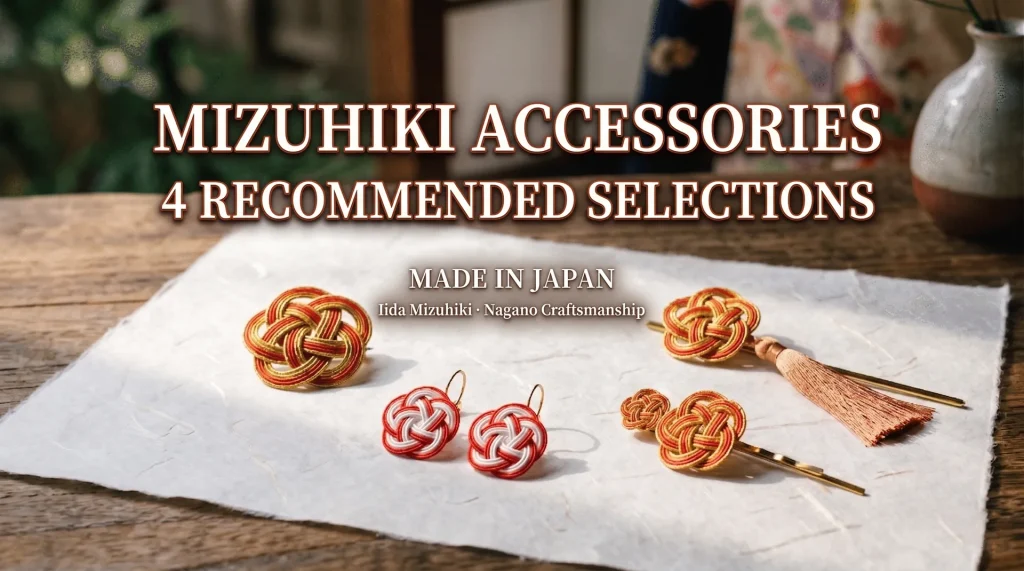
Mizuhiki (水引) is one of those Japanese craft forms that looks complicated and is, in fact,
exactly as beautiful as it looks. Thin cords made from twisted washi paper, lacquered to hold
their shape, knotted into flowers, cranes, and geometric forms that carry meanings — plum
blossoms for luck, awaji knots for lasting ties, butterflies for new beginnings.
The craft has been used in Japan since at least the 7th century, when documents from the
continent arrived bound with red-and-white cord that became the model for Japanese ceremonial
wrapping conventions. Today, mizuhiki decorates wedding envelopes, gift wrapping, and — increasingly —
everyday accessories: kanzashi hair ornaments, earrings, brooches, bag charms.
This guide explains the knot types and their meanings, introduces the primary production region
(Iida, Nagano — 70% of Japan's mizuhiki output), and covers four picks: a beginner craft kit,
a formal kanzashi, earrings, and wrapping materials.
Quick Reference: Four Mizuhiki Picks
| Product | Type | Level | Best for |
|---|---|---|---|
| Mizuhiki cord kit | Craft / DIY | Beginner | First experience with the material; make brooches and hair accessories |
| Mizuhiki kanzashi (formal hair ornament) | Finished accessory | — (finished) | Kimono, yukata, furisode — formal occasion hair decoration |
| Mizuhiki earrings | Finished accessory | — (finished) | Everyday Western or Japanese dress; lightweight; handmade variation |
| Mizuhiki wrapping cord set | Gift wrapping | Beginner | Japanese-style gift presentation; adds ceremonial meaning to any gift |
1. What Is Mizuhiki?
Mizuhiki cord is made from washi (Japanese handmade paper) — cut into thin strips, tightly
twisted, then coated with starch or glue to hold the cylindrical shape. The result is a
firm but flexible cord, a few millimetres in diameter, available in a wide range of colours
from traditional gold-red-white to contemporary pastels.
The cord is then knotted. The specific knots used in Japanese ceremony culture each have
established meanings — different knots for weddings, funerals, birthdays, expressions of
gratitude. The aesthetic of the finished knot is inseparable from its meaning: the form
IS the message.
In contemporary Japan, mizuhiki has moved beyond ceremonial wrapping into jewellery and
accessories. The same knots that decorate wedding envelopes now appear as kanzashi hair
ornaments, earrings, brooches, and bag charms — the craft traditions applied to wearable form.
2. The Knots and Their Meanings
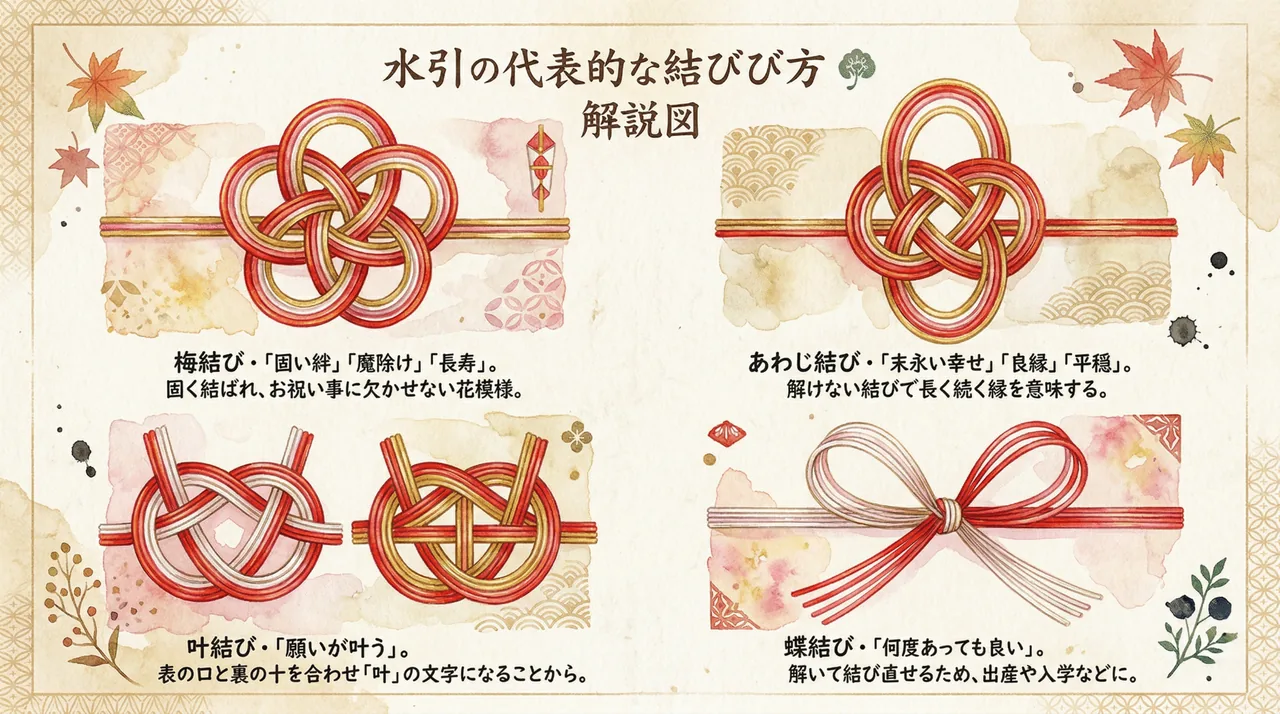
Ume-musubi (梅結び) — Plum Blossom
Five petals formed from cord, producing a plum blossom shape. The plum has auspicious associations in Japanese culture (part of the "pine, bamboo, plum" triad of good fortune). The knot is used widely for congratulatory occasions. It's also the most beginner-accessible knot — well-designed beginner kits start here.
Awaji-musubi (あわじ結び) — Awaji Knot
A knot with significant social weight: it means "a bond that continues indefinitely." Pull both ends and it tightens further rather than coming apart — a physical expression of the meaning. Used for both weddings (celebrating lasting union) and memorials (respectful and permanent). The most formal of the common knot types.
Kanau-musubi (叶結び) — "Wish Granted" Knot
Viewed from the front, the knot forms the character 口 (mouth). Viewed from the back, it forms 十 (cross/ten). Together they compose 叶 — the character meaning "to come true" or "to be granted." Used for charms, prayers, and objects representing wishes or intentions.
Cho-musubi (蝶結び) — Butterfly Knot
The bow-tie form. Can be untied and retied — signifying that the occasion it celebrates can and should recur: birthdays, graduations, seasonal gifts. Used for recurring celebrations, not for one-time occasions (weddings, funerals) where finality is appropriate.
3. Four Picks: Kit, Kanzashi, Earrings & Wrapping Set
No.1 — Mizuhiki Cord Set (Beginner Craft Materials)
The first step into mizuhiki practice is getting cord in your hands. A standard assortment pack of Japanese mizuhiki cord — metallic colours in the traditional range — gives you the material to attempt basic knots before committing to a full kit. Start with ume (plum blossom): five cords bundled together, shaped petal by petal, then fixed with a small amount of craft adhesive and a finding (brooch pin or hair clip). The process requires patience but no special tools. Available directly on Amazon.com.
- Material
- Washi paper cord, metallic-coated, made in Japan
- Best for
- First mizuhiki experience; making brooches, hair accessories, wrapping decorations
No.2 — Mizuhiki Kanzashi (Formal Hair Ornament)
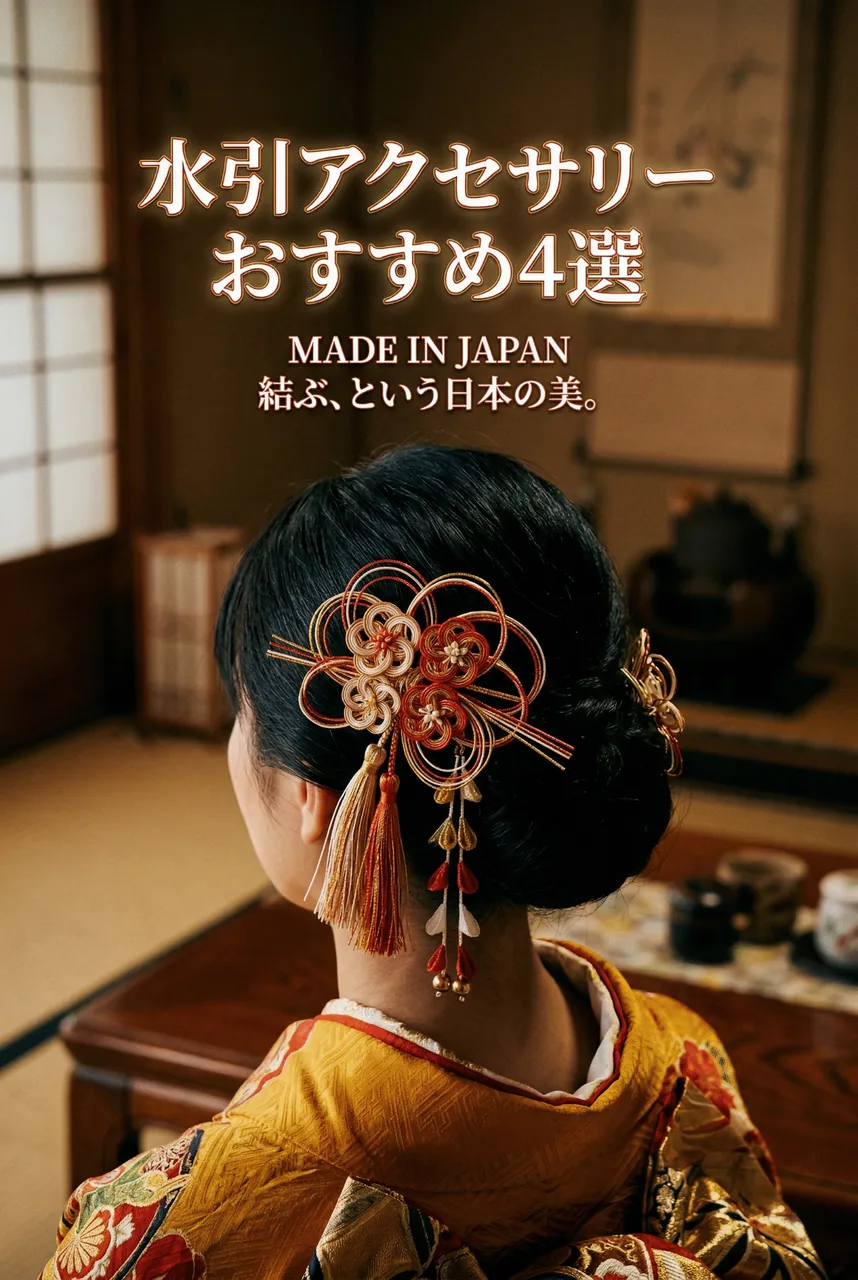
A kanzashi (かんざし) is a hair ornament for formal Japanese occasions — Coming-of-Age ceremonies (成人式), Shichi-Go-San celebrations, graduation, or the yukata season. Mizuhiki kanzashi feature three-dimensional knot forms — typically ume blossoms, butterflies, or pine-and-plum compositions — mounted on a stick or clip. The gold-red-white colourways are traditional for formal occasions; softer, more contemporary colours suit yukata-season wear. Each kanzashi is handmade, so no two are identical.
- Material
- Washi mizuhiki cord, handmade, made in Japan
- Best for
- Coming-of-Age, furisode, graduation; formal Japanese dress
No.3 — Mizuhiki Earrings
The most everyday-wearable mizuhiki accessory format. Washi cord is exceptionally light — mizuhiki earrings weigh a fraction of metal equivalents, making them comfortable for long wear. The knot form (usually ume or kanau) hangs from a simple finding. Small, quiet designs work with Western clothing; larger tassel-and-knot combinations suit kimono or yukata styling. Because each piece is hand-knotted, there's visible variation between pairs — the same knot made by the same person twice will differ slightly. This is the character, not the flaw.
- Material
- Washi mizuhiki cord, handmade, made in Japan
- Best for
- Everyday Japanese craft accessory; lightweight; suitable for Western or Japanese dress
No.4 — Mizuhiki Wrapping Cord Set
Mizuhiki is primarily a wrapping tradition — the knots were developed to decorate gifts and ceremony envelopes. A cord set with instructions for basic knots gives you the material to add a Japanese ceremonial dimension to any gift. Tie an awaji knot on a birthday present and it becomes something different. The wrapping is the gesture. Available on Amazon.com as a material set, or through Japanese craft suppliers as a complete kitting package.
- Material
- Washi mizuhiki cord in assorted colours, made in Japan
- Best for
- Gift wrapping; adding Japanese ceremonial meaning to any present
4. Iida, Nagano — Japan's Mizuhiki Capital
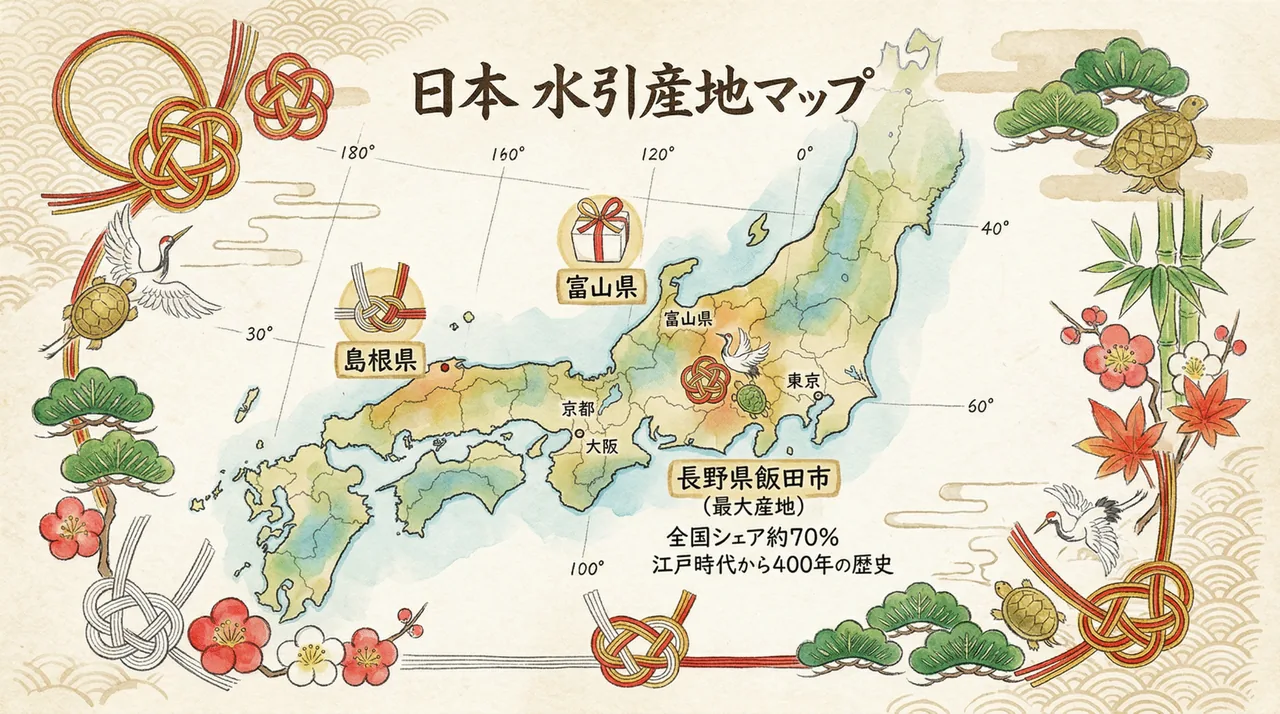
Iida City in Nagano Prefecture is where the vast majority of Japan's mizuhiki is produced.
The craft took hold here in the Edo period and expanded through the Meiji and Taisho eras as
ceremonial gift culture spread from aristocratic contexts into the broader population. Today,
Iida accounts for roughly 70% of national production.
Iida has an official "mizuhiki artisan" (水引工芸士) certification system, recognising craftspeople
who have mastered the full technical range of the craft. Certified artisan workshops produce
both traditional ceremonial forms and contemporary accessories. Products certified as Iida mizuhiki
carry the regional designation as quality assurance.
5. Getting Started: Beginner Tips for Knotting
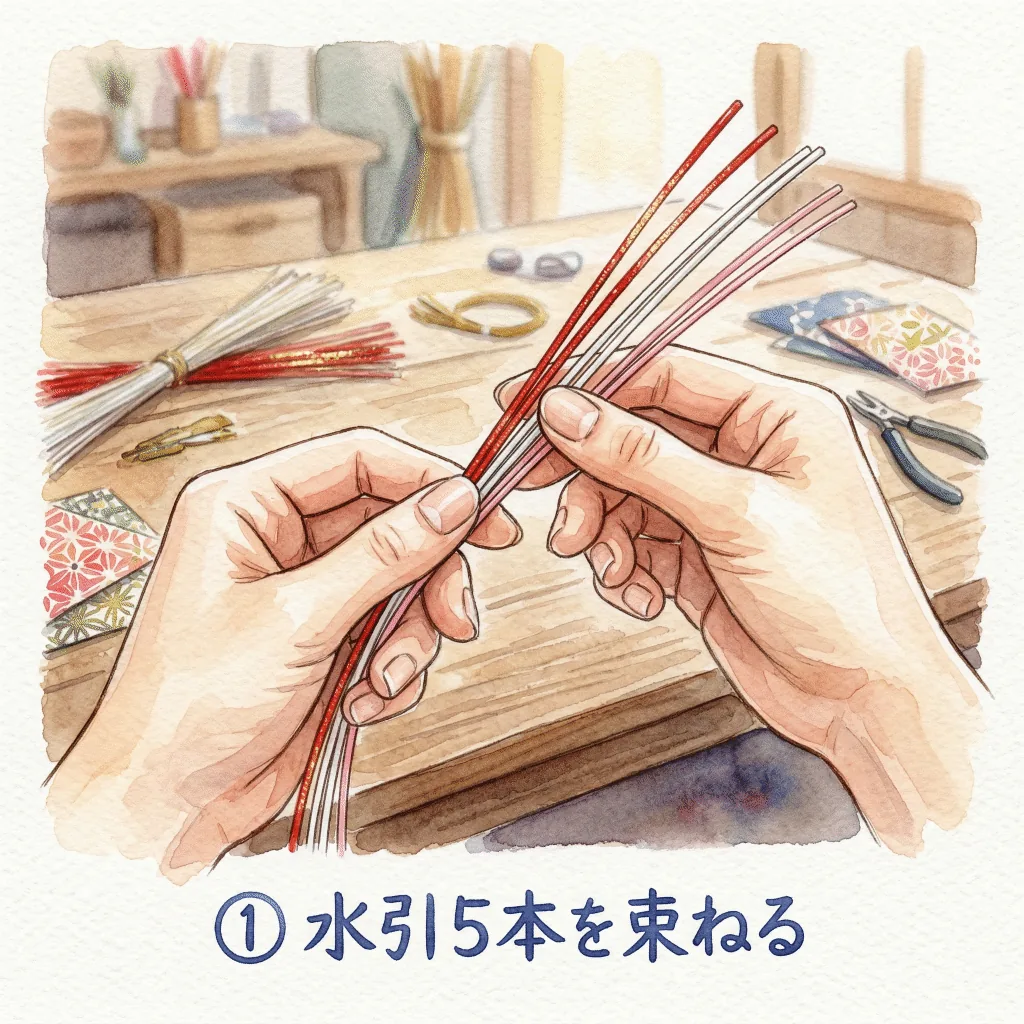
Step 1: Bundle the cords
Group 5 cords of the same colour (odd numbers are traditional for auspicious occasions). A single cord is too thin to hold form — bundling 5 creates enough mass for the shape to be visible and stable. Hold the bundle in the middle; this is your working centre.
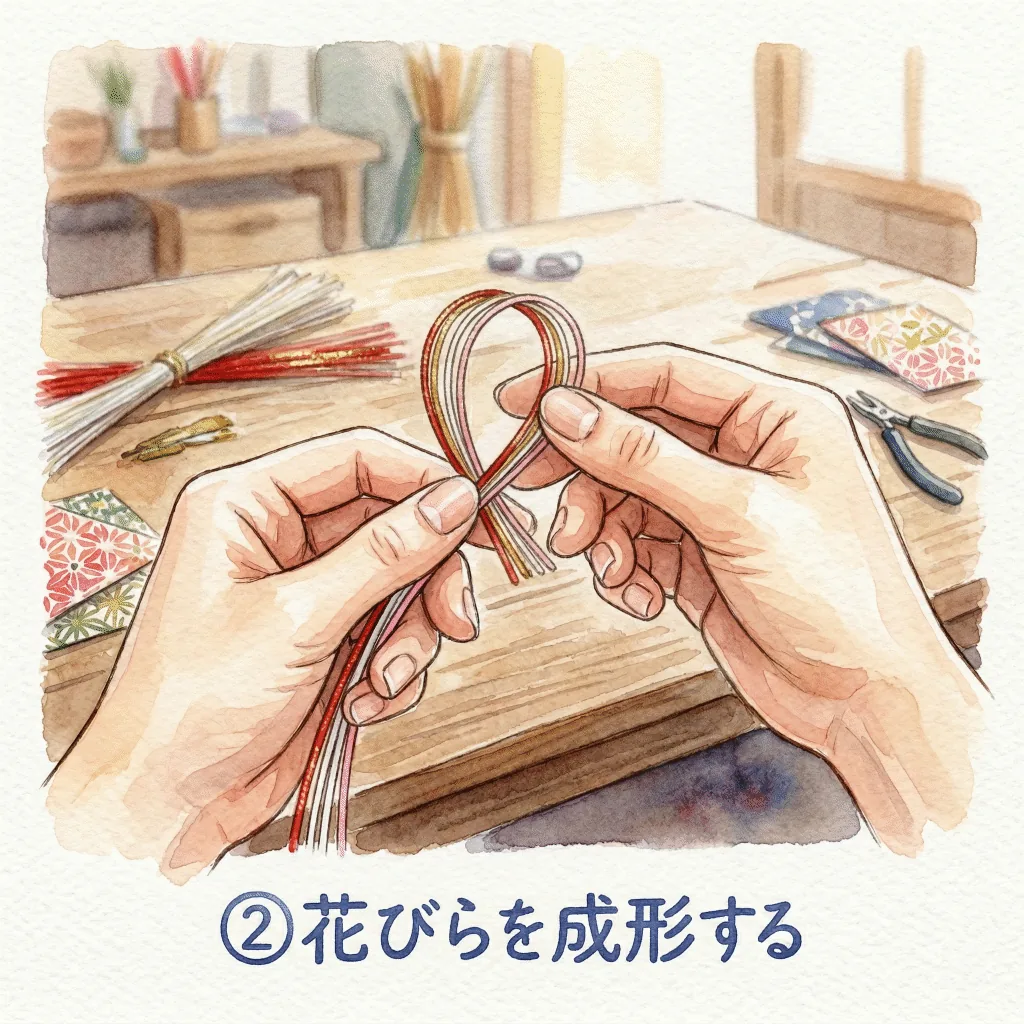
Step 2: Shape each petal individually
For ume (plum), fold the bundle into a petal loop, one at a time. The cord holds its shape when bent but springs back if you release tension — work slowly, holding each petal in position until it stabilises. Don't rush; the cord will telegraph impatience.
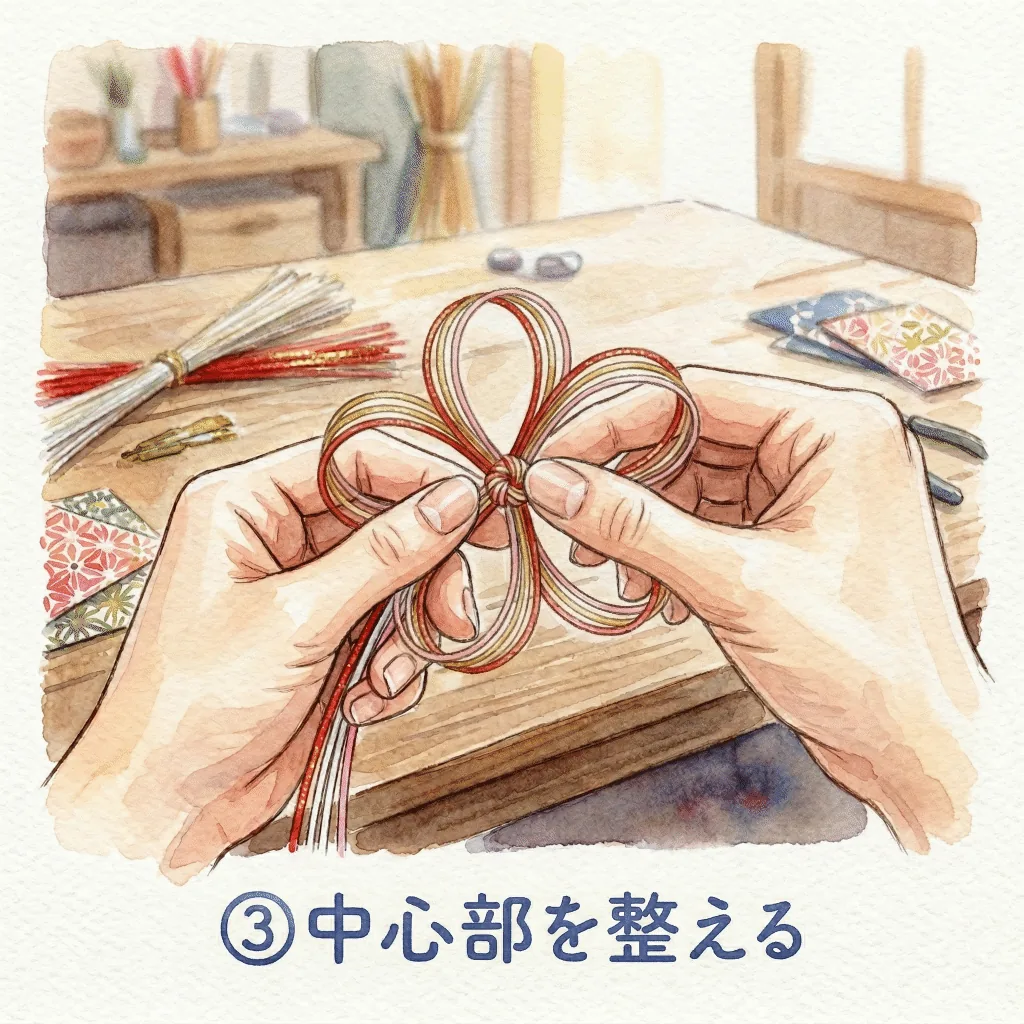
Step 3: Align the centre
When 5 petals are formed, adjust so they radiate evenly from the centre. The easiest way to check: photograph it directly from above. Irregular petal spacing is immediately visible from that angle. Video references (many free on YouTube for ume-musubi) help significantly for the first attempt.
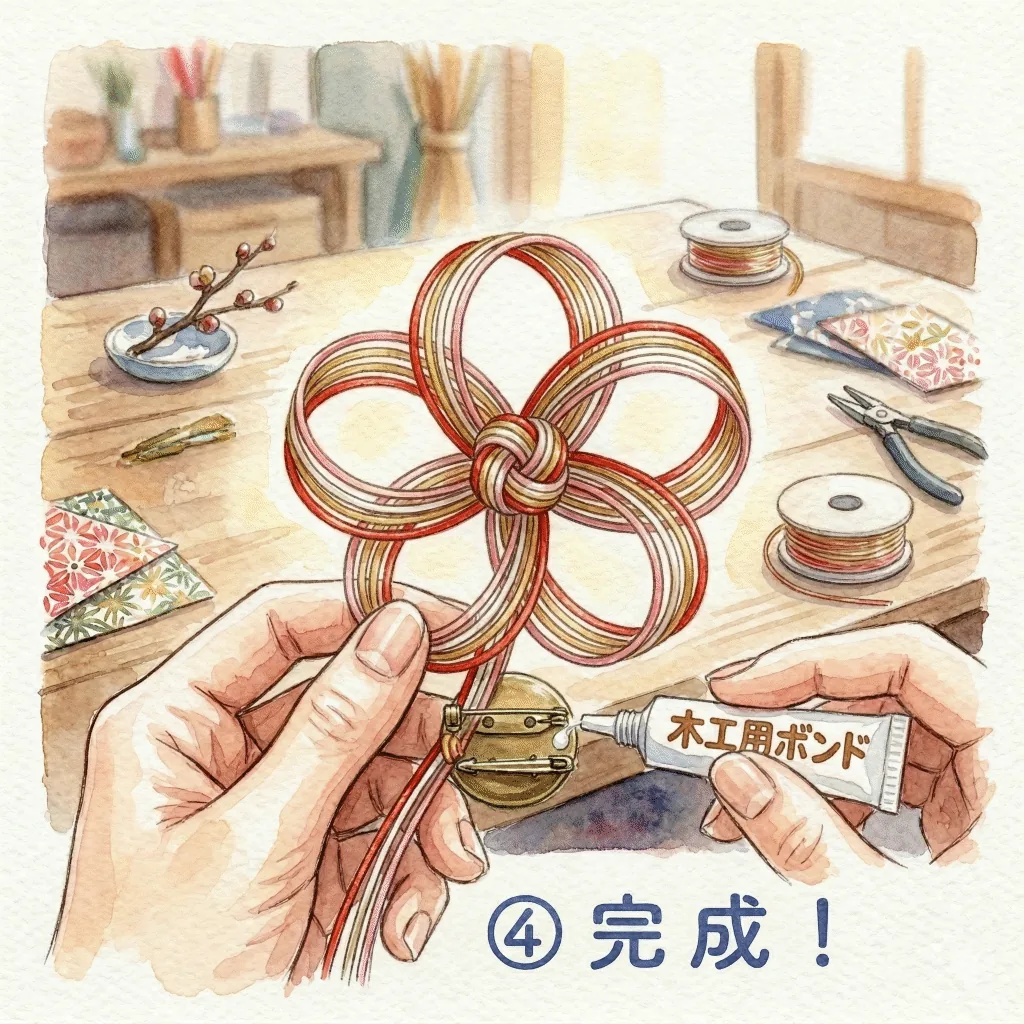
Step 4: Secure the ends
Apply a small amount of craft adhesive (PVA or wood glue) to the tail ends where they cross at the back. Allow to dry fully before handling. Attach a brooch finding, hair clip, or earring wire to complete the accessory. The glue joint is critical — a knot that can shift will lose its form quickly.
6. How to Wear Mizuhiki Accessories
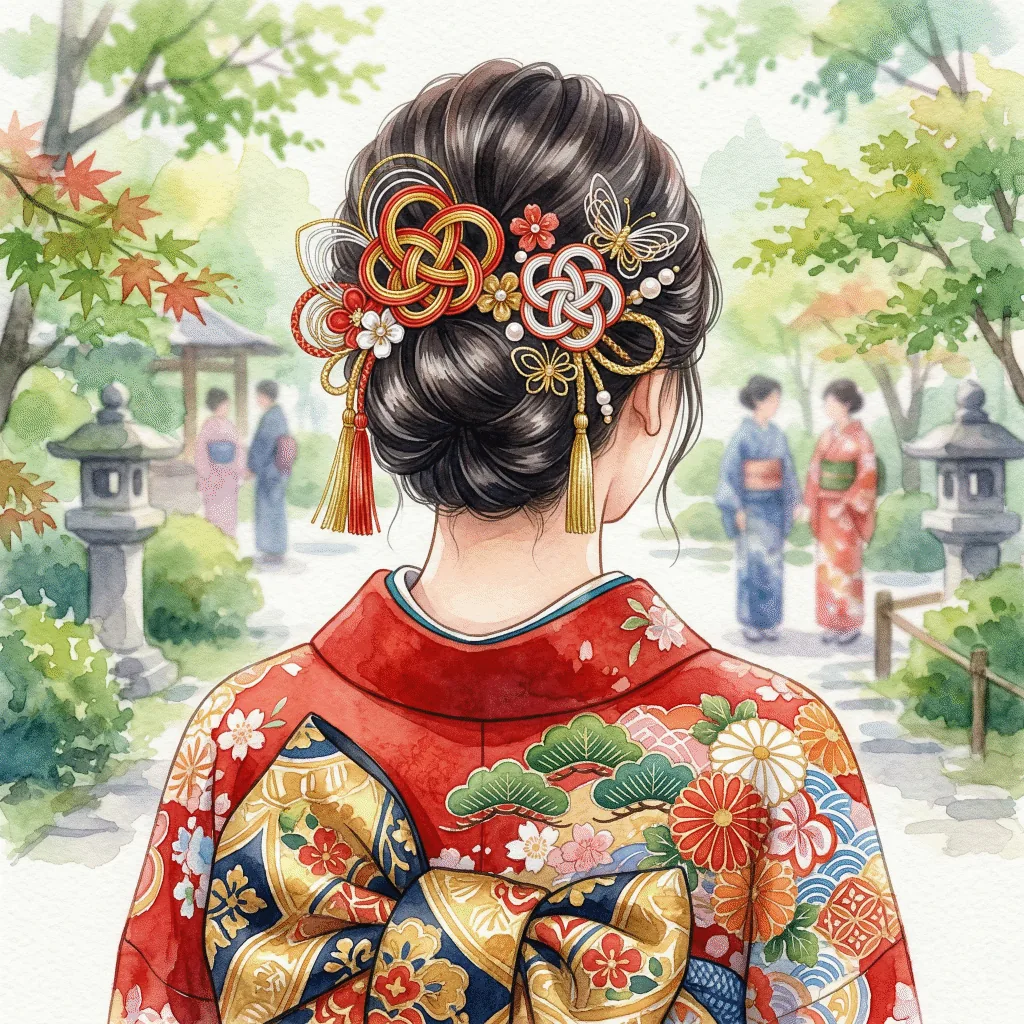
Kanzashi with furisode or yukata
Mizuhiki kanzashi in gold-red-white are traditional for formal Japanese dress occasions — Coming-of-Age, graduation, Shichi-Go-San. The three-dimensional knot forms photograph exceptionally well against the pattern of a furisode sleeve. Yukata season permits more flexible colour choices including contemporary pastels and single-colour kanzashi.
Ume brooch with a white shirt and denim
A single ume-musubi brooch on a plain white shirt — this is the most straightforward way to incorporate mizuhiki into everyday Western dress. The knot does all the work; keep everything else neutral. The gold-red-white colourway works against white; a muted single-colour version works against a wider range of fabrics.

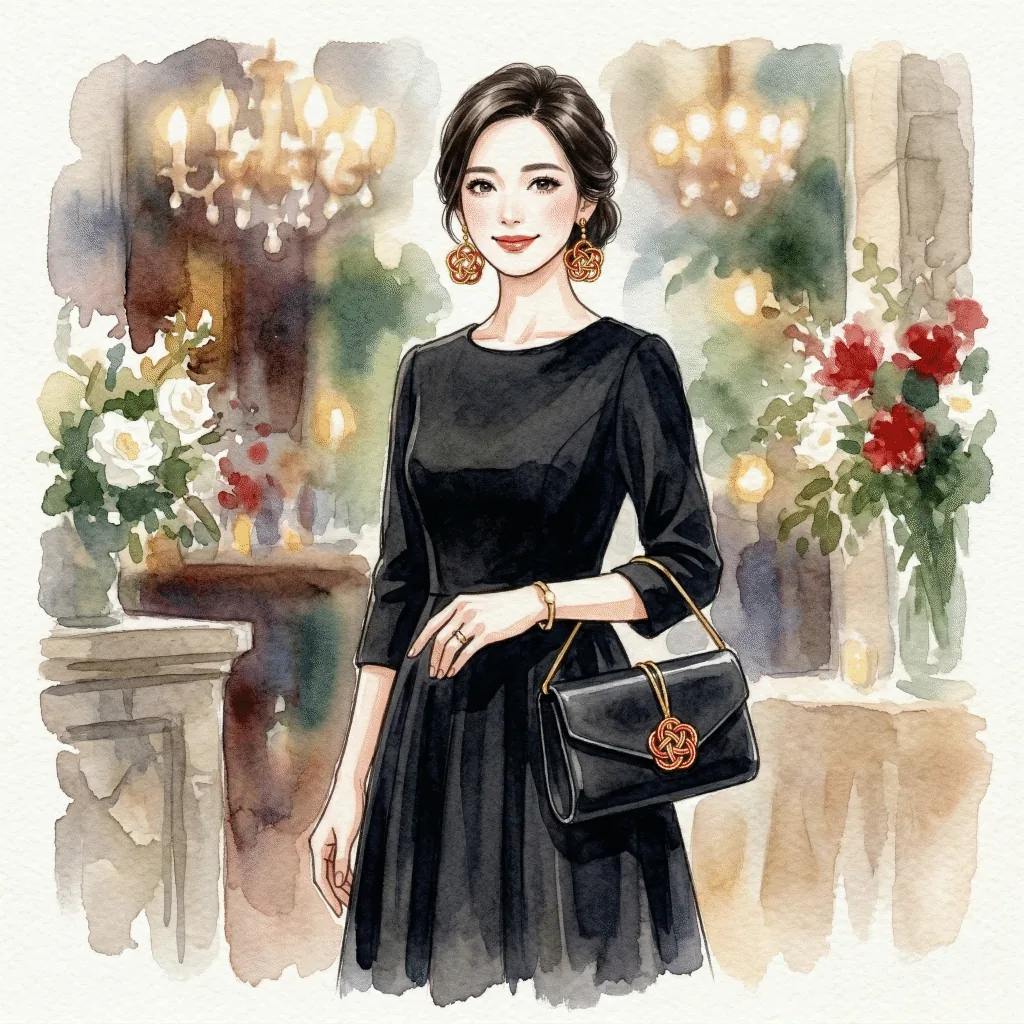
Mizuhiki earrings with a black dress
Gold-red mizuhiki earrings against black reads as composed and intentional — the warm cord colour catches against the dark fabric. This works for formal Western dress as well as semi-formal occasions. The lightness of washi cord means the earrings move more naturally than metal ones, adding a quality that's visible when you move.
7. Mizuhiki as a Gift
Mizuhiki gifts work across a wide range of occasions and recipients. The cultural specificity — most recipients outside Japan will have seen mizuhiki on Japanese packaging but may not know the word or understand the knot meanings — adds a layer of depth to the gift that pure aesthetic objects lack.
- Coming-of-Age / graduation: Kanzashi or hair ornament. Tied to a specific life transition — appropriate and memorable.
- Wedding / engagement: Awaji-knotted wrapping on any gift. "A bond that lasts" — the meaning is the present-within-the-present.
- Birthday / Mother's Day: Earrings or brooch. Wearable daily reminder of the occasion.
- For international visitors / souvenirs: A cord set with a knot instruction card is the gift that teaches — the recipient learns the craft tradition, not just receives the object.
8. Frequently Asked Questions
Is mizuhiki waterproof?
No — washi is paper-based and degrades with sustained moisture. Avoid wearing mizuhiki accessories in rain or humid conditions where sweating will bring the cord into contact with significant moisture. For wrapping, this isn't a concern unless the gift will be stored in humid conditions. Some contemporary mizuhiki products are treated with water- resistant coating; check the product listing. Alternatively, a light application of hair spray can stiffen the cord and provide some moisture resistance.
Should I start with a kit or buy finished accessories?
If you want to give or wear a mizuhiki accessory without the craft process, buy finished
work from a maker. The quality of a skilled artisan's knotting is significantly different
from a beginner's first attempt, and this is immediately visible in the finished object.
If you're interested in the process as much as the object — if you want to understand
how the knots work, and to make something yourself — start with materials. A sensible
approach: buy a finished ume brooch to see what a well-executed knot looks like, then
attempt to replicate it with cord.
Is there a rule about odd vs even cord numbers?
For ceremonial purposes in Japan, odd numbers (3, 5, 7) are used for auspicious occasions (weddings, births, celebrations) and even numbers (2, 4) for memorial occasions. For accessory-making, these conventions are relaxed — use whatever bundle count produces the form and weight you want. Beginner ume patterns typically use 5 cords (matching the 5 petal count visually and symbolically).
How is mizuhiki different from kumihimo?
Kumihimo (組み紐) is Japanese braided cord — silk or cotton threads interlaced in specific patterns to produce a cord with the pattern embedded in the structure. The process produces the cord itself. Mizuhiki is pre-made cord (twisted washi paper) that is then knotted into specific forms. Both are Japanese cord crafts, but the technique, material, and finished product are completely different. Kumihimo is used for obi-jime (kimono sash closures) and jewellery; mizuhiki for ceremonial wrapping and accessories.
What is Iida mizuhiki?
Iida City (飯田市) in Nagano Prefecture is Japan's primary mizuhiki production region — approximately 70% of national output comes from here. "Iida mizuhiki" is a regional designation indicating the product was made in this tradition. Iida has a certified artisan system (水引工芸士) that recognises craftspeople who have mastered the full technical range. Products from certified Iida workshops carry that provenance as a quality marker.
How should I store finished mizuhiki accessories?
Store in a dry location away from direct sunlight. Humidity will cause the washi fibre to soften and lose its shape; UV will fade the dye over time. A small box or case that prevents physical contact between multiple pieces is ideal — mizuhiki knots can catch on each other and distort if stored loosely together. Never stack finished pieces under pressure.
Final Thoughts: A Craft Where Form and Meaning Are the Same Thing
The ume knot doesn't just look like a plum blossom — it means luck and new beginnings.
The awaji knot doesn't just look elegant — it means a bond that tightens under pressure.
In mizuhiki, the visual form and the cultural meaning are inseparable. You can't
appreciate one without the other.
That depth is what distinguishes mizuhiki from decorative cord work. A kanzashi made
from ume-musubi for a Coming-of-Age ceremony carries meaning appropriate to the
occasion. An awaji-knotted gift wrapping says something specific to the recipient.
The craft has survived 1,300 years because it continues to serve a social function
that nothing else replicates.

Japanese Incense Guide: Awaji, Kyoto Brands & How to Burn
Japanese Wind Chimes: Nanbu Tekki, Edo Glass & Etchu Doki