"I can't cut a straight line, and every nail I drive ends up crooked…"
"Should I just skip hand tools and buy power tools right away?"
If you're just getting into DIY, you've probably had those doubts.
Here's the short answer: no, you don't need expensive power tools to start.
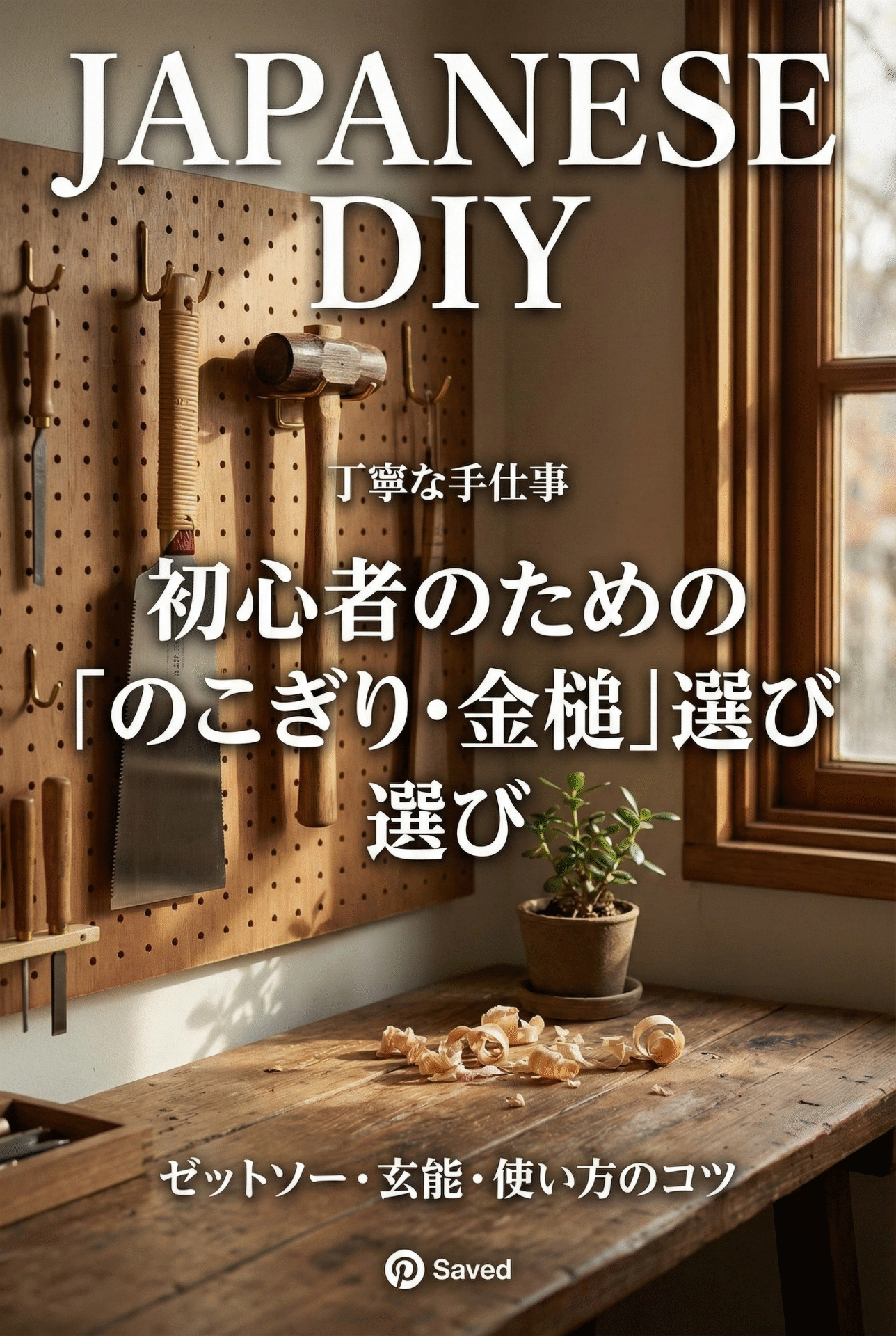
A well-made Japanese saw and
hammer will let you work with surprising precision — and in near silence.
Two tools in particular stand out: the Z-SAW replaceable-blade saw, used by craftspeople worldwide,
and the genno (玄能), a traditional Japanese woodworking hammer made in Tsubame-Sanjo.
This guide covers the tools that make "cutting" and "driving nails" genuinely enjoyable.
Series: This article is part 6 of the Outdoor & Hobby Tools series.
Quick Reference: Japanese Saws & Hammers at a Glance
| Type | Use | Blade / Material | Origin |
|---|---|---|---|
| Double-Edge Saw | Rip & crosscut combined | High-carbon steel | Sanjo / Banshu |
| Replaceable-Blade Saw | General crosscutting | High-carbon steel (replaceable) | Sanjo / Banshu |
| Genno (Woodworking Hammer) | Nailing, chisel work | Forged steel, wood handle | Tsubame-Sanjo |
| Nail Hammer (Claw) | Nailing & nail pulling | Forged steel, fiberglass handle | Sanjo / Niigata |
1. Rethinking "Cut" and "Drive" | The Case for Hand Tools
Hardware stores are full of electric circular saws and impact drivers. They're undeniably useful — but hand tools offer something power tools can't match.
Quiet, Safe, and Deeply Satisfying
Power tools produce noise levels that make apartment balcony work or Sunday morning projects basically
impossible.
A hand saw and a hammer impose no such limits on when or where you work.
There's also something almost meditative about the rhythm of pulling a saw through wood — feeling the grain,
adjusting pressure, listening to the cut.
Learning hand tool feel first makes the jump to power tools later far less error-prone.
2. Z-SAW: The Replaceable-Blade Saw That Changed DIY
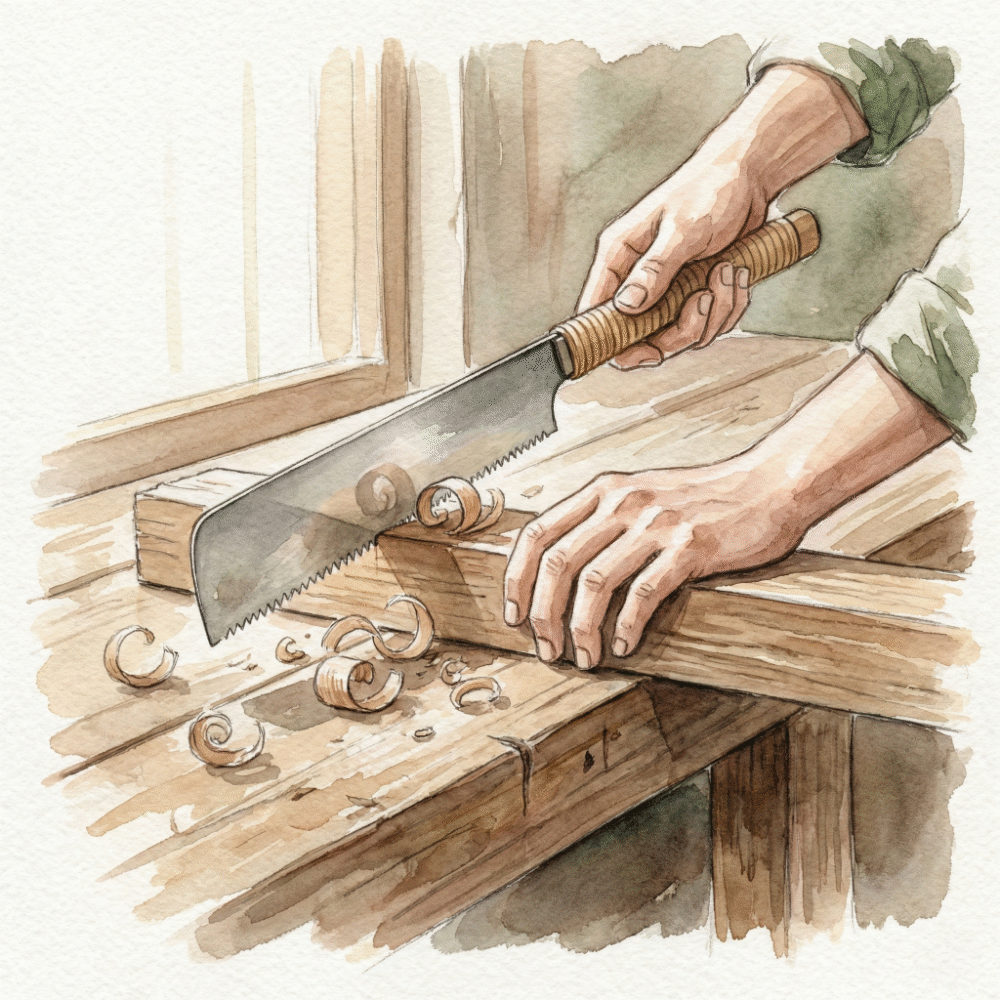
If you only buy one saw, make it a Z-SAW — made by Okada Metal Industry Co. in Miki City, Hyogo Prefecture.
Z-SAW Life Saw 265
Japan's best-selling replaceable-blade saw — the standard by which all others are
measured.
Before Z-SAW, a dull saw meant a trip to a professional sharpener. Z-SAW changed that by making the blade
snap-replaceable — like a snap-off utility knife, but for saws.
Proprietary "Hard Impulse" heat treatment keeps each blade sharp for far longer than untreated
alternatives.
For beginners, the 265 (265mm blade length) handles virtually any DIY timber with ease.
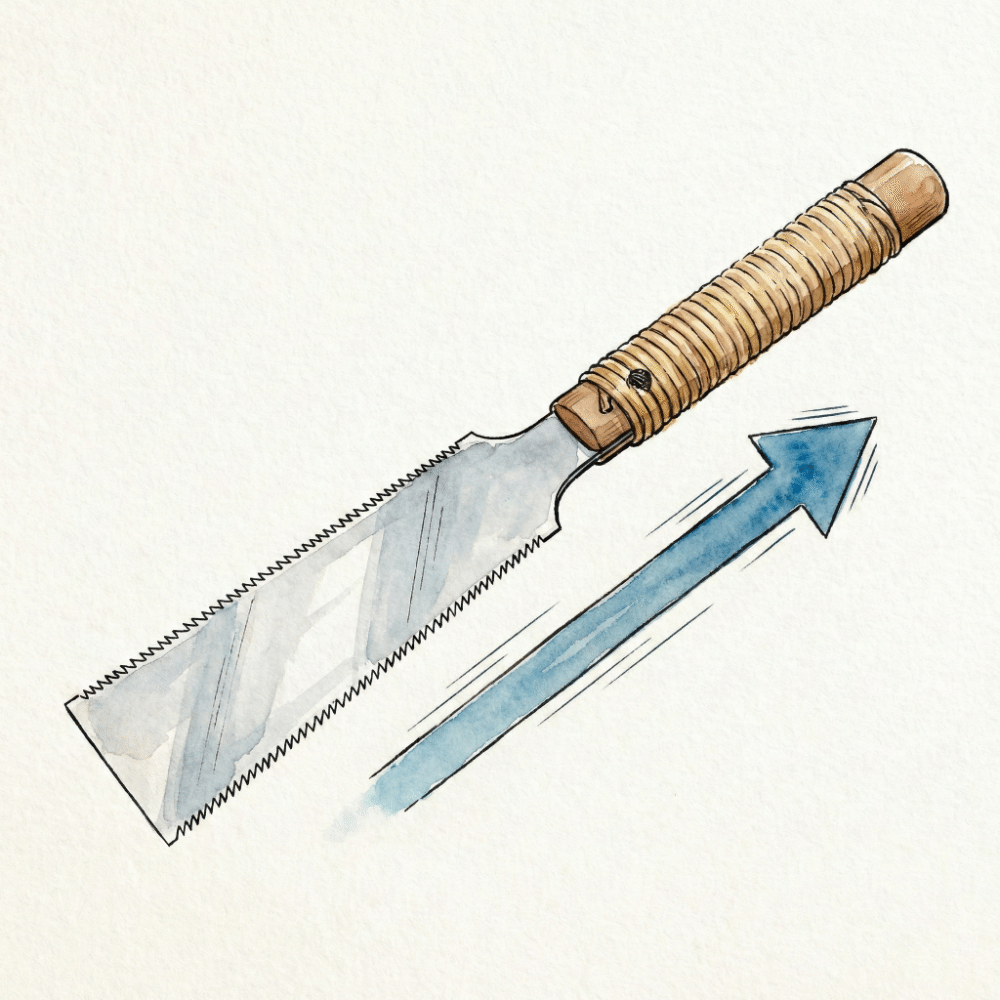
3. Why Japanese Pull Saws Cut Better | The Physics of Pulling
Professional furniture makers around the world seek out what they call the "Japanese Pull Saw" — and for good reason.
Pulling Creates Tension — And Thinner Blades
Western saws cut on the push stroke. Because a blade under compression buckles if it's too thin, Western saws
must be thick and therefore heavy.
Japanese saws cut on the pull stroke. A blade under tension is self-straightening, which means
it can be made extremely thin.
A thinner blade removes less material per stroke — resulting in effortless cuts with almost no pressure
required.
The trick: let the saw do the work. Grip loosely, pull gently, and let the blade's own weight guide it — you'll
be surprised how straight the cut comes out.
4. The Genno Hammer | More Than Just Driving Nails
The traditional Japanese woodworking hammer is called a genno (玄能) — and it has a feature most people never notice.
Two Faces, Two Jobs
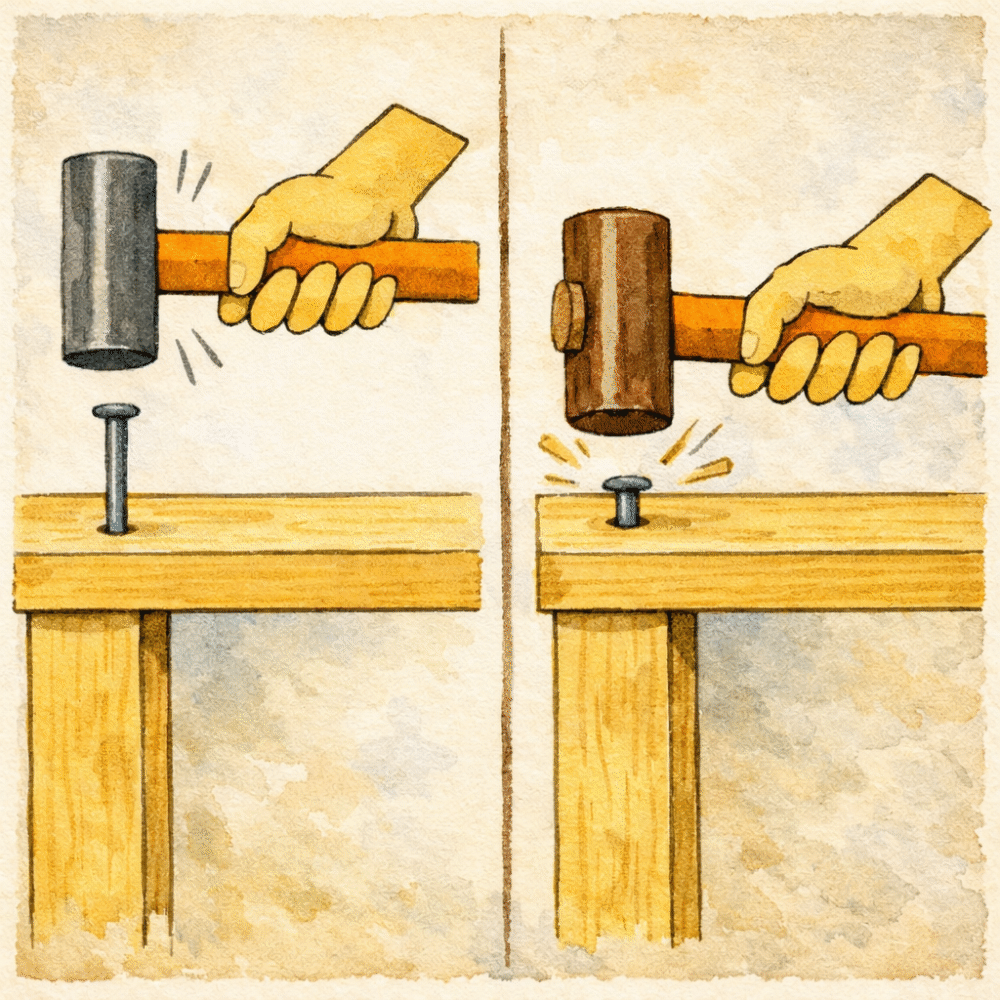
Look closely at a genno and you'll see the two striking faces are different shapes — one flat, one slightly
convex (domed).
1. Flat face: Used for driving the nail in from start to finish — sets the nail straight.
2. Convex face (the "wood-killing face"): Used for the final blow that seats the nail head
flush.
If you use the flat face for that last strike, the hammer's edge hits the wood and leaves a dent.
The convex face contacts only the nail head — no wood damage.
This small, thoughtful detail is exactly the kind of practical refinement that defines Japanese hand tools.
5. KAKURI (Kakuri Sangyo) | Stylish Woodworking Tools from Tsubame-Sanjo
"I want tools I'd actually leave out on a shelf, not hide in a drawer."
If that's you, Kakuri Sangyo (KAKURI) from Tsubame-Sanjo, Niigata Prefecture, makes tools that
deliver on both design and performance.
KAKURI DIY Tool Set
Natural wood handles. A coherent, beautiful aesthetic. Sharpness you can actually feel.
KAKURI sets use genuine wood handles rather than injection-molded plastic, giving every piece a warmth that
industrial tools simply don't have.
Sets come in dedicated wooden boxes or rolled canvas cases — beautiful to store, easy to carry.
The blades are finished by Tsubame-Sanjo craftspeople, so you're not sacrificing performance for looks.
6. Caring for Your Saw & Hammer | Maintenance and Safe Practice
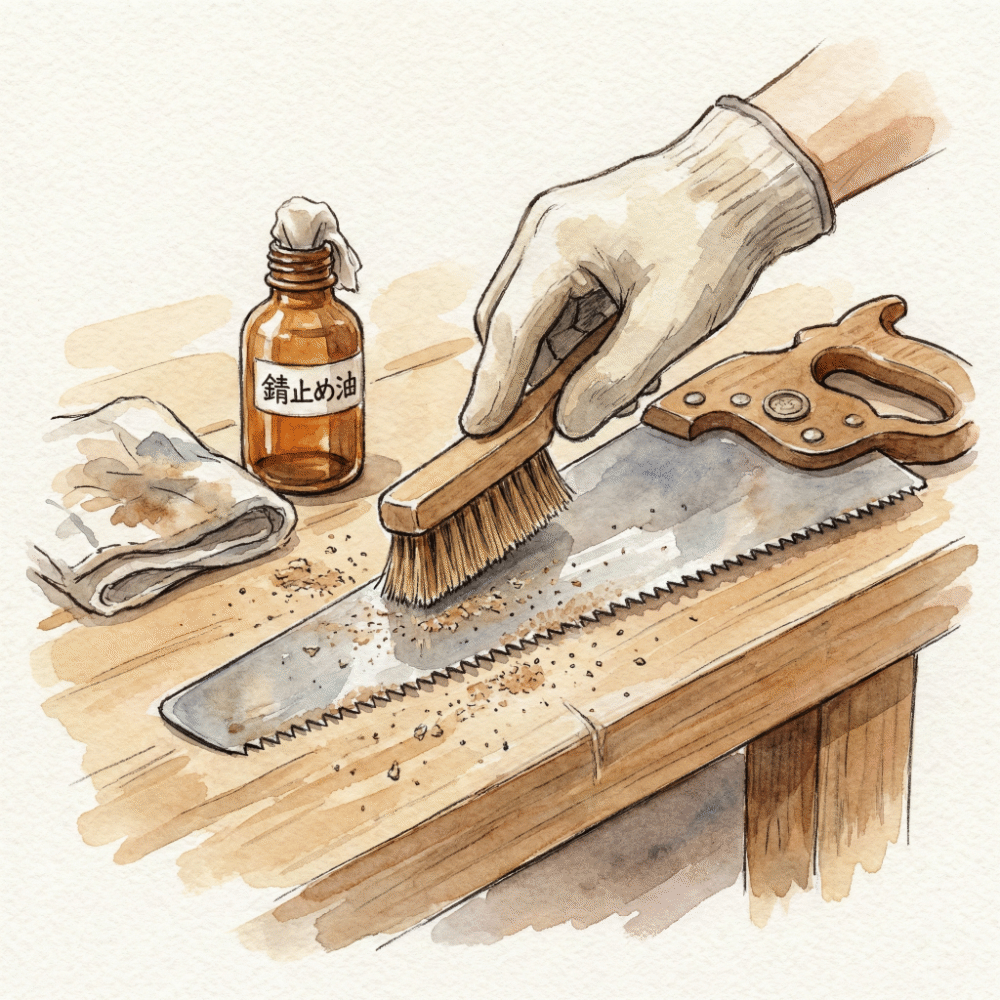
A little attention after each session keeps hand tools performing well for years.
Brush It, Oil It, Check the Handle
Saw care:
After use, brush any wood dust from between the teeth with a stiff brush.
Apply a thin coat of anti-rust oil (WD-40 or similar) to the blade to prevent corrosion and keep the next cut
smooth.
Genno care:
Over time, the wood handle dries out and can loosen inside the head — a dangerous situation.
If the head wobbles, re-drive the wedge (kusabi) at the top of the handle, or replace the handle entirely.
Customizing the handle to a color or wood species you love is itself a satisfying DIY project.
7. Frequently Asked Questions
How do I cut a straight line with a handsaw?
Light grip, aligned eye, and let it pull.
Hold the handle loosely — don't force it. Apply light pressure only on the pull stroke, never on the push.
Align the cut line, the blade, and your dominant eye into a straight plane before starting.
A saw guide (straight-cut jig) also works well for beginners and costs very little.
When should I replace a Z-SAW blade?
When the stroke feels heavy, or the cut surface starts to fray — time to swap.
Continuing with a dull blade means using more force, which is tiring and less accurate.
Replacement blades are inexpensive and widely available — keep a spare on hand so you never have to push through
with a worn blade.
What weight genno should I choose?
Around 300g (roughly 80 monme) is the most versatile weight for general DIY.
Lighter and you'll need many more strikes per nail; heavier and accuracy suffers as you tire.
For smaller hands or those who prefer a lighter feel, around 225g (60 monme) is more manageable.
What's the difference between rip cut and crosscut?
Rip cut follows the wood grain; crosscut runs against it.
For most DIY work — cutting boards to length — you'll be crosscutting.
Modern multi-purpose saws like the Z-SAW handle both directions, so a single blade covers all common home
woodworking tasks.
Can I re-sharpen a Z-SAW blade?
Z-SAW blades are designed for replacement, not sharpening — the geometry is set in the factory.
Traditional double-edge saws can be re-sharpened by a specialist called a metate-shi (blade setter), and some
makers still accept postal sharpening orders.
For a beginner, the replaceable-blade approach is far more practical.
The wood splits when I drive nails near the edge — what am I doing wrong?
Drill a pilot hole first.
Near edges or with thick nails, pre-drilling a hole slightly smaller than the nail diameter prevents
splitting.
An old carpenter's trick: tap the nail point with your hammer to slightly blunt it before driving — a blunt point
pushes the fibers aside rather than wedging them apart.
Final Thoughts: The Sound of Hand Tools on a Quiet Weekend
In an age of cordless drills and table saws, there's something quietly radical about picking up a hand saw.
The soft shush of a Z-SAW gliding through pine. The clean, rhythmic knock of a genno setting a nail.
These sounds don't just build furniture — they turn a Sunday afternoon into something genuinely restorative.
Hand tools made by Japanese craftspeople reward patience and care. Start with one good saw and one honest hammer
— and discover what it feels like to build something slowly, and well.
Best Japanese Hand Tools | KTC Nepros, OLFA Cutters & More for Your DIY Toolbox
Japanese Garden Scissors Guide | Sakagen, Toyama Hamono & How to Choose