The summer sun is relentless, and the neighbors can see straight into your room the moment the window is open.
Running the air conditioner all day leaves you sluggish — and the electricity bill doesn't help either.
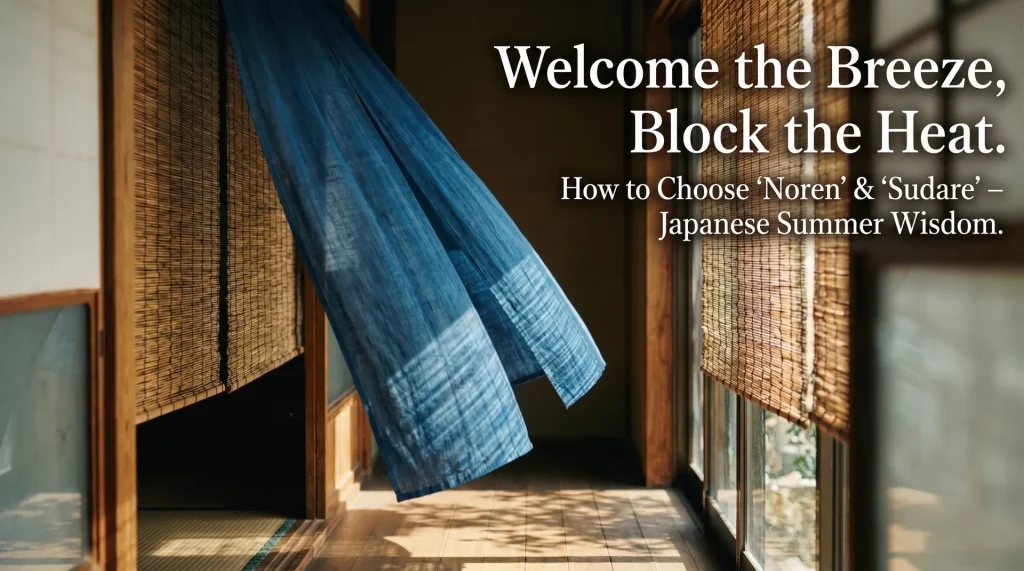
The answer is an old one: noren (fabric divider curtains) and sudare (woven reed blinds).
One length of fabric or one panel of woven reed blocks harsh sunlight and prying eyes while inviting a gentle breeze indoors.
They are the most elegant, eco-friendly "natural air conditioner" and room divider that Japanese summers ever produced.
This guide covers Kyoto artisan-dyed hemp noren and high-performance domestic sudare — pieces that are as functional as they are beautiful.
Feature series: This article is part of the "Japanese-Made Household Essentials" series.
1. Why Noren and Sudare? Privacy, Breeze, and Heat-Blocking in One
Curtains and blinds can't do what noren and sudare do.
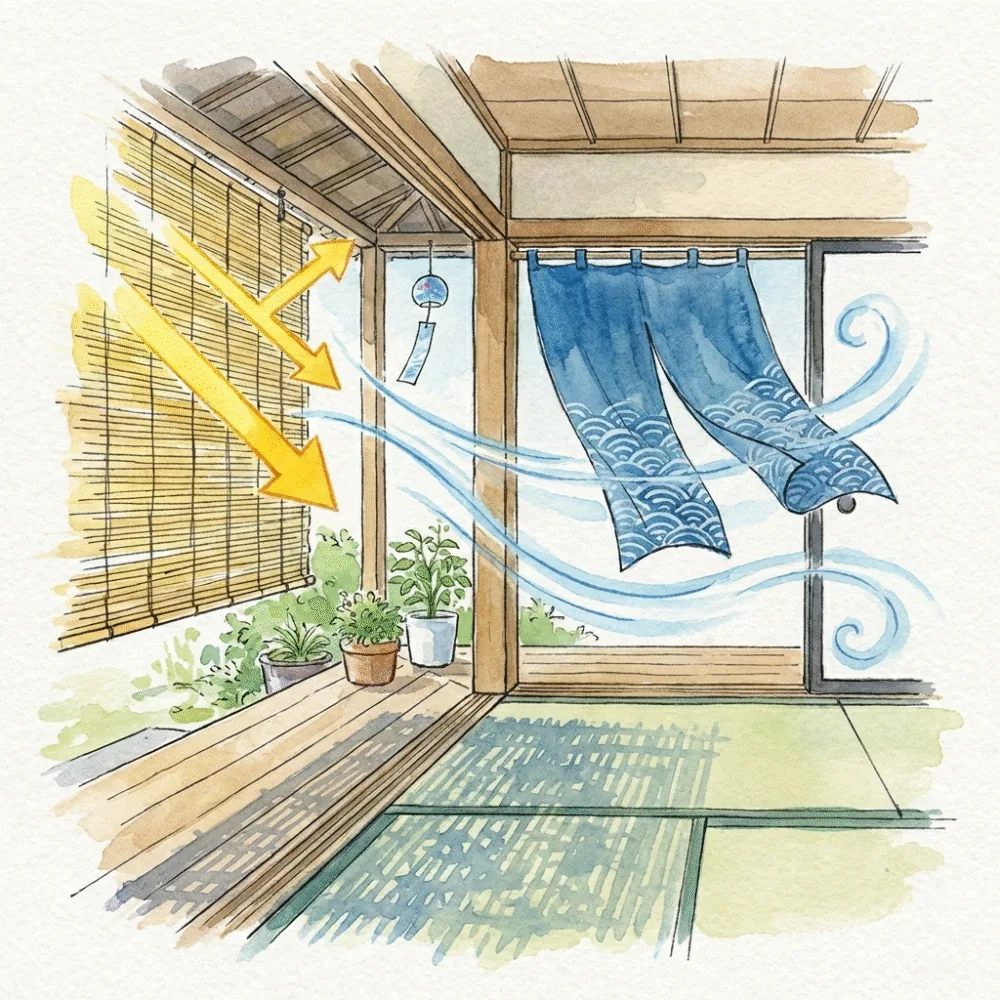
"Private from outside, open to the breeze" — the perfect balance
The key quality of noren and sudare is their deliberate openness.
Unlike solid curtains that block everything, these screens stop outside eyes while letting air flow freely through.
Heat doesn't build up inside. You feel the presence of the outdoors without being exposed to it. This is a uniquely Japanese way of drawing boundaries — soft, not hard.
2. Choosing Your Noren by Material: Cooling Hemp vs. Soft Cotton
Match the material to where and when you'll use your noren.
Summer's best: hemp (linen / ramie) — crisp, translucent, and naturally cooling
Hemp fiber has a hollow core that disperses heat, making it cool to the touch and to the eye.
Its characteristic crispness and the way light passes through the weave look just as cooling as they feel — perfect as a summer divider in entryways and living rooms.
It starts firm but softens beautifully with use.
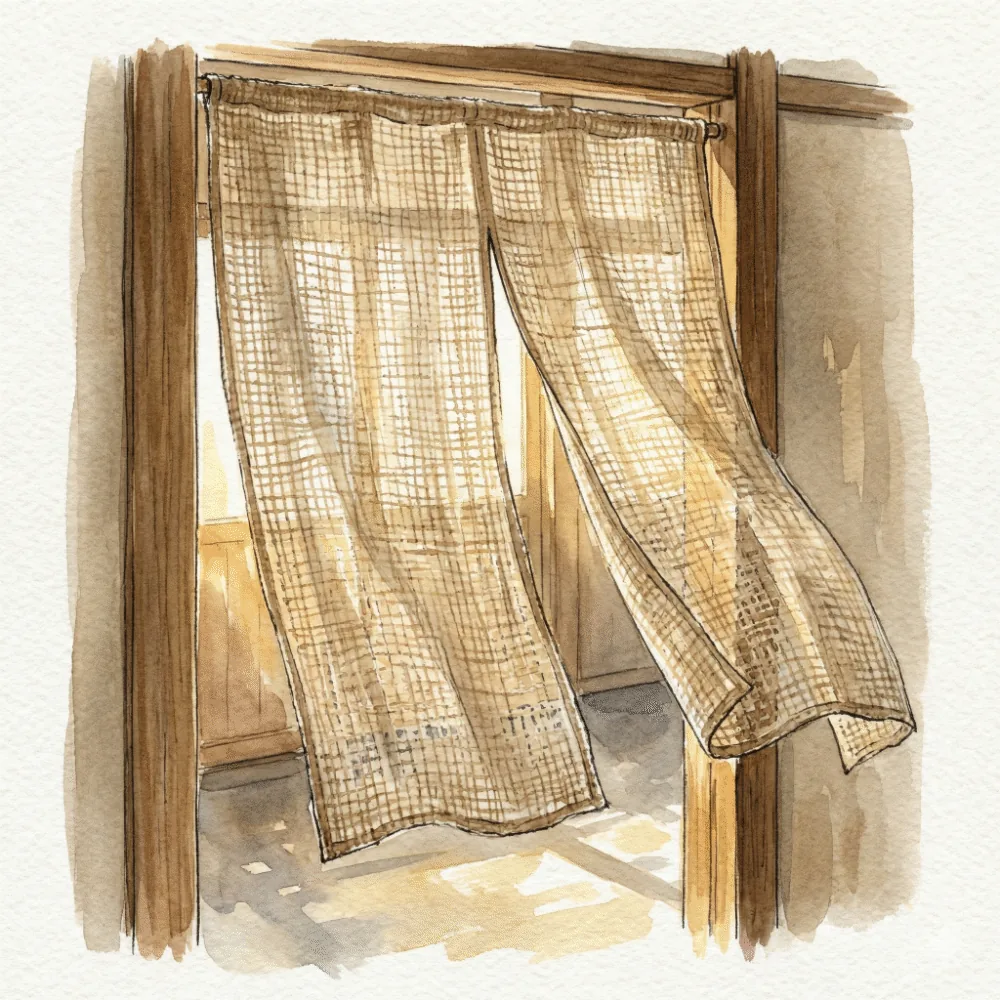
Year-round option: cotton — soft, less see-through, wide variety of patterns
Cotton is soft against the skin and highly absorbent. Less translucent than hemp, it works better where more privacy is needed — bathroom entryways, kitchen dividers.
It takes dye beautifully, so it comes in an enormous range of patterns from traditional Japanese motifs to clean modern designs — suitable in any season.
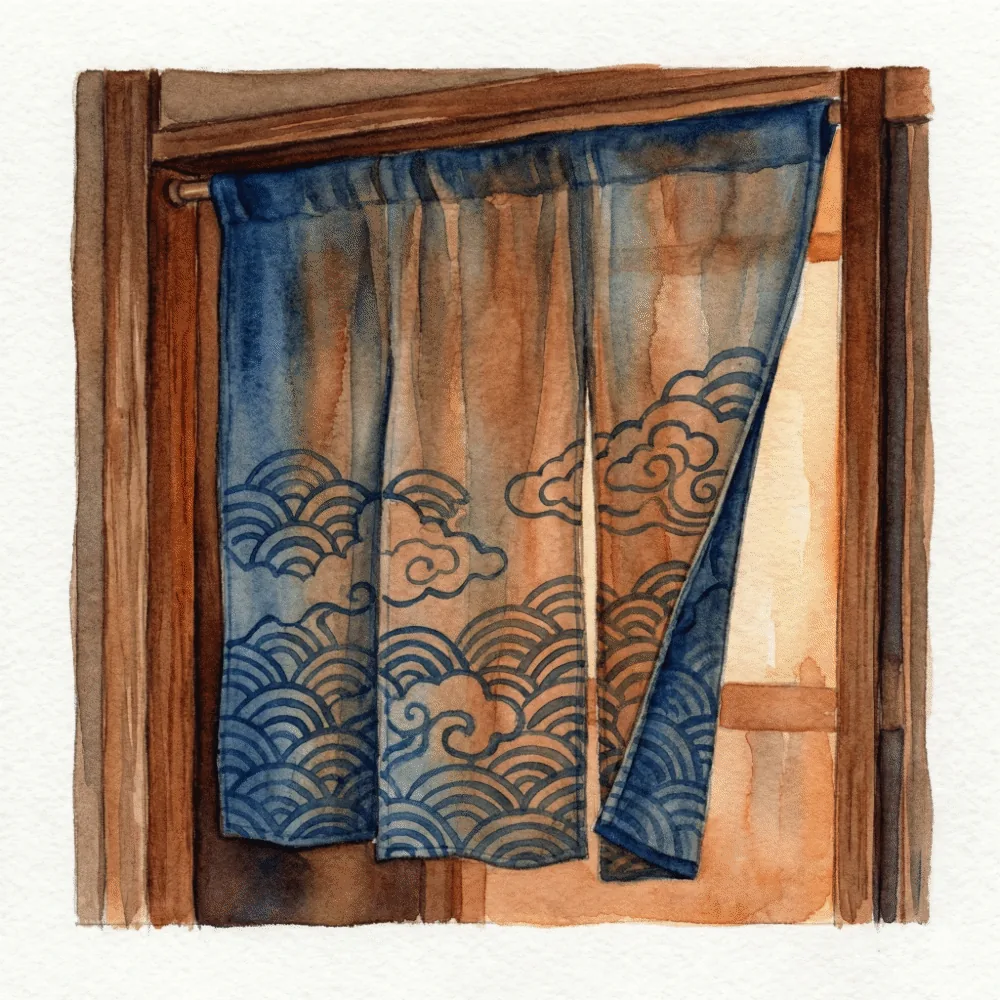
3. Recommended Noren: Kyoto's Manyosha — Artisan Hand-Dyed Hemp
A Kyoto maker preserving traditional dyeing techniques while designing noren for contemporary living.
Manyosha (万葉舎) — Hand-Dyed Hemp Noren
Light and wind through artisan hands — translucency as an art form.
Each piece is dyed individually by Kyoto craftspeople using techniques such as hiki-zome (brush dyeing) and kata-zome (stencil dyeing) — giving the fabric a depth of color that machine production cannot replicate.
Particularly striking are noren using "opal processing," which partially dissolves the weave to create translucent patterns, and "sukashi-ori" (openwork weaving), where the pattern is formed by the structure of the cloth itself.
Hold one up to light and the pattern seems to float — a quality that transforms any entryway it greets visitors through.
4. Choosing Your Sudare by Material: Heat-Blocking Reed vs. Elegant Bamboo
Hung outside a window, sudare intercept heat before it enters the room. The material determines how well.
Best heat insulation: reed (yoshi / ashi) — hollow core blocks heat like insulation
Reed that grows in wetlands has a straw-like hollow core. That air pocket acts as powerful insulation — blocking direct sun heat before it reaches the glass.
The cheaper options at home improvement stores are typically thin Chinese-grown reeds; domestic Japanese reed is thicker, tougher, and lasts significantly longer.
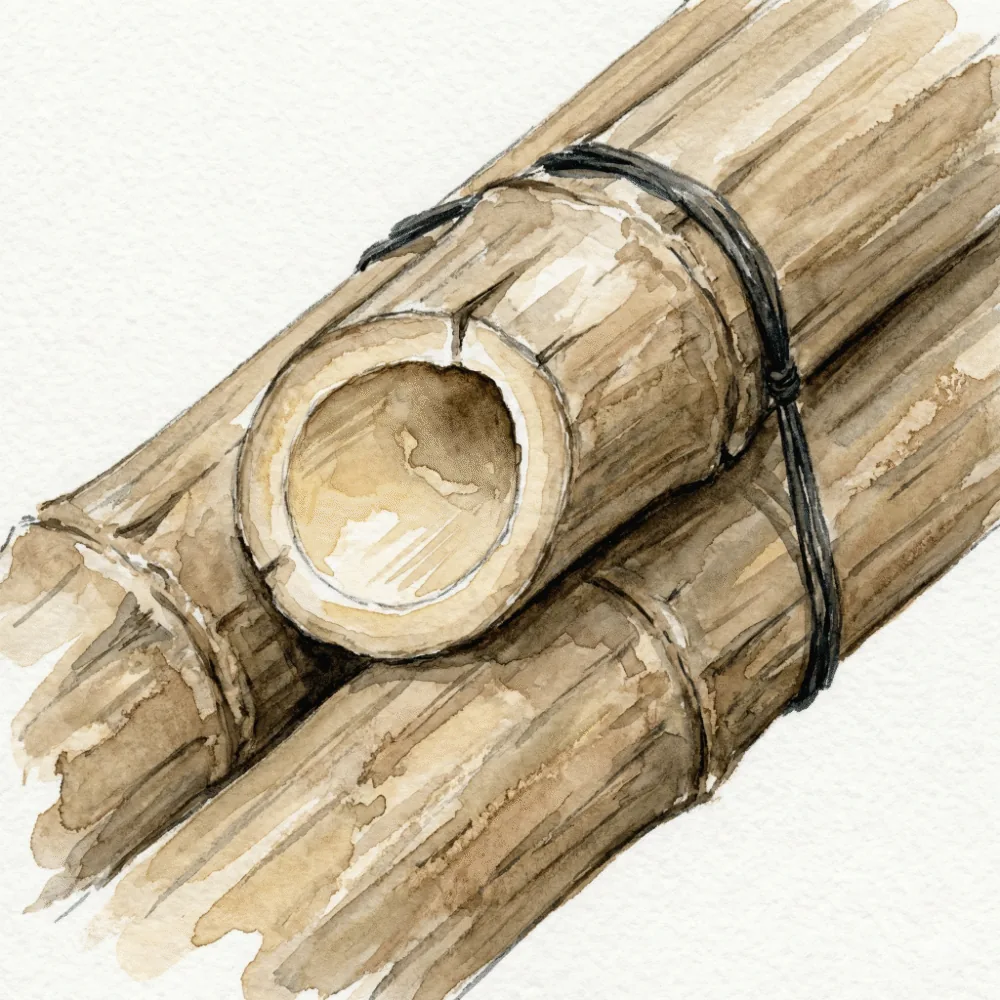
Elegant and durable: bamboo — premium look, indoors or out
Bamboo fiber is dense and extremely tough — it outlasts reed in terms of raw durability.
It provides slightly less heat insulation than reed, but the premium look and the warm amber patina it develops with age more than compensate.
Works beautifully outdoors and as an interior blind or window screen, adding a sophisticated cafe-like atmosphere indoors.
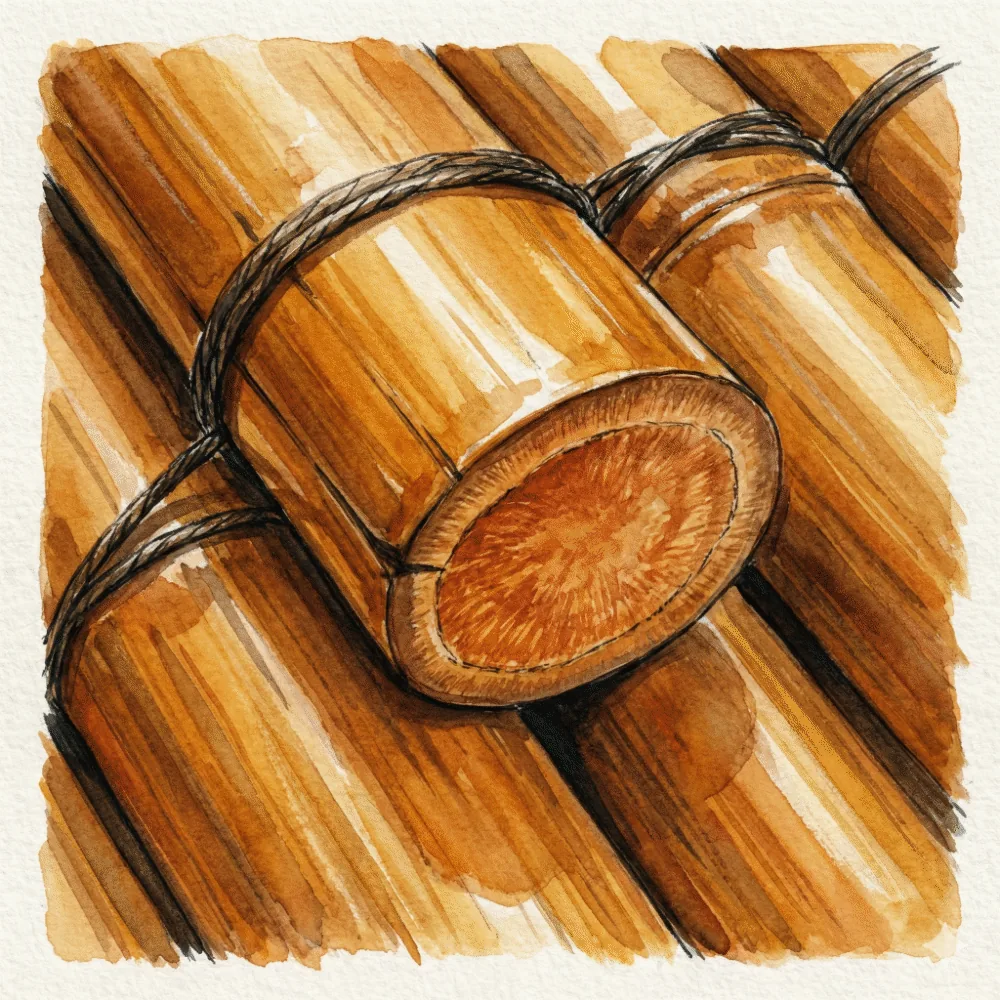
5. Recommended Sudare: Lake Biwa Reed — Japan's Finest Natural Shade
Premium sudare made from the highest-quality reed grown on the shores of Lake Biwa, Japan's largest lake.
Lake Biwa Sudare — Domestic Japanese Reed
Thick, dense "ground reed" (jiyoshi) creates deep, cool shade.
Lake Biwa reed grows thicker and denser than Chinese varieties — the walls of each stalk are substantial, which means the insulating air pocket inside is proportionally larger and more effective.
Hung outside a window, it casts a deeply cool shade that feels like stepping under a tree on a hot day.
Each stalk's strength also means the sudare resists breaking — this is not a one-season item, but something that can last for years with proper care.
6. Where to Hang Them: Outside for Sudare, Inside for Noren
Each type has an ideal placement that maximizes its function.
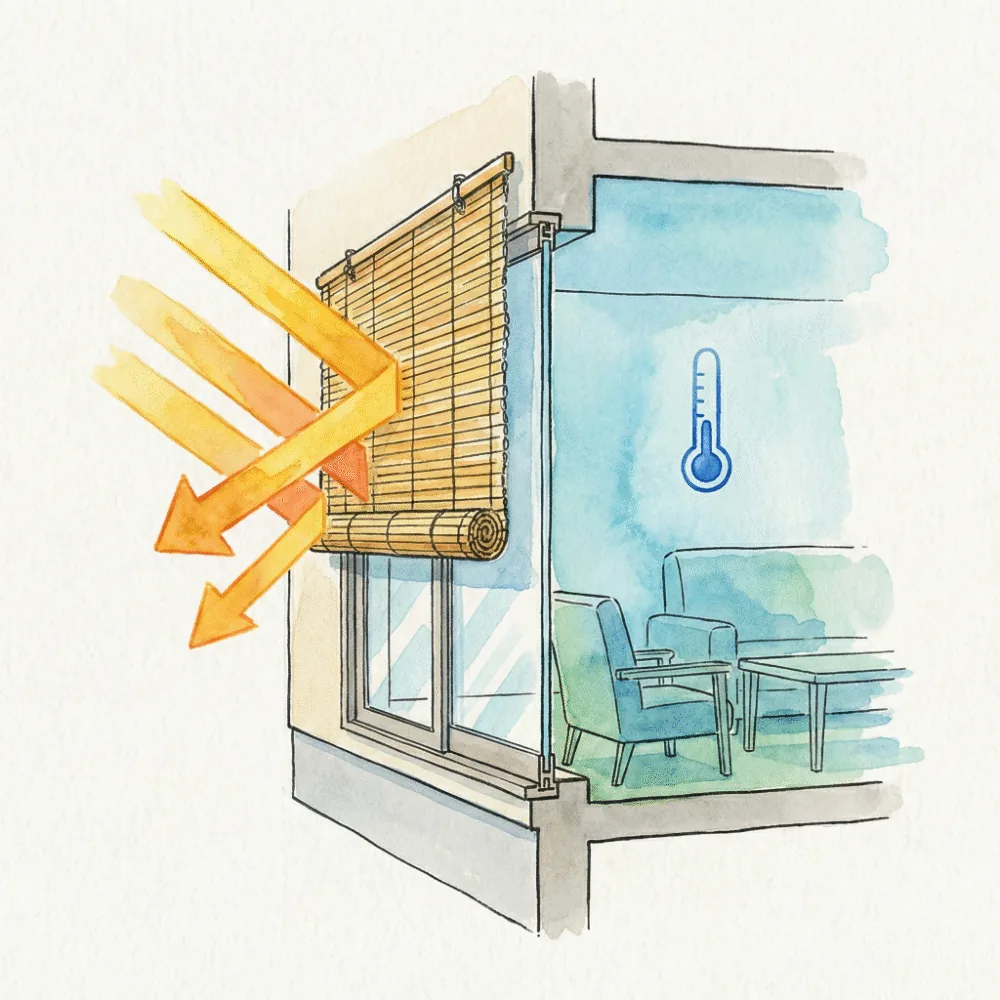
Sudare: always hang outside the window — stop heat before it enters
To get full heat-blocking benefit from a sudare, hang it on the outside of the window — not like a curtain inside.
Intercepting the sun's heat before it reaches the glass prevents that heat from ever entering the room, dramatically improving air-conditioning efficiency.
Use eave hooks (under the roof overhang) or window-frame hooks designed for sudare — hardware stores carry multiple types.
Noren: hang at room boundaries — softly divide without sealing
Noren belong at the junction between spaces: entryway and hallway, living room and kitchen, the threshold of a changing room or bathroom.
Unlike a door, a noren doesn't close anything completely — it lets you sense the presence of people and air on the other side while gently concealing what's beyond.
It also serves as a simple air-conditioning barrier, slowing the loss of cooled air without blocking movement.
7. Care and Storage: Dry Completely to Prevent Mold
Natural materials and moisture don't mix well. End-of-season storage is where most damage happens.
Sudare: dry thoroughly over several clear days before storing
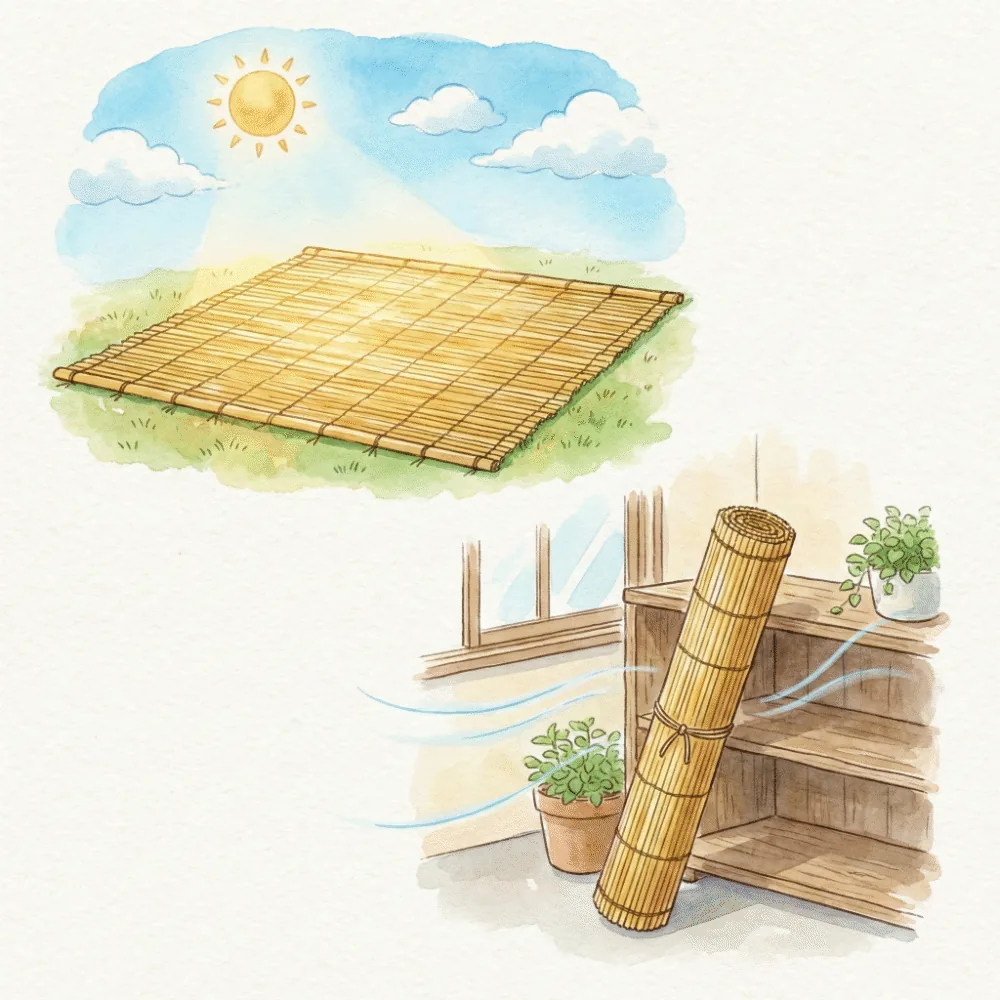
When putting your sudare away at the end of summer, wait for a dry stretch of clear weather and let it air out completely — over multiple days if needed.
Rolling it up with any trapped moisture inside creates perfect mold conditions.
If it's visibly dirty, a gentle water rinse is fine — but complete drying afterward is non-negotiable.
Store in a well-ventilated spot, laid flat (not standing upright).
Hemp noren: hand-wash gently, dry in shade to preserve texture
Machine washing causes hemp to wrinkle severely and can cause shrinkage.
Use a gentle detergent and hand-wash with pressing motions (not wringing). Keep the spin cycle brief.
Reshape while damp and dry in a shaded, ventilated spot — direct sun causes uneven fading. The result is the characteristic crisp, fresh texture that makes hemp so appealing.
8. Frequently Asked Questions
How do I attach a sudare to my window?
Use sudare hooks designed for your window type.
Home improvement stores and 100-yen shops carry hooks that clamp onto aluminum sash frames, attach with strong magnets, or use adhesive backing.
Match the hook type to your window material — aluminum, wood, or exterior wall — and check the weight rating before you buy.
What should I do when a typhoon or strong wind is forecast?
Remove or roll up and secure your sudare before strong winds arrive.
Sudare catch wind like a sail. If hooks fail, the whole panel can become a projectile — breaking windows or injuring someone nearby.
When the wind picks up, bring it inside. It's inconvenient for a day; a broken window is much worse.
My sudare has mold. Can I save it?
Surface mold can often be treated; deep mold usually means replacement.
For surface mold: brush off outdoors, wipe with diluted neutral detergent or rubbing alcohol, then dry completely.
If the binding cord or the interior of the stalks has gone black, spores are embedded too deeply and will return — replacement is the safer call.
Why are noren slit down the middle?
To make passing through easier and to let wind escape safely.
A single-panel noren would need to be lifted every time someone passes — impractical. Slits let people walk through with minimal effort.
The slits also let wind pass through without sending the whole noren flying off its rod.
Can noren and sudare work in a Western-style home?
Yes — choose your design carefully and they blend in beautifully.
For noren: solid colors or geometric patterns in hemp work naturally in modern interiors without feeling like a costume.
For sudare: charcoal-finished or carbonized reed sudare with minimal traditional markings fit easily into contemporary spaces and add a warmth that modern blinds never quite achieve.
Final Thoughts: Cooling All Five Senses, the Japanese Way
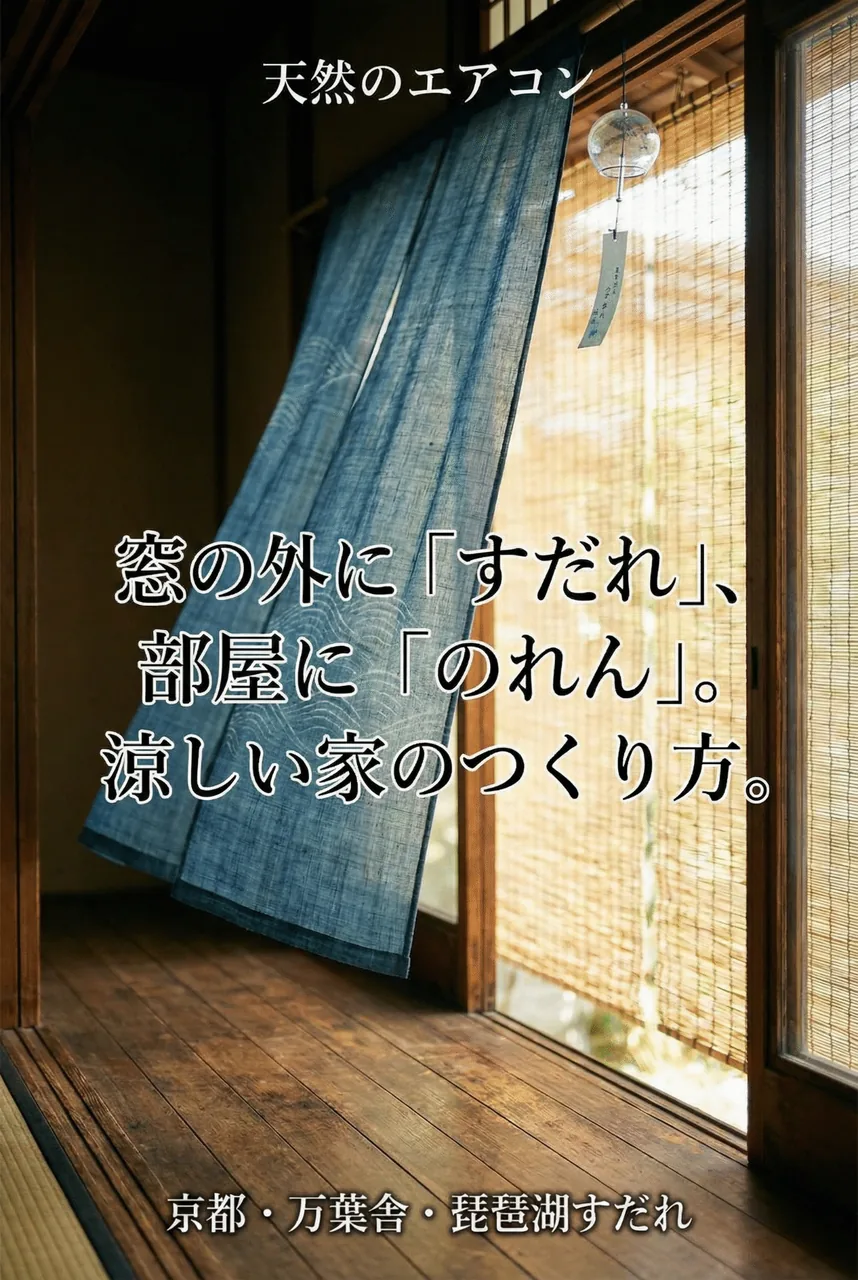
An air conditioner cools the room in minutes.
But watching noren billow, feeling the shade a sudare throws across the floor, noticing the breeze on your skin as it passes through — none of that can be replicated by a machine.
These are tools born from the accumulated wisdom of people who endured Japan's humid, relentless summers for generations.
This summer, try adding one piece of that wisdom to your home — and discover what it feels like to be cool with all five senses.