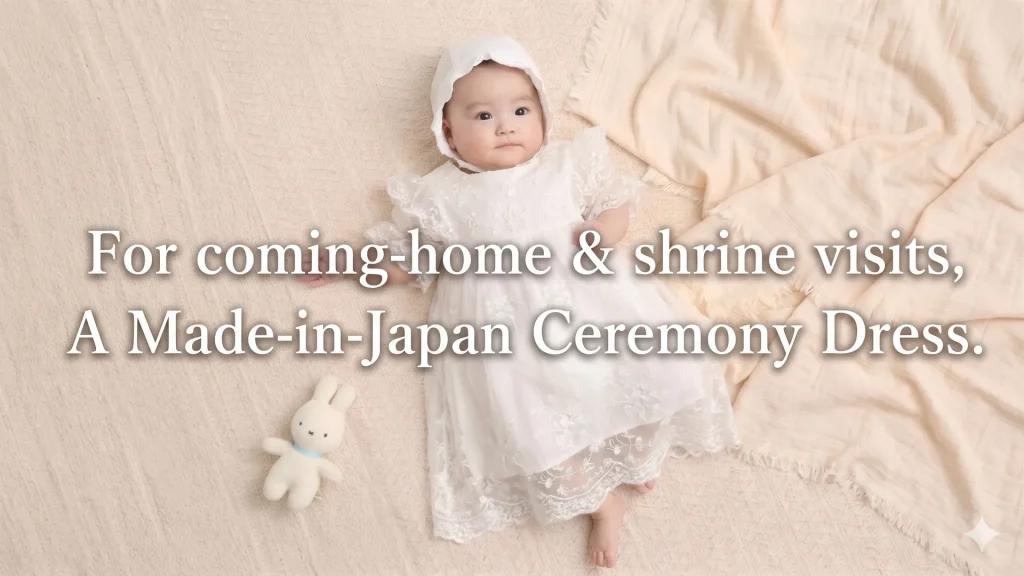
The day you leave the hospital with your newborn, or the occasion of their first shrine visit (miyamairi) to pray for a healthy life ahead.
For a baby's very first formal moment — one that will live in photographs and in memory — you want to dress them in something truly special.
This page explains how to choose a Japanese-made ceremony dress (baby dress) — one that is not only beautiful to look at, but designed with a newborn's comfort in mind. We've selected the best domestic brands whose pieces are lovely enough for a ceremony, yet wearable long after.
Quick Reference: Ceremony Dress Types at a Glance
| Type | Character | Material | Price Range |
|---|---|---|---|
| Japanese formal (iwai-gi) | Traditional style with strong photogenic presence | Pure silk / synthetic | ¥30,000–¥100,000+ |
| Western dress | Lace and embroidery, also wearable as discharge outfit | Cotton / satin | ¥5,000–¥30,000 |
| Ceremony suit | For boys; formal look | Cotton blend | ¥5,000–¥20,000 |
| Coverall | Simple, doubles as everyday wear | Cotton / gauze | ¥3,000–¥10,000 |
Why "Japanese-Made" for a Baby's First Formal Outfit?
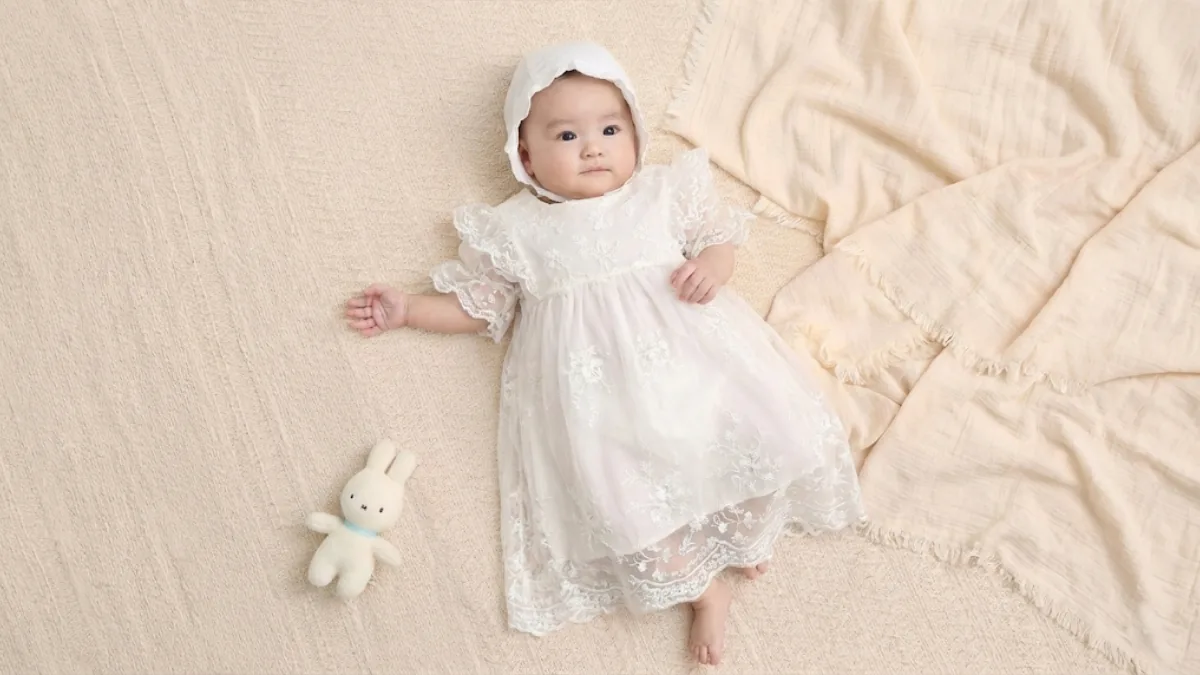
Lace and embroidery that don't scratch
Lace and embroidery are what make a ceremony dress beautiful — but for a newborn's delicate skin, they can be an irritant.
High-quality Japanese-made dresses are constructed so that lace never contacts the skin directly: a lining is added, and any area that touches the body uses 100% cotton gauze or smooth jersey. The result is a dress that looks like formalwear but feels like a onesie from the inside. A baby who stays comfortable and content is the key to getting that beautiful photo.
A "white" that photographs beautifully
Inexpensive synthetic whites can read as bluish or cheap under certain lighting — and it shows in photos.
Most domestic brands use premium cotton grown and milled in Japan, or satin with a refined, soft luster. The "natural white" or warm off-white (kinari) that results from quality fabric reflects light gently and makes a newborn's complexion look bright and healthy in every shot.
Long Coat or 2-Way All? How to Choose Your Style
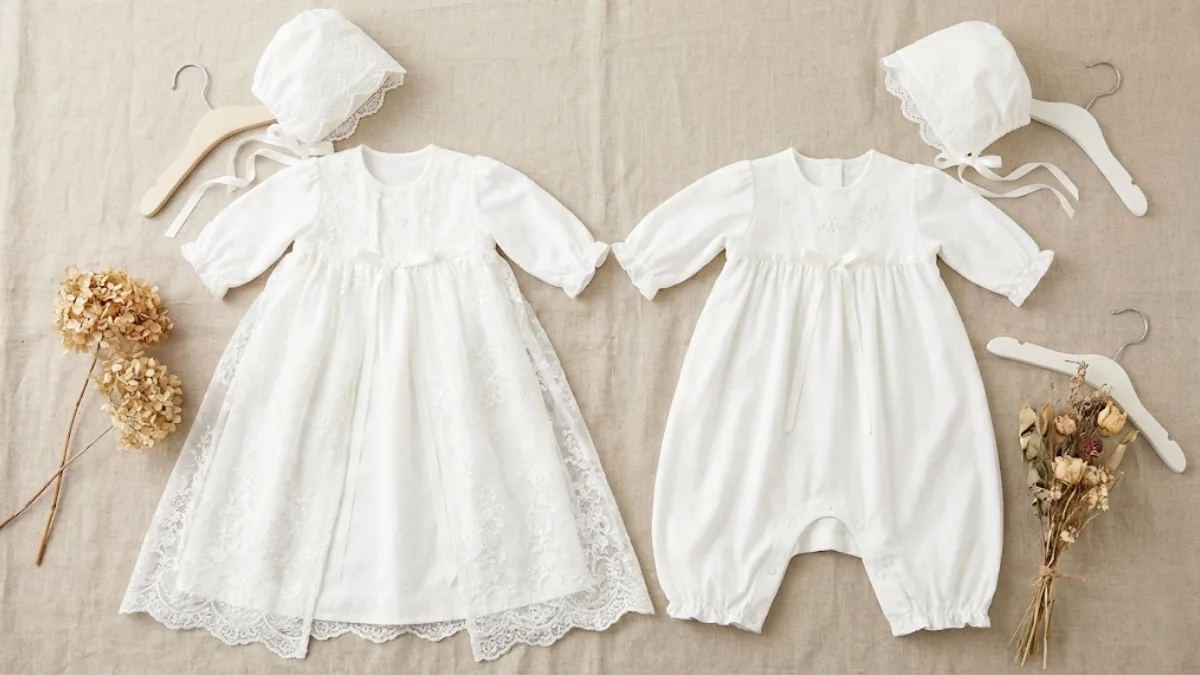
1. The spectacular "long coat" style
A lace over-dress (coat) that falls to the feet, worn over an inner coverall — sold as a set. The volume is impressive, and the lace fans out beautifully when the baby is held.
This is the choice for parents prioritizing a miyamairi or professional photo shoot. Many sets allow the inner coverall to be used separately as everyday wear afterward.
2. The practical "2-way all" style
It looks like a dress, but the snaps at the crotch convert it into a romper. Most designs lean elegant rather than elaborate, making them ideal not just for hospital discharge, but as a going-out outfit for the first several months.
3. The simple "pure white" style
For parents who prefer "we'd rather skip the frills" or "we just want something clean and beautiful for the ride home" — a premium plain white garment has its own quiet dignity. Choose quality pile or quilted fabric and the result is every bit as sacred and memorable as any lace dress, with none of the fuss.
4 Japanese-Made Ceremony Dresses Worth the Photo
From the brands featured on Made in JAPAN.JP, here are four domestic labels whose quality and design are genuinely suited to a baby's most important formal moments.
mon-ange-robe
Angel-soft loveliness, made in Japan. Refined enough to wear once — practical enough to wear again.
mon-ange-robe is a brand defined by careful domestic sewing from skilled craftspeople. Their specialty is delicate lace and ribbon details that remain tasteful rather than excessive — a natural for hospital discharge and miyamairi alike.
Their 2-way all line is particularly strong, with several models using organic cotton for extra skin gentleness. Sets that include a matching bonnet and bib make coordinating effortless.
Best for: Parents who love refined, feminine designs and want bonnet-to-outfit coordination right out of the box.
Akachan no Shiro (Baby's Castle)
The classic choice. A timeless brand trusted by parents — and grandparents — for generations.
Akachan no Shiro ceremony dresses are sold in department stores nationwide and are recognized for their timeless, formal designs that resist fashion trends. From full long-coat sets to petit formal styles, the range is genuinely broad.
Every piece is managed through their own factory from sewing to final inspection. For parents who want to hand something down that will hold up as a keepsake, this is a brand you can trust completely.
Best for: Parents seeking a traditional long-dress look, or anyone who wants a brand that grandparents will immediately recognize and approve of.
COFUCU
For those who aren't lace people. Organic cotton knit dresses with ceremony-worthy beauty.
If "frill-heavy lace" isn't your style, COFUCU's knit dresses are the answer. Made from GOTS-certified organic cotton, they achieve a formal, celebratory look through beautiful openwork and cable-knit patterns rather than lace.
The warm off-white (kinari) tones blend naturally into everyday life after the ceremony. Gender-neutral designs make them an easy fit for any family with a natural, unfussy aesthetic.
Best for: Natural-style parents, or anyone looking for a beautiful alternative to traditional lace.
PUPO
Pure white simplicity. For the family that wants a discharge outfit that's theirs.
PUPO's offering is less "dress" and more "an exceptionally well-made white 2-way all." They skip elaborate decoration and instead let the fabric — openwork knit, fluffy pile — do the quiet, beautiful work of dressing a baby with dignity.
Perfect for parents who think "we're just driving home, we don't need a gown — but we still want something lovely." Priced accessibly, and genuinely useful long after the ceremony as daily pajamas and outerwear.
Best for: Minimalist parents, or those who want something they'll actually keep putting on the baby after the big day.
Column: Is Lace on a Baby Boy Strange?
"Is it really okay to dress a boy in frilly lace?" is a question many parents ask — and the answer is absolutely yes.
Royal families across Europe have a long tradition of dressing boys in lace ceremony dresses for christenings. When it comes to a baby's formal moment, gender is simply not part of the consideration. In fact, there's a case to be made that the elaborate lace and dress look is a privilege unique to babyhood — one that disappears all too quickly.
If you'd prefer something that reads more neutral, COFUCU's knit styles, tuxedo-inspired designs, or a clean simple white 2-way all are all beautiful and entirely appropriate options.
Frequently Asked Questions
Should I dress my baby in Japanese or Western style for miyamairi?
Either is perfectly fine. Japanese formal wear (iwai-gi) carries a more traditional, formal feel, but dressing a newborn in it can be complicated.
Western-style ceremony dresses are easier to put on, double as hospital discharge outfits, and remain popular for exactly that practicality.
Should I rent or buy a ceremony dress?
Buying is generally recommended, since the outfit will be captured in photos you'll keep forever. Japanese-made ceremony dresses hold up well enough to be passed on to a younger sibling.
Many parents choose to purchase specifically because the discharge outfit is a once-in-a-lifetime moment they want to own, not return.
Is it okay to put a lace dress on a baby boy?
Completely fine. European royal families have a centuries-old tradition of dressing boys in lace for christenings.
If lace feels like too much, knit styles or tuxedo-inspired designs are equally charming alternatives.
When should I buy a ceremony dress to be ready in time?
Start shopping as soon as your discharge date is confirmed.
Preparing before the birth is also fine. If you're ordering a personalized or custom piece, allow at least two to three weeks for delivery.
How do I wash a ceremony dress?
For cotton garments, placing them in a laundry net and using a delicate or hand-wash cycle is generally safe.
Dresses with significant satin or lace are best taken to a dry cleaner. Always check the care label on the garment before washing.
Can a ceremony dress be used as everyday wear afterward?
2-way all styles are very wearable as daily outfits once the outer dress layer is removed.
Styles like COFUCU's knit designs, with minimal decoration, work well as going-out clothes for the first several months after birth.
Hospital discharge and miyamairi each happen exactly once in a baby's life.
A ceremony dress sewn with care by Japanese craftspeople will make those moments warmer, more beautiful, and more meaningful. We hope you find the perfect one.
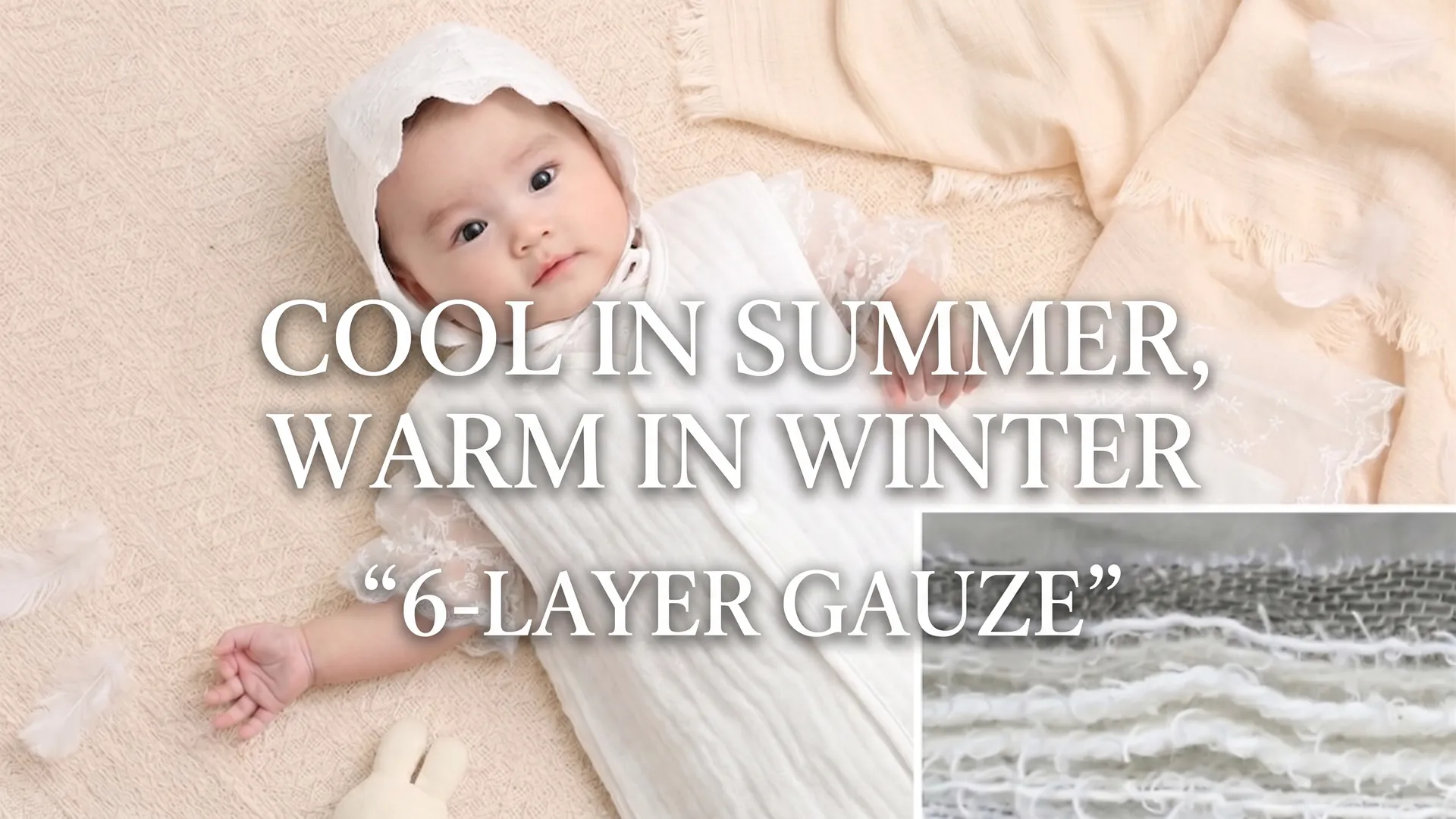
Cool in Summer, Warm in Winter — Why Six-Layer Gauze Is a Baby Essential
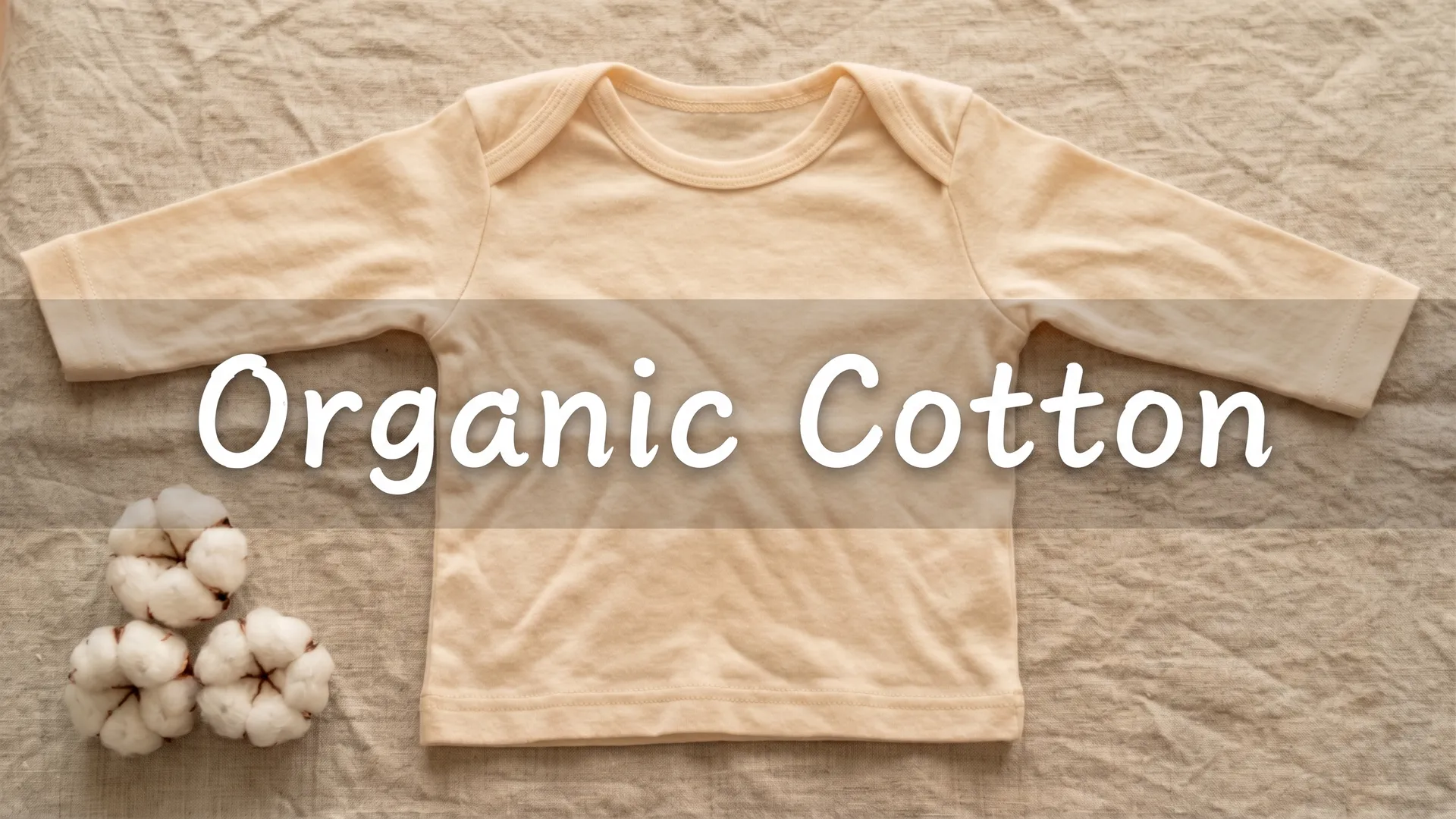
How to Choose Japanese-Made Organic Cotton Baby Clothes