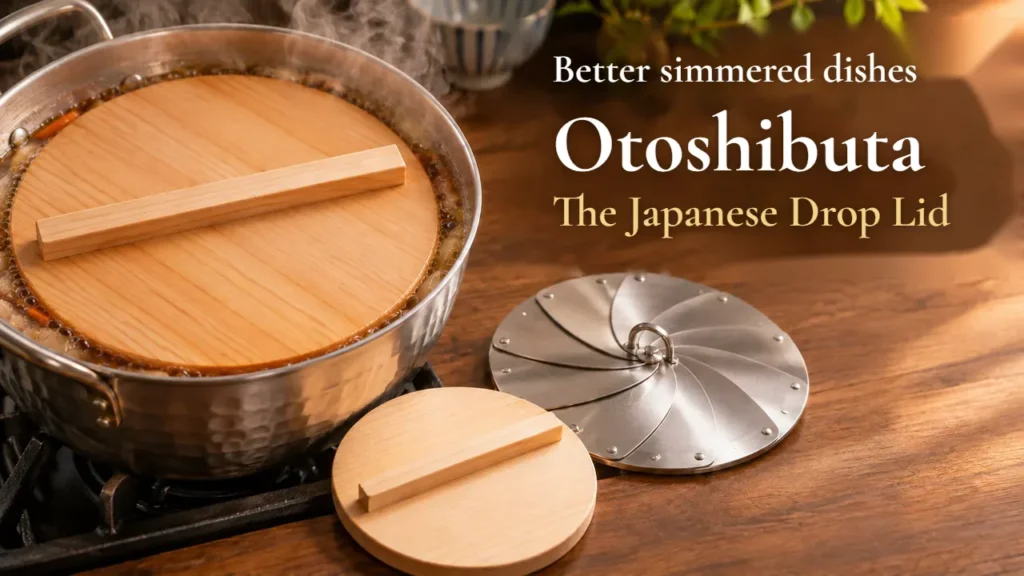
Same recipe, yet the flavor never soaks in, or the potatoes fall apart. The difference may not be the heat or the seasoning, but the lid.
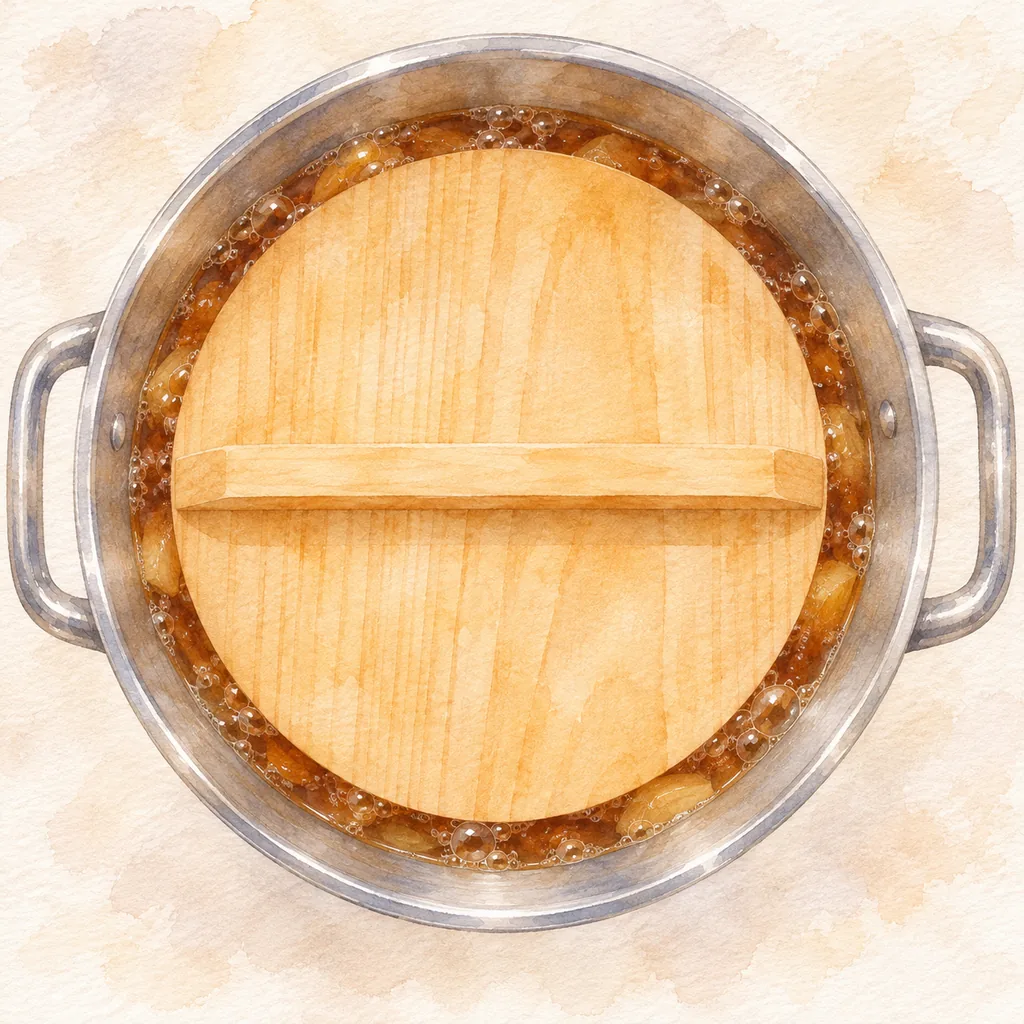
An otoshibuta, literally a "dropped lid," is a small lid that sits directly on the food inside the pot, not on the rim. It sends the simmering broth back over everything, keeps the pieces from tumbling into each other, and lets the flavor soak in. It is a humble tool, but Japanese simmered dishes depend on it, and the material changes how it works.
This guide covers three made-in-Japan drop lids you can buy on Amazon.com: an adjustable stainless lid from Tsubame, Kiso sawara and cedar, plus clever designs sold in Japan, how to size one, and how to look after a wooden lid.
Quick Reference: Japanese Drop Lids at a Glance
| Drop lid | Material, size | Why choose it | Where to buy |
|---|---|---|---|
| Metal | |||
| Shimomura Kogyo FO-1 ▾ | Stainless, 14 to 23 cm | One lid for every pot; doubles as a steamer rack | Amazon.com |
| Nagao Otoshibuta de R ▾ | Stainless, 14.5 to 23 cm | Twist to resize, no steps | Sold in Japan |
| Hokuriku Alumi Steam Plate ▾ | Anodized aluminum, 19 cm | A steamer plate; flip it for a drop lid | Sold in Japan |
| Wood | |||
| WASHO Kiso Sawara ▾ | Sawara cypress, 16 cm | Classic wooden lid for small pots | Amazon.com |
| Pearl Metal Cedar ▾ | Cedar, 20 cm | An easy first wooden lid | Amazon.com |
| Sawara Skimming Drop Lid ▾ | Sawara, 18 cm | Grooves skim off the scum | Sold in Japan |
Tap a name to jump to its review.
1. Why Japanese: Simmering With Very Little Broth
Japanese home cooking leans on nimono, simmered dishes: nikujaga (beef and potatoes), buri daikon (yellowtail with daikon radish), kabocha squash, braised fish. They are cooked in a shallow pool of dashi, soy sauce, mirin and sugar rather than a pot full of liquid, so the seasoning stays concentrated and the vegetables keep their shape.
The catch is that a shallow broth only touches the bottom of the food. The drop lid solves that: the bubbling broth hits the lid and runs back over the top of every piece. Western cooks do something similar with a circle of parchment paper (the French call it a cartouche); in Japan, it became a dedicated, reusable tool, and every kitchen has one.
2. What a Drop Lid Does, and Wood or Metal
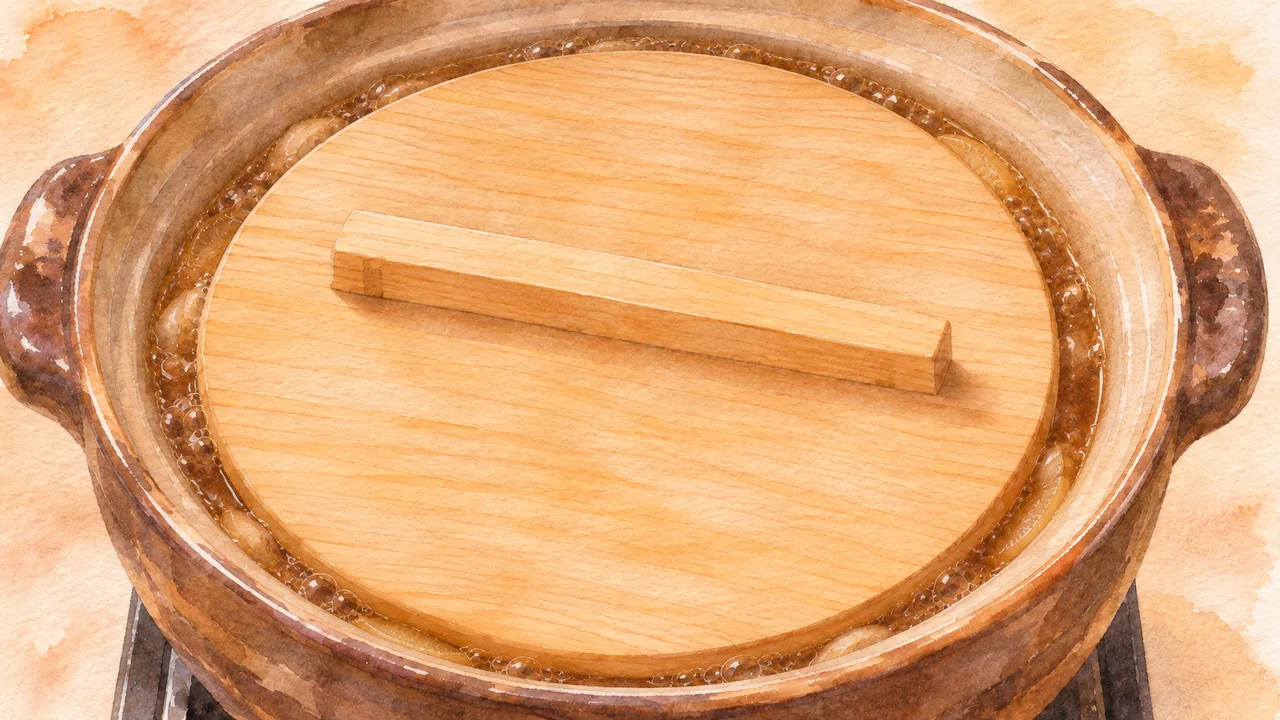
The broth circulates; the food stays still
A drop lid is said to do several jobs at once. It spreads the broth over everything, so even a little liquid seasons the top of the food. It keeps food from breaking apart by holding the pieces gently so they don't tumble and knock into each other. And it slows sudden boiling-down and boil-overs.
Wood or metal?
A wooden lid is the traditional choice: its gentle weight holds food down softly, and it settles into the broth. A metal lid can come in adjustable sizes or double as a steamer, and it washes and dries easily. Choose by what you cook and how much care you want to give it.
3. Metal Drop Lids: Adjustable, or a Steamer Too
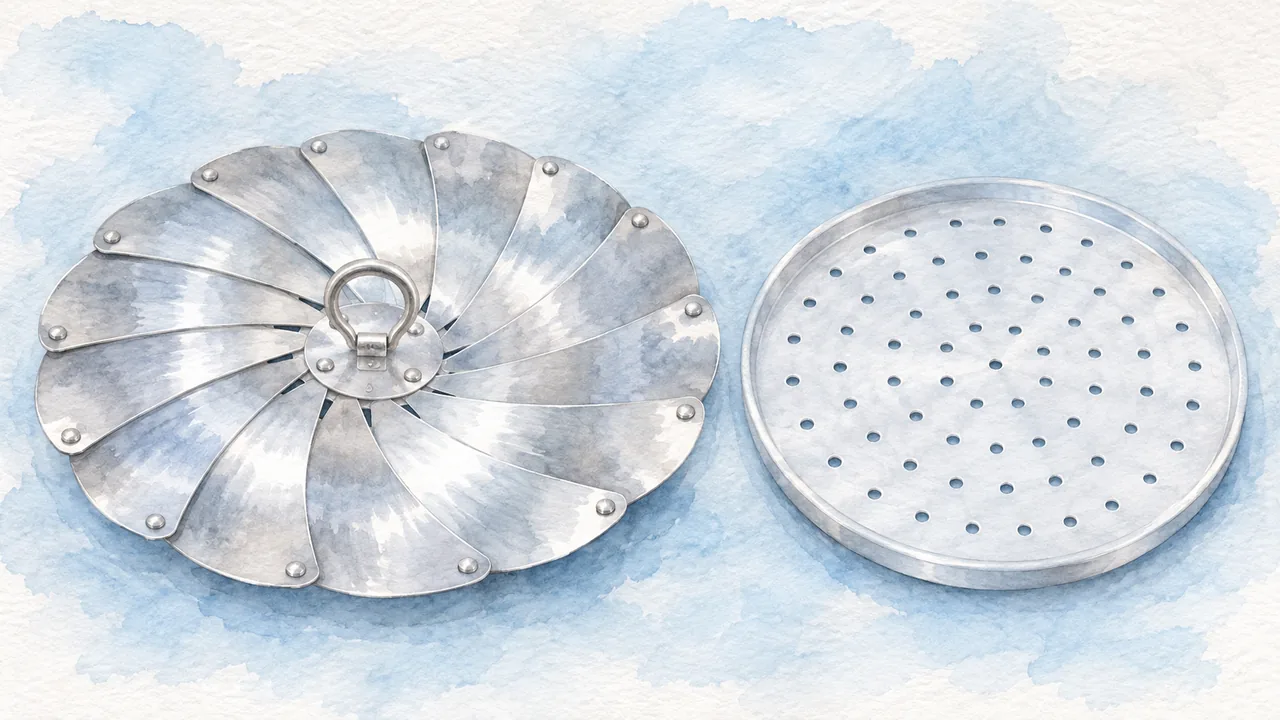
Shimomura Kogyo FO-1 Adjustable Stainless Drop Lid: one lid, every pot, and a steamer
A free-size stainless drop lid from Shimomura Kogyo of Tsubame-Sanjo, Niigata. Overlapping plates fan out from 14 to 23 cm, so it fits pots of roughly 16 to 26 cm. It came from a home cook's idea, and it also works as a steamer rack.
Being stainless, it goes in the dishwasher, with none of the drying a wooden lid needs. Japanese users say it made skimming easier and that they no longer throw away a disc of foil every time.
Shimomura Kogyo FO-1 Adjustable Stainless Drop Lid (Otoshibuta), 140-230 mm
Loading product details…
Nagao Otoshibuta de R: twist to resize
A free-size drop lid made in Tsubame, Niigata, Japan's stainless steel town. It adjusts steplessly from 145 to 230 mm: grab it and twist. Tough, rust-resistant stainless, about 200 g, and one lid replaces a drawer full of sizes. Sold in Japan.
Hokuriku Alumi Steam Plate: a steamer plate that flips into a drop lid
Set it in a pot or frying pan and you have a steamer; turn it over and it is a drop lid. Anodized aluminum, easy to clean, about 19 cm across for pots and pans 20 cm and wider inside. One tool, two jobs, little storage space. Sold in Japan.
4. Wooden Drop Lids: Sawara and Cedar
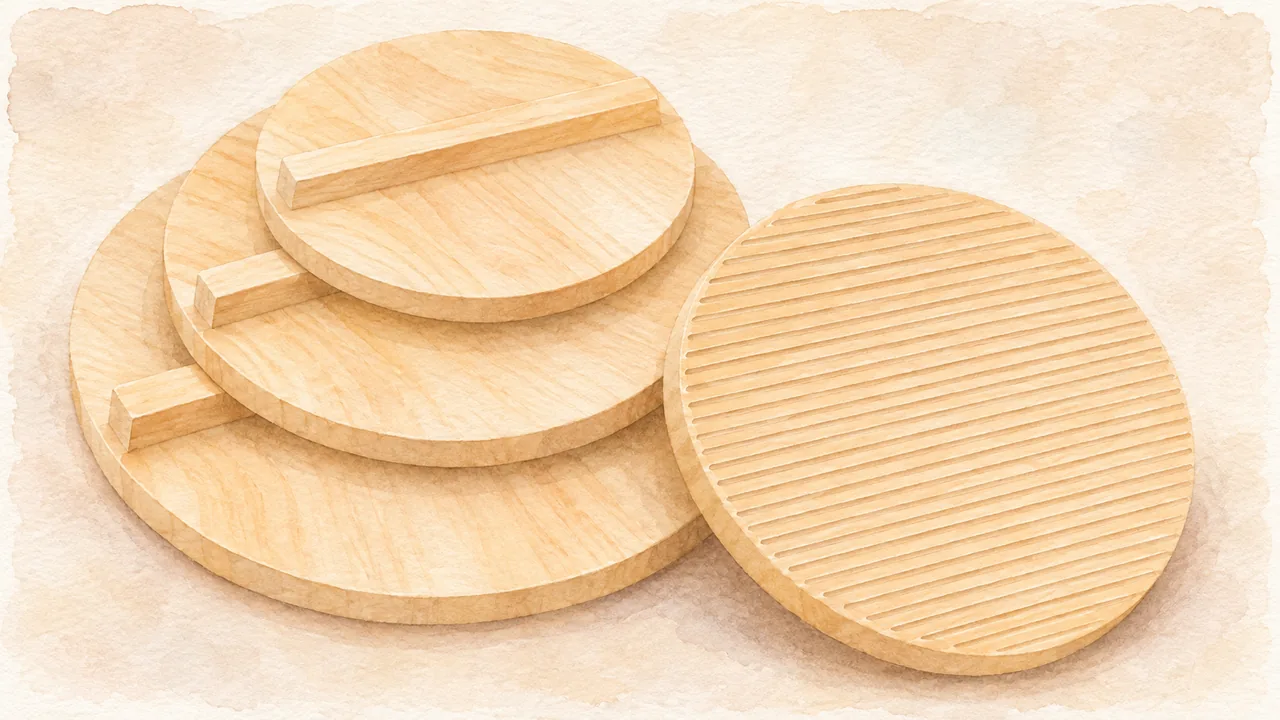
WASHO Kiso Sawara Wooden Drop Lid 16 cm: the classic, for small pots
A wooden drop lid of Kiso sawara, a Japanese cypress from the Kiso valley in Nagano. Sawara is a pale, light wood long used for Japanese kitchen tools. The 16 cm size suits a pot of about 18 cm, the size you'd use for a small batch of simmered vegetables or fish.
WASHO Kiso Sawara Wooden Drop Lid (Otoshibuta), 16 cm
Loading product details…
Pearl Metal Wooden Drop Lid C-4807, Cedar, 20 cm: an easy first wooden lid
A cedar drop lid from Pearl Metal, the Tsubame-Sanjo housewares maker. At 20 cm it fits a pot of about 22 cm, a family-size batch of nikujaga. It is an inexpensive way to try cooking with a wooden lid.
Pearl Metal Wooden Drop Lid C-4807, Cedar, 20 cm
Loading product details…
Temahima Kobo Drop Lid, Sawara or Hinoki: unfinished wood, six sizes (sold in Japan)
An unfinished drop lid of sawara or hinoki cypress. It keeps the broth moving, stops food breaking up and lets flavor soak to the center. Handmade from natural wood, so each varies slightly in color and size. Six sizes from about 14 to 24 cm; 18 cm weighs about 100 g. Hand-wash only. Sold in Japan.
Sawara Skimming Drop Lid: grooves that lift the scum (sold in Japan)
A drop lid born from a home cook's idea, with many grooves cut into its underside. Stroke it across the surface of the broth and it picks up the scum in one go; rinse it off under the tap. Far fewer trips with a ladle mid-simmer.
The grooves also help the broth circulate. Unfinished sawara, about 18 cm, with a handle so you can prop it at an angle to drain and dry. Sold in Japan.
5. Sizing: A Little Smaller Than the Pot
Leave a gap at the edge
Choose a drop lid a size smaller than the pot you'll use it in. A small gap around the edge is said to let steam escape and broth well up around the lid.
As a rule of thumb, an 18 cm pot takes a lid of about 16 cm. Pick a wooden lid to match the pot you use most; if your pots vary, an adjustable stainless lid covers them all.
6. Using and Caring for a Wooden Lid
Wet it first
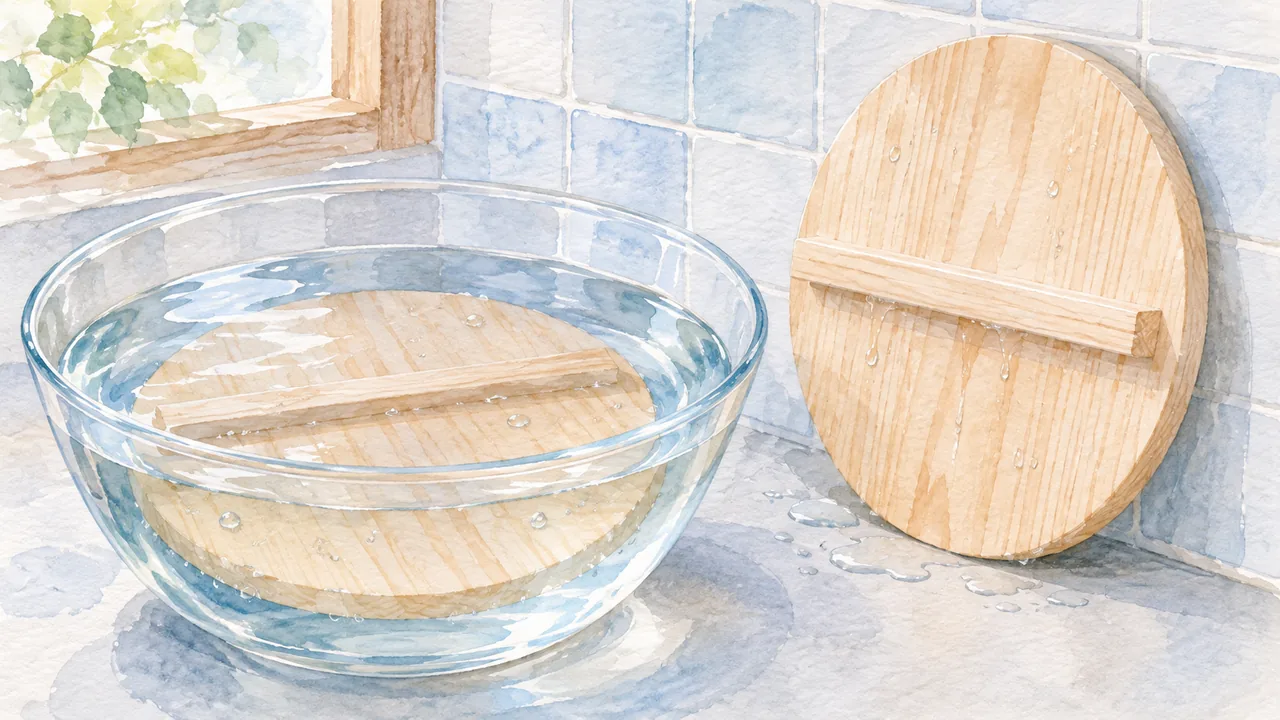
It is usually advised to dip a wooden drop lid in water before it goes into the pot. A dry lid soaks up broth, color and smell; a damp one absorbs less, so the next dish won't pick up the last one's aroma.
Wash it, stand it up to dry
Afterward, wash it with a brush or sponge and dry it thoroughly. Stacked or put away wet, it can mold or darken. Propping it at an angle by its handle helps it drain and dry fast. Keep wooden lids out of the dishwasher.
7. Frequently Asked Questions
What is an otoshibuta in English?
A "drop lid." Otoshi means "dropped" and buta (from futa) means "lid": a lid dropped inside the pot to rest on the food. The closest Western equivalent is a circle of parchment paper laid on a braise.
Wood or metal: which drop lid is better?
Wood if you simmer often and like the traditional feel; metal if you want easy care and flexible sizing. Wood holds food down gently with its weight. Stainless and aluminum wash and dry easily.
What size drop lid do I need?
A size smaller than the inside of your pot: about 16 cm for an 18 cm pot. For several pot sizes, an adjustable stainless lid is the easy answer.
What can I use if I don't have a drop lid?
Cut parchment paper or aluminum foil into a circle a little smaller than the pot, and poke a few holes in it. If cutting and throwing one away every time gets tiresome, a reusable drop lid pays for itself.
How do I keep a wooden drop lid from going moldy?
Wash it soon after use and prop it up to dry completely. Don't stack it or put it away while damp.
What dishes is it used for?
Almost any simmered dish. Nikujaga, chikuzenni (chicken and root vegetables), buri daikon, simmered kabocha and braised fish: anything you want to season with little broth, or keep from falling apart. It works just as well on a Western braise.
8. Final Thoughts: One Lid Changes a Simmered Dish
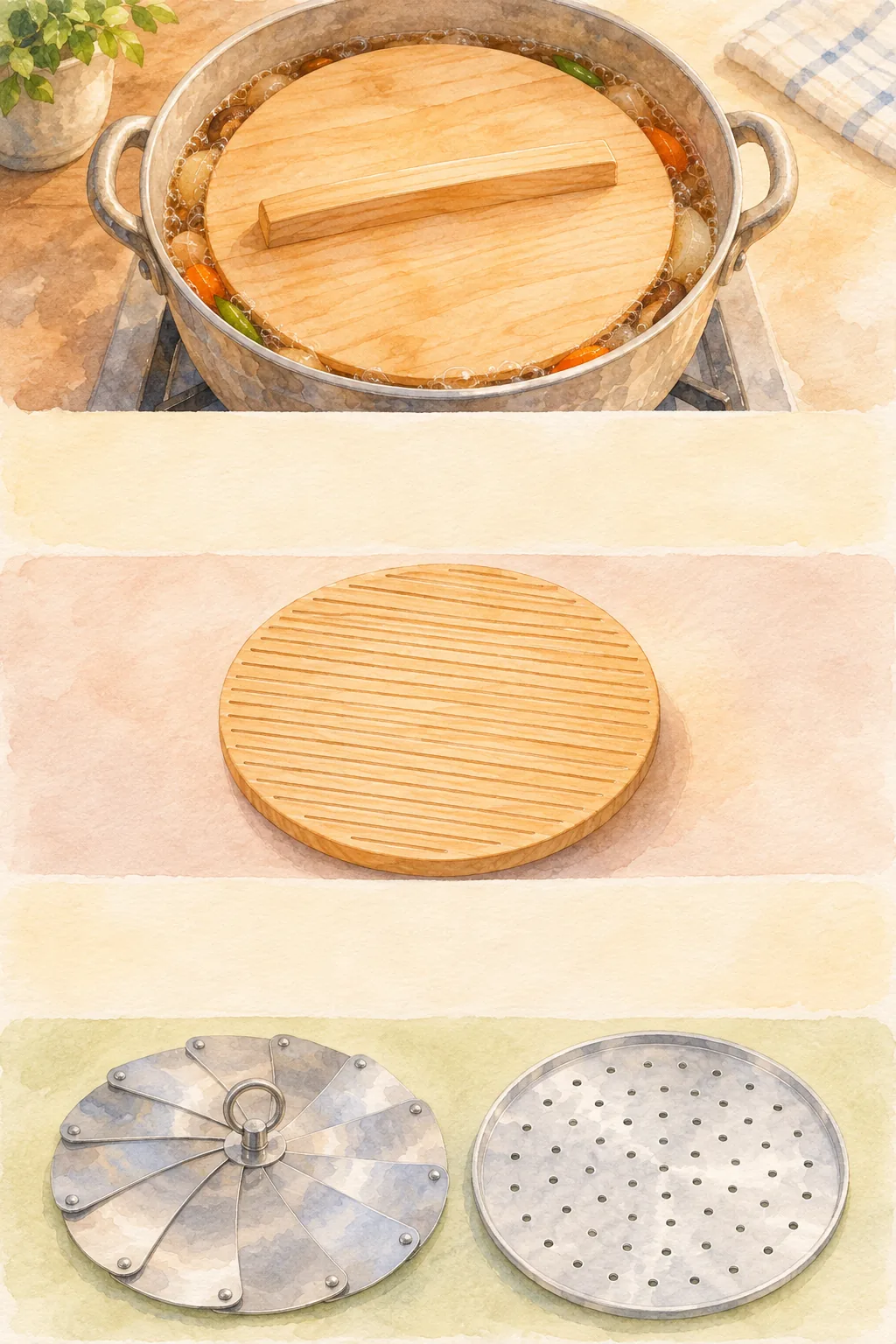
A drop lid is chosen by its material.
Shimomura Kogyo's stainless lid that fits every pot and steams too. Kiso sawara and cedar for the traditional feel. In Japan, Temahima Kobo's unfinished sawara and hinoki, a sawara lid that skims scum with its grooves, Nagao's twist-to-resize stainless, and an aluminum steamer plate that flips into a lid. Each is a Japanese tool for making everyday simmered dishes taste better.
Add one lid to your usual braise.

Yukihira Nabe: Japan's Everyday Saucepan, Explained

Japanese Stew Pots: Vermicular, and the 0.01mm Lid