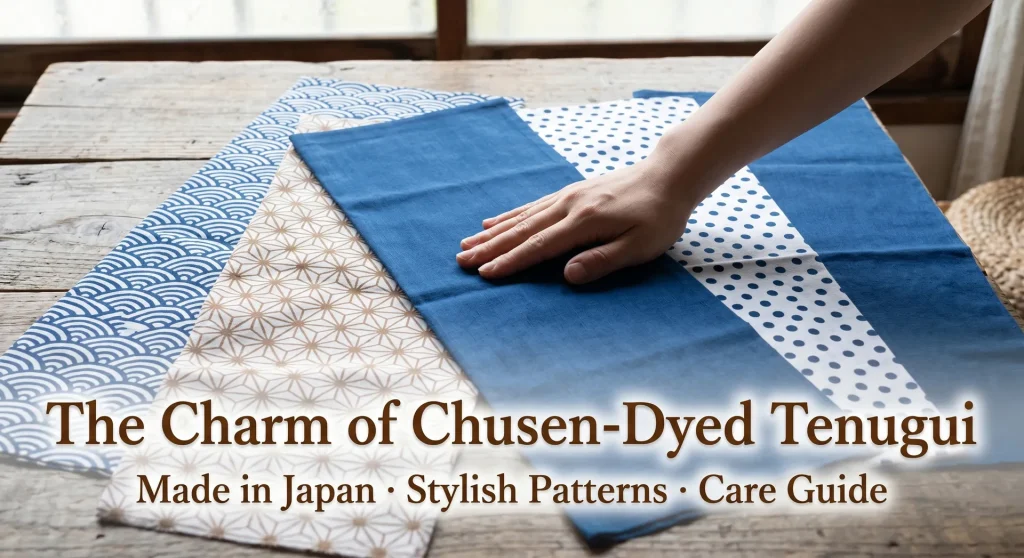
If you're buying tenugui, choose chusen-dyed. The difference between a
hand-poured chusen tenugui and a cheap printed version isn't subtle — it's the difference between
a cloth that gets better with every wash and one that stiffens and fades from day one.
Tenugui (手ぬぐい) is a rectangular cotton cloth, roughly 35 × 90 cm, with no hem on the short
ends. That raw edge isn't a flaw — it's intentional, and the reason is more interesting than
you'd expect.
This guide covers what makes chusen dyeing special, why the unfinished edges are a feature,
the traditional patterns worth knowing, the three brands that define the category, and how to
care for a tenugui so it grows into something better than new.
Quick Reference: Tenugui at a Glance
| Feature | Printed Tenugui | Chusen-Dyed Tenugui |
|---|---|---|
| Dye method | Ink applied to surface only | Dye poured through stacked fabric layers |
| Reverse side | White or pale — no dye penetration | Fully coloured on both sides |
| Absorbency | Reduced — surface ink blocks fibres | Excellent — fibres remain open |
| With age | Stiffens, fades unevenly | Softens, colour settles beautifully |
| Edge finish | Often hemmed | Raw cut — dries faster, can be torn for emergencies |
| Top brands | — | Kamawanu, Nijiyura, Rienzen (Todaya) |
1. Chusen Dyeing vs. Printed — Why It Matters
The single most important decision when buying tenugui is how it was dyed. Choose chusen (注染) and you won't go wrong.
Both sides dyed, fibres fully open
Printed (pigment):
Ink sits on the fabric surface. The reverse stays white. The coating partially blocks the
fibres, reducing absorbency and giving the cloth a slightly stiff hand.
Chusen (hand-poured dye):
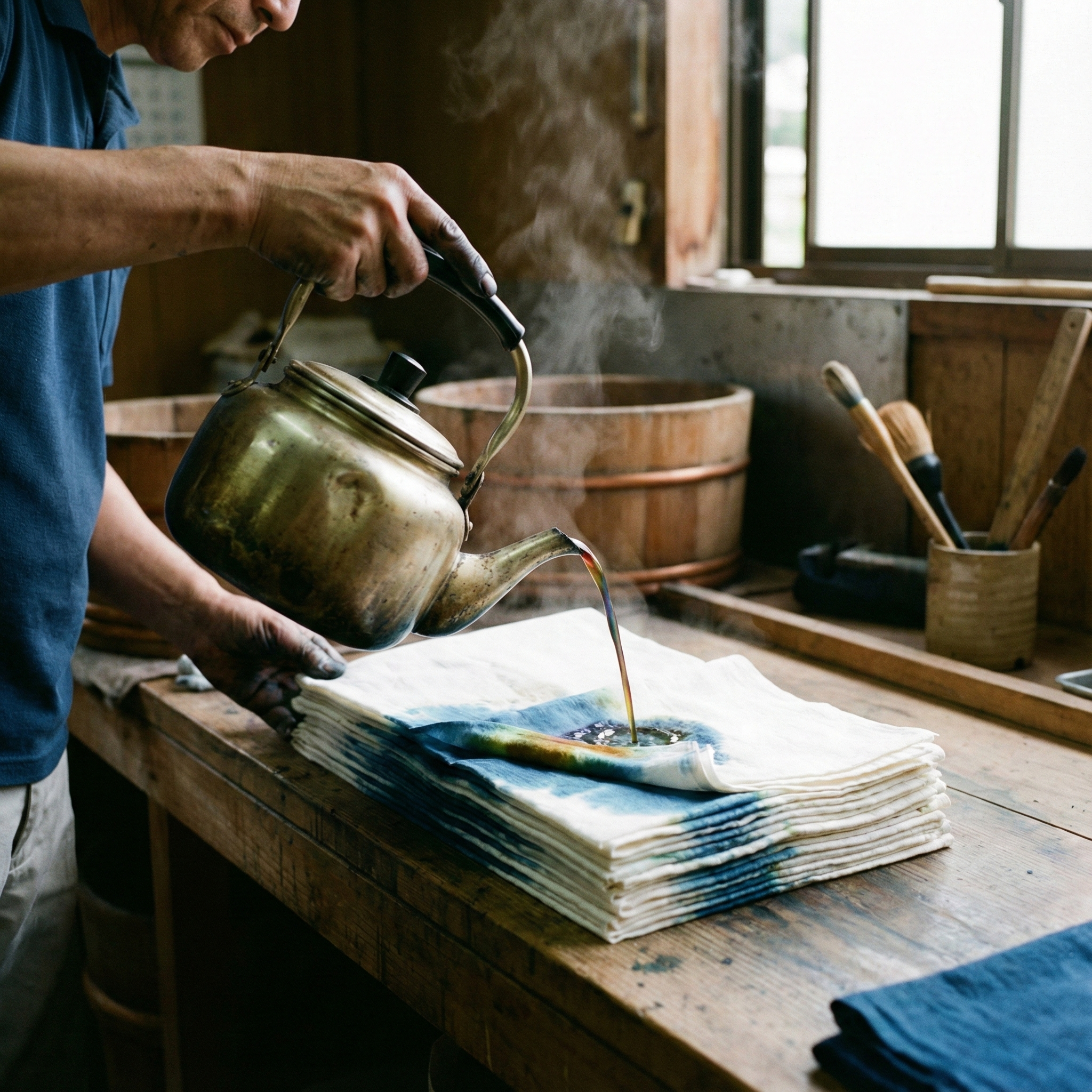
Multiple layers of cloth are stacked together and dye is literally poured from above,
soaking through to the core of each fibre. The result: both sides are fully and
evenly coloured, there is no "front" and "back" distinction, and the fibres
remain unblocked — so absorbency and breathability are excellent from the start.
Each wash softens the cloth further. After a year of daily use, a chusen tenugui feels
nothing like it did new.
2. Why the Edges Are Left Unfinished
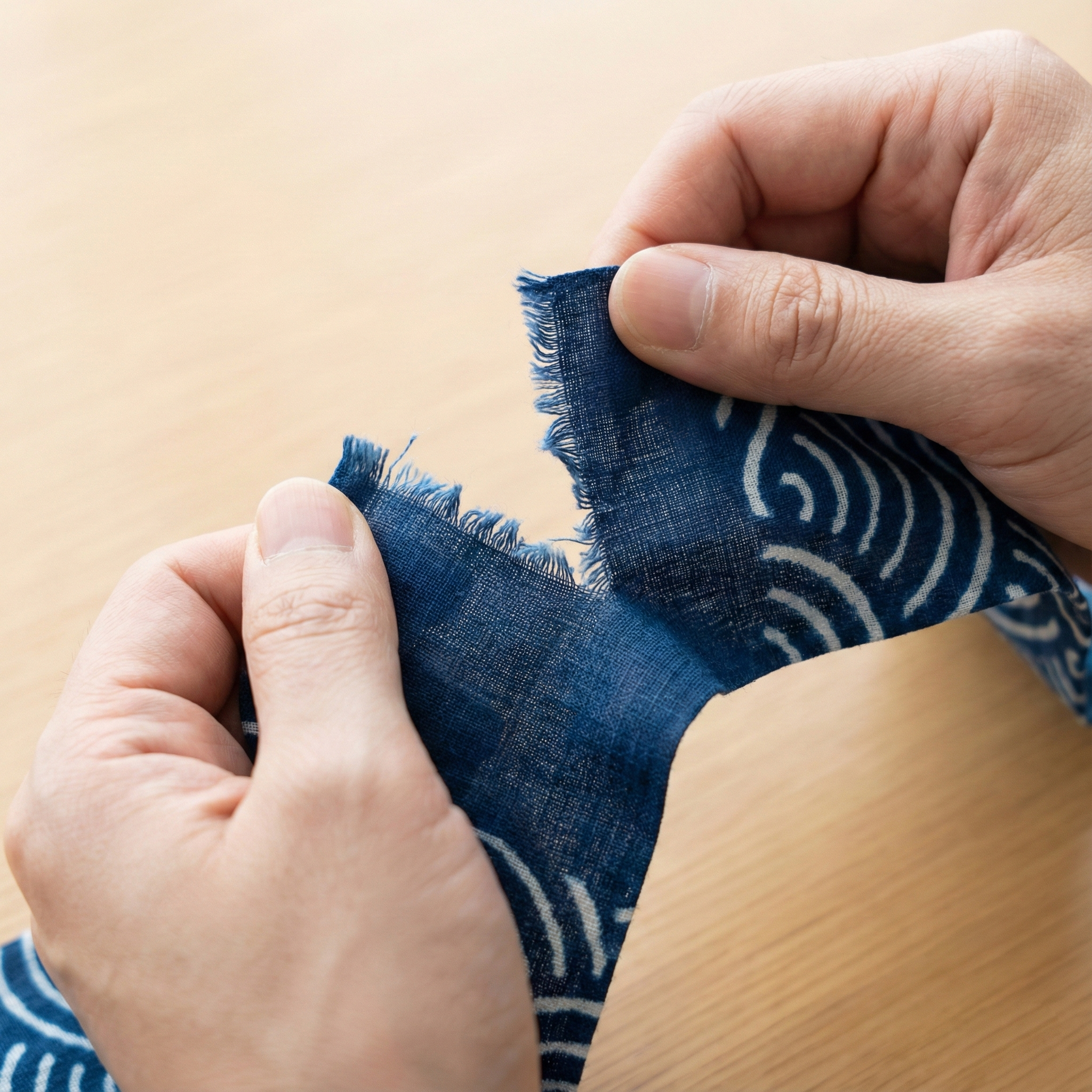
First-time buyers often notice that the short ends of a tenugui are not hemmed — threads will start to fray after the first wash. This is not a defect. It is a deliberate design choice with two practical reasons behind it.
Reason 1: It dries faster and stays cleaner
A hemmed edge traps moisture in the fold. In Japan's hot, humid summers that trapped
water becomes a breeding ground for bacteria and mould.
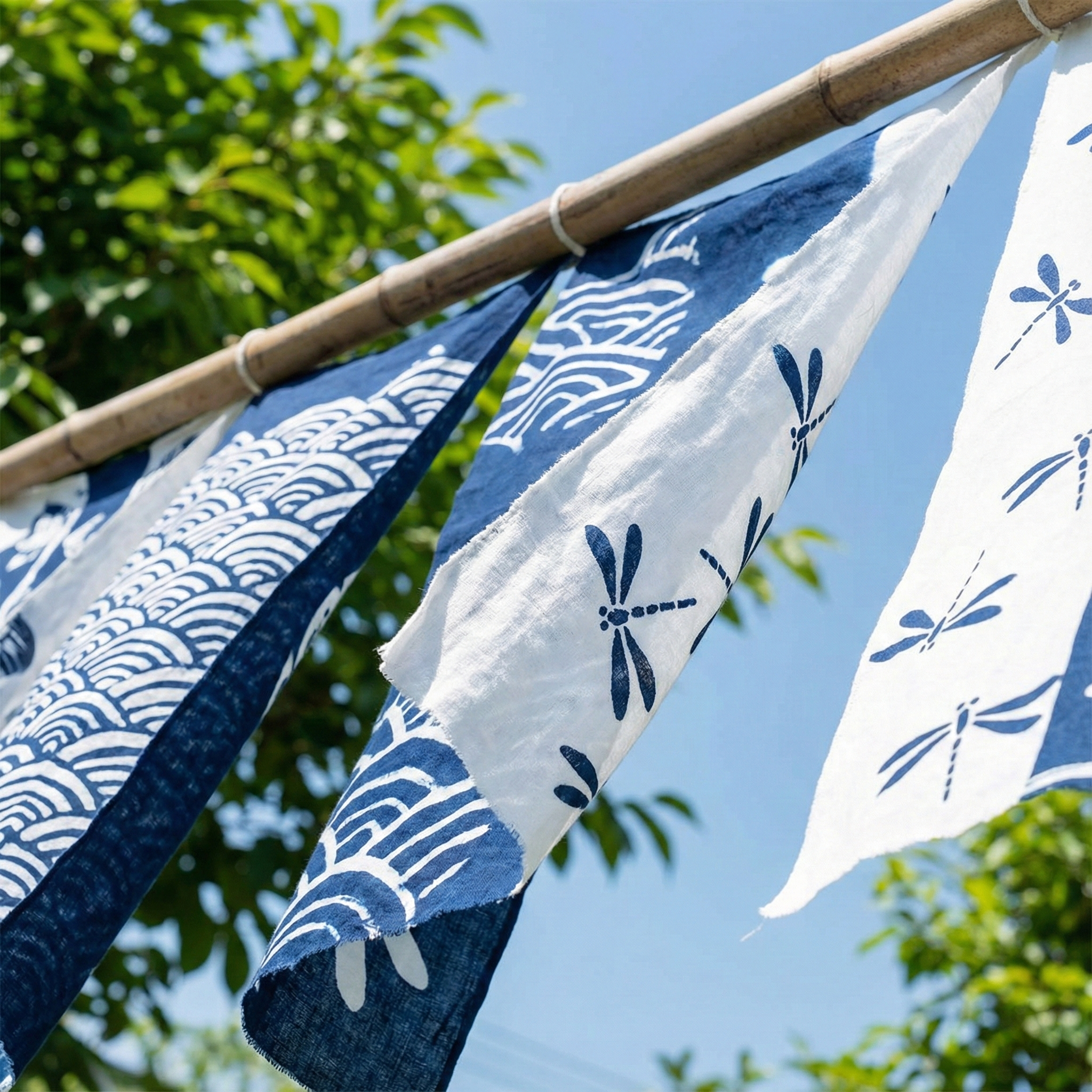
The raw cut lets water drain freely — a tenugui dries remarkably quickly, which is
why it was the tool of choice for public bath-houses for centuries.
Fast drying equals a cleaner cloth.
Reason 2: It can be torn into strips when needed
Historically, tenugui could be torn by hand into bandages for injuries, or into cord
to repair a broken sandal strap. A hemmed edge cannot be torn cleanly.
Tenugui was always a survival tool as much as a cleaning cloth — and
the raw edge is what made that possible.
3. How to Use Tenugui: Wrap, Display, Wear
Using it only as a hand towel is underusing it significantly. Here are three ways tenugui earns its place in a modern home.
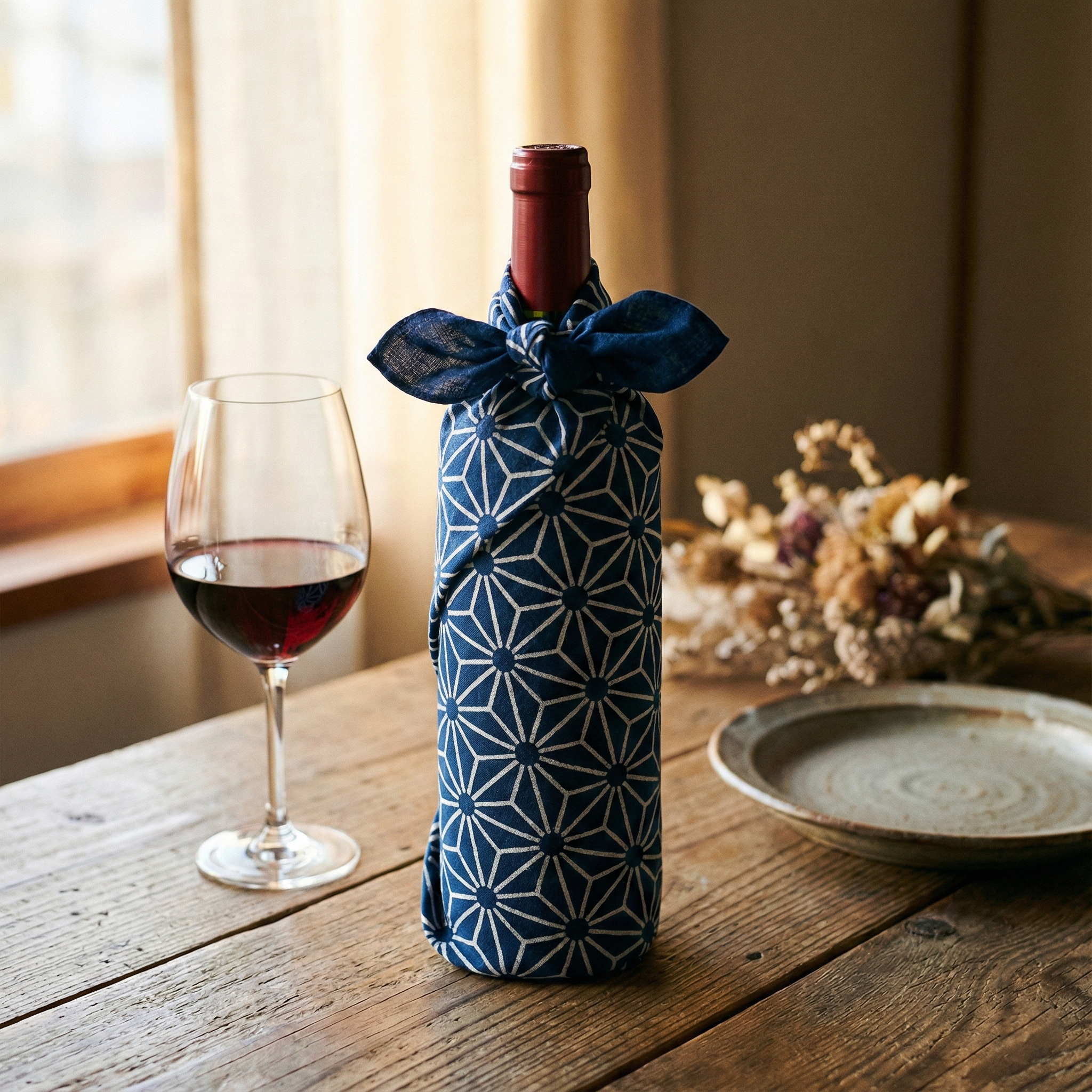
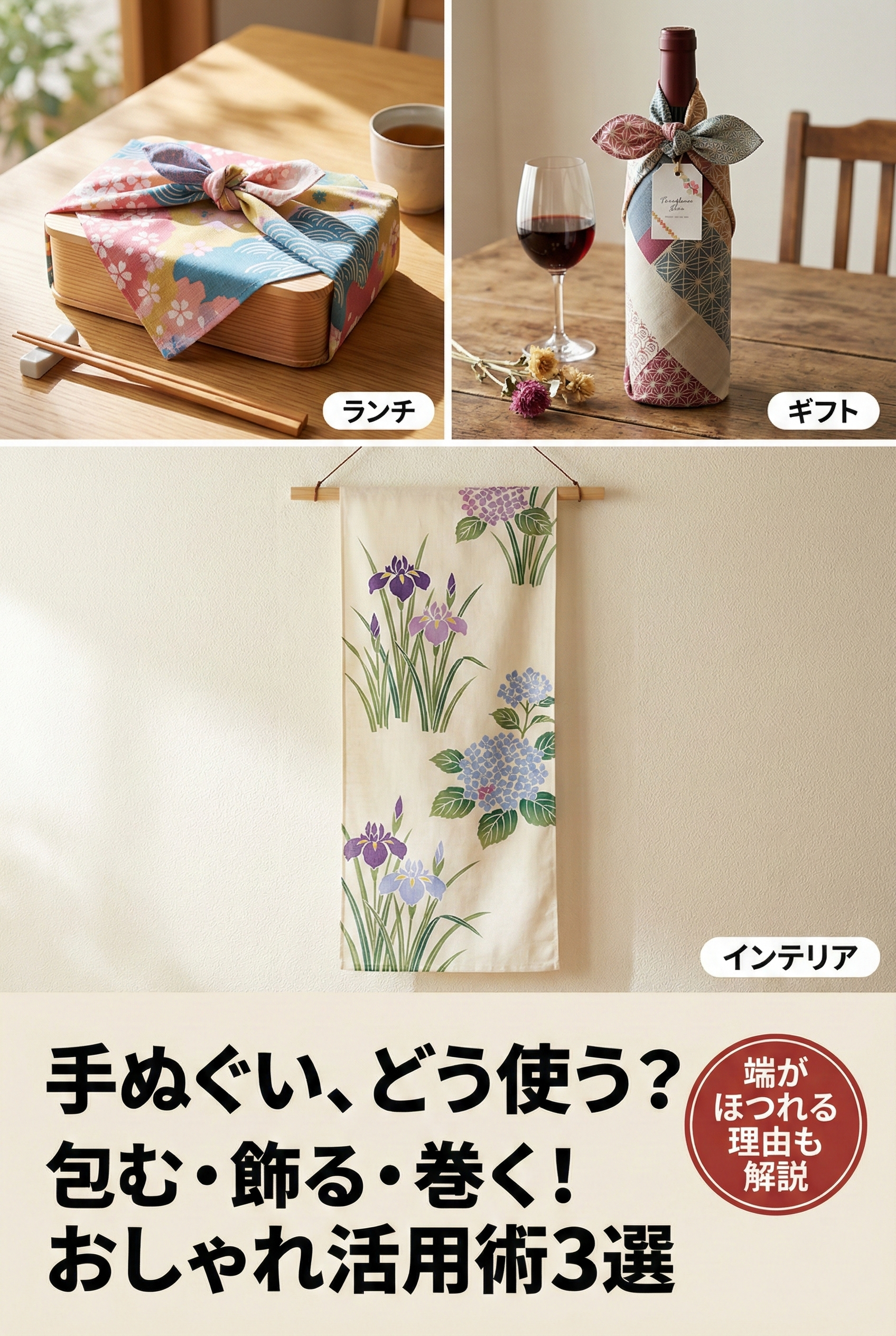
① Wrapping — wine bottles, bento boxes, gifts
Wrap a wine bottle in a seasonal tenugui pattern and hand it as a gift. The cloth is
part of the present — the recipient unknots it and uses it immediately.
No wrapping paper, no waste, and it reads as genuinely thoughtful rather than rushed.
For a bento box, tenugui wrapping is more compact than a bulky bag: the knot sits flat,
and the cloth doubles as a placemat at lunchtime.
② Wall display — a seasonal room accent
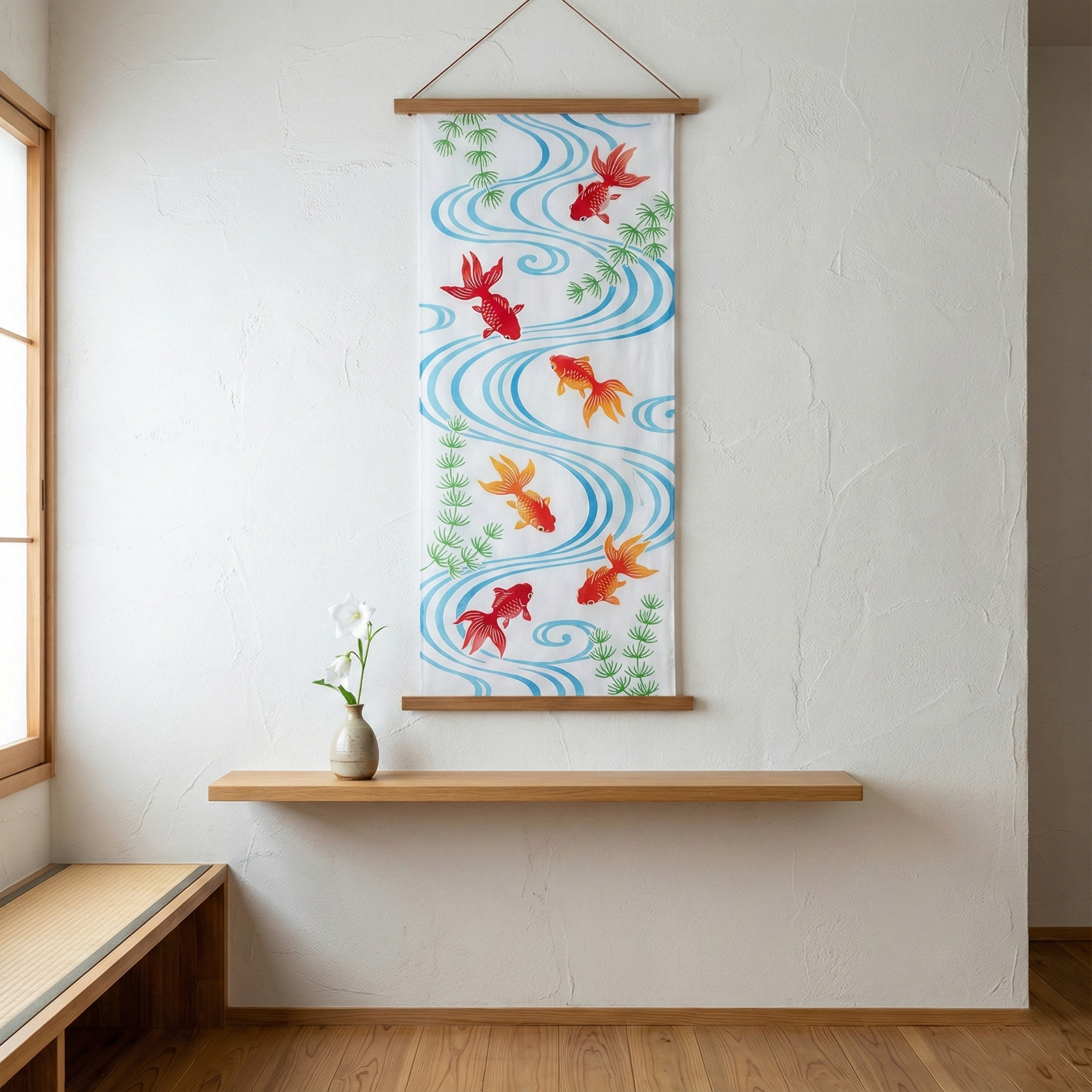
A tenugui tapestry rod (sold separately for a few dollars) lets you hang any tenugui
as a wall piece. Cherry blossoms in spring, goldfish in summer, maple leaves in autumn,
camellia in winter.
At 90 cm long, a single tenugui transforms a wall. Swap it each season, store the rest
flat — the entire collection takes up almost no space.
③ Wearing — scarf, headband, neck wrap
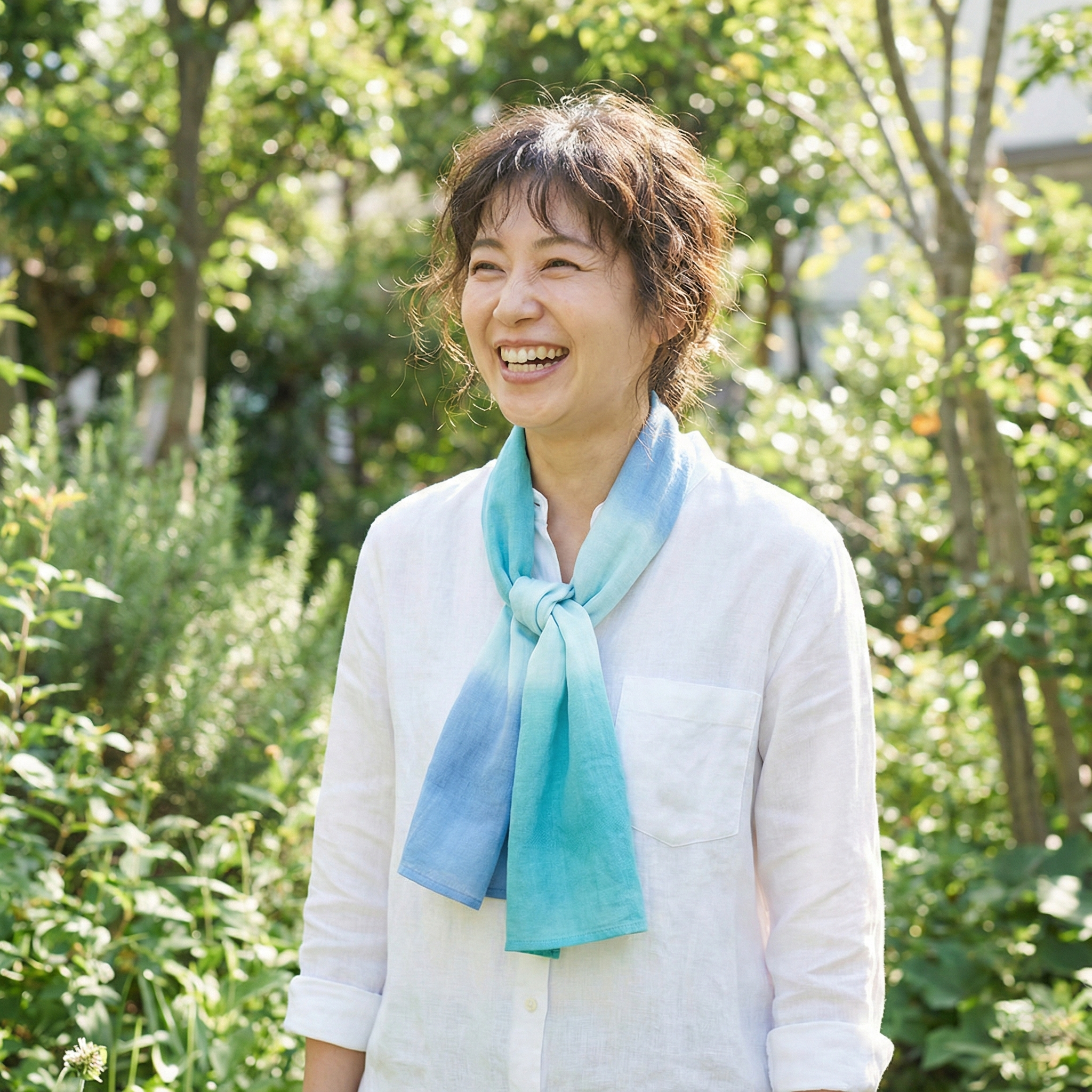
100% cotton and breathable, tenugui is comfortable against skin even in summer heat.
Folded lengthwise and tied around the neck, it blocks sun and absorbs sweat without
the weight of a conventional scarf.
Wrap a cold pack inside and wear it for heat relief. The chusen gradient patterns look
intentional worn this way — not like an improvised solution.
4. Three Traditional Patterns and Their Meanings
Traditional tenugui patterns carry meaning — auspicious symbols, protective motifs, and Edo-era wordplay. Knowing the meaning makes choosing, and gifting, more deliberate.
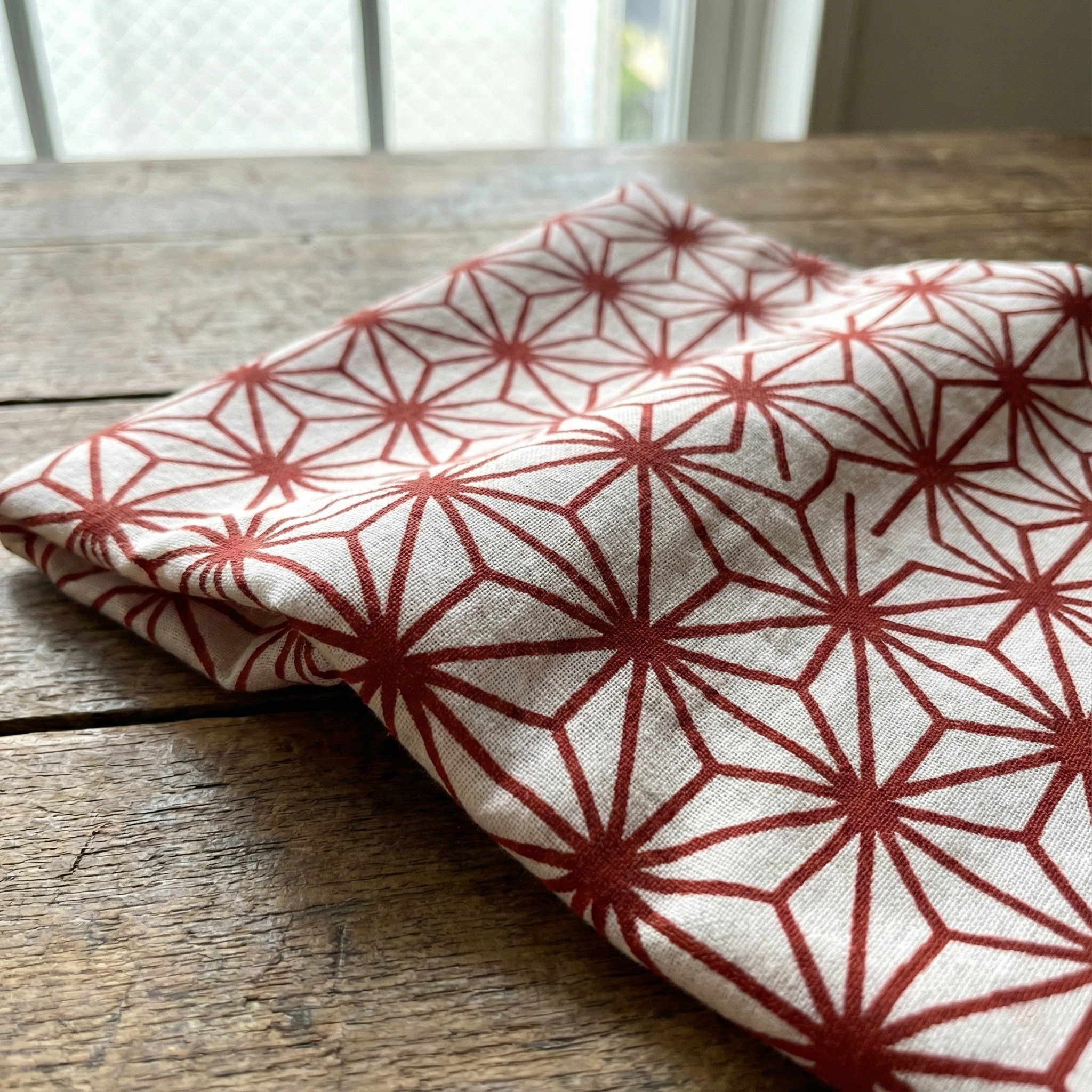
Asanoha (麻の葉) — Hemp Leaf
A six-pointed geometric lattice pattern. Hemp grows fast and strong, so the pattern
carries the meaning of "healthy growth and protection from harm."
Traditional choice for gifts celebrating a new baby or a child's milestone.
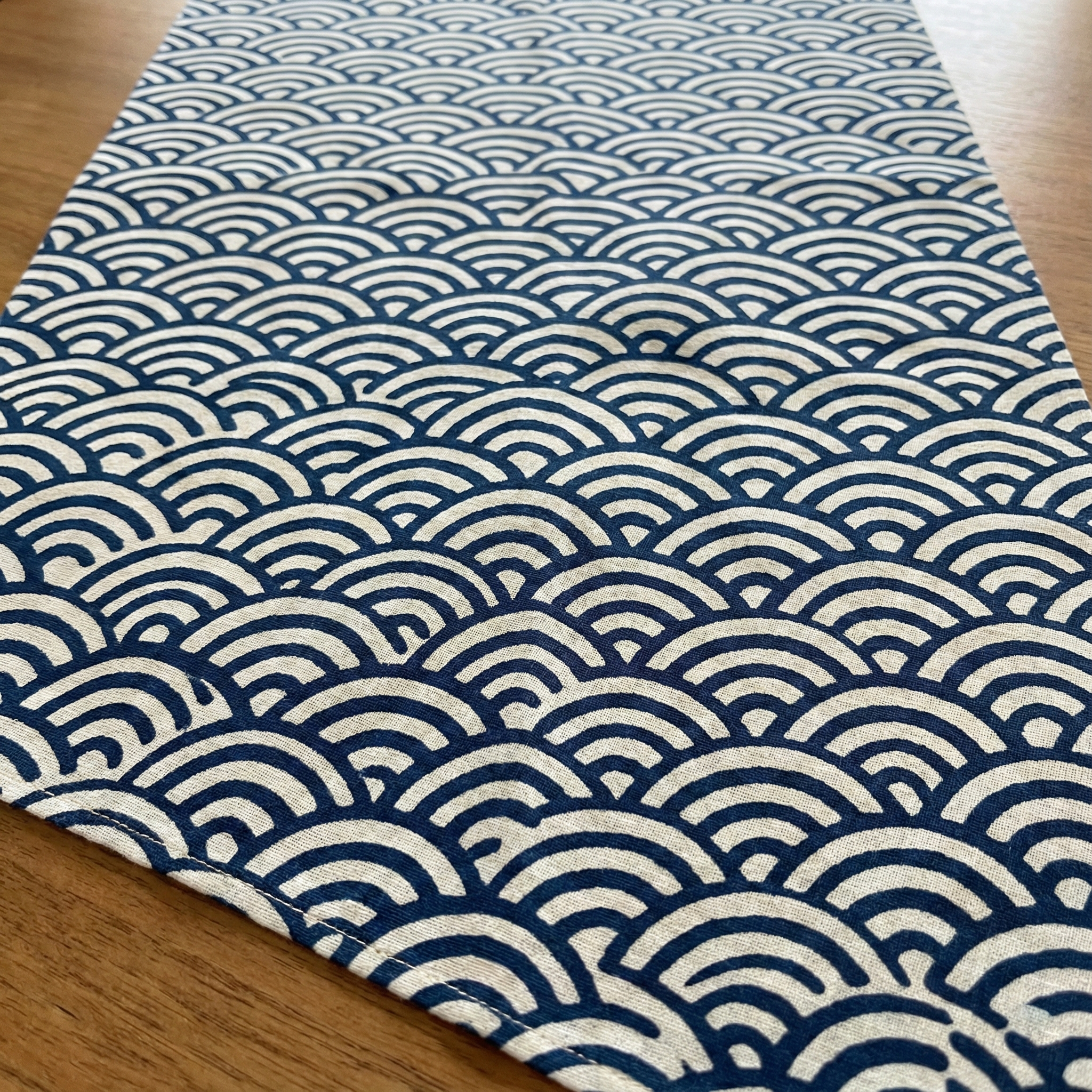
Seigaiha (青海波) — Blue Ocean Wave
Overlapping semicircles forming an endless wave pattern. The meaning:
"may calm and peace continue without end."
A standard choice for wedding gifts, housewarming presents, or any celebratory occasion.
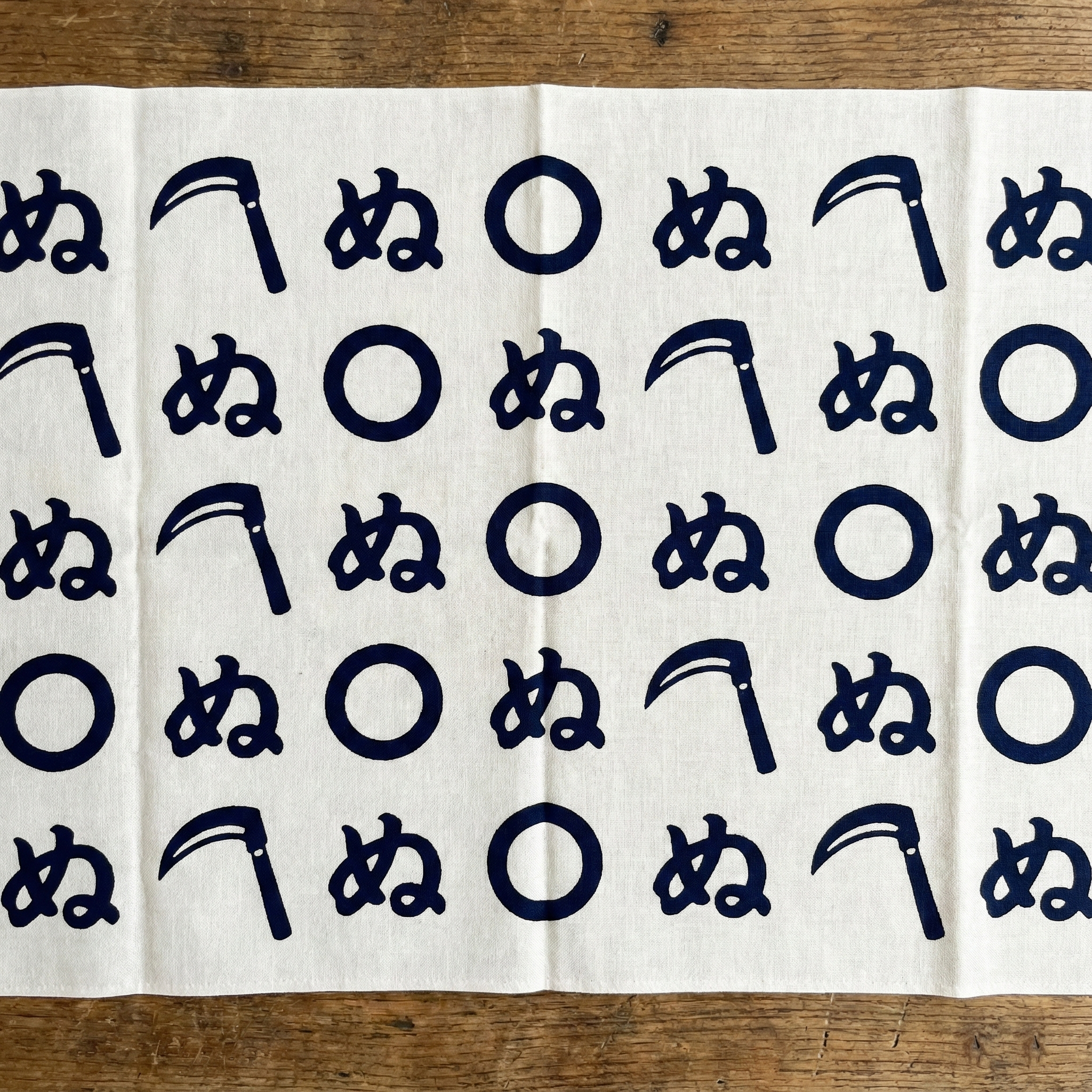
Kamawanu (鎌輪奴) — Edo Visual Pun
A rebus pattern: a sickle (kama) + a circle (wa) + the hiragana character "nu" —
together read as "kamawanu" (構わぬ), meaning "I don't care about appearances."
It expressed the Edo commoner spirit: dress plainly, help the weak.
Also the name of the famous tenugui brand Kamawanu, which uses this as its icon.
5. Three Chusen Brands Worth Knowing
These three brands have defined modern tenugui culture. All use chusen dyeing, all maintain strong design identities, and any of them is a solid starting point.
Kamawanu — The Brand That Made Tenugui a Daily Fashion Item
Founded in Daikanyama, Tokyo, Kamawanu is largely responsible for reintroducing tenugui to younger Japanese consumers and keeping it relevant today. Their catalogue runs from classical patterns in bold modern colourways to playful pop designs. Seasonal limited editions sell out consistently. If this is your first tenugui, start here.
- Based in
- Daikanyama, Tokyo
- Known for
- Classical Japanese patterns in bold, modern colourways
- Best for
- First-time buyers and fashionable everyday use
Nijiyura — The Dye Factory That Turned Bleed Into a Design Feature
A factory brand from Sakai, Osaka, Nijiyura runs their own chusen production and uses the technique's natural ink bleeding as an intentional aesthetic. The result is watercolour-like gradients and soft edges that no other dyeing method can replicate. If you prefer painterly patterns over crisp geometric ones, this is the brand for you.
- Based in
- Sakai, Osaka
- Known for
- Soft gradients and watercolour-like edges — bleed as a design feature
- Best for
- Those who prefer gentle, painterly patterns
Rienzen / Todaya — The Connoisseur's Choice
Based in Nihonbashi, Tokyo, Todaya supplies tenugui to kabuki actors and classical dancers. They use tokuoka, a premium cotton finer and smoother than standard tenugui cloth. Craftspeople handle stencil design and dyeing from start to finish. Traditional patterns in unexpected colours, contemporary motifs in classical technique. If you know what you're looking for, this is the one.
- Based in
- Nihonbashi, Tokyo
- Known for
- Premium tokuoka cotton; supplies kabuki actors and classical dancers
- Best for
- Connoisseurs who want Edo craft at its most refined
6. Care and Breaking In Your Tenugui
Tenugui is a cloth you break in, not just use. Proper care from the start determines how well it ages.
Should I wash it before first use?
Yes — a rinse before first use is recommended.
New tenugui is sometimes treated with a light sizing (starch) to help the dye set during
production. Rinsing in plain water without detergent removes this, leaving the cloth
softer and more absorbent from the first use. Air dry in shade.
Can I machine wash it?
Hand wash the first few times, then machine wash is fine.
Chusen-dyed tenugui bleeds colour noticeably at first — hand wash alone for the first
two or three washes to protect other laundry. Once the bleeding stops, a mesh laundry
bag in the machine is safe.
Avoid bleach and detergents with brighteners — both damage the dye and the hand of
the cloth.
The edges are fraying — what do I do?
Trim with scissors. Do not pull the loose threads.
After washing, weft threads will work their way out from the cut ends. Pulling them
makes it worse. Trim with small scissors, flush with the edge.
After three or four washes, the short fibres interlock naturally and fraying stops on
its own — you end up with a narrow fringe of about 5–10 mm that stays stable.
Can I iron it?
Yes, but the slightly wrinkled look is part of the appeal.
For wall display or use as a table runner, a medium-to-high iron gives a crisp,
presentable surface. For everyday use as a cloth or hand towel, snapping it flat
and air drying is enough — the lived-in texture is characteristic, not untidy.
When is it time to retire a tenugui?
When it's worn thin, it becomes the best cleaning cloth you own.
A tenugui that's faded and gone soft has exceptional absorbency — better than when
new. The traditional approach is to use it as a kitchen wipe, then a floor cloth,
until nothing is left. 100% cotton, no synthetic fibres — it breaks down cleanly.
Using a cloth completely before discarding it is considered the proper way in
traditional Japanese household practice.
Final Thoughts: It Ages Into Something You Can't Buy New
A new tenugui is already good. A tenugui used daily for a year is better — softer,
more absorbent, broken in to the kind of hand that can only come from time.
Start with a chusen-dyed cloth from Kamawanu, Nijiyura, or Todaya. Pick a pattern
you actually like — you'll see it every day. Fold it into your bag. Use it.
You won't notice it improving. Then one day you'll hold it and realise it's
the best cloth in the house.
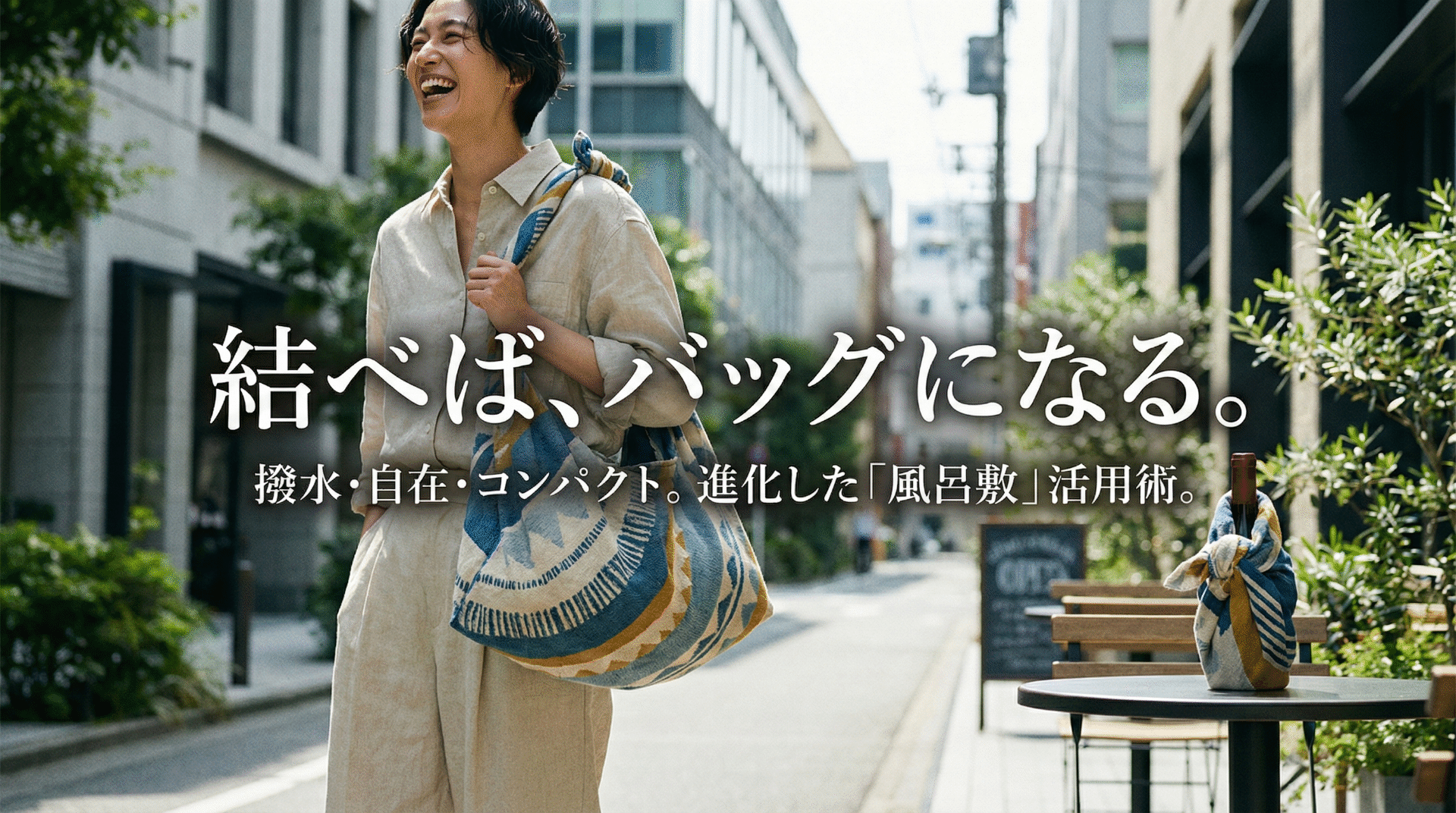
Furoshiki: The Japanese Wrapping Cloth That Does Everything
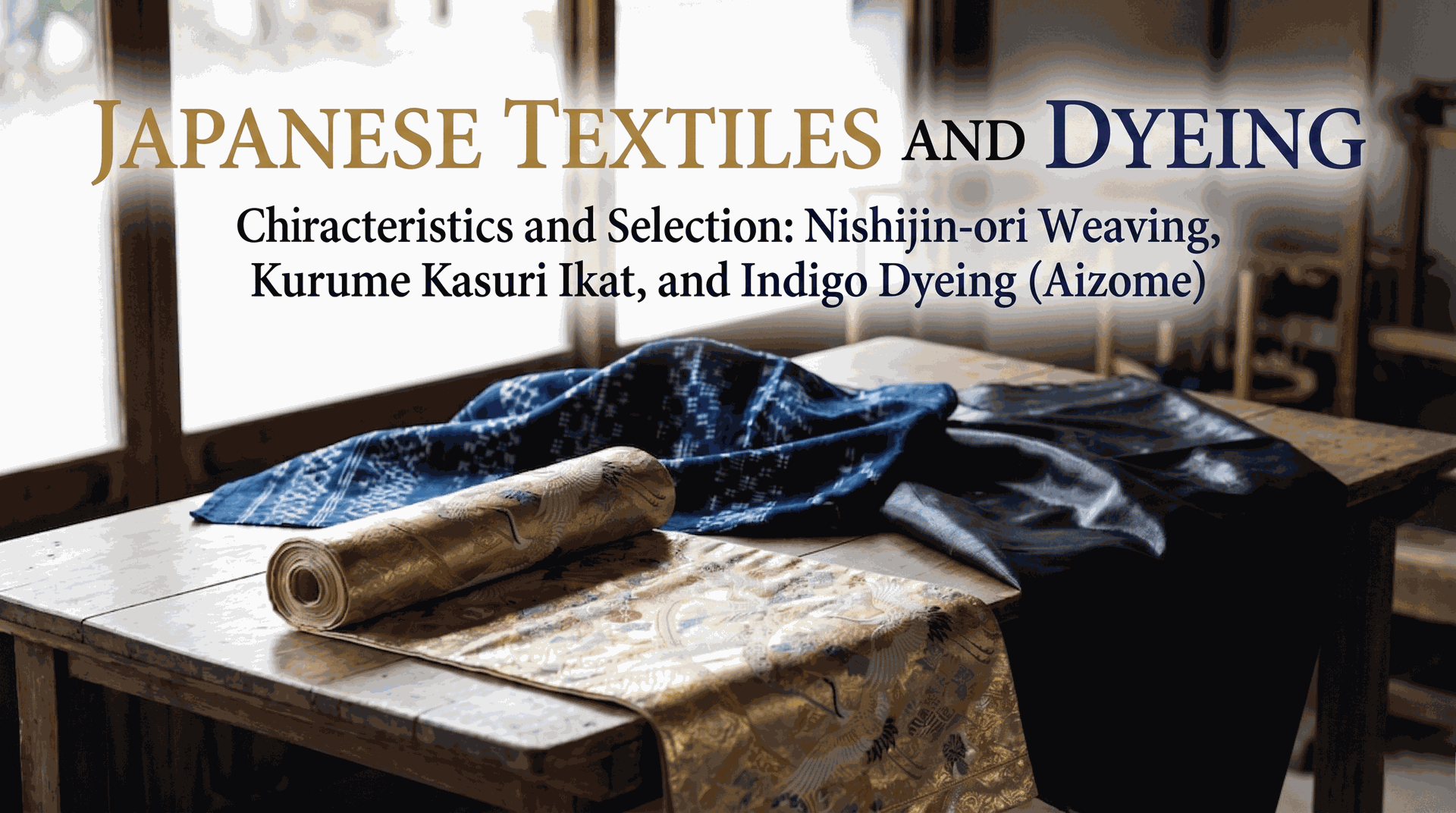
Japanese Textiles: Indigo, Nishijin Weave, and Regional Traditions