Have you ever walked into a hotel lobby or traditional inn and felt instantly at ease — before you even registered
why?
Visual décor matters, but the atmosphere of a space is often decided by something invisible:
scent.
Essential oils are lovely, but for Japanese homes and their humid climate, nothing integrates quite like
Japanese incense
— it draws out moisture, clears the air, and grounds a room in quiet elegance.
The refined fragrances of Kyoto's Shoyeido (松栄堂), founded over 300 years ago, or the modern scents
crafted by kosho (master blenders) on Awaji Island — the heartland of Japanese incense
production — can transform your living space into something that feels genuinely restorative.
This guide covers how to choose incense as a beginner, and how to find a beautiful incense burner worth displaying
as décor.
Quick Reference: Incense Types at a Glance
| Type | Shape | Scent Reach | Best For |
|---|---|---|---|
| Stick | Straight rod | Steady, sustained | Daily use, bedtime |
| Cone | Pyramid shape | Fast, wide-reaching | Before guests arrive, large rooms |
| Coil | Spiral | Long-lasting, sustained | Reading, extended relaxation |
| Electric | Wood chip / resin | Smokeless, safe | Homes with children or pets |
1. Why Your Entryway Needs Incense — Purification & the Power of Scent
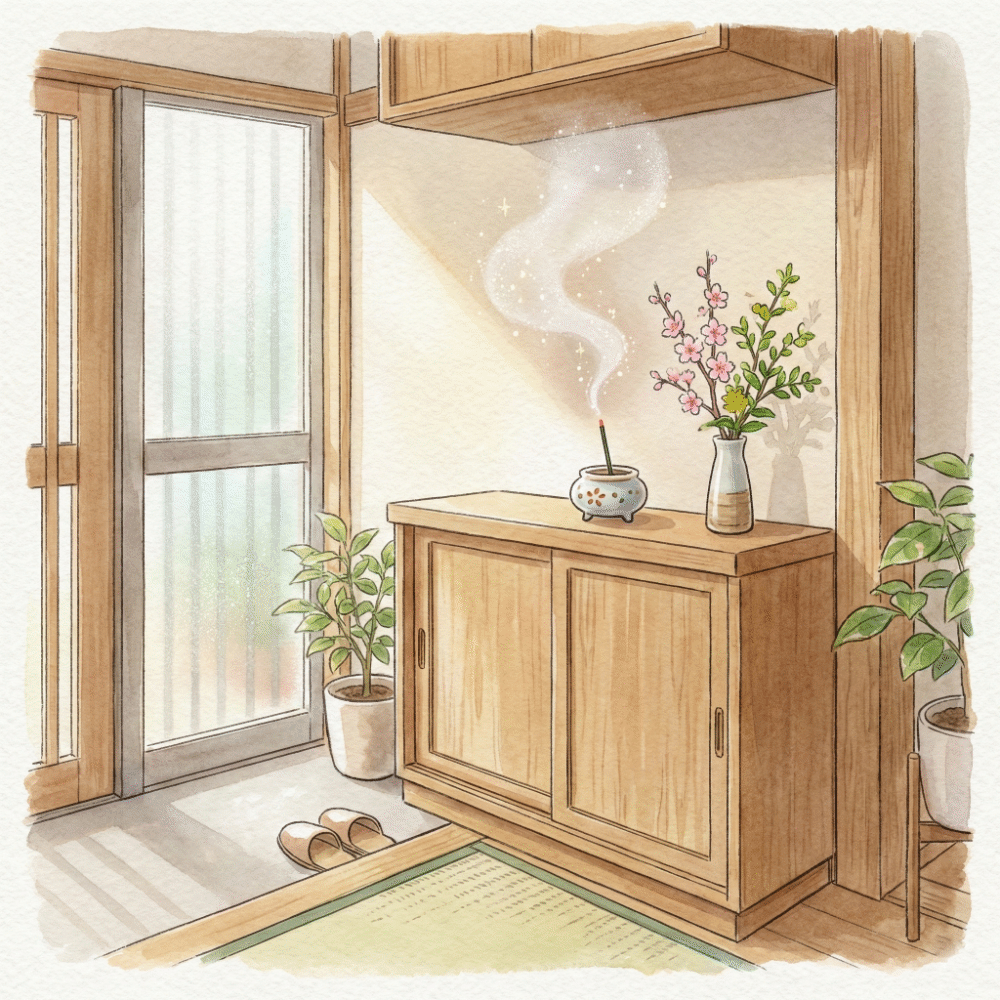
The idea that incense belongs only in front of a Buddhist altar is long outdated.
Today, incense is used as room fragrance — particularly in entryways and living rooms — and for good reason.
The Switch That Happens at the Door
Your entryway is both where you welcome guests and where you yourself return from the outside world.
When a gentle fragrance greets you as you open the door, your brain registers it as a signal to shift into "off
mode" — the stress of the commute begins to dissolve before you've even set down your bag.
Throughout Japanese history, incense smoke has been believed to carry the power to cleanse a space, to purify
the air and settle unseen disturbances.
Try lighting a single stick after tidying up. The room will feel sharper, quieter — perceptibly cleaner — in a
way that's hard to put into words.
2. Shoyeido (Kyoto) — 300 Years of Refined Kyo-senko
Kyoto is the spiritual center of Japanese incense culture.
At its heart stands Shoyeido (松栄堂), a house with over 300 years of history — trusted equally by
temples and households, by connoisseurs and curious newcomers.
Shoyeido — Horin Series (Sandalwood Base)
The star of Shoyeido's lineup is the Horin series, built on a sandalwood (byakudan) base. Varieties like Horikawa and Shirakawa deliver the warm, deep, traditional scent that evokes old Kyoto — yet sit naturally in a modern apartment. Available in stick and long-burning coil formats, ideal as welcoming incense before guests arrive.
- Material / Type
- Kyoto-style stick and coil incense (sandalwood base)
- Made in
- Kyoto, Japan (est. 1705)
- Best for
- Daily use, entryway fragrance, gifting
- Price range
- $15–$40
3. Awaji Island — Japan's Incense Capital & the hibi Revolution
Around 70% of all incense produced in Japan comes from a single island: Awaji, in Hyogo Prefecture.
Here, kosho (master fragrance artisans) work within a centuries-old tradition while constantly pushing it
forward with new forms and scents.
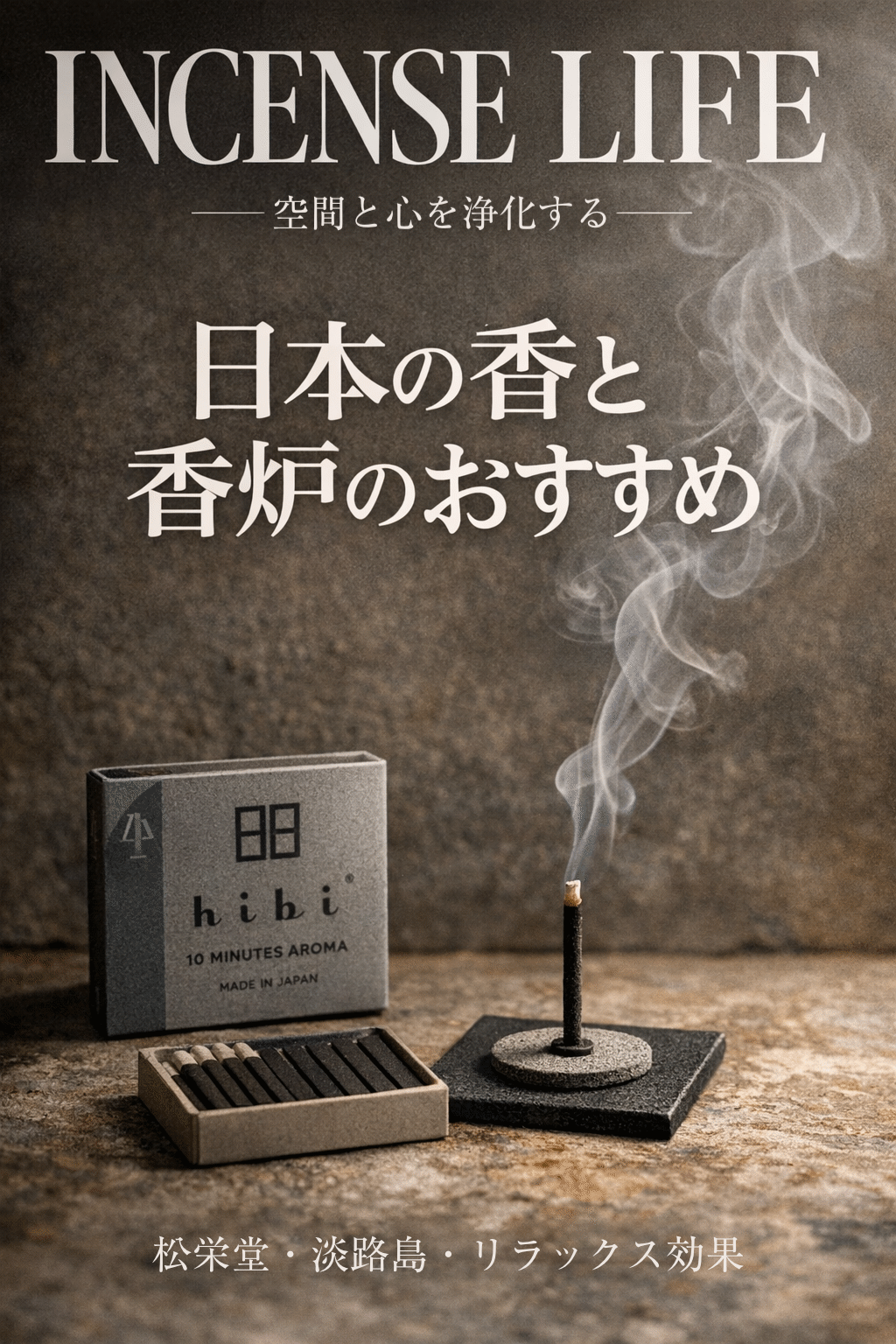
hibi — 10 MINUTES AROMA (Strike-to-Light Incense)
hibi was born from a collaboration between Awaji Island's incense makers and traditional matchstick craftsmen of Harima. Ignite by striking against the side of the box — just like a match. Each stick burns for about 10 minutes and comes with a dedicated mat, so no burner is required. Scents lean botanical and Western (geranium, lavender, tea tree) — the perfect entry point for incense beginners.
- Material / Type
- Match-style incense sticks (no lighter needed)
- Made in
- Awaji Island / Harima, Hyogo, Japan
- Best for
- Beginners, gifting, no-burner convenience
- Price range
- $15–$30
4. Stick, Cone, or Coil? Incense Shapes Explained
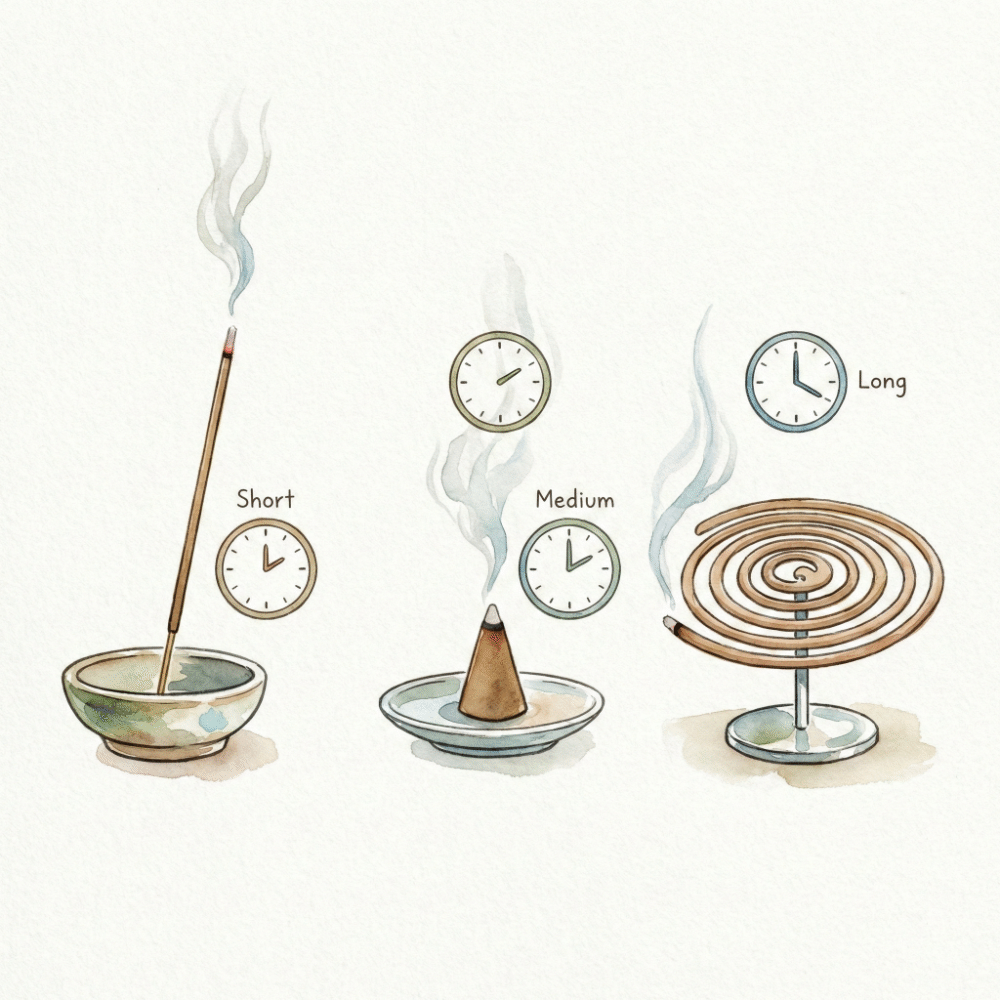
Japanese incense comes in three main forms. Match the shape to your space and how long you want the fragrance to last.
Burn Time & Room Coverage at a Glance
- Stick (rod-shaped):
Burn time: 15–30 minutes.
The burn surface is uniform, so the fragrance releases at a steady, consistent intensity. The most common format and the easiest to start with. - Cone (pyramid-shaped):
Burn time: around 10 minutes.
Because the base widens as it burns down, the scent intensifies and spreads quickly — ideal for large rooms or when you need a space scented in a hurry before visitors arrive. - Coil (spiral):
Burn time: 1–2 hours or more.
Made for long sessions — reading, meditation, or any space where you want fragrance to linger. Also performs well in rooms with air movement.
5. Incense Burners & Holders — Kutani, Nanbu, and Arita
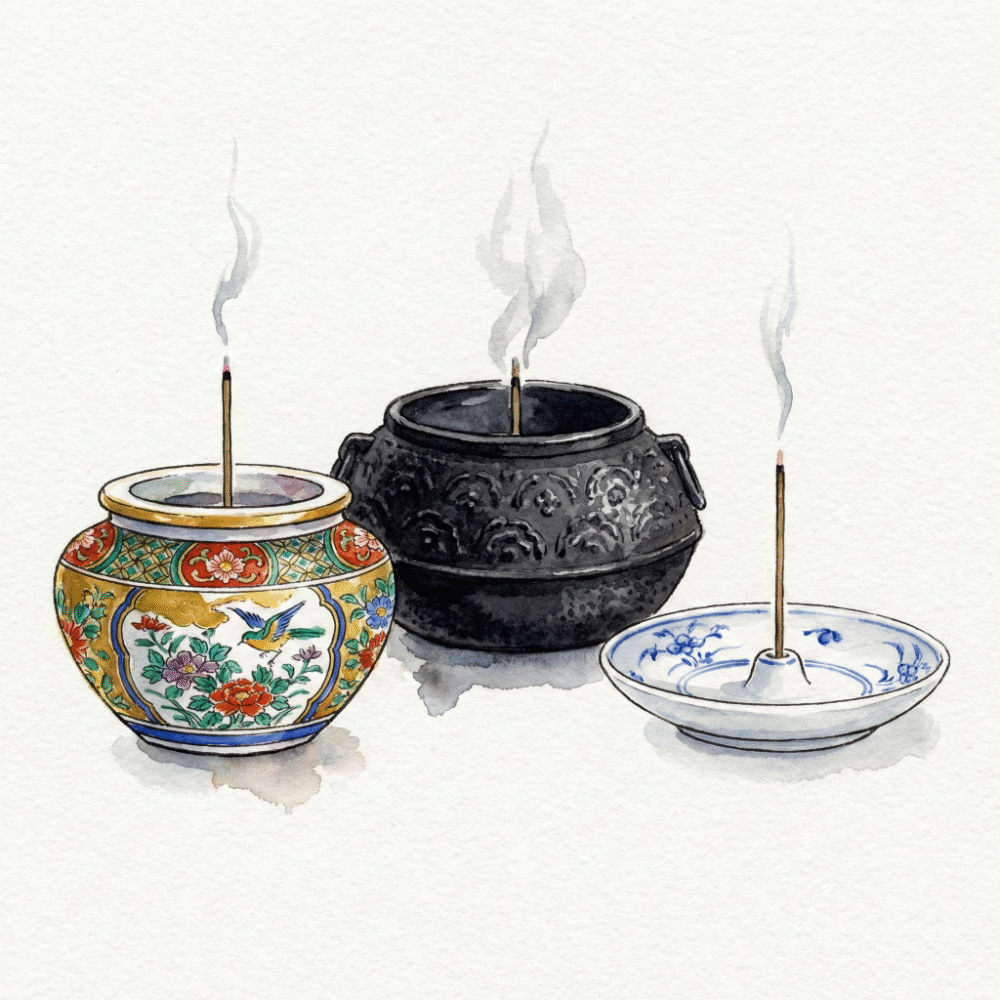
The vessel you burn incense in — the koro (香炉), or incense burner — is part of the experience.
Almost any heat-resistant dish can work in a pinch, but a dedicated burner elevates the ritual and adds beauty to
your shelf even when no incense is burning.
Choosing by Material
- Kutani ware (Ishikawa Prefecture):
Famous for vivid overglaze painting in bold colors. A Kutani burner works as a decorative object even when empty — and if you choose a lidded style, watching smoke curl through the tiny holes in the lid becomes its own quiet pleasure. - Nanbu Tekki cast iron (Iwate Prefecture):
Weighty and austere, Nanbu iron burners suit modern Japanese interiors, industrial-style rooms, or minimalist décor. Their mass makes them stable — ash stays put and the burner doesn't tip. - Arita ware (Saga Prefecture):
White porcelain with a clean, luminous surface. Simple incense holders in Arita porcelain blend quietly into Western-style living rooms without demanding attention — understated and easy to live with.
6. Morning Clarity, Night Calm — Scents for Every Mood
Different incense materials carry different effects.
Matching your scent to the time of day and your intention is the habit that distinguishes a casual user from someone
who truly enjoys the ritual.
A Simple Scent Prescription
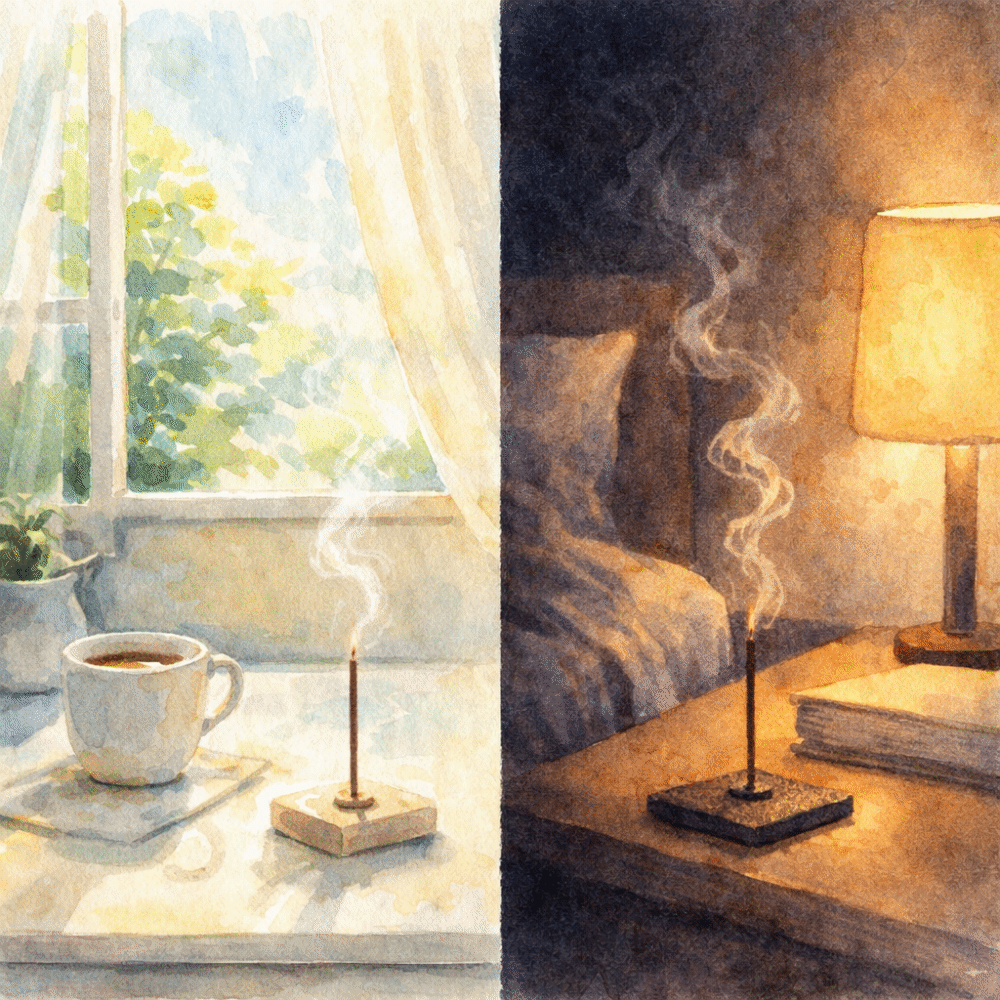
Morning & Work (refresh and focus):
Sandalwood (byakudan) or citrus-based scents.
Clean, lightly sweet, never cloying — these fragrances sharpen the mind and help you settle into focused work
without the drowsiness that heavier scents can bring.
Evening & Before Sleep (unwind and release):
Agarwood (jinko) or lavender-based scents.
Jinko is quiet and profound — its depth is almost meditative. Burning it in a dimly lit room after a
long day can feel like shedding the weight of everything that accumulated since morning. A deeply earned kind of
stillness.
7. Listening to Fragrance — A Beginner's Introduction to Monko
In the classical Japanese art of kodo (the way of fragrance), you do not "smell" incense — you
"listen" to it (kiku).
Formal kodo practice has its own refined etiquette and is not easily accessible, but a home version of
monko (listening to fragrance) is available to anyone.
A Conversation with Scent
The method is simple.
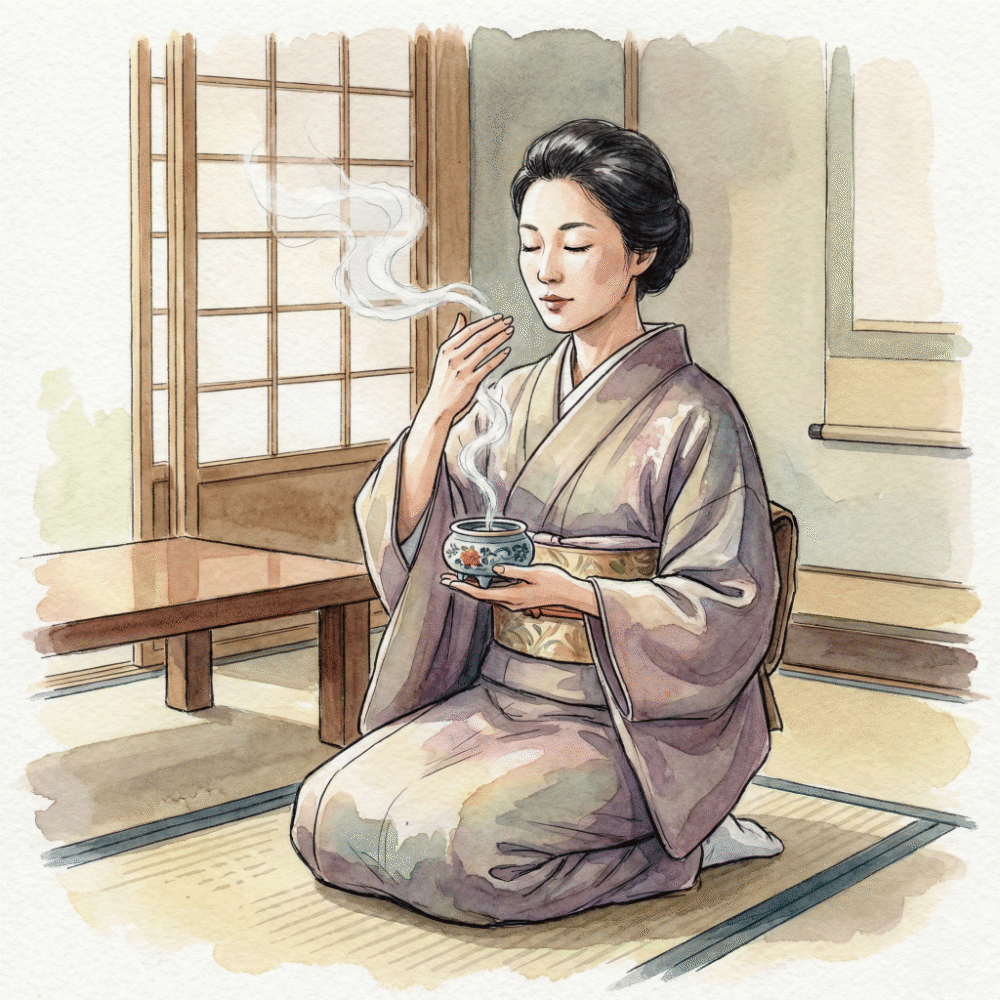
Light your incense, then sit a short distance away. Cup one hand and gently draw the smoke toward you — not
deeply inhaling, but letting the fragrance approach on its own terms.
Close your eyes. Breathe slowly. Ask yourself: what image comes to mind? What feeling?
"Does this scent remind you of a forest after rain? Of old paper in a library? Of something you can't name?"
There are no wrong answers. Spending five or ten minutes in attention to a single fragrance is, in practice, a
form of mindfulness — stripping the mental noise and returning you to the present. It is an unhurried luxury
that costs almost nothing.
8. Frequently Asked Questions
I rent my apartment. Will incense stain the walls?
Not if you ventilate well and keep the incense away from walls.
Burning large quantities daily, or placing your burner close to a wall, can cause residue to build up over time.
If you're concerned, look for "low-smoke" (bisho) varieties, or position the burner near the center of
the room rather than against a surface.
How do I get the best "lingering scent" after burning?
Finish burning at least 30 minutes before guests arrive.
In Japanese aesthetics, the subtlest phase of incense — the utsuri-ka, or transferred fragrance that
remains after the smoke clears — is considered the most refined. Burning right before someone arrives risks the
room feeling smoky; burning in advance leaves only the quiet, pleasant trace that makes visitors notice something
beautiful without quite knowing what it is.
Do I need ash in my burner? Is there an alternative?
Only if you're inserting stick incense directly into the burner — and there are easier
alternatives.
If you use a small incense holder or insense holder placed on a dish or plate, no ash is needed at all.
Ash-free setups are easier to clean and mean less risk of scattered ash. For beginners, a simple ceramic or metal
holder on a small plate is the lowest-maintenance way to start.
Is incense safe around pets or babies?
Exercise caution.
Dogs and cats have far more sensitive noses than humans, and certain botanical compounds can cause discomfort or
adverse reactions. There is also the risk of accidental contact with the burning tip. If you have pets or young
children in the home, burn incense only in a well-ventilated room they cannot access, keep sessions brief, or
consider an electric aroma diffuser as a safer alternative.
Does incense expire?
Technically no — but the fragrance does shift over time.
Stored away from moisture and direct sunlight, incense can last for many years. High-grade jinko
(agarwood) is actually said to mellow and deepen with age, much like fine whisky. Lighter, aroma-forward sticks
tend to lose volatility faster, so use those within a year or two of opening for the best experience.
There are so many options. What should I buy first?
Start with Shoyeido's Horin Horikawa or hibi's 10 MINUTES AROMA.
Horin Horikawa is a sandalwood-based classic that appeals across ages and genders — the closest thing to a
universally liked Japanese incense. hibi requires no lighter or holder, burns for just 10 minutes, and comes in
familiar botanical scents that ease first-timers in gently. Both are made in Japan, gift-ready, and widely loved.
Final Thoughts: Light One Stick and Let the Room Breathe
You light the stick. A thin thread of smoke rises and begins to drift.
For the next ten or twenty minutes, you simply watch it.
In the middle of days that rarely pause, incense creates a deliberate gap — a small, intentional emptiness.
Kyoto's centuries-old fragrances and Awaji Island's modern interpretations share the same quiet invitation: slow
down and breathe.
Find a burner you find beautiful, choose a scent that speaks to you, and tonight — try striking a match instead
of reaching for your phone.
What rises with the smoke might surprise you.
Japanese Incense Guide: Awaji, Kyoto Brands & How to Burn
Japanese Green Tea Gifts: Uji vs. Shizuoka and 3 Top Brands