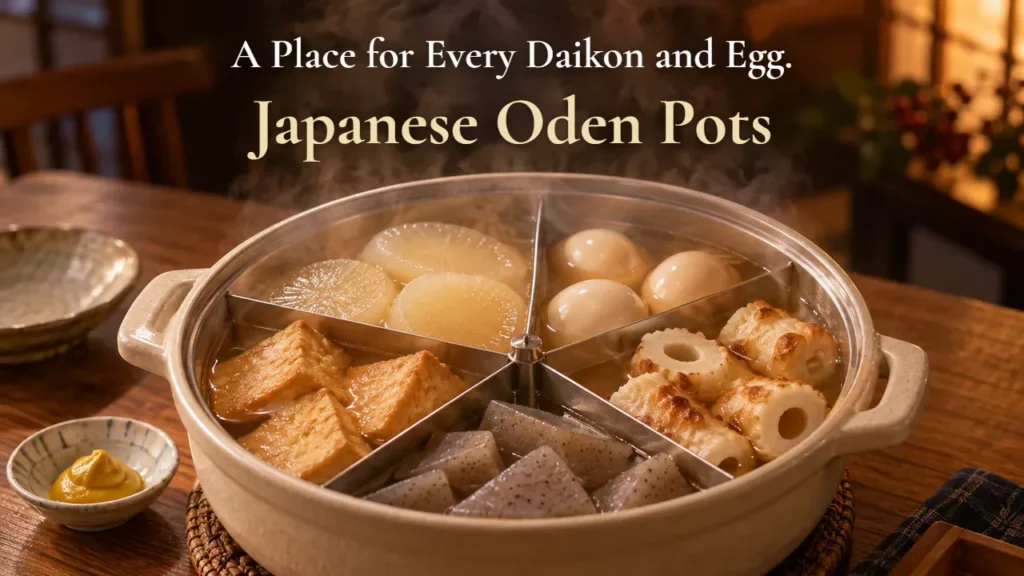
Daikon, eggs, chikuwa, konnyaku — oden is a joy the moment you lift the lid, when every ingredient sits neatly in its own compartment.
Oden is Japan's winter one-pot of ingredients simmered slowly in a light dashi broth. This guide thinks about the oden pot starting from the divider: a Tsubame-Sanjo divider you can drop into the pot you already own, a Tsubame divided pot with its own centre core, a donabe from Yokkaichi Banko ware — which makes more than 80% of Japan's clay pots — and a deep Nambu cast-iron pot from Iwate. All four can be bought from outside Japan, and we've noted which work on induction.
Quick Reference: Which Oden Pot?
| Pot | Region / Material | Size | Induction |
|---|---|---|---|
| Shimomura Kihan oden divider ▾ | Tsubame-Sanjo, stainless | Fits pots 20–30 cm (8–12 in) inside | Depends on your pot |
| Objet oden & yudofu pot ▾ | Tsubame-Sanjo, iron-core 3-ply | 3.7 L, 25 cm | Yes |
| Ginpo Banko ware donabe ▾ | Yokkaichi Banko ware, clay | Sizes for 1 person and up | No (gas flame only) |
| Iwachu Furusato deep pot ▾ | Nambu cast iron | 18 / 21 cm | 21 cm: yes |
1. Will It Work on Your Stove?
Short answer: on induction, choose the Objet pot or the 21 cm Iwachu iron pot; on gas, any of them — including the clay donabe. None of these pots are electric, so voltage doesn't matter. What matters is your heat source.
| Your stove | Works | Doesn't |
|---|---|---|
| Induction | Objet oden pot; Iwachu Furusato 21 cm | Banko ware donabe |
| Gas | All four | — |
| Divider only | Follows whatever pot you put it in | |
The clay donabe is for gas flames only. If you cook on induction or an electric coil, choose one of the metal pots — or drop the stainless divider into an induction-ready pot you already have.
2. Why Japanese: Oden Lines Up in Compartments
Shimomura Kihan, in Tsubame-Sanjo, describes its oden divider as "a handy tool that keeps oden ingredients from getting jumbled." With a divider, daikon goes here and eggs go there, and you can find what you want at a glance.
There are two ways to get one: add a divider to a pot you already have, or choose a pot that comes with one. And simmering slowly in a donabe or a deep iron pot without a divider is another way to enjoy oden.
3. Add Just a Divider to the Pot You Have
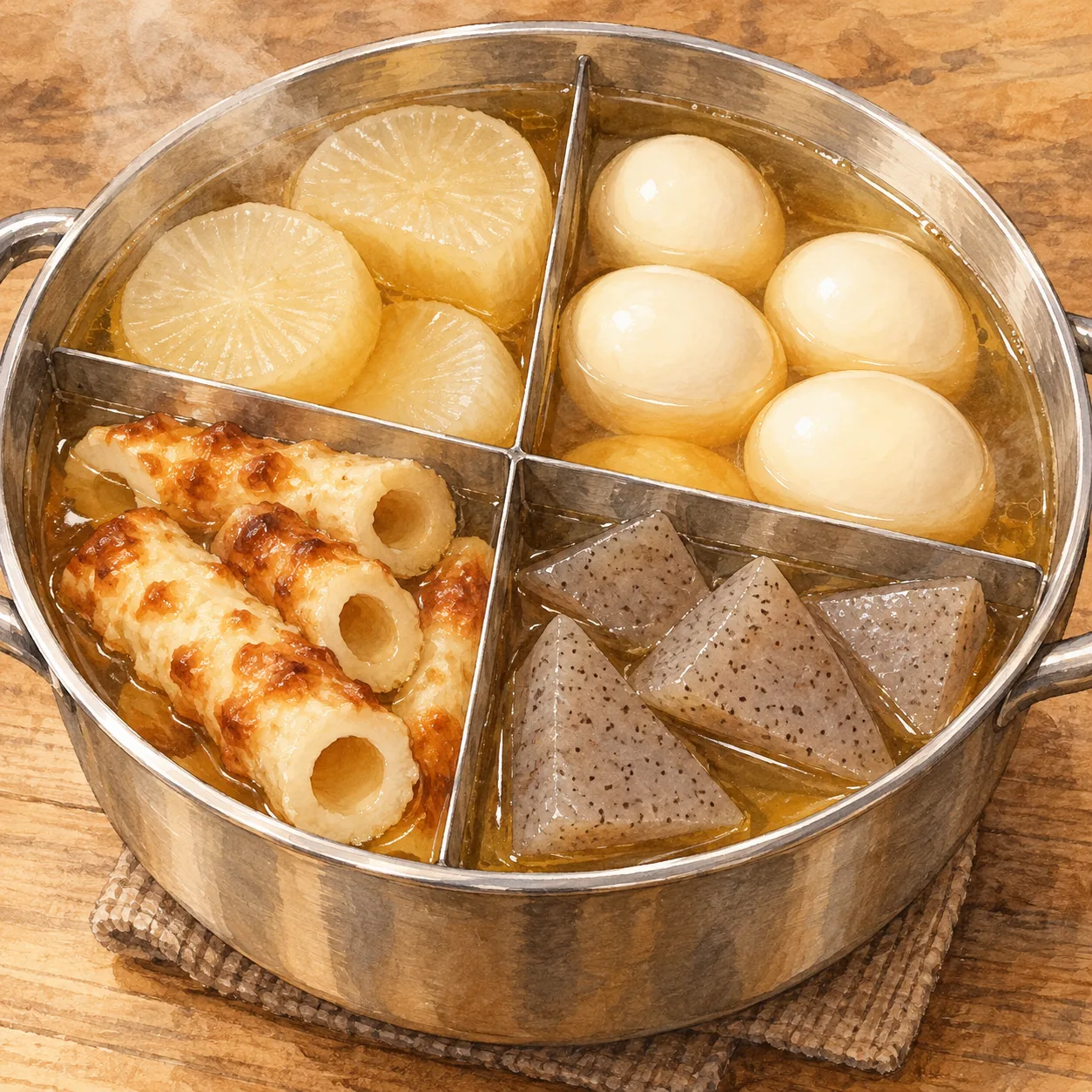
Shimomura Kihan's oden divider, from Tsubame in Niigata, is the divider alone. Opened out, it's 23 cm wide, 23 cm deep and 7 cm tall (about 9 × 9 × 2.8 in), and fits pots with an inside diameter of 20–30 cm (about 8–12 in) — so your own donabe or two-handled pot becomes an oden pot. According to the retailer, because it's stainless, broth doesn't soak in and colours don't transfer.
Shimomura Kihan Oden Divider, One Size
A Japanese-made oden divider in 18% chromium stainless steel, sold in Japan under the name "Izakaya-san." For trying a divider first without buying a new pot. Which heat sources you can use depends on the pot you pair it with.
Shimomura Kihan Oden Divider, Stainless, One Size
Loading product details…
4. A Tsubame Pot With Divider and Core
Objet, by Miyazaki Seisakusho (Miyaco) of Tsubame, is a long-selling series made since 1982. Its official site says: "Because it's something you use every day — sturdy, easy to use, and never tiresome."
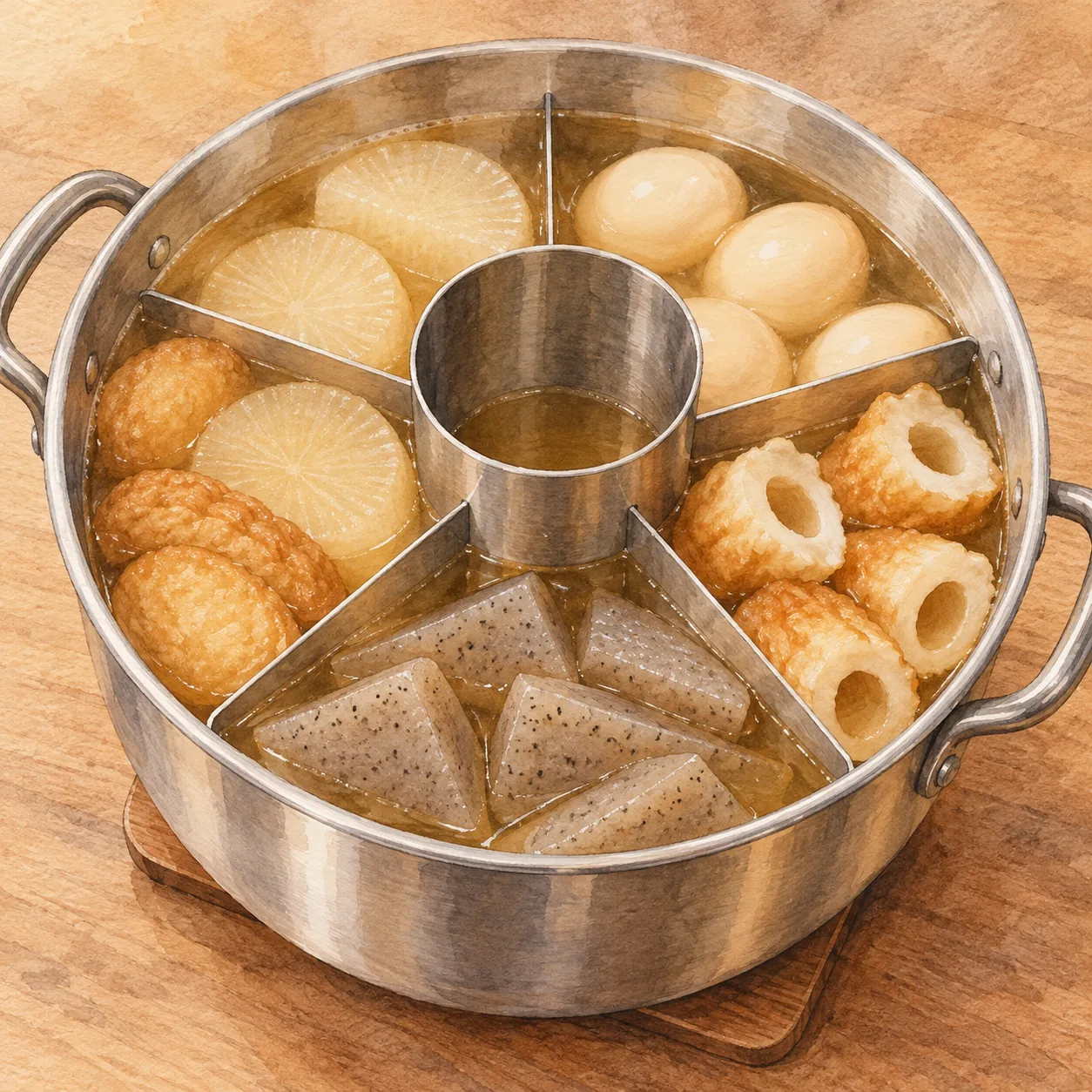
The oden & yudofu pot comes with a divider and a nakago (centre core). According to the retailer, the body is fully iron-core three-ply — iron sandwiched in stainless — so "heat spreads evenly, ideal for simmering" and "food stays warm." Take out the divider and core, and it's a shallow two-handled pot.
Miyazaki Seisakusho Objet Oden & Yudofu Pot, 25 cm
A divided pot with a 25 cm (9.8 in) inside diameter and a 3.7-litre capacity, made in Japan. Works on all heat sources, including induction. Japanese retailers note a five-year quality guarantee, with paid replacement parts available after that. For oden, and for yudofu (simmered tofu) too.
Miyazaki Objet Oden & Yudofu Pot 25 cm (OJ-8-1)
Loading product details…
5. Simmer in Clay: Yokkaichi Banko Ware
According to the Association for the Promotion of Traditional Craft Industries, Banko ware donabe from Yokkaichi, Mie, hold more than 80% of Japan's market. Yokkaichi even holds a "donabe memorial service" to give thanks to clay pots.
Ginpo Pottery of Yokkaichi was founded in 1932. The Banko ware cooperative describes it as "a specialist maker of heat-resistant tableware, known for producing everything in-house, from preparing the clay and mixing glazes to firing."
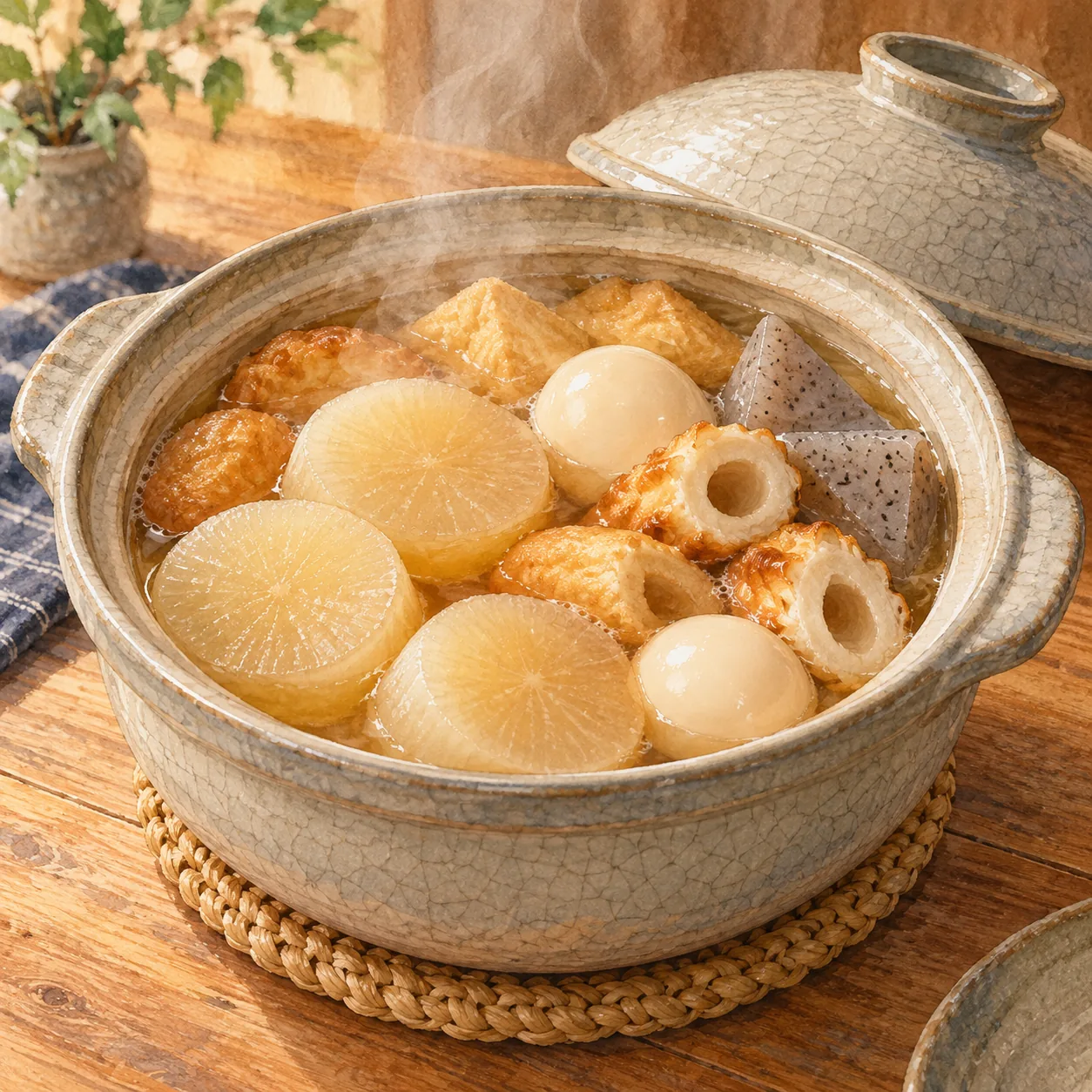
Ginpo Banko Ware Donabe, Deep No. 8 (2–3 People)
A deep Ginpo donabe in the Hanamishima pattern, made in Japan, for two to three people — and it holds heat well. Gas flame only; it can't be used on induction. Want compartments? Pair it with the divider in section 3. A No. 6 size for one person is also listed.
Ginpo Banko Ware Donabe, Deep No. 8 (2–3 People)
Loading product details…
6. Simmer in Iron: Nambu Cast Iron
Iwachu of Morioka, founded in 1902, makes the "Furusato" pot: a deep cast-iron pot with a bail handle and a wooden lid. The retailer calls it "a nostalgic pot that warms you up," and recommends it for dishes that use its depth — oden, sukiyaki, miso soup, pork miso soup, simmered dishes.
To season it at first, the retailer advises: wash it with hot water, heat it dry briefly, coat it with cooking oil and stir-fry some vegetable scraps to let the oil settle in. After cooking, move the food to another dish before it cools.
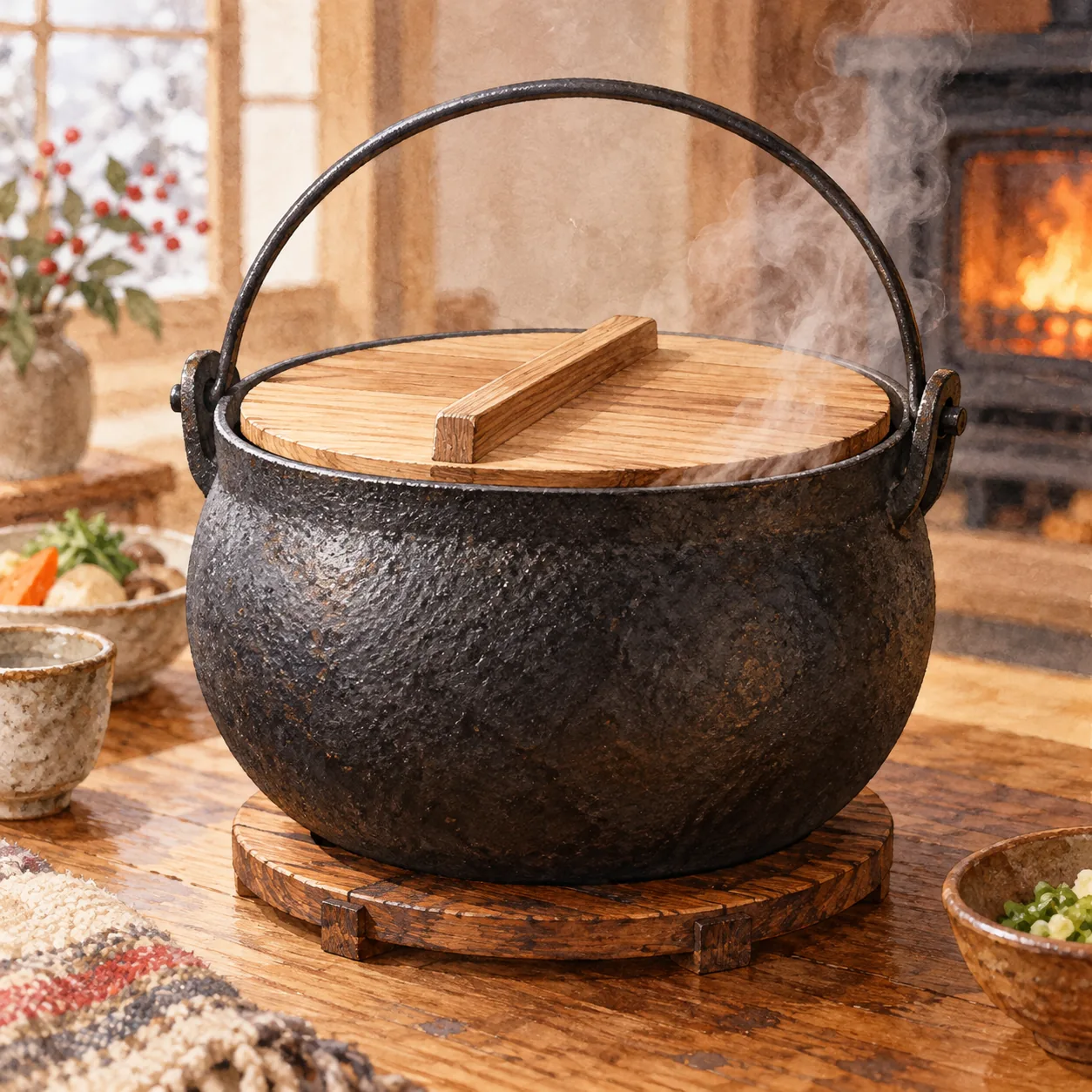
The 21 cm deep Furusato pot in our Japanese guide holds 1 litre, weighs 1.8 kg and works on induction as well as direct flame — just right for oden for one or two.
Iwachu Furusato Deep Pot 18 cm, Nambu Ironware
The same Furusato series in an 18 cm (7.1 in) inside diameter, sold for direct-flame cooking. A compact iron pot for oden for one, or for miso soup every day.
Iwachu Furusato Deep Pot 18 cm, Nambu Ironware
Loading product details…
7. Choosing by Household Size
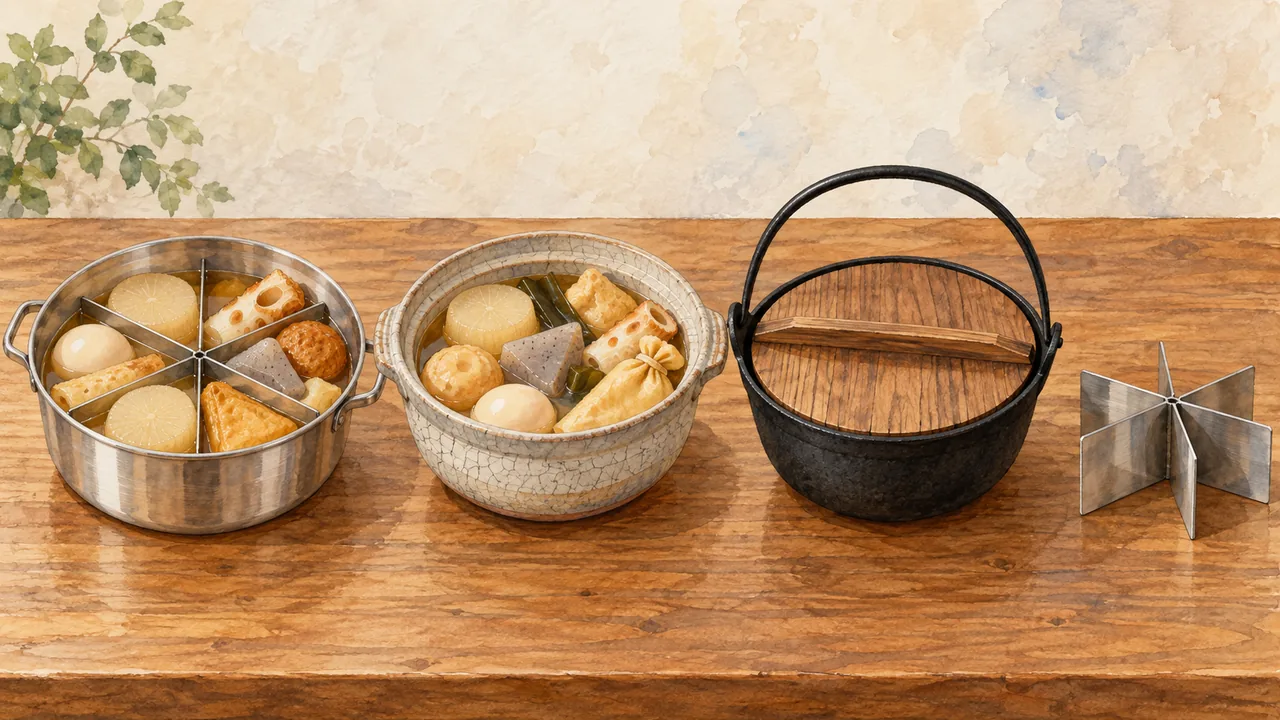
For a family around the table, the Objet's 3.7 litres. For one or two, the Iwachu iron pot. Donabe come in sizes from one-person pots upwards, so you can match the number of people. And if you already own a good pot, the stainless divider is all you need.
8. Frequently Asked Questions
Can I turn a pot I already have into an oden pot?
Yes, if its inside diameter is 20–30 cm (8–12 in). Put Shimomura Kihan's stainless oden divider in it. It's described as not absorbing broth or picking up colour.
Which oden pots work on induction?
Of those in this guide, the Objet oden & yudofu pot and the 21 cm Iwachu Furusato pot. The Banko ware donabe is for gas flames only.
Why is Banko ware famous for donabe?
Banko ware donabe hold more than 80% of the Japanese market, according to the Association for the Promotion of Traditional Craft Industries. Yokkaichi even holds a memorial service to thank clay pots.
Can a divided pot be used for other things?
Yes. Take out the Objet pot's divider and core, and it's a shallow two-handled pot — good for yudofu, too.
Can I leave oden in the iron pot overnight?
No — Iwachu's retailer advises moving food to another dish before it cools. Store leftover oden in a separate container.
What's a good oden pot for one person?
A small Iwachu Furusato pot or a one-person Banko ware donabe. Both are sized for oden for one.
Final Thoughts: Winter Oden in a Pot Where Everything Has Its Place
Oden is more fun when everything lines up.
Shimomura Kihan's divider from Tsubame-Sanjo, to use the pot you have. Miyazaki Seisakusho's Objet, made since 1982, if you want the divider built in. A Ginpo donabe from Yokkaichi Banko ware — over 80% of Japan's clay pots — for slow simmering on gas. And an Iwachu iron pot for a night on your own.
Lift the lid, and the daikon and eggs are each in their own place. Welcome winter with oden like that.
Sukiyaki Pan: Japanese Nambu Cast Iron From 3 Foundries
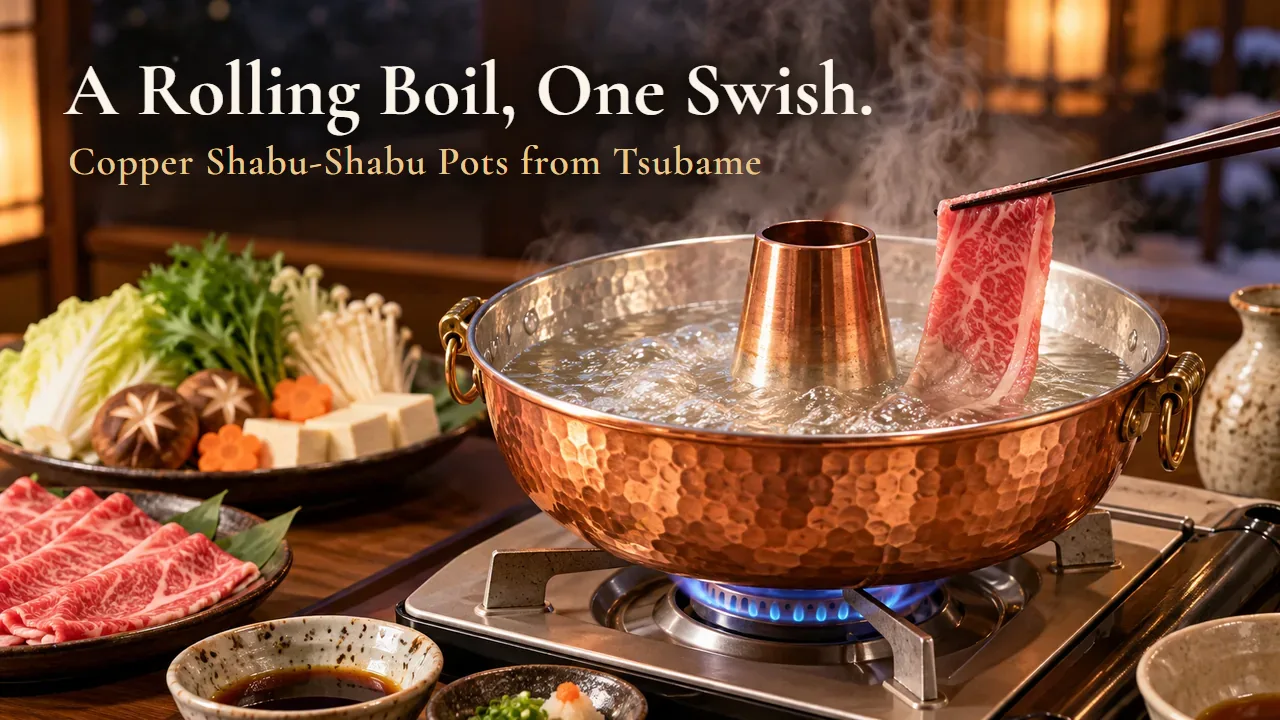
Shabu-Shabu Pot: Japanese Copper From Tsubame