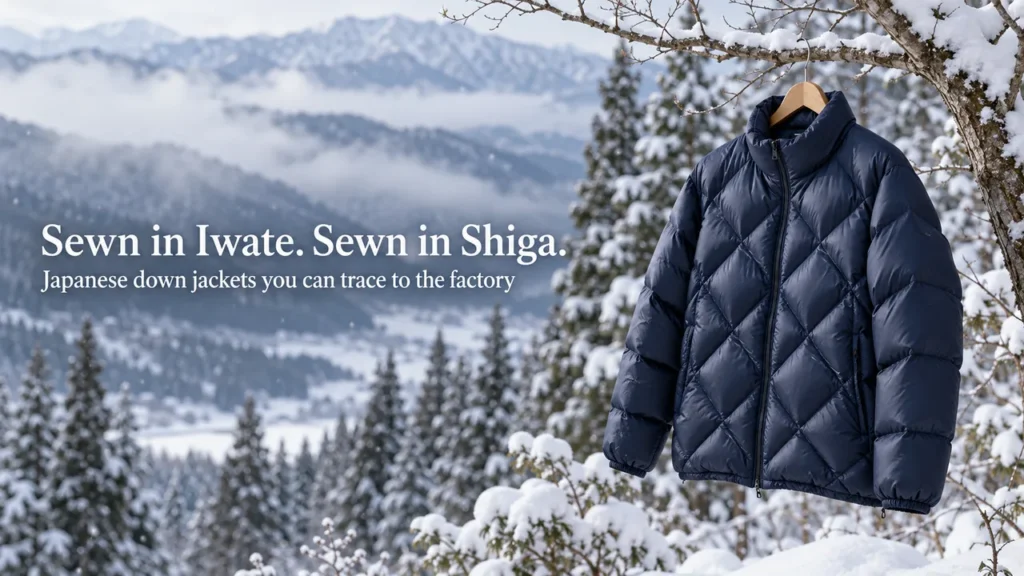
The best-known Japanese down jackets come from two factories you can name: Descente's plant in Iwate, where a Mizusawa Down jacket goes through 280 production steps, and Nanga's own workshop in Maibara, Shiga, where the Ibuki and Mikami are sewn one at a time.
Japan also has a down maker with a longer story than either. Zanter made the country's first down clothing in 1951 and has outfitted Japan's Antarctic research expeditions since 1956. And there is a fifth: the Rocky Mountain Featherbed down vest, an American design from the 1960s that a Japanese company brought back and now has made in a Japanese down factory.
This guide covers all five — what makes each one different, how to read fill power and down ratio, which one fits the way you'll actually wear it, and the honest answer to the question everyone outside Japan asks first: can you buy one from where you live?
Quick Reference: 5 Japanese-Made Down Jackets at a Glance
| Brand / model | Where it's made | What sets it apart | Best for |
|---|---|---|---|
| Mizusawa Down Mountaineer |
Oshu, Iwate (Descente's Mizusawa factory) | Heat-bonded down chambers instead of stitching; 280 steps per jacket | The one jacket you keep for decades |
| Nanga Ibuki | Nanga's own factory, Maibara, Shiga | 760 fill power; waterproof-breathable Aurora-Tex shell | A first Japanese down jacket, city to campsite |
| Nanga Mikami | Nanga's own factory, Maibara, Shiga | 860 fill power goose down; 15-denier shell | The lightest of the five; mountains and cold travel |
| Zanter JP-Original Down |
Made in Japan | Antarctic-expedition specification; 800 fill power | Serious cold |
| Rocky Mountain Featherbed |
Sewn in Japan | One-piece leather yoke; 700 fill power vest | Layering, autumn to late winter |
1. Why Japanese Down: One Factory, Start to Finish
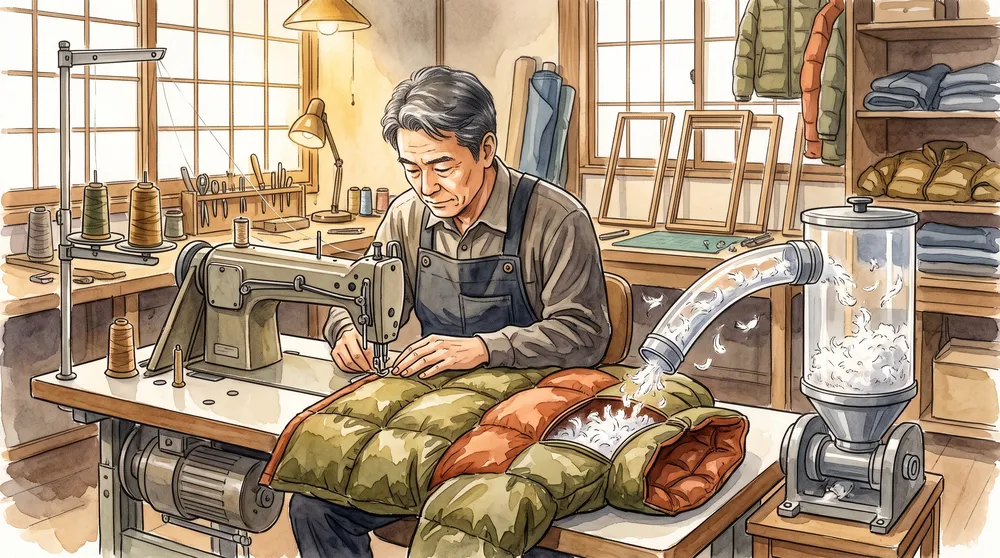
What sets these jackets apart is that the same factory fills the down and sews the jacket. Descente's Mizusawa plant in Iwate Prefecture runs what the company describes as an integrated down-wear production line — rare in Japan — and a single Mizusawa jacket passes through 280 production steps, which Descente says is more than double a typical down jacket. Nanga's Ibuki and Mikami are made one at a time in Nanga's own factory in Maibara, Shiga.
The down itself gets the same attention. Nanga uses down washed in Japan, and the Mikami's goose down is cleaned in ultra-soft water. Zanter takes down that has been washed in its country of origin and puts it through ten further refining steps in Japan before it becomes the 800 fill power down in its jackets.
And each maker has a history you can trace. Zanter produced Japan's first down clothing in 1951, developing down jackets and sleeping bags with the Japanese Alpine Club's Manaslu expedition, and has supplied the down gear for Japan's Antarctic research expeditions since 1956. Mizusawa Down was launched in 2008 after a year of development at the Iwate factory. When you buy one of these, you know where it was made and who made it.
2. The Five, Brand by Brand
From the jacket you keep for life to a first Japanese down jacket, the lightest of the group, a coat built for polar cold, and a vest for layering — here is what each one is, and who it suits.
Mizusawa Down Mountaineer (Descente Allterrain) | Iwate
280 steps, in Descente's own factory in Iwate
Descente, the Japanese sportswear company, makes Mizusawa Down from start to finish at its plant in Oshu, Iwate Prefecture — the town that used to be called Mizusawa. Its defining feature is that the down chambers are not stitched. They are formed by heat bonding, so there are no needle holes for rain to soak through and wet the down. Where sewing can't be avoided, such as the sleeves, the seams are taped on the inside.
The Mountaineer is the line's standard model. With so few visible seams, it has a clean, almost architectural face that works as well on a city street as in snow. This is the one to choose if you want a single jacket for the long haul.
Nanga Aurora-Tex Down Jacket "Ibuki" | Shiga
Named after Mount Ibuki, sewn in Nanga's Maibara factory
Nanga is the down company from Maibara, Shiga, best known for its sleeping bags. The Ibuki takes its name from Mount Ibuki, one of Japan's "100 Famous Mountains", and is the brand's Japan-made model, sewn one at a time in its own factory. There is an original MADE IN JAPAN tag inside the front.
The shell is Nanga's waterproof-breathable Aurora-Tex, rated to a 20,000 mm water column, and inside are 150 g of 760 fill power white duck down from Spain. The quilting follows the shape of the body to reduce cold spots. It is the easiest place to start if you want one jacket that handles both a commute and a campsite.
Nanga Aurora-Tex Light Down Jacket "Mikami" | Shiga
Nanga's flagship
Nanga calls the Mikami "the Japan-made down jacket in pursuit of Nanga's highest warmth and lightness." The shell is Aurora-Tex Light, an ultralight 15-denier fabric, and the fill is 180 g of 860 fill power goose down from Poland, washed in Japan in ultra-soft water.
The construction borrows from Nanga's sleeping bags: box-quilted baffles that keep the down lofted, plus a vent at the neck to let trapped heat and moisture out. For hiking, or for travel through genuinely cold places where every gram you carry counts.
Zanter JP-Original Down
The original Japanese down maker, and its Antarctic jacket
Zanter made Japan's first down clothing in 1951. It worked with the Japanese Alpine Club's Manaslu expedition on down clothing and sleeping bags for climbing, and from 1956 it supplied the down equipment for Japan's Antarctic research expeditions.
The JP-Original Down is built to that Antarctic, extreme-cold specification. It uses 800 fill power down refined in Japan, in a shell of Toray's waterproof-breathable Brizatec, at a ratio of 90% down to 10% feather — and it is labelled MADE IN JAPAN. For real cold, and for anyone who wants to wear the history of Japanese down.
Rocky Mountain Featherbed Down Vest
The leather-yoke vest, revived in Japan
Rocky Mountain Featherbed began in the United States in the 1960s and eventually disappeared. The Japanese company 35SUMMERS brought it back, and it is now produced in a Japanese down factory.
Its signature is a one-piece leather yoke across the shoulders. The shell and lining are a 70-denier nylon taffeta recreated from studying vintage pieces, and the fill is 700 fill power at 90% down. Over a shirt or a sweater, it covers you from autumn to the end of winter.
3. How to Choose: Fill Power, Down Ratio, Weatherproofing, Fit
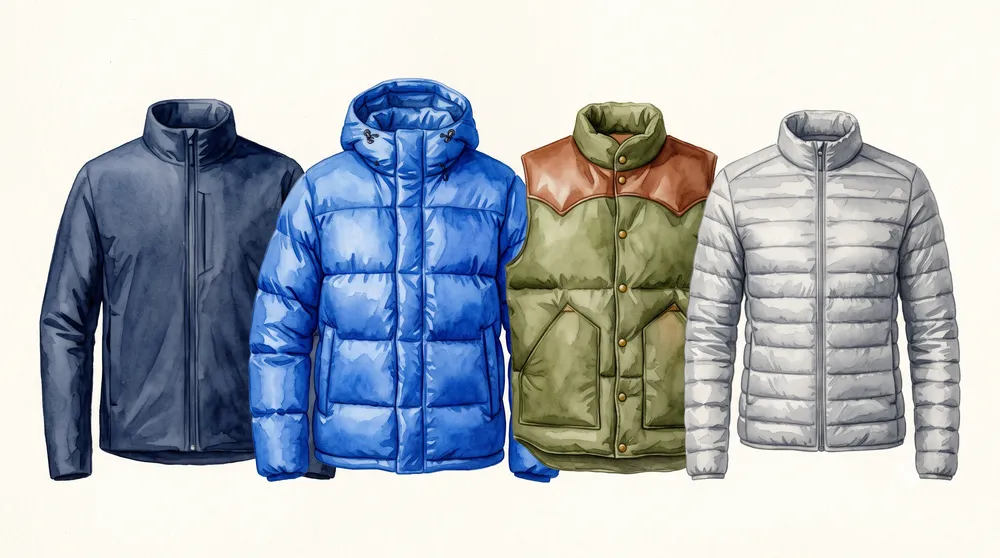
A few numbers and features make down jackets much easier to compare. Here is what to look for.
- Fill power tells you how warm for its weight: Fill power measures the loft of the down. The higher the number, the less down it takes to be warm, so the lighter the jacket tends to be. Zanter's own guidance is that "600–700 fill power is generally good down, and 700 fill power and above is high-quality down." The five here are 700 (Rocky Mountain Featherbed), 760 (Nanga Ibuki), 800 (Zanter), and 860 (Nanga Mikami).
- Check the down-to-feather ratio: Down is the soft cluster; feather has a quill. A higher share of down means a lighter, puffier jacket. The Ibuki, the Zanter, and the Rocky Mountain Featherbed are 90% down; the Mikami is 93%.
- Match weatherproofing to where you'll be: If you'll spend long stretches in rain or wet snow, a waterproof-breathable shell matters. Mizusawa avoids stitch holes with heat bonding and taped seams; Nanga uses Aurora-Tex (the Ibuki is rated to 20,000 mm); Zanter uses Toray's Brizatec.
- Weight, silhouette, and size: At the same warmth, higher fill power is lighter and easier to move in. Japanese brands publish their own size charts, so compare the chest and length in centimetres with a jacket you already own, and allow for what you'll wear underneath. For something you'll keep for years, a colour and shape that won't date is the safer choice.
4. City, Mountains, or Real Cold
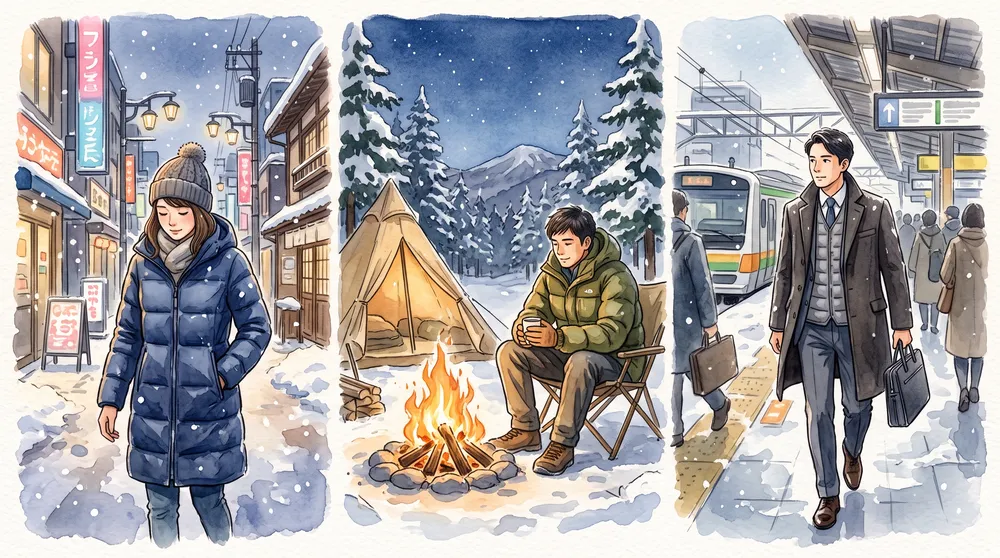
Even among Japanese-made down, the right jacket changes with how you'll wear it. Work backwards from your days.
For the city: a clean-faced jacket, or a vest
If your winter is mostly commuting and walking around town, Mizusawa's near-seamless face or Nanga's Ibuki, which goes from the city to a campsite, are the natural picks. Both are built for rain and snow, so a turn in the weather won't catch you out. A down vest layers over a sweater or shirt from early autumn and gives you the most combinations.
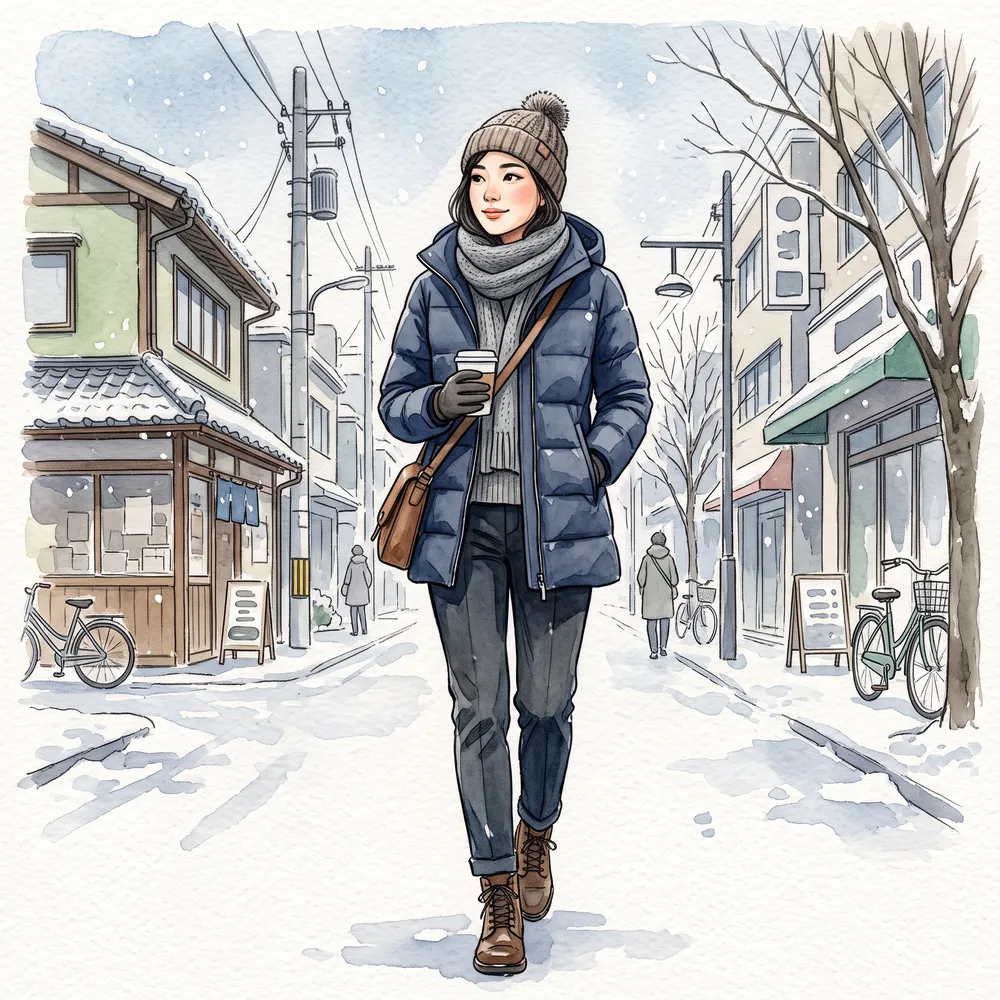
For mountains and real cold: lightness, or sheer protection
When the weight you carry matters — hiking, trekking — the Nanga Mikami, with 860 fill power down and a 15-denier shell, is the one built around lightness. If you live or work somewhere seriously cold, the Zanter JP-Original, made to an Antarctic-expedition specification, is the one to rely on. Decide when and where you'll wear it first, and the choice gets easy.
5. Can You Buy One Outside Japan?
Honestly, it is not straightforward — and we would rather tell you that than imply otherwise. When we checked the makers' own sites in October 2026, here is what we found.
| Maker | English information | International shipping stated? |
|---|---|---|
| Descente (Mizusawa Down) | Yes — an English Mizusawa page | No. The listed stockists are in Japan, plus Descente's online store |
| Nanga | Yes — an English site with an online shop link and a contact page | Not stated |
| Zanter | Product pages in Japanese | Not stated |
| Rocky Mountain Featherbed | Sold through Japanese retailers | Not stated |
- Ask the maker directly. Nanga's English site has a contact page. A short message asking whether they ship to your country is the most reliable answer you can get.
- If you are visiting Japan, buy it there. Nanga lists its shops on its English site, and Descente's Mizusawa page lists the stores that carry it. Winter is when the full range is on the shelves.
- Check the model name and the label before you buy from anyone else. Look for the exact model names in this guide and a MADE IN JAPAN label — the Ibuki has one sewn inside the front.
We will add listings you can buy from abroad here as we confirm them, one product at a time.
6. Washing, Storing, and Repairing Down
Looked after properly, a down jacket keeps its warmth for a very long time. Here is how to make one last.
- Don't over-wash, but don't skip it: Down doesn't need frequent washing, but sweat and skin oils wear the down out, so once a season is ideal. Check the care label: if it can be washed at home, use a down-specific detergent and go gently; if not, take it to a cleaner. Spot-clean collars and cuffs early to stop them yellowing.
- Drying is the part that matters most: Down that stays damp clumps, smells, and loses warmth. Tumble-dry on low with a couple of tennis balls to break up the clusters, and keep going until it is completely dry. Without a dryer, dry it flat and pat it now and then to bring the loft back.
- Store it uncompressed: In the off-season, skip the compression bag and give it room. Crushed down is slow to recover its loft. Keep it somewhere dry, on a hanger or loosely folded.
- Repair it and keep wearing it: Small holes can be patched with a down-repair sticker. For large tears or a broken zip, ask the shop you bought it from or the maker about repair. Fixing it rather than replacing it is how a jacket like this earns its price.
7. Frequently Asked Questions
Mizusawa Down or Nanga — which should I buy?
For a special, keep-it-forever jacket, Mizusawa Down; for a first Japanese down jacket, the Nanga Ibuki is the easier choice. Mizusawa is made in Descente's own Iwate factory in 280 steps, with heat-bonded down chambers. The Ibuki is sewn in Nanga's own factory in Shiga and pairs 760 fill power down with a waterproof-breathable Aurora-Tex shell, so it handles both town and campsite.
What fill power should I look for?
700 fill power and above is a good benchmark. Zanter describes 600–700 as generally good down and 700 and above as high-quality down. The five jackets in this guide range from 700 to 860. If lightness is your priority, the Nanga Mikami at 860 is the one.
What is the "Antarctic expedition" down jacket?
It refers to Zanter, which has supplied the down equipment for Japan's Antarctic research expeditions since 1956. The JP-Original Down is Zanter's jacket built to that extreme-cold specification, with 800 fill power down refined in Japan and a Toray Brizatec waterproof-breathable shell.
Can I wash a down jacket at home?
If the care label allows it, yes — but drying it thoroughly is what matters. Wash gently with a down detergent, then tumble-dry on low with tennis balls until it is completely dry. Damp down clumps and starts to smell. If the label says not to wash it at home, a specialist cleaner is the safe route.
Which is the lightest Japanese-made down jacket here?
The Nanga Mikami. Nanga calls it its Japan-made down jacket in pursuit of the brand's highest warmth and lightness. It combines the 15-denier Aurora-Tex Light shell with 860 fill power Polish goose down.
Do these makers ship internationally?
None of them stated international shipping on their own sites when we checked in October 2026. Descente and Nanga both have English pages, and Nanga's has a contact page — asking them directly is the most reliable way to find out. If you are travelling to Japan, buying in person is the simplest option.
Final Thoughts: A Jacket You Can Trace to Its Factory
Mizusawa Down, put through 280 steps in an Iwate factory. Nanga's Ibuki and Mikami, sewn one at a time in Maibara. Zanter, Japan's first down maker and the outfitter of its Antarctic expeditions. And the Rocky Mountain Featherbed vest, revived in Japan around a one-piece leather yoke. Each comes with a factory and a story attached.
Use fill power, down ratio, and weatherproofing to narrow the field, then decide by where you'll wear it. Wash it properly, store it uncompressed, and repair it when it tears. This winter, choose a jacket you can trace to the people who made it.
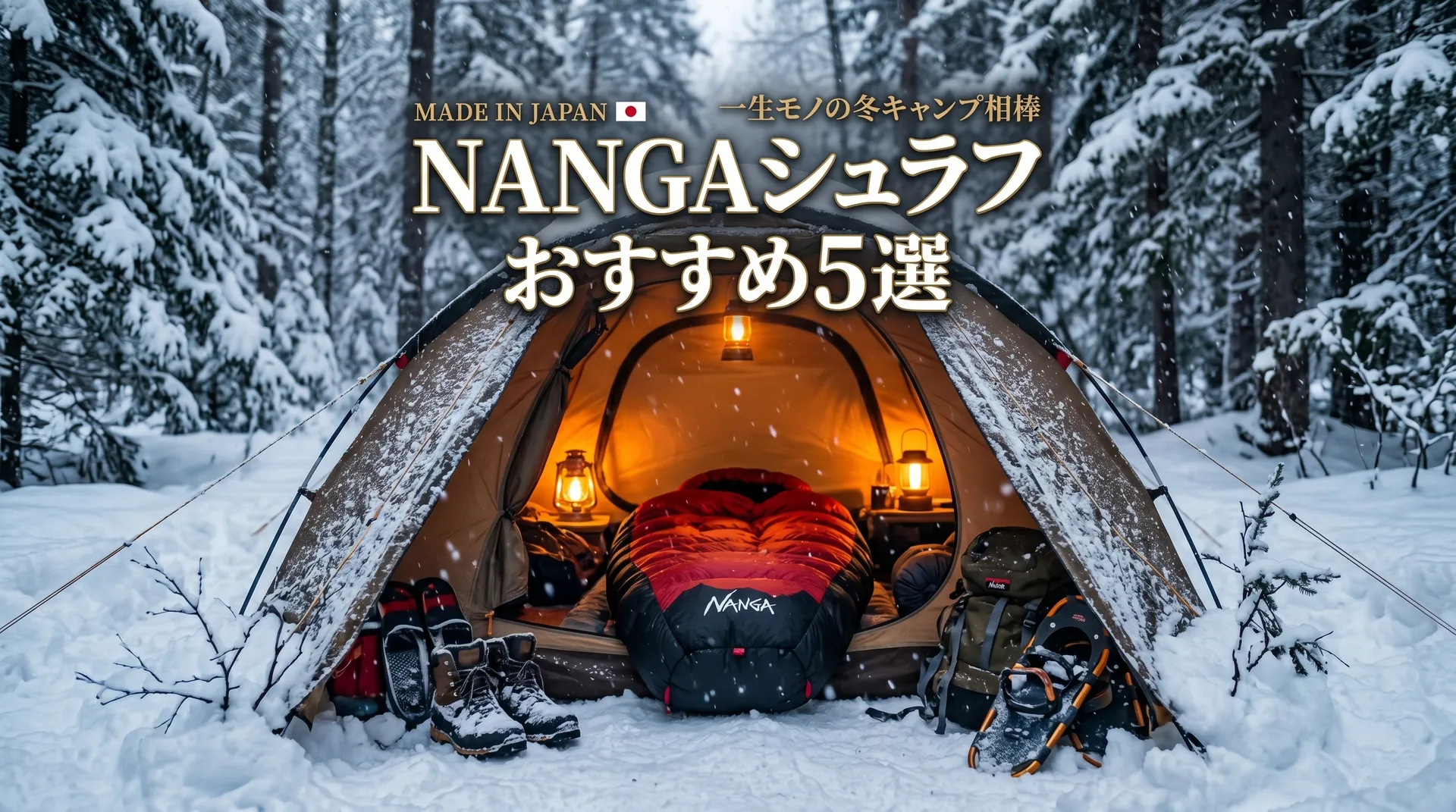
NANGA Sleeping Bags: Lifetime Repair, and Real Limits
Japanese Innerwear: Seamless, Tagless, and Sized Small